(Headline USA) House Republicans were investigating whether the Biden administration pressured medical organizations to remove age limits on life-altering gender-transition procedures, including irreversible hormonal and surgical treatments.
🚨 Biden-Harris Admin Officials Appear to be Advocating for the Removal of Age Minimums for Gender Transition Procedures
Subcommittee Chair Lisa McClain (@RepLisaMcClain) is investigating allegations of interference by Biden-Harris Administration officials in recommendations for… pic.twitter.com/Lx6TerZCzb
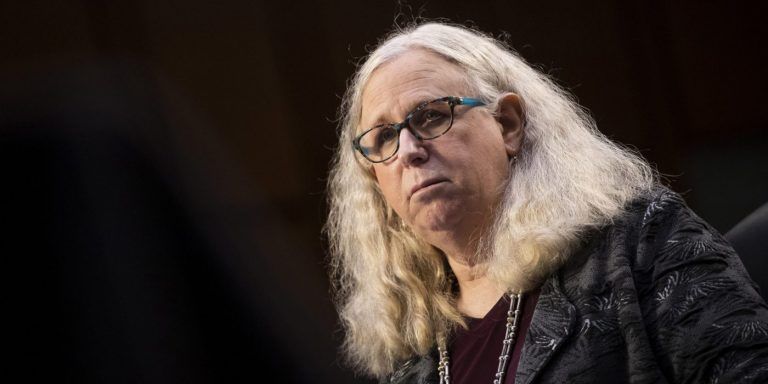
Earlier this summer, the New York Times reported that Rachel Levine, a transgender and the assistant secretary for health at the Department of Health and Human Services, urged the World Professional Association for Transgender Health (WPATH) to remove age limit recommendations for transgender surgical procedures, arguing such requirements could limit access to “gender-affirming care” in the U.S.
Levine’s pressure campaign was exposed in an Alabama court filing, in a case challenging a state law that banned certain gender-related procedures for minors.
Levine was highly supportive after receiving WPATH’s revised “standards of care” proposal but was “very concerned that having ages (mainly for surgery) will affect access to healthcare for trans youth and maybe adults too,” according to an internal WPATH email that was released as part of the Alabama litigation.
“Apparently the situation in the USA is terrible and [Levine] and the Biden administration worried that having ages in the document will make matters worse,” the email continued. “She asked us to remove them,” it added, using female pronouns to refer to Levine.
Now, the House Oversight Committee is investigating Levine and HHS over whether they, “acting in their official capacity, inappropriately applied pressure for changes to international pediatric medical standards,” according to Rep. Lisa McClain, R-Mich., the chairwoman of the committee’s healthcare and financial services panel.
McClain requested all documents and communications between Levine and the HHS staff with WPATH and other medical organizations in regards to their recommendations on “gender-affirming care.”
“The Biden Administration’s advocacy for expanding the pool of vulnerable children subjected to life-altering procedures they may later regret is reprehensible,” McClain wrote in a letter to HHS Secretary Xavier Becerra. “Emails indicating that this advocacy was done for political advantage—possibly to satisfy extremist elements of its base—is even more outrageous.”
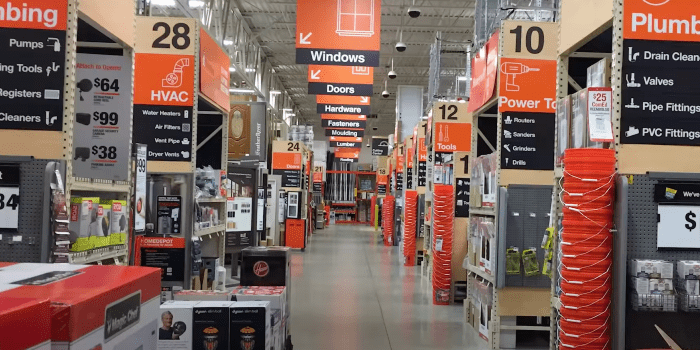
(Headline USA) Home Depot could be the next company to face a conservative boycott after a report this week revealed it partnered with a LGBT group to develop a curriculum that taught elementary students about gender identity and sexuality.
In 2022, Home Depot announced it would be working with the Human Rights Campaign to support the activist group’s “Welcoming Schools” program. The program offers LGBT curricular options, including K-12 lesson plans that feature inappropriate content on “pansexual” and “nonbinary” identities, according to Fox Business.
One lesson plan supplied by the “Welcoming Schools” program has kindergarten to second grade students read a book titled Red: A Crayon’s Story, which teaches children about variant gender identities. The teacher is then instructed to help students explore their own identities.
“Each student will create a crayon about themselves that explores their inner identities,” the lesson plan states. “It is important to teach young children that we cannot assume someone’s gender identity based upon their gender expression.”
Another lesson plan for third through fifth graders, titled “Social Justice Acrostic Poems,” has students write poems about various social justice movements, including Black Lives Matter, respect all languages, animal rights, climate change, migration is beautiful, gay rights, women’s rights, water is life, disability rights, gun control or March for Our Lives.
In a statement, Home Depot denied HRC’s ulterior objective to indoctrinate students, claiming the “Welcoming Schools” program merely “focuses on preventing and ending bullying, which is often targeted at LGBTQ students.”
Kelie Charles, Home Depot’s senior director of diversity, equity, and inclusion, added, “We are dedicated to intensifying our efforts to make a meaningful, sustainable difference in supporting change in our communities.”
A number of companies that cater to red-leaning constituencies have faced boycotts in recent months for embracing leftist policies. Just this month, Lowe’s—a direct competitor of Home Depot’s—agreed to ditch its woke DEI policies after pushback.
“Our movement against wokeness is a force that companies simply cannot ignore,” independent journalist and activist Robby Starbuck said in a statement afterward. “I’m a megaphone for normal people who are sick of having divisive social issues shoved down their throat at work.”
Home Depot’s co-founder and first CEO, Bernard Marcus has been known as a generous and outspoken supporter of former President Donald Trump, although the 95-year-old has been retired from company operations since 2002.
The company came under fire previously after it was busted pushing controversial ideas derived from “critical race theory”—including that of an innate privilege for whites, males and Christians—in its training seminars.
The scandal broke just weeks after current CEO Ted Decker assumed control of the company, following the retirement of his former boss, Craig Menear, in March 2022.
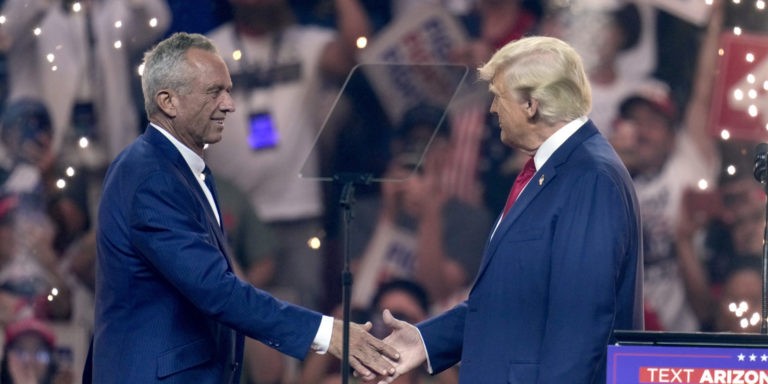
Last week, Kennedy said that he would withdraw from key swing states and throw his support behind former President Donald Trump in order to try to defeat the Democrats.
When he suspended his campaign, Kennedy said that his name remaining on the ballot in battleground states “would most likely hand the election to the Democrats, with whom I disagree on most existential issues.”
But now, leftist state officials who were previously eager to disavow the maverick political scion and longtime Democrat are refusing to comply, presumably hoping to hurt Trump’s chances of breaching the Rust Belt’s blue wall, as he did in his successful 2016 campaign.
In Michigan, George Soros-backed Secretary of State Jocelyn Benson rationalized the move on the grounds that candidates not from major parties cannot withdraw, and that Kennedy was running as a member of the Natural Law Party.
“Minor party candidates cannot withdraw, so his name will remain on the ballot in the November election,” Cheri Hardmon, Benson’s senior press secretary, said in a statement.
In Wisconsin, a lone Republican on the state elections commission voted to get Kennedy off the ballot. But commissioner Robert Spindell Jr. was overruled in a 5-1 vote by two other Republicans and three Democrats—one of whom accused the Trump campaign of orchestrating a bad faith political ploy.
“We know Trump and Kennedy are playing games,” Democratic commissioner Mark Thomsen said, according to the Associated Press. “Whatever games they’re playing, they have to play them with Kennedy on the ballot.”
The board also voted to approve five other third-party candidates, including Green Party nominee Jill Stein, who helped draw votes from Hillary Clinton in 2016. Democrats had sued to block her from the ballot, as they had with Kennedy prior to his decision to withdraw.
Independent candidate Cornel West—who could potentially put a huge dent in Democrats’ black and Muslim support in Milwaukee and other major urban centers—will also appear on the Wisconsin ballot.
Nonetheless, in a post on X, conservative pundit George Behizy pointed out the fundamental hypocrisy of Democrats for seeking to remove Kennedy from ballots in deep blue states while fighting to retain it in swing states.
“This only conclusion here is that Democrat officials in every state were conspiring to steal the 2024 election,” he wrote.
BREAKING: Following Michigan's example, the Wisconsin Elections Commission just voted 5-1 to keep RFK Jr's name on the ballot against his will
Out of nowhere, Democrats have frozen all efforts to remove RFK Jr's name from the ballot. However, they still want him removed from the… pic.twitter.com/InoZ6LqKqX
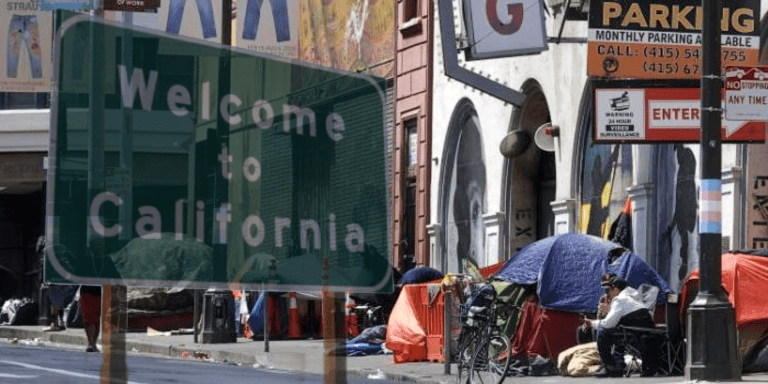
The bill, introduced by state Assemblyman Joaquin Arambula, would grant certain illegals eligibility to apply to the state’s Dream for All home loan program, which awards first-time home-buyers up to 20% in down-payment assistance through a lottery system. The program is currently available only to low- and middle-income Californians, and it caps out at $150,000 in downpayment assistance.
“This bill would specify that an applicant who meets all other requirements for a loan under the program including, but not limited to, any requirements imposed on the agency in administering the program by specified entities, and who is otherwise eligible under applicable federal and state law, shall not be disqualified solely based on the applicant’s immigration status,” said the legislation.
To be eligible for the program, applicants must provide a taxpayer ID number or a Social Security number.
“We simply wanted to be as inclusive as possible within our policies so that all who are paying taxes here in our state were able to qualify,” Arambula said earlier this year.
California Republicans have blasted the bill as “out of touch” and immoral.
“California’s budget deficit continues to grow and Democratic lawmakers are so out of touch with everyday Californians that they are quite literally taking money away from law-abiding citizens, their own constituents, and handing it over as a free gift to people who broke federal law to cross the border illegally,” state Sen. Brian Jones said in a statement.
California Gov. Gavin Newsom has not indicated whether he will sign the bill if it passes through the Democrat-controlled state legislature.
If he does, the bill could have an impact on the 2024 election, since illegal immigration is a top issue for most voters.
In a statement, a spokesperson for former President Donald Trump highlighted the bill, calling it a “fundamentally unfair but typical Democrat policy.”
(Ken Silva, Headline USA) Human Events reported Wednesday that a U.S. Attorney has empaneled a grand jury as part of a criminal investigation into the assassination attempt against former President Donald Trump.
Citing a letter obtained from America First Legal, Human Events said a records request about alleged Trump shooter was denied because those records are subject to a grand jury subpoena.
The letter, from the Community College of Allegheny County in response to attorney Wally Zimolong, reportedly denied the request for records on Trump shooter Thomas Crooks’s student files, communications, disciplinary records, or other data containing his name.
“Please be advised that your request is denied on the basis that it requests records that relate to an ongoing criminal investigation, which are exempt from disclosure,” the letter states.
“Specifically, the records that you have requested are within the scope of a grand jury subpoena issued to CCAC by the United States District Court for the Western District of Pennsylvania, and which the U.S. Attorney’s Office has confirmed relate to an ongoing criminal investigation.”
The news of the grand jury investigation comes on the heels of Crooks’s parents reportedly hiring an attorney as the FBI continues to investigate what they knew about their now-deceased child’s plans for the July 13 campaign rally in Butler, Pennsylvania.
Among many other threads, the FBI could be investigating whether Crooks used his parents’ house to make the purported explosives found in his vehicle. Local sniper Ben Shaffer, who was involved in the security at the Trump shooting, said at a Monday press conference that the explosives were “possibly” made at the Crooks household, where the gunman lived.
Rep. Eli Crane, R-Ariz., has made cryptic comments about how clean Crooks’s home was when law enforcement searched it after the shooting.
“Did you get any reports from any of your agents of anything fishy at the home. Was there any silverware found in the home, or trash? Was it extremely clean, almost like a medical lab? That’s what I’m hearing. Interesting,” Crane said last month at a congressional hearing.
Meanwhile, the Crookses’ neighbors are beginning to talk to media.
“I would love to know what really happened and what Thomas’ motivation was,” neighbor Kelly Little, 39, told The New York Post in an article this week.
“It’s been weeks since police were here. There’s nothing happening, no police activity,” she reportedly said, reportedly noting that local cops drive by occasionally, but there haven’t been officers stationed there long-term.
Another neighbor who declined to be named reportedly said she doesn’t think Crooks acted alone. Yet another neighbor who only gave her first name, Karen, questioned the parents’ involvement.
“What went on in that house? Why didn’t they know their son was going through whatever he was going through or that their son thought the way he thought?” she reportedly asked.
(Money Metals News Service) In the latest episode of the Money Metals Midweek Memo, host Mike Maharrey dives deep into the recurring economic themes that dominate the news cycle. Maharrey begins by acknowledging a feeling many listeners may share: a sense of repetition in the content.
However, he stresses the importance of understanding that while news headlines change daily, the underlying economic fundamentals remain consistent, often playing out in slow motion over time.
The Repetitive Nature of Economic Themes
Maharrey highlights that the same macroeconomic issues—such as inflation, debt, and easy money policies—continue to dominate the landscape.
Since the 2008 financial crisis, these issues have only intensified, particularly during the pandemic. He points out that while we see new headlines and data daily, the larger dynamics are slowly unfolding beneath the surface.
The host notes that, eventually, these dynamics will culminate in significant events, such as financial crises or stock market crashes. However, predicting when this will happen is impossible—it could be tomorrow, next month, or even next year.
The Fast-Paced World of News and Its Impact
Maharrey contrasts the slow-moving nature of economic trends with the fast-paced, headline-driven world of modern news.
Drawing from his background in journalism, he discusses the challenges of balancing speed and accuracy in news reporting. The pressure to be the first to report often leads to incomplete or incorrect information being disseminated.
He emphasizes that, in today’s world, people want information quickly and expect it to be accurate, but these two demands are often mutually exclusive.
The Impact of Fast Information on Decision-Making
The rapid pace of information in modern society has also shortened decision-making windows for both individuals and policymakers. Maharrey illustrates this with an example from history: when the Berlin Wall was being built, U.S. officials had days to contemplate their response before the news became public.
Today, such an event would be immediately broadcast worldwide, creating instant public pressure for a response. He suggests that this speed can lead to rash decisions, both in politics and markets.
Understanding Economic Frameworks
Maharrey urges listeners to develop a solid economic framework to interpret data and trends. He criticizes the mainstream reliance on Keynesian economics, which he believes leads to poor understanding and bad decisions.
By contrast, a good framework can help individuals make sense of seemingly contradictory data and avoid reacting impulsively to outlier events.
Jerome Powell’s Jackson Hole Speech: More Inflation Ahead?
Maharrey then shifts focus to Federal Reserve Chairman Jerome Powell’s recent speech at Jackson Hole. He interprets Powell’s remarks as a clear signal that more inflation is on the horizon.
Although Powell did not explicitly say this, Maharrey argues that the Fed’s plans to slow balance sheet reduction and cut interest rates will inevitably lead to an increase in the money supply, which is the root cause of inflation.
Inflation: A Policy, Not an Accident
Maharrey stresses that inflation is a deliberate policy, not a random occurrence. He explains that expanding the money supply benefits the government by allowing it to borrow and spend more, but this comes at the expense of the public.
Despite the Fed’s attempts to manage inflation, Maharrey points out that much of the inflationary pressure from the pandemic era remains, and the Fed’s recent actions indicate a return to inflationary policies.
The Future of Gold
As a final point, Maharrey discusses the role of gold as a hedge against inflation. He notes that gold prices have been steadily rising, with the metal closing above $2,500 an ounce for two consecutive weeks. He also cites Brien Lundin, publisher of the Gold Newsletter, who believes that the next phase of the gold bull market has begun.
Maharrey suggests that now is a good time to invest in gold, as price drops present buying opportunities.
Conclusion: The Importance of Patience
Maharrey concludes by reminding listeners that economic changes occur slowly and that it is crucial to maintain a long-term perspective. In a world that demands instant results, he advocates for a “slow-cooking” approach to understanding and navigating the economy.
For those interested in gold and silver investments, Maharrey encourages them to contact Money Metals Exchange for guidance and to take advantage of current opportunities in the precious metals market.
(Ken Silva, Headline USA) The FBI released new evidence Wednesday from its investigation of the July 13 assassination attempt against former President Donald Trump, including photos of alleged shooter Thomas Crooks’s rifle, as well as the explosives found in his vehicle.
According to the FBI, the rifle is an AR-15 made by DPMS Panther Arms. It did have a compact optimal site attached. The rifle is still operational, according to the FBI.
The photo also showed that the rifle had a chunk missing from its stock. That’s likely where the bullet of a local cop struck—hitting Crooks with shrapnel and causing him to stop firing after eight shots. A Secret Service sniper put the kill shot in Crooks’s head 10 seconds after that.
The FBI also released a photo of Crooks’s purported backpack, showing that it could fit the rifle when the AR-15 was broken down. The FBI said it has video of Crooks scaling the AGR building at 6:05 p.m., but the bureau didn’t release that footage. Crooks would begin firing from the AGR rooftop at 6:11 p.m.
I wonder if the FBI does this shit on purpose to make the schizos go crazy. At first it looked to me like the rifle on the right is different because there's no chunk shown missing — but the stock is just collapsed so it's harder to see the missing chunk pic.twitter.com/TuFHZwtzq9
While the FBI didn’t release footage of Crooks climbing, it did publish a photo of the air conditioning unit the shooter allegedly scaled.
“The subject accessed the roof by climbing on the tan machine on the far right side of the photo,” the FBI said of the photo.
As for the explosives, the FBI’s photo purportedly shows them as they were initially discovered in Crooks’s car trunk.
“The receiver for remote detonation was in the ‘off’ position; devices had several problems in the way they were constructed,” states an FBI description of the photo.
In addition to releasing photos, the FBI held a press conference Wednesday for approved media only. Headline USA initially wrote an article based on reports from that press conference, but later in the day the FBI finally released a transcript of remarks made by Kevin Rojek, the special agent in charge of the FBI Pittsburgh Field Office.
The transcript included info not reported on by the FBI-approved media.
For instance, Rojek confirmed that the FBI accessed Crooks’s encrypted chat accounts. He also downplayed the fact they were encrypted—and to his point, so are apps such as WhatsApp, ProtonMail and Signal.
“We successfully accessed the information from these accounts and appropriately analyzed their content. However, we continue to identify and exploit the subject’s accounts,” Rojek added—suggesting that the FBI still hasn’t tracked down all of Crooks’s online activity.
(Ken Silva, Headline USA) Kevin Rojek, the special agent in charge of the FBI’s Pittsburgh office, reportedly said Wednesday that the bureau has found no evidence that Thomas Crooks had help in his assassination attempt against former President Donald Trump.
Rojek and Bobby Wells, assistant director of the FBI’s counterterrorism division, spoke at a press conference—which was not publicized, and to which only FBI-approved media attended.
“There was no second shooter shooting at the former president that day. All the rounds have been accounted for. We have zero reason to believe there was a second shooter,” said Rojek, according to Triblive.com.
The FBI also said it’s found no evidence of the involvement of others—foreign or otherwise.
“I want to be clear: We have not seen any indication to suggest Crooks was directed by a foreign entity to conduct the attack,” FBI Assistant Director Bobby Wells told reporters, according to NBC News.
And even though the FBI has reportedly cracked at least two of Crooks’s three foreign-based encrypted chat apps, agents still haven’t found a motive.
“We have a clear idea of mindset, but we are not ready to make statements on motive,” Wells stated, claiming that Crooks’s online search history and social media presence reflected a “mixture of ideology,” according to Triblive.com.
Additionally, according to NBC News, Rojek said Crooks engaged in a “sustained, detailed effort to plan an attack” and “looked at any number of events and targets” before ultimately “hyper-focusing” on the Trump rally after it was announced in early July. The Trump rally appears to have been a “target of opportunity,” Rojek added, according to NBC.
The New York Post was also at the press conference, reporting more details about Crooks’s purported internet search history. According to the Post, Rojek said Crooks “conducted more than 60 searches related to President Biden and former President Trump.”
Crooks also reportedly had a July 5 search for “When is the DNC convention” and “When is the RNC in 2024.” Other searches, according to the Post, included “Where will Trump speak from at Butler farm show,” “Butler farm show podium,” “Butler farm show photos,” “detonating cord,” “blasting cap,” “How to make a bomb from fertilizer” and “how do remote detonators work.”
Additionally, the Post reported that the FBI has conducted “nearly 1,000 interviews,” including with Trump.
Meanwhile, Rojek reportedly said Crooks’ parents “have provided all the information that we have asked and have been extremely cooperative.” That comments comes in the wake of a local law enforcement officer from the rally suggesting that Crooks made several ANFO bombs in his parents’ home—raising questions about how the parents could possibly not know about that occurring under their roof.
(Jon Forrest Little, Money Metals News Service) In the early 20th century, a revolution in personal transportation was about to change the world.
The year was 1908, and Henry Ford had just unveiled his Model T, a car that would put America on wheels and spark an industrial transformation unlike any seen before. The heart of this revolution was the Model T’s engine – a simple yet robust 4-cylinder marvel that produced 20 horsepower.
This powerplant, designed for reliability and ease of manufacture, would soon find its way into applications far beyond the automobile.
As Model Ts began rolling off assembly lines by the thousands, enterprising individuals across the country saw potential in Ford’s creation.
Farmers, always eager for ways to increase productivity, were among the first to recognize the engine’s versatility.
They began removing engines from old Model Ts and repurposing them to power everything from water pumps to grain mills.
The adaptability of the Model T engine sparked a wave of innovation. Soon, it was powering boats, generators, and even early aircraft. In rural areas, where electricity was still a luxury, the Model T engine became a lifeline, providing power for essential tasks and bringing modern conveniences to remote communities.
This technological transfer wasn’t limited to small-scale applications. As the reliability and efficiency of the Model T engine became apparent, larger industries took notice. Mining companies began using modified versions to power equipment deep underground.
Construction firms found ways to incorporate the engine into various pieces of machinery, revolutionizing building techniques.
The Model T engine’s influence extended beyond American shores. In Europe, where the scars of World War I were still fresh, the engine found new life in reconstruction efforts. Its simplicity made it ideal for powering portable sawmills and other equipment needed to rebuild war-torn cities
The silver market appears poised for a significant supply crunch that has not yet been fully reflected in its price. This impending shortage, driven by the rapid growth of electric vehicles (EVs) and renewable energy technologies, could lead to a dramatic price increase in the coming years.
The EV Revolution and Silver Demand
Electric vehicles are at the forefront of the growing demand for silver. Regardless of the vehicle type, any mode of transportation utilizing an electric engine contributes to this surge in silver consumption. The electric engine (silver battery) alone is projected to require 25,000 metric tons of silver annually for EV production.
This number is based on the adoption of Silver solid-state battery (if it’s good enough for EVs it’s good enough for almost any engine in any car, truck, bus, barge, or plane)
To put this in perspective:
25,000 metric tons is equivalent to approximately 803,750,000 troy ounces of silver.
This is one year of mining effort
How do you think the solar, aerospace, military, AI, robotics, and jewelry manufacturers are going to respond to being shoved out of line?
This demand spans across various vehicle types, including cars, trucks, vans, buses, motorcycles, ships, barges, ferries, yachts, and even airplanes.
Silver’s Superiority in EV Technology
Silver’s unique properties make it the preferred material for many EV components, particularly in battery technology. Its excellent conductivity, corrosion resistance, and thermal management capabilities make it indispensable in the production of high-performance EV batteries.
Market Size Comparison: Silver vs. Nickel
To understand the potential impact on silver prices, it’s instructive to compare it with the nickel market:
The nickel market, with an annual production of 2.7 million tons, is expected to see price increases over the next five years due to EV demand.
Projecting forward, The silver market, at approximately 25,000 metric tons per year for silver batteries, is about 108 times smaller than the nickel market.
This vast difference in market size suggests that the impact of EV demand on silver prices could be significantly more pronounced than on nickel prices.
Factors Contributing to the Potential Price Surge
Limited Supply: Unlike some other metals, silver mining is often a byproduct of other metal extraction processes, making it challenging to quickly increase supply.
Diverse Industrial Applications: Beyond EVs, silver is crucial in solar panels, electronics, and other growing industries, further straining supply.
Investment Demand: As awareness of the supply shortage grows, investment demand for silver as a precious metal could increase, adding to price pressure.
Technological Advancements: New technologies, like solid-state batteries, may require even more silver per vehicle, potentially exacerbating the supply-demand imbalance.
Market Implications
The current silver price, hovering around $30 per ounce, may not fully reflect the looming supply shortage. As the Silver battery market continues to expand and other industrial uses grow, we could see a significant price adjustment in the silver market.
Investors, manufacturers, and policymakers should be prepared for potential supply chain disruptions and price volatility in the silver market. Companies reliant on silver for their products may need to secure long-term supply agreements or explore alternative technologies.
The silver market appears to be on the cusp of a major shift.
We may now experience “Silver Wars” between industry sectors. (Military, Aerospace, Solar, Electric engines) all competing for the #1 conductor of energy… SILVER
The combination of surging demand from the EV sector, limited supply flexibility, and silver’s critical role in various emerging technologies suggests that current prices may be undervaluing the metal’s future prospects. As the market begins to price in these factors, we will see a massive explosion in silver price and a sustained increase in silver prices in the coming years.
Jon Forrest Little graduated from the University of New Mexico and attended Georgetown University’s Institute for Comparative Political and Economic Systems. Jon began his career in mining industry and now publishes “The PickAxe” which covers topics surrounding precious metals, energy, history, and politics.
The stock market, however, continues to trade near its all-time highs — even as volatility increases. A correction or extended downturn in the stock market would likely provide a new catalyst for gold, but negative stock market action has obviously been unnecessary for gold to rally.
Meanwhile, Western demand for physical bullion and even ETF shares backed by bullion has actually remained modest for most of the year — especially as compared to 2020-2023.
It’s demand from Asia as well as central banks that has been the driver for higher gold prices since late last year.
A pickup in buying activity in North America and Europe would, however, would add rocket fuel to the existing very strong global demand picture — and silver would be expected to rise with gold as well.
In other news, the grand opening of Money Metals’ massive new depository in Idaho — a facility that’s more than TWICE the size of the U.S. Bullion Depository at Fort Knox — has captured the attention of the gold industry, as well as numerous “mainstream” news outlets.
Building and operating the largest precious metals depository in North America has further solidified Money Metals’ place at the top of the industry. Learn more about gold and silver storage here.
Stefan Gleason is President of Money Metals Exchange, the national precious metals company named 2015 “Dealer of the Year” in the United States by an independent global ratings group. A graduate of the University of Florida, Gleason is a seasoned business leader, investor, political strategist, and grassroots activist. Gleason has frequently appeared on national television networks such as CNN, FoxNews, and CNBC, and his writings have appeared in hundreds of publications such as the Wall Street Journal, Detroit News, Washington Times, and National Review.