American Consumers Spending More, Getting Less

(Mike Maharrey, Money Metals News Service) Retail sales beat expectations in August, rising by 0.1 percent month-on-month. You might assume this means American consumers did better this month than last month. A deeper look into the context of these numbers offers another perspective.

The retail sales data only tells us that Americans spent more last month than they did the month before. But that doesn’t necessarily mean they got more stuff. In fact, when factoring in price inflation, we find that while Americans spent more in August, they got fewer goods and services for their money.

Raw retail sales data only tells half the story because it isn’t adjusted for price inflation. Retail sales reflect how much stuff people buy, along with rising or falling prices.

This means if prices are rapidly rising, retail sales can increase in dollar terms even when consumers cut back and buy less stuff. 

In an inflationary environment, retail sales will always tick higher, unless consumers cut back their volume of purchases enough to offset rising prices. During deflationary periods (falling prices), retail sales will fall, all things being equal, unless people buy enough extra goods and services to offset falling prices. 

In other words, just because dollar widget sales increase doesn’t mean people bought more widgets. It could be that they bought fewer widgets but paid a lot more for them. Conversely, falling sales could reflect price drops and doesn’t necessarily mean people purchased fewer widgets.

The CPI in August came in at 0.2 percent. This accounts for the totality of the 0.1 percent increase in retail sales. Looking at these data points together, we find that Americans spent more money but ended up with less stuff.

It’s also important to consider how Americans are spending.

Of late, Visa and Mastercard have funded the American consumer.

We won’t get the August consumer credit data until next month, but we can get a sense of what’s going on by looking at the July numbers.

There was a large and unexpected jump in consumer spending in July, with retail sales surging by 1.1 percent. Meanwhile, non-revolving debt, primarily made up of credit card balances, rose by 9 percent ($10.6 billion).

So yes, Americans spent. But they borrowed to do it.

Looking at the numbers out of context might make you think that American consumers are healthy, wealthy, and wise, and enjoying the good life. In reality, it appears they are trying to keep up with rising prices using credit cards charging over 20 percent in interest.

If you’re an optimist, you can praise the resilience of American consumers. After all, they’ve managed to keep spending even with prices rapidly rising.

If you’re a pessimist, you might note that Americans have blown through their savings and are increasingly using credit cards to handle everyday expenses, a strategy that might not be sustainable.


Mike Maharrey is a journalist and market analyst for MoneyMetals.com with over a decade of experience in precious metals. He holds a BS in accounting from the University of Kentucky and a BA in journalism from the University of South Florida.


Russians Using Gold to Do Business, Skirt Sanctions

(Mike Maharrey, Money Metals News Service) Russian businesses are using gold to pay Chinese suppliers as a way to skirt economic sanctions.

According to the Russian website Russia’s Pivot to Asia, Russian businesses are buying physical gold in Russia and then transporting it to Hong Kong via courier. There, the gold is sold, and the cash is deposited into the bank accounts of Chinese suppliers to pay for goods and services.

With their access to dollars cut off, this gives Russian suppliers an alternative way to purchase supplies, and the process also shields Chinese banks from sanction threats.    

Hong Kong is a free port and does not levy import duties on gold and customs fees are minimal. According to Russia’s Pivot, “The process avoids all use of the banking system except for the deposits into secured Chinese bank accounts.”

Hong Kong serves as a major Asian gold trading hub. Gold imports into the city totaled around $16 billion in 2023.

After Russia invaded Ukraine, the U.S. and other Western nations imposed strict sanctions on Russia, including locking the country out of the SWIFT payment system.  

The Society for Worldwide Interbank Financial Telecommunications (SWIFT) system serves as the global economy’s superhighway. In effect, it operates as a global financial messaging service, facilitating cross-border payments. Since the dollar is the world reserve currency, SWIFT effectively facilitates an international dollar system. 

The United States has taken advantage of its privilege as the issuer of the world’s reserve currency, in effect, weaponizing the dollar for use as a foreign policy tool.

Without access to the SWIFT system, Russia has had to find workarounds to keep its economy going. Gold serves as the perfect alternative because it is money that other parties don’t control. In other words, using gold minimizes counterparty risk. While the U.S. can freeze dollar assets and lock other countries out of the dollar trading system, it has little or no control over the movement of physical gold.

Russia ranks as the world’s second-largest gold producer. The country also added a significant amount of the yellow metal to its central bank reserves in the years before the invasion of Ukraine.

Russia’s use of gold to facilitate business transactions takes de-dollarization to the next level.

As Nassim Taleb recently pointed out, global transactions are still generally labeled in dollars “as an anchor currency,” but central banks are increasingly storing their wealth in gold. In other words, the dollar still serves as the primary medium of exchange, but more and more countries are turning to gold as a store of value. This is evidenced by record central bank gold buying over the last several years.

By using gold as money in business transactions, Russia shows that the dollar really isn’t even necessary as a medium of exchange.

This isn’t to say the dollar is in imminent danger of losing its status as the reserve currency, but its strength is certainly being undermined. Other countries have watched how the U.S. has aggressively used the dollar and they are naturally wary. This is why so many countries are diversifying away from the greenback and putting more of their reserves in gold. 


Mike Maharrey is a journalist and market analyst for MoneyMetals.com with over a decade of experience in precious metals. He holds a BS in accounting from the University of Kentucky and a BA in journalism from the University of South Florida.

Bucking Gold Repatriation Trend, Argentina Sends More Gold to London

(Jan Nieuwenhuijs, Money Metals News Service) In July, the Central Bank of Argentina (BCRA) shipped another 3 tonnes of gold to the U.K. to swap for foreign exchange. A month prior, BCRA also transported 3 tonnes to the U.K. BCRA is now estimated to have 37 tonnes (60% of Argentina’s gold reserves) on swap in the London Bullion Market.

Argentina Is Leveraging Its Physical Gold

Argentine newspaper Clarín reported in 2017 that BCRA moved 11 tonnes of its monetary gold to London, according to their research, to be swapped out for Japanese yen. “We are already doing this with all the gold we have in London, because by placing it in that financial center we can expand its use,” the central bank told to Clarín at the time.

El País reported in July of 2024 that BCRA was again transporting gold abroad.

After rumors were making rounds about how much gold was shipped out and to where, President Milei hinted that the gold was used overseas as collateral for a loan (this is how a swap typically works). Argentina appears to be in need of other currencies to pay interest or to pay off debt.

Argentina Sends More Gold to London

A few weeks back, I was able to confirm BCRA had sent $150 million worth of gold (3 tonnes) to the UK in June, based on cross-border trade statistics. Because officials had confessed that part of the Argentinian monetary gold was sent abroad and for the first time ever the UK—home of the largest gold market globally—imported 3 tonnes from Argentina that month, I was confident this batch could be assigned to BCRA.

Monetary gold can cross borders outside the scope of customs statistics, which apparently happened in 2017. However, if a central bank lets a bullion bank take care of the shipping, the bullion bank has to deal with customs, and the gold will show up in trade data (as was the case with the secret purchases by Saudi Arabia’s central bank in recent years).

In the same spirit, new trade data from the UK shows another import of 3 tonnes from Argentina for July. It looks like BCRA is sending more and more gold to London in a desperate need for foreign exchange.

Most of Argentina’s Gold Is Now Held in London

Bloomberg recently wrote that, according to its sources: “before the move, about half of Argentina’s gold was in domestic vaults with the other half in London.” Bloomberg speculated there was only one shipment of gold to Europe, which would be the one in June.

So, before June, half of BCRA’s total gold reserves (62 tonnes) were in London. Adding 6 tonnes transferred in June and July means there are now 37 tonnes abroad, which equals 60% of Argentina’s monetary metal.

If Milei succeeds in getting Argentina’s finances in order, international debt can be repaid and foreign exchange obtained through trade can be used to unwind the swaps. If not, BCRA could default on its swap obligations and thereby surrender ownership of 36 tonnes of precious metal.


Originally a sound engineer in the Dutch movie industry, Jan Nieuwenhuijs has devoted the last decade to in-depth gold market research. His commentary and analysis has earned him international recognition as a top expert on the Chinese gold market, the COMEX futures market, the London Bullion Market, and the Turkish gold market. Currently, he writes about the international monetary system, central bank gold policies, the mechanics of the global gold market, the gold price, and economics in general.

Instagram Enacting Strict New Privacy Settings for All Teen Accounts

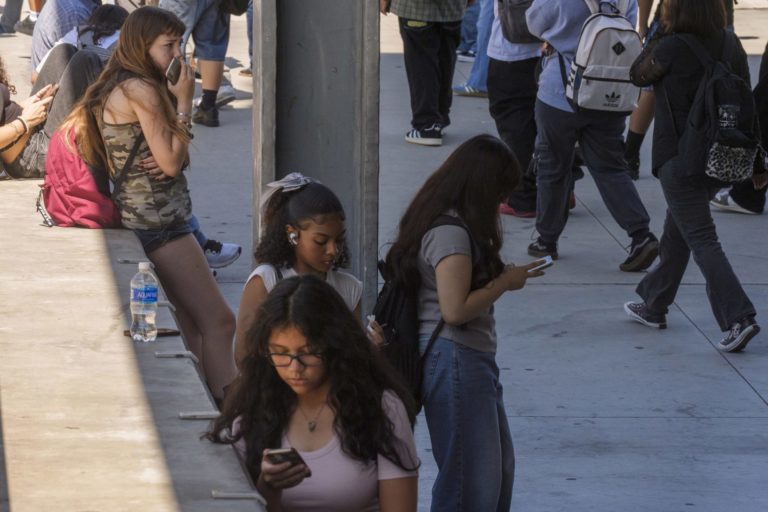
(Headline USA) Instagram is making teen accounts private by default as it tries to make the platform safer for children amid a growing backlash against how social media affects young people’s lives.

Beginning Tuesday in the U.S., U.K., Canada and Australia, anyone under under 18 who signs up for Instagram will be placed into restrictive teen accounts and those with existing accounts will be migrated over the next 60 days. Teens in the European Union will see their accounts adjusted later this year.

The teen accounts will be private by default. Private messages are restricted so teens can only receive them from people they follow or are already connected to. “Sensitive content,” such as videos of people fighting or those promoting cosmetic procedures, will be limited, Meta said. Teens will also get notifications if they are on Instagram for more than 60 minutes and a “sleep mode” will be enabled that turns off notifications and sends auto-replies to direct messages from 10 p.m. until 7 a.m.

“The three concerns we’re hearing from parents are that their teens are seeing content that they don’t want to see or that they’re getting contacted by people they don’t want to be contacted by or that they’re spending too much on the app,” said Naomi Gleit, head of product at Meta. “So teen accounts is really focused on addressing those three concerns.”

While it may add an extra layer of protection, it is not entirely clear that the changes will prevent teens from being exposed to inappropriate content on the platform, nor that it will protect them from online predators that the teens allow to connect, some of whom may use fake identities to pose as peers.

On the other hand, it may prevent parents or other adults who are not connected to the teens on the platform from effectively monitoring the content that is posted, including access to the teens’ list of followers and comments on photos.

These settings will be turned on by default for all teens; however, 16- and 17-year-olds will be able to turn them off. Kids under 16 will need their parents’ permission to do so.

Meta acknowledges that teenagers may lie about their age and says it will require them to verify their ages in more instances, like if they try to create a new account with an adult birthday.

The Menlo Park, California company also said it is building technology that proactively finds teen accounts that pretend to be grownups and automatically places them into the restricted teen accounts.

The announcement comes as the company faces lawsuits from dozens of U.S. states that accuse it of harming young people and contributing to the youth mental health crisis by knowingly and deliberately designing features on Instagram and Facebook that addict children to its platforms.

In the past, Meta’s efforts at addressing teen safety and mental health on its platforms have been met with criticism that the changes don’t go far enough. For instance, while kids will get a notification when they’ve spent 60 minutes on the app, they will be able to bypass it and continue scrolling.

That’s unless the child’s parents turn on “parental supervision” mode, where parents can limit teens’ time on Instagram to a specific amount of time, such as 15 minutes. Doing so requires that the teen account user consent to having the account in question supervised.

Nick Clegg, Meta’s president of global affairs, said last week that parents don’t use the parental controls the company has introduced in recent years.

But the new teen accounts will create a “big incentive for parents and teens to set up parental supervision,” Gleit said.

“Parents will be able to see, via the family center, who is messaging their teen and hopefully have a conversation with their teen,” she said. “If there is bullying or harassment happening, parents will have visibility into who their teen’s following, who’s following their teen, who their teen has messaged in the past seven days and hopefully have some of these conversations and help them navigate these really difficult situations online.”

U.S. Surgeon General Vivek Murthy said last year that tech companies put too much on parents when it comes to keeping children safe on social media.

“We’re asking parents to manage a technology that’s rapidly evolving that fundamentally changes how their kids think about themselves, how they build friendships, how they experience the world—and technology, by the way, that prior generations never had to manage,” Murthy said in May 2023.

Adapted from reporting by the Associated Press

FBI Informant Played Key Role in 9/11 Attacks, Newly Unsealed Evidence Shows

(Ken Silva, Headline USA) An FBI informant who shared his home with two of the 9/11 hijackers has been accused in civil court of being “co-opted” by Saudi Arabian intelligence to help carry out the Sept. 11, 2001, terrorist attacks.

That informant, Dr. Abdussattar Shaikh, was presented in the 9/11 Commission Report as “an apparently law-abiding citizen with friendly, long-standing contacts among local police and FBI personnel.” Shaikh was recruited as an informant in 1994, according to his handler.

But according to plaintiffs suing Saudi Arabia for its role in 9/11, at some point Dr. Shaikh was “hired” by Saudi intelligence agent Omar al-Bayoumi to house the two hijackers, Nawaf al-Hazmi and Khalid al-Mihdhar.

“It was a plan that had been carefully and meticulously developed by Bayoumi in conjunction with other Saudi officials,” a plaintiffs’ lawyer argued at a July 31 court hearing, according to the Florida Bulldog.

The Saudi government denied that al-Bayoumi hired Dr. Shaikh, reportedly arguing in a court filing that “there is no evidence he had anything to do with [the hijackers] moving into Shaikh’s house.”

Dr. Shaikh’s FBI handlers have also defended the man. His handling agent, Steven Butler, told the 9/11 Commission that Shaikh was “duped” by the hijackers, while former San Diego FBI chief William Gore recently told the Florida Bulldog that Shaikh was “one of the finest guys I ever met.”

Dr. Shaikh, for his part, was reportedly “too old and ill” to be formally interviewed for the long-running civil litigation. A New York federal judge is expected to rule soon on whether the lawsuit against Saudi Arabia will be allowed to continue.

The allegations against Dr. Shaikh follow several other revelations that have come out in recent months, implicating Saudi Arabia in 9/11.

Those revelations included a long-suppressed video showing al-Bayoumi “casing” Capitol Hill in June 1999—months before al-Qaeda made the decision to include Washington DC in its terrorist plot. Numerous investigators believe the Capitol building was the target of Flight 93, which instead crashed in Pennsylvania.

More recently, last month it was revealed that sketches plotting the 9/11 attack belonged to al-Bayoumi.

Families of 9/11 victims argued in a 71-page brief filed on May 7 that al-Bayoumi operated under the directions of the Saudi Kingdom. Along with “casing” the Capitol, he served as the handler for al-Hazmi and al-Mihdhar.

Additionally, new evidence in recent years has suggested that not only was al-Bayoumi a Saudi agent; he was also an asset of the CIA. That information has been coming from the proceedings against 9/11 defendants at Guantanamo Bay.

According to Office of Military Commissions investigator Don Canestraro, at least two FBI agents told him that the CIA had attempted to recruit two of the hijackers as informants. The CIA was directing its recruiting efforts through al-Bayoumi, according to Canestraro.

Canestraro has also implicated Dr. Shaikh of having received money from the Saudis while working as an FBI informant.

Ken Silva is a staff writer at Headline USA. Follow him at twitter.com/jd_cashless.

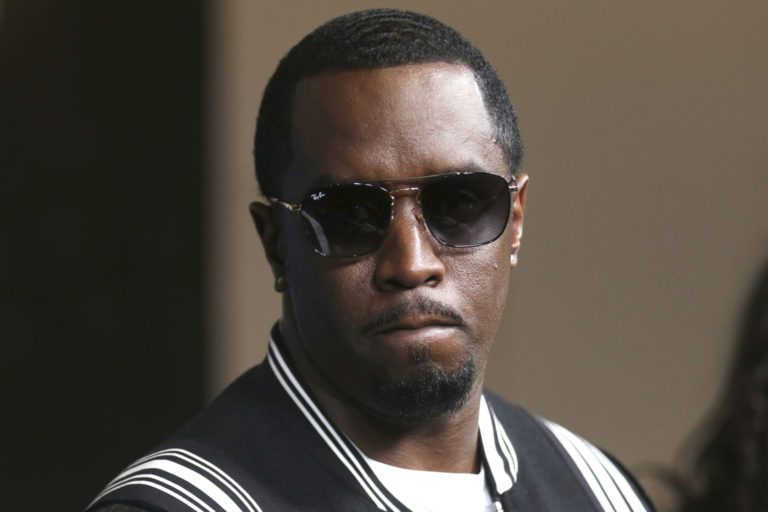
Diddy Do It?: Famous Anti-Trump Rapper Arrested amid Federal Sex-Trafficking Probe

(Headline USA) Sean “Diddy” Combs was expected to appear before a federal judge in New York on Tuesday after his indictment on undisclosed criminal charges.

The music mogul was arrested late Monday in Manhattan, roughly six months after federal authorities conducting a sex trafficking investigation raided his luxurious homes in Los Angeles and Miami.

The indictment detailing the charges was expected to be unsealed Tuesday morning, according to U.S. Attorney Damian Williams.

Combs’s arrest by the Justice Department follows suspiciously after the news of a second assassination attempt against former President Donald Trump by a radical Ukraine war-backer, as if timed to knock the latter from the news cycle. Democrats, including President Joe Biden and Vice President Kamala Harris, have been condemned widely for their stochastic terrorism and use of violent, divisive rhetoric.

Like many Hollywood celebrities—and wealthy black community leaders like Oprah Winfrey and Al Sharpton—Combs was ones on friendly terms with Trump.

Several pictures have surfaced of the pair posing together since the Combs scandal first broke.

Several high-profile rappers have come out publicly supporting Trump in the 2024 election for a variety of reasons ranging from his handling of the economy to his political persecution at the hands of corrupt federal officials.

However, the “All About the Benjamins” performer made clear in 2020 that he was no longer a Trump ally before reluctantly offering his endorsement of Joe Biden, according to CNN.

“If this man is elected, we’re not standing by no more getting killed,” he told popular radio host Charlamagne Tha God.

“We not scared of anybody standing up and standing by,” he said making reference to a loaded question that Trump had received during the 2020 debates, in which he was asked to repudiate a group of counter-demonstrators who had clashed with Antifa, while no such demand was made of Biden.

“We’re on the verge of a race war,” Combs added. “… White men like Trump need to be banished.”

He went on to announce the launch of a new political party, Our Black Party, although it is unclear whether the party actually went beyond the discussion phase. Its last post on Facebook was in 2022, shortly after the midterm election.

Over the past year, Combs has been sued by people who say he subjected them to physical or sexual abuse. He has denied many of those allegations and his lawyer, Marc Agnifilo, called the new indictment an “unjust prosecution.”

“He is an imperfect person, but he is not a criminal,” Agnifilo said in a statement late Monday.

Combs, 58, was recognized as one of the most influential figures in hip-hop before a flood of allegations that emerged over the past year turned him into an industry pariah.

In November, his former girlfriend, the R&B singer Cassie, whose legal name is Casandra Ventura, filed a lawsuit saying he had beaten and raped her for years. She accused Combs of coercing her, and others, into unwanted sex in drug-fueled settings.

The suit was settled in one day but months later CNN aired hotel security footage showing Combs punching and kicking Cassie and throwing her on a floor. After the video aired, Combs apologized, saying, “I was disgusted when I did it.”

Combs and his attorneys, however, denied similar allegations made by others in a string of lawsuits.

Douglas Wigdor, a lawyer for Cassie, said in a statement Tuesday that “neither Ms. Ventura nor I have any comment.”

“We appreciate your understanding and if that changes, we will certainly let you know,” he added.

A woman said Combs raped her two decades ago when she was 17. A music producer sued, saying Combs forced him to have sex with prostitutes. Another woman, April Lampros, said Combs subjected her to “terrifying sexual encounters,” starting when she was a college student in 1994.

A bizarre and unsettling exchange between the rapper and teen pop-star Justin Bieber also resurfaced following the allegations. It appeared to show Combs making reference to a weekend of ribaldry with the 15-year-old, whom he was reportedly chaperoning at the time with no parental supervision.


Combs, the founder of Bad Boy Records, has gotten out of legal trouble before.

In 2001, he was acquitted of charges related to a Manhattan nightclub shooting two years earlier that injured three people. His then-protege, Shyne, was convicted of assault and other charges and served about eight years in prison.

Adapted from reporting by the Associated Press

RFK Jr. Investigated for Decapitating Dead Whale Decades Ago—Just a Coincidence?

Editor’s Note: This article has been updated to include NOAA’s response to Headline USA’s inquiry about the investigation.

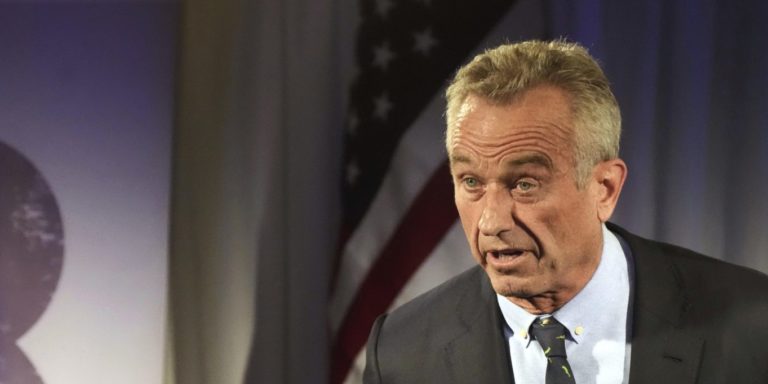
(Luis Cornelio, Headline USA) Former independent presidential candidate Robert F. Kennedy Jr. announced that federal authorities have launched an investigation into his work involving whale specimens from more than two decades ago. 

“I received a letter from the National Marine Fisheries Institute saying that they were investigating me for collecting a whale specimen 20 years ago,” Kennedy said during a campaign event on behalf of Trump in Arizona, as reported by Fox News.

“This is all about the weaponization of our government against political opponents,” he added, not specifying the exact date of the letter, simply saying it was received “this week.” 

The probe is led by the National Marine Fisheries Service, an office within the Biden-led Department of Commerce’s National Oceanic and Atmospheric Administration (NOAA). 

NOAA spokesperson Kate Silver declined to address questions regarding the allegations of government weaponization and whether the probe was initiated, telling Headline USA on Tuesday morning that the agency does not comment on ongoing investigations.

The specific story prompting the investigation was first recounted in 2012 by RFK Jr.’s daughter, Kick Kennedy, in an interview with Town and Country magazine. 

According to Kick, RFK Jr. traveled to Squaw Island, New York, after learning that a whale carcass had washed ashore. He then reportedly decapitated the whale and took a five-hour drive back to Mount Kisco, NY. 

“Every time we accelerated on the highway, whale juice would pour into the windows of the car, and it was the rankest thing on the planet,” Kick told the magazine.  

“We all had plastic bags over our heads with mouth holes cut out, and people on the highway were giving us the finger, but that was just normal day-to-day stuff for us,” she added. 

Following the re-emergence of this 2012 interview, the left-leaning Center for Biological Diversity demanded that NOAA investigate Kennedy. 

NOAA did not respond to Headline USA’s inquiry about whether the investigation was prompted by the campaign of the leftist non-profit. 

Trump Drops Evidence, List of Dems Pushing Dangerous, Violent Rhetoric

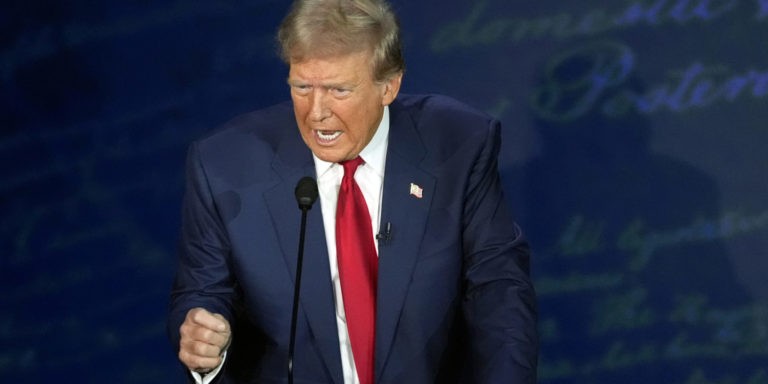
(Dmytro “Henry” Aleksandrov, Headline USA) The Donald Trump campaign recently uploaded a massive list of different quotes from Democrats that possibly became the reason why two different leftists tried to assassinate him right before the crucial 2024 election.

According to the Trump campaign, the corrupt politicians’ rhetoric “inspired another attempt on President Trump’s life.”

After a far-left ideologue attempted to murder Trump while he was playing golf in West Palm Beach, Fla., on Sept. 15, 2024, the Trump campaign published the extensive list the day after that.

Trump’s team compiled 39 statements that well-known Democrats made in recent years. As expected, among the people spreading the anti-Trump rhetoric were Kamala Harris, the current Democratic presidential nominee, and Joe Biden, who said that Trump is “a threat to our democracy and fundamental freedoms” and an “existential threat.”

The Trump campaign also mentioned Biden saying that it was “time to put Trump in a bullseye” right before the first assassination attempt on Trump and Harris joking about killing Trump when he was still in the White House in 2018.

“Does one of us have to come out alive?” Harris responded to Ellen DeGeneres’s question about whether she would want to get stuck in an elevator with Trump or other Republicans while laughing hysterically.

Democratic vice-presidential candidate Tim Walz’s violent rhetoric was also included on the list.

“Are [Republicans] a threat to democracy? Yes. … Are they going to put people’s lives in danger? Yes,” he said.

The Trump campaign also mentioned former House Speaker Nancy Pelosi, who previously said that “[Trump] is a threat to our democracy of the kind that we have not seen.”

The Post Millennial reported that Trump was almost murdered twice in just over the last two months, with the previous attempt happening on Sept. 15, 2024. In July, Thomas Matthew Crooks, a would-be assassin, missed his head and shot his ear instead.

Dems Trying to Persuade Elderly Trump Backers to Split GOP Ticket in Swing Districts

(Dmytro “Henry” Aleksandrov, Headline USA) It was recently reported that, to split Republicans, a group of leftist consulting firms is responsible for starting a shadowy political operation that has deceived many Donald Trump-supporting old and disabled people into running as third-party candidates in crucial Congressional swing districts.

According to the National File, the Patriots Run Project, the group behind this operation, has ties to firms such as Nevada-based Sole Strategies, Common Sense America, and Patinkin Research. Notably, all these firms have strong affiliations with Democratic Party campaigns and candidates.

As reported, the Patriots Run Project has been remarkably successful in its recruitment efforts. The leftists from this group have managed to persuade a significant number of old and disabled Trump supporters to run in congressional races across several states, including Iowa and Virginia. This has sometimes hindered the Democrats’ efforts to get their candidates on the ballot.

The most concerning part about the recent news was the fact that the Patriots Run Project recruited people mainly through social media who were almost always old people, disabled people or both, which means that the Democrats made a deliberate decision to target people who can be easily defrauded and manipulated.

While recruiting third-party candidates is not inherently illegal, the Patriots Run Project’s operation raises serious legal concerns. The group, which does not appear to be a registered business entity or have nonprofit status with the IRS and is a Political Action Committee (PAC) with the Federal Election Commission (FEC), may have violated state and federal election laws.

According to the news source, the organization provided paid signature gatherers for the congressional candidates it recruited to split the Republican Party. Patriots Run Project operatives who used fake names would also pick up the candidates and drive them to local election offices to file their candidacy paperwork.

As expected, a candidate recruit also told the File that one of these operatives tried to avoid appearing on government security cameras and made sure other people could not take a photo of them.

Two Figures Tied to Trump’s Phony Ukraine Impeachment Backtrack on Violent Rhetoric

(Dmytro “Henry” Aleksandrov, Headline USA) After facing significant backlash, two far-left Donald Trump haters connected to one of the witch hunts, Ukraine-related impeachment, apologized for their violent rhetoric that could’ve contributed to both of the assassination attempts on Trump. 

Blaze Media reported that one of those people was Rachel Vindman, the wife of Trump impeachment witness Alexander Vindman, who backtracked by deleting a post on social media mocking Trump over the second attempt to murder him on Sept. 15, 2024, at the Trump International Golf Club in West Palm Beach, Fla.

“No ears were harmed. Carry on with your Sunday afternoon,” she wrote.

After people criticized her, Vindman only doubled down by writing in another post that she would not delete the post.

“Sorry you’re triggered. I mean, no, I’m not. I don’t care a little bit. Trump has been inciting violence against his enemies for years. He douses a situation in gasoline, lights a match, & walks away claiming no responsibility,” she wrote.

However, eventually, Vindman got rid of the post.

“I have deleted my tweet. It was flippant & political violence is a serious issue. Whether it’s aimed at a former president, the media, immigrants, or political ‘enemies’ & every incident should be addressed appropriately if we want to change the tenor of our political discourse,” she wrote.

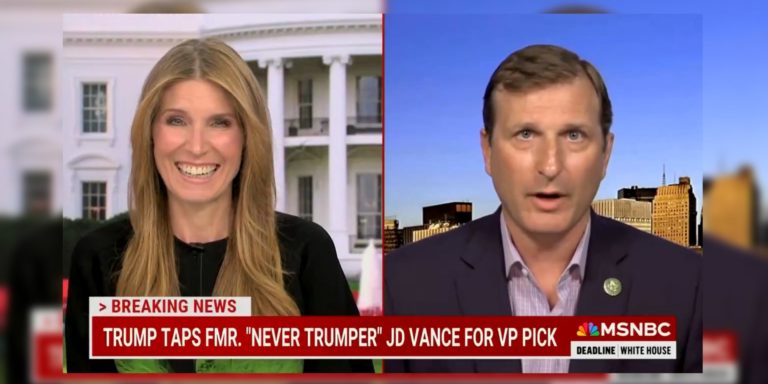
The other leftist who reluctantly apologized was Rep. Dan Goldman, D–N.Y., whose last year’s comments about how Trump should be “eliminated” resurfaced and went viral.

While talking to Jen Psaki on MSNBC, Goldman pushed the deadly rhetoric, ironically claiming that Trump’s rhetoric was dangerous.

“We saw what happened on January 6th, when he used his inflammatory rhetoric now, and his recent truth social post is incredibly, incredibly scary for anyone that might be trying to work in government. And it is just unquestionable at this point that man cannot see public office again. He is not only unfit, he is destructive to our democracy, and he has to be eliminated,” he said.

Goldman apologized on social media for his rhetoric after facing criticism.

“Yesterday on TV, I mistakenly used the wrong word to express the importance for America that Donald Trump doesn’t become President again. While he must be defeated, I certainly wish no harm to him and do not condone political violence. I apologize for the poor choice of words,” he wrote.