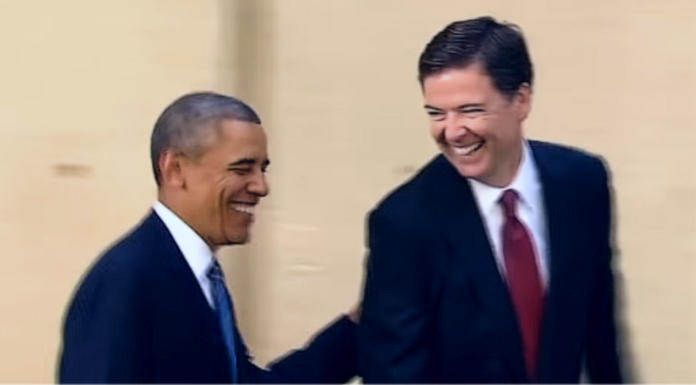
(Luis Cornelio, Headline USA) Disgraced former FBI Director James Comey had some revealing thoughts about the infamous preemptive pardons issued by former President Joe Biden: first, that he never asked for one, and that those who accepted them effectively admitted guilt.
Comey, who has been indicted twice by a grand jury, made the comments during a May 14 interview on CNN’s The Arena, with clips of the exchange gaining viral attention earlier this week.
Comey is facing federal charges in connection with his alleged deadly threat against President Donald Trump.
When asked whether he considered asking Biden for a pardon before Trump returned to office in 2025, Comey replied: “Never.”
Comey added that he would not have accepted a pardon even if Biden had offered one, asserting that the Supreme Court has said accepting a pardon is “an admission of guilt.”
“And so, I’m not guilty. I am innocent, so I wouldn’t be accepting any pardons,” Comey continued.
Asked whether he believed the individuals Biden preemptively pardoned were guilty of offenses, Comey appeared to double down: “Well, I’m just telling you what the Supreme Court said by accepting a pardon, it’s an admission of guilt. And so, I hope they thought about it carefully.”
💥NEW: CNN’s Kasie Hunt: “Do you think the people that Biden did preemptively pardon are guilty of crimes?”
James Comey: “By accepting a pardon, it’s an admission of guilt.” pic.twitter.com/41IHRX9xrU
— Jason Cohen 🇺🇸 (@JasonJournoDC) May 14, 2026
Comey’s remarks came over one year after Biden controversially issued sweeping preemptive pardons — the first of their kind in U.S. history — to several allies, relatives and his son, Hunter Biden.
The comments also resurfaced roughly two weeks after a federal grand jury in North Carolina indicted him in connection with a controversial Instagram photo Comey posted showing seashells arranged to display “86 47.” As alleged by the grand jury, “86” referred to killing Trump, while “47” referred to his place as the 47th president.
Comey faced a second two-count grand jury indictment in Virginia tied to alleged false statements made to Congress. Those charges were later dismissed over a technical issue involving the appointment of the lead prosecutor.