(Mike Maharrey, Money Metals News Service) Archaeologists in Greece have unearthed 3,500-year-old gold jewelry. Meanwhile, scientists in Thailand dug up two gold rings estimated to be 2,000 years old.
Archaeological discoveries like this serve as a reminder of the enduring value and beauty of gold.
Think about it: how many things in your house could you bury today and dig up 3,000 years from now in virtually the same condition as when you buried them?
The Greek Cultural Ministry announced the discovery of more than 30 gold pieces, ranging from disc-shaped amulets to gold beads. Archaeologists made the find during 2025 excavations at Kolona on the Greek island of Aegina. The researchers said the gold was in “remarkable” condition. Scientists think the 32 gold pieces were all part of a single necklace.
Archaeologists found the gold near the remains of a wall surrounding an “inner suburb” of the Middle Bronze Age settlement, and it is likely around 3,500 years old.
It just goes to show how long humans have been enamored with gold. Its beauty, coupled with its scarcity, captivates. There are two of the reasons gold is so valuable.
Jewelry remains one of the most common uses for gold today. Last year, jewelry production consumed 1,542.3 tonnes of the yellow metal.
Apart from its beauty, gold’s physical characteristics make it ideal for jewelry. It is malleable and can be melted over and over again without damaging its fundamental structure. It is also virtually indestructible. It doesn’t tarnish and retains its beauty even after 3,500 years in the ground.
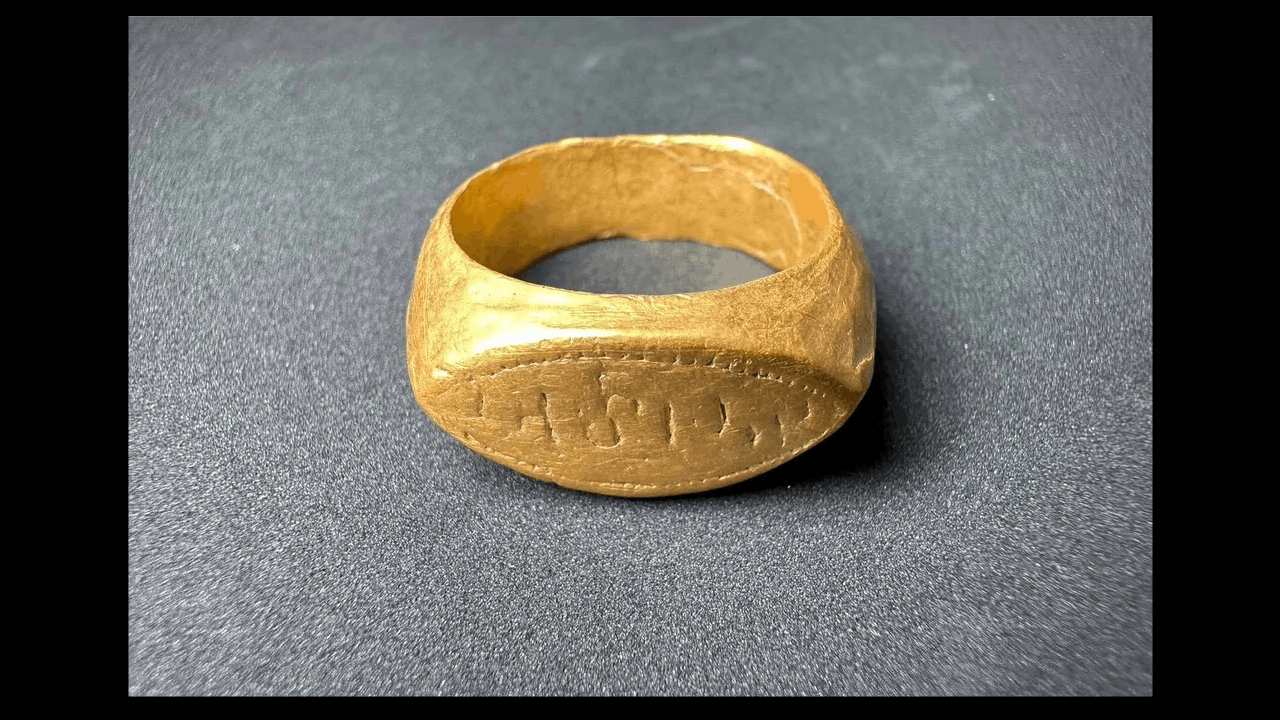
In Thailand, archaeologists found two gold rings, one bearing inscriptions that scientists said seem to reference an auspicious zodiac sign in Indian or Vedic astrology.
Archaeologists found the rings along with human remains at the Don Yai archeological site about 80 miles southwest of Bangkok.
One of the two rings was engraved in Brahmi script. According to Smithsonian Magazine, Brahmi likely derived from Aramaic. Many modern scripts and alphabets in South and Southeast Asia evolved from Brahmi.
According to an Associated Press report, the script reads “pusarakhitasa,” translated to mean “the one protected by Pushya.” A spokesperson for the Thai government’s Fine Arts Department told the AP that Pushya is one of the most auspicious zodiac signs in Indian or Vedic astrology.
It’s almost mind-boggling to think that I could wear a 2,000-year-old gold ring today, and people would think it is just as beautiful as it was then. I could also sell the gold virtually anywhere in the world today. The rings discovered in Thailand and the jewelry dug up in Greece are as valuable today as it was thousands of years ago – even if you don’t factor in the intangible historical value.
Photo courtesy of the Thailand Fine Arts Department
Mike Maharrey is a journalist and market analyst for Money Metals with over a decade of experience in precious metals. He holds a BS in accounting from the University of Kentucky and a BA in journalism from the University of South Florida.