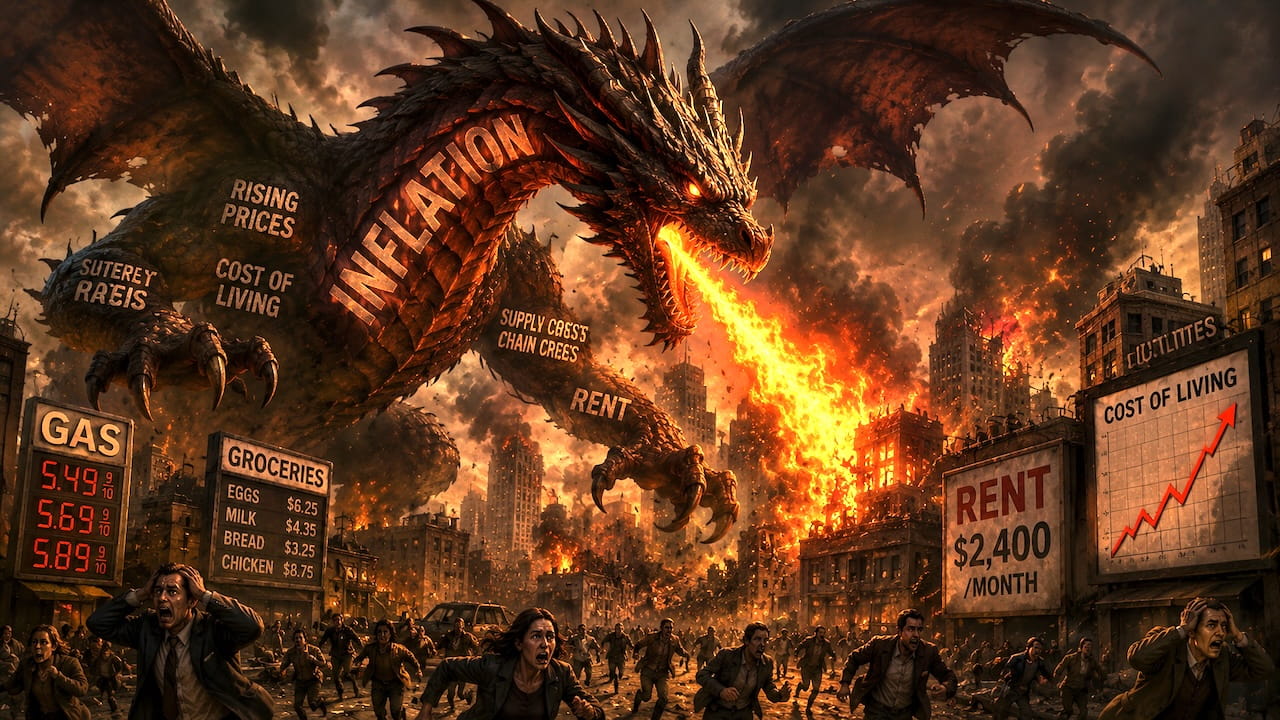
(Mike Maharrey, Money Metals News Service) The inflation dragon is alive and well.
Last November, Donald Trump called himself “the affordability president.” However, it appears that the message is falling flat with your average American.
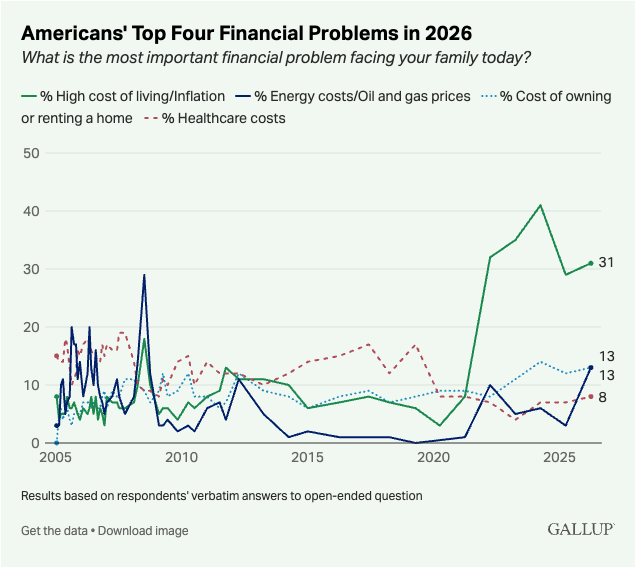
Based on a recent Gallup poll, affordability tops the list of Americans’ most pressing financial problems. In total, 65 percent of the respondents mentioned rising costs as their biggest economic concern.
The survey was conducted between April 1 and April 15.
Of those surveyed using open-ended questions, 31 percent mentioned generally high inflation with rising persistently high and rising prices as their biggest financial worry. That was below the 41 percent peak in 2024, but similar to last year’s results. According to Gallup, general inflation worries are among the highest in its more than 20-year trend.
On top of the nearly third of Americans worried about inflation generally, many more pointed to increasing prices in specific categories as their biggest concern.
“Overall, affordability concerns dominate this year’s list, with combined mentions of inflation, energy, housing, and healthcare costs — along with college expenses, transportation costs, and childcare — far exceeding all other types of financial concerns.”
Rising energy and housing costs tied as the second biggest financial concern, cited specifically by 13 percent of the respondents. Worries about rapidly increasing energy prices were up 10 percent from last year and at the highest level since 2008.
Eight percent of the respondents cited rising healthcare costs as their biggest concern.
Other issues mentioned as pressing economic problems included taxes (6 percent), debt (6 percent), the overall state of the economy (2 percent), interest rates (2 percent, and Social Security (1 percent).
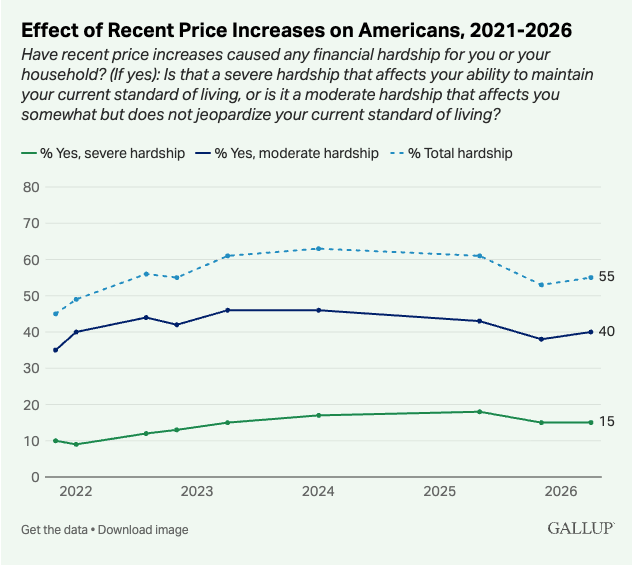
In a separate Gallup Panel survey, 55 percent of those surveyed said recent price increases have created hardships.
Less than half of Americans view their financial situation as excellent or good. Around 35 percent described it as “fair,” with 19 percent calling their overall financial position “poor.”
Inflation Isn’t a Figment of Our Imagination
Inflation worries are supported by the data.
We’re all painfully aware of rising fuel prices due to the Iran conflict. The energy index rose 10.9 percent month-to-month in March. That was driven by a 21.2 percent monthly increase in gasoline prices.
But other prices continue to creep higher as well. Annual core inflation, stripping out those fuel prices, nudged up slightly, from 2.5 percent in February to 2.6 percent in March. It’s important to point out that core CPI remains above the Fed’s stated 2 percent target and has been mired in this range for well over a year.
Also, keep in mind that the CPI formula intentionally understates price inflation. The government revised the CPI formula in the 1990s so that it understated the actual rise in prices. Based on the formula used in the 1970s, CPI is closer to double the official numbers. So, if the BLS used the old formula, we’d be looking at CPI closer to 6 percent. And using an honest formula, it would probably be worse than that.
And there is no relief in sight. The Federal Reserve is creating more inflation as we speak.
Consumer price inflation is just one symptom of monetary inflation (what economists historically defined as inflation). The Fed has been ratcheting that up for well over a year.
Based on the Fed’s M2 data, the money supply increased from $21.61 trillion in February 2025 to $22.67 trillion in February 2026, a 4.9 percent increase.
In other words, we have an actual inflation rate of nearly 5 percent.
The M2 money supply increased by another $57 billion in March.
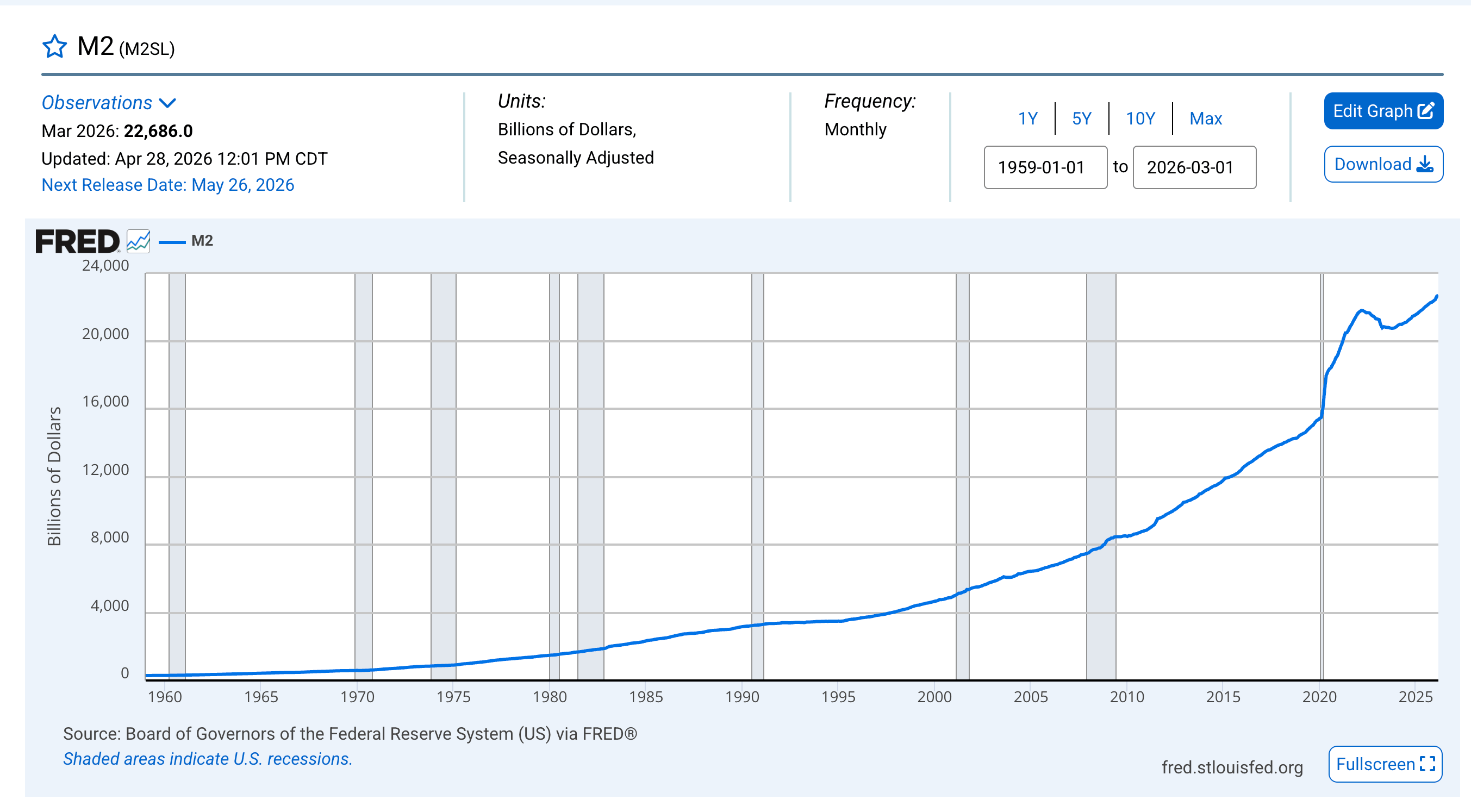 We also know inflationary pressures are increasing because the Federal Reserve is once again expanding its balance sheet.
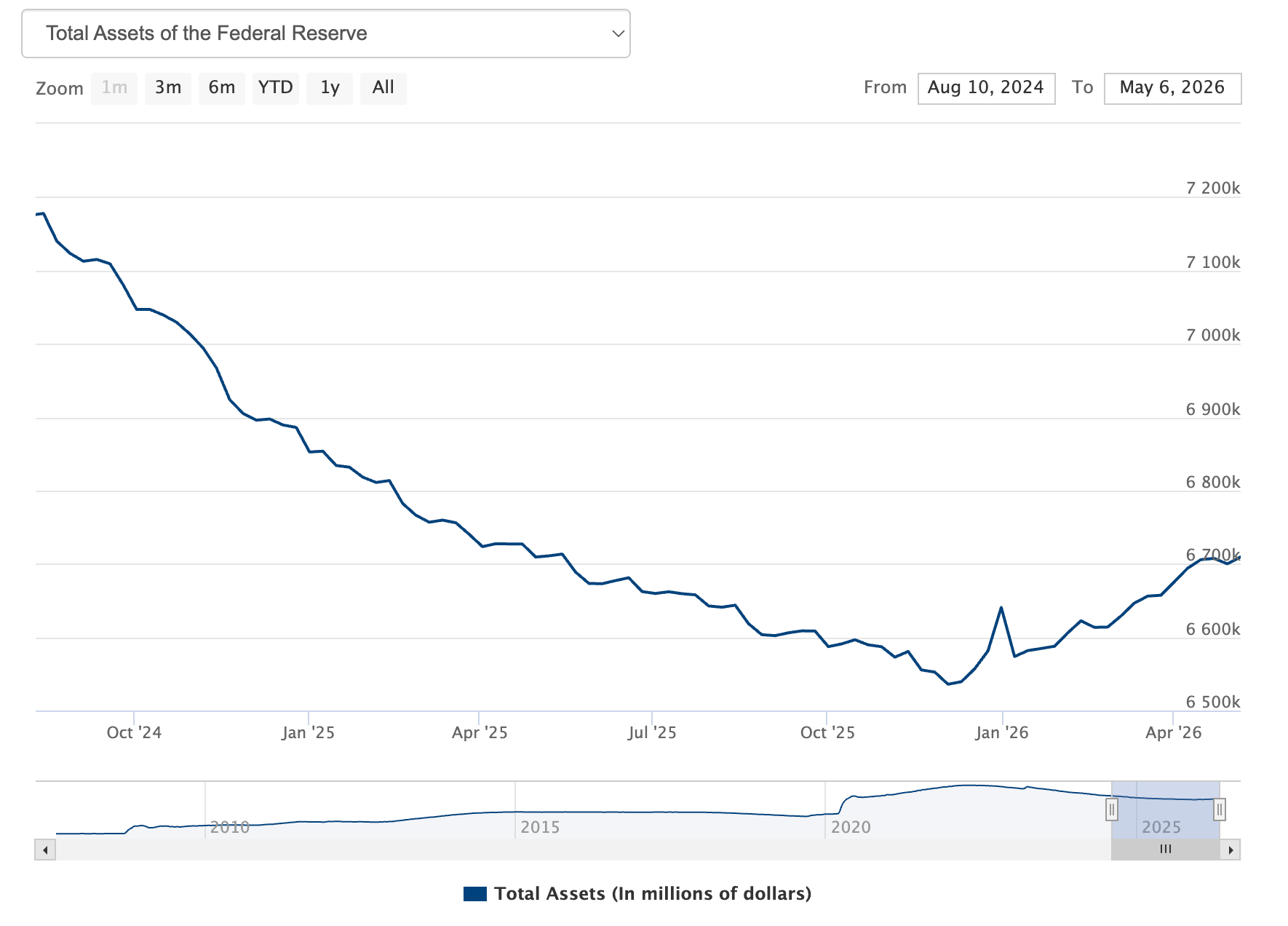
While you’ll never hear anybody at the Fed utter the term, the central bank relaunched quantitative easing in December. That means they are once again buying U.S. Treasuries using money created out of thin air.
Ultimately, this monetary inflation will work its way through the economy. It will either manifest in rising asset prices or rising consumer prices. Ultimately, it is devaluing your money (by design).
So, if you’re hoping inflation will cool, don’t hold your breath. In fact, you should do everything you can to position yourself to weather more inflationary pressure.
Mike Maharrey is a journalist and market analyst for Money Metals with over a decade of experience in precious metals. He holds a BS in accounting from the University of Kentucky and a BA in journalism from the University of South Florida.