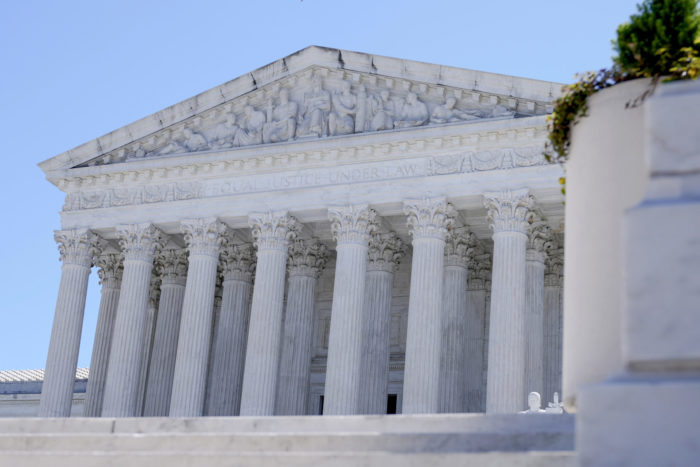
(Andrew Rice, The Center Square) The U.S. Supreme Court, in a 5-4 decision, struck down President Donald Trump’s executive order to overhaul birthright citizenship as unconstitutional.
Justices on the high court ruled in Trump v. Barbara, a case challenging the president’s February 2025 order stripping birthright citizenship protections from children born after Feb. 19, 2025, whose parents are either illegally present in or temporary residents of the United States.
The 14th Amendment took central focus throughout the court’s opinion. The amendment, originally set to confer citizenship rights to formerly enslaved people, was widely regarded as allowing for citizenship of any individual born in the United States.
The 14th Amendment reads: “All persons born or naturalized in the United States, and subject to the jurisdiction thereof, are citizens of the United States and of the State wherein they reside.”
The majority of justices said the 14th Amendment is adequate to confer citizenship to children born to noncitizen parents. Chief Justice John Roberts said the clause “subject to the jurisdiction thereof” refers to the United States’ power to govern anyone living in its territory.
“Children born in the United States to parents unlawfully or temporarily present here are thus subject to the Nation’s jurisdiction,” Roberts wrote in the court’s majority opinion.
Roberts cited Supreme Court precedent in Wong Kim Ark, a 1898 case that upheld citizenship for children born in the U.S. to Chinese nationals.
“Aliens who traveled to the United States for ‘business or pleasure’ received no ‘exemption from the jurisdiction of the country,'” Roberts wrote. “To the contrary, they were subject to that jurisdiction for as long as they remained here—and any children born to them were American citizens under the Fourteenth Amendment.”
Roberts also said the 14th Amendment was used to enshrine common law understandings of citizenship in the U.S. Constitution. This understanding of would make it difficult for Congress to enact a law limiting birthright citizenship.
Several justices on the high court did not agree with the majority’s interpretation of the statute. Justice Samuel Alito said the 14th Amendment was misinterpreted by the majority opinion.
He said the 14th Amendment was meant to mirror the 1866 Civil Rights Act, which strictly conferred citizenship to formerly enslaved African Americans and excluded American Indians and children of diplomats. Alito said those exclusions are proof as to why birthright citizenship cannot be conferred to children of illegal immigrants.
“A person who is ‘subject to any foreign power’ is not ‘subject to the jurisdiction’ of the United States within the meaning of the Fourteenth Amendment,” Alito wrote.
Justice Brett Kavanaugh agreed with the majority’s judgment in the case but partially dissented to the ruling. He said the court should have dealt with the issue of citizenship on a narrower basis, instead of involving protections brought about by the U.S. Constitution.
Mike O’Neill, vice president of Legal Affairs and Landmark Legal, expressed frustration at the court’s decision to uphold birthright citizenship. He said the decision allows for “birth tourism” to continue in the U.S.
“Freezing out the Congress by providing a blanket interpretation of the 14th Amendment’s Citizenship Clause limits the power of the American people to effectuate policies that ensure our national security,” O’Neill said. “Make no mistake: America is more vulnerable today after this decision.”
The high court’s decision represents a critical blow to the Trump administration’s immigration agenda.