Biden Admin Plotted to Give ‘Amnesty’ to 3M More Illegals in Final Month

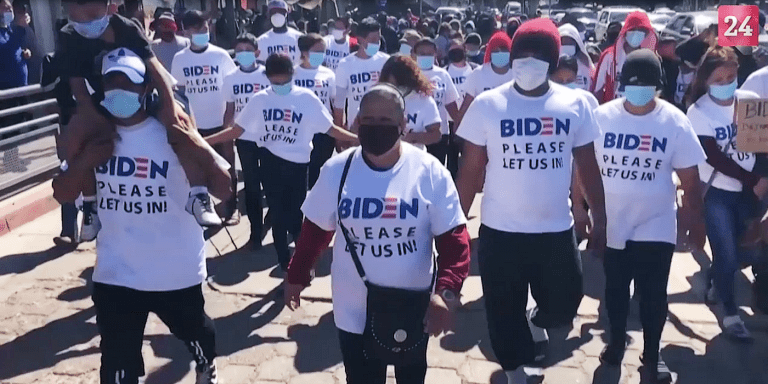
(Ben Sellers, Headline USA) A January 2025 briefing memo released Thursday by Sen. Eric Schmitt, R-Mo., revealed that during his final month in office then-President Joe Biden plotted to deliver de-facto amnesty to some 3.1 million illegal immigrants — including gang members — by granting them “temporary protected status.”

“This memo provides background information on Temporary Protected Status (TPS), including actions taken by YOUR Administration, actions taken by the previous Administration, and certain requests from Members of Congress and other leaders to expand TPS before YOU leave office,” said the internal memo, which was misdated as 2024.

The designation — adding countries like Ecuador and Guatemala to existing TPS designees including Venezuela, El Salvador, Sudan and Haiti — would have derailed the incoming Trump administration’s deportation plans for up to 18 months, including efforts to remove violent members of the Tren de Aragua gang.

Schmitt said his release of the recent memo was part of an ongoing investigation into TPS abuse.

“Biden tried to destroy this country,” he said. “Thank God President Trump won.”

Ultimately, the Biden administration extended TPS redesignation to some 900,000 illegals but stopped short of its scheme to designate new ones.

Despite facing pressure from open-border activist groups and congressional Democrats to enact a mass amnesty program, “administration officials have been wary of issuing an early redesignation for Nicaragua and appearing as if they were making a political move to handcuff Trump’s team,” Politico reported at the time.

Ultimately, President Donald Trump’s campaign promises of mass deportation have fallen well short of the 10 million he vowed to remove.

Figures released in January by the Department of Homeland Security indicated that it had executed some 675,000 deportations while another 2.2 million illegals have self-deported since Trump returned to office.

By contrast, the Biden administration admitted an estimated 15 million illegals under the watch of former DHS Secretary Alejandro Mayorkas.

Ben Sellers is a freelance writer and former editor of Headline USA. Follow him at x.com/realbensellers.

Maine Democratic Delegates Choose New Nominee to Face US Sen. Susan Collins

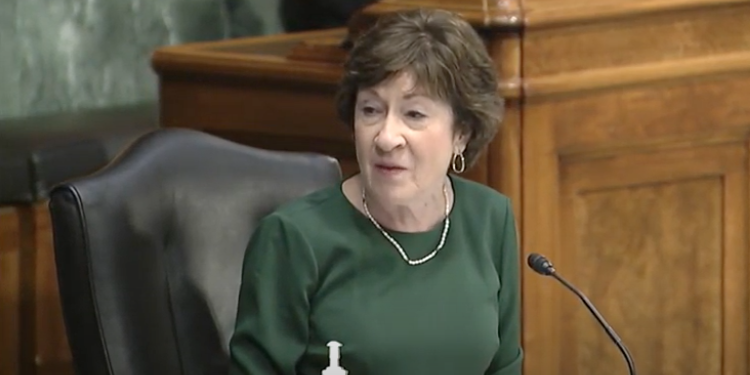
(Headline USAFormer state lawmaker and logger Troy Jackson secured the Democratic nomination for U.S. Senate in Maine on Saturday and will face longtime GOP Sen. Susan Collins in November in a race that could decide which party controls the chamber.

Jackson replaces Graham Platner, who won the Democratic primary in June but withdrew from the race earlier this month following an allegation of sexual assault that Platner has denied. Maine Democrats met Saturday to choose a new Senate nominee to face Collins.

Support coalesced around Jackson, a former Maine Senate president and fifth-generation logger from rural northern Maine who campaigned alongside Platner during a failed bid for governor and was a favorite among progressives to replace him.

“When the people in power refuse to listen, you have to organize, you have to stand in solidarity, together. And you have to make them listen,” Jackson said during a speech at the last-minute nominating convention.

Democrats view Maine as the party’s best opportunity to flip a Senate seat this year because it’s a competitive race in a state President Donald Trump lost in 2024. But defeating Collins won’t be easy. The five-term incumbent holds a fundraising advantage, while Jackson will have less than four months to sell himself to voters.

Republicans immediately launched an ad campaign against Jackson, accusing him of having a volatile temper and linking him to Platner. The Senate Leadership Fund, Republicans’ super PAC, said it is committed to spending over $42 million against Jackson.

Collins has described Jackson as a ‘Bernie Bro’

Jackson, 58, will need to convince the state’s large independent voting bloc that it’s time to replace Collins, 73. Republicans have called Jackson too extreme for Maine voters, and Collins said earlier this week that she knows Jackson well and that his positions are “clearly” in line with socialism.

“Troy Jackson will attempt to sell Mainers a multi-trillion dollar bill of goods based on rhetoric that will make everything sound free, but in reality would be paid for by middle and lower income workers,” said Collins’ campaign spokesperson, Shawn Roderick.

Both Jackson and Collins are from northern Maine, where traditional industries such as potato farming and timber harvesting are vital parts of the economy. Both will make the case over the next few months that they are the right leader to protect those industries, along with lobster fishing and tourism.

Collins noted that Jackson ran U.S. Sen. Bernie Sanders’ first presidential campaign in Maine, adding “He’s a Bernie Bro.”

Asked by reporters about that description, Jackson said, “I don’t really care. What I am is a guy from northern Maine that’s a logger.”

He said he would attack Collins on what he described as her record of supporting tax cuts for the wealthy and failing to protect health care.

Jackson needs to scramble to make up a fundraising gulf against the incumbent, who has been raising money for months. Federal filings show she has raised more than $16 million so far. Jackson’s campaign this week said he raised more than $1 million since jumping into the Senate race.

Maine is an important piece of Democrats’ effort to win the Senate

Democrats have a narrow path to take back the Senate in November and it’s highly unlikely they can do it without a win in Maine. In addition, they need victories in competitive races in North Carolina, Alaska and Ohio, and they need to hang on to the seats they already have. That includes open Senate seats in Michigan and Minnesota, where Democratic incumbents are retiring.

Maine’s Democratic primary was one of the early contests where progressives took on establishment-backed Democrats. While Platner faced several controversies during his campaign, he easily outlasted Gov. Janet Mills, who was backed by Democratic Senate leader Chuck Schumer but dropped out before the June 9 primary.

Platner had backing from Sanders as well as Arizona Sen. Ruben Gallego and Massachusetts Sen. Elizabeth Warren. That support disintegrated after the sexual assault allegation early this month.

Republicans began making the case Saturday that Jackson is too close to Platner. Jackson is “a Platner apologist, a radical Bernie Bro, and a walking red flag displaying all the warning signs of the early days of the Platner campaign,” RNC spokesperson Kristen Cianci said in a statement.

Jackson told reporters Saturday that he has not been in touch with Platner and is building a new movement. He didn’t mention Platner from the stage during his two addresses to Democratic delegates on Saturday, but said the campaign was “bigger than any one person.”

Jackson overwhelmingly won delegates’ support

The Maine Democratic Party scrambled to choose a new nominee after Platner, who sailed to victory in the Democratic primary in June, was accused by a former girlfriend of sexually assaulting her in 2021. Platner denies the allegation, but quit the race after key supporters called on him to withdraw.

Maine law gave the state party authority to choose a replacement and required a new nominee to be named by Monday — 101 days before the Nov. 3 election.

Maine Democrats’ never-before-used process of voting on a new nominee involved hundreds of Democratic delegates gathering in Bangor, about 130 miles (209 kilometers) north of Portland. The delegates were elected at county party meetings last weekend, and Jackson scored an easy victory over just one opponent.

He first ran for office as a Republican in 2000 when he sought a seat inside Maine’s House of Representatives. He lost, but won two years later when he ran as an independent. He switched to the Democratic Party in 2004, and eventually became the Maine Senate president before leaving the statehouse in 2024.

He came in third while running for governor in this year’s Democratic primary, but had the backing of Platner and Our Revolution, the political organization founded by Sanders. Once Platner dropped out on July 10, a flood of former governor candidates — including Jackson — jumped to try to take his place. But by July 19, most had abandoned their bids, with Jackson emerging as the clear favorite.

Jackson received early support from progressives who had backed Platner before he dropped out. Our Revolution initially backed Jackson for governor and Platner for Senate. When Platner left the race, the group rallied behind Jackson.

He has supported progressive positions such as Medicare for All. He also has called for the abolition of Immigration and Customs Enforcement, whose presence in Maine has been hotly debated since an agent killed a driver in the state earlier this month.

Jackson acknowledged the disappointment of Platner’s supporters and the need to win them over for the general election.

“I agree there are people that are still very frustrated and angry what happened. I understand that,” he said to reporters. “All I’m trying to do is explain to them that his campaign was about the issues.”

Adapted from reporting by the Associated Press

Oregon Fire Looms Near Town as 4th Firefighter Dies

(Headline USAAs dry, windy weather fueled a big wildfire near a city in central Oregon, a fourth firefighter died after he and several colleagues last month were overcome by a fast-moving wildfire near the Colorado-Utah border.

Nathan Matthews, 43, of Lincoln, Nebraska, died Friday, the federal Interior Department said in a release Saturday.

Meanwhile, several fierce wildfires in a summer of big ones continued burning across the western U.S.

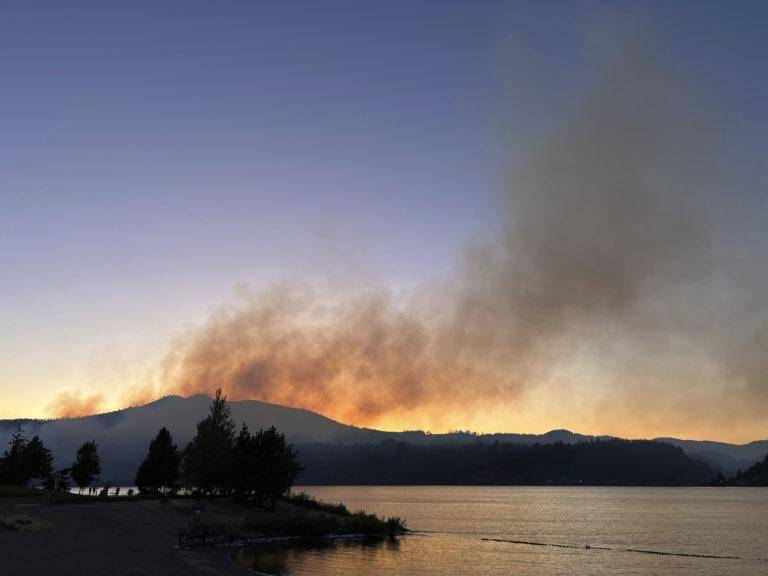
One of the worst — and the one deemed top priority for firefighting efforts — was just a few miles north of Sisters, a central Oregon city of about 3,000 people.

Winds gusting up to 30 mph threatened to push flames into new areas. Firefighters made progress keeping the fire in check, however, and officials were optimistic the city would be in the clear once the worst of the wind died down Sunday.

“It’s going to take a while to put it out entirely. But as long as it stops moving, I think that’ll get people to relax a little bit,” Sisters Mayor Jennifer Letz said.

As of Saturday, the lightning-caused fire had burned about 40 square miles and was 5% contained. About 30 people evacuated from areas north of Sisters were in a shelter at the local high school, with about as many more staying in recreational vehicles parked outside, Letz said.

The city wasn’t in any immediate danger, and business was carrying on like usual, Letz said.

“We’re not necessarily asking everybody to come to Sisters. But it’s safe here,” said Letz.

Months of dry weather, a record lack of snow in some areas, hot spells and erratic winds have contributed to the blazes in Oregon, Washington, California, Colorado and elsewhere this summer.

In Canada, 926 fires were burning Saturday, including 82 deemed out of control, according to the Canadian Wildland Fire Information System.

About 300 aircraft and 5,300 people were involved in fighting the fires. They included 133 in northwestern Ontario alone, according to the province’s Aviation, Forest Fire and Emergency Services agency.

The biggest in Ontario had covered some 1,200 square miles.

The U.S. firefighter who died was among a group that had deployed tentlike emergency sheltersto try to shield themselves when flames closed in June 27. Three of them died at the scene: Emily Barker, 38; Nick Hutcherson, 27; and Sydney Watson, 26.

They were part of a Helitack crew — a group that gets dropped by helicopter into remote areas to try to squelch new, rapidly expanding fires — that had been deployed in Mesa County, Colorado, west of the city of Grand Junction.

Matthews and another firefighter were taken for medical treatment. The Interior Department declined Saturday to discuss their treatment, Matthews’ career or the surviving firefighter’s current condition.

Watson, Hutcherson and Barker were honored at a memorial service earlier this month. Memorial arrangements for Matthews weren’t yet announced.

Adapted from reporting by the Associated Press

DNC Doubles Down on Controversial Primary Calendar

(Luis CornelioHeadline USA) The Democratic National Committee announced Friday that it will once again hold its first presidential primary contest in South Carolina, doubling down on a controversial primary calendar that prioritizes black voters ahead of the 2028 election.

The DNC’s Rules and Bylaws Committee granted the Palmetto State a waiver to hold its primary on Jan. 22, 2028, according to a party press release. The waiver still needs to be approved by the full DNC, Axios reported.

The decision continues the primary calendar first adopted for the 2024 election cycle after then-President Joe Biden successfully pushed to elevate South Carolina.

Black voters in the Palmetto State threw a lifeline to Biden’s struggling 2020 presidential campaign after he failed to gain momentum in the early contests.

The committee bypassed Nevada, which is now scheduled to hold its primary on Feb. 1, 2028.

Critics argue the move prioritizes South Carolina’s black electorate. However, Hispanic leaders wanted the DNC to kick off the primary season in the Silver State to elevate Hispanic voters, Axios reported.

Republican commentators suggested online that the calendar could also shape the next Democratic presidential nomination, with former Vice President Kamala Harris emerging as a potential top contender should she run for president a third time.

If the waivers are approved, the remaining early contests would be held in New Hampshire on Feb. 8, 2028; New Mexico on Feb. 15, 2028; Michigan on Feb. 22, 2028; and Virginia on Feb. 29, 2028.

Super Tuesday is scheduled for March 7, 2028.

According to the party, the states are home to 4.6 million black voters, 4.2 million Hispanic voters, 1.4 million Asian American, Native Hawaiian and Pacific Islander voters, and roughly 370,000 Native American voters.

The DNC press release also stated that the proposed early states prioritize “diverse groups of voters.” Similarly, DNC Chair Ken Martin hailed the waivers as “fair” and “transparent.”

“I commend the RBC for their diligent work and commitment to a fair and transparent selection process,” Martin said. “As a result of their hard work, today, Democrats took a critical step toward retaking the White House in 2028 by ensuring we have the strongest possible nominee.”

NYC Stabbings Suspect Arrested on Hate Crime Charges

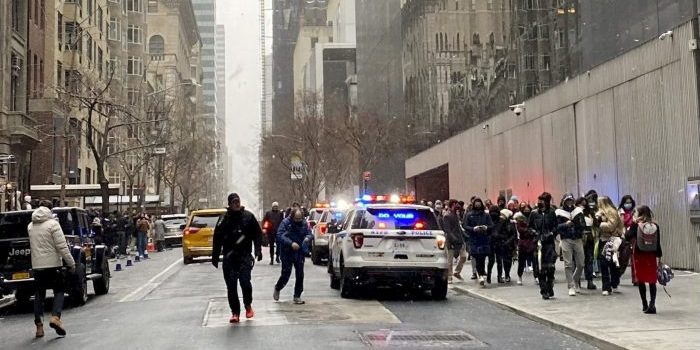
(Headline USAA suspect in two separate stabbings on New York City streets was arrested Friday on attempted murder and charged with hate crimes relating to both victims, a Jewish man and an Asian man.

Raul Morales, 51, allegedly yelled the Arabic phrase “Allahu akbar” while attacking the two men Thursday on Manhattan’s Upper West Side, according to police accounts of what witnesses told them.

Morales was initially arrested Friday on hate crime charges related to the Jewish man but not the other. He was arraigned later that day and charged with attempted murder and assault as hate crimes related to both victims.

As Morales was led out of a police station Friday evening, he shouted about seeking justice for someone. When reporters asked about the stabbings, he responded that he was “gonna talk about it” as he was ushered into a police car.

Morales’ court-appointed attorney did not immediately respond to an emailed request for comment late Friday.

The stabbings happened about two blocks apart Thursday afternoon, police said. Both victims were taken to a hospital and were expected to survive. They were in stable condition Friday, state Attorney General Letitia James said at a morning news conference with other officials and community leaders.

According to the Manhattan District Attorney’s Office, Morales approached the Asian man from behind and stabbed him with a knife “without provocation.” Then, after walking four blocks away, he stabbed the Jewish man wearing a kippah with a screwdriver, prosecutors said.

A witness followed Morales as he fled to the apartment he was staying at, prosecutors said.

The Jewish victim was attacked just after leaving a nearby synagogue, called the Jewish Center, Rabbi Yosie Levine said.

“He was just trying to pray at his synagogue, and now we’re the ones praying for his recovery,” Levine said.

The Asian American Foundation, a New York-based advocacy group, said in a statement the attacks “underscore the persistent safety challenges” and mistreatment — from harassment to physical assault — facing Asian Americans in the city.

“We demand continued, meaningful investment in community safety and hate prevention that protects everyone,” the group said in a statement.

The charges Morales faces carry a consecutive total of 40 years in prison, prosecutors said. His next court appearance is scheduled for July 30.

Hate crimes in New York City have been on the rise in recent years, while overall violent crime rates have dropped, according to police data. Tisch said in April that more than half of all confirmed hate crimes in the city so far this year targeted Jewish people. Estimates of the size of the city’s Jewish community vary, but it’s far less than half the overall population.

“We are undeniably being disproportionately targeted, again and again and again,” City Comptroller Mark Levine said at the Friday morning news conference, where he also told Asian Americans: “We stand in outrage with you.”

James and Levine are Democrats.

Adapted from reporting by the Associated Press

Gold, Silver, and the Coming Monetary Reckoning: Greg Weldon Sees Major Opportunity Ahead

(Money Metals News Service) On a recent episode of the Money Metals Podcast, host Mike Maharrey welcomed veteran market strategist Gregory T. Weldon, publisher of the Global Macro Strategy Report, for a wide-ranging discussion on precious metals, inflation, Federal Reserve policy, artificial intelligence, and global macroeconomic trends.

Weldon explained why he has shifted back to a bullish outlook on gold and silver following the recent correction, arguing that the long-term bull market in precious metals remains firmly intact.

(Interview Starts Around 6:08 Mark) 

Gold and Silver Investment Outlook Turns Bullish Again

Weldon said he previously anticipated silver would correct toward $61 per ounce, with a worst-case target near $54, after successfully exiting positions between $96 and $98 when prices had traded above $100.

With silver now recovering above $60, he believes investors have another opportunity to accumulate physical precious metals. He described the current environment as a “back the truck up” moment, adding that he is personally converting long-term savings into physical gold and silver rather than holding excess cash. He also noted that one of his silver-share investments returned 167%, after being up as much as 217% before profits were taken.

Weldon remains especially optimistic about silver’s future. He reiterated that the breakout above $36.50 confirmed a major secular bull market and argued that today’s rally is supported by genuine supply deficits and rising industrial demand rather than speculative excess. Based on his long-term macroeconomic analysis, he projects silver could ultimately reach approximately $326 per ounce within the next five to seven years.

AI Bubble, Stock Market Risks, and Federal Reserve Policy

The conversation then turned to broader financial markets, where Weldon expressed growing concern that artificial intelligence has become the latest investment bubble. He argued that enormous capital spending on AI infrastructure, semiconductor manufacturing, and data centers is approaching saturation, leaving technology stocks vulnerable if spending begins to slow. In his view, a significant stock market correction could temporarily pressure many asset classes before ultimately strengthening demand for safe-haven assets such as gold and silver.

Maharrey and Weldon also discussed the bond market and Federal Reserve policy. Weldon believes rising long-term interest rates reflect slowing economic growth, tightening financial conditions, and increasing fiscal concerns rather than healthy economic expansion. While higher yields can create short-term headwinds for gold, he argued that expanding government debt and deteriorating fiscal conditions ultimately leave policymakers with few options other than renewed monetary stimulus.

Regarding Federal Reserve Chair Kevin Warsh, Weldon praised his communication skills but questioned whether the Fed can realistically maintain a hardline stance against inflation. He believes any meaningful economic slowdown or stock market decline would force policymakers to abandon restrictive monetary policy and return to quantitative easing and money creation, despite public commitments to fighting inflation.

Inflation, Food Prices, and Energy Market Challenges

Another major focus of the interview centered on inflation, particularly rising food costs. Weldon argued that weather-related disruptions remain one of the most overlooked inflationary risks. He pointed to historically low snowpack across the western United States, declining fog moisture in Northern California, and NOAA’s forecast for an unusually severe El Niño expected to persist into April of next year. According to Weldon, these conditions threaten agricultural production across multiple regions, including sugar production in Thailand and coffee crops in Brazil and Vietnam.

He also warned that petroleum markets remain structurally tight despite hopes that geopolitical tensions could ease. With crude oil reserves at historically low levels and food inflation likely accelerating alongside energy costs, Weldon believes inflation will remain well above the Federal Reserve’s long-term target, placing policymakers in an increasingly difficult position.

China, Rare Earth Minerals, and the Long-Term Case for Gold

The interview concluded with a discussion of global geopolitics and strategic resource competition. Weldon argued that China has built a substantial long-term advantage through its control of rare earth minerals, commodity supply chains, and growing gold reserves. He noted that China, Russia, and Vietnam control more than 80% of the world’s rare earth resources, leaving the United States heavily dependent on foreign suppliers for many critical materials used in advanced manufacturing and defense.

Weldon believes these geopolitical trends, combined with mounting U.S. government debt, persistent inflation, and increasing pressure on the dollar, reinforce the long-term investment case for physical gold and silver.

Throughout the interview, he emphasized that investors should focus less on short-term market volatility and more on preserving purchasing power through ownership of tangible assets as the global economic and monetary landscape continues to evolve.

Hegseth Says Not Giving the Pentagon $1.5 Trillion Is the ‘Greatest Threat’ Facing the US

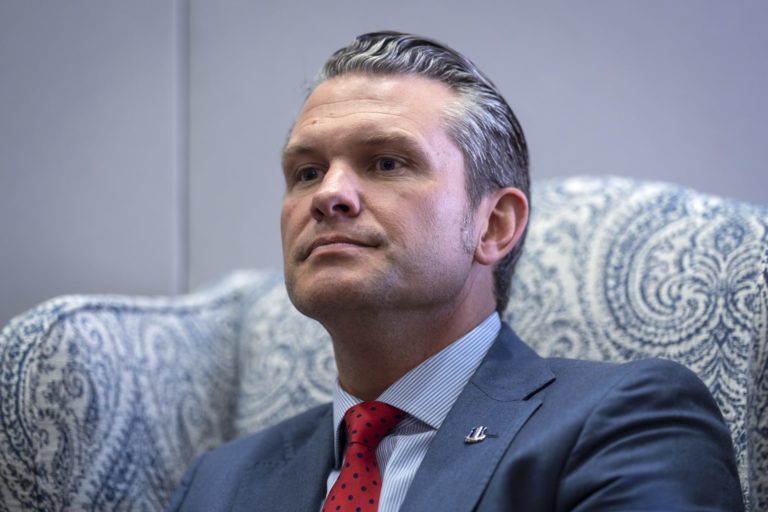
(John Weeks, Antiwar.com) Secretary of War Pete Hegseth, during a Congressional hearing on Tuesday, said a failure to appropriate $1.5 trillion for the Pentagon’s Fiscal Year 2027 (FY27) budget constitutes the “greatest threat” to US national security.

Hegseth, joined by Chairman of the Joint Chiefs of Staff Dan Caine and Agriculture Secretary Brooke Rollins, appeared before the Senate Appropriations Committee on Tuesday to discuss the Trump administration’s request for an additional $87.6 billion in supplemental spending.

Most of the money would go to the Pentagon, but approximately $11.1 billion would go to US farmers. The war with Iran has depleted Pentagon funding, and the shock to the oil economy will have a direct impact on the fertilizer market farmers depend on.

On Tuesday, Hegseth defended the supplemental funding and claimed it would be part of the Pentagon’s FY27 budget, not in addition to it. Congress has yet to approve the $1.5 trillion the Pentagon wants. On Wednesday, the House of Representatives voted to authorize $1.15 trillion of the massive military budget, but the Senate has yet to approve it.

There is no guarantee the Republican-controlled Senate will sign off on the funding. Democrats have generally opposed the funding on party lines (only six democrats in the House voted for it) and even Republican senators have balked at the massive price tag.

On Tuesday, Hegseth characterized the full budgetary request as a “generational investment” and claimed the supplemental funding was of the utmost importance:

“As you know, we live in a dangerous world that requires bold and swift action. Hence, this supplemental request for fiscal year 2026. This request is an urgent, necessary injection of resources to address the immediate needs of our department,” he said.

The “immediate needs” refers to the ongoing war with Iran, which analysts believe has cost far more than the Pentagon is willing to admit. On Tuesday, Hegseth told Senators the war has cost approximately $37.5 billion thus far. Credible independent analysis, however, suggests the cost could already be north of $100 billion, a number much closer to the supplemental money the White House has requested.

Regardless of the true cost of the war, Hegseth’s commitment to the $1.5 trillion funding target tracks typical military bureaucratic logic, and it marks a major boost in military spending, a nearly 50% increase from this year’s more than $1 trillion military budget.

This article originally appeared at Antiwar.com. 

Report: Trump Switched Planes at Last Minute to Avoid Iranian Assassination Threat

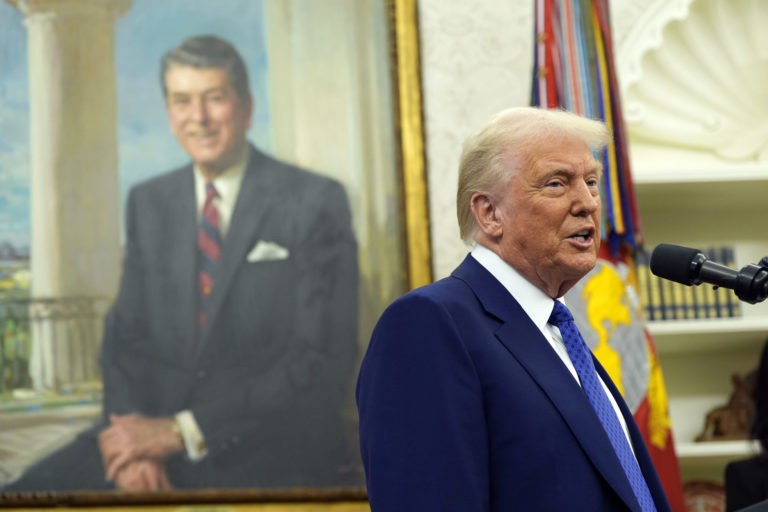
(Ken Silva, Headline USA) The New York Times reported Friday that President Donald Trump made the last-minute decision to switch airplanes when leaving a NATO summit in Turkey earlier this month due to a purported assassination threat coming from Iranian proxy forces.

“He had flown into Ankara on the new Qatari-donated Boeing 747-8, which lacks the same advanced defensive capabilities of the old Air Force One,” the Times reported, citing anonymous sources.

“After the U.S. government picked up on the threat, the Secret Service urged Mr. Trump to change planes. He later announced that he would be using the old plane to leave the country.”

The Times article follows a Wall Street Journal report from earlier this month, which said that Israel briefed the U.S. with purported intelligence about an Iranian plot to assassinate Trump. The Times said the decision to switch planes in Turkey stemmed from different intelligence than what the Israelis were providing. The Times added that some U.S. officials believe that the Israeli intelligence was intended to convince Trump to escalate his war against Iran.

Officials have yet to provide any evidence of a credible Iranian assassination attempt against Trump. This author’s book on the Trump assassination attempts details how the FBI and Israel manufactured dubious evidence that Iran was threatening him—though admittedly the threats may be more legitimate now amidst a full-fledged war between the countries.

There were two assassination attempts against Trump in 2024. One occurred on July 13, 2024, in Butler, Pennsylvania, when 20-year-old Thomas Crooks allegedly shot him in the ear from a rooftop during a campaign rally. The other occurred about two months later at Trump’s Palm Beach golf course, where North Carolina man Ryan Routh was spotted by Secret Service hiding in the bushes with an SKS-style rifle a mere few hundred yards away from Trump.

Additionally, a gunman tried storming the White House Correspondents’ Dinner event earlier this year in an apparent attempt to kill Trump and other officials. Trump was on a separate floor from the alleged gunman, Cole Allen, when law enforcement apprehended him.

There’s no evidence that any of those attempt were sponsored by Iran.

The FBI did arrest a Pakistani national named Asif Merchant on July 12, 2024—the day before Trump was shot—for murder-for-hire in an alleged plot to assassinate U.S. officials, including possibly Trump.

However, Merchant’s actions can hardly be called an assassination attempt. Rather, the available evidence suggests that Merchant was the target of a highly controlled FBI sting operation, and that he never posed a threat to Trump.

Indeed, the U.S. was monitoring Merchant before he even entered the U.S. in April 2024, and officials let him into the country to track him and see where he’d go.

Moreover, an FBI informant drove Merchant around while he was here, and introduced him to two undercover agents posing as “hitmen.” Merchant allegedly paid those two agents $5,000 as a downpayment for his plot—which also included staging a protest and stealing documents—and he was arrested as he was attempting to leave the country.

Merchant was found guilty in March.

The FBI did accuse one other man of being involved in an Iranian plot against Trump in a criminal complaint filed in November 2024. In that case, there’s arguably even less evidence of a credible threat to Trump.

Indeed, the defendants in that case—Farhad Shakeri, 51, of Iran; Carlisle Rivera, also known as Pop, 49, of Brooklyn, New York; and Jonathon Loadholt, 36, of Staten Island, New York—were not accused of conspiring to kill any politicians, let alone Trump. Rather, they were charged with plotting to kill a U.S. journalist of Iranian origin.

While Shakeri is one of the defendants, the government’s criminal complaint shows that he appears to have been snitching to the FBI in recent months. According to the charging papers, Shakeri participated in phone interviews with the FBI from Iran on September 30, October 8, October 17, October 28 and November 7—ostensibly trading information in exchange for a sentence reduction for an unidentified individual.

In one of those interviews, Shakeri—who was deported from the United States in 2008 after serving fourteen years in prison for robbery—told the FBI that an Iranian Revolutionary Guard Corps official was pushing him to assassinate Trump.

Shakeri further told the FBI that the IRGC official told him on October 7 that he had to provide a plan to kill Trump within seven days. Shakeri said he was unable to do so, and so Iran decided to pause its plans to kill Trump until after the election—which would have made it easier to kill him if he lost.

The FBI admitted in the charging papers that Shakeri is a liar, but said his claims about Trump “appear to be truthful.” Nevertheless, when the Justice Department secured indictments in the case a month after the criminal complaint was filed, there was no mention of the allegation against Trump.

Loadholt and Rivera both pled guilty to conspiring against the journalist, while Shakeri remains at-large in Iran.

Ken Silva is the editor of Headline USA. Follow him at x.com/jd_cashless.

Trump Threatens To Carry Out Biggest Attack Yet on Iran

(Dave DeCamp, Antiwar.com) Donald Trump has also signaled that he may bomb Picakaxe Mountain, known as Kolang Kouh, where US and Israeli officials have claimed there may be underground nuclear activity, claims Iran has denied. Israeli media reported on Wednesday that the US informed Israel that it intends to escalate its attacks on Iran in the coming days and may use heavy bombers to target the mountain.

Despite the US being at war with Iran “at the request” of Israel, according to the official State Department rationale, Israel has sat out the war since the ceasefire and Memorandum of Understanding collapsed.

Trump told Ravid that Israel “would join in two minutes if I ask them to,” but added that “we don’t need anybody” to launch a new attack against Iran. He said that there would be “consequences” for Israel if it joined, appearing to reference potential Iranian retaliation against Israeli territory.

Iran has been targeting US bases across the region, and at least four US soldiers have been killed, and around 100 have been wounded this month, but Iranian missiles and drones have spared Israel, as the Israeli military hasn’t participated in direct attacks on Iran.

Israeli Finance Minister Bezalel Smotrich said this week that the “current situation is best” for Israel and that Israel had no interest in joining the war.

This article originally appeared at Antiwar.com.  

NYPD Probing Stabbings as Possible Hate Crimes

(Chris Wade, The Center Square) New York City authorities said the attacks of two people stabbed in separate incidents in the Upper West Side on Thursday are being investigated as possible hate crimes.

The New York City Police Department said it arrested Raul Morales, 51, after he stabbed an unidentified Asian male and a Jewish male in separate attacks. Police said both victims were taken to Mount Sinai-Luke’s Hospital and are expected to survive.

Witnesses told police Morales yelled Allahu Akbar or “God is Great” in Arabic during both attacks. 

NYPD Commissioner Jessica Tisch said a preliminary investigation has determined there is no known connection between the attacker and the victims, or between the victims and each other. 

She said the attacks are being investigated as hate crimes. 

“While the perpetrator has no known mental health history with the NYPD, the initial investigation suggests that mental health may have been a factor,” Tisch said in a statement.

New York City Mayor Zohran Mamdani issued a statement about two hours after the stabbing incidents, repeating information provided by the NYPD and saying that “hateful and despicable attacks have no place in our city.”

City Council Speaker Julie Menin she was “absolutely sickened and furious by what appears to be an antisemitic stabbing” and noted that it comes after other attacks on Jewish people in New York City and elsewhere. 

“While we await additional details to be confirmed, we know that what is happening in our city is abhorrent,” Menin posted on X. “The fear in the Jewish community is real. Every New Yorker deserves to feel safe in their neighborhood, regardless of their faith or identity.  

Gov. Kathy Hochul also took to social media to say she is “disgusted by what appears to be another senseless attack on New Yorkers simply because they’re Jewish.”

“The strength of New York has always been our ability to live together across every faith and background,” Hochul added. “Anyone who tries to tear that apart will be met with the full force of the law. New York will stand with our Jewish community today, tomorrow, and always.”

Israel’s diplomatic post in New York City also criticized the attacks but also blamed Mamdani for creating “a climate in which Jews are targeted.” 

“I am appalled by the horrific antisemitic stabbing attack in New York. Appalled but sadly not surprised,” Minister of Foreign Affairs of the State of Israel Gideon Sa’ar posted on X. 

“This violence did not happen in a vacuum,” he wrote. “Months of incitement against the Jewish state from Mamdani have helped create a climate in which Jews are targeted. Words have consequences. Mamdani must end the incitement, confront antisemitism with resolve, and act now to protect the city’s Jewish community.”