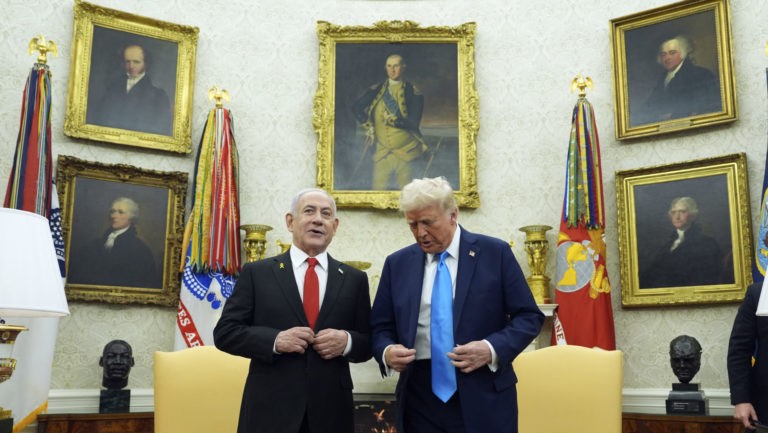
White House Says No Decision Yet on $2,000 Tariff Rebate Checks

(The Center Square) President Donald Trump and some GOP lawmakers have repeatedly floated the idea of sharing some of the government’s tariff revenue with taxpayers, but the White House said no checks are in the mail.

Trump said in an interview that he was considering sending Americans checks for between $1,000 and $2,000 from the tariff revenue.

“We’re going to do something, we’re looking at something. No. 1, we’re paying down debt. Because people have allowed the debt to go crazy,” the president told OAN. “We’ll pay back debt, but we also might make a distribution to the people, almost like a dividend to the people of America.”

The president said the $37 trillion national debt is “very little, relatively speaking” because the government is raking in tariff revenue.

Trump has said the tariffs will generate trillions in federal revenue, although other estimates are much lower.

In August, Treasury Secretary Scott Bessent said federal debt is the top priority.

“We’re going to bring down the deficit to GDP,” he said in a TV interview. “We’ll start paying down the debt, and then at that point that can be used as an offset to the American people.”

Bessent has estimated the tariffs will generate about $300 billion a year.

White House press secretary Karoline Leavitt said Trump hasn’t decided yet.

“I think it’s an idea that the president has discussed and floated with his advisers, but no decision has been firmly made at this point in time,” Leavitt told reporters on Monday.

The Congressional Budget Office estimated that Trump’s tariffs could bring in $4 trillion over the next decade, but would raise consumer prices and reduce the purchasing power of U.S. families.

U.S. Sen. Josh Hawley, R-Mo., introduced the American Worker Rebate Act, legislation that would send rebate checks to working Americans of at least $600 per adult and dependent child (or about $2,400 for a family of four).

That bill remains stalled in the Senate.

Earlier in his administration, Trump and former adviser Elon Musk floated the idea of returning money to taxpayers through the Department of Government Efficiency. Musk’s DOGE initially expected to find $2 trillion in savings by cutting waste fraud and abuse. However, Musk has since left the White House and DOGE was on track to save about $150 billion as of an April cabinet meeting.

Trump has made tariffs the centerpiece of his economic agenda during the first six months of his second term.

According to an analysis of federal data from the Penn Wharton Budget Model, the president’s new tariffs raised $80.3 billion in revenue between January 2025 and July 2025 before accounting for income and payroll tax offsets.

Trump has said he wants to use tariffs to restore manufacturing jobs lost to lower-wage countries in decades past, shift the tax burden away from U.S. families, and pay down the national debt.

A tariff is a tax on imported goods that the importer pays, not the producer. The importer pays the cost of the duties directly to U.S. Customs and Border Protection, a federal agency.

In the past 50 years, the federal government has ended with a fiscal year-end budget surplus four times, most recently in 2001. Congress has run a deficit every year since then.

According to the U.S. Department of Treasury, U.S. debt stands at $37.8 trillion.
Biden Officials Suppressed CIA Report on Hunter’s Ukraine Dealings

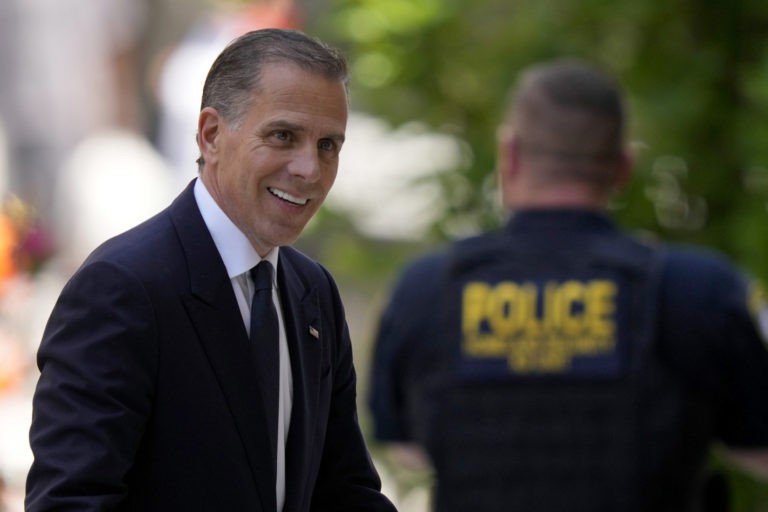
(Luis CornelioHeadline USA) Aides to then-Vice President Joe Biden shielded Hunter Biden from scrutiny by blocking the circulation of an intelligence report to policymakers about his controversial business dealings. 

The February 2016 order was made directly by the official in charge of Biden’s Presidential Daily Brief, Just the News reported on Tuesday.  

“I just spoke with VP/NSA and he would strongly prefer the report not/not be disseminated,” the briefer told the CIA. “Thanks for understanding.” 

A current CIA official told Just the News that the directive was “extremely rare and unusual.” Reporting from Headline USA further suggested the 2016 order was part of Biden’s broader effort to use his office to protect his son and other family members from scrutiny. 

The withheld CIA report documented the reactions of senior Ukrainian officials to Biden’s December 2015 visit. 

Those officials “privately mused” about the ongoing criticism of Hunter’s business with Burisma, the Ukrainian gas company that was paying him up to $83,000 a month despite his lack of relevant experience. 

At the time, concerns mounted over conflicts of interest and whether Biden would push for policies that benefited his son. Among those concerns was Biden’s decision to demand the firing of Ukrainian prosecutor Viktor Shokin, who was investigating Burisma. Biden threatened to withhold $1 billion in U.S. loan guarantees unless Shokin was removed from office. 

“These officials viewed the alleged ties of the U.S. Vice President’s family to corruption in Ukraine as evidence of a double-standard within the United States Government towards matters of corruption and political power,” the CIA report said, according to Just the News. 

The Ukrainian officials also “expressed bewilderment and disappointment” about Biden’s visit for failing to adhere to the agenda items of the meeting. 

The document’s disclosure comes as the second Trump administration continues to expose scandals of corruption and government weaponization tied to former presidents Barack Obama and Biden

Wall Street’s Record-Breaking Rally Runs out of Steam as gold Tops $4,000 Per Ounce

(Headline USA) Wall Street’s record-breaking rally is running out of momentum on Tuesday after the price of gold topped $4,000 per ounce for the first time.

The S&P 500 dipped 0.4% from its latest all-time high and was heading for its first loss in eight days The Dow Jones Industrial Average was down 149 points, or 0.3%, with a little less than an hour remaining in trading, and the Nasdaq composite was 0.6% lower.

Markets are taking a pause following a rush higher for many investments on hopes that the economy will remain resilient and that the Federal Reserve will continue to cut interest rates.

Tesla was the heaviest weight on the market and sank 3.9% after unveiling a cheaper version of its best-selling model. The electric vehicle maker gave back most of its leap from the prior day, when hype and speculation built after it hinted at a coming product announcement through postings on social media.

Oracle also dragged the market lower. It fell 2.3% after a news report suggested it’s making thin profit margins on a key line of business related to artificial-intelligence technology.

The frenzy around AI has been one of the biggest trends guiding Wall Street to record after record recently. It’s been so strong that it’s raised worries that prices have potentially shot too high across the market.

On Tuesday, IBM rose 1.7% after announcing a partnership that will integrate Anthropic’s Claude AI chatbot into some of its software products. 

Advanced Micro Devices rallied 3.6% to add to its surge from Monday, when it announced a deal where OpenAI will use its chips to power AI infrastructure. Dell rose 3.7% after executives talked up the company’s opportunity for growth because of AI at an investment conference.

Much is riding on expectations that the AI investment boom will pay off by making the global economy more productive and driving more growth. Without that increased efficiency, inflation could push higher due to upward pressure coming from the mountains of debt that the U.S. and other governments worldwide are building.

That has optimists on Wall Street buying tech stocks and pessimists buying gold, according to Thierry Wizman, a strategist at Macquarie Group.

Investors have traditionally seen gold as offering protection from high inflation. Its price has soared more than 50% this year not only because of governments’ huge debt loads but also because of political instability worldwide and expectations for lower interest rates from the Fed.

Investors looking to “hedge” themselves, meanwhile, may be buying both tech stocks and gold, Wizman wrote in a research report.

Elsewhere on Wall Street, Intercontinental Exchange, the company behind the New York Stock Exchange, rose 2% after saying it had agreed to invest up to $2 billion in Polymarket.

Polymarket offers prediction markets that allow customers to profit from making predictions on events across politics, financial markets and popular culture, such as who will become New York City’s next mayor or whether the U.S. government will announce this year that aliens exist.

Constellation Brands added 0.6% after the beer and wine company reported results for the latest quarter that several analysts said were better than they expected. Sales of beer still dropped from a year earlier, though, as CEO Bill Newlands highlighted a “challenging socioeconomic environment that has dampened consumer demand.”

In Toronto, shares of Trilogy Metals more than tripled after the White House said late Monday that it’s taking a 10% equity stake in the Canadian company while allowing the Ambler Road mining project in Alaska to go forward.

President Donald Trump late Monday ordered the approval of a proposed 211-mile road through an Alaska wilderness to allow mining of copper, cobalt, gold and other minerals used in production of cars, electronics and other technologies. Trilogy is seeking to develop the Ambler site along with an Australian partner, and its stock soared 250.9%.

In Europe, France’s CAC 40 edged up by less than 0.1% a day after slumping due to the latest political upheaval in Paris. France’s prime minister abruptly resigned on Monday.

In the bond market, the yield on the 10-year Treasury eased to 4.12% from 4.18% late Monday.


Adapted from reporting by the Associated Press

Graham: Political Weaponization of FBI ‘Should Bother Everybody’

(Alan Wooten, The Center Square) Employees have been terminated, the CR-15 squad abolished, and an investigation is ongoing by the FBI.

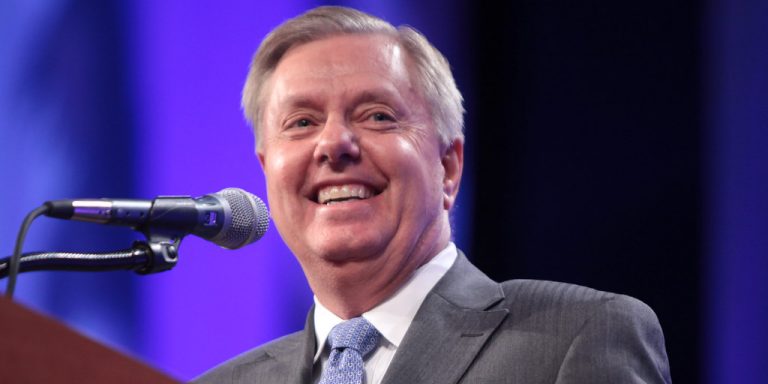
Still, fourth-term Republican Sen. Lindsey Graham says the discovery of he and seven other senators being surveilled by the FBI “is chilling.” A Sept. 27, 2023, memo is part of a discovery by the FBI forming the foundation of an accusation Jack Smith, special counsel in former President Joe Biden’s administration, tracked private communications and phone calls in his probe of the events on Jan. 6, 2021, at the Capitol when Donald Trump was a first-term president.

“As chairman of the Judiciary Committee,” Graham said in a video statement he released late Monday, referring to 2021, “I did the job I felt necessary and to believe that the Department of Justice or a special council would subpoena who I called, where I called from should bother everybody. It certainly bothers the hell out of me.”

Fox News Digital was first with the story Monday. On Tuesday, FBI Director Kash Patel said on social media, “Transparency is important and accountability is critical. We promised both, and this is what promises kept looks like. This FBI is delivering.”

The CR-15 squad was a public corruption unit in the Washington Field Office of the FBI.

Graham said in 2023, his phone data was subpoenaed by Smith’s probe in connection to an investigation of Donald Trump. The memo includes a case identification number and is called, “Arctic Forst – Election Law Matters – Sensitive Investigative Matter – CAST.”

CAST is an acronym for the cellular analysis survey team within the FBI.

Graham said data was collected Jan. 4-7 in 2021, showing call participants, duration and general locations. He said phone companies were asked to provide the information. Graham said Smith was trying to determine “whether or not I should certify the election.”

“This was done in 2023 in the middle of a presidential election cycle where I’m supporting President Trump,” Graham said in his video message Monday.

Not only did he support him, he was first to endorse among sitting senators.

In addition to Graham, Sens. Bill Hagerty and Marsha Blackburn of Tennessee, Josh Hawley of Missouri, Dan Sullivan of Alaska, Tommy Tuberville of Alabama, Ron Johnson of Wisconsin, Cynthia Lummis of Wyoming, and Mike Kelly of Pennsylvania are on the memo. All are Republicans.

“This FBI discovered and exposed the weaponization of law enforcement,” Patel wrote on social media midday Tuesday. “We are on it.”

Graham said Patel and Deputy Director Dan Bongino are to be congratulated.

“One way to make sure this doesn’t happen again is to fire the people who were behind it and hold the government accountable for violating the rights and separation of powers that exist in this country,” Graham said.

Mamdani Rips Israeli Government on Second Anniversary of Hamas Attack

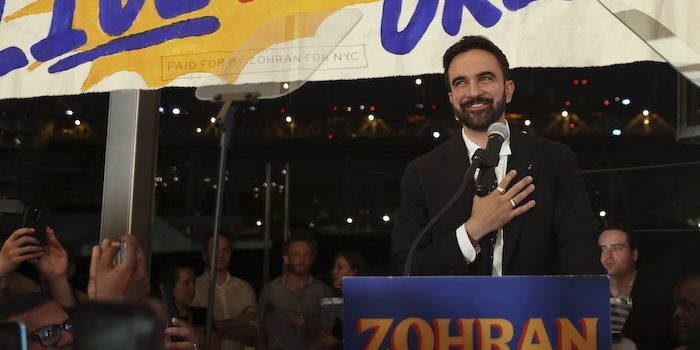
(Chris Wade, The Center Square) New York City mayoral Candidate Zohran Mamdani accused the Israeli government of “genocide” in a scathing statement Tuesday to mark the two-year anniversary of Hamas’ Oct. 7 terrorist attack. 

“Two years ago, Hamas carried out a horrific war crime, killing more than 1,100 Israelis and kidnapping 250 more,” Mamdani said “In the aftermath of that day, Prime Minister Netanyahu and the Israeli government launched a genocidal war: a death toll that now far exceeds 67,000; with the Israeli military bombing homes, hospitals, and schools into rubble.”

Mamdani, a Queens Assemblyman and front-runner in the mayoral race, described Hamas’ attack as “horrific” and said “I mourn these lives and pray for the safe return of every hostage still held and for every family whose lives were torn apart by these atrocities.” He called for an end to Israel’s war in Gaza. 

“This must end. The occupation and apartheid must end,” he said. “Peace must be pursued through diplomacy, not war crimes, and our government must act to end these atrocities and hold those responsible to account.”

But Mamdani’s statement didn’t recant his previous support for the phrase “globalize the intifada” which his chief rival in the mayor’s race, former Gov. Andrew Cuomo, and other top Democrats had demanded of him ahead of the anniversary of Hamas’ attack. 

Over the weekend, Cuomo called on Mamdani to publicly condemn his previous support for the expression ahead of planned protests Tuesday, acknowledging the massacre and Israel’s years-long bombing campaign that’s left roughly 64,000 Palestinians dead, according to the Hamas-controlled Public Health Ministry. 

Mamdani, a member of the Democratic Socialists of America, refused to condemn the slogan during the 2025 primary election, sparking a backlash from Jewish leaders and community members. As a mayoral candidate, he has pledged not to support the phrase, but has declined to condemn it.

Pro-Palestinian groups have used it as a slogan — which means to “shake-off” in Arabic — to resist the Israeli government, but Jewish groups say it fuels antisemitic violence and hate speech. 

Mamdani’s latest comments are likely to provoke strong reactions in New York City, which is the world’s second-largest home to Jews behind only the Israeli city of Tel Aviv. He has also been criticized for saying he backs the Boycott, Divestment and Sanctions movement targeting the Israeli government, and has promised if elected to arrest Israeli President Netanyahu if he visits New York City, calling him a “war criminal.” 

“What we see is a war crime being answered with war crimes. And what we see is, every single hour, the Israeli military killing a Palestinian child for close to two years,” Mamdani told the popular daytime talk show “The View” during an appearance last Wednesday. “I can’t stop that as the mayor of this city. I can make clear my own values, my own commitments.” 

The latest polls showed Mamdani leading Cuomo by a commanding 15 percentage points, with less than two months to go until the mayoral election. He also faces Republican nominee Curtis Sliwa, founder of the Guardian Angels. Mayor Eric Adams, a Democrat, dropped out of the race last week.

Billions in GDP Lost During First Week of Government Shutdown, Johnson Says

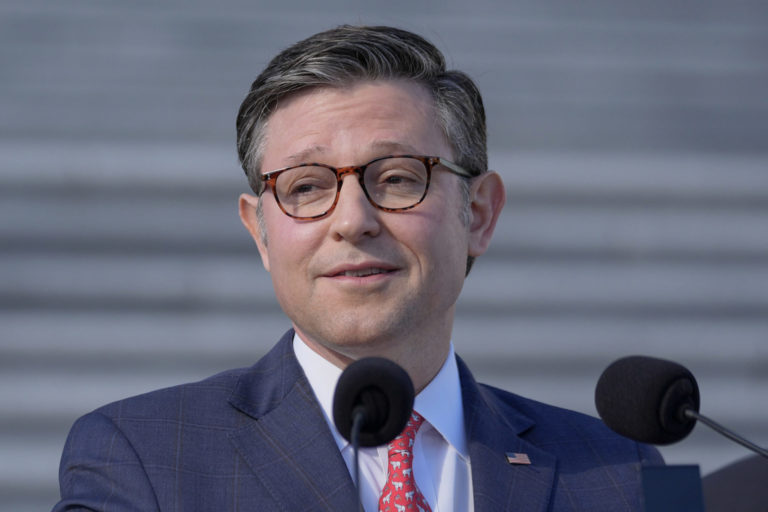
(Thérèse Boudreaux, The Center Square)  As the federal government shutdown hits the one week mark, House Speaker Mike Johnson, R-La., is urging Democrats to vote for Republicans’ funding bill to prevent permanent damage to the U.S. economy.

“Each week the shutdown continues, it will wipe out an estimated $15 billion in our Gross Domestic Product in our country,” Johnson told reporters Tuesday, referencing calculations released by the White House.

“A month-long shutdown would mean not just 750,000 federal civilian employees furloughed right now, but an additional 43,000 more unemployed Americans across the economy, because that is the effect, the ripple effect that it has in the private sector,” he added.

Congress, however, shows no signs of coming to a funding agreement to open the government anytime soon. Two options lay on the table: Republicans’ clean Continuing Resolution that would extend government funding for seven weeks, or Democrat’s $1.4 trillion spending bill.

Democratic leaders oppose Republicans’ bill because it does nothing to prevent the enhanced Obamacare Premium Tax Credits from expiring in December, a policy issue that they believe must be addressed now to prevent millions of Americans’ health care premiums from spiking.

Republican leaders have said they are willing to discuss the issue with Democrats, but only after the government reopens.

“We are pleading with Democrats in the Senate to do the right thing,” Johnson said. “There’s a lot of end-of-year issues that are being conflated with this very simple issue of keeping the government open, and that is the first and most immediate priority.”

At least eight Senate Democrats need to vote for the clean CR for it to clear the chamber’s 60-vote threshold. So far, only three members of the Democratic Caucus have lent their support.

Senators may vote for the sixth time on both parties’ proposals Tuesday evening. As of the afternoon, the U.S. Senate Periodical Press Gallery says votes on the bills “are possible but they are not scheduled at this time.”

The last time federal funding lapsed occurred in late 2018, and the shutdown lasted a record 35 days.

Seismic Shift: Morgan Stanley Recommends 60/20/20 Portfolio With 20% Allocated to Gold

(Mike Maharrey, Money Metals News Service) Is Wall Street starting to embrace gold?

For years, mainstream investment gurus have steered clients away from gold. But with the yellow metal gaining more than 87 percent since January 2024, it’s getting hard to ignore the yellow metal.

Morgan Stanley CIO Michael Wilson recently came out with an investment strategy that includes a 20 percent allocation to gold.

Historically, the conventional wisdom on Wall Street was a 60/40 portfolio, with 60 percent of the holdings in equities and 40 percent in fixed-income investments, primarily bonds. The theory is that these asset classes balance each other, with stocks strengthening in a strong economy and bonds creating a hedge during downturns.

However, bonds have lost their safe-haven status in recent months. Last spring, at the height of tariff uncertainty, gold rallied as bonds sold off.

This was not business as usual during a time of stock market weakness and general market instability. As CNBC noted at the time, “Treasuries and the dollar typically benefit from flight-to-safety environments, a function of the U.S.′ historical financial strength.”

That happened early in the trade war, but it quickly unraveled.

It’s also very unusual for gold to rally when bond yields are rising. This underscores the fundamental strength of the yellow metal in the current market environment.

Given the changing market dynamics, Wilson said investors should consider a 60/20/20 strategy, swapping half of the bond portfolio for gold to serve as a “more resilient” inflation hedge.

“Gold is now the anti-fragile asset to own, rather than Treasuries. High-quality equities and gold are the best hedges.”

There is a general pivot away from U.S. debt globally. For the first time since 1996, foreign central banks hold more gold than U.S. Treasuries as the world continues to de-dollarize.

This makes sense given the growing worries about the U.S. government’s fiscal irresponsibility. In August, the national debt pushed above $37 trillion, and there is no sign that the borrowing and spending will slow down any time soon.

Earlier this year, analyst Artis Shepherd called the sagging demand for U.S. Treasuries “red lights blinking.”

“The bond market is sending a message to the U.S. government that its spending is out of control and the reserve currency ‘privilege’ it has abused for the last 80 years is running out.”

A Seismic Shift

A major investment firm like Morgan Stanley abandoning the venerable 60/40 portfolio represents a seismic shift in the investing world.

It’s not clear why American investing advisors have historically spurned gold. I would argue it is fiduciary malpractice to steer clients away from the yellow metal, given the persistent inflationary environment we live in. After all, gold is an inflation hedge.

However, investment advisors don’t earn big brokerage fees when clients buy gold.

We also suffer from institutional ignorance.

In a world of fiat money, many advisors simply don’t understand gold’s centuries-long performance as money and its role as a hedge against debasement. We’ve also lived through nearly two decades of artificially low interest rates and monetary stimulus that have boosted stocks and real estate. We have a generation of advisors who think zero percent interest rates are normal and view gold through a short-term price lens instead of as a monetary insurance policy.

Additionally, I think there is also a bias against gold because the entire global financial paradigm depends on people’s faith in fiat money. Gold undermines that faith. But we are reaching a point where even the mainstream players can’t ignore reality. The fiat system is getting shaky.

As an article published by the Charts and Parts Substack noted, “Morgan Stanley just blinked.”

“Gold now has a real seat at the table.”

This could lead the way to a broader institutional shift in strategy.

“Nobody likes to go first — not in markets, not in start-ups, not in fashion. But once the ice breaks, the floodgates can open. … This isn’t the avalanche. It’s a snowflake. But snowflakes can start a slide. Morgan Stanley broke the 60/40. Capital tilts toward gold.”

It will be interesting to see if other mainstream advisors follow suit. But whether they do or not, you should consider rebalancing your portfolio to include gold if you haven’t already. The policies and economic dynamics driving this gold rally aren’t going away any time soon. This monetary malfeasance can’t be voted away. The best thing you can do is prepare and shield yourself from the inevitable consequences.


Mike Maharrey is a journalist and market analyst for Money Metals with over a decade of experience in precious metals. He holds a BS in accounting from the University of Kentucky and a BA in journalism from the University of South Florida.

Gold Miners Are Outperforming AI Chip Stocks This Year

(Mike Maharrey, Money Metals News Service) There has been a lot of hype surrounding artificial intelligence, and AI stocks have helped propel the stock market to record highs. Meanwhile, gold stocks have quietly outperformed AI chip stocks.

Based on the MSCI Gold Miners Index, gold stocks have gained around 135 percent so far in 2025.

In contrast, MSCI’s index of major global semiconductor firms is up 40 percent.

The gold price itself is up around 49 percent on the year and is on track for its best year since 1979. The yellow metal is up over 87 percent since January 2024.

According to a Bloomberg report, “In addition to central bank buying, the metal has also been supported by Federal Reserve rate cuts, the trend of de-dollarization and rising holdings in gold-backed exchange-traded funds.

In the early months of the gold bull rally, gold stocks lagged, but they have played catch-up in recent months.

Newmont Corp. and Agnico Eagle Mines Ltd. stocks have more than doubled this year. London-listed gold and silver miner Fresnillo Plc has nearly quadrupled. Meanwhile, Hong Kong’s Zijin Mining Group’s shares have gained more than 130 percent in the same period, outpacing China’s AI darling Alibaba Group Holding Ltd.

Van Eck Associates Corp. investment strategist Anna Wu called gold miners “one of my most bullish medium thematic calls.” She said gold has a strong safe-haven appeal, “while gold miners are also set to benefit from margin expansion and valuation re-rating.

Gold’s general appeal isn’t the only thing driving mining stocks higher. Their valuations are much more in line with reality than many AI stocks. The MSCI gold miner index is trading at around 13 times forward earnings estimates. That’s still slightly below the 5-year average. In contrast, the AI chip gauge is at 29 times earnings estimates, well above its 5-year average.

Saxo Markets chief investment strategist Charu Chanana told Bloomberg that there appears to be plenty of upside in the gold mining sector.

“Even after a near-vertical move in the yellow metal, miners’ multiples look undemanding because earnings have run faster than prices. If gold stays near record territory, the cash-flow math still argues for elevated margins.”


Mike Maharrey is a journalist and market analyst for Money Metals with over a decade of experience in precious metals. He holds a BS in accounting from the University of Kentucky and a BA in journalism from the University of South Florida.

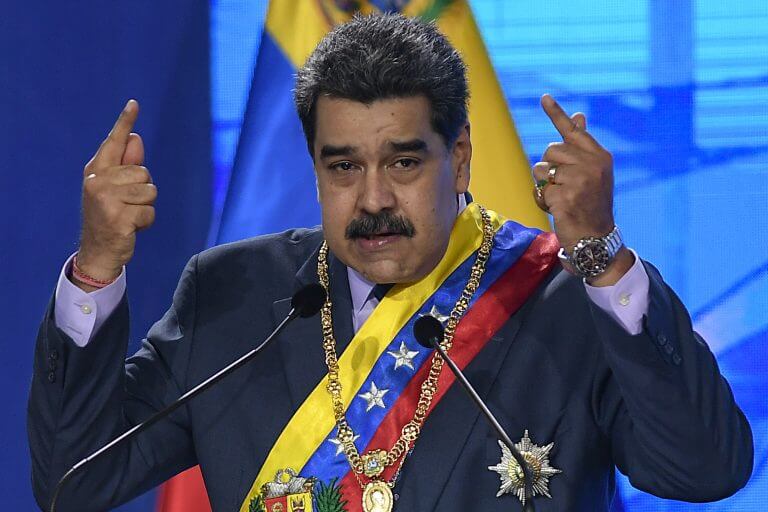
Trump Calls Off Diplomacy With Venezuela’s Maduro, Making Regime Change War More Likely

(Dave DeCamp, Antiwar.comPresident Trump has called off diplomatic efforts to reach an agreement with Venezuelan President Nicolas Maduro, The New York Times reported on Monday, a step that paves the way for more US military escalations and makes a US attempt at regime change in Venezuela more likely.

US officials told The Times that during a meeting with US military officials on Thursday, the president called his special envoy, Ric Grenell, who had been leading the efforts to negotiate with Maduro, and instructed him to halt all diplomatic outreach with the Venezuelan government.

About two weeks ago, Grenell said he was still in contact with the Venezuelan government, comments that angered other officials within the Trump administration. Grenell has reportedly clashed with Secretary of State Marco Rubio, a long-time proponent of regime change in Venezuela who has been driving the current policy.

The Times report said that Trump has been frustrated with Maduro for not voluntarily stepping down from power and his government’s insistence that it’s not involved in drug trafficking. The US has drawn up plans for military escalation, including potential direct strikes on Venezuela aimed at ousting Maduro.

So far, US military action in the region has involved the bombing of at least four boats that the Trump administration has claimed, without evidence, were carrying drugs, military action that lacks legal authorization. Based on numbers released by the administration, at least 21 people have been extrajudicially executed at sea by the US military since the strikes started on September 2.

The US has also significantly built up its military assets in the region, and according to the Washington Examiner, US military planners believe the forces are now sufficient to seize and hold key strategic facilities such as ports and airfields on Venezuelan territory. Any attempts to seize strategic sites inside Venezuela would likely provoke a full-blown war with the government, which says it has a militia of over 4 million people that it’s ready to mobilize.

President Trump appeared to threaten strikes on “land” inside Venezuela in a speech on Sunday. “In recent weeks, the Navy has supported our mission to blow the cartel terrorists the hell out of the water … we did another one last night. Now we just can’t find any,” he told a crowd of US Navy sailors at Norfolk Naval Station in Virginia.

“They’re not coming in by sea anymore, so now we’ll have to start looking about the land because they’ll be forced to go by land,” the president added.

The Times report said that advocates of diplomacy with Maduro have warned that any attempts to carry out regime change in Venezuela risk putting the US into an extended war. The first Trump administration attempted to oust Maduro by backing opposition figure Juan Guaido and imposing crippling economic sanctions on Venezuela, an effort that failed but fueled an exodus of millions of migrants from the country.

This article originally appeared at Antiwar.com.


U.S. Has Given At Least $21.7 Billion to Israel Since War on Gaza Began

(Headline USAThe United States under the Biden and Trump administrations has provided at least $21.7 billion in military assistance to Israel since the start of the Gaza war two years ago, according to a new academic study published Tuesday, the second anniversary of the Oct. 7, 2023, Hamas attacks in Israel that provoked the conflict.

Another study, also published by the Costs of War project at Brown University’s Watson School of International and Public Affairs, says the U.S. has spent roughly $10 billion more on security aid and operations in the broader Middle East in the past two years.

While the reports rely on open source material for most of their findings, they offer some of the most comprehensive accountings of U.S. military aid to close ally Israel and estimated costs of direct American military involvement in the Middle East.

The State Department had no immediate comment about the amount of military aid provided to Israel since October 2023. The White House referred questions to the Pentagon, which oversees only a portion of the assistance.

The reports, which draw on publicly available notifications to Congress, were released as President Donald Trump presses for an end to the war in Gaza. Israeli and Hamas officials launched indirect talks in Egypt this week after Hamas accepted some elements of the U.S. plan that Israel also said it supported.

The reports, which are sharply critical of Israel, say that without the U.S. assistance, Israel would not have been able to sustain its concerted campaign against Hamas in Gaza. They note that tens of billions of dollars in future funding for Israel is projected under various bilateral agreements.

The main report says the U.S. provided $17.9 billion to Israel in the first year of the war — when Democratic President Joe Biden was in office — and $3.8 billion in the second year. Some of the military assistance has already been delivered while the remainder will be supplied in the coming years, it said.

That report was produced in conjunction with the Washington-based Quincy Institute for Responsible Statecraft. The institute has been accused by some pro-Israel groups of being isolationist and anti-Israel, charges the organization denies.

A second report analyzing U.S. spending on broader Middle East activities, such as strikes on Yemen’s Houthi rebels and Iranian nuclear facilities, puts those costs at between $9.65 billion and $12 billion since Oct. 7, 2023, including between $2 billion and $2.25 billion for the attacks in Iran and associated costs in June.

Adapted from reporting by the Associated Press