De Blasio Finally Lets NYPD Clear Month-Long Homeless ‘Protest’ at NYC City Hall

0

As the Trump administration increasingly moves to toughen up on leftist cities that have allowed violent riots to spiral out of control, New York’s anti-cop mayor, Bill de Blasio, finally allowed the city’s law enforcement to do their job.

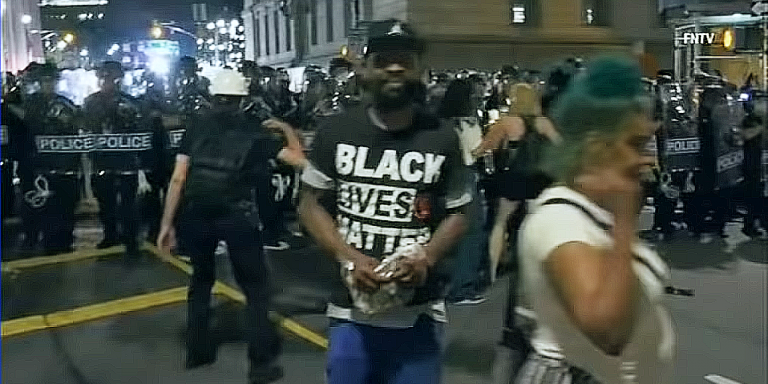
Police in riot gear moved in early Wednesday to clear a month-long encampment of protesters and homeless people from a park near New York‘s City Hall.

A line of officers with helmets and shields entered City Hall Park shortly before 4 a.m. and forced the remaining people who were camped there out. At least seven people were arrested, officials said.

Officers moved through the camp taking down tents and other temporary structures and tossing them into garbage trucks to be hauled away. Cleaning crews arrived later to scrub graffiti from buildings in the area.

The encampment in City Hall Park started in late June following weeks of protests sparked by the May death of George Floyd at the hands of Minneapolis police.

The “Occupy City Hall” protest claimed it was part of a national “defund the police” movement. Protesters said they would camp out until the city reduced the New York Police Department’s budget by $1 billion.

The City Council responded by passing a budget that shifts roughly $1 billion from the police department, but some activists criticized the funding cuts as cosmetic or insufficient.

The encampment swelled to several hundred people at its height but had lately dwindled to fewer than 100, many of them homeless people.

De Blasio, a Democrat, had resisted calls to move the protesters out of the park that adjoins the historic building where he works.

Asked about it Tuesday, de Blasio cited “a balance we always strike between the right to protest and especially public safety.”

He added, “That decision will be made by the NYPD as things emerge. We’re looking at the situation every day. But again, I think we look at the specific facts of what’s going on and then decisions will be made day by day.”

De Blasio said Wednesday he’ll resist any effort by President Donald Trump to send federal officers to New York as the president has done in Portland and has threatened to do in other cities. De Blasio said on MSNBC’s Morning Joe that if Trump sends officers to the city, “We will be in court immediately and we will win.”

Emboldened by Riots, Va. Dems Push Radical ‘Criminal Justice’ Agenda

0

On the heels of a sweeping legislative overhaul that has made once conservative Virginia a full-fledged leftist stronghold resembling blue “sanctuary” states like California, the emboldened Democrat legislature is now taking up one of its most controversial packages yet.

Virginia Democrats say they are looking to make transformational change to the state’s criminal justice system—just a few months after taking a slightly less ambitious approach.

The killing of George Floyd and widespread protests over police violence have prompted leftist lawmakers and their activist allies to promise sweeping changes to the criminal justice system.

“I think we’re all tired of the incremental change that has failed us and failed our community members for so long,” Portsmouth Commonwealth’s Attorney Stephanie Morales said on a conference call recently organized by Senate Democrats.

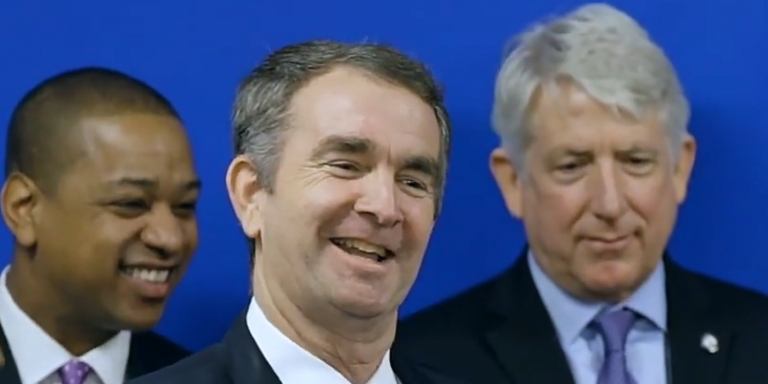
“We want to do as much as possible as quickly as possible,” she said, likely anticipating a backlash next year, when Gov. Ralph Northam reaches the end of his deeply divisive term.

Northam’s legacy was blighted by a minor hiccup after racist photos from his medical school yearbook surfaced in early 2019.

Defying near universal calls to resign, though, he caved to radical activists in the state and assented to a wish-list of extremist demands should Democrats regain power for the first time in two decades.

Outside interest groups then flooded Virginia during its elections last November, seeing their opportunity to transform the state—both a symbolic and, in many ways, a politically strategic coup for the far left.

Northam and his corrupt cohorts have ridden the wave much farther, however, than even they anticipated as they pursue a winner-take-all agenda that has outraged the state’s conservative rural areas.

Some considered the possibility of seceding to join West Virginia during a contentious gun-rights dispute in January.

Democrats already had pushed for shocking changes within the state’s criminal-justice apparatus, but supporters were disappointed earlier this year when many of their proposals were put off for a year or sent to a commission for study.

Activists criticized the lawmakers for being too timid, passing some minor reforms but punting on major issues. That included bills to end solitary confinement, abolish the death penalty and make it easier to expunge criminal records for misdemeanor and nonviolent felony convictions.

But after Floyd’s killing sparked nationwide protests—including in Virginia where several Confederate monuments have been taken down—lawmakers pledged to make criminal justice a key part of a special session scheduled in August.

The session was initially set just to focus on state budget shortfalls due to the coronavirus pandemic.

Lawmakers recently began to hold hearings on criminal justice proposals that have been suggested by the Virginia Legislative Black Caucus, the Democratic Senate Caucus and a group of liberal-leaning county prosecutors.

Those proposals include banning choke holds, giving prosecutors unrestricted access to all reports and disciplinary records of police officers and downgrading the charge of assault on a police officer from a felony to a misdemeanor in cases where the officer is not injured.

John W. Jones, executive director of the Virginia Sheriff’s Association, said he’s worried what kind of message passing that law would send about keeping police safe.

He also said he’s nervous lawmakers will enact bad policy by trying to do too much too fast. A particular concern is a push to weaken immunity provisions for law enforcement officials from lawsuits.

“I’m really concerned about some of these really important issues being rushed through without due process,” Jones said.

Other proposals Democrats and their allies support include requiring that most warrants are served during the daytime, and that a judge, not a magistrate, approve any no-knock or nighttime warrants.

They say the proposals that are aimed at preventing cases similar to Breonna Taylor, who was fatally shot by police conducting a no-knock warrant at her home in Kentucky earlier this year.

Some libertarians, including Kentucky Sen. Rand Paul, have also been vocal supporters of those measures—which touch on Fourth Amendment privacy rights.

However, others note that Taylor, far from being the saint she was portrayed to be, may have been supporting her boyfriend in a major drug-running operation and interfered with law-enforcement during the bust.

State Sen. Scott Surovell echoed the worries of Virginia law enforcement. The swing-district Democrat said some lawmakers “wanted to go a little slower and take a little harder look at things” earlier this year, but he’s hopeful the events of the last few months have brought the need for immediate reform into focus.

“The pace was really more of an issue than the policy,” Surovell said.

House Del. Patrick Hope, who is helping lead House committee hearings on criminal justice reform, said Floyd’s death convinced him and other lawmakers that “decisive” action is needed.

“The sense of urgency is growing, and we cannot ignore these issues any longer,” Hope said Wednesday at a virtual committee hearing.

The American Civil Liberties Union of Virginia is focusing on increasing police accountability, in part by establishing a set of professional standards of conduct for officers that, if violated, could result in the loss of their police certification.

Currently, police officers in Virginia can only lose their certification if they fail to complete mandatory training or are convicted of a felony or certain misdemeanors. Under the proposal, they could face the loss of their certification for misconduct, including the excessive use of force.

“Law enforcement should be treated as a profession,” said Claire Gastanaga, executive director of the ACLU of Virginia. “And police—if they want to be treated like professionals —need to understand they can lose their license for misconduct.”

Despite the new urgency in the need for reform, lawmakers invoked the race card in an effort to temper expectations that all of the controversial reforms will pass this special session.

“This was the capital of the Confederacy, these are not problems that materialized overnight and they will not be fixed overnight,” said Sen. Mamie Locke. “We have our work cut out for us.”

Adapted from reporting by the Associated Press

Wildlife Agency Tosses Activist Bid to Block Montana Waterways over Fish Species

0

U.S. wildlife officials on Wednesday rejected special protections for a rare, freshwater fish species that’s been at the center of a long-running legal dispute, citing conservation efforts that helped increase Arctic grayling numbers in a Montana river.

The Trump administration has pressed, under the direction of EPA administrator Andrew Wheeler, to dial back the massive waterways grab enacted during the Obama administration, which used environmental protections to seize private property and regulate industry.

But a radical environmentalist group failed to persuade officials that the fish at the center of a lengthy courtroom battle, which they claim has been endangered by climate change, is actually at risk.

The Associated Press obtained details of the decision not to protect the fish under the Endangered Species Act in advance of a planned public announcement later in the day.

The move comes almost two years after a notoriously liberal federal appeals court faulted the U.S. Fish and Wildlife Service for arbitrarily dismissing the threat that climate change and other pressures pose to the species.

Known for their iridescent appearance and sail-shaped dorsal fins, Arctic grayling are members of the salmon family that can reach 30 inches in length and are prized by many anglers.

Officials credited a conservation agreement involving landowners and government agencies for recent improvements to the grayling’s river habitat in southwestern Montana’s Big Hole Valley.

The Big Hole River and its tributaries — home to one of the few native populations of the fish in the Lower 48 states — saw grayling numbers roughly double during the last decade to about 1,500 adult fish, said Fish and Wildlife Service biologist Jim Boyd.

“If you can increase the number of breeding individuals, you can start to feel really good about the conservation efforts and know they are truly working,” he said.

Despite habitat improvements including more shade from trees along stream banks to keep the water cool, Arctic grayling occupy only a fraction of the streams across the upper Missouri River basin where they were historically widespread.

The species declined over the past century because of competition from non-native fish and after their habitat was significantly altered by dams and high summer water temperatures.

Efforts to protect Arctic grayling date to 1991, when wildlife advocates petitioned the government to add the fish to its list of threatened and endangered species.

Officials determined in 1994 and again in 2004 that protections were needed. But they were never imposed because other species were given a higher priority.

The Fish and Wildlife Service in 2014 determined that protections were no longer needed because the landowner conservation agreement had helped the fish rebound.

Conservation groups sued in federal court and prevailed when the case reached the 9th U.S. Circuit Court of Appeals in 2018.

The appeals court faulted the government for not taking into account data that showed the fish’s population in the Big Hole River was declining and for dismissing the potential for climate change to cause lower water flows and warmer temperatures.

Attorney Jenny Harbine, with the Earthjustice environmental law firm that represented wildlife advocates in the lawsuit, said the worsening climate crisis leaves the grayling’s survival in doubt.

“The commitment of landowners along the Big Hole River is commendable and absolutely essential for the survival of grayling. We question whether it’s enough,” Harbine said.

Arctic grayling are native to river drainages around the Arctic Ocean, Hudson Bay and the northern Pacific Ocean.

A population of grayling that historically inhabited parts of Michigan was wiped out last century, but scientists are seeking to reintroduce the fish to parts of the state.

Rural Areas Scoff at Woke Mob’s Effort to Erase Confederacy

0

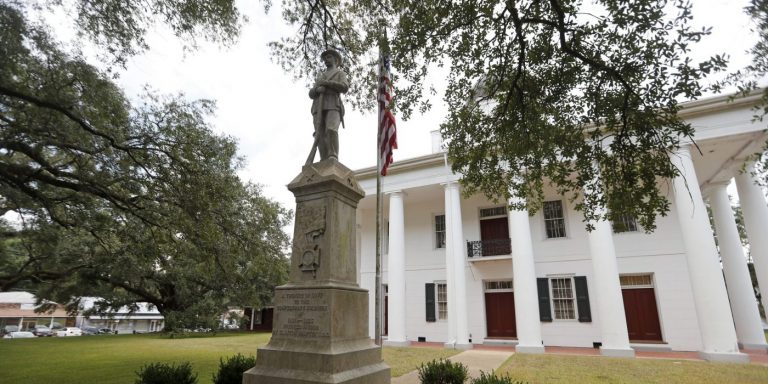
The statue of the anonymous Confederate soldier has stood in front of the white-columned East Feliciana Parish courthouse for more than a century, leaning on his rifle as he looks down on trucks hauling timber and residents visiting the bank across the street.

It withstood an attempt to remove it in 2016. The local doctor who asked the southeast Louisiana parish to move it lost two friends in the controversy, but the statue stayed.

In 2018, a black man who was a defendant in a trial petitioned to have his case moved, saying the statue was a symbol of racism. He lost that fight, and the statue stood.

Now, as recent race riots have renewed far left attacks on the hundreds of Confederate monuments still standing across the Southern landscape, officials in the rural parish of roughly 20,000 people have voted 5-3 to leave the statue where it is.

In recent weeks, dozens of Confederate statues have fallen across the country — often in more liberal-leaning urban centers.

Leftist leaders who have long chafed at the presence of the monuments—many protected by local statutes—used the danger posed to rioting vandals trying to tear them down as the final pretense for their removal.

But in many smaller places like Clinton, the effort to remove markers that many far-left radicals claim as “racist” relics has stalled or has yet to arrive.

Hurting their cause is the shocking overreach that the “woke” mob has exerted in demanding not just the removal of Confederate leaders, but many others whom they arbitrarily have deemed racist—including pro-Union presidents Abraham Lincoln and Ulysses S. Grant.

Even black abolitionist Frederick Douglass, a prominent 19th-century Republican, has not escaped their wrath. And some are now demanding that Mount Rushmore be deemed a symbol of “white supremacy” and dynamited.

That has resulted in a growing backlash movement that has, if anything, been detrimental to the efforts farther afield, where outraged main-street Americans have drawn the line after seeing rioters treated with impunity in places like Seattle, Portland and St. Louis.

A similar backlash to riots during the Obama presidency were a key component in President Donald Trump’s political ascension.

Trump has, likewise, stood his ground in the recent attacks, threatening this week to veto House Democrats’ effort to rename military bases honoring Confederate generals.

But black activists, even in rural and more conservative areas, insist they will never cease their campaign to tear down the monuments.

John Sanders, a black businessman and minister in Clinton, thought the national spotlight on the issue presented a slight chance that parish officials would vote to move it. But if not now, he thinks it will happen—some day.

“I think that it has to come up again,” he said.

“It’s not a matter of ‘if,’ he continued. “It has to come up again, and the reason I say that is that there is no way that we can sit around and be on the wrong side of history.”

The phrase has been a commonly used trope among left-wing activists, who insist that history must, inevitably, be a steady march toward the agenda of radical progressives.

However, historically speaking they have been right only about half the time. Many of the monuments were erected in an era of national reconciliation following the indignities of a decade of Southern “reconstruction.”

Yet, the involvement of “carpet-baggers” (Northerners who migrated south) and “scalawags” (virtue-signaling Southerners) ultimately entrenched negative attitudes toward newly freed blacks and helped the Ku Klux Klan gain a national foothold in the Democrat party for the next half-century.

“It’s unclear how long this will continue, whether this is going to be a full movement that really leads to a cascade effect where more and more are removed,” said Adam Domby, a College of Charleston historian.

Domby said it would take far more removals in politically conservative areas to convince him there’s been a national shift in support of removing Confederate monuments.

Since the Memorial Day death of George Floyd served as the catalyst for the most recent election-year “woke” revolution, at least 63 Confederate statues, monuments or markers have been removed. Most were removed by government officials, though protesters have toppled some.

All but eight have come down in cities or metropolitan areas larger than 50,000 people. Most of the areas lean politically left, with 41 of the monuments removed in counties or equivalent areas that voted Democratic in the 2016 presidential election.

AP’s exclusive tally verified removals through government announcements, AP news coverage and other sources, then analyzed them based on census data and voting patterns.

Still, in a sign that the removal movement might be spreading, local governments in several less populous areas of Mississippi, Louisiana and South Carolina have recently approved removals but not yet taken down the monuments.

The sheer number of Confederate monuments still standing shows the enormous task for those seeking removals: More than 700 remain on public land, according to the far-left Southern Poverty Law Center.

Laws that protect the monuments in Alabama, Georgia, Mississippi, North Carolina, South Carolina and Tennessee are slowing efforts.

Despite North Carolina’s state law that all but prohibits permanent removals, its Democratic governor cited a public-safety exemption to remove several Confederate monuments at the state Capitol in Raleigh after protesters ripped two statues down.

Some local officials also invoked safety as they removed monuments in several cities; at least 17 have come down statewide since Floyd’s death.

Yet in Republican-leaning Alamance County, the county manager’s public safety argument for removing a statue near the courthouse was rebuffed when most members of the county commission said publicly they were legally unable — or simply unwilling — to take it down.

North Carolina still has at least 69 monuments on public land. Of those, 56 are in counties that voted for President Donald Trump in 2016; 52 are in towns of fewer than 20,000, the AP tally shows.

After a far-left takeover of the state legislature, backed by billionaire globalists, Virginia this year amended a similar law to let local governments take statues down. The state, where much of the fighting happened, was also the seat of the Confederacy.

A prior dispute over the illegal removal of two monuments helped to spark the deadly 2017 clash between right- and left-wing extremists groups in Charlottesville.

But in the state capital of Richmond, a Democrat mayor unilaterally decided to invoke emergency powers last month rather than follow the newly enacted removal process.

Still, a different scenario is unfolding in Virginia’s rural Franklin County. Most residents who spoke Tuesday at a Board of Supervisors meeting urged the swift removal of a Confederate statue from the county courthouse.

Instead, the board voted to delay the decision by putting a non-binding referendum on relocating the statue to voters in the Republican-leaning, majority-white county. The final decision will still lie with the board after the November election.

“The people in Rocky Mount are looking for every excuse to keep it there,” said Ruby Penn, whose sister, Penny Blue, is the only person of color on the county School Board.

In Louisiana, a little over 2,000 people signed a petition to remove Confederate monuments in front of the East Feliciana Parish courthouse and the one in neighboring West Feliciana Parish.

In a sometimes heated meeting about a week before the final vote, LaRhonda George said Confederate statues shouldn’t be displayed at a building where people of “any race are supposed to go seek justice.”

She said if people want to honor ancestors, they should move the statue to the town’s Confederate cemetery.

Supporters said removing it would wipe away a memorial to their ancestors, along with parish history.

“This is only for memorial for those that lost their lives, regardless of what it was for,” Deanna Fontenot said. “They lost their lives.”


US Orders China to Shutter Houston Consulate over Property Theft Concerns

0

(Headline USA) The United States said Wednesday that it has ordered China to close its consulate in Houston “to protect American intellectual property” and the private information of Americans.

China strongly condemned the move, the latest in a series of steps by the Trump administration as it ratchets up pressure on the world’s second-largest economy over trade, technology, human rights and security.

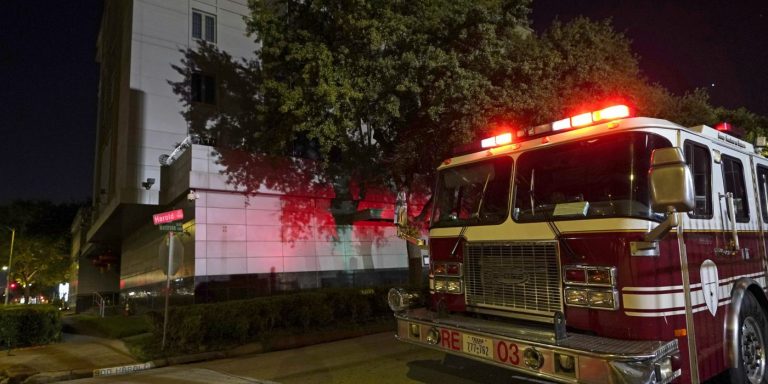
Firefighters responded to reports of papers being burned on the consulate grounds Tuesday night but were barred entry, according to Houston news media reports.

The U.S., in a brief statement, did not provide any details on why the consulate in Texas was targeted.

“The United States will not tolerate [China’s] violations of our sovereignty and intimidation of our people, just as we have not tolerated [its] unfair trade practices, theft of American jobs, and other egregious behavior,” said the statement, which was attributed to State Department spokesperson Morgan Ortagus.

The consulate was informed of the decision Tuesday, Chinese foreign ministry spokesperson Wang Wenbin said, calling it “an outrageous and unjustified move that will sabotage relations between the two countries.”

“The unilateral closure of China’s consulate general in Houston within a short period of time is an unprecedented escalation of its recent actions against China,” Wang said at a daily news briefing in Beijing.

He warned of firm countermeasures if the U.S. does not reverse itself. Besides its embassy in Beijing, the U.S. has five consulates in mainland China, according to its website. They are in Shanghai, Guangzhou, Chengdu, Wuhan and Shenyang.

Houston media reports said authorities responded to reports of a fire at the Chinese Consulate. Witnesses said people were burning paper in what appeared to be trash cans, the Houston Chronicle reported, citing police.

Police were told that occupants were given until 4 p.m. Friday to leave the property, the Chronicle said.

Houston police said in a tweet that officers responded to “a meet the firefighter” call at the Chinese Consulate building at 3417 Montrose Blvd. The tweet said smoke was observed in an outdoor courtyard area, and that officers were not allowed to enter the building.

Wang accused the U.S. of opening Chinese diplomatic pouches without permission multiple times, confiscating Chinese items for official use and imposing restrictions on Chinese diplomats in the U.S. last October and again in June. He also said that U.S. diplomats in China engage in infiltration activities.

“If we compare the two, it is only too evident which is engaged in interference, infiltration and confrontation,” Wang said.

He also said that the Chinese Embassy in Washington has received bomb and death threats, and accused the U.S. government of fanning hatred against China.

President Donald Trump, his reelection prospects damaged by the coronavirus outbreak, has blamed China repeatedly for the pandemic. Almost every day brings a fresh U.S. action against what Trump has called the rising Asian superpower’s exploitation of America.

Already this week, the Commerce Department has sanctioned 11 Chinese companies over alleged human rights abuses in the Xinjiang region and the Justice Department said two Chinese stole intellectual property and targeted companies developing coronavirus vaccines.

Secretary of State Mike Pompeo is expected to continue the attacks Thursday in a speech on U.S.-China relations at the Nixon Library in California.

Chinese Foreign Minister Wang Yi, saying U.S.-China relations face their most severe challenge since diplomatic ties were established in 1979, asked recently if the two nations would be able to stay the course after a more than four-decade voyage.

Adapted from reporting by the Associated Press

Radical Resistance to Federal Peacekeepers becomes ‘Very Frightening’

0

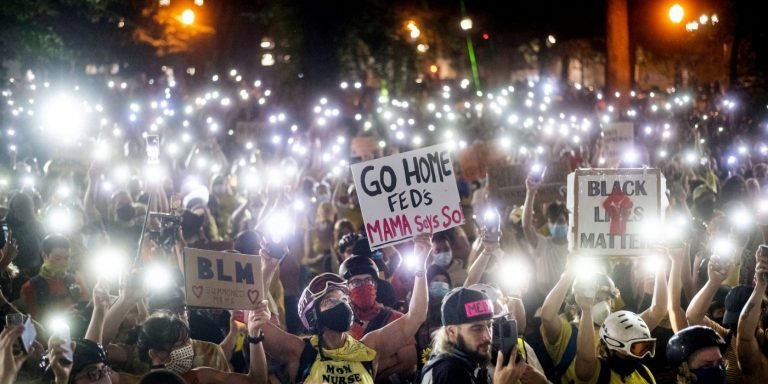
(Headline USA) The Trump administration is facing growing resistance from radical lefitsts—in the courts and on the streets—to sending federal agents to Portland, Oregon, where protests have spiraled into violence, and vowing to do the same in other Democratic-led cities.

Initially reluctant to provide tactical support during anarchist demonstrations in Seattle, New York and others, some of which lasted weeks, Trump changed his tune with the violence in Oregon, refusing to allow the rioters to lay the city to ruin. He likewise determined to send 150 troops into Chicago to maintain order as crime skyrocketed.

The Trump administration also has sent more than 100 federal officers to Kansas City to help quell a rise in violence after the shooting death of a young boy there.

But leftists claim that the presence of federal agents on the streets of progressive Portland—and particularly allegations they have whisked people away in unmarked cars without probable cause—has energized two months of nightly protests that had begun to devolve into smaller, chaotic crowds.

Trump’s administration also faces multiple lawsuits questioning its authority to use broad policing powers in cities.

One filed Tuesday says federal agents are violating protesters’ 10th Amendment rights by engaging in police activities designated to local and state governments. The legal action was filed by the Portland-based Western States Center, which helps organize and promote the rights of communities of color and low-income people.

Oregon’s attorney general sued last week, asking a judge to block federal agents’ actions. The state argued that masked agents have arrested people on the street, far from the U.S. courthouse that’s become a target of vandalism, with no probable cause.

“It is time for the Trump troops to go home and focus their attention on other activities,” Democratic Gov. Kate Brown said on MSNBC.

Federal authorities, however, said state and local officials had been unwilling to work with them to stop the vandalism and violence against federal officers and the U.S. courthouse in Portland.

“We need to find a peaceful outcome,” acting Department of Homeland Security Secretary Chad Wolf said at a news conference Tuesday in Washington. “At the end of the day, we have to protect the federal property and the law enforcement officers.”

The use of federal agents against the will of local officials also has set up the potential for a constitutional crisis, legal experts say.

Federal forces were deployed to Portland in early July, and tensions have grown since: A protester was hospitalized this month with critical injuries after a U.S. Marshals Service officer struck him in the head with a round of less-lethal ammunition.

Anger flared again over the weekend after video surfaced of a federal agent hitting a U.S. Navy veteran repeatedly with a baton while another agent sprays him in the face with pepper spray.

Crowds had recently numbered fewer than 100 people but swelled to more than 1,000 over the weekend, again attracting a broader base in a city that’s increasingly unified and outraged.

Among the protesters was Mardy Widman, who watched demonstrations unfold in her hometown for weeks but stayed away because, at 79, she feared getting the coronavirus.

When Trump sent in federal officers, that changed: A masked Widman took to the street Monday with other Portland residents.

“It’s like a dictatorship,” Widman, a grandmother of five, said, holding a sign that read: “Grammy says: Please feds, leave Portland.”

“I mean, that he can pick on our city mostly because of the way we vote and make an example of it for his base is very frightening,” she said.

Federal agents again used force to scatter protesters early Tuesday and deployed tear gas and rubber bullets as some in the crowd tried to pull plywood off the shuttered entryway of the Mark O. Hatfield Federal Courthouse.

Portland police said some protesters lit fires in the street and tried several times to set them at the courthouse doors.

Wolf defended the federal response, saying the Department of Homeland Security has clear authority to protect government property and detain people suspected of threatening personnel or damaging such property.

Wolf said agents have been assaulted with lasers, bats, fireworks, bottles and other weapons and “yet the city of Portland takes little to no action.”

While he said federal agencies have made 43 arrests since July 4, he disputed that they were done by unidentified agents, noting that they have the word “police” on their uniforms.

“These police officers are not storm troopers, they are not Gestapo. That description is offensive,” Wolf said.

Maxine Waters Interrupts Traffic Stop to Berate Officers

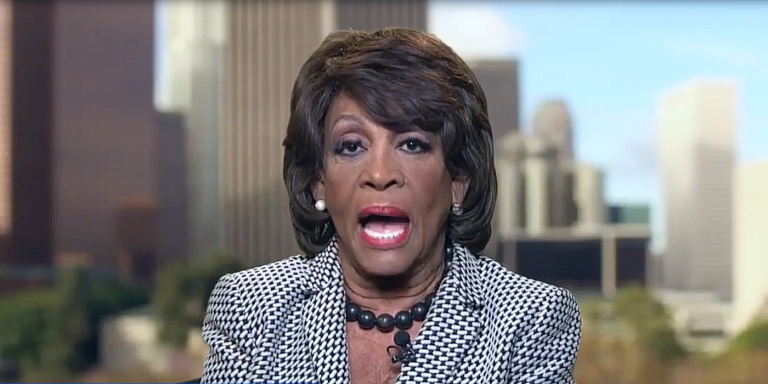
Rep. Maxine Waters, D-Calif., interrupted a traffic stop involving a black man during a burglary investigation.

Waters was reportedly driving in her home district this weekend when she saw a Los Angeles County Sheriff patrol car conducting a routine traffic stop.

Because the traffic stop involved a black citizen, Waters said she parked her car and walked over to the officers.

“They stopped a brother so I stopped to see what they were doing,” she said in a video of the interaction.

The officer informed Waters that she had parked illegally, but Waters disregarded the warning.

“They said I’m in the wrong place and they’re going to give me a ticket,” she continued. That’s OK, as long as I watch them.”

A spokesperson for the sheriff’s office told the Daily Mail that Waters began berating and “yelling at the deputies.”

She refused to listen to the officers, so they wrote her a ticket. She then refused to sign the citation, but was released with a warning.

Waters has previously accused police officers of enjoying the use of force, using former Minneapolis police officer Derek Chauvin as an example.

Chauvin was the officer filmed restraining George Floyd, whose death while in police custody ostensibly triggered a wave of nationwide race riots in June and has served as a catalyst for the emboldened Black Lives Matter movement.

“I believe, sometimes, some of these officers leave home thinking, ‘I’m going to get me one today.’ And I think this is his ‘one,’” Waters recently told TMZ.

She also has insisted that police brutality and racial injustice are a “tradition” within law enforcement that must be “done away with.”

Waters, who supported impeaching President Donald Trump even before he had committed any of his alleged impeachable offenses, has also accused the president of emboldening officers who believe “they can get away with this kind of treatment.”

“Tradition has not worked for us,” she said last month.

“So what you’re talking about—paying attention to a police chief or your city council members who are saying they just can’t get it done, or your mayors who are elected—these police chiefs don’t want to be accountable to them,” she said. “All of that was tradition, and that’s got to be done away with.”

Trump Re-Ups Pledge to Veto Bill Renaming Military Bases

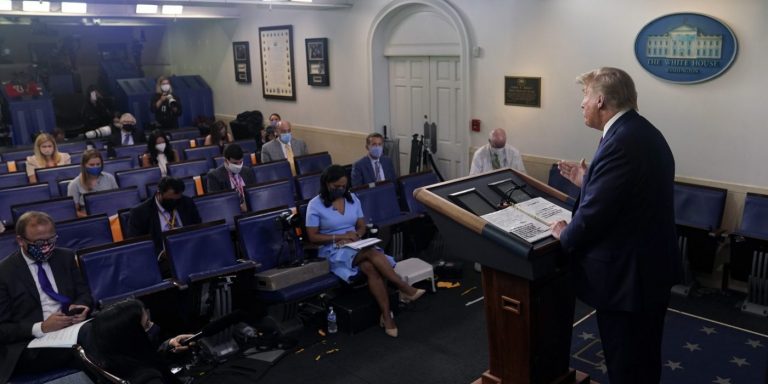
The White House is threatening to veto a massive defense policy bill over a provision that would rename military bases such as Fort Bragg that are named after Confederate officers.

The veto threat Tuesday came hours before the House approved the $741 billion annual defense authorization, a sprawling, bipartisan bill that includes a 3% pay raise for U.S. troops.

The 295-125 vote sends the bill to the Senate, where lawmakers are considering a similar measure.

Rep. Adam Smith, D-Wash., chairman of the House Armed Services Committee, claimed that in the face of dueling national crises, it was essential for Republicans to reach across the aisle to capitulate to the House Democrats’ radical agenda.

“In our current political climate, characterized by partisanship and divisive leadership in the White House, it is increasingly important that Congress show the American people we are still capable of compromise,” Smith said.

In order to override a veto, both chambers would require a nearly insurmountable two-thirds majority. However, some Republicans fret that sailing against the manufactured tradewinds of the current racial frenzy could prove politically costly.

Still, others, fear that anything leveraging the sacred cow of defense spending is too risky to toy with.

The White House said it supported the overall spending figure, but it issued a 13-page statement expressing “serious concerns” about multiple provisions in the bill, including the renaming of some military institutions and limitations on the use of funds for Afghanistan that the White House said would seek to constrain the president’s war powers.

If the bill were presented to President Donald Trump in its current form, “his senior advisors would recommend that he veto it,” the White House said.

Trump also threatened a veto earlier this month, tweeting that the measure would lead to the renaming “Fort Bragg, Fort Robert E. Lee, and many other Military Bases from which we won Two World Wars.”

Trump has described the bases named for Confederate leaders as a part of American history, and he has defended flying the Confederate flag as “freedom of speech”—a position that even far-left groups like the American Civil Liberties Union have taken until recent years.

The statement released Tuesday describes the language in the bill as “part of a sustained effort to erase from the history of the Nation those who do not meet an ever-shifting standard of conduct,” pointing to ongoing efforts to rename or topple federal monuments and memorials.

“President Trump has been clear in his opposition to politically motivated attempts like this to rewrite history and to displace the enduring legacy of the American Revolution with a new left-wing cultural revolution,” the statement by the White House Office of Management and Budget reads.

Ten Army bases are named for Confederate military officers, including Fort Hood in Texas, Fort Benning in Georgia, Fort Bragg in North Carolina and Fort A.P. Hill in Virginia.

Congress has approved the annual defense measure every year for almost six decades. It typically enjoys veto-proof support, though various controversies often mean that it does not pass until late in the year.

Among the provisions in the House-proposed bill:

  •  create a Pandemic Preparedness and Resilience National Security Fund, directing $1 billion to efforts to prepare for and respond to future pandemics
  • designate an assistant secretary of defense for industrial base policy, charged with supervising Pentagon policies to develop and maintain the nation’s defense industrial base
  • prevent the use of Pentagon funds to reduce U.S. forces stationed in Germany and elsewhere in Europe below levels present in June, unless the Defense secretary and Joint Chiefs of staff certify six months in advance that the reduction would not negatively affect U.S. and allied security
  • fully fund the European Deterrence Initiative and provide billions of dollars for submarine and anti-submarine warfare capabilities that enhance deterrence against Russia
  • provide $250 million to support Ukraine and extend a ban on funding for any activity that would recognize Russian sovereignty over Crimea

A host of non-defense pork-spending on Democrat wish-list items also weaseled their way into the bill, including environmental measures pushed by Democrats in the West to protect the Grand Canyon and wilderness areas in three states.

Those likely tie into recent efforts to thwart the construction of the US–Mexico border wall, one of Trump’s 2016 campaign promises, which activist judges have repeatedly used injunctions to thwart.

The bill also provides up to $10,000 in debt relief to millions of private student loan borrowers, including thousands of service members and veterans.

The amendment’s sponsor, Rep. Madeleine Dean, D-Pa., said the COVID-19 pandemic has exacerbated a student debt crisis that has left at least one in seven student loan borrowers more than 90 days delinquent in their payments.

Several of the more radical Democrat presidential candidates, such as Sen. Elizabeth Warren, D-Mass., and socialist Sen. Bernie Sanders, I-Vt., had included in their platforms a bid to wipe away student loan debt as part of an effort to appeal to jobless millennial voters.

Adapted from reporting by the Associated Press

Hawley Calls On Corporate America, Woke Celebs to De-Slave Their Products

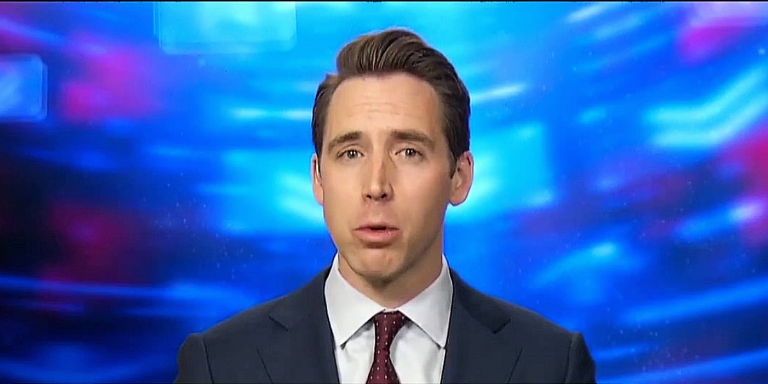
In a Tuesday morning tweet, Sen. Josh Hawley, R-Mo., challenged activist celebrities and corporate America to take a stand against slavery by holding governments like China accountable for their appalling labor practices.

With so much attention currently devoted to Black Lives Matter, racism and the horrors of slavery, corporate America and popular culture icons like NBA superstar Lebron James should automatically embrace the non-controversial position.

But that’s not likely to happen, and Hawley is exposing the hypocrisy.

To genuinely address the corporate Left’s professed causes would, in turn, diminish bottom lines—and that’s a sacrifice too great for their movement.

Rather, corporations and brand celebrities seem intent on profiting from slavery, as their Chinese virtue-signaling suggests.

On Monday, the freshman Missouri senator, a prominent ally to President Donald Trump, introduced federal legislation to hold American companies accountable if they use slave labor in their supply chains.

The Slave-Free Business Certification Act would increase corporate supply chain disclosure requirements, mandate regular audits, require CEOs to certify that their company supply chains do not rely on slave labor and creates penalties for firms that fail basic minimum standards for human rights.

“Executives build woke, progressive brands for American consumers, but happily outsource labor to Chinese concentration camps, all just to save a few bucks,” Hawley said in a statement.

He also tagged some of America’s loudest and most privileged social-justice-spouting celebrities and corporations for a response.

Among them were James, apparel brand Nike and Apple CEO Tim Cook, along with an appeal to National Basketball Association commissioner Adam Silver.

As of Tuesday afternoon, all of Hawley’s inquiries went unanswered.

Similarly, fellow GOP Sen. Ted Cruz, R-Texas, took on NBA Dallas Mavericks owner Mark Cuban.

According to Hawley, at least 80 companies have been tied to slave labor in China, including American sportswear companies and tech giants.

The issue also spreads far beyond China, as demonstrated by Starbucks’s use of South American forced labor for its coffee beans.

“If corporate America wants to be the face of social change today, they should have to certify they are completely slave-free,” said Hawley.

“And if they refuse to do so, they should pay the price,” he added. “That’s social responsibility.”

Trump Admin Sending 150 Federal Agents to Crime-Ridden Chicago

The Department of Homeland Security plans to send 150 federal agents to Chicago this weekend to help curb violent crime, according to the Chicago Tribune.

Gun violence and criminal behavior in Chicago has skyrocketed, with more than 70 people injured and 10 killed just this past weekend.

This same weekend last year, 43 people were shot, three of them fatally.

It’s clear Chicago authorities no longer have control of the city, but Democrats insisted this week that federal policing would only make the situation worse.

“Make no mistake: Trump’s federal troops will not be a constructive force in Chicago,” Colleen Connell, executive director of the ACLU of Illinois, said in a statement. 

Connell referenced federal policing efforts in Portland, which acting DHS Secretary Chad Wolf defended as absolutely necessary given the radical efforts of Antifa terrorists to brutalize and destroy government property.

“I don’t need invitations by the state, state mayors or state governors to do our job. We’re going to do that, whether they like us there or not,” Wolf told Fox News.

“We want to work with them. And we have a great working relationship with the vast majority of local law enforcement,” Wolf said. “However there are some communities that, again, want to breed this environment that allows this lawlessness.”

Trump administration officials have been warning Democratic-run cities that the federal government would step in if need be. Just last week, acting Deputy Homeland Security Secretary Ken Cuccinelli said that federal enforcement would spread if violent protests continued to spike. 

“If we get the same kind of intelligence in other places about threats to other federal facilities or officers, we would respond the same way,” he told CNN.

Federal officers have been reportedly rounding up antagonistic rioters and detaining them in unmarked vehicles. Videos of the altercations prove that these rioters were defacing public buildings, setting dumpster fires, and throwing projectiles at officers standing guard:

Yet Oregon Gov. Kate Brown claimed that Wolf and other DHS officials were deliberately setting up confrontations between protesters and law enforcement.

Chicago Mayor Lori Lightfoot has already adopted a similar tone, blaming Trump for gun violence in her city, which she said is a direct result of the Trump administration’s refusal to take action on gun-reform legislation.

“If you go back over many years President Trump has said a lot of disparaging things about the city of Chicago. He likes to use us as a political punching bag,” Lightfoot said. “But if the president was really committed to helping us deal with our violence he would do some easy things.”

Lightfoot urged Trump not to send federal officers to Chicago on Monday, claiming that their presence would be a “disaster.”

“What we do not need, and what will certainly make our community less safe is secret, federal agents deployed to Chicago,” Lightfoot wrote in a letter to the White House.

Federal officers would be “unfamiliar with the unique circumstances of our neighborhoods” and would not be effective, she argued.

Trump, however, defended the DHS’s work in Portland and said his officers have done a “fantastic job” thus far.

“I’m going to do something—that, I can tell you,” he said when asked about Lightfoot’s letter. “Because we’re not going to let New York and Chicago and Philadelphia and Detroit and Baltimore and all of these—it’s a mess.”