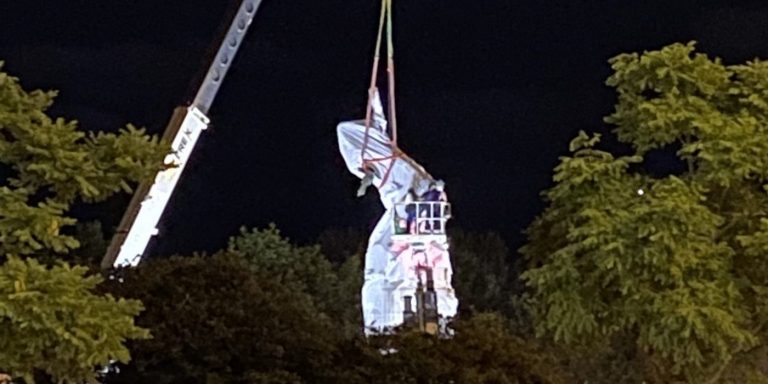
Amid ongoing protests, Chicago Mayor Lori Lightfoot ordered two statues of Christopher Columbus to be taken down in the middle of the night this week.
At around 2 a.m. early Friday, two cranes showed up to take the statue located in Grant Park, according to Fox 32. The statue was official removed at about 3 a.m.
In a statement, the mayor’s office said the statue was “temporarily removed … until further notice,” according to the Chicago Tribune.
“This step is about an effort to protect public safety and to preserve a safe space for an inclusive and democratic public dialogue about our city’s symbols,” the statement said. “In addition, our public safety resources must be concentrated where they are most needed throughout the city, and particularly in our South and West Side communities.”
Protesters attempted to take down the statue themselves last week, which resulted in a clash between law enforcement and violent protesters. The protests continued throughout Thursday night and into Friday morning, with crowds gathered outside of Lightfoot’s home.
Italian residents near Grant Park had defended the statue, arguing that it was an important part of their heritage and a significant reminder to immigrants everywhere that starting a new life in the U.S. is possible.
“I had just moved in in October of 1966, and they had a big kind of celebration here,” said Wade Freeman, who was living near Grant Park when the statue of Columbus was first built. “It’s kind of a big deal to see this go away.”
Pasquale Gianni, with the Joint Civic Committee of Italian Americans, called Lightfoot’s removal of the statue “disheartening.”
“These are where the statues belong, in their communities,” he said.
A GOP intra-party battle is taking place in Tennessee, where a Trump-supporting insurgent candidate is gunning for an establishment Republican in the all-important effort to replace retiring Sen. Lamar Alexander.
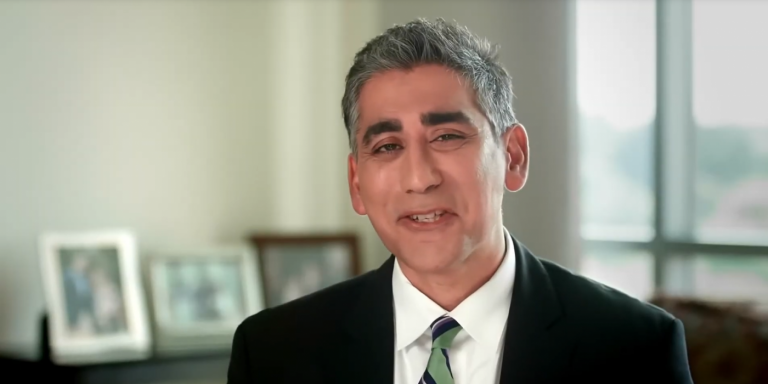
Dr. Manny Sethi has “swamp” candidate Bill Hagerty in his cross-hairs, and he received a major momentum-boost recently by way of an endorsement from Texas Sen. Ted Cruz.
Although largely eclipsed byhigh-profile Senate races in neighboring Deep South states, the GOP primary brawl in Tennessee is equally telling of a growing conservative realignment in the Trump presidency that somewhat resembles earlier efforts like the Obama-era Tea Party movement.
Just as former Auburn coach Tommy Tuberville recently defeated ex-Attorney General Jeff Sessions in Alabama, and GOP Rep. Doug Collins is outpolling incumbent Sen. Kelly Loeffler in Georgia, Sethi has cast himself as something of a political outsider taking on the moneyed interests of the Establishment.
Hagerty is a wealthy businessman and former ambassador to Japan. He supported Jeb Bush in the 2016 Republican primary, then moved to Sen. Marco Rubio, R-Fla., after Bush’s embarrassing early defeat.
Conservative talk radio host Mark Levin has referred to Hagerty as “Mitt Romney Junior.”
On the other hand, Cruz described Sethi in a Facebook post on Wednesday as a true “conservative fighter that will stand up for our values.”
According to Cruz, Sethi is everything that squish Republicans fear.
He’s unapologetically pro-life, pro-Second Amendment and pro-free-market economy.
As a newcomer, he’s not beholden to the establishment patronage system—and, as a physician, Sethi has made repealing all aspects of Obamacare a central theme of his candidacy.
“There’s a reason the Establishment’s throwing everything they’ve got at Dr. Manny these final days—he’s winning,” said Cruz.
Hagerty’s establishment connections predate his 2016 opposition to President Trump.
Not only is he an advisor and friend to anti-Trump Sen. Mitt Romney, R-Utah, the two are former business partners.
He also worked for the George H.W. Bush administration; hired NeverTrumpers; and donated to extensively to the late Sen. John McCain, R-Ariz., as he was feuding with President Trump on the 2016 campaign trail.
As the Russia-collusion hoax continues to unwind, an FBI official at the heart of the government’s spying abuses was revealed to be a professor of spying ethics at a Washington, D.C. area college.
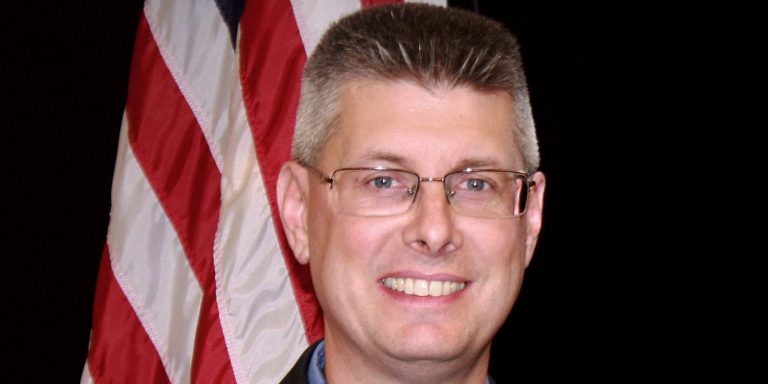
Brian J. Auten, a former senior FBI analyst, was cited by the Justice Department for failing to properly vet the so-called Steele Dossier, which was used as the basis to secure secretive warrants to spy on the Trump campaign.
As of Friday, Auten’s professor page at Patrick Henry College appeared to have been recently taken down.
The dossier—commissioned by the Hillary Clinton campaign—was a compilation of dubiously sourced dispatches from ex-British spy Christopher Steele, an outspoken Trump critic who worked for the seedy opposition research firm Fusion GPS.
Since the conclusion, last year, of the 18-month, $30+million special counsel investigation led by former FBI Director Robert Mueller, the unprecedented conspiracy to overthrow President Donald Trump has been blown to bits by multiple inspector-general reports and troves of declassified documents.
None of the dossier’s salacious accusations were ever confirmed, but the process of securing the FBI’s warrant on Trump campaign advisor Carter Page included at least 17 “significant inaccuracies and omissions,” according to DOJ inspector general Michael Horowitz.
Horowitz also found that the FBI’s warrant applications to the Foreign Intelligence Surveillance court omitted information about the reliability of one of Steele’s key “sub-sources.”
Those “mistakes”—all cutting in the same direction—came down to Auten, who has, ironically, taught classes on the ethics of spying at Patrick Henry College since 2010.
His tenure overlaps the period when he and other senior FBI and Obama administration officials were conducting a counter-intelligence spy ring against Trump based on phony rumors, forged evidence and political dirty tricks.
Horowitz identified him as the bureaucrat most responsible for not putting the brakes on the dossier, though he was not identified by name.
As an ethics professor, Auten has a lot to answer for.
Not only had he never verified the basis for spying on a presidential campaign and then sitting president of the United States, but by January 2017 Auten had more than enough evidence to prove the dossier was bogus, according to Sperry.
Yet, former FBI Director would soon conduct an eighteen-month special counsel probe largely based on the dossier’s Russian collusion accusations.
The documents “significantly undercut” the “reliability” of Steele’s work, the Mueller probe and the spying warrants that flowed from Auten’s position at the FBI.
A 57-page document recounts three days of interviews with Steele’s primary “sub-source” of information for his Trump–Russia reports.
Steele’s source, according to the committee, told the FBI in January and March of 2017 that the information contained in Steele’s dossier was false. Yet, the FISA spying warrants continued to be renewed.
The document also showed that Steele’s source was giving him information that was “second and third-hand information and rumors at best.”
The committee further declassified notes from former FBI special agent Peter Strzok, which disputed a New York Times article titled “Trump Campaign Aides Had Repeated Contacts with Russian Intelligence.”
While Democrats mourn the loss of Rep. John Lewis, D-Ga., another civil rights icon passed with hardly any mention.
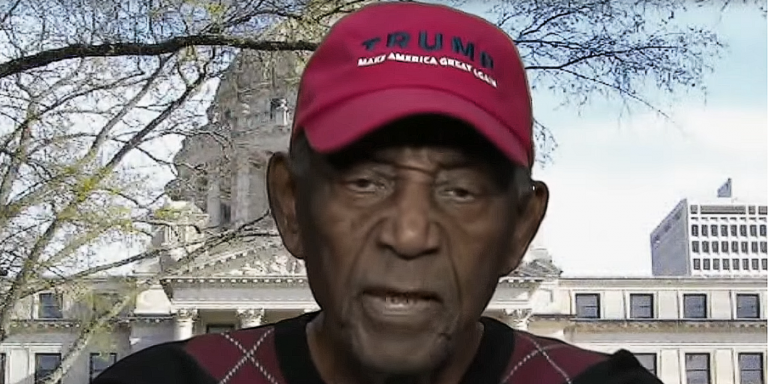
Charles Evers, who died this week at age 97, made history as a black mayor in segregated Mississippi.
Evers—the brother of Medgar Evers, a civil rights activist who was killed in Mississippi in 1963—was also a Republican who supported President Donald Trump.
Trump tweeted his mutual respect for the late “trail blazer” on Wednesday:
I am deeply saddened by the loss of my friend Charles Evers. Charles was a trail blazer in politics and a fearless leader, alongside his brother Medgar, for Civil Rights. pic.twitter.com/rL4bLbCY1D
Unlike Lewis—a notorious partisan who called Trump a racist and refused to attend his inauguration—Evers had a long history of backing Republican presidents including Richard Nixon, Ronald Reagan and George W. Bush.
He even served as a delegate to the Republican National Conventions during the races against Bill Clinton in 1996 and Al Gore in 2000.
In 2016, Evers cast one of Mississippi’s six electoral votes for Donald Trump and reportedly described himself as an “independent Republican” like Trump.
“I’m a great believer in earning something. Democrats always want to give away something,” he said, adding that he was a longtime Trump supporter.
“He’s a multimillionaire,” Evers said. “I like rich folks. Can’t nobody buy him.”
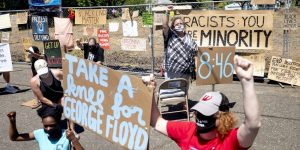
(Headline USA) After George Floyd’s death in the custody of Minneapolis police, people in Portland came out in droves to protest police brutality and racism, chanting that “black lives matter.”
As the weeks went by, the crowds dwindled to a few dozen and the protests increasingly turned violent.
But ever since militarized federal agents arrived in the far-left city early this month to maintain order and safeguard federal property, the numbers of protesters have swelled again.
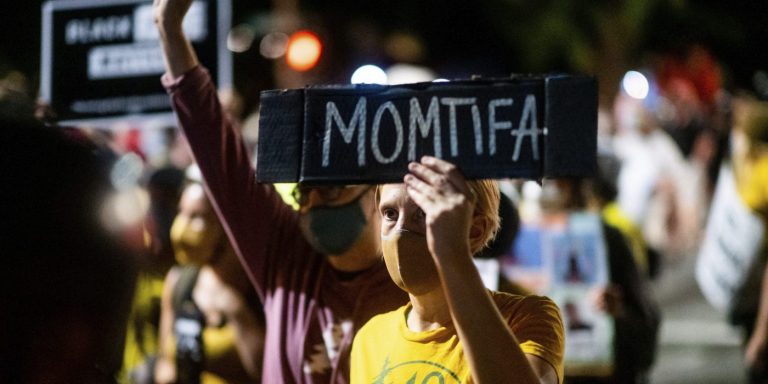
Thousands of mostly white demonstrators, including mothers wearing yellow shirts and dads armed with leaf blowers to drive away tear gas, join in chants like “Feds go home!”
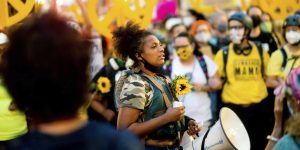
Sometimes, they also call for racial justice, led by black protesters with megaphones.
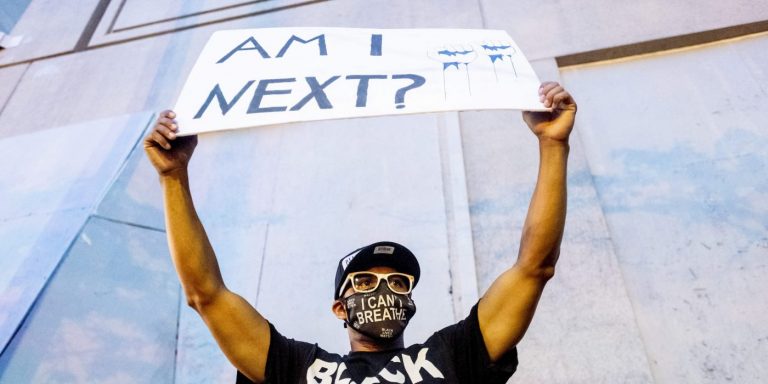
For the most part, though the catalyzing event—the public outrage over Floyd and other innocent victims of color due to “systemic racism”—has spun off in many other directions, leaving the original movement something of an afterthought.
Coming Together, Falling Apart
Skeptics and critics wonder if that weren’t the plan all along.
Well before the deaths of Floyd, Ahmaud Arbery, Breonna Taylor and Rayshard Brooks spurred the latest public action, radical activists such as those backing the campaign of Sen. Bernie Sanders had promised violent clashes to come.
Such efforts seem, in recent campaign cycles, to have become something of a pattern that onlookers could set their watches to.
The anti-war demonstrations during the George W. Bush years gave way to the Occupy Wall Street anti-capitalist movement of the 2012 Barack Obama–Mitt Romney campaign.
The racial discord in the waning years of Obama’s second term all seemed to coalesce in violent anti-Trump clashes as organized and—in some cases—well-paid groups like Black Lives Matter and Antifa found their audience and coordinated their efforts.
Radical feminist groups like Code Pink and socialist organizations found their respective niches also.
Rally around the Rage
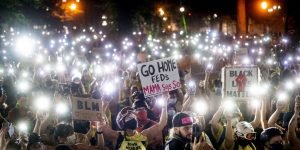
Hundreds of Black Lives Matter protesters hold their phones aloft on Monday, July 20, 2020, in Portland, Ore. / IMAGE: Associated Press
The opposing figurehead seems immaterial—weak and “compassionate” moderates like Bush and Romney were just as apt as anyone to be denounced as Nazis by the unruly mobs.
However, President Donald Trump’s refusal to capitulate has mobilized the resistance effort even more, helping the radical hate-groups to coalesce around a common political enemy.
The lackluster appeal of presumptive Democrat alternative Joe Biden makes ginning up fury among left-wing extremists even more of an imperative.
The success of Democrat organizers in unifying these conflicting interests in service of a singular outcome can, however, be a double-edged sword.
Apart from a few vague, reductive slogans and talking points, few in the crowd seem fully capable of articulating just what it is they are angry about—much less presenting viable solutions that extend beyond early November.
Instead of violence and chaos being a means to an end, they have become the end itself as protesters violently protest the fact that federal authorities won’t allow them to protest even more violently and destructively.
Ironically, the rhetoric against federal intervention mirrors closely that of Confederate figures, whom many in the mob have recently demanded must be obliterated from the nation’s history books for their traitorous 19th-century rebellion.
Blacks to the Back?
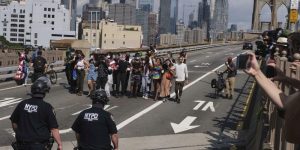
NYPD stand on the Brooklyn Bridge during a Black Lives Matter protest that resulted in violent clashes and injury to several police officers. / PHOTO: Associated Press
Historically speaking, the Left’s appropriation of black suffering to attain ulterior political objectives—forcing loyal minority foot-soldiers into a more subservient role in favor of priorities that are, if not counter-productive, at the very least irrelevant—has a long history of its own.
Once again, black leaders agreed that they didn’t mind taking a back seat over something as important as swapping Trump for Biden.
In Portland, black leaders insist the recent surge in activity—though often chaotic—hasn’t distracted from their anti-racist message. Instead, it’s shined a spotlight on it.
Portland City Commissioner Jo Ann Hardesty, the first black woman elected to that office, rejected the idea that the Black Lives Matter protests are being hijacked by white people.
“We cannot afford not to respond to this attack on our democracy, this attack on our Constitution,” Hardesty said.
“And we would be foolish to believe that we could stay focused just on black lives and not address the physical assaults that are taking place,” she added.
Unburdened in the Burbs
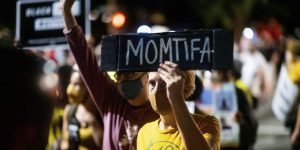
An Antifa rioter who declined to give her name protests at the Mark O. Hatfield United States Courthouse on Wednesday in Portland, Ore. / PHOTO: Associated Press
Those attending the protests are overwhelmingly white, a reflection of Oregon’s makeup.
Its population is only 2% black, compared with 13% for the entire U.S., largely due to the state’s racist past. Its Constitution excluded Blacks from living in Oregon until the clause was repealed in 1927.
For white liberals, witnessing the anarchy that has taken root in cities like Seattle and Portland offers an immersive experience better than any safari.
Better yet, it helps them to assuage and ameliorate the crushing guilt of their own privilege upon returning to the affluent suburbs where they have priced out many minority residents.
By being subjected to tear gas, nightsticks and pepper spray, “white people are stepping up and they’re seeing the brutality” that back people normally experience, said white protester Carol Vogel Warner. “They’re feeling it.”
Warner said she felt so deep a sense of empathy and obligation to take up the cause that she adopted a black son, following the lead of celebrities like Angelina Jolie who, likewise, have accented their own families with the adoption of underprivileged children of color.
Nice to Be Noticed
Protesters kneel in memory of George Floyd during a demonstration in Portland, Ore. / PHOTO: Associated Press
Some back protesters say that white people who have been throwing water bottles at law enforcement and causing vandalism are setting back the movement.
“When we ask people to stop, they don’t. I have been pushed tonight. I have been shoved tonight. I have been told to shut up,” Portland demonstrator Julianne Jackson said. “If white people want to help us, this is not helping us.”
For most black Democratic leaders, though, the opportunity to help newly “woke” whites experience vicariously the pain of systemic racism and police brutality makes it all worthwhile.
State Sen. Lew Frederick, who’s dodged pepper balls fired by federal agents at the protests, said the Trump administration “miscalculated” if it thought it could end the demonstrations with a show of force.
“It reignited the protest movement in Portland,” Frederick said, adding that he’s seen more black people demonstrating now than in the early days.
Even this week, with the nation focused on the deployment of the federal agents and their tactics, white protesters chanted the names of Floyd, Breonna Taylor and others who have been killed by police.
Vogel Warner said thousands of people stopped marching Monday to remember them.
“We all raised a hand and we had some moments of silence, offering either prayers or chants or our silent love to those people who died,” she recalled.
Just the Beginning…
Black Lives Matter organizer Teal Lindseth, 21, leads protesters in Portland, Ore. / PHOTO: Associated Press
The intervention in Oregon could be just the beginning of a clash between the Trump administration and Democratic leaders in cities nationwide who refuse to bar rioters from engaging in lawless conduct.
During the recent anarchist takeover in Seattle, two lives were lost due to shootings that first-responders couldn’t get to.
It was only then that Mayor Jenny Durkin decided to use local authorities to shut it down, although several stragglers resisted for days afterward.
The economic damage for private businesses that have been looted and vandalized, piled on to the losses from pandemic-related closures, also has been immense.
The White House announced this week that federal agents also will deploy to Chicago, Cleveland, Detroit, Milwaukee and Albuquerque, New Mexico, to combat rising crime.
Yet, the Movement for Black Lives, a coalition of more than 150 black-led organizations across the U.S., said it remains “undeterred.”
“As we witness Portland becoming a war zone, we understand clearly that this is an attempt to intimidate not just protesters on the streets of Portland but to derail our movement in defense of [b]lack lives,” said Chinyere Tutashinda, a coalition organizer.
In the end, though, the movement all comes down to money and power—two areas where black leaders still must look to their benevolent white allies for help and support.
The protests are just one prong of the move to end police violence and racial discrimination and serve underserved communities, Frederick said. Another is changing laws and providing assistance.
After Floyd’s death, Oregon lawmakers passed police accountability measures proposed by the People of Color Caucus, to which Frederick belongs.
And on July 14, 10 days after the federal deployment in Portland, lawmakers provided $62 million in federal coronavirus relief funding to black people and businesses affected by the pandemic.
“That’s because of the People of Color Caucus and the kind of momentum that has been fostered,” Frederick said.
(Headline USA) A federal judge specifically blocked U.S. agents from arresting or using physical force against journalists and legal observers at protests where radical leftist governments and their terrorist-mob allies are seeking to test the limits of President Donald Trump’s federal power.
U.S. Judge Michael Simon made his ruling late Thursday, a day after Portland’s mayor was tear-gassed by federal agents while making an appearance outside a federal courthouse during the ongoing riots. Protesters have gathered in Oregon’s largest city for nearly two months straight.
A large crowd of demonstrators returned Thursday night, chanting and holding signs near the federal courthouse.
Simon had previously ruled that journalists and legal observers are exempt from police orders requiring protesters to disperse once an unlawful assembly has been declared. Federal lawyers intervened, saying journalists should have to leave when ordered.
“This order is a victory for the rule of law,” Jann Carson, ACLU of Oregon’s interim executive director, said in a statement.
The judge said objections by law enforcement were outweighed by First Amendment concerns.
“None of the government’s proffered interests outweigh the public’s interest in accurate and timely information about how law enforcement is treating” protesters, he wrote.
Simon’s order is in effect for 14 days. Journalists and observers must wear clear identification, he said. A freelance photographer covering the protests for The Associated Press submitted an affidavit that he was beaten with batons and hit with chemical irritants and rubber bullets this week.
The ACLU lawsuit is one of several filed in response to law enforcement actions during the protests. The state of Oregon is seeking an order limiting federal agents’ arrest powers during the demonstrations.
On Wednesday, Democrat Mayor Ted Wheeler and hundreds of others were objecting to the presence of federal police sent by Trump, who labeled the demonstrators as “agitators & anarchists” after Wheeler was gassed.
He remained at the front of the raging demonstration—with protesters lighting a large fire between protective fencing and the Mark O. Hatfield Federal Courthouse.
Wheeler has opposed the federal agents’ presence but has also faced harsh criticism from the protesters, who yelled and swore at him.
Earlier in the night, Wheeler was mostly jeered by protesters as he tried to rally the demonstrators who have clashed nightly with federal agents.
Trump in his tweet ridiculed Wheeler, calling him the “Radical Left Mayor of Portland, who last night was booed & shouted out of existence by the agitators & anarchists.”
The Justice Department’s inspector general said Thursday it will review the conduct of federal agents who responded to unrest in Portland and in Washington, D.C., after concerns emerged from members of Congress and the public.
City council members accused Wheeler of not reining in police who used tear gas multiple times on protesters before federal agents arrived. And city business leaders have condemned the mayor for not bringing the situation under control before the agents showed up.
Department of Homeland Security acting Secretary Chad Wolf denied that federal agents were inflaming the situation. He told “CBS This Morning” that Wheeler legitimized criminality by going to the front of the crowd of demonstrators where the fires were lit and where people were trying to pull down a security fence.
Police said the crowd threw Molotov cocktails, lit fires in a park and in trash cans and released hundreds of gallons of water from fire hydrants.
Wheeler’s appearance in the protest zone came hours after state attorneys for Oregon urged another judge to issue a restraining order against the federal agents. Oregon Attorney General Ellen Rosenblum’s lawsuit accuses federal agents of arresting protesters without probable cause, whisking them away in unmarked cars and using excessive force. Federal authorities have disputed those allegations.
The hearing in U.S. District Judge Michael Mosman’s court focused on the actions of the more than 100 federal agents responding to protests outside the Portland courthouse.
The state’s motion asks Mosman to command agents from the Department of Homeland Security, Customs and Border Protection, Federal Protective Service and U.S. Marshals Service to immediately stop detaining protesters without probable cause, to identify themselves and their agency before arresting anyone, and to explain why an arrest is taking place.
(Headline USA) President Donald Trump on Thursday scrapped plans for a four-night Republican National Convention celebration in Florida.
Trump had already moved the convention’s public events out of North Carolina because of virus concerns.
Trump and his advisers feared that going forward with big parties and “infomercial” programming in Florida would ultimately backfire on the president.
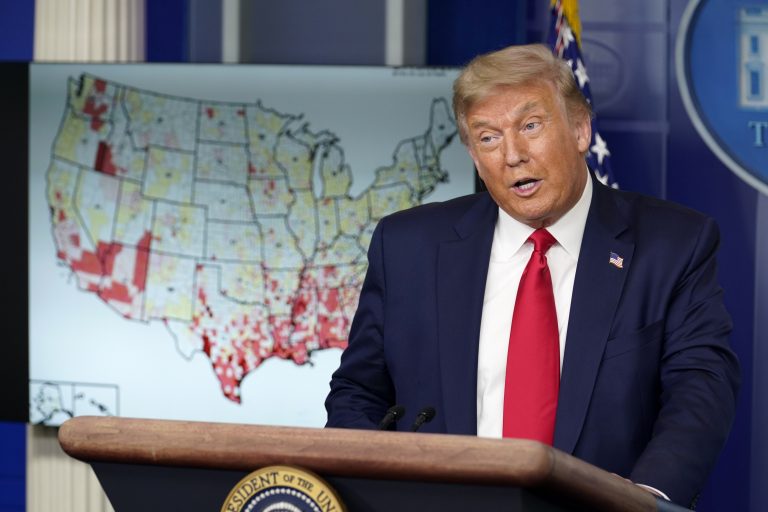
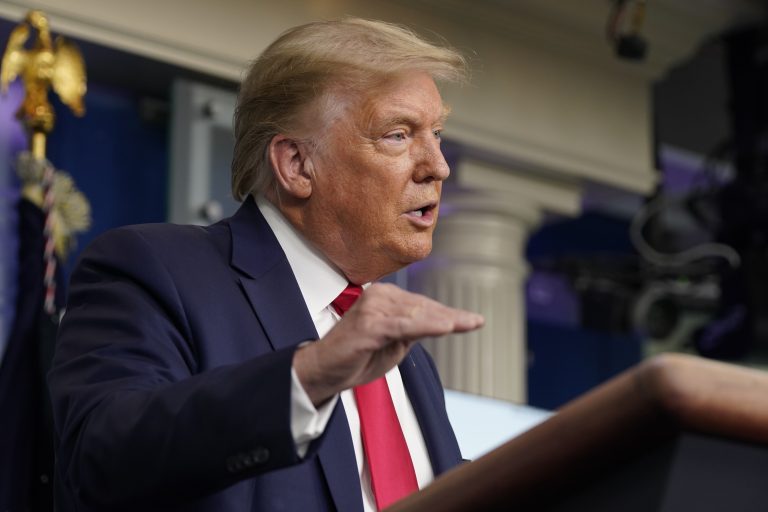
“It’s a different world, and it will be for a little while,” Trump said, explaining his decision at a White House coronavirus briefing. “To have a big convention is not the right time.”
A small subset of GOP delegates will still formally renominate Trump on Aug. 24 in Charlotte, North Carolina, at an event scheduled to last just four hours.
Trump had decided last month to shift the ceremonial portions of the GOP convention to Florida because of a dispute with North Carolina’s Democratic leaders over holding an indoor gathering with supporters taking a pass on face masks.
Trump said he plans to deliver his nomination acceptance speech in an alternate form still to be determined — perhaps online.
Trump campaign manager Bill Stepien said the campaign will still “provide exciting, informative, and enthusiastic programming so Republicans can celebrate the re-nomination of President Trump and Vice President Pence.”
Trump said thousands of his supporters and delegates wanted to attend the events in Florida, but “just felt it was wrong” to gather them. Some of them would have faced quarantine requirements when they returned to their home states from the convention.
“We didn’t want to take any chances,” he added. “We have to be vigilant. We have to be careful, and we have to set an example.”
Democrats will hold an almost entirely virtual convention Aug. 17-20 in Milwaukee using live broadcasts and online streaming, according to party officials. Joe Biden plans to accept the presidential nomination in person, but it remains to be seen whether there will be a significant in-person audience.
The Biden campaign did not immediately respond to messages Thursday seeking comment on Trump’s announcement.
In recent weeks, Trump aides and allies have encouraged the president to consider calling off the convention, arguing it was not worth going forward with the event if the focus would be on the pandemic.
Trump acknowledged that consideration, saying, “I could see the media saying, ‘Oh, this is very unsafe.'”
Trump said he did not cancel the convention events at the request of local officials, but the Jacksonville City Council was set to meet Friday to discuss safety concerns around the gathering.
Jacksonville Mayor Lenny Curry, a former chair of the Florida Republican Party, said he appreciated Trump “putting health and public safety first.”
“I know this was a difficult decision and just demonstrates and reaffirms once again his commitment to Jacksonville, the state of Florida and the people of the United States of America,” he said. “I’m grateful for him and his leadership, and this was the right way to move forward.”
Joe Gruters, current chair of the Florida Republican Party and a state senator from Sarasota, called it a “selfless move.”
“Having our home-state candidate was going to be a really big deal for Florida, but listen, he had it right,” Gruters said. “At the end of the day, it’s about safety.”
More than 10,000 people were expected in Jacksonville — already a fraction of the number that would typically attend a nominating convention.
Only 336 delegates will be allowed to participate in Charlotte under extraordinary procedures approved last month by the Republican National Committee. The balance of the more than 2,500 delegates will vote by proxy.
Cory Burkarth, a spokesman for the city of Charlotte, said Thursday, “We have an agreement in place with the Republican National Committee to host a substantially scaled down business meeting and that is what we are planning to do.”
(Headline USA) Softening his earlier stance, President Donald Trump on Thursday acknowledged that some schools may need to delay their reopening this fall, despite evidence that the coronavirus poses a similar, or perhaps smaller, threat to children as the seasonal flu.
It marks a shift from Trump’s previous demand for a full reopening of the nation’s schools.
In recent weeks, Trump has said that it’s safe to open schools and that Democrats have opposed it for political reasons.
Less than 40 children under the age of 14 have died, tragically, from complications related to COVID-19 since February, according to the CDC’s statistics. Many experts worry that the CDC has overcounted the death toll from the virus.
About 100 children die from the seasonal flu every year.
Thousands of children under the age of 14 have died from all other reasons during the same time period.
But speaking at a White House news conference, Trump said districts in some virus hot spots “may need to delay reopening for a few weeks.” He said the decision will fall to governors.
Even as he tempered his position, though, Trump insisted that every school should be “actively making preparations to open.”
Students need to be in school buildings to prevent learning setbacks, he said, and to access meal programs and mental health services.
As long as they have necessary measures in place, he added, “many school districts can now reopen safely.”
Trump has made opening schools a key priority as he looks to restart the economy.
Students need to return to the classroom so their parents can return to work, he has said.
His push has at times put him at odds with his own health officials. Earlier this month, he said school guidelines from the Centers for Disease Control and Prevention were too tough, prompting the agency to promise updated guidance.
The CDC on Thursday added new information to its website on opening schools.
Much of the new material emphasized the importance of reopening schools.
The updated guidance urged school leaders to work with local officials to make decisions about the fall, taking into account the virus’s rate of transmission in the area.
It laid out a range of measures depending on the level of spread.
If there’s minimal or moderate spread, it recommends social distancing, masks and increased sanitation.
But in areas with substantive and uncontrolled spread, it says, school closure is an “important consideration.”
“Plans for virtual learning should be in place in the event of a school closure,” the CDC said.
Some of the nation’s largest districts have already rejected the idea of a full reopening. The Los Angeles and San Diego districts plan to keep classes online this fall, while New York City’s schools plan to offer a mix of online and in-person instruction.
Education Secretary Betsy DeVos has said that students should be in the classroom every day if their families want and that any alternative fails students and taxpayers.
In many states, education leaders have said they want to return to school but lack the funding to implement safety measures. A group of state education chiefs has said U.S. schools would need more than $200 billion to prepare for a fall reopening.
Trump on Thursday said he’s asking Congress to provide $105 billion in education funding as part of the next virus relief bill. It’s meant to help schools reduce class sizes, hire teachers, rearrange spaces and provide masks, he said.
But if a local district doesn’t open, Trump said, the money should be steered to parents so they can pursue other education options.
“If schools do not reopen, the funding should go to parents to send their children to the public, private, charter, religious or home school,” he said. “All families should be empowered to make the decision that is right for their circumstance.”
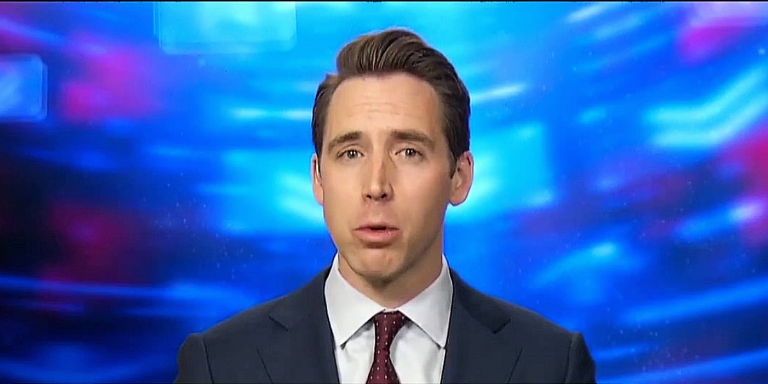
(Associated Press) An eastern Missouri man was sentenced to time served and probation after pleading guilty Thursday to sending several death threats to U.S. Sen. Josh Hawley of Missouri last year.
Jeremy Cawthon, 38, of St. Charles, was sentenced to 16 months of jail time already served and a year of supervised probation, federal prosecutors said in a news release.
Cawthon admitted that he sent several threats to Hawley via Facebook in March and April of last year.
The FBI was contacted i n April 2019 about the threats, which included telling the Republican senator that “I will kill you before I allow you to continue a dictatorship of monetary and religious systems…”
He also threatened to put Hawley “6 feet in the ground before I let you murder my friends and family…”
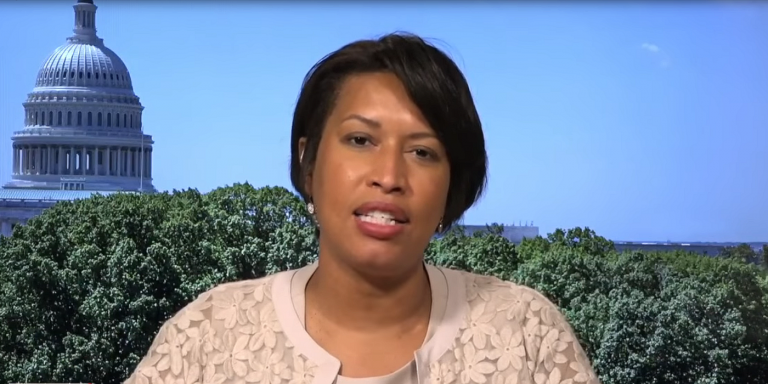
Washington, DC’s radical leftist mayor, Muriel Bowser, announced this week that she is expanding her executive order requiring face coverings in public.
It’s one of the strictest mask ordinances in the country, requiring people older than 2-years-old to wear a mask every single time they leave the house.
Those who do not obey the ordinance will be fined by police officers enforcing the order, according to John Falcicchio, Bowser’s chief of staff.
The only exception to the mandate is “vigorous exercise,” though Bowser did not define what that is.
She did, however, say that walking a dog or waiting for a bus are both activities that would require a mask.
The order states: “Persons leaving their residences shall wear a mask when they are likely to come into contact with another person, such as being within six feet of another person for more than a fleeting time.”
Bowser also said local authorities would investigate President Donald Trump’s appearance at the Trump International Hotel this week, since he entered the building without a mask on.
Investigators went to the hotel and inspected it on Wednesday to check for compliance with Bowser’s order and found no violations at the time of the visit, according to the Washington Post.
Bowser did say, however, that authorities would continue monitoring the hotel.
Trump was at the hotel attending a GOP fundraiser organized by the Republican National Committee.
The RNC said all of the federal government’s health guidelines were followed, including requiring those who attended the event to pass coronavirus tests the day of and undergo temperature screenings as well as wellness questionnaires.
The president has also encouraged Americans to wear masks while in public, saying that it is “patriotic to wear a face mask when you can’t socially distance.”
But Trump has made it clear he won’t mandate masks or support those who do.
Bowser, on the other hand, argued that the order is necessary because “you don’t know if you’re going to be able to maintain social distance.”