Appeals Court Gives Reprieve to Uber, Lyft in California

0

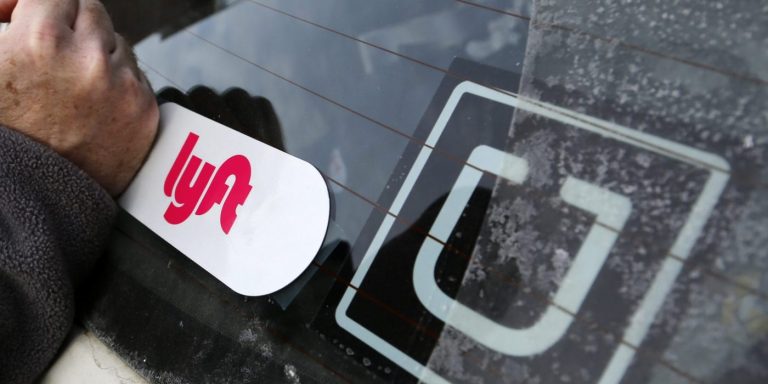
(Headline USA) An appeals court has allowed ride-hailing giants Uber and Lyft to continue treating their drivers as independent contractors in California in a decision that will give the two companies a few more months to protect their business models in a key market.

The stay pauses a lower-court ruling that was scheduled to take effect at midnight on Friday and would have forced Uber and Lyft to treat all their drivers as employees.

The companies said that such a change in status would be impossible to accomplish overnight and would have saddled them with a financial burden difficult for them to shoulder while they are still struggling to turn a profit.

Lyft told riders and drivers in a Thursday blog post that it planned to discontinue providing rides in California just before midnight without a stay.

Uber CEO Dara Khosrowshahi had repeatedly said its service would have no choice but to stop providing rides in California if the state’s law goes into effect because the company can’t just flip a switch and quickly hire about 50,000 drivers as employees.

A California shutdown would have dealt a staggering blow to Uber and Lyft at a time when both are still sustaining huge losses while the pandemic has scared off millions of riders who aren’t traveling as much or are worried about possible exposure to the novel coronavirus.

The state represents a big part of Uber and Lyft’s businesses. It accounted for 9% of Uber’s worldwide rides and food delivery service before the pandemic caused people to avoid traveling.

California is even more important to Lyft, which doesn’t operate outside of the U.S. besides Canada. It accounted for 21% of Lyft’s rides before the pandemic, but that figure dropped to 16% during the April-June period as more people stayed at home and there were few places to go.

Uber said the appeals court reprieve will ensure its “critical services won’t be cut off while we continue to advocate for drivers’ ability to work with the freedom they want.”

Lyft applauded the stay in a statement while vowing “to continue fighting for independence plus benefits for drivers.”

Investors cheered the news too as Uber’s stock gained nearly 7% to close at $31.41 and Lyft’s stock gained nearly 6% to close at $29.76.

The stay delivered a temporary setback for California Attorney General Xavier Becerra after winning a lower-court ruling earlier this month that would have enforced new employment standards passed by state lawmakers last year.

“We’re confident in the facts of our case and we look forward to continuing our fight to defend the rights of workers across the state,” Becerra’s office said in a statement.

It will be business as usual for Uber and Lyft in California, at least for the next few months.

Things could change during the fall, though, especially if they can’t persuade California voters to approve a ballot initiative in November that will let the app-based companies continue to treat drivers as independent contractors, thus making them exempt from state laws mandating overtime, sick leave and expense reimbursement.

But the law would provide drivers with “alternative benefits,” including a minimum wage and subsidies for health insurance.

Uber, Lyft and DoorDash have pledged a collective $90 million to campaign for the ballot measure this fall in addition to Postmates and Instacart’s contributions of $10 million each.

Opposition to the initiative is funded by organized labor, making it one of the more expensive and high-profile initiatives on the ballot this year.

Before votes weigh in on the initiative, the appeals court will hear oral arguments in an Oct. 13 hearing. But a ruling is unlikely until after the Nov. 3 election.

The ride-hailing companies have argued that they’re technology companies, not transportation companies, so drivers are not a core part of their business.

California officials say treating drivers as contractors harms more than just drivers, since the companies don’t contribute to the state’s dwindling unemployment insurance fund on the drivers’ behalf.

The threat of a California shutdown rankled drivers.

“I’m outraged that they would just abandon their drivers, abandon their passengers, just abandon their obligations and duty as a business that was founded in California,” said Jerome Gage, 28, who drives full-time for Lyft. “We can end all this when we vote no on Prop. 22 in November.”

Adapted from reporting by the Associated Press
POLICE: More than 500 Arrests Since May at Portland Protests

0

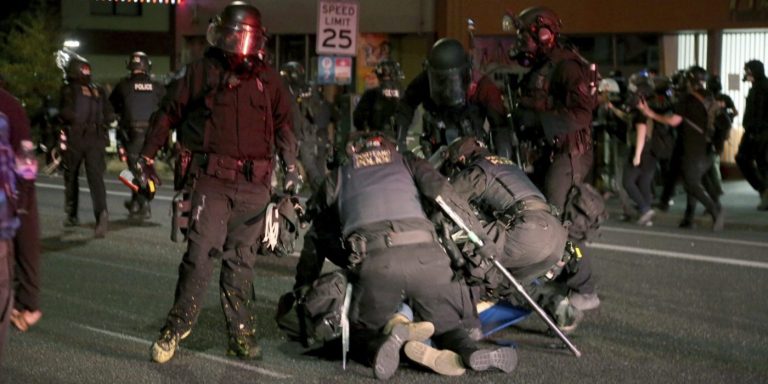
Police in Portland, Oregon, said Thursday they have declared a riot 17 times and arrested a total of more than 500 people during nightly demonstrations throughout the city that began in late May following the police killing of George Floyd in Minneapolis.

Data released by the Portland Police Bureau showed fires were set by protesters on 41 of the 83 nights of protest, acts of vandalism were committed on 49 nights, and projectiles were thrown during at least 58 nights.

Since the protests began on May 29, police have only recorded seven nights that were free of vandalism, fireworks or intentionally set fires.

“When criminal behavior occurs, especially behavior threatening the safety of those near the event or those targeted by the event, law enforcement must respond,” police said in a statement on the department’s website.

Also Thursday, a federal judge issued a preliminary injunction barring federal agents from dispersing or arresting journalists or legal observers during the ongoing protests. The American Civil Liberties Union had sued over the police actions.

For weeks, police officials have received questions regarding where demonstrations have been taking place in the city, crimes that occur and police actions. In response, the department released a timeline of the protests.

The most recent data was from Wednesday night, when police said two people were arrested and protesters lit fires, committed vandalism and threw projectiles,

Police declared a riot, meaning six or more persons engage in “tumultuous and violent” conduct and intentionally or recklessly created a grave risk of public alarm.

Protesters clashed with federal agents for the first time in weeks at a demonstration targeting a U.S. Immigration and Customs Enforcement building.

Windows were spray-painted and broken before a riot was declared and authorities used tear gas and other riot control methods to break up the crowd, The Oregonian/OregonLive reported.

Several officers suffered minor injuries after they were hit with rocks.

Adapted from Reporting by the Associated Press

BARR: Feds to Appeal Ruling, Seek Death Penalty for Boston Marathon Bomber

0

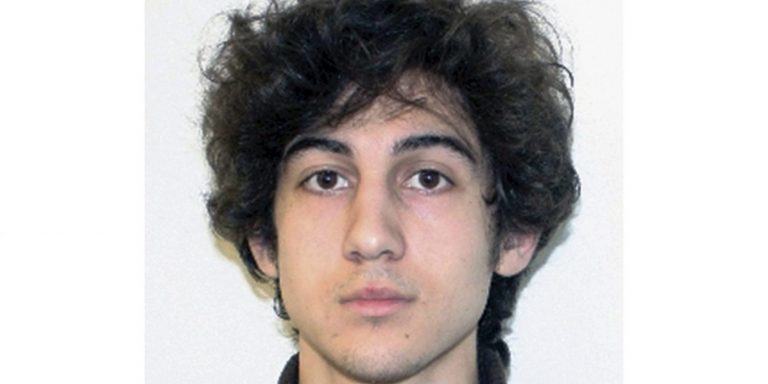
(Headline USA) The Justice Department will seek to reinstate a death penalty for Dzhokhar Tsarnaev, the man who was convicted of carrying out the 2013 Boston Marathon bombing, Attorney General William Barr said Thursday.

In an interview with The Associated Press, Barr said the Justice Department would appeal the court’s ruling last month that tossed Tsarnaev’s death sentence and ordered a trial to determine whether he should be executed for the attack that killed three people and wounded more than 260 others. Barr said the Justice Department would take the matter to the U.S. Supreme Court.

“We will do whatever’s necessary,” Barr said. “We will take it up to the Supreme Court and we will continue to pursue the death penalty.”

Under Barr, the Justice Department has again begun carrying out federal executions, putting three men to death so far and scheduling at least three others next week and in September, despite the coronavirus pandemic and waning public support for the death penalty.

Barr has said it is the Justice Department’s duty to carry out the sentences imposed by the courts — including the death penalty — and to deliver justice for the families of the victims.

A three-judge panel of the 1st U.S. Circuit court found in July that the judge who oversaw the 2015 trial did not adequately question potential jurors about what they had read or heard about the highly publicized case.

The 1st Circuit’s decision has ripped open old wounds in Boston, with many injured in the attack expressing anger and anguish at the prospect of having to relive their trauma again at a second trial.

Massachusetts’ U.S. Attorney Andrew Lelling said Thursday that prosecutors are hoping for a favorable ruling at the nation’s highest court so they can avoid another trial.

Lelling said he respects the voices of those calling on prosecutors to drop their pursuit of the death penalty but said Tsarnaev’s crimes “place him in that narrow category of criminals for whom death is a proportional punishment.”

“Some have argued that executing Tsarnaev will not deter others from pursuing similar crimes. But, ultimately, this decision is not about deterrence,” Lelling said in an emailed statement. “It is about justice.”

The defense acknowledged that Dzhokhar Tsarnaev and his older brother, Tamerlan Tsarnaev, carried out the attack on April 15, 2013, but sought to portray his brother as the radicalized mastermind who they said lured his impressionable younger brother into violence.

Tamerlan Tsarnaev, 26, died following a gunfight with police and being run over by his brother as he fled. Police captured a bloodied and wounded Dzhokhar Tsarnaev hours later in the Boston suburb of Watertown, where he was hiding in a boat parked in a backyard.

Tsarnaev, now 27, was convicted of all 30 charges against him, including conspiracy and use of a weapon of mass destruction and the killing of an MIT police officer during the Tsarnaev brothers’ getaway attempt. The appeals court upheld all but a few of his convictions.

An attorney for Tsarnaev, David Patton, declined to comment Thursday.

Patton said after the 1st Circuit’s decision that “it is now up to the government to determine whether to put the victims and Boston through a second trial, or to allow closure to this terrible tragedy by permitting a sentence of life without the possibility of release.”

Prosecutors told jurors that Tsarnaev was just as culpable in the attack they say was meant to punish the U.S. for its wars in Muslim countries.

In the boat where he was found hiding, he wrote, “Stop killing our innocent people and we will stop.”

Killed in the bombing were Lingzi Lu, a 23-year-old Boston University graduate student from China; Krystle Campbell, a 29-year-old restaurant manager from Medford; and 8-year-old Martin Richard, who had gone to watch the marathon with his family.

Massachusetts Institute of Technology police Officer Sean Collier was shot to death in his cruiser days later.

Describing media attention in the case as “unrivaled in American legal history,” the appeals court said U.S. District Judge George O’Toole fell short in running a jury selection process “sufficient to identify prejudice.”

The 1st Circuit also found that O’Toole erred in refusing to let the defense tell jurors about evidence tying Tamerlan Tsarnaev to the killings of three people in the Boston suburb of Waltham in 2011.

“If the judge had admitted the Waltham evidence — evidence that shows (like no other) that Tamerlan was predisposed to religiously-inspired brutality before the bombings and before Dzhokhar’s radicalization — the defense could have more forcefully rebutted the government’s claim that the brothers had a ‘partnership of equals,’” Judge O. Rogeriee Thompson wrote in the ruling.

President Donald Trump tweeted after the decision that the federal government “must again seek the Death Penalty in a do-over of that chapter of the original trial.”

The ruling came as the U.S. government recently resumed federal executions following a 17-year pause.

Adapted from reporting by the Associated Press
Inspector General: Census Lacks Door Knockers Needed for 2020 Count

0

(Headline USA) The U.S. Census Bureau is short by more than 25% of the door knockers needed for the 2020 census, according to its watchdog agency, and it’s about to let go of its least productive census takers.

Both developments highlight persistent questions about whether the bureau has enough manpower to get a complete and accurate head count under an accelerated time frame preferred by the Trump administration.

Bureau officials, though, say they are pleased with the progress made by census takers and are on pace to finish the job.

The Office of Inspector General’s alert this week says it’s concerned about the bureau’s ability to hire and retain workers, with six weeks left in the count that helps determine the distribution of $1.5 trillion in federal spending and how many congressional seats and Electoral College votes each state gets.

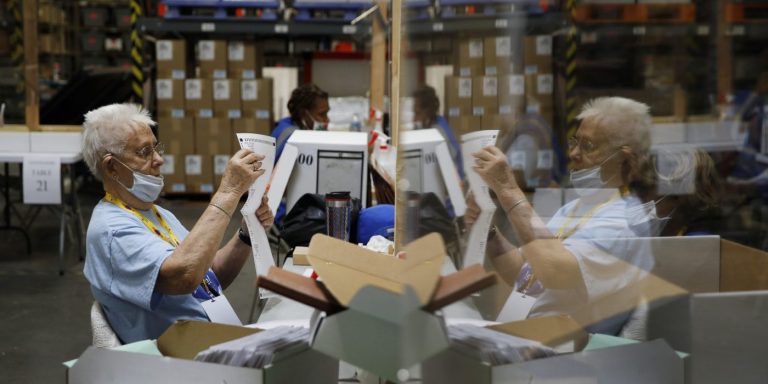
The bureau needed more than 300,000 census takers by the end of August but by mid-month, just 220,000 census takers were trained and ready to start knocking on the doors of households that haven’t yet responded to the census.

Thirty-seven of the nation’s 248 census offices aren’t even halfway toward reaching their hiring goals, the office said.

“Without taking timely action, the bureau is at risk of not conducting a complete and accurate 2020 Census,” the memorandum from the Office of Inspector General said.

The bureau acknowledges that more than a third of people hired to be census takers aren’t showing up for either training or their assignments.

Despite the greater-than-expected attrition, the bureau said it has increased productivity while aggressively training new workers to fill the slots of no-shows.

The statistical agency is still recruiting and hiring census takers to fill the jobs of people who have dropped out over coronavirus fears or other concerns, and it’s giving cash awards to the most experienced census takers.

Census takers have been given face masks and hand sanitizers, and they’re instructed to maintain at least six feet of distance while asking households in-person questions about their race, sex, Hispanic origin and relationships to each other.

“Our census takers are working more hours and completing more cases than we had planned,” the bureau said in statement.

The census taker shortfall is coming as the bureau’s operational plan calls for it to let go of less productive door knockers and transfer their caseloads to higher performers so that the most experienced census takers can work on the hardest-to-reach households.

The low-performing census takers will stop working before the census ends on September 30, according a review of operational plans, interviews and bureau emails obtained by The Associated Press.

“They say, ‘Thank you. Your work is over,’” said John Thompson, a former bureau director in the Obama administration. “If the person is doing a bunch of work and not getting completed cases then … at that point, you are better off without them.”

The 2020 census has been hampered by the pandemic and a shortened schedule caused by congressional inaction.

Starting later than planned because of the pandemic, the door-knocking phase of the 2020 census began in some areas in July, but widespread door-knocking didn’t begin until earlier this month, and it was expected to last through October.

However, that planning was contingent on Congress extending bureau deadlines for turning over figures used for the redrawing of congressional and legislative districts into next year.

The requested extensions passed the Democratic-controlled House, but the Republican-controlled Senate hasn’t acted on it.

Without them, the bureau earlier this month announced the census would stop at the end of September instead of the end of October. That decision is being challenged in court.

By not extending the apportionment deadline, the final numbers used for redrawing congressional districts will have to be turned in by Dec. 31, while Trump is still in office, even if the Republican president loses the November election.

The Senate’s inaction coincides with a memorandum President Donald Trump issued last month trying to exclude people living in the U.S. illegally from being counted for reapportionment. More than a half dozen lawsuits have been filed, challenging Trump’s memorandum.

In a court filing for one of the lawsuits, Al Fontenot, an associate director at the bureau, said the president’s order has had no impact on field operations for the census, and that the agency remains committed to counting each person in the U.S.

“The Census Bureau intends to meet a similar level of household responses as collected in prior censuses, including outreach to hard-to-count communities,” Fontenot said.

As of this week, 64% of households have self-responded to the questionnaire either online, by telephone or through the mail. Census takers have gotten responses from another 8.7% of households.

But the census takers’ jobs will get harder with each passing week, since the households most likely to answer the questions are visited first during the door-knocking phase, said Terri Ann Lowenthal, a former congressional staffer who specialized in census issues.

Census takers typically will try to visit non-responding households six times. After three failed attempts, a census taker can use neighbors or landlords as proxies to get answers about a household.

If there are sufficient administrative records about a household, the census taker may only need to visit once.

The bureau is “still recruiting, and they keep saying we have plenty of workers and not to worry because we can do this faster with plenty of enumerators,” said Lowenthal, who is now a census consultant. “But that is not what we are hearing from the field and now the Inspector General report is confirming that.”

Adapted from reporting by the Associated Press
Ex-CIA Chief Brennan Faces Interview in Durham’s Russia Probe

0

(Headline USA) Former CIA Director John Brennan is scheduled to be interviewed Friday by U.S. Attorney John Durham‘s team as part of its inquiry into the investigators and intelligence officials behind the 2016 Russia election interference probe, according to people familiar with the matter.

Brennan led the CIA under the Obama administration as it and other intelligence agencies arrived at the conclusion that Russia had interfered in the 2016 election to benefit Donald Trump.

Durham’s interest in speaking with him underscores the extent to which he and his team are examining how the CIA reached that assessment, which Trump has long resisted.

The people who discussed the interview with The Associated Press insisted on anonymity to talk about an ongoing investigation.

Brennan is appearing voluntarily for the interview, a likely indication he does not believe he has reason to be concerned about any criminal charges. He has previously said he welcomed the chance to be questioned and felt he had had nothing to hide.

“And so I look forward to the day when the truth is going to come out and the individuals who have mischaracterized what has happened in the past will be shown to have deceived the American people,” Brennan said in a May interview on MSNBC.

A spokesman for Durham declined to comment on Friday.

Attorney General William Barr last year appointed Durham, the U.S. attorney for Connecticut, to examine the decisions that were made by government officials as they investigated ties between the Trump campaign and Russia.

Exhaustive reports by former special counsel Robert Mueller and the Republican-led Senate intelligence committee have detailed extensive ties between Russians and Trump associates, but Barr has challenged the idea that the FBI had sufficient basis to open its counterintelligence investigation and gave Durham a mandate that allows him to look into the actions of other agencies too.

Brennan, who has emerged as a vocal critic of Trump’s, testified before Congress in 2017 that he had personally warned Russia against interfering in the election and that he was so concerned about Russia’s contacts with people involved in Trump’s campaign that he convened top counterintelligence officials to focus on the issue.

He told the House intelligence committee at that hearing that it “should be clear to everyone that Russia brazenly interfered in our 2016 present election process,” though he said he didn’t have enough information to know whether it was colluding with the campaign.

“But,” he said, “I know there was a basis to have individuals pull those threads.”

Mueller’s investigation found that the Trump campaign embraced Russia’s help and expected to benefit from it, though he did not allege a criminal conspiracy between the two.

Durham brought his first criminal charge last week against a former FBI lawyer accused of altering an email related to the secret surveillance of former Trump campaign adviser Carter Page.

The attorney, Kevin Clinesmith, pleaded guilty on Wednesday to a false statement charge.

Adapted from reporting by the Associated Press

Nevada’s Mail-In Ballot Scam Puts ‘Ballot Harvesting’ Back in Spotlight

0

(Headline USA) As President Donald Trump’s reelection campaign challenged Nevada‘s new voting law in court, the president and Republicans argued the rules would facilitate fraud and illegal voting.

Chief among their criticisms was a provision allowing “ballot harvesting.”

The Nevada lawsuit highlighted a practice that has long fueled Republicans’ suspicions about mail-in voting.

The rule permitting a third party to collect and return multiple ballots remains a source of partisan dispute.

Those fights are likely to continue up to Election Day as states adjust their laws for the pandemic.

Despite largely supporting the effort in places like California, Democrats have disingenuously opposed it in the past when the outcome favors Republicans.

One of the recent instances of alleged fraud related to ballot collection happened in North Carolina in 2018, resulting in a congressional election being overturned after claims that an independent political operative working for Republican Mark Harris had introduced “taint” into the outcome.

More than half of states allow a third party to collect ballots although some rules restrict the people to relatives or other specific people instead of partisan activists who may be seeking to sway the outcome.

And political groups and campaigns from both parties have run ballot-collection programs aimed at boosting turnout and ensuring voters who are older, homebound, disabled, or live far from U.S. postal services can get their ballot returned.

“This is not new ground,” Nevada’s Democratic Assembly Speaker Jason Frierson said in a statement. “Allowing someone to assist a voter in turning in their ballot helps protect vulnerable populations, including our tribal and rural communities.”

However, the Nevada law seems mostly to be of concern in the counties surrounding Reno and Las Vegas, the only ones to back Hillary Clinton in 2016. Collectively, they won the state for Clinton.

During the recent primaries, Cook County officials in the area surrounding Sin City sent out thousands of ballots later returned as undeliverable wrong addresses. Others were discovered discarded on the street and in Dumpsters.

Trump and the GOP contend “ballot harvesting” opens the door for fraud and have fought to restrict it. This has escalated as states prepare for greater reliance on absentee voting or vote-by-mail amid COVID-19.

This year, Republicans and Democrats have squared off in lawsuits over the third-party collection of ballots in Pennsylvania, Florida and Minnesota.

In Wisconsin, a conservative law firm known as the Wisconsin Institute for Law and Liberty requested that election officials outlaw the process.

Though that state’s laws don’t specifically address “ballot harvesting,” officials said they weren’t aware of any efforts to systematically collect absentee ballots in the state and did not impose a rule prohibiting it.

The 9th U.S. Circuit Court of Appeals earlier this year struck down a 2016 law passed by Republicans in Arizona that made it a felony for someone besides a voter’s family member or caregiver to return an absentee ballot.

While the appeals court sided with Democrats who had sued to challenge the law, the ruling is on hold while the state’s Republican Attorney General Mark Brnovich appeals to the U.S. Supreme Court.

In the meantime, the ballot collection restriction remains in force for the 2020 election.

In Nevada, an easing of ballot collection rules was included in a new law that calls for automatically sending ballots to all active voters this November.

Trump’s reelection campaign, the Republican National Committee and Nevada GOP filed a lawsuit last week asking a judge to strike down the law.

The complaint makes a brief mention of “ballot harvesting,” alleging without supporting evidence that it is among changes that “facilitate fraud and other illegitimate voting practices.”

Nevada’s Democratic attorney general asked a judge this past week to dismiss the lawsuit. A hearing has not yet been held.

Nevada is among 26 other states allowing voters to more broadly designate someone to drop off their ballot. About a dozen of those states have imposed limits on how many ballots a person can submit. Minnesota limits a person to collecting and returning three ballots, for example.

California since 2016 has allowed for someone to collect an unlimited number of ballots from voters, though it does bar someone from being paid based on how many ballots they return.

California’s law became the source of controversy and GOP criticism after Democrats used the practice to their advantage in 2018, flipping Republican-held congressional seats after a flood absentee ballots came in before the deadline and were counted after Election Day.

Nevada’s law does not include limits on how many ballots can be collected or restrictions on payment. It does allow someone to be charged with a felony for blocking the ballot from being submitted or failing to return it after being entrusted to do so.

In addition to expanding ballot collection, Nevada’s law also allows voters who are over 65, have a disability or are unable to read or write to have someone assist them in physically marking their ballot. Those provisions have also drawn criticism from Trump.

Nevada requires anyone assisting a voter in physically marking a ballot to include a written statement with the name, address and signature of the person who assisted the voter.

Adapted from reporting by the Associated Press
Trump Says Democrats’ Convention was ‘Gloomiest’ in History

(Headline USA) President Donald Trump said Friday that where Democratic presidential candidate Joe Biden sees “American darkness,” he sees “American greatness.”

Anxious for his turn in the spotlight after the four-day Democratic National Convention, Trump is hitting his opponent hard.

“Over the last week, the Democrats held the darkest and angriest and gloomiest convention in American history,” Trump said in a speech to the GOP-aligned Council for National Policy in Arlington, Virginia. “They spent four straight days attacking America as racist, a horrible country that must be redeemed.”

Trump in recent speeches has emphasized the unrest and violence in American cities and has positioned himself as a defender of law and order.

Biden, in his nomination acceptance speech Thursday night, portrayed Trump as someone who tries to divide Americans.

“United we can and will overcome this season of darkness in America,” said Biden, who said nothing to address the violence plaguing the nation’s major cities, nearly all of which are run by Democrats.

Trump and the Democrats agreed on one thing.

Just as the Democrats had repeatedly contended Thursday night, Trump declared, “The future of our country and indeed our civilization is at stake on Nov. 3.”

He chided the Democrats, saying their convention did not address the threat from China or bringing safety to Democratic-run cities.

“Joe Biden grimly declared a season of American darkness,” Trump said.

Vice President Mike Pence, interviewed Friday, said the Republican National Convention next week will focus on what Trump has accomplished, including on the economy and with his coronavirus response.

Pence promised a heavy focus on GOP support for law and order and said the Democrats had failed to acknowledge violence plaguing some U.S. cities.

“We’re going to make sure that the American people see the choice here,” Pence said.

Adapted from reporting by Associated Press.

Kansas City Chiefs to Ban Fans From Wearing Warpaint, Headdresses

The Kansas City Chiefs announced Thursday that fans will be banned from wearing war paint or ceremonial headdresses in the team’s stadium from now on.

“While we have discouraged fans from wearing headdresses for several years, effective immediately, fans “will be prohibited from wearing headdresses into the stadium,” the NFL team said in a statement.

“Face painting is still allowed for all fans, but any face paint that is styled in a way that references or appropriates American Indian cultures and traditions will be prohibited,” it said.

Fans who sport either get-up will be blocked from entering the stadium during security screening, the team added.

This ban was the result of discussions with “a group of local leaders from diverse American Indian backgrounds and experiences” over the past six years, the Chiefs said.

The team’s leadership is also reviewing fans’ use of the tomahawk chop, as well as Arrowhead Stadium’s area known as the “Drum Deck,” where fans can hit a giant, native-style drum featuring the team’s logo.

These changes are just the latest example of a professional sports team cracking down on “offensive” words or actions related to Native American culture.

Several teams have even changed their names completely to appease leftists who have accused the NFL of perpetuating “harmful stereotypes.”

The MLB’s Cleveland Indians announced it would change its team name earlier this summer, and the Washington Football Team, formerly known as the Washington Redskins, followed suit shortly thereafter.

“The decision to use ‘Washington Football Team’ for this season allows the franchise the ability to undertake an in-depth branding process to properly include player, alumni, fan, community, and sponsor input,” the team said in July.

Over the next few months, the Washington Football Team will begin “the process of retiring all Redskins branding from team properties whether it be FedExField, Redskins Park, other physical and digital spaces,” officials said.

Hero Who Killed Bin Laden Banned from Delta for Not Wearing Mask in Photo

U.S. Navy SEAL Robert O’Neill, who is credited with killing Osama bin Laden, was banned from Delta Air Lines on Thursday for allegedly refusing to wear a mask during a recent flight.

O’Neill had posted a picture of himself on a Delta flight without a mask on, with the caption, “I’m not a p***y.”

The picture was a joke, according to O’Neill, but Delta accused him of failing to comply with its standards.

“Part of every customer’s commitment prior to traveling on Delta is the requirement to acknowledge our updated travel policies, which includes wearing a mask,” a Delta spokesman said in a statement.

“Failure to comply with our mask-wearing mandate can result in losing the ability to fly Delta in the future,” it said.

Several users interpreted O’Neill’s picture as a dig at the Marine pictured behind him, who was wearing a mask.

O’Neill clarified that his photo was not directed toward the Marine, but he agreed to delete the picture.

But that didn’t stop leftists from swarming O’Neill’s account and demanding that Delta ban him. Delta caved, because O’Neill was informed that he was not allowed to fly with the airline shortly after taking down the picture.

O’Neill blasted the airline after learning about the ban:

Chicago Mayor Lightfoot Bans All Protests Outside Her Home

Chicago Mayor Lori Lightfoot instructed law enforcement to block protesters from gathering outside her home, but refused to take forceful action against violent rioters destroying private property downtown.

When asked why she gets heightened security while the rest of the city fends for itself, Lightfoot argued it’s because of the amount of threats she has received.

“I think that residents of this city, understanding the nature of the threats that we are receiving on a daily basis, understand I have a right to make sure that my home is secure,” Lightfoot said, according to the Chicago Tribune.

“I’m not going to make any excuses for the fact that, given the threats I have personally received, given the threats to my home and my family, I’m going to do everything I can to make sure they’re protected,” she added.

Police were instructed this week to arrest anyone who refuses to leave the area near Lightfoot’s home, even if they are peacefully protesting, according to the Tribune.

According to an email sent by the district’s commander at the time, officers assigned to enforce the directive were instructed to tell protesters “that it is against the city code and state law to protest” and that they must “leave immediately.”

After the warning is given, the street “should be locked down,” the instructions added.

To carry out this order, as many as 140 officers at a time have been stationed outside Lightfoot’s home over the past few days, according to the Chicago Sun-Times.

Meanwhile, violence in the city continues to skyrocket. On Aug. 10, city officials were forced to raise bridges to the city’s downtown in an attempt to prevent looting from occurring in the city’s center.

But Chicago Police Department Superintendent David Brown also defended his officers’ actions, pointing to the violent actions of rioters who have joined the protests.

“We have seen very peaceful First Amendment protests for the most part but embedded in each of those protests have been very violent people,” Brown said.

“And they’re embedded,” he continued. “They put up umbrellas. And they come for a fight. So we have to prepare for what we’ve seen.”