Appeals Court Denies Trump’s Request to Stop Release of Tax Records

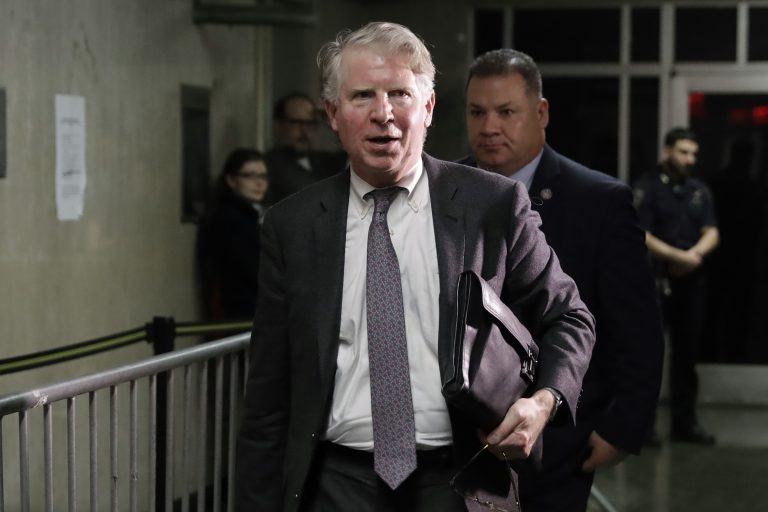
(Headline USA) A federal appeals court said Friday it wouldn’t step in right away to delay New York prosecutors’ effort to get President Donald Trump’s tax records, potentially leaving the Supreme Court as his most promising option to block prosecutors’ subpoena.

The 2nd U.S. Circuit Court of Appeals denied Trump’s request to immediately put Manhattan District Attorney Cyrus R. Vance Jr.’s subpoena on hold while Trump appeals to try to get it invalidated.

The appeals court said it would hold a hearing on the request for a delay, but not until Sept. 1. After winning a lower court ruling, Vance’s office had agreed not to enforce the subpoena before Aug. 28.

The DA’s office declined to comment on what the appeals court ruling might mean for that time frame. Messages were sent to Trump’s lawyers.

The case has already been to the Supreme Court and back, and Trump has said he expects it to end up there again.

Even if the tax records ultimately are subpoenaed, they would be part of a confidential grand jury investigation and not automatically made public.

The Supreme Court ruled last month that the presidency in itself doesn’t shield Trump from Vance’s investigation.

But the high court returned the case to a Manhattan federal judge’s courtroom to allow Trump’s lawyers to raise other concerns about the subpoena.

They did, arguing that it was issued in bad faith, might have been politically motivated and amounted to harassment.

U.S. District Judge Victor Marrero rejected those arguments Thursday — and then turned down a request from Trump’s lawyers to delay enforcement of the subpoena while they appeal his decision.

“The president has not demonstrated that he will suffer irreparable harm” if the records are turned over for a grand jury probe that would keep them secret, he wrote Friday morning.

Trump’s lawyers asked the appeals court for the same delay and got their answer hours later.

Vance’s attorneys have said they are legally entitled to extensive records to aid a “complex financial investigation.”

Vance, a Democrat, began seeking the Republican president’s tax returns from his longtime accounting firm over a year ago, after Trump’s former personal lawyer Michael Cohen told Congress that the president had misled tax officials, insurers and business associates about the value of his assets.

Trump on Thursday blasted the quest for his financial records as a “the most disgusting witch hunt in the history of our country.”

Congress is also pursuing Trump’s financial records, though the Supreme Court last month kept a hold on the banking and other documents that Congress has been seeking and returned the case to a lower court.

Adapted from reporting by the Associated Press.
Here’s a Guide to Trump’s ‘Promises Kept’ & Promises Stalled Before the RNC

0

(Headline USA) President Donald Trump has fulfilled a wide range of promises he made during his 2016 campaign, but he has fallen short of some promises.

It’s a theme that will play a major role in the upcoming Republican National Convention, as the president tries to convince the nation that he deserves a second term.

“I’m the only candidate that gave you more than I promised in the campaign. It’s true. I’m the only one ever, maybe ever,” Trump said at a rally in battleground Arizona last week.

He has followed through on his promises to put America first, especially on issues of trade, immigration, and foreign policy.

“I think the golden egg of Trump’s reelection effort is going to be the promises kept, such as getting two Supreme Court justices in power and keeping America out of foreign wars like Afghanistan and Iraq,” said Douglas Brinkley, presidential historian at Rice University.

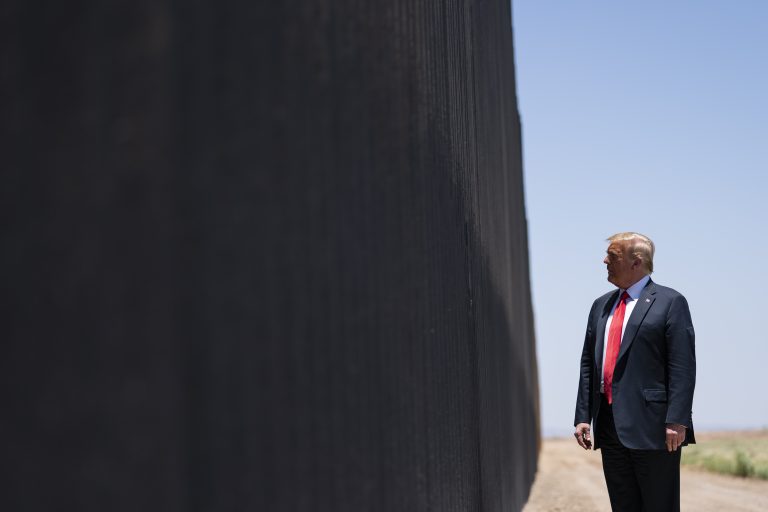
Arguably Trump’s biggest impact has been on immigration.

The project is now underway, with 450 miles expected to be completed by the end of December.

And Trump has succeeded in fundamentally transforming the nation’s immigration system, despite resistance from the courts and little cooperation from Congress.

Using more than 400 executive actions, according to a recent analysis by the nonpartisan Migration Policy Institute, Trump has effectively shut down the asylum system at the southwest border and slashed refugee admissions.

At the same time, Trump has imposed a slew of new restrictions on legal immigration, with the pandemic spurring many more.

With so few visas being processed and immigration fees collected, the U.S. Citizenship and Immigration Services has all but run out of money and is about to furlough large swaths of its workforce.

Some specific promises on immigration went unfulfilled: Trump failed to create a new “deportation force,” never met his pledge to deport millions, didn’t end funding for sanctuary cities that don’t cooperate with immigration authorities and didn’t move to end the constitutional right to birthright citizenship.

But he did clamp down on “catch and release” of immigrants in the country illegally, enhance background screening of migrants and move to suspend immigration from a host of nations with high rates of terrorism.

“They have used the tools that the executive branch has on immigration really to their ultimate extent. And they’ve been successful,” said Doris Meissner, the director of the Migration Policy Institute’s U.S. Immigration Policy Program and a former commissioner of the U.S. Immigration and Naturalization Service. “And you know, in many ways remarkably so because there’s been very stiff resistance all the way.”

On health care, Republicans in Congress did repeal the Obama-era individual mandate forcing people to buy health insurance, but he failed to replace the Affordable Care Act with an alternative.

On the economy, Trump and congressional Republicans pushed through a promised tax cut early in his term that dramatically slashed the corporate tax rate — as he had promised — and doubled the estate tax threshold, but did not eliminate it.

He also did not meet his pledge to reduce the number of individual income tax brackets from seven to three to simplify the tax code.

Some of Trump’s more controversial promises have fallen by the wayside, such as his pledge to eliminate gun-free zones at schools and on military bases and to establish a national right to carry concealed weapons that would trump local restrictions.

But he delivered on other fronts. He immediately enacted a federal hiring freeze, as he had promised, and mandated that for every new federal regulation enacted, two be eliminated.

He launched an aggressive campaign to roll back environmental protections passed by the Obama administration.

At the same time, he has prioritized tapping the country’s shale oil, and natural gas and coal reserves.

However, courts are undoing many of Trump’s environmental rollbacks.

On trade, Trump renegotiated the North American Free Trade Agreement and withdrew the U.S. from the Trans-Pacific Partnership, but failed to decrease the U.S.-China trade imbalance.

On the international front, the impact has been enormous as he has put his “America First” policy into practice, fundamentally redefining America’s place in the world.

He increased funding for the military, joined the race to explore space, and has threatened U.S. membership in the outdated alliances of the 20th century, including NATO.

At the same time, he has pulled the U.S. from participation in a host of landmark accords, including the Paris Climate Agreement and the Iran nuclear deal.

At international summits, he has fostered positive relationships with potentially dangerous leaders leaders, including Russia’s Vladimir Putin, and asked for more reciprocal relationships with longstanding allies like the U.K. and Canada.

In a sign of just how far he has broken from the global community, he stopped funding the World Health Organization earlier this year.

Adapted from reporting by the Associated Press.
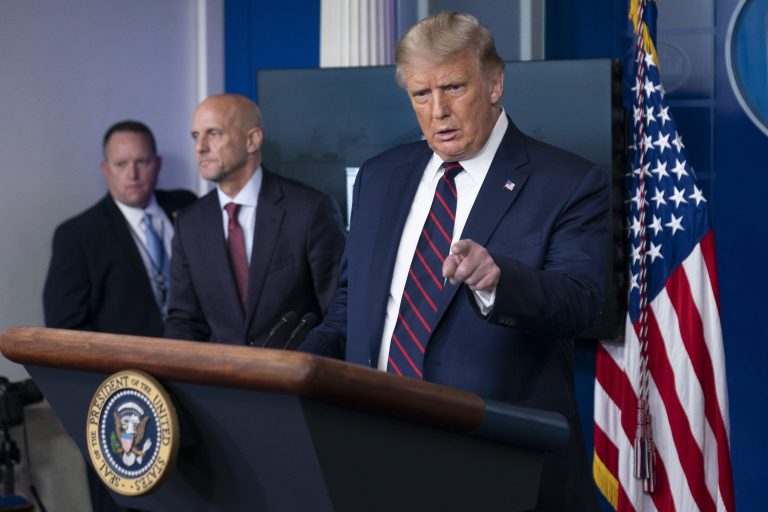
Trump Announces FDA’s Authorization to Use Plasma to Treat COVID-19

(Headline USA) President Donald Trump on Sunday announced emergency authorization to treat COVID-19 patients with convalescent plasma.

Trump called the move “a breakthrough” and one of his top health officials called “promising.”

The announcement came after White House officials complained there were politically motivated delays by the Food and Drug Administration in approving a vaccine and therapeutics for the disease.

The authorization makes it easier for some patients to obtain the treatment but is not the same as full FDA approval.

The blood plasma, taken from patients who have recovered from the coronavirus and rich in antibodies, may provide benefits to those battling the disease.

In a letter describing the emergency authorization, the chief scientist for the FDA, Denise Hinton, said: “COVID-19 convalescent plasma should not be considered a new standard of care for the treatment of patients with COVID-19. Additional data will be forthcoming from other analyses and ongoing, well-controlled clinical trials in the coming months.”

White House chief of staff Mark Meadows talked about the speed at which the administration has made treatments available for the coronavirus.

“This president is about cutting red tape,” Meadows said in an interview Sunday on “This Week” on ABC. “He had to make sure that they felt the heat. If they don’t see the light, they need to feel the heat because the American people are suffering.”

Trump said he thought there had been a “logjam” at the FDA over granting the emergency authorization.

He said there are people at the FDA “that can see things being held up … and that’s for political reasons.”

Earlier this month, Mayo Clinic researchers reported a strong hint that blood plasma from COVID-19 survivors helps other infected patients recover.

More than 70,000 patients in the U.S. have been given convalescent plasma, a century-old approach to fend off flu and measles before vaccines. It’s a go-to tactic when new diseases come along, and history suggests it works against some, but not all, infections.

The Mayo Clinic reported preliminary data from 35,000 coronavirus patients treated with plasma, and said there were fewer deaths among people given plasma within three days of diagnosis, and also among those given plasma containing the highest levels of virus-fighting antibodies.

But it wasn’t a formal study. The patients were treated in different ways in hospitals around the country as part of an FDA program designed to speed access to the experimental therapy.

That “expanded access” program tracks what happens to the recipients, but it cannot prove the plasma — and not other care they received — was the real reason for improvement.

Adapted from reporting by the Associated Press.
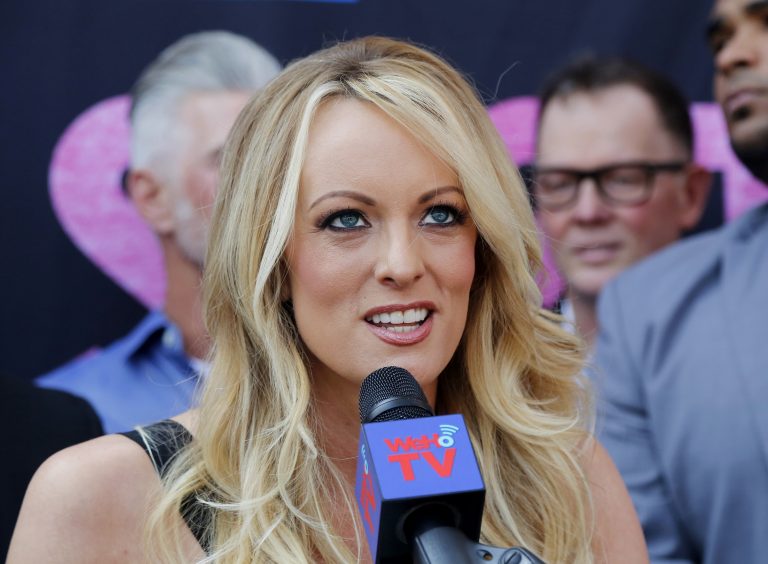
Calif. Judge Orders Trump to Pay Stormy Daniels $44K for Legal Fees

0

(Associated Press) A California court ordered President Donald Trump this week to pay $44,100 in attorney fees to porn actress Stormy Daniels to pay for her legal battle over her effort to cancel a hush money deal brokered to keep her quiet about their sexual relationship a decade ago.

The order in Superior Court in Los Angeles determined Daniels won her lawsuit against Trump over the agreement that was signed 11 days before the 2016 presidential election.

As a part of that deal, the losing party would pay the lawyers fees.

The White House did not immediately respond to a request for comment about the decision.

The president’s personal lawyer at the time, Michael Cohen, paid $130,000 to Daniels, who filed the suit under her legal name Stephanie Clifford.

After Trump’s election, Daniels sued to void the agreement.

Trump and his supporters denied the president knew about the payment for several years before Trump acknowledged it on Twitter in May 2018 and said he reimbursed Cohen for the money paid to Daniels.

Daniels’s suit over the non-disclosure agreement was dismissed before going to trial or a settlement because the parties were no longer quiet.

Trump’s lawyers said Daniels didn’t win the case and therefore wasn’t entitled to lawyer fees, but Judge Robert Broadbelt III disagreed in his ruling Monday, posted online by Daniels’s lawyers.

Trump’s lawyers also argued Daniels didn’t prove the president was a part of the non-disclosure agreement which was made under the name “David Dennison,” but Broadbelt wrote there was a large amount of evidence showing Cohen chose Dennison as a pseudonym for Trump.

After her lawyer announced the decision, Daniels wrote on Twitter: “Yup. Another win.”

But they haven’t all been wins for Daniels. She also sued Trump for defamation after the president’s comments on Twitter that a man she said threatened her to stay quiet about their alleged affair in 2011 was “nonexistent.”

Trump also posted side-by-side photos of the composite sketch of the man making the threats and Daniels’s husband.

The defamation lawsuit was thrown out and Daniels is appealing the decision and an order to pay Trump almost $300,000 in attorney fees.

A judge in that case ruled Trump’s statements on Twitter were protected speech under the First Amendment.

Since Trump’s election, Daniels has remained in the adult entertainment industry, using her new fame to promote strip club appearances and shows, including her latest venture called “Spooky Babes Paranormal Show” where she said she is leading a team of investigators to hunt ghosts and get answers for people here on Earth.

She also still takes shots at the president on Twitter.

Meanwhile, Cohen pleaded guilty to campaign finance charges and lying to Congress, among other crimes, and was sentenced to three years in prison in 2018.

NJ Judge Scraps Local Election Result after Candidate Charged with Voter Fraud

A New Jersey judge ruled Wednesday that the results of a May special election race must be scrapped after mail-in voting led to rampant voter fraud.

The local election fraud comes as President Donald Trump predicts massive voter fraud and confusion if the Democrats are able to send 51 million ballots throughout the country for the presidential election.

State Superior Court Judge Ernest Caposela called for a new election in November to determine who will hold the disputed Paterson City Council seat, Paterson Press reported.

Paterson Council Vice President Michael Jackson and Alex Mendez who seemingly won the race, according to the fraudulent vote totals, have been charged with voter fraud as well as Shelim Khalique, of Wayne, and Abu Rayzen, of Prospect Park.

All four of the suspects have asserted that they are innocent.

Mendez will face Councilman William McKoy, who lost the May 12 special election race by 240 votes.

The election was nullified after law enforcement agents within the USPS informed the New Jersey Attorney General’s Office that they found hundreds of mail-in ballots in a single mailbox in Paterson and many more found in Haledon, a city a few miles away.

The Passaic County Board of Elections disqualified 800 ballots in the election.

Both McKoy and Mendez claimed that their supporters were unable to vote or had their ballots disqualified in the election.

McKoy hired an attorney, who brought an injunction against Mendez to prevent him from taking office. The motion was accepted and Mendez was not sworn in to replace McKoy as Paterson’s Ward 3 councilman.

Mendez and McKoy both said they expect victory in the November election.

The city has been a hotbed for election problems, with more than 3,200 ballots having been disqualified after the May election, though the elections board did not say that voter fraud led it to toss out the ballots.

North Carolina Congressman Predicts ‘Landslide’ Reelection for Trump

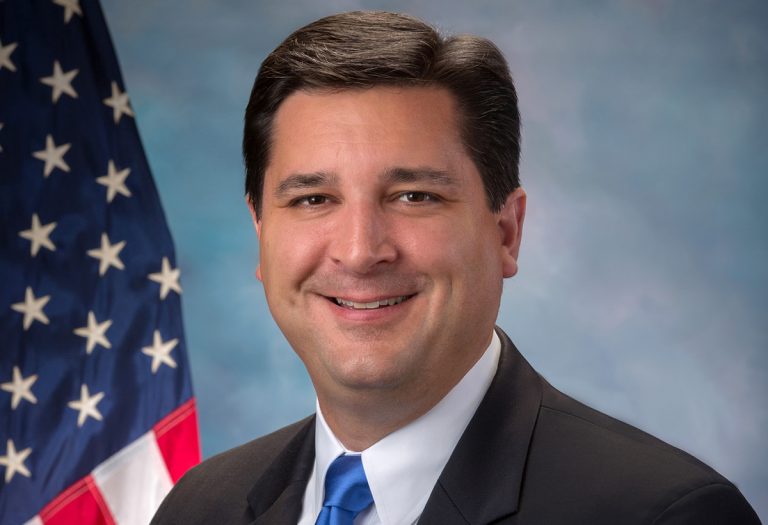
A North Carolina congressman said he thinks President Donald Trump will win reelection “in a landside” because of a growing number of people who quietly support him, WECT reported.

Rep. David Rouzer, R-N.C., made the comment on Thursday in Wilmington while speaking to his supporters.

He said he does not fully trust the corporate media’s polls that show Democratic presidential nominee Joe Biden holding a significant national lead over Trump.

“I know from 2016 he [Trump] never led in a poll, at least not one that I recall. He was always down two or three [points], and he wins the state by two-point-eight percent, three percent,” Rep. Rouzer said, referencing Trump’s win in North Carolina.

He said the polling inaccuracies that predicted former Secretary of State Hillary Clinton’s victory in the 2016 presidential election may be even more exaggerated in 2020.

“There was about a three to four underpoll for Trump in 2016,” he said. “I think you can double that in 2020. The reason I think you can double that is I think there are a lot of people that quite honestly, they don’t want to tell the pollsters which way they are going to vote for president.”

Rouzer said Biden is “a bridge to socialism in America,” which is revealed in the fact that radical socialists, including Sen. Bernie Sanders, I-Vt, and Rep. Alexandria Cortez, D-N.Y., support him.

Some people in the crowd mentioned that Biden has received more bipartisan support than Trump.

“I’m looking at everybody that supports him at the national level, AOC (Oscasio-Cortez) and the radical left, I’m looking at Bernie Sanders, and the input they’ve had on his campaign already from a substance and policy standpoint,” Rouzer said.

He said Democrats want to defund the police, which will lead to “mob rule.”

“Joe Biden may say ‘no, that’s not what I want to do!’, but the fact of the matter is the policies that are going to be put in place are going to lead right to that point,” he said.

Muslim & LGBTQ Delegates at DNC Remove ‘Under God’ from Pledge

(Headline USA) President Donald Trump noted Saturday that Democrats are taking “under God” out of the Pledge of Allegiance at their national convention.

Trump tweeted: “The Democrats took the word GOD out of the Pledge of Allegiance at the Democrat National Convention. At first I thought they made a mistake, but it wasn’t. It was done on purpose. Remember Evangelical Christians, and ALL, this is where they are coming from-it’s done. Vote Nov 3!”

The central programming of the convention featured the entire pledge, complete with “under God,” but some Democrats removed the words.

During two caucuses before the evening conventions started, the Muslim Delegates and Al lies Assembly and the LGBTQ Caucus meeting, both Tuesday, left out “under God,” from the pledge.

The party’s series of caucus meetings was livestreamed but not part of the prime-time convention broadcast.

The pledge was written in 1892 and altered in the 1920s.

“Under God” was added in 1954, when President Dwight Eisenhower encouraged Congress to do so.

Those two words have prompted a debate at times over whether people who do not practice religion should be expected to pledge allegiance to a country under God.

Adapted from reporting by the Associated Press.
Democrats Hardly Mention Supreme Court at Convention

(Headline USA) The future of the Supreme Court is on the line, though it would be hard to tell from the Democratic National Convention that just concluded.

There was a fleeting glimpse of a younger Ruth Bader Ginsburg, a brief reference to the court by Senate Democratic leader Chuck Schumer of New York and a mention of it by Ayesha Curry, in a segment with NBA star Stephen Curry and their two daughters.

Neither Democratic presidential nominee Joe Biden nor vice presidential running mate Kamala Harris said a word about the high court in their acceptance speeches.

By contrast, President Donald Trump and other Republican candidates rarely miss a chance to talk up Trump’s more than 200 federal court appointments, including Supreme Court justices Neil Gorsuch and Brett Kavanaugh, with the prospect of more seats to fill in a second term.

“The most important thing a president can do is the appointment of federal judges and Supreme Court justices,” Trump said at a recent campaign stop in Yuma, Arizona.

That’s a refrain likely to be repeated at the Republican National Convention that begins on Monday and when Trump gives his acceptance speech later in the week.

The Democratic silence is all the more surprising because liberal groups are trying to motivate progressive voters by highlighting the GOP’s success in restocking the federal bench with younger judges who might serve for decades.

One ad from the Supreme Court Voter project, a coalition of Democratic and liberal groups, features Senate Majority Leader Mitch McConnell telling a crowd, “We’re changing the federal courts forever.”

“It was a major misstep on the part of the Democrats to remain silent about the courts,” said Nan Aron, president of the judiciary-focused Alliance for Justice. “Democrats mistakenly believe that the right-wing base of the Republican Party cares more passionately about the courts than progressives do.”

Trump is explicitly making a similar point.

“When it comes to the Second Amendment, when it comes to life, when it comes to a lot of things you people live for, if you don’t have the Supreme Court and you don’t have the courts on your side, you can forget it,” Trump said at the Arizona rally.

Four years ago, Republicans successfully made the Supreme Court an election issue when they kept a high court seat open and candidate Trump offered voters a list of potential nominees to fill it.

A fifth of voters nationwide said Supreme Court appointments were the most important factor in determining their presidential vote, and nearly 6 in 10 of them backed Trump, according to 2016 exit polls.

With the 87-year-old Ginsburg’s health faltering and Justice Stephen Breyer just having celebrated his 82nd birthday, both sides recognize the next president could have more than one Supreme Court seat to fill. Conservative Justices Clarence Thomas and Samuel Alito also are in their 70s.

“The courts and the future of the country could not be more on the ballot this year,” Elizabeth Wydra, president of the liberal Constitutional Accountability Center, said in a recent online forum.

The court currently has five conservative Republican justices, although Chief Justice John Roberts sided with the liberals in several important cases last term that provoked criticism from Vice President Mike Pence and other conservatives.

If Trump gets to replace one or both of the two aging liberals, he could solidify a conservative majority that would not depend on Roberts’ vote.

The convention aside, Democrats have taken some steps to elevate the courts as an issue.

Biden has pledged to put the first Black woman on the court and has suggested vetting is already underway to consider candidates if he’s elected.

The Democratic platform endorses amorphous “structural court reforms to increase transparency and accountability” and also calls for increasing the number of lower court judges to handle increased workloads around the country.

But there is nothing on two far-reaching proposals to expand the Supreme Court or adopt term limits for justices, although some progressive congressional candidates who back court expansion won their primaries.

Adapted from reporting by the Associated Press.
Democrats Cry ‘Racism!’ in Mispronunciation of Kamala’s Name after Mocking Pence

(Headline USA) In a cringeworthy segment during the final night of the Democratic National Convention, actor Julia Louis-Dreyfus and former presidential candidate Andrew Yang awkwardly mispronounced the last name of Vice President Mike Pence.

Was it “Mika Pints?” or “Paints?” Or maybe “Ponce,” Yang said.

“Oh, some kind of weird foreign name?” Louis-Dreyfus asked.

“Yeah, not very American sounding,” Yang replied.

Kamala Harris’ first name is pronounced “KAH’-mah-lah” — or, as she explains in her biography, “‘comma-la,’ like the punctuation mark.”

But mispronunciations have been rampant in the days since the California senator became the first black woman and the first Asian American woman named to a major party’s ticket.

Pence referred to her as “kah-MAH’-lah,” putting his emphasis on the second syllable, at events last week.

Republican National Committee Chair Ronna McDaniel did the same on Wednesday, as did Trump at a rally in Pennsylvania on Thursday, the day after Harris delivered a prime-time speech accepting the Democratic nomination — a speech he indicated he watched.

Harris’ supporters say the pattern amounts to racism.

“It is an effort to diminish her,” said Fatima Goss Graves, president of the National Women’s Law Center Action Fund. “It’s designed to signal difference.”

Even Democratic presidential nominee Joe Biden slipped up and mispronounced the first “a” in Kamala during his speech introducing her as his running mate, but he quickly repeated her name with the correct pronunciation.

Adapted from reporting by the Associated Press.
MURDOCK: The ‘Soft Bigotry’ of Dems’ Mail-In Ballot Scam

0

(Deroy Murdock, Headline USA) When the U.S. Civil Rights Commission meets on Friday, it will welcome its newest member.

J. Christian Adams is a Justice Department veteran and seasoned ballot-integrity litigant and activist.

President Donald J. Trump wisely named Adams to the commission, to guide it toward sensible work and restrain the far-Left tendencies of its Democrat members and staff.

Adams should start by scuttling the Commission’s latest project: To weaponize COVID-19 and push universal mail-in ballots, Democrats’ flavor-of-the-month.

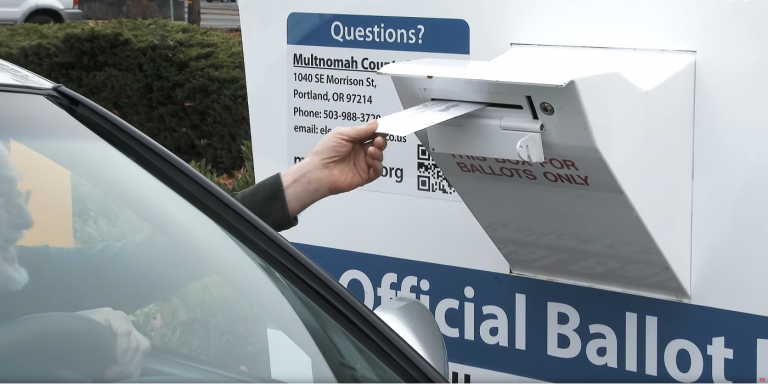
This spectacularly sloppy practice blasts millions of ballots — requested or not — to every voter on a state’s rolls, even those who have relocated or died.

At best, this promises messy results. At worst, this is an on-the-knees plea for vote fraud.

The Commission will consider a draft report that argues that COVID-19 makes mail-in ballots a medical necessity.

These crafty liberals begin with the tragic fact that the often-deadly Chinese virus has weighed especially heavily against blacks and other minorities in general, due to existing medical conditions, subpar medical care, and other woeful factors that ensnare specific patients.

From this sad reality, the Commission’s Left infantilizes voters of color and assumes that they cannot handle myriad challenges to casting ballots. The entire paper reeks of what President G.W. Bush called “the soft bigotry of low expectations.”

Requiring notarized signatures makes it harder to cast phony ballots.

This is too much for Commission Democrats. They complain that voters of color endure a “lack of access to items such as transportation and printers.”

The report quotes Representative Marcia Fudge, D-Ohio, who told the Commission: “It is difficult to remain socially distant if voters are forced to find witnesses or notaries to sign their ballots.”

The Commission report also claims that underprivileged voters have trouble acquiring stamps and basic office supplies.

The report cites Kristen Clarke, president of the Lawyers’ Committee for Civil Rights Under Law. She moaned that Ohio’s absentee-ballot request process “presented challenges to many voters, particularly low-income voters, who lack access to printers, postage, or envelopes.”

Asking minority voters to complete change-of-address forms also demands too much of them.

As the draft report states: “If they cannot get their absentee ballot applications or ballots mailed to their new or temporary address, minority voters who have moved may have a harder time meeting strict absentee ballot deadliness [sic].”

The Commission should worry primarily about disenfranchisement. Alas, mass-mail-in-ballots are perfect for making votes vanish.

According to the USPS’s inspector general, for 2018, “We found that the Postal Service’s nationwide service performance score for Election and Political Mail was 95.6 percent, or slightly below its goal of 96 percent.”

Imagine that USPS satisfies its own standards and delivers 96 percent of the ballots to which it is entrusted. So, only 4 percent of ballots would disappear.

If the same 135,719,982 Americans who voted in 2016 did so again, then a mere 5,428,799 ballots would go astray. This many totally absent ballots could throw the election the wrong way.

Given that Hillary Clinton won Minnesota by a margin of 1.52 percent, and Donald J. Trump secured Michigan by just 0.23 percent, a USPS promise to lose just 4 percent of ballots is nauseatingly inadequate.

Unlike the Commission draft, America’s highest-profile authority on the Chinese virus does not believe the pathogen merits an all-mail election.

According to federal COVID-19 guru, Dr. Anthony Fauci, “There’s no reason why we shouldn’t be able to vote in person or otherwise.”

As he told ABC News on August 14: “If you go and wear a mask, if you observe the physical distancing, and don’t have a crowded situation, there’s no reason why shouldn’t be able to do that.”

The infirm and those vulnerable to COVID-19 should be free to request absentee ballots, as has been possible for decades.

Everyone else should go vote at the polls on Election Day and hope that the COVID cure also eradicates the political pandemic of mass-mail-in ballots.

Deroy Murdock is a Manhattan-based Fox News Contributor, a contributing editor with National Review Online, and a senior fellow with the London Center for Policy Research.