Inspector General to Probe Roger Stone Sentencing Due to Lying Mueller Prosecutor’s Complaint

The Justice Department’s inspector general is investigating after a hard-nosed prosecutor who worked on Robert Mueller‘s special counsel team complained about political interference in Roger Stone‘s sentencing—despite having a history of partisan overreach himself.

Aaron Zelinsky and three other prosecutors resigned in protest in February after Attorney General William Barr stepped into Stone’s case to pursue a lighter sentence.

Stone was the last person to be indicted by Mueller’s office, something of a parting shot for the two-year probe that ultimately found no evidence of collusion between the Trump campaign and Russia.

Nonetheless, Mueller sought repeatedly to nail Trump associates on process crimes that were essentially the result of alleged missteps during the investigation itself, even without an underlying crime to support them.

Zelinsky played a large role in recommending a sentence of seven to nine years for the 67-year-old Stone when he was convicted of lying to Congress and witness intimidation.

However, Barr pressured the prosecutors—who were following a policy by the previous attorney general, Jeff Sessions, to pursue the maximum sentence—to reduce it to a more reasonable recommendation of three to four years.

President Donald Trump ultimately used his constitutional powers to commute Stone’s sentence altogether.

After quitting the DOJ, Zelinsky testified in June before the House Judiciary Committee, complaining that he felt political pressure in the case.

That prompted Inspector General Michael Horowitz to initiate his own probe this week, NBC News reported.

But Zelinsky’s allegations of political interference seem a tall order given his clearly overzealous pursuit of Trump advisers in the past.

Among them was energy expert George Papadopoulos, who became entangled in a web of espionage after a being introduced at a conference to Maltese university professor Joseph Mifsud.

Mifsud claimed to be able to act as a liaison between the Trump campaign and Russian President Vladimir Putin, and he allegedly revealed to Papadopoulos that Russia was in possession of hacked emails from the Hillary Clinton campaign.

Papadopoulos agreed to fully cooperate with the FBI’s efforts to interview Mifsud, even alerting them to a possible date when Mifsud would be traveling to the US, but he declined to wear a wire to assist the investigators.

Papadopoulos later said in his book Deep State Target that he believed the FBI was working with Mifsud and other European intelligence sources, and that the idea of interviewing him was entirely incidental to its “Crossfire Hurricane” sting operation.

Nonetheless, Zelinsky falsely claimed in his sentencing guidelines that “Papadopoulos hindered federal prosecutors’ ability to question or arrest” Mifsud and that his “false statements were intended to harm the investigation.”

Papadopoulos went on to serve nearly two weeks in prison as part of a plea deal for the alleged crime of lying to the FBI, based on little more than Zelinsky’s claim.

Papadopoulos wrote that the entire purpose was for Mueller’s prosecutors to “show the world they’ve got muscle” and send an example to other potential witnesses whom they hoped to turn against Trump.

“They want to send a message,” Papadopoulos wrote. “If anyone connected to Trump f**ks with them—no matter how innocent they may be—they are going to jail.”

But a memo declassified by the FBI in February confirmed that it was Zelinsky who had, in fact lied to the court.

Rep. Devin Nunes, R-Calif., the ranking minority member of the House Intelligence Committee, denounced the hardball tactics in an interview with Just the News’s John Solomon.

“The whole idea seemed nonsensical from the beginning that in the sentencing memorandum they would say that he stalled their investigation into Joseph Mifsud,” Nunes said.

“Now, we know from [these notes] that actually the opposite is true,” he continued. “The truth is that Papadopoulos offered, told the FBI, that Mifsud was going to be in the United States. …Now, the sad part is that Papadopoulos served his [time] in jail.”

Zelinsky is not the only one of Papadopoulos’s interrogators to have had his motives subsequently called into question.

A prior IG report from Horowitz painted a damning picture of FBI attorney Kevin Clinesmith, who led the FBI’s second Papadopoulos’s interrogation.

Clinesmith was later revealed to have altered evidence in order to bolster the case for a FISA domestic surveillance warrant.

He, himself, was indicted in August as part of the investigation by US Attorney John Durham into the circumstances surrounding the anti-Trump probe.

Clinesmith also was one of several FBI operatives to be fired by Mueller after he was exposed for his overtly biased social-media messages, including one that said “Vive le Resistance!”

More recently, members of the Mueller team including Andrew Weissmann came under fire after they were revealed to have wiped their phones prior to Horowitz’s audit.

The IG report ultimately claimed there was no evidence that bias interfered with the investigators’ work.

It is unclear whether Zelinsky’s past actions during the Mueller investigation may come into play as part of Horowitz’s latest probe into the Stone sentencing.

However, the inspector general is said to have cooperated closely with Durham, whose probe—including a potential criminal investigation of the special counsel’s team—is in its final stages with a preliminary report expected before the November election.

Dem Governors Whine as Trump Stages Rallies as ‘Peaceful Protests’

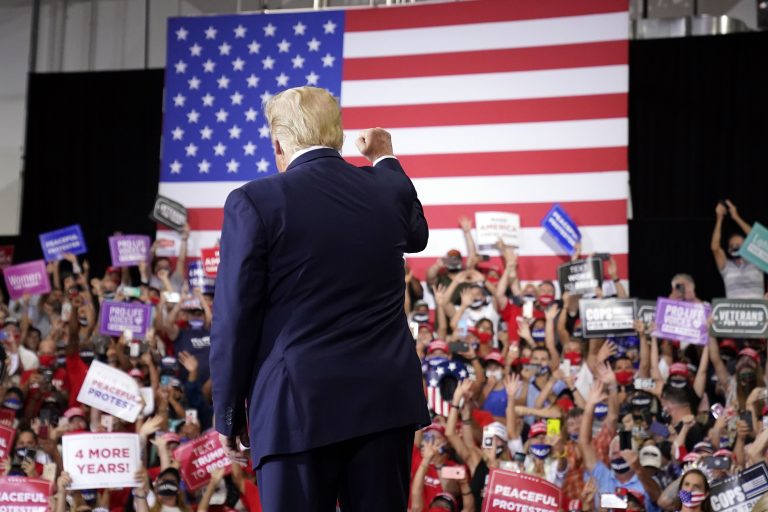
(Headline USA) President Donald Trump has been holding ever-growing rallies in battleground states, in most cases in defiance state emergency orders against large gatherings.

Democratic governors and local leaders have urged the president to reconsider the events, warning that he’s putting lives at risk. But they have largely not tried to block the gatherings of thousands of people, which Trump and his team deem “peaceful protests” protected by the First Amendment.

“If you can join tens of thousands of people protesting in the streets, gamble in a casino, or burn down small businesses in riots, you can gather peacefully under the 1st Amendment to hear from the President of the United States,” Tim Murtaugh, a Trump campaign spokesperson, said in a statement.

Trump’s refusal to abide by contrived, inconsistent “health” guidelines based on dubious data underscores the extent to which he believes a perfectly justified return to normalcy is vital to winning in November.

This summer’s mass riots and protests in response to alleged racial injustice and police misconduct have served as cover for his rallies, making the case that, if demonstrators can gather en masse, so can his supporters. So far, Democratic governors have declined to stand in his way, refusing to become a foil to Trump as liberals who would try to deny Republicans their First Amendment rights.

Trump’s campaign insisted that it takes appropriate health precautions, including handing out masks and hand sanitizer and checking the temperatures of rallygoers.

But thousands of maskless supporters stand shoulder to shoulder at the rallies, while sports are still played in empty arenas and concerts have been largely banned, due to overzealous governors and public officials — most of them Democrats.

Trump held an indoor rally at the Xtreme Manufacturing facility in Henderson, Nevada, on Sunday night. The state restricts gatherings to 50 people, but thousands of supporters packed into the warehouse space nonetheless. Relatively few people wore masks.

“This is an insult to every Nevadan who has followed the directives, made sacrifices, and put their neighbors before themselves,” said Nevada Gov. Steve Sisolak, a Democrat.

The city of Henderson on Monday announced that it was fining Xtreme Manufacturing $3,000. Sisolak slammed the rally as “shameful, dangerous and irresponsible.”

But it does not appear the governor would try to prevent a replay. If Trump returns to the state for another rally, said COVID-19 response director Caleb Cage, state officials will continue to encourage his campaign to follow state law and directives.

In some other states, the rallies are legal. In North Carolina, an order signed by Democratic Gov. Roy Cooper limits outdoor gatherings to 50 people and mandates masks in public, but “activities constituting the exercise of First Amendment rights” are exempt.

The state’s top public health official, Dr. Mandy Cohen, played down calls for stricter enforcement last week as she criticized Trump for holding a rally at the Winston-Salem airport, where thousands of supporters crammed together without masks.

“This isn’t really about mandates and enforcement. It’s about leadership,” Cohen told reporters.

“By using the First Amendment exemption for mass gatherings under the governor’s executive order in this way, they’re making it much harder for North Carolina to get our children back in school and people back to work safely,” said Dory MacMillan, a spokesperson for Cooper — who had no such criticism when protesters and rioters congregated en masse earlier this year.

In Michigan, political speech is exempt from Democratic Gov. Gretchen Whitmer’s order limiting the size of outdoor gatherings. And while Whitmer’s office issued a memo saying people engaging in First Amendment activities still must adhere to social distancing measures, the state hasn’t moved to enforce the rules at Trump’s rallies or during protests.

“We hope the president would care enough about his supporters and their friends and families that he would encourage social distancing and mask wearing,” said Ryan Jarvi, a spokesperson for Democratic Attorney General Dana Nessel.

Nevada is one state where Trump has encountered resistance. His campaign had originally planned to hold a pair of rallies over the weekend in Las Vegas and Reno, but those plans were scuttled after the Reno-Tahoe Airport Authority warned one of the hosts that the rally would violate the governor’s restrictions and the terms of the company’s lease. Trump’s campaign immediately moved to blame Sisolak for the pushback, but the governor’s office insisted it had had no involvement.

Trump told the Las Vegas Review-Journal in an interview Sunday that “he did not believe he was subject” to the order and blamed Sisolak for forcing him to abandon plans for the outdoors rallies.

“They canceled six different sites because the governor wouldn’t let it happen, all external sites,” the president said.

The campaign did not respond to questions about what sites they had tried.

Upcoming rallies in Wisconsin on Thursday and Minnesota on Friday will be held in open-air airplane hangars, and neither state caps attendance on outdoor events.

Ashley Mukasa, a spokesperson for Winnebago County Health Department, said the county doesn’t have any local ordinances that would allow it to issue or enforce local health orders. However, the agency briefed Trump’s advance team about the statewide mask mandate, she said.

“They wanted to avoid breaking any laws,” Mukasa said.

In Minnesota, where Democratic Gov. Tim Walz has long been reluctant to spar publicly with Trump, the virus order exempts anything that would limit “the movement of federal officials in Minnesota while acting in their official capacity.” Beltrami County’s public health director, Cynthia Borgen, said the state’s health department had decided the president’s visit would fall under that exemption — even though he will be there to campaign.

For one activist from the state, Trump’s co-opting of the term peaceful protest represents “a new low.”

“His actions are a mockery of legitimate peaceful protests that have been happening in Minnesota and around the country regarding our stances against police violence and brutality,” said Nekima Levy Armstrong, a civil rights lawyer and former president of the Minneapolis NAACP.

Trump on Monday again drew hundreds of supporters to an indoor event in Phoenix that his campaign advertised as a “Latinos for Trump roundtable,” limiting scrutiny, but that had the feel of something different.

“This is supposed to be a roundtable, but it looks like a rally,” he told the crowd.

Most in the audience did not wear masks, though tables filled with hundreds of unused masks were at the entrance to the event.

Arizona Gov. Doug Ducey, a Republican, has consistently refused to criticize Trump for holding large gatherings in the state, including a packed campaign event at a Phoenix church in June, when Arizona was seeing a surge in coronavirus cases.

“The constitutional rights of Arizonans are going to be protected,” Ducey said. “They’ve been protected the entire time. They’re nonnegotiable.”

Adapted from reporting by Associated Press.

Thinking About a Precious Metals IRA? Now May Be the Time

0

(Clint Siegner, Money Metals News Service) Gold prices have risen 35% since the March lows.

The S&P 500 is nearly 50% higher.

Stocks have outperformed but investors will want to think carefully before positioning for the months ahead.

The equity markets’ move has been 100% fueled by the Fed’s liberal sprinkling of pixie dust and the fantasy that the bubble will continue to grow indefinitely.

Stock investors must suspend disbelief and hope valuations will reach even greater record highs even as 30 million Americans remain out of work.

For anyone skeptical about whether the equity markets can continue to outperform gold, now would be a good time to switch horses. One of the best ways to do that is transferring some retirement funds out of a conventional brokerage account and into a Self-Directed IRA.

These accounts allow you to switch some of your Wall Street assets for tangible assets such as gold, silver, and real estate.

Nervous investors are making the switch in increasing numbers.

And the cost of maintaining the account is often well below what Wall Street charges to “manage” your funds.

Banks and brokerages successfully cultivated the idea that IRAs should contain only conventional securities – stocks, bonds, and mutual funds. The vast majority of retirement funds are invested in those assets, and financial institutions get a rake on every nickel invested. It is no accident that paper is the ONLY option in most accounts.

Annual maintenance and storage fees for $100,000 in IRA funds invested in physical gold, including the storage at Money Metals Depository, are roughly 35 basis points (.0035) for the first year and 20 basis points (.002) ongoing. The maintenance and management fees built into many ETFs and mutual funds are triple that amount.

Today, there are a number of good IRA companies offering self-directed plans, so it is worth covering how an investor might go about choosing one.

You’ll want to start by evaluating the basics. Choose a firm with a reputation for providing great service and competitive fees. You might give extra points for a firm that is well established in the industry.

We do not recommend using custodians charging more than $150 in annual fees or those charging more than $50 to process a transaction.

There are some very good IRA firms we vetted who charge fees significantly below those levels.

The capability to enroll, view, and manage transactions online will be a major consideration if you prefer the convenience of managing affairs electronically.

If you prefer to deal in person, inquire by phone to see if you can reach a service rep easily and get good care.

You should avoid IRA custodians who want to steer you into particular products or programs. Some “rare” and “proof” coin dealers have special arrangements with custodians in order to steer people into high premium coins.

Those over-hyped coins generally do not perform well for anyone but the dealers selling them and should be avoided like the plague. In fact, the Wall Street Journal just published an extremely damning article about the proof coin market.

Many clients may want to store metals closer to where they live. However, we suggest there are more important considerations…

  • Storage fees should be low, of course.
  • Further, you should choose a reputable depository which offers segregated storage, outside of the COMEX custodial network and whatever tangled web of rehypothecation that could entrap your metals there.
  • Lastly, the depository should take physical security seriously.

Money Metals Depository meets all of the above recommendations and more.

MMD operates a Class 3 vault located directly below a County Sheriff’s department!

Segregated storage is the only type we offer in Idaho, and our facility is far away from the COMEX system of vaults, Wall Street bankers, and Washington DC politicians.

With segregated storage, the coins and bars you send in are the exact property you get back when the time comes.

If you would like to store your IRA metals with Money Metals Depository and take advantage of zero shipping costs and instant delivery from Money Metals Exchange, you’ll want to choose New Direction IRA in Colorado, Advanta IRA in Florida and Georgia, or Mountain West IRA in Idaho.

Any of the above three IRA custodians can serve clients nationwide and come highly recommended by our IRA clients for low fees and great support.

If you need a specific recommendation on an IRA custodian based on your circumstance, please just give one of our Specialists a call at 1-800-800-1865.

And to get started with a precious metals IRA, visit this pageOriginal Source

Clint Siegner is a Director at Money Metals Exchange, a precious metals dealer recently named “Best in the USA” by an independent global ratings group. A graduate of Linfield College in Oregon, Siegner puts his experience in business management along with his passion for personal liberty, limited government, and honest money into the development of Money Metals’ brand and reach. This includes writing extensively on the bullion markets and their intersection with policy and world affairs.

California’s Solar-Power Output Drops by a Third as Forest Fires Rage

0

California‘s poor forest management and excessive reliance on green energy sources has left the state unprepared to handle fires sweeping across the state, leaving residents without electricity during apocalyptic darkness.

The California Independent System Operator reported last Thursday that the solar power generation in the state fell to about two-thirds of an average summer day because of the fires, E&E News reported.

This will compound the need for the state to enforce rolling blackouts, which leave residents without power, sometimes without warning.

Michael Bolen, project manager for solar generation at the Electric Power Research Institute, said the problem could continue even after the visible smog dissipates.

“All those ash [and] smoke particles have to settle somewhere,” he said. “If they land on the PV modules, then they could block light from entering the modules.”

President Donald Trump visited California on Monday to talk about the wildfires, and he blamed improper forest management rather than climate change at a press conference with Gov. Gavin Newsom, USA Today reported.

If forest management is the culprit, then the state could pull back from its green-energy regime and end rolling blackouts.

“When trees fall down after a short period of time, they become very dry—really like a matchstick … and they can explode,” Trump said.

Newsom agreed that forest management issues contribute to the wildfires, but he said the most important problem is climate change.

“Please respect, and I know you do, the difference of opinion out here as it relates to this fundamental issue … of climate change,” Newsom said.

He previously blamed climate change for the wildfires at the Democratic National Convention.

“If you are in denial about climate change, come to California,” Newsom said. “The hots are getting hotter. The dries are getting drier.”

Newsom will move forward with plans to turn the state into a green-energy utopia, with rolling blackouts and higher energy prices. California plans to eliminate carbon-based fuels by 2045.

Even President Barack Obama’s former energy secretary, Ernest Moniz, said California’s lawmakers and policymakers cannot realistically assert that solar power, combined with battery power storage, can sustain the state’s electricity grid over the next 10 years.

Moniz said energy technology has not yet reached the California’s solar-power dream into a reality. Solar and wind energy sources will need natural gas to supplement them for years to come.

“Right now there is a shortage of [generating] capacity,” Moniz said, in reference to the state’s “tremendous challenges” with solar and wing energy.

Solar and wind energy vary too much in their reliability, especially as energy demands change during the time of day and across seasons.

He said natural gas must be readily available until technologies develop to allow for sustainable battery storage, hydrogen-based energy, and tools to remove carbon dioxide from the atmosphere.

“We need to do more in terms of looking at how the whole system fits together,” Moniz said.

Former EPA Administrator Gina McCarthy, who served under Moniz, disagreed with her one-time boss, arguing that climate change poses such an existential threat that natural gas cannot be tolerated.

“We think there are opportunities that abound to make this transition,” said McCarthy, who is now the president of the Natural Resources Defense Council.

“It’s not only realistic, it’s imperative. We don’t have any choice,” she said.

9th Circuit Says Trump Can End Temporary Protected Status of Some Immigrants

0

(Headline USA) The Trump administration can end humanitarian protections that have allowed hundreds of thousands of people from El Salvador, Nicaragua, Haiti and Sudan to remain in the United States, a divided appeals court ruled Monday.

While an appeal is imminent and orders to leave wouldn’t take effect for months, the decision moved many people closer to losing legal status, including families who have been in the U.S. for decades and have young children who are American citizens.

The 9th U.S. Circuit Court of Appeals lifted a preliminary injunction that blocked the government from ending Temporary Protected Status, or TPS, for people from those four countries that are affected by natural disasters and civil conflict.

The order also applies to beneficiaries from Honduras and Nepal, who sued separately but are subject to Monday’s ruling under an agreement between attorneys for both sides, said Ahilan Arulanantham, a lawyer for the American Civil Liberties Union of Southern California, who argued on behalf of TPS holders.

Since 1990, the policy has granted temporary legal status, which is often extended beyond what is necessary. The Trump administration decided to end it for several countries, saying the conditions that justified protections in America no longer exist.

That decision had been on hold even as President Donald Trump moved to restrict other forms of humanitarian status in the U.S., such as refugee resettlement and access to asylum.

A three-judge 9th Circuit panel in Pasadena, California, rejected arguments that the administration failed to follow proper procedures and that allegedly racially motivated comments by the president and his aides about some of the countries drove the decision to end TPS.

The ACLU noted that in 2017, Trump said recent immigrants from Haiti “all have AIDS” and that Nigerians, once seeing the United States, would never “go back to their huts” in Africa.

White House pressure on Homeland Security leaders to end TPS didn’t prove racial motivation and was “neither unusual nor improper,” wrote Judge Consuelo Callahan, who was appointed by President George W. Bush. She noted that the administration extended TPS for other non-white, non-European countries.

“While we do not condone the offensive and disparaging nature of the president’s remarks, we find it instructive that these statements occurred primarily in contexts removed from and unrelated to TPS policy or decisions,” Callahan wrote.

Judge Ryan Nelson, a Trump appointee, issued a concurring opinion. Judge Morgan Christen, who was appointed by President Barack Obama, dissented.

The ACLU will appeal to the full 9th Circuit and, depending on the outcome, may ask the Supreme Court to take the case, Arulanantham said.

“If the decision stands, these longtime lawful residents who were welcomed to the U.S. because their countries were mired in violence or natural disasters could be sent back,” the ACLU said. “Because they have several hundred thousand American children — many of whom are school-aged — this decision would force those families to be torn apart.”

The Justice Department welcomed the decision, saying allegations that TPS decisions were motivated by race were baseless.

People from Honduras, Nepal, Haiti, Nicaragua and Sudan could be forced to leave as early as March 5, Arulanantham said. Salvadorans would have until Nov. 5, 2021, under a separate pact between the U.S. and Salvadoran governments.

The ultimate outcome many hinge on the presidential election. Trump’s Democratic challenger Joe Biden promises “an immediate review” of TPS and said he will pursue legislation for longtime residents to remain in the U.S. and seek citizenship.

More than 400,000 people from 10 countries have the protected status, including some 250,000 from El Salvador, according to the Congressional Research Service. El Salvador first got TPS in 2001 after earthquakes displaced much of the population.

Honduras has about 80,000 TPS beneficiaries, followed by Haiti with 55,000, Nepal with nearly 15,000, Nicaragua with about 4,500, and Sudan with less than 1,000.

Salvadoran President Nayib Bukele, who has worked closely with Trump on immigration, wrote on Twitter after the ruling that there is “enough time to ask our allies for a permanent solution, or at least another temporary solution.”

Adapted from reporting by Associated Press.

Leftist LA Sheriff Criticizes Dems for ‘Fanning the Flames’ of Anti-Cop Rhetoric

0

(Headline USA) The Los Angeles County sheriff on Monday criticized elected officials, sports figures and civic leaders for “fanning the flames of hatred” as America grapples with racism and police brutality, saying they instead should emphasize trust in the criminal justice system.

Sheriff Alex Villanueva’s comments to The Associated Press came after the weekend ambush of two deputies who were in their parked police vehicle when a man walked up to the passenger’s side and fired multiple rounds.

The deputies were struck in the head and critically wounded but both are expected to recover, Villanueva said. The gunman hasn’t been captured.

The shooting occurred in Compton, one of the communities that makes up South Los Angeles, an area with a large black population that has long been a flashpoint for racial tension and mistrust of police.

Hundreds marched to the Sheriff’s Department South LA station in Compton on Saturday to protest the fatal shootings of a black man on Aug. 31 and a black teenager in 2018.

Both were killed by deputies from the station, which also is the workplace of the deputies targeted Saturday.

After that shooting, Black Lives Matter protesters gathered outside the hospital where the deputies were treated and tried to block the emergency room entrance.

Videos from the scene recorded protesters shouting expletives at police and at least one yell “I hope they … die.”

Villanueva said the angry rhetoric is making his deputies’ work more difficult.

“They’re out there doing their job and yet we have people fanning the flames of hatred and just turning up the volume when we don’t need it. We need to be turning it down,” Villanueva said.

“Particularly our elected officials and civic leaders and sports figures, they need to start emphasizing trust in the system, due process.”

Villanueva did not specify any particular people but many Democrat politicians and left-leaning athletes have harshly criticized police and called for defunding departments.

The NBA playoffs were delayed last month when Los Angeles Lakers star LeBron James and other stars supported the Milwaukee Bucks’ decision not to play following a shooting in Kenosha, Wisc., of an alleged rapist.

U.S. Open winner Naomi Osaka of Japan wore masks with the names of black victims of violence throughout the tennis tournament.

After 29-year-old Dijon Kizzee was killed by two LA County deputies last month, U.S. Rep. Maxine Waters, a Democrat who represents part of South Los Angeles, said “”while we don’t know all of the details of this incident” she shares the community’s outrage and that the message from police killings is “the lives of people of color do not matter and that the practice is to shoot first and ask questions later.”

She said the Sheriff’s Department is out of control and called on state Attorney General Xavier Becerra to investigate “the pattern of abuses.”

Villanueva said the department’s investigations into police shootings like Kizzee’s take time.

“We’re not going to speed up or slow down at the behest of anybody,” he said. “It’s going to be based on fact, not on emotion. Some people already have determined the results, so they’re trying to throw rocks at the process.”

Villanueva also rejected claims the criminal justice system is biased against people of color, saying his department is committed to thorough investigations, including of its own employees.

“To someone who says they’re biased, the only bias we have is toward facts,” he said. “We need to stop the false narratives. We have to let the system take its course and justice has to be based on facts, based on evidence. It has to be right.”

Villanueva also defended the arrest of Josie Huang, a reporter for public radio station KPCC taken into custody during Saturday’s demonstration outside the hospital after appearing to interfere in the arrest of a violent protester.

In a video of the incident, Huang can be heard shouting, “I’m a reporter. … I’m with KPCC” as she falls to the ground. She said she was wearing a press pass.

Villanueva said Huang was too close to the deputies during the man’s arrest.

He claimed “that’s where she crossed the line from journalism to activism,” He said he didn’t know if the deputies heard her shouting “I’m a reporter.”

“You have to have a certain level of responsibility as a journalist,” Villanueva said. “Do your job but do it as a safe distance where you’re not interfering with the deputies doing their job.”

He added: “All I can say is, in the heat of the moment when these protesters are calling or chanting for the death of the deputies in the emergency room, she picked the worst time possible to try to get an up-close of the deputies making an arrest. That’s on her.”

Top HHS Official Warns About CDC Deep State ‘Resistance’; Advises Loading Up on Ammo

(Headline USA) After a leading communications official in the Department of Health and Human Services warned via a Facebook video that seditious government scientists could be part of an armed coup, House Democrats quickly sought to clamp down.

A Democrat-led subcommittee said Monday that it is requesting transcribed interviews with seven officials from the Centers for Disease Control and Prevention and the HHS, including communications aide Michael Caputo.

Caputo has often publicly pushed back on CDC statements about the coronavirus and said on Sunday that the CDC has a “resistance unit” to undermine Trump, according to the New York Times.

The New York Post reported on Caputo’s Facebook video:

Caputo also said his life could be in danger.

“You understand that they’re going to have to kill me, and unfortunately, I think that’s where this is going,” he told his followers in a live video posted on his Facebook page Sunday.

He also predicted that Trump will win re-election but Joe Biden, the Democratic presidential nominee, won’t concede.

“And when Donald Trump refuses to stand down at the inauguration, the shooting will begin. The drills that you’ve seen are nothing,” he said, adding: “If you carry guns, buy ammunition, ladies and gentlemen, because it’s going to be hard to get.”

“There are scientists who work for this government who do not want America to get well, not until after Joe Biden is president,” he continued.

His Facebook page has since been made private.

The House subcommittee said it is examining President Donald Trump’s response to the coronavirus pandemic is launching an investigation into reports that political appointees have meddled with routine government scientific data to better align with Trump’s public statements.

According to a report in Politico, Caputo, along with scientific adviser Paul Alexander, pressured officials to alter the CDC’s Morbidity and Mortality Weekly Reports, a long-running weekly journal that features the latest science-based research and data on infectious diseases.

Known as MMWR, the report has long been a sacred government information resource for doctors, scientists and researchers tracking outbreaks.

The officials pressured CDC to change the reports, at times retroactively, to better align them with Trump’s often rosier public statements about the coronavirus, Politico reported.

In a letter to Health and Human Services Secretary Alex Azar and CDC Director Robert Redfield, the Democratic members of the subcommittee said they are “gravely concerned” about the reports of political meddling in a journal that has long been free of political interference.

“With nearly 200,000 Americans killed and hundreds more dying each day from the coronavirus pandemic, the public needs and deserves truthful scientific information so they can keep themselves and their families healthy,” the Democrats wrote.

The panel is also demanding documents from the department, including communications sent or received by Redfield, Azar, Caputo and Alexander regarding the MMWR and other matters.

HHS did not immediately respond to a request for comment on the letter.

According to Politico, Caputo and Alexander complained about a report that explained children can transmit the coronavirus and Alexander asked the CDC to alter it or pull it down, saying the report could impact school reopening and hurt Trump politically.

Adapted from reporting by the Associated Press

DeVos Sees School Closures as Opening for Long-Sought Charter Initiatives

0

(Headline USA) As millions of American children start the school year online, the Trump administration is hoping to convert their parents’ frustration and anger into newfound support for school choice policies.

Democrats, dominated by powerful teachers unions that would stand to lose funding and influence, have long tried to thwart the idea.

But Education Secretary Betsy DeVos and President Donald Trump have repeatedly invoked school choice as the solution to parents’ woes during coronavirus lockdowns.

If public schools fail to open, they say, parents should get a cut of the district’s federal funding to send their children to private schools or for home schooling, learning pods or other options.

The issue also was presented during the recent Republican National Convention among a litany of ways the Trump administration has been working to improve the lives of minorities.

Speaking at the White House in July, Trump declared that “there is nothing that the African American community wants more than school choice.”

Before taking office, DeVos spent decades as an advocate for charter schools and voucher programs in Michigan and elsewhere.

As secretary, she has been credited with helping states expand programs but has struggled to make headway on federal legislation.

Since last year, she has been calling for a $5 billion federal tax credit to support scholarships that help students attend private schools or other education alternatives. The idea was included in Senate Republicans’ latest relief bill, which was voted down Thursday.

DeVos says she’s fighting to give families access to a wider array of options as many districts remain online.

“Parents are increasingly demanding it,” DeVos told the Associated Press.

“It’s becoming ever more evident that parents and students need to have more choices,” she continued “I would argue that it is the ideal time to be talking about this more widely. And in fact, we are.”

In nearly every public appearance she has made during the pandemic, DeVos has used the spotlight to draw attention to school choice.

On Twitter, she has highlighted stories of families calling for options beyond their local public schools has emphasized the struggles of private, religious schools.

Her focus on school choice has drawn sharp opposition from Democrats and public school leaders.

In July, DeVos issued a rule that sought to shift millions of dollars in federal virus relief from public schools to private schools.

Democrats and some Republicans in Congress said the rule conflicted with the intent of the funding bill, and several states vowed to ignore it.

This month a federal judge appointed by Trump struck down the rule, saying DeVos overstepped her powers.

DeVos also drew criticism for using $180 million in relief aid to create new “microgrants” that families could use to send students to private schools, among other purposes. At the same time, she has publicly assailed some public schools that decided to start the school year primarily or entirely online.

In-person instruction should be available to any family that wants it, DeVos has said, and anything short of that fails students and taxpayers.

Congress earmarked $13 billion for schools in a March relief package, but many districts say the money barely started to cover the costs of reopening.

DeVos said she’s working closely with governors and state education chiefs and has yet to hear a complaint from them.

“There’s a notion that we had to have some dictate from the federal level about what schools have to do,” DeVos said. “It’s just a fallacy. And I’m afraid in many cases, it is an excuse for inaction.”

Florida school chief Richard Corcoran said DeVos has granted every request for flexibility the state has submitted.

He said DeVos is “dead right” to criticize schools that kept classes online.

And supporters of school choice say DeVos is right to press for the issue now. Once an abstract debate for many families, choice has suddenly became a personal issue for parents across the country considering options to local schools remaining online, backers say.

Jeanne Allen, founder and CEO of the Center for Education Reform, said private schools and charter schools have been quicker to adapt to the pandemic and to reopen.

“Education right now is under a microscope like never before, and the problem is that districts don’t work for most people,” Allen said.

“Secretary DeVos is really fortunate to be in a position where the most important worldwide concern right now is at her feet to handle as she might see fit,” she said.

But some choice supporters are skeptical that this is the moment advocates have dreamed of. Michael Petrilli, head of the Thomas B. Fordham Institute, a conservative think tank, said DeVos should have focused on uniting schools of all types to face the challenges of the pandemic.

“Instead she’s just been an armchair quarterback, criticizing schools for what they’re not doing,” he said. “She has been very clear in her messaging and her advocacy that she doesn’t have a whole lot of respect for traditional public schools.”

DeVos denies that she’s favoring one type of school over another.

“I’m focused on students, not on school buildings, school systems or any word that comes before school,” DeVos said. “I don’t accept the notion that we’re focused on one type of school versus another. It’s really on students.”

Chick-fil-A Abandons San Antonio After Anti-Religious City Council Relents

Chick-fil-A is no longer seeking to open a restaurant in San Antonio, Texas—even though city officials were forced to relent and allow the Christian-owned business to open a franchise after more than a year of legal back-and-forth.

“We are always evaluating potential new locations in the hopes of serving existing and new customers great food with remarkable service,” Chick-fil-A said in a statement.

“While we are not pursuing a location in the San Antonio airport at this time, we are grateful for the opportunity to serve San Antonians in our 32 existing restaurants,” it said.

The popular fast-food chain tried to open a location in the San Antonio International Airport a couple of years ago, but city council members blocked Chick-fil-A from doing so.

They argued that the business’s owners were discriminatory towards the LGBT community because they donated to Christian charities.

In return, the state of Texas opened an investigation last year into whether San Antonio had discriminated against the restaurant “due to the expression of the owner’s religious beliefs.”

That investigation concluded recently, and Texas Attorney General Ken Paxton told Fox News on Sunday that Chick-fil-A would finally be offered a lease at the San Antonio International Airport.

Paxton said the investigation’s conclusion was “so important” because if Texas had allowed this kind of discrimination to occur in San Antonio, “then this could happen all over the country.”

“City councils or other governmental entities could just decide they didn’t like your personal views on whatever related to your religious faith and stop you from having a business,” he explained, calling San Antonio’s actions a “violation of our First Amendment rights.”

San Antonio, however, denied Paxton’s claim that the city would be offering Chick-fil-A a lease.

Instead, city leaders agreed to an “informal resolution” with the state’s Department of Transportation after the Federal Aviation Administration concluded its investigation into the matter, city officials said.

“The FAA has not ordered the City of San Antonio to have Chick-fil-A at its airport. The City itself offered to resolve the FAA investigation informally following Chick-fil-A’s publicly stated change-of-position on its charitable giving policy,” the city said in a statement, according to San Antonio TV station KSAT.

“The City maintains that at no point did it discriminate against Chick-fil-A,” it said. “Any placement of Chick-fil-A at the San Antonio Airport is ultimately contingent on Chick-fil-A’s continued interest and approval by the City Council,” the statement continued.

But Chick-fil-A is no longer interested.

Given the city’s blatant opposition to the franchise, it’s easy to understand why.

City council members accused Chick-fil-A of endorsing a “legacy of anti-LGBTQ behavior”—all because the company donated to the Fellowship of Christian Athletes, a student organization that believes “marriage is exclusively the union of one man and one woman,” according to the organization’s mission statement.

Paxton argued that regardless of whether Chick-fil-A chooses to open a restaurant in San Antonio, it was important for the state of Texas to take a stand against religious discrimination.

“If we stop it now, it allows other restaurants and other business owners to continue to have their own personal religious views and not be affected by government telling them that they can’t do something,” he said.

Adapted from reporting by the Associated Press

Wisc. Dems Block Green Party’s Ballot Bid, Clear Way for Mass Mailings in Key Swing State

0

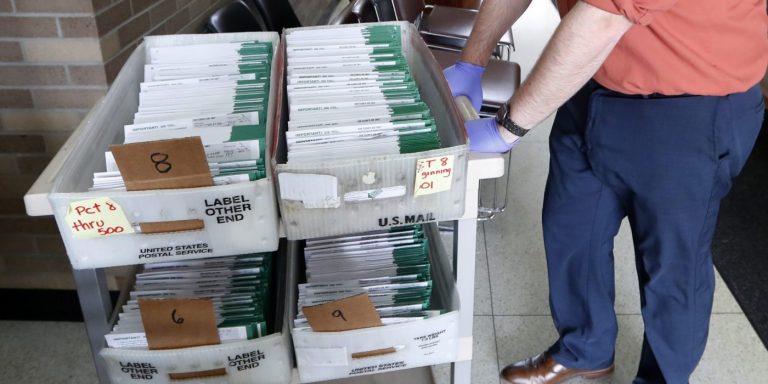
The Wisconsin Supreme Court ordered Monday that the Green Party presidential candidate should not be added to the ballot, clearing the way for local clerks to resume mailing absentee ballots to more than 1 million voters who have requested one.

The 4-3 order comes just seven weeks before the Nov. 3 presidential election in this narrowly divided state.

Democrats had feared that adding Howie Hawkins to the ballot would take votes away from Joe Biden and assist President Donald Trump.

Trump won Wisconsin by fewer than 23,000 votes in 2016.

Election officials had warned of significant delay and chaos had the court ordered Hawkins added to the ballot. That would have forced clerks to reprint and mail the ballots less than two months before the election.

Rapper Kanye West is also trying to get on the Wisconsin ballot. The court did not address his challenge, which if successful could result in a new ballot being ordered.

Both West and Hawkins are getting help from Republicans who see them as siphoning votes from Biden in this narrowly divided state.

Attorneys representing the Green Party candidates have represented Republicans in prior legal battles.

Several Republicans, including the former attorney for the state Republican Party, are assisting West.

Meanwhile, Democrat lawyers, such as notorious election-stealing attorney Marc Elias, have been focusing some of their clout on blocking the third party candidates from giving disaffected voters more options.

Clerks had already mailed an untold number of ballots before the Supreme Court on Sept. 10 stopped the sending of ballots while it considered the Green Party lawsuit.

Democrats feared a delay in creating and then sending out replacement ballots will confuse voters and dampen turnout. The ruling comes just ahead of a state deadline to send absentee ballots by Thursday to people who have a request on file will not be met. Saturday is the deadline under federal law to mail ballots to military and overseas voters.

Voters in Wisconsin have until Oct. 29 to request an absentee ballot by mail, but election officials have urged voters to act sooner given expected delays in the mail. Absentee ballots must be received by 8 p.m. when polls close on Election Day.

State elections officials have estimated that more than 2 million of the state’s roughly 3 million eligible voters will cast absentee ballots, largely due to concerns about the coronavirus pandemic.

The Wisconsin Elections Commission in August deadlocked twice on whether Hawkins and his running mate should be placed on the ballot, resulting in them not getting added.

Three Republican election commission members said Hawkins should be on the ballot while three Democratic members said he didn’t qualify because his running mate listed an incorrect address on thousands of nominating signatures.

The state Supreme Court sided with the commission in determining that Hawkins should not be on the ballot.

Adding Hawkins to the ballot could have had a dramatic effect on the outcome of the election. The Green Party’s 2016 presidential candidate, Jill Stein, won 31,006 votes in the state—more than Trump’s 22,748-vote margin over Hillary Clinton.

There are more than 170 lawsuits nationally over election procedures, often filed by the two major parties or their allies, that have injected a new level of uncertainty into a contest already disrupted by the pandemic.

Third parties are also going to court to get on the ballot in other states such as Arizona, Pennsylvania and Virginia.