Will Lingering Anger Over COVID Lockdowns Affect Voters’ Decisions?

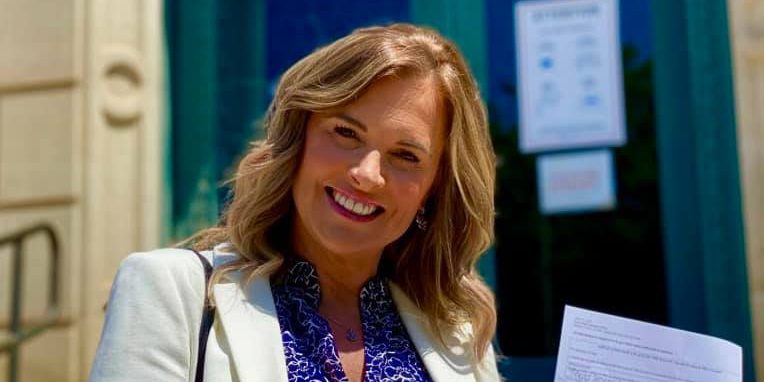
(Headline USA) When response to the coronavirus pandemic slammed the U.S. economy this spring, Dallas salon owner Shelley Luther became an overnight symbol of rebellion against lockdown measures, spending two days in a Texas jail for refusing to close her doors.

Nearly $500,000 poured into a donation fund set up by conservative activists.

Republican Sen. Ted Cruz made a show of getting his hair cut at Luther’s salon. She flew to Michigan to rally with shutdown protesters and launched a run for the Texas Senate, hammering Republican Gov. Greg Abbott over virus restrictions.

Her race in a deeply red and rural district is now a small test of what other Republican candidates nationwide are including in their issue mix with just five weeks before Election Day — lingering voter resentment of lockdown orders to help boost them into office, at a time when President Donald Trump’s reelection may hinge on persuading voters that the worst is behind America.

“I stood up for you, I went to jail and I’ll do it again and again,” Luther told a room of voters this past week in a small town outside Fort Worth, in an event livestreamed on her Facebook page.

Referring to Abbott, she said, “I’ll sleep on that man’s porch, bring the media until he opens up Texas.”

Trump is eager to frame his race against Democrat Joe Biden, the former vice president, on the Supreme Court vacancy and on an aggressive message of law and order in the aftermath of a summer of urban riots.

But some GOP candidates, including Luther, want voters to remember the early weeks and months of closed restaurants and enforced lockdowns as the country is now slowly reopening and the unemployment rate is improving, though still high at 8.4%.

In Minnesota, Republican Senate candidate Jason Lewis has made anger over coronavirus measures a cornerstone of an underdog challenge against Democratic incumbent Tina Smith, staking his hopes on bringing out voters in rural areas where mom-and-pop businesses were hit hard by the shutdown.

In the race for North Carolina governor, Republican challenger Dan Forest, the state’s lieutenant governor, has run hard against Democratic Gov. Roy Cooper’s executive orders on COVID-19 restrictions, saying he wants to replace “the current culture of fear with clear goals and a path forward.”

A majority of Americans — 69% — say they are still at least somewhat worried about themselves or their family members being infected with the virus, according to a poll from The Associated Press-NORC Center for Public Affairs Research. Eighty-three percent of Democrats say they are at least somewhat concerned about the virus, compared with 55% of Republicans.

There is skepticism that angst over lockdown measures is enough for underdog GOP candidates to narrow the gap.

In Texas, where Democrats are running closer races than they have in a generation in a longtime GOP stronghold, GOP incumbents in battleground seats have focused on the recovery rather than rail against past lockdowns.

“With every day that passes, people are getting back to normal. I think there was voter anger in July, but I don’t think it’s anywhere as considerable as it was then,” said Matt Mackowiak, a Republican consultant in Texas.

Luther, who did not respond to a request for an interview, is one of five candidates running in what is expected to be a low-turnout special election Tuesday to fill a seat vacated by a GOP legislator running for Congress. Her campaign received a $1 million loan from billionaire Texas oilman Tim Dunn, whose conservative group Empower Texans is one of the biggest political spenders in Texas politics and a critic of Abbott.

In Minnesota, Lewis recently railed against coronavirus restrictions to a small crowd of a couple dozen supporters in Stillwater, which is one of the areas outside the Twin Cities where both he and Trump need to do well to flip what has become an unlikely battleground state.

Trump narrowly lost Minnesota in 2016, and Lewis, a staunch supporter of the president, has made opposition to restrictions and face mask mandates a centerpiece of his campaign. He has sued Democratic Gov. Tim Walz, claiming that the restrictions on public gatherings have hindered his ability to campaign.

“The lockdown has changed everything,” Lewis said. “The virus changed everything. And the angst that these draconian lockdowns imposed on Minnesota, especially in greater Minnesota but really all over the state, I believe was the game changer.”

Adapted from reporting by Associated Press.
Trump’s Former Campaign Manager Hospitalized After Threatening to Kill Himself

0

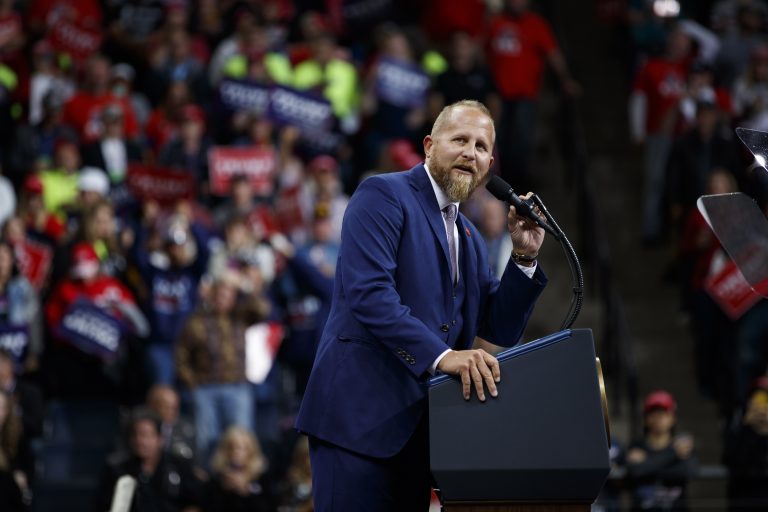
(Headline USA) President Donald Trump‘s former campaign manager Brad Parscale was hospitalized Sunday after he threatened to harm himself, according to Florida police and campaign officials.

Police officers talked Parscale out of his Fort Lauderdale home after his wife called police to say that he had multiple firearms and was threatening to hurt himself.

Police Sgt. DeAnna Greenlaw said Parscale was hospitalized under the state’s Baker Act, which allows anyone deemed to be a threat to themselves or others to be detained for 72 hours for psychiatric evaluation.

“Brad Parscale is a member of our family and we love him,” said Trump campaign communications director Tim Murtaugh. “We are ready to support him and his family in any way possible.”

Parscale was demoted from the campaign manager’s post in July but remained part of the campaign, helping run its digital operation.

Standing 6’8″ and with a distinctive beard, Parscale had become a celebrity to Trump supporters and would frequently pose for photos and sign autographs ahead of campaign rallies.

But Trump had begun to sour on him earlier this year as Parscale attracted a wave of media attention that included focus on his seemingly glitzy lifestyle on the Florida coast that kept him far from campaign headquarters in Virginia.

Over the summer, he hyped a million ticket requests for the president’s comeback rally in Tulsa, Oklahoma, that ended up drawing just 6,000 people.

Trump promoted Bill Stepien to campaign manager weeks later.

Parscale was originally hired to run Trump’s 2016 campaign by Jared Kushner, the president’s powerful son-in-law.

While the Republican National Committee owns most of the campaign’s data, voter modeling and outreach tools, Parscale ran most of the microtargeted online advertising that Trump aides believe was key to his victory four years ago.

Under the state’s Red Flag Law, officials could ask a judge to bar Parscale from possessing any weapons for up to a year.

Adapted from reporting by the Associated Press.

BLM Activist Takes Selfie with Lara Trump; Says Trump Supporters Aren’t So Bad

0

Rakeem Jones, a Black Lives Matter activist, posed for a picture with conservatives including President Donald Trump’s daughter-in-law Lara Trump on Wednesday, the Fayetteville (NC) Observer reported.

Later, Jones posted the photos with Trump, as well as conservative duo Diamond and Silk, on Facebook and said, “Trump supporters are not as bad as people make them out to be.  That really is the biggest thing we learned.”

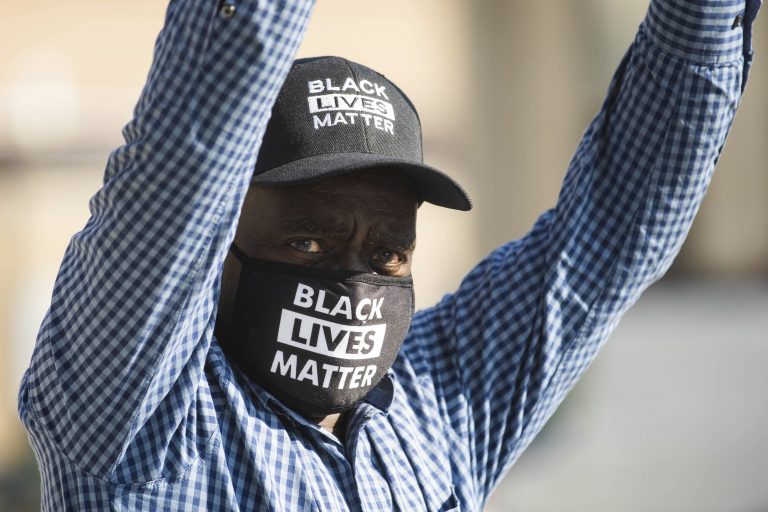
Trump, Diamond, and Silk posed in the pictures without masks, while Jones was wearing a mask that says, “The Ville’s Voice,” a group he helped found to support the Black Lives Matter agenda.

President Trump has not softened his stance against Black Lives Matter, saying in Atlanta on Friday that the radical group is “really hurting the black community.”

Jones said he posted the photo as part of his process of “learning about both sides.”

In an effort to learn about Republicans, he hosted them on his radio show on WIDU, a Fayetteville-area radio station.

And Jones attended a Trump rally two Saturdays ago at the Fayetteville regional airport.

He said contemporary political divisions occur because people are “messed up” and “take things in an extreme way.”

His willingness to speak with Trump supporters comes after a hostile encounter with one of them.

While Jones was protesting outside a Trump rally in 2016, John McGraw, 78, elbowed him in the head. McGraw pleaded no contest at the trial, and he and Jones hugged.

Despite the extreme beliefs and tactics of Black Lives Matter as an organization, Jones has remained opposed to violence.

Other pictures on Facebook show him with Sen. Thom Tillis, R-N.C., Republican Lt. Gov. Dan Forest, and Democratic State Rep. Kirk deViere.

“NEVER FORGET TO BE OPEN-MINDED,” he said.

Appeals Court: Wisconsin Cannot Count Absentee Ballots for Six Days After Election

0

(Headline USA) A federal appeals court on Sunday temporarily halted a six-day extension for counting absentee ballots in Wisconsin‘s presidential election.

As it stands, ballots will now be due by 8 p.m. on Election Day. A lower court judge had sided with Democrats and their allies to extend the deadline until Nov. 9.

Democrats sought more time as a way to help deal with an expected historic high number of absentee ballots.

The Democratic National Committee, the state Democratic Party and allied groups including the League of Women Voters sued to extend the deadline for counting absentee ballots after the April presidential primary saw long lines, fewer polling places, a shortage of workers and thousands of ballots mailed days after the election.

U.S. District Judge William Conley ruled Sept. 21 that ballots that arrive up to six days after Election Day will count as long as they’re postmarked by Election Day.

Sunday’s action puts Conley’s order on hold until the 7th Circuit U.S. Court of Appeals or U.S. Supreme Court issues any further action.

No further details were immediately posted by the appeals court.

State election officials anticipate as many as 2 million people will cast absentee ballots to avoid catching the coronavirus at the polls.

If the decision had stood it could have delayed knowing the winner of Wisconsin for days.

The Republican National Committee, the state GOP and Wisconsin’s Republican legislators argued that current absentee voting rules be left in place, saying people have plenty of time to obtain and return their ballots.

Conley on Sept. 21 also extended the state’s deadline for registering by mail or electronically by seven days, from Oct. 14 to Oct. 21 and declared that poll workers can work in any county, not just where they live.

Clerks have reported fears of the virus caused shortages of poll workers in both Wisconsin’s spring presidential primary and state primary in August. Loosening the residency requirements could make it easier to fill slots.

Trump won Wisconsin by less than 1 percentage point — fewer than 23,000 votes — in 2016 and the state figures to be a key battleground again in 2020. Polls show Democrat Joe Biden with a slight lead but both sides expect a tight race.

Adapted from reporting by the Associated Press.

Kenosha Officer Says Jacob Blake Turned at Him with Knife Before He Fired

0

(Headline USA) The Kenosha police officer who shot Jacob Blake told investigators he opened fire because Blake started turning toward the officer while holding a knife, the officer’s lawyer contends.

Brendan Matthews, the attorney for Officer Rusten Sheskey and the Kenosha police union, told CNN that when Sheskey arrived at the scene on Aug. 23 in response to a call from a woman who said Blake was at her home and shouldn’t be there, he heard a woman say, “He’s got my kid. He’s got my keys.”

Sheskey saw Blake put a child in the SUV as he arrived, but he didn’t know that two other children were also in the back seat, Matthews said.

He said Sheskey told investigators he opened fire because Blake “held a knife in his hand and twisted his body toward” the officer, and that he didn’t stop until he determined Blake “no longer posed an imminent threat.”

Matthews said if Sheskey had allowed Blake to leave and something happened to the child, “the question would have been ‘Why didn’t you do something?'”

Cellphone video captured by a bystander and posted online shows Sheskey and another officer follow Blake with their guns drawn as he walks around the front of the parked SUV, opens the driver’s side door and lean into the vehicle.

Sheskey then opened fire, hitting Blake seven times and leaving him paralyzed from the waist down, according to his family members and lawyer.

Ben Crump, an attorney for Blake’s family, did not immediately respond to a Sunday email seeking comment about Matthews’ interview and his voicemail wasn’t accepting new messages.

But he previously said Blake was only trying to break up a domestic dispute that day and that he did nothing to provoke police, adding that witnesses didn’t see him with a knife.

Blake’s uncle, Justin Blake, said Saturday that the allegation that Blake was attempting to kidnap his own child was false, the Kenosha News reported.

“That’s ridiculous,” Justin Blake said. “It’s gaslighting. Outright lies.”

The bystander who recorded the shooting, 22-year-old Raysean White, said he saw Blake scuffling with three officers and heard them yell, “Drop the knife! Drop the knife!” before gunfire erupted.

White said he didn’t see a knife in Blake’s hands.

The Wisconsin Department of Justice, which is leading the investigation, previously said in a news release that a knife was found in the vehicle, but it didn’t say whether Blake had been holding it at any point during the confrontation or whether police knew it was there before Sheskey shot him.

Blake, who was wanted on a warrant for those charges when police arrived at the scene Aug. 23, pleaded not guilty to the charges earlier this month via video from from his hospital bed.

A trial date was set for Nov. 9.

Sheskey and the other two officers who were at the scene were placed on administrative leave pending the outcome of the investigation.

Adapted from reporting by the Associated Press.

Anonymously Sourced NYT Report: Trump Paid $750 in Income Taxes in 2016, 2017

(Headline USA) President Donald Trump allegedly paid just $750 in federal income taxes the year he ran for president and in his first year in the White House, according to an anonymously sourced report Sunday in the New York Times, which refused to disclose how it came across or obtained the information.

The report says that Trump, who has fiercely guarded his tax filings and is the only president in modern times not to make them public, paid no federal income taxes in 10 of the past 15 years.

The president’s financial disclosures indicated he earned at least $434.9 million in 2018, but the tax filings reported a $47.4 million loss.

Roughly half of Americans pay no income taxes, primarily because of how low their incomes are. But IRS figures indicate that the average tax filer paid roughly $12,200 in 2017, about 16 times more than what the report said the president paid.

The Times said the disclosure comes from tax return data it obtained extending over two decades.

Speaking at a news conference Sunday at the White House, Trump dismissed the report as “fake news” and maintained he has paid taxes, though he gave no specifics.

He also vowed that information about his taxes “will all be revealed,” but he offered no timeline for the disclosure and made similar promises during the 2016 campaign on which he never followed through.

A lawyer for the Trump Organization, Alan Garten, and a spokesperson for the Trump Organization did not immediately respond to a request for comment from The Associated Press on the report.

Garten told the Times that “most, if not all, of the facts appear to be inaccurate.”

He said in a statement to the news organization that the president “has paid tens of millions of dollars in personal taxes to the federal government, including paying millions in personal taxes since announcing his candidacy in 2015.”

A serial purveyor of anonymously-sourced reports on Trump during his administration — many of which were unproven or turned out not to be true — the Times said it declined to provide Garten with the tax filings in order to protect its sources, but it said its sources had legal access to the records.

The president has fielded court challenges against those seeking access to his returns, including the U.S. House, which is suing to get Trump’s tax returns as part of congressional oversight that does not suggest any crime has been committed.

During his first two years as president, Trump allegedly received $73 million from foreign operations, which in addition to his golf properties in Scotland and Ireland included $3 million from the Philippines, $2.3 million from India and $1 million from Turkey, among other nations.

The report said the president in 2017 paid $145,400 in taxes in India and $156,824 in the Philippines, compared to just $750 in U.S. income taxes. The Times said the tax records did not reveal any unreported connections to Russia.

Trump, starting in 2010, claimed and received an income tax refund that totaled $72.9 million, which the Times said was at the core of an ongoing audit by the IRS.

The Times said a ruling against Trump could cost him $100 million or more.

The president could also face mounting financial pressure in the years ahead. The tax records show he’s carrying a total of $421 million in loans and debt that are primarily due within four years.

Most of that debt comes from the Doral golf resort in Florida ($125 million) and Trump’s Washington hotel ($160 million), two properties that the Times said are struggling financially.

During his first general election debate against Democrat Hillary Clinton in 2016, Clinton said that perhaps Trump wasn’t releasing his tax returns because he had paid nothing in federal taxes.

Trump interrupted her to say, “That makes me smart.”

The Times has spent little time and effort examining the questionable deals of his opponent for the presidency, Democrat Joe Biden, and his son Hunter, who reaped millions of dollars from relationships with companies and individuals in Russia, Ukraine, and China.

Adapted from reporting by the Associated Press.

Portland Police Shut Down Leftist Riots at Night After Peaceful Conservative Demonstration During the Day

0

(Headline USA) Law enforcement declared an unlawful assembly late Saturday, forcing rioters from downtown Portland, Oregon, and making several arrests, just hours after peaceful demonstrations earlier in the day that supported President Donald Trump.

Hundreds of people were gathered downtown in Oregon’s largest city, where rioters shot fireworks at police. Video posted by KOIN-TV showed officers warn that protesters who hurl projectiles will be subject to arrest.

Images showed the violent resisters crowded in and around a park near the Mark O. Hatfield United States Courthouse — the same courthouse that had been the scene of nightly unrest over the summer. One was seen burning an American flag.

Several arrests were made, according to reporters at the scene, but a specific number was not immediately available.

The unrest came just hours after a conservative rally and counter-protesters largely dispersed without serious violence. Police did investigate an alleged assault after one person who was documenting the event was pushed to the ground and kicked in the face.

Separately, police said a criminal citation was issued after officials confiscated firearms, paintball guns, baseball bats and shields from a pick-up truck that was initially stopped for having obscured license plates as it left the rally.

Oregon State Police Superintendent Travis Hampton and Multnomah County Sheriff Mike Reese praised the minimal violence in a joint statement late Saturday.

“Our Unified Command worked well to prevent violence before it started,” Hampton said in the statement. “Law enforcement officers performed a number of traffic stops and took weapons off the streets.”

“On Saturday, Oregonians denounced hate, racism and violence,” Reese stated, adding that, “the Unified Command was able to help keep the peace.”

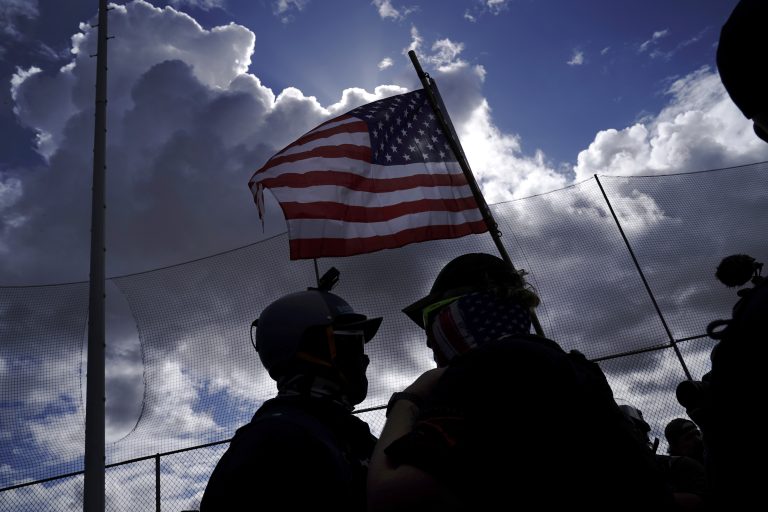
Several hundred people, dozens of them wearing body armor to protect themselves against Antifa attacks, gathered to support President Donald Trump and his “law and order” reelection campaign Saturday afternoon.

Organized by the Proud Boys, the rally was described as a free speech event to support Trump and police and condemn anti-fascists and “violent gangs of rioting felons” in the streets — which ended up materializing later in the night after the peaceful conservatives left.

TJ Detweiler, who works in construction and plumbing, said at the rally that he wanted to end domestic terrorism in the U.S.

“I would like to see people stop the looting and rioting and enjoy the country for what rights we have,” Detweiler said.

Liberal local and state elected officials condemned the event and rushed to shore up law enforcement ranks as left-wing groups organized several rallies to oppose the Proud Boys’ message. About 1,000 counter-protesters gathered at another park.

The events began at noon and were largely dispersed by 3 p.m.

The rally came as Portland has seen nearly nightly riots since the death of George Floyd during a police confrontation in late May.

Adapted from reporting by Associated Press.
President Trump Nominates Amy Coney Barrett to Supreme Court

0

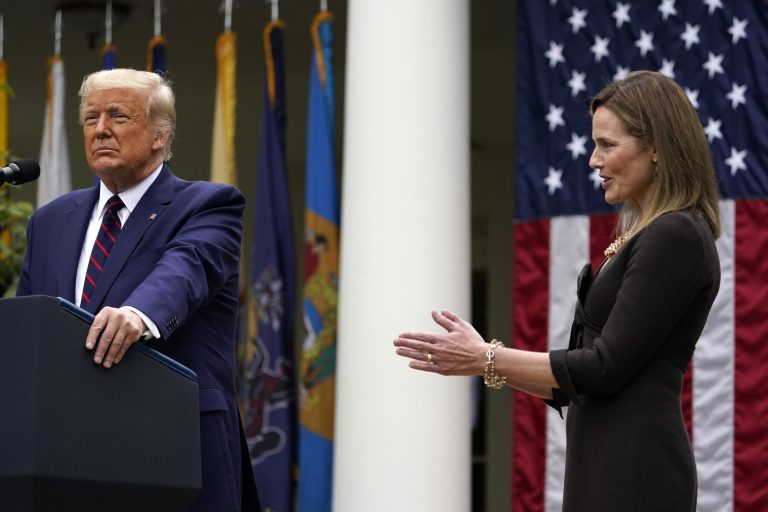
(Headline USA) President Donald Trump nominated Judge Amy Coney Barrett to the Supreme Court on Saturday.

Barrett, a former clerk to the late Justice Antonin Scalia, said she was “truly humbled” by the nomination and quickly aligned herself with Scalia’s conservative approach to the law, saying his “judicial philosophy is mine, too.”

Barrett, 48, was joined in the Rose Garden by her husband and seven children.

If confirmed by the Senate, she would fill the seat vacated by liberal Ruth Bader Ginsburg.

It would be the sharpest ideological swing since Clarence Thomas replaced Justice Thurgood Marshall nearly three decades ago.

She would be the sixth justice on the nine-member court to be appointed by a Republican president, and the third of Trump’s first term in office. Not all Republican-appointed justices are conservative, however.

Trump hailed Barrett as “a woman of remarkable intellect and character,” saying he had studied her record closely before making the pick.

Republican senators are lining up for a swift confirmation of Barrett ahead of the Nov. 3 election, as they aim to lock in conservative gains in the federal judiciary before a potential transition of power.

Trump, meanwhile, is hoping the nomination will galvanize his supporters as he looks to fend off Democrat Joe Biden.

Even before Ginsburg’s death, Trump was running on having confirmed in excess of 200 federal judges, fulfilling a generational aim of conservative legal activists.

Trump joked that the confirmation process ahead “should be easy” and “extremely noncontroversial,” though it is likely to be anything but.

He encouraged legislators to take up her nomination swiftly and asked Democrats to “refrain from personal and partisan attacks.”

In 2016, Republicans blocked Obama’s nomination of Merrick Garland to the Supreme Court to fill the election-year vacancy.

Senate Republicans say they will move ahead this time, arguing the circumstances are different now that the White House and Senate are controlled by the same party.

Senate Majority Leader Mitch McConnell said the Senate will vote “in the weeks ahead” on Barrett’s confirmation.

Barrett is expected to make her first appearance Tuesday on Capitol Hill, where she will meet with McConnell; Republican Sen. Lindsey Graham, the chair of the Judiciary Committee; and others.

Hearings are set to begin Oct. 12, and Graham said he hoped to have Barrett’s nomination out of the committee by Oct. 26.

Senate Democratic leader Chuck Schumer and House Speaker Nancy Pelosi warned that a vote to confirm Barrett to the high court would be a vote to strike down the Affordable Care Act.

Schumer added that the president was once again putting “Americans’ healthcare in the crosshairs.”

Biden took that route of criticism, as well, framing Trump’s choice as another move in Republicans’ effort to scrap the 2010 health care law passed by his former boss, President Barack Obama. The court is expected to take up a case against it this fall.

The set design at the Rose Garden, with large American flags hung between the colonnades, appeared to be modeled on the way the White House was decorated when President Bill Clinton nominated Ginsburg in 1993.

Barrett, recognizing that flags were still lowered in recognition of Ginsburg’s death, said she would be “mindful of who came before me.”

Although they have different judicial philosophies, Barrett praised Ginsburg as a trailblazer for women and for her friendship with Scalia, saying, “She has won the admiration of women across the country and indeed all across the world.”

Barrett has been a judge since 2017, when Trump nominated her to the Chicago-based 7th U.S. Circuit Court of Appeals.

But as a longtime University of Notre Dame law professor, she had already established herself as a reliable conservative in the mold of Scalia, for whom she clerked in the late 1990s.

She would be the only justice on the current court not to have received her law degree from an Ivy League school. The eight current justices all attended either Harvard or Yale.

The staunch conservative had become known to Trump in large part after her bitter 2017 appeals court confirmation included allegations that Democrats were attacking her Catholic faith.

The president also interviewed her in 2018 for the vacancy created by the retirement of Justice Anthony Kennedy, but Trump ultimately chose Brett Kavanaugh.

Trump and his political allies are itching for another fight over Barrett’s faith, seeing it as a political windfall that would backfire on Democrats.

Catholic voters in Pennsylvania, in particular, are viewed as a pivotal demographic in the swing state that Biden, nominally Catholic, is trying to recapture.

While Democrats appear powerless to stop Barrett’s confirmation in the GOP-controlled Senate, they are seeking to use the process to weaken Trump’s reelection chances.

Barrett’s nomination could become a fight over abortion, an issue that has divided many Americans so bitterly for almost half a century.

The idea of overturning or gutting Roe v. Wade, the landmark 1973 decision that legalized abortion, has animated activists in both parties for decades.

Now, with the shift in the court’s ideological makeup, Democrats hope their voters will turn out in droves because of their frustration with the Barrett pick.

“Justice Ginsburg must be turning over in her grave up in heaven, to see that the person they chose seems to be intent on undoing all the things that Ginsburg did,” Schumer said.

Trump has also increasingly embraced the high court — on which he will have had an outsize hand in reshaping -– as an insurance policy in a close election.

“We don’t have to do it before, but I think this will be done before the election,” Trump told reporters Saturday. “I think it’ll send a great signal to a lot of people.”

“I think this will end up in the Supreme Court,” Trump said Wednesday of the election. “And I think it’s very important that we have nine justices.”

No Democratic senators are expected to vote to confirm Barrett before the election, even though some did support her in 2017.

Two Democrats still serving in the Senate who voted to confirm Barrett in 2017, Sen. Tim Kaine of Virginia and Sen. Joe Manchin of West Virginia, now say it’s too close to the election to consider her nomination.

Meanwhile, outside conservative groups are planning to spend more than $25 million to support Trump and his nominee.

The Judicial Crisis Network has organized a coalition that includes American First Policies, the Susan B. Anthony List, the Club for Growth and the group Catholic Vote to help confirm Barrett. The Republican National Committee has launched a $10 million digital campaign of its own, in conjunction with Trump’s reelection campaign.

Adapted from reporting by the Associated Press.

California to Cut Off Electricity to Prevent Forest Fires & Protect Marijuana Fields

0

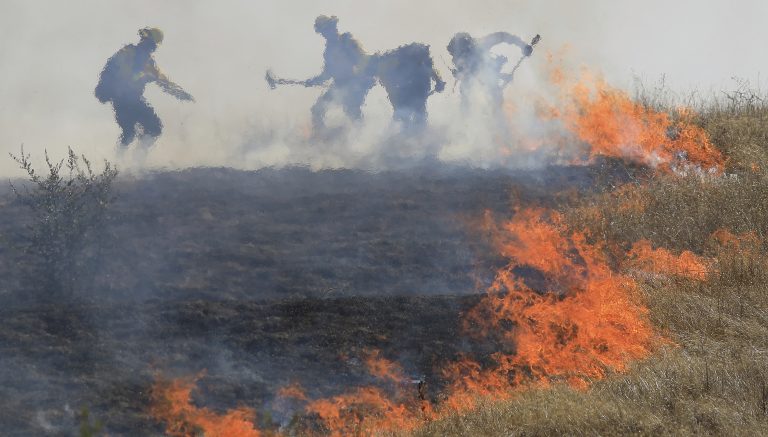
(Headline USA) Firefighters and officials at California‘s largest utility company braced for hot, dry and windy weather in northern and central areas of the state this weekend that may fan the flames of several major wildfires or ignite new ones.

Pacific Gas & Electric warned Friday it may cut power from Sunday morning to Monday, potentially affecting 97,000 customers in 16 counties, during which forecasters said a ridge of high pressure will raise temperatures and generate gusts flowing from the interior to the coast.

PG&E initially warned that approximately 21,000 customers in three counties would lose power beginning Saturday evening but expanded the potential shutoff when the forecast changed.

The utility is tracking the weather to determine if it would be necessary to shut off power to areas where gusts could damage the company’s equipment or hurl debris into lines that can ignite flammable vegetation.

When heavy winds were predicted earlier this month, PG&E cut power to about 167,000 homes and businesses in central and Northern California in a more targeted approach after being criticized last year for acting too broadly when it blacked out 2 million customers to prevent fires.

PG&E equipment, combined with the state’s catastrophic mismanagement, has sparked past large wildfires, including the 2018 fire that destroyed much of the Sierra foothills town of Paradise and killed 85 people.

Firefighters battling the state’s largest wildfire braced for the change in weather by constructing fuel breaks on Friday to keep the flames from reaching a marijuana-growing enclave where authorities said many of the locals have refused to evacuate and abandon their maturing crops.

The wildfire called the August Complex is nearing the small communities of Post Mountain and Trinity Pines, about 200 miles (322 kilometers) northwest of Sacramento, the Los Angeles Times reported.

Law enforcement officers went door to door warning of the encroaching fire danger but could not force residents to evacuate, Trinity County Sheriff’s Department Deputy Nate Trujillo said.

“It’s mainly growers,” Trujillo said. “And a lot of them, they don’t want to leave because that is their livelihood.”

As many as 1,000 people remained in Post Mountain and Trinity Pines, authorities and local residents estimated Thursday.

A drier California means plants are more flammable.

The U.S. Forest Service’s Pacific Southwest Region announced Friday that it is extending the closure of all nine national forests in California due to concerns including fire conditions and critical limitations on firefighting resources.

The threatened marijuana growing area is in the Emerald Triangle, a three-county corner of Northern California that by some estimates is the nation’s largest cannabis-producing region.

People familiar with Trinity Pines said the community has up to 40 legal farms, with more than 10 times that number in hidden, illegal growing areas.

Growers are wary of leaving the plants vulnerable to flames or thieves. Each farm has crops worth half a million dollars or more and many are within days or weeks of harvest.

One estimate put the value of the area’s legal marijuana crop at about $20 million.

“There (are) millions of dollars, millions and millions of dollars of marijuana out there,” Trujillo said. “Some of those plants are 16 feet (5 meters) tall, and they are all in the budding stages of growth right now.”

Gunfire in the region is common. A recent night brought what locals dubbed the “roll call” of cannabis cultivators shooting rounds from pistols and automatic weapons as warnings to outsiders, said Post Mountain volunteer Fire Chief Astrid Dobo, who also manages legal cannabis farms.

Hundreds of migrant workers typically pour into the area this time of year to help trim and harvest the plants, but it’s uncertain whether that population dwindled due to the coronavirus pandemic, said Julia Rubinic, a member of the Trinity County Agriculture Alliance, which represents licensed cannabis growers.

Mike McMillan, spokesman for the federal incident command team managing the northern section of the August Complex, said fire officials plan to deliver a clear message that “we are not going to die to save people. That is not our job.”

“We are going to knock door to door and tell them once again,” McMillan said. “However, if they choose to stay and if the fire situation becomes, as we say, very dynamic and very dangerous … we are not going to risk our lives.”

A firefighter was killed and another was injured on Aug. 31 while working on the fire.

Diana Jones, a volunteer firefighter from Texas, was among 26 people who have died since more than two dozen major wildfires broke out across the state last month.

A memorial service was held Friday for a veteran firefighter, Charles Morton, 39, a squad boss with the Big Bear Interagency Hotshot Crew who died Sept. 17 while battling the El Dorado Fire in the San Bernardino National Forest east of Los Angeles.

“I know that Charlie was a very skilled, in fact extraordinary, firefighter and a fire leader,” U.S. Forest Service Chief Vicki Christiansen told the gathering at The Rock Church in San Bernardino.

“He committed himself, often for weeks and months on end, to protecting lives, communities and natural resources all around this country in service to fellow Americans.”

The Butte County Sheriff’s Office on Friday released the identity of another of the 15 people killed in a rampaging forest fire earlier this month. The remains of Linda Longenbach, 71, of Berry Creek, were found on Sept. 10 in a roadway about 10 feet from an ATV, close to the body of a man previously identified as Paul Winer, 68.

A relative told investigators the victims were aware of the fire and chose not to evacuate.

Adapted from reporting by the Associated Press.

New York AG Letitia James Tells NYPD to End Traffic Stops & Arrests for Active Warrants

0

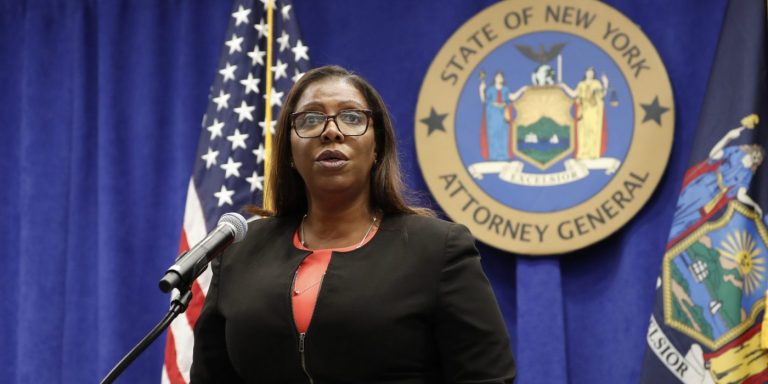
(Headline USA) New York‘s attorney general on Friday recommended the New York Police Department get out of the business of routine traffic enforcement.

Attorney General Letitia James, who acts as a special prosecutor appointed to investigate certain police killings, argued that traffic stops for minor infractions often end in violence.

She said Allan Feliz’s death last October after he was pulled over for a seat belt violation “further underscores the need for this change.”

James’ office concluded that the NYPD’s use of deadly force was justified but that the sequence of events leading to Feliz’s death would never have happened if police hadn’t stopped him in the first place.

Police further heightened tensions by attempting to arrest Feliz on outstanding warrants for low-level offenses such as spitting, littering and disorderly conduct, James’ office said.

The NYPD declined to comment.

Feliz initially complied when an officer asked him to get out of his car, but then jumped back in and tried to flee, James’ office said in a report on his death that included the recommendation about police yielding traffic stop duties.

Sgt. Jonathan Rivera then fired a stun gun at Feliz and climbed into the car, warning, “Yo, boss, I am going to (expletive) shoot you,” as Feliz shifted the vehicle into gear and began moving. Rivera shot Feliz once in the chest, killing him.

James’ office concluded Rivera was justified in shooting Feliz in part because he feared the vehicle’s movement was endangering another officer standing nearby, the report said.

“The officer’s alleged justification is a fairy tale,” said Robert Vilensky, a lawyer for the Feliz family, which is suing the NYPD. “The car which they say was moving was at best moving 2 mph. That wouldn’t knock over a fly.

“The justification is a made-up story to rationalize killing an unmarked civilian,” he said.

The NYPD has a separate unit of personnel who are not officers but direct traffic and hand out parking tickets — but who also have limited interaction with the public.

James’ recommendation is aimed at officers who stop people for things like speeding, seat belt infractions and other issues.

If police officers are to remain involved in traffic enforcement, James’ office said, the police department should drop a policy that encourages officers to arrest any motorist who is found to have an open warrant.

Instead, the report said, drivers with open warrants should be arrested only with a supervisor’s approval if an officer had reasonable cause to believe they were a danger to the community.

“It is highly unlikely that the incident involving Mr. Feliz … would have escalated in the manner it did in the absence of this automatic arrest policy,” James’ office wrote.

Adapted from reporting by the Associated Press.