Biden Doubles Down on Debate Insults; Doesn’t Regret Telling Trump to ‘Shut Up’

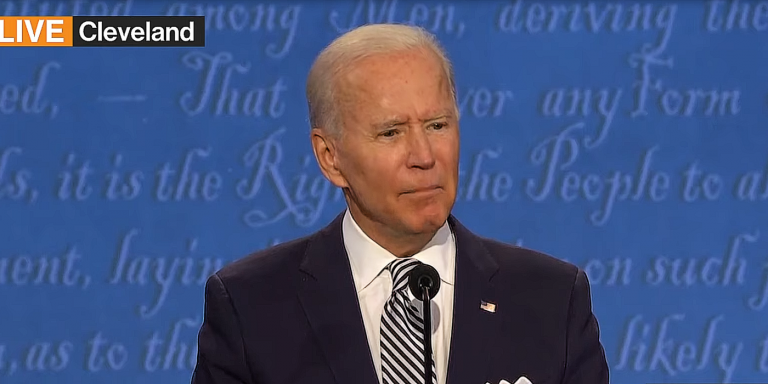
Joe Biden refused to apologize for calling President Donald Trump a “racist,” “fool,” “clown” and “Putin’s puppy” during the first presidential debate on Tuesday.

Instead, he doubled down on his personal attacks against the president.

During a campaign stop in Pennsylvania on Wednesday, Biden slammed Trump for interrupting him during the debate, and he told voters that Trump’s performance was proof that he does not care about the American public.

A local reporter, however, pointed out that Biden did not exactly follow debate etiquette either, citing several insults that Biden threw at Trump throughout the course of the debate.

“Do you regret any of that?” the reporter asked.

“No,” Biden said.

When asked why, Biden said: “Because everything I said was true.”

Biden offered no evidence to support his accusations.

The chaotic debate between Biden and Trump prompted the debate commission to revise the rules and allow the moderator to cut off candidates’ microphones if they continue to talk over each other and/or the moderator.

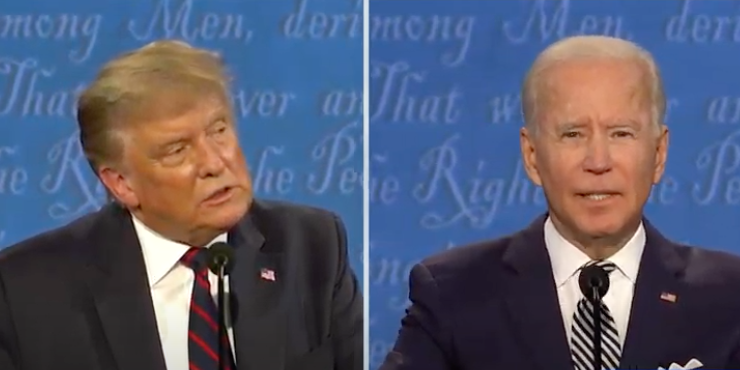
At one point during Tuesday’s debate, Biden told Trump to “shut up,” and moderator Chris Wallace became involved in the back-and-forth multiple times.

Trump, however, pushed back on attempts to change the rules and said his team will “absolutely oppose” any proposed changes.

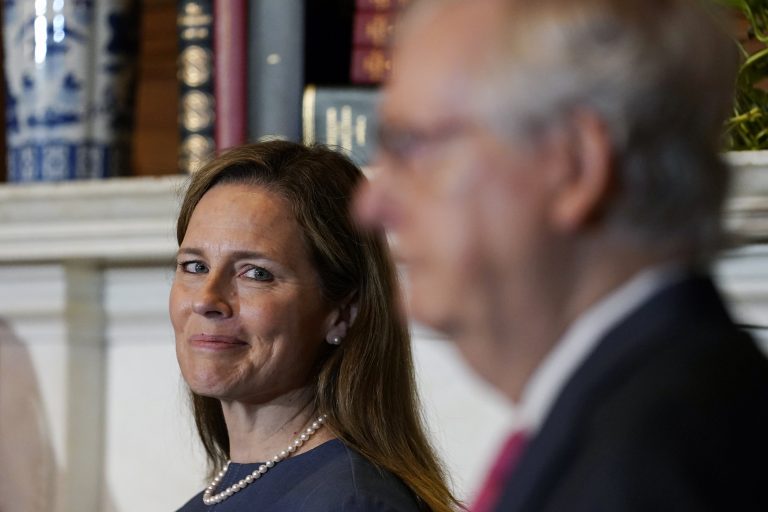
BIDEN: ‘I Taught Constitutional Law,’ and Barrett Nomination is ‘Violating the Constitution’

Democratic candidate Joe Biden attempted to use his experience teaching law as a cop-out when pressed on court-packing the day after Tuesday night’s debate with President Donald Trump.

In an interview with Pittsburgh’s WTAE, Biden was asked why he wouldn’t give a straight answer about efforts to add seats to the Supreme Court.

Instead of answering, he deflected again and accused Republicans of “violating the Constitution.”

“I’m not going to play Trump’s game. Right now, my entire focus is seeing to it that the American people get a chance – the election has already started – to have their say on who the next Supreme Court justice is. And that’s what I’m focused on,” he said.

When asked how Republicans were violating the Constitution, Biden used his legal experience as a crutch.

“The Constitution says that the American people — I taught constitutional law for over 20 years — says the American people get an opportunity to choose who they want on the Supreme Court by who they pick as their senator and their president,” Biden claimed.

Biden taught classes at Widener University Delaware Law School for several years, but that experience clearly has not helped him.

Nowhere in the Constitution does it say that the American people get to decide who sits on the Supreme Court.

Instead, it specifies that the president has the authority and the right to nominate for vacancies, and then the Senate gives “advice and consent” — in other words, confirmation.

Leftists, however, are furious that Trump is exercising that authority to fill the late Justice Ruth Bader Ginsburg’s seat, and are threatening to add seats to the bench if they retake the Senate in November.

Biden opposed court-packing last year, but has refused to condemn the radical proposal since then.

“Whatever position I take on that, that’ll become the issue,” Biden said during Tuesday’s presidential debate. “I’m not going to answer the question.”

Judge Says Government’s Suit Against Bolton Over His book Can Proceed

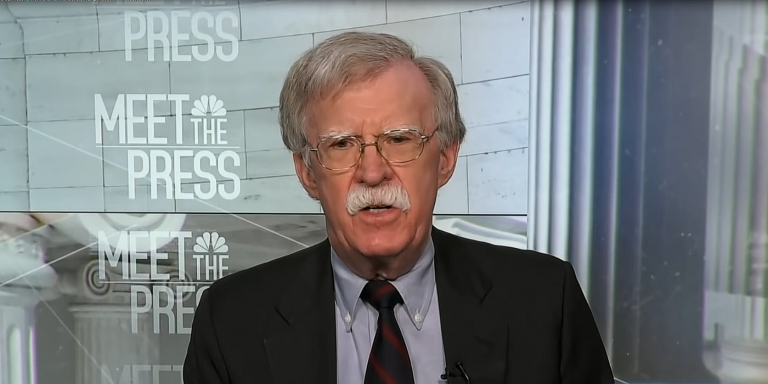
(Headline USA) The Trump administration can move forward with its lawsuit against former national security adviser John Bolton over his “tell-all” book, a judge ruled Thursday in denying a request to dismiss the complaint.

The Justice Department alleges that Bolton’s book, “The Room Where It Happened” contains classified information, and the government sued in June to try to prevent the release.

Though the book was published as scheduled, a suit accusing Bolton of breaking contracts with the government by disclosing classified information and by failing to complete a required prepublication review can proceed, U.S District Judge Royce Lamberth said in a 27-page opinion.

The Justice Department, the judge wrote, “plausibly pleads that Bolton breached those obligations.”

A lawyer for Bolton did not immediately return an email seeking comment.

The book, which details Bolton’s 17 months as Trump’s national security adviser, contains descriptions of conversations with foreign leaders that could be seen as politically damaging to the president.

Those include accounts that Trump tied providing military aid to Ukraine to that country’s willingness to conduct investigations into Democratic rival Joe Biden and Biden’s son Hunter, and that Trump asked China’s President Xi Jinping to help his reelection prospects.

Lamberth in June denied the government’s request for an injunction to block the book from being published, given that thousands of copies had already been distributed.

But he also scolded Bolton for moving ahead with the book’s publication without waiting for formal, written authorization that the book had been cleared.

Bolton’s lawyers have said he worked for months for a White House career official to ensure that the manuscript was carefully screened and that he received verbal clearance last April that the book no longer contained classified material.

But White House officials conducted a second review that they said identified classified information still in the book.

The case took a notable turn when a lawyer for that career official, Ellen Knight, submitted a statement that said that Knight had advised National Security Council lawyers that she intended to clear the book for publication, but she was told to take no action and to tell Bolton that the process was “ongoing.”

Weeks later, she learned that a White House official who she says had no previous classification experience had been instructed to conduct a second review of the manuscript.

That official, Michael Ellis, flagged hundreds of passages that he believed were still classified.

Knight disagreed with that conclusion and considered the re-review to be “fundamentally flawed,” according to the filing.

Adapted from reporting by Associated Press.

Trump’s Pushback Throws Dems’ Corrupt Vote-By-Mail Scheme into Disarray

President Donald Trump’s call for volunteer poll watchers during Tuesday’s debate has spooked many leftist ballot-padding operations that were relying on corrupt vote counters to proceed with impunity.

Several Democrat states have used the cover of the coronavirus to loosen their absentee voting rules.

With some sending out unsolicited ballots to everyone on their outdated voter rolls, the potential for ballot mishandling is a major concern.

Already, reports have arisen about voters receiving incorrect ballots or multiple ballots. Federal investigators are also looking into ballots getting suspiciously discarded en route to their destination.

But even if the absentee ballots make it to the right place, unlike in-person voting that automatically tallies a voter’s selection, the decisions on which ones are admissible will then be cast to sometimes shadowy assemblies of vote processors and certifiers at the local level.

“I’m urging my supporters to go into the polls and watch very carefully, because that’s what has to happen,” Trump said.

A legion of left-wing lawyers is on hand to challenge the decisions in conservative districts.

However, GOP leaders may have less infrastructure and resources available for doing the same in left-wing states like Pennsylvania, where corrupt judges on the state Supreme Court already have made clear they intend to side with Democrats in undermining vote integrity.

Thus, challenging questionable ballots or procedures at the point of initial processing adds an extra layer of scrutiny.

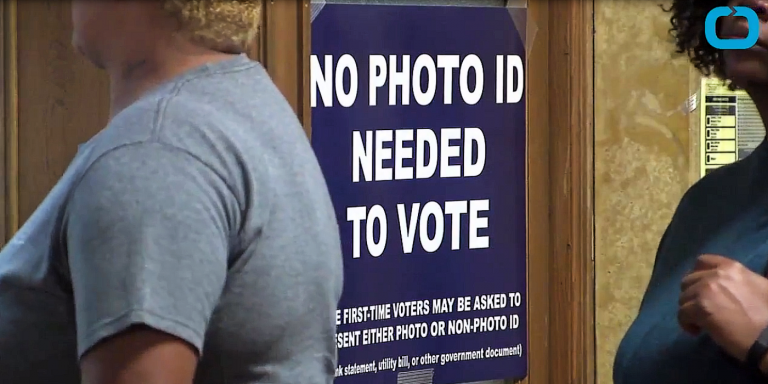
While many states do allow citizen poll-watchers, the process for approving and certifying them may vary by state and often needs to be done in advance, with approval from the local boards.

But some Democrat-run boards have hoped to conduct their vote counting behind closed doors, once again using the coronavirus and other arbitrary policies as their pretense for keeping the process in the dark.

Left-leaning media outlets reacted to Trump’s call for poll watchers by trying to stoke fear that allowing the process to be open and transparent could undermine election integrity and subject it to undue partisan influence.

“Anytime that anybody is suggesting that people go to the polls for any other reason other than encouraging people to be part of the process or whether they are there for a candidate, it’s problematic,” Philadelphia City Commissioner Lisa Deeley, the top election official in the city, told Politico.

The leftists ironically claimed that Trump’s intention was voter-intimidation even as they engaged in fearmongering themselves.

Without any evidence, Deeley and others speciously claimed that the presence of poll watchers would be a deterrent for minority voters and suppress the vote.

“To all our voters in Philadelphia, but in particular the [b]lack and brown community, when there is confusion, that typically leads to people not wanting to participate in the process,” claimed Philadelphia City Commissioner Omar Sabir, a Democrat.

The city was singled-out for criticism by Trump after it forcibly ejected James Fitzpatrick, Trump’s Pennsylvania director of Election Day operations, from a satellite election office at Philadelphia City Hall.

The authorities claimed he was being “disruptive” by recording video on his cellphone.

“He was taking pictures and photos while inside the booth, being irate,” said Teresa Lundy, communications chief for the Sheriff’s Office. “He was also being disruptive. … He wasn’t there to be a poll watcher because poll watcher certificates weren’t issued.”

Despite states’ having already sent out some 2 million vote-by-mail ballots, according to debate moderator Chris Wallace, some are panicking now that a distrust of the mail system will result in greater numbers turning out on Election Day.

An NPR report found that only half of the initially projected 70 percent of voters indicated that it intended to vote by mail.

That has led some Democrats and their mainstream media allies to shift tactics and press for more Election Day turnout.

As a result, many local precincts fear they may be understaffed and unprepared for the mass turnout.

“This is swinging the pendulum back too far,” said Tammy Patrick, a left-wing activist with the Democracy Fund—one of the leading national advocates for expanding mail voting. “It breaks my heart, but it does not surprise me.”

Activists like Patric continued to issue dire forecasts of polling-place bedlam that would be ripe for a new COVID spike.

“If we flood our in-person voting facilities in the middle of a global pandemic,” she said, “that is the recipe for some true chaos.”

The increase in Democrats who plan to participate in Election Day voting does offer a safeguard, at least, against the possibility that left-wing county officials might intentionally restrict access to polling places on Election Day by claiming COVID concerns forced them to do so.

Ironically, Democrats have long levied similar accusations against their GOP opponents, insisting that they had interfered with polling access.

But the constantly changing dynamics of the virus and the political turmoil surrounding the election have left them with an unclear path forward and the hope—if not likelihood—that their best-laid plans to introduce chaos and confusion on Election Day may ultimately backfire.


Trump Signs Temporary Bill Avoiding Gov’t Shutdown at Least Until December

(Associated Press) President Donald Trump has signed a bill to fund the government through Dec. 11, averting the possibility of a government shutdown when the new fiscal year starts Thursday.

Trump signed the bill, which was approved by sweeping bipartisan agreement Wednesday, into law early Thursday morning shortly after returning from campaigning in Minnesota.

The temporary extension will set the stage for a lame-duck session of Congress later this year, where the agenda will be largely determined by the outcome of the presidential election.

The measure would keep the government running through Dec. 11 and passed by a 84-10 vote.

The House passed the bill last week.

The stopgap spending bill is required because the GOP-controlled Senate has not acted on any of the 12 annual spending bills that fund the 30 percent of the government’s budget that is passed by Congress each year.

If Democratic nominee Joe Biden wins the White House in November, it’s likely that another stopgap measure would fund the government into next year and that the next administration and Congress would deal with the leftover business.

The measure is the bare minimum accomplishment for Capitol Hill’s powerful Appropriations committees, who pride themselves on their deal-making abilities despite gridlock in other corners of Congress.

The legislation — called a continuing resolution, or CR, in Washington-speak — would keep every federal agency running at current funding levels through Dec. 11, which will keep the government afloat past an election that could reshuffle Washington’s balance of power.

The measure also extends many programs whose funding or authorizations lapse on Sept. 30, including the federal flood insurance program, highway and transit programs, and a long set of extensions of various health programs, such as a provision to prevent Medicaid cuts to hospitals that serve many poor people.

It also finances the possible transition to a new administration if Biden wins the White House and would stave off an unwelcome COVID-caused increase in Medicare Part B premiums for outpatient doctor visits.

Farm interests won language that would permit Trump’s farm bailout to continue without fear of interruption.

In exchange, House Democrats won $8 billion in food aid for the poor.

Newsom Signs Law Mandating Racial, Gender Quotas in Corporate Boardrooms

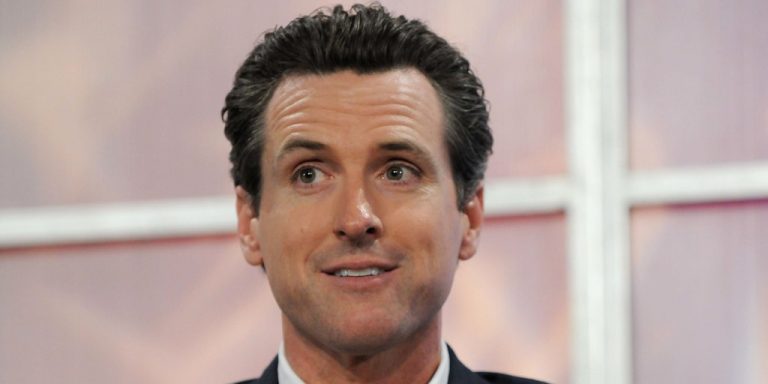
(Headline USA) Hundreds of California-based corporations must have directors from racial or sexual minorities on their boards under a first-in-the-nation bill signed Wednesday by Gov. Gavin Newsom.

The diversity legislation is similar to a 2018 measure that required boardrooms to have at least one female director by 2019.

Like that measure, it could face court challenges from conservative groups who view it as a discriminatory quota.

Supporters evoked both the coronavirus pandemic that is disproportionately affecting minorities and weeks of unrest and calls for inclusion that followed the slaying of George Floyd in May in the custody of Minneapolis police.

After Floyd’s death, many corporations issued statements of support for diversity, but many haven’t followed through, said Assemblyman Chris Holden (D-Pasadena), who co-authored the bill.

“The new law represents a big step forward for racial equity,” Holden said. “While some corporations were already leading the way to combat implicit bias, now, all of California’s corporate boards will better reflect the diversity of our state. This is a win-win as ethnically diverse boards have shown to outperform those that lack diversity.”

By the end of 2021, the more than 660 public corporations with California headquarters must have at least one board director from an “underrepresented community,” according to the measure.

Those who qualify would self-identify as Black, Latino, Asian, Pacific Islander, Native American, Native Hawaiian or Alaska Native, or as gay, lesbian, bisexual or transgender.

The measure requires at least two such directors by the end of 2022 on boards with four to nine directors.

Three directors are required for boards with nine or more directors.

Firms that don’t comply would face fines of $100,000 for first violations and $300,000 for repeated violations.

At an online signing ceremony, Newsom said it was important for minorities to have a voice on the boards of powerful corporations.

“When we talk about racial justice, we talk about empowerment, we talk about power, and we need to talk about seats at the table,” Newsom said.

The legislation was part of a package of racial justice measures signed by Newsom before a midnight deadline.

Others bar the use of peremptory challenges to remove potential jurors based on racial, religious or gender identity; allow judges to alter sentences that are believed to involve racial or ethnic discrimination; and set up a state task force to study the idea of reparations to African Americans for slavery.

The text of the corporate diversity bill cited the Latino Corporate Directors Association, which said 233 of 662 publicly traded companies headquartered in California had all-white boards as of this year.

Nearly 90% didn’t have any Latino directors, although Latinos make up 39% of the state’s population.

Only 16% had an African American board member.

The only official opponent in a legislative analysis was former California commissioner of corporations Keith Bishop.

He objected that that bill, coupled with the existing diversity law, would make it more desirable for corporations to pick women who also are members of the underrepresented communities to simultaneously meet both sets of quotas, to the detriment of men or women who do not meet the qualifications in the new bill.

Adapted from reporting by Associated Press.

Debate Debacle: What Biden and Trump SHOULD Have Been Asked

Tuesday night’s presidential debate between Donald Trump and Joe Biden won’t go down as a great moment in the annals of American democracy.

That much both camps, as well as independent observers of the chaotic spectacle, can agree upon.

The post-debate debate over whose interruptions or insults were most egregious totally overlooked the glaring failure of moderator Chris Wallace to ask any substantive questions about the country’s unprecedented financial predicament.

Record budget deficits? Unsustainable debt growth? Open-ended Federal Reserve currency creation?

None of these topics that bear down starkly on America’s financial future were even brought up!

Whoever occupies the Oval Office for the next four years will have to make critical decisions that could determine whether the country suffers a currency crisis or other great reckoning.

Wallace chose instead to badger the President of the United States about how much personal income tax he recently paid, raise a fuss about his rollback of “racial sensitivity training,” and scold like a schoolmarm whenever Trump initiated spontaneous exchanges with his opponent.

The establishmentarian journalist’s sympathies toward Biden were on full display.

Beyond that, his obliviousness to the elephant in the room – the growing fiscal and monetary crisis both candidates have had a hand in creating – did voters a major disservice.

Here’s the question the debate moderator should have asked:

What’s the end game for skyrocketing federal budget deficits and a national debt that now represents well over 100% of GDP – especially given that entitlement outlays and other “mandatory” spending programs are projected to surge in the years ahead?

Back in the 1990s, it was still common to ask presidential candidates what they would do to balance the budget and reduce the national debt. Debt became one of the major issues of the day after it was brought to prominence by the charts and graphs of independent candidate Ross Perot.

As of 2020, the federal government is set to run up a previously unthinkable deficit of over $3 trillion to push the national debt to $27 trillion. And nobody seems to care.

Obviously, no politician who hopes to win election will oppose emergency coronavirus stimulus measures in the name of fiscal responsibility. But the American people deserve to be told the truth by elected officials about how exactly they intend to pay for all the “free” money they are handing out.

Had the candidates been pressed on this issue, Biden might have spouted something about increasing federal revenues by making the rich pay even more in taxes. Trump might have talked about growing the economy and hitting China with tariffs.

But a sharp debate moderator who grasped the nature of what the Federal Reserve is now doing – and who understood the link between debt growth and the country’s stray from sound money principles – would cut to the chase.

We’re never going to grow our way out of the debt. And we’re never going to tax our way out of it, either. It’s all going to be papered over by the Federal Reserve. Isn’t that the end game?

Of course it is. In effect, there is now a bipartisan consensus is support of the debt monetization.

The once obscure central banking mandate euphemistically called Modern Monetary Theory (MMT) has now quietly become mainstream. It essentially tasks the Fed with printing whatever dollars the government needs, rendering debt burdens irrelevant while marking down the value of the currency.

Do you support MMT, Mr. President? What about you former Vice President Biden?

They would each be hard pressed to deny it at this point.

In the wake of the COVID lockdowns, the Treasury Department and the U.S. Congress essentially told the Fed to do whatever it takes to avert debt defaults, even if means buying literal junk bonds and adding them to its balance sheet. That’s exactly what the central bank did.

The Fed’s so-called “dual mandate” of stable prices and full employment is now an in infinite mandate. Central bankers have assumed the role of funding the government, bailing out financial markets, stimulating the economy, propping up asset prices, and lifting consumer prices.

Ever since President Richard Nixon de-linked the U.S. dollar from gold in 1971, government spending and debt has accelerated to the upside.

In the process, the value of the dollar has been steadily debased. What cost $1.00 in 1971 costs $6.37 in 2020, based on the government’s own Consumer Price Index.

It’s all reflected in gold prices, which recently surged to a record high of over $2,000/oz – 100 times higher compared to gold’s dollar price a century ago. Measured by gold, that’s a 99% decline in the currency’s purchasing power!

Whether Fed Chairman Jerome Powell wants to admit it or not, the ultimate arbiter of his actions won’t be the next President who decides whether to reappoint him, the members of Congress to whom he gives testimony, or the voters who elect them in November.

The ultimate arbiter of monetary policy will be the precious metals markets.

A loss of confidence in the currency will be reflected in a further rise in gold and silver prices. Neither Trump nor Biden will be able to override the veto of sound money…Original Source

Stefan GleasonStefan Gleason is President of Money Metals Exchange, a precious metals dealer recently named “Best in the USA” by an independent global ratings group. A graduate of the University of Florida, Gleason is a seasoned business leader, investor, political strategist, and grassroots activist. Gleason has frequently appeared on national television networks such as CNN, FoxNews, and CNBC and in hundreds of publications such as the Wall Street Journal, The Street, and Seeking Alpha.

California to Study Reparations for Black Americans

(Headline USA) California will develop a detailed plan for reparations under a new law signed on Wednesday by Gov. Gavin Newsom, making it the first state to mandate a study of how it can make amends for its role in the oppression of black people.

The law creates a nine-member task force to come up with proposals for how the state could provide reparations to black Americans, what form those reparations might take and who would be eligible to receive them.

“This is not just about California, this is about making an impact, and a dent, across the rest of the country,” Newsom said moments after signing the bill during a ceremony broadcast on his YouTube channel.

The law does not limit reparations to slavery, although it requires the task force to give special consideration for black people who are descendants of slaves.

California never had a government-sanctioned system of slavery. It entered the Union in 1850 as a free state after gold was discovered in the Sierra Nevada mountains. But the state did let slave-owning whites bring their slaves to California. The Legislature even passed a law making it legal to arrest runaway slaves and return them to their owners.

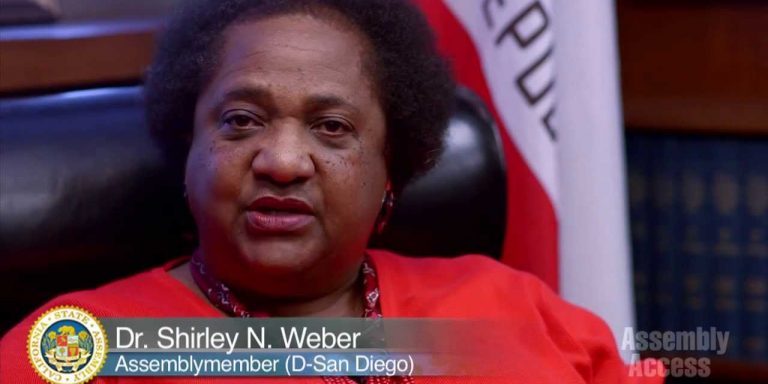
“California has come to terms with many of these issues, but it has yet to come to terms with its role in slavery,” said Assemblywoman Shirley Weber, a Democrat from San Diego who authored the bill.

The law does not say the reparations must be cash payments. Other options could include forgiving student loans and paying for public works projects or job training. In July, the City Council in Asheville, North Carolina, approved reparations by pledging to make investments in areas where black people face disparities.

Reparations are not without precedent in the United States. The U.S. government partially funded German reparations to Holocaust victims following World War II. And in 1988, the federal government set up a reparations program for Japanese-Americans who were held in concentration camps during World War II.

Reparations for slavery have been debated for decades in the United States. A similar proposal to study reparations for black Americans was first introduced in Congress in 1989. It has never passed, but Congress held a hearing on the proposal last year.

Momentum has been building once again for similar proposals in state and local governments across the country after the May police killing of George Floyd in Minnesota reignited a national movement for racial justice. State legislatures in Texas, New York and Vermont have considered studying reparations, but none have passed measures.

Newsom would appoint five members of California’s task force.

The other four would come from the Legislature, with two each appointed by the leaders of the state Senate and Assembly.

The law says the task force must include at least two people from “major civil society and reparations organizations” and at least one person from academia who is an expert in civil rights.

The task force must have its first meeting no later than June 1. It must submit its recommendations to the state Legislature one year after its first meeting.

Adapted from reporting by Associated Press.

COMEY: ‘I Would Be Concerned’ About Hunter Biden’s National Security Threats

With 34 days to go until the November election, Democrats sought during Wednesday’s Senate Judiciary Committee hearing with former FBI Director James Comey to denounce the probe into FBI’s mishandling of “Crossfire Hurricane” as ‘old news’ while scoring their own fresh political barbs.

But the talking points backfired on them when an attempt to smear President Donald Trump with vague innuendo led Comey to agree that Democrat nominee Joe Biden would pose a security threat due to his family members’ well-documented foreign conflicts of interest.

Several senators—including Dick Durbin, D-Ill.; and Richard Blumenthal, D-Conn.—asked private citizen Comey to speculate on a recent New York Times report that cast aspersions on Trump’s finances.

Experts have since noted that the Times‘s supposed bottom lines—that Trump underpaid in taxes and faced a massive amount of loan debt—were both misleading when taking into account his actual portfolio of real-estate holdings and other assets like branding agreements.

Nonetheless, Comey played along with the attempts to suggest that Trump posed a threat to national security as a result of the unspecified, hypothetical risk that he might be compromised by a foreign entity.

No evidence exists—despite Democrats’ relentless efforts to find it—that Trump’s pre-presidential business deals had been used as leverage to influence his policies.

But Comey acknowledged—presumably based on his vast prior human-resources experience —that Trump’s level of debt might cause him to think twice about granting a security clearance to a new hire, if not a duly elected president.

Following Blumenthal’s grandstanding, Graham used his power as chair to interject a significant counterpoint: that Trump is not the only candidate with potential financial entanglements.

“Just to follow up on some of Sen. Blumenthal’s questions—uh, would you be concerned about a counterintelligence threat or compromise if a candidate’s family member was receiving millions of dollars from a corrupt company in the Ukraine?” Graham asked Comey.

He went on to raise some of the other serious allegations raised about Hunter Biden in a recently released report from the Senate Homeland Security and Government Affairs Committee.

Although the report drew extensively from witness testimony, recorded evidence and documents to expose millions of dollars in foreign government payoffs that Biden’s family members accepted during his time as vice president, Democrats have repeatedly dismissed it.

During Tuesday night’s debate, in fact, Biden deflected from Trump’s efforts to grill him over Hunter’s corrupt business ties by falsely insisting the evidence had been “discredited.”

But Comey effectively discredited Biden’s dubious dismissal, confirming that he would be concerned by it.

“If I were still in the FBI, I would be concerned about any effort to exert leverage over a government official, potential government official or someone close to them in an effort to influence them,” he said.

Blumenthal attempted to retort by suggesting that the Biden allegations were made up and irrelevant.

“The question you just raised is a hypothetical relating to a non-government—current non-government—official,” he huffed, while ignoring the fact that the abuses happened during Biden’s term as vice president with the Obama administration.

“What we have here and what the records reveal quite starkly is that the president of the United States—our commander in chief—is vulnerable to leverage, manipulation and even possible blackmail,” Blumenthal continued.

Graham responded by validating Blumenthal’s right to make his point before adding, “The point I was making is very real. It’s not a hypothetical. These things happen.”

NYC Mayor Bill de Blasio Named ‘Porker of the Month’

New York City Mayor Bill de Blasio is the Citizens Against Government Waste’s “Porker of the Month” for demanding city residents pay an additional $5 billion in taxes while refusing to cut spending anywhere else.

De Blasio announced earlier this month that he would be requesting $7 billion in aid from the New York State government to help New York City recover from the coronavirus pandemic.

However, other state Democrats, including Gov. Andrew Cuomo, blasted de Blasio’s borrowing plan as premature after the New York state General Assembly and state Senate denied de Blasio’s request, according to the New York Post.

“You have to have serious conversations … Borrowing for operating expenses is a risky proposition,” Cuomo said. ” It has to be done with caution, if at all. You’re really rolling the dice on future revenues.”

The two liberal leaders have often found themselves at loggerheads in the power-struggle that ensued after the Big Apple became the defacto global epicenter of the virus outbreak.

In response, to the rejection from the state legislature, de Blasio cut his borrowing plan by $2 billion, arguing that the city needs a “fallback” if the federal government chooses not to send additional aid to New York.

But the CAGW pointed out in its monthly report that all de Blasio has to do is cut the city’s existing budget.

“If he slashed just 2%, he would save $1 billion,” the group explained. “There are other reasonable and easy solutions to resolve NYC’s budget crisis like having city workers pay insurance premiums, since 90% of them currently get free healthcare.”

Earlier this year, de Blasio had pledged to begin offering free healthcare to all residents, including illegal immigrants, although it is unclear what his timeframe was for enacting the measure and whether the city’s dual health and financial crises had derailed it.

“City employees make 75% more than the median wages for private sector workers, making it sensible to freeze their paychecks for two years,” said the CAGW release. “Instead, Mayor De Blasio is ignoring practical cuts, begging for more money, and driving New York City residents out in droves.”

CAGW President Tom Schatz said  de Blasio’s latest financial failure proves he is “New York City’s worst mayor.”

“It is hard to think of anything good to say, other than he cannot run for mayor again in 2021, giving New York City taxpayers some hope for the future,” Schatz said in a statement.

“For refusing to reform the city’s budget while begging for more money, Bill De Blasio can put his award for ‘Porker of the Month’ right next to the plaque for ‘New York City’s Worst Mayor.’”