Trump, Biden to Do Dueling Town Halls in Place of Cancelled Debate

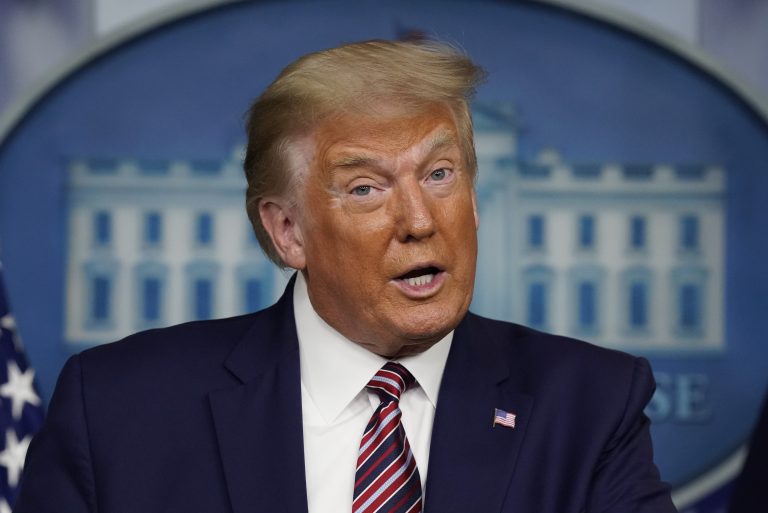
(Headline USA) NBC News agreed to put President Donald Trump before voters in a town hall event on Thursday after the president submitted to an independent coronavirus test with the results reviewed by Dr. Anthony Fauci.

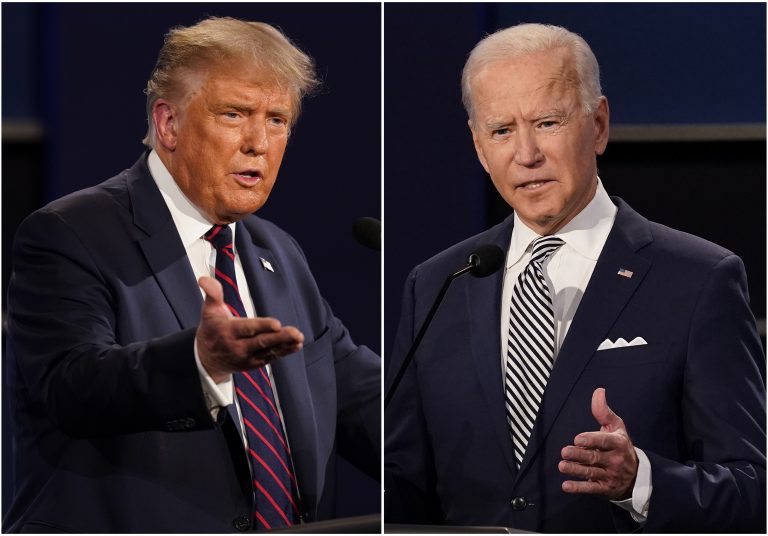
The announcement Wednesday sets up dueling town halls with Democratic opponent Joe Biden on a night the two candidates were supposed to meet for their second debate.

Biden is appearing on a similar town hall event in Philadelphia, televised by ABC.

It also subjected NBC News to a sharp backlash on social media, where a call to boycott the network was a trending topic on Twitter.

NBC said Trump would be at least 12 feet from moderator Savannah Guthrie and the audience.

Trump, who tested positive for COVID-19 on Oct. 2 and spent three days at the Walter Reed military hospital, took a coronavirus test Tuesday administered by the National Institutes of Health, NBC said.

Both NIH clinical director Dr. Clifford Lane and Fauci reviewed Trump’s medical records and said they had a high degree of confidence that the president is “not shedding infectious virus.”

Trump’s ability to reach a national television audience on Thursday was in part dependent on Fauci.

A formal matchup between the Republican president and Biden that was scheduled for Thursday in Miami by the nonpartisan Commission on Presidential Debate was canceled.

In light of the president’s infection, the commission shifted the format to a virtual meeting, and Trump declined to participate.

Both town halls will begin at 8 p.m. Eastern, but Biden will have the last word.

The ABC event, moderated by George Stephanopoulos, will last 90 minutes with an additional half hour of analysis.

Trump’s town hall on NBC is scheduled for an hour.

Previous town halls on both ABC and NBC were staged by the networks to boost Biden.

In a previous Trump town hall hosted by Stephanopoulos on ABC, some of the “undecided” voters who toughly questioned him were later discovered to be Biden backers.

And on a previous NBC town hall for Biden, he was lobbed softball after softball that embarrassed even some liberal commentators.

Critics of NBC questioned why the network scheduled Trump for the same time, making viewers have to choose if they were interested in seeing both candidates react live in a similar format.

Veteran liberal journalist Jeff Greenfield called it “indefensible” in a Twitter post.

“They rewarded Trump by giving him this time,” Greenfield said in an interview.

He questioned whether NBC acceded to a demand by the president, but the network said in a statement that “the Trump campaign did not dictate or request the time slot nor express any preference.”

NBC considered it important that Trump be given the same format, day of the week and length of time that Biden had last week — although he will have a different moderator.

Lester Holt hosted the Biden event.

In addition to preventing viewers from getting a side-by-side comparison of the two men, the dueling events will likely be seen by far fewer people.

The first debate between the two men last month was watched by an estimated 73.1 million people, the Nielsen company said.

An estimated 6.7 million people saw Biden at an NBC News-sponsored town hall last week.

Like the Trump event on Thursday will be, it was simulcast on MSNBC, CNBC and streamed online.

Trump’s town hall with Stephanopoulos on Sept. 15 was seen by 3.8 million people, Nielsen said.

Thursday’s Trump town hall on NBC will be held outdoors at the Perez Art Museum in Miami.

Audience members will be socially distanced, required to wear a mask and submit to a temperature check before entering the venue, NBC said.

Adapted from reporting by Associated Press.

Supreme Court Halts Census Count in Blow to the Alarmist Left

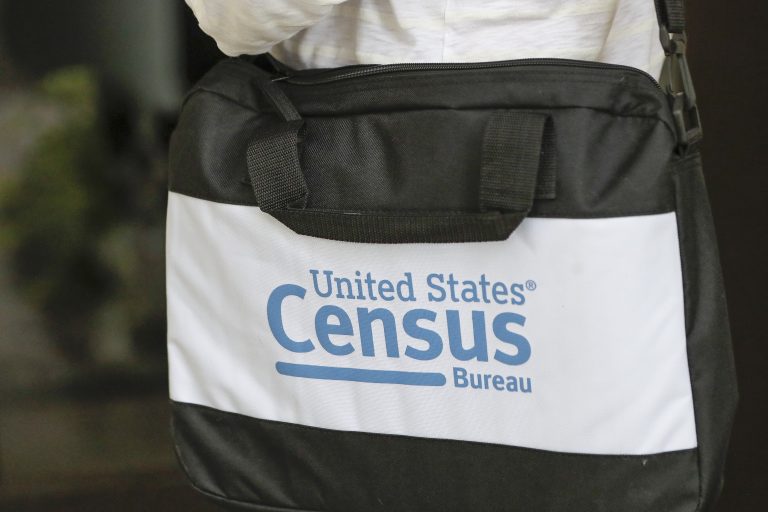
(Headline USA) The Supreme Court on Tuesday ruled that the Trump administration can end census field operations early, in a blow to plaintiffs in a lawsuit challenging the administration’s decision to end the count.

The Census Bureau says it has counted 99.9% of households nationwide.

The ruling increased the chances of the Trump administration retaining control of the process that decides how many congressional seats each state gets — and by extension how much voting power each state has.

After the Supreme Court justices’ ruling, the Census Bureau said field operations would end on Thursday.

“Democrats and their left-wing allies have ignored the facts and sought to unnecessarily delay the census,” said James Comer, ranking member on the House Oversight Committee and a Kentucky Republican. “Despite the scare tactics from the left, Americans can have confidence that the 2020 census is counting every resident in the United States and will be accurately and fully completed.”

At issue was a request by the Trump administration that the Supreme Court suspend a lower court’s order extending the 2020 census through the end of October following delays caused by the pandemic. The Trump administration argued that the head count needed to end immediately to give the bureau time to meet a year-end deadline. Congress requires the bureau to turn in by Dec. 31 the figures used to decide the states’ congressional seats — a process known as apportionment.

By sticking to the deadline, the Trump administration would determine the numbers used for the apportionment, no matter who wins next month’s presidential election.

In a statement, House Speaker Nancy Pelosi called the Supreme Court’s decision “regrettable and disappointing,” and said, without offering evidence, that the administration’s actions “threaten to politically and financially exclude many in America’s most vulnerable communities from our democracy.”

Associate Justice Sonia Sotomayor dissented from the high court’s decision, saying “respondents will suffer substantial injury if the Bureau is permitted to sacrifice accuracy for expediency.”

The Supreme Court ruling came in response to a lawsuit by a coalition of local governments and civil rights groups, arguing that minorities and others in allegedly “hard-to-count” communities would be missed if the census ended early. They said the schedule was cut short to accommodate a July order from President Donald Trump that would exclude people in the country illegally from being counted in the numbers used for apportionment, because those people aren’t voters.

The race-obsessed opponents of the order said it followed the strategy of the late Republican redistricting guru, Thomas Hofeller, who had advocated using voting-age citizens instead of the total population when it came to drawing legislative seats since that would favor Republicans and non-Hispanic whites.

Last month, activist U.S. District Judge Lucy Koh in San Jose, Calif. sided with the plaintiffs and issued an injunction suspending a Sept. 30 deadline for finishing the 2020 census and a Dec. 31 deadline for submitting the apportionment numbers. That caused the deadlines to revert back to a previous Census Bureau plan that had field operations ending Oct. 31 and the reporting of apportionment figures at the end of April 2021.

When the Census Bureau, and the Commerce Department, which oversees the statistical agency, picked an Oct. 5 end date, Koh struck that down too, accusing officials of “lurching from one hasty, unexplained plan to the next … and undermining the credibility of the Census Bureau and the 2020 Census.”

An appellate court panel upheld Koh’s order allowing the census to continue through October but struck down the part that suspended the Dec. 31 deadline for turning in apportionment numbers. The panel of three appellate judges said that just because the year-end deadline is impossible to meet doesn’t mean the court should require the Census Bureau to miss it.

The plaintiffs said the ruling against them was not a total loss, as millions more people were counted during the extra two weeks. However, the Census uses statisticians to estimate total population extrapolated from actual counts.

“Every day has mattered, and the Supreme Court’s order staying the preliminary injunction does not erase the tremendous progress that has been made as a result of the district court’s rulings,” said Melissa Sherry, one of the attorneys for the coalition.

Besides deciding how many congressional seats each state gets, the census helps determine how $1.5 trillion in federal funding is distributed each year.

San Jose Mayor Sam Liccardo said, without evidence, that his city lost $200 million in federal funding over the decade following the 2010 census, and he feared it would lose more this time around. The California city was one of the plaintiffs in the lawsuit.

“A census count delayed is justice denied,” Liccardo said.

With plans for the count hampered by the pandemic, the Census Bureau in April had proposed extending the deadline for finishing the count from the end of July to the end of October, and pushing the apportionment deadline from Dec. 31 to next April. The proposal to extend the apportionment deadline passed the Democratic-controlled House, but the Republican-controlled Senate didn’t take up the request. Then, in late July and early August, bureau officials shortened the count schedule by a month so that it would finish at the end of September.

The Senate Republicans’ inaction coincided with Trump’s order directing the Census Bureau to have the apportionment count exclude people who are in the country illegally. The order was later ruled unlawful by a panel of three district judges in New York, but the Trump administration appealed that case to the Supreme Court.

The Census Bureau says it has counted 99.9% of households nationwide, though some regions of the country such as parts of Mississippi and hurricane-battered Louisiana fall below that.

As the Census Bureau winds down field operations over the next several days, there will be a push to get communities in those two states counted, said Kristen Clarke, president and executive director of the Lawyers’ Committee for Civil Rights Under Law, one of the litigants in the lawsuit.

“That said, the Supreme Court’s order will result in irreversible damage to the 2020 Census,” Clarke said.

Adapted from reporting by Associated Press.

Supreme Court Won’t Revive Case Brought by Democrats Against Trump

(Headline USA) The Supreme Court declined Tuesday to revive a lawsuit filed by members of Congress against President Donald Trump alleging that he illegally profits off the presidency.

The high court said it would not hear a case filed by Democratic members of Congress in 2017.

A federal appeals court in Washington previously ruled that the lawsuit should be dismissed.

The appeals court did not rule on whether Trump violated the law.

It said only that the approximately 200 members of Congress who brought the lawsuit lacked the ability to sue.

As is typical when the Supreme Court declines to hear a case, the justices did not explain their reasoning.

Trump still faces other lawsuits alleging he violated the emoluments clause of the Constitution by accepting payments from foreign and domestic officials who stay at the Trump International Hotel.

In May, a federal appeals court in Virginia reinstated a lawsuit brought by the state of Maryland and the District of Columbia.

A similar lawsuit brought by by restaurant workers and a prominent restaurateur and hotelier is also ongoing.

Adapted from reporting by Associated Press.

Trump, Biden Shift Campaign Strategies to Crucial Tossup States

0

(Headline USA) With Election Day just three weeks away, President Donald Trump and Democratic challenger Joe Biden concentrated Tuesday on battleground states both see as critical to clinching an Electoral College victory, tailoring their travel to best motivate voters who could cast potentially decisive ballots.

Biden was in Florida courting seniors, betting that a voting bloc that buoyed Trump four years ago.

But the soon-to-be-78-year-old sees a potential pathway with the older voters, including many retirees from places like New York that were hard hit by the coronavirus pandemic. It was Biden’s third visit to the state in a month, after making targeted appeals to other communities, including veterans and Latinos.

Biden said at a senior center in Pembroke Pines—about 20 miles from Fort Lauderdale—that in the eyes of President Trump, “you’re expendable, you’re forgettable, you’re virtually nobody.”

The “only senior Donald Trump seems to care about” is himself, Biden added.

After frequently criticizing Trump for not doing enough to promote wearing masks to prevent the spread of the virus, Biden was wearing two masks, an N-95 underneath a blue surgical mask, as he deplaned in Florida. Later in the day, he switched to his normal mode of donning just one.

Tim Murtaugh, a spokesperson for Trump’s campaign, said in a statement that “Biden is playing politics with people’s lives over the virus.”

Introducing Biden, Democratic Rep. Debbie Wasserman Schultz noted that “neither of these men will walk into the White House without the blessing of Florida seniors.”

“Much is made of the rise of the youth vote, and thank God for it,” the Florida congresswoman said. “But it’s residents 65 or older who still swing elections in the Sunshine State.”

Biden also was holding a voter mobilization rally in the heavily African American community of Miramar. His swing coincided with a $500,000 donation from billionaire former New York Mayor Mike Bloomberg to increase Democratic turnout in Miami–Dade County.

That included a controversial and legally iffy pledge to cover the debts of convicted felons. Under a 2018 voter referendum heavily backed by billionaire George Soros, many ex-cons saw their voting rights restored.

But Gov. Ron DeSantis later amended the policy saying that they first must have repaid all debts—including financial debts from judgments and court fees.

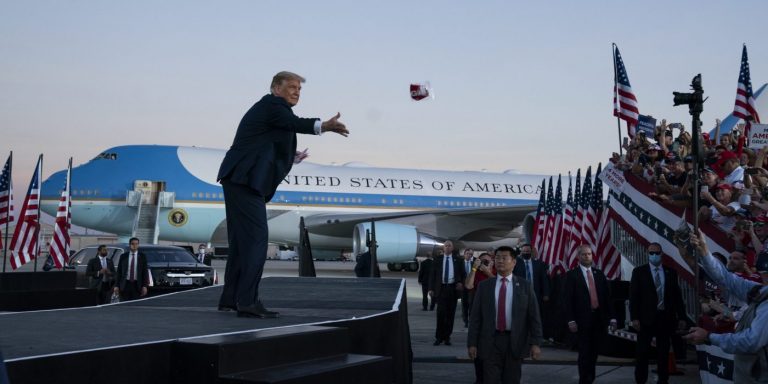
The president was staging an evening rally in Pennsylvania, Biden’s native state, where he sought to remind voters of Biden’s past pledge to end  fracking in areas where the economy is heavily dependent on energy.

Biden previously told supporters that he would ban fossil fuels—presumably to include natural gas—but he has since flip–flopped on the stance after eyeing the political landscape. He now claims to have proposed only barring new leases on federal land, a fraction of U.S. fracking operations.

Biden “has handed control to the socialists, Marxists and left-wing extremists,” Trump planned to say, according to excerpts released by the White House.

“If he wins, the radical left will be running the country—they are addicted to power, and God help us if they get it.”

The president also campaigned in Sanford, Florida, on Monday and will head back to the state on Friday.

Biden’s campaign believes it can take the presidency without Florida’s 29 electoral votes, but it wants to lock up the state to pad a margin of victory over Trump in the hopes of avoiding any post-election tensions.

Many have questioned the legitimacy of an election where many people will cast mail-in ballots during the pandemic, and even Biden’s own surrogates have warned that election night itself may look like a Trump landslide before the absentee votes are counted.

Trump narrowly flipped Michigan, Pennsylvania and Wisconsin in 2016, resulting in his surprise Electoral College landslide against Hillary Clinton.

However, aides have concluded that Michigan may be out of reach amid the pandemic and that Trump faces a stubborn deficit in Wisconsin. Even if he wins there, though, he may still need to make up Electoral College ground if Biden claims Florida or the traditionally red state of Arizona, both of which are too close to call.

On the flip side, Trump has seen gains in Minnesota as voters rural voters grow increasingly outraged over the race riots that have led both to rampant crime and calls to defund police in Minneapolis.

The president’s travel this week reflect a growing need to play defense, however, in once solid red states where a diaspora from blue states like New York and California has now shifted the calculus against thim.

Such is the case in several other must-win battleground states such as North Carolina, Iowa and Georgia in light of recent polling that shows Biden improving.

With 20 electoral votes, Pennsylvania is anchored by Philadelphia to the east, Pittsburgh to the west. But the rest of the state is largely rural, comprised of small cities and towns where Trump ran up the score four years ago.

He will need to again, in even greater numbers, as his prospects have slipped since 2016 in places like vote-rich suburban Philadelphia, where he underperformed by past Republican measures.

The city drew his ire in the recent debate amid a federal probe into a systemic voting fraud ring and other measures that seemed designed to stack the deck in Democrats’ favor.

Trump’s rally is at the airport in Johnstown in Cambria County, a historically coal and steel area that narrowly backed Democrat Barack Obama in 2008. But it has trended Republican for the past three decades and, in the 2016 election, Trump scored a 37 percentage-point victory. The area is also substantially whiter and has lower median incomes and lower rates of college-degree attainment than the rest of Pennsylvania.

Given that his local support was so strong four years, it might be hard to find additional votes to make up for losses elsewhere, said Ryan Costello, a Trump-bashing former Republican congressman from Democratic-trending Chester County, southwest of Philadelphia.

“I don’t accept the premise that he will keep his deficit in the suburbs to what it was, or even similar, in 2016,” Costello, who retired from Congress in 2019, said of Trump.

Biden visited Johnstown late last month. The former vice president has tried to cast himself as a champion of working-class voters while accusing Trump of focusing on stock market returns and Park Avenue values.

Despite the pandemic, Trump’s campaign has prioritized in-person events and aggressive door-knocking as it tries to turn out new and low propensity voters, including more members of the white working class who may have backed Democrats in the past but now favor the president.

Republicans point to an aging population and a shrinking voter-registration edge for Democrats, down 20% from 2016’s election to 717,000, according to the latest Pennsylvania data.

Adapted from reporting by the Associated Press

Accused Kenosha Gunman Kyle Rittenhouse Won’t Face Charges in Illinois

0

(Headline USA) A 17-year-old accused of killing two protesters during the race riots days after Jacob Blake was shot by police in Kenosha, Wisconsin, will not face charges in his home state of Illinois, prosecutors said Tuesday.

An investigation revealed the gun used in the Kenosha shooting was purchased, stored and used in Wisconsin, the Lake County State’s Attorney’s Office said.

There is no evidence the gun was ever physically possessed by Kyle Rittenhouse in Illinois, it said.

Rittenhouse of Antioch, remains held in a juvenile detention center in Lake County without bond due to pending criminal charges in Kenosha. Rittenhouse is due back in Lake County court on Oct. 30 for an extradition hearing.

His arrest has become a rallying point for many on the Right, with a legal defense fund that has attracted millions of dollars in donations.

But others see Rittenhouse as a domestic terrorist whose presence with a rifle incited the protesters.

Defense attorneys have portrayed Rittenhouse as a courageous patriot who was exercising his right to bear arms and acting in self-defense while being chased by violent attackers.

Adapted from reporting by the Associated Press

Activist Charged w/ Dumping Trash on ICE Chief’s Property

0

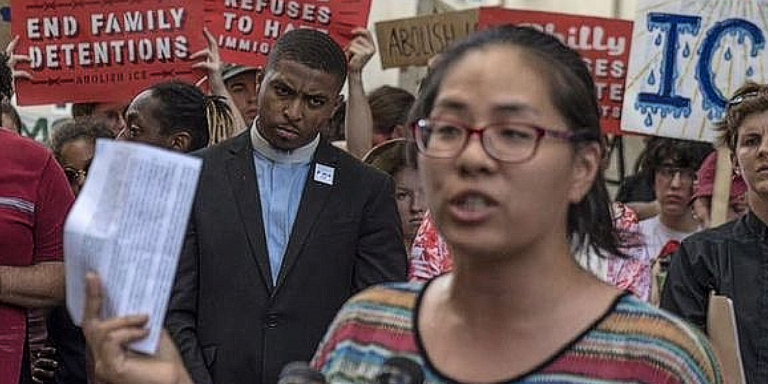
(Headline USA) The executive director of an advocacy organization has been charged with misdemeanor offenses for protesting in Virginia on the property of the acting director of Immigration and Customs Enforcement, authorities said.

Acting ICE Director Tony Pham was not home Sept. 8 when a group of protesters dumped trash on his yard in Henrico County and “caused fear to his family,” Henrico County police Lt. Matt Pecka said in a news release Monday.

A police investigation identified Nancy Nguyen, the executive director of VietLead, a political advocacy group in Philadelphia and New Jersey, as one of those protesters, news outlets reported.

The organization said in a Facebook post Friday that the protest was about Pham’s recent appointment to the role.

They said Nguyen was arrested on “bogus charges” Thursday night in her Philadelphia home.

She was then released Friday on her own recognizance, and greeted by hugs and cheers from supporters outside Philadelphia’s police headquarters, The Philadelphia Inquirer reported.

“While protesting is a protected First Amendment activity, doing so on one’s private property is illegal,” Pecka said, adding that police are working to identify the other protesters.

Meanwhile, VietLead has called Nguyen’s arrest a politically motivated “scare tactic to intimidate immigration rights advocates.”

She was charged with entering the property of another for the purposes of interfering with property rights and dumping trash, according to Pecka.

It was not immediately clear if she had an attorney who could comment on her behalf.

Adapted from reporting by the Associated Press

Dems Ask Supreme Court to Extend Wisc. Ballot Deadline by 6 Days

0

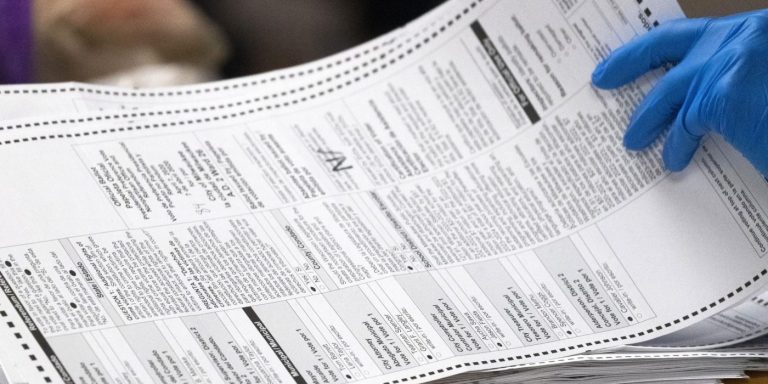
(Headline USA) Democrats and their allies asked the U.S. Supreme Court on Tuesday to allow for absentee ballots in battleground Wisconsin that are received up to six days after the election to be counted.

The move is being fought by Republicans, who have opposed other attempts across the country to expand mail-in voting amid growing instances of systemic vote fraud and other concerns over ballots being mishandled.

Democrats argue that the flood of absentee ballots and other challenges posed by the coronavirus pandemic make it necessary to extend the period in which ballots can be counted. Wisconsin is one of the nation’s hot spots for COVID-19, with hospitalizations treating a record high number of patients with the disease.

Republicans oppose the extension, saying voters have plenty of opportunities to cast their ballot by the close of polls on Election Day and that the rules should not be changed so close to the election.

A federal judge in September sided with Democrats and said ballots postmarked by Election Day, Nov. 3, could be counted if they’re received by Nov. 9.

The judge also ruled that poll workers could include people from outside the county, a change Democrats wanted in order to make it easier to fill vacancies.

Democrats are not seeking to reinstate one part of the lower court’s ruling that would have extended the deadline for online and mail-in voter registration from Wednesday until Oct. 21.

The 7th U.S. Circuit Court of Appeals upheld the ruling, but last week put the lower court’s decision on hold pending further appeals.

“We hope that the Supreme Court will do the right thing and allow election officials to count all valid ballots cast by Election Day, even if ballots are delayed in the mail and arrive a few days later,” said Farbod Faraji, an attorney at the far-left activist group Protect Democracy, which is assisting Democrats with the lawsuit.

“But voters should not count on that,” he continued. “Everyone voting absentee should submit their ballot as early as possible, so that their municipal clerk receives it no later than 8:00 pm on November 3rd.”

The request for the Supreme Court to take the case comes amid confirmation hearings for conservative Amy Coney Barrett, whom President Donald Trump selected to replace the late Ruth Bader Ginsburg, a liberal icon.

There are numerous similar fights over absentee ballots happening in other battleground states.

In neighboring Minnesota on Monday, a federal judge upheld a state court agreement that allows the counting of absentee ballots received up to seven days after Election Day.

In Michigan, Republicans are appealing a ruling that extended the deadline to receive mail ballots postmarked before Election Day to Nov. 17.

And in Pennsylvania, Republicans asked the U.S. Supreme Court to put a hold on a ruling that extends the deadline for counting and receiving mail-in ballots.

In North Carolina, several Republican lawsuits challenge a settlement in which the state elections board agreed to change the way defective mail ballots can be fixed by voters.

There is also a federal lawsuit in North Carolina related to witness signature requirements for absentee ballots.

In Wisconsin, absentee ballots typically must be received by 8 p.m. on Election Day. But this year, as many as two-thirds of all ballots, or roughly 2 million, are projected to be cast absentee, which Democrats claim will overwhelm local election officials.

Absentee ballots can’t be counted in Wisconsin until 7 a.m. on Election Day.

A group of Democratic lawmakers on Tuesday called for Republicans who control the Legislature to convene a special session to change the law before Election Day.

Republicans have rejected earlier calls to change the law.

Democrats cite problems in Wisconsin’s April presidential primary election, including long lines at the polls and thousands of ballots mailed after the election, as reasons to grant an extension. They also argue that potential delays in mail delivery could cause the late arrival of ballots.

As of Tuesday, 717,000 of more than 1.3 million requested absentee ballots had been returned. To date, the returned absentee ballots account for nearly 24% of the total vote of more than 3 million ballots in 2016.

President Donald Trump won Wisconsin by less than 1 percentage point — fewer than 23,000 votes — in 2016.

As they did for Hillary Clinton in 2016, polls currently show Democratic challenger Joe Biden with a slight lead in the state, but both sides expect another close race. Three of the past five presidential elections in Wisconsin were decided by less than a percentage point.

Those suing to receive the extension include the Democratic National Committee; the Wisconsin Democratic Party; the League of Women Voters of Wisconsin; Disability Rights Wisconsin; Wisconsin Alliance for Retired Americans; and Black Leaders Organizing for Communities, a Milwaukee-based advocacy group working to defeat Trump.

The Republican National Committee, the Wisconsin Republican Party and state Republican lawmakers are fighting the lawsuit.

Adapted from reporting by the Associated Press

Wisc. Police Chief: No Reason to Fire Black Officer Who Killed Teen in Feb.

0

The police chief of a Milwaukee suburb that has seen protests and unrest since an officer was cleared of criminal wrongdoing in the fatal shooting of a black teenager in February said Monday that he sees no reason why the officer should be fired.

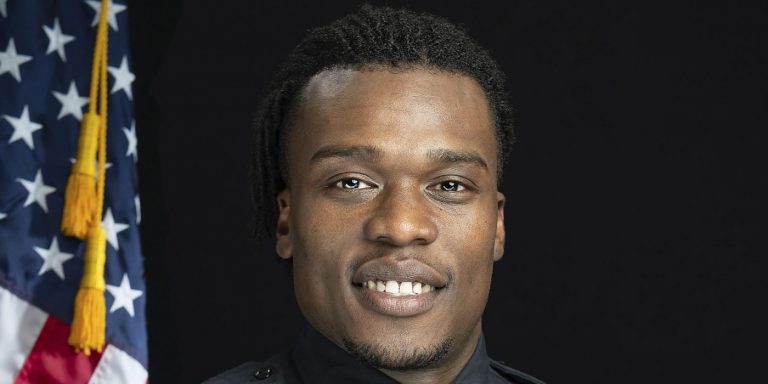
Joseph Mensah, who is also black, fatally shot 17-year-old Alvin Cole on Feb. 2 outside the Mayfair Mall in Wauwatosa.

Cole was the third person Mensah shot and killed since joining the police force five years ago.

Milwaukee County’s district attorney announced last week that like the first two fatal shootings, Mensah would not be charged in Cole’s death.

In his report, he noted that officers said Cole pointed a gun at them and refused to drop it, and that Mensah could successfully argue he fired in self-defense.

Although Mensah won’t face charges, the Wauwatosa Police and Fire Commission is considering firing him.

The commission asked an independent investigator, former U.S. Attorney Steven Biskupic, to look into a complaint filed by the family of one of the men Mensah killed.

In a report provided to The Associated Press by Cole’s family’s attorney, Biskupic recommended that Mensah be fired because he felt the risk was too great that Mensah would fatally shoot someone else, which would create “an extraordinary, unwarranted and unnecessary risk” to the city and police department.

After five nights of protests and sporadic unrest, police Chief Barry Weber said during an online news conference Monday that he disagrees with Biskupic’s recommendations because Mensah was found to have acted legally when he used deadly force in all three shooting deaths.

“I’ve never heard of any police officer ever being disciplined for something they may or may not do in the future,” Weber said, noting that the decision is ultimately up to the commission to decide.

“Joseph Mensah’s been cleared by the district attorney in three different cases. There’s been no reason to this point, and none that I can see, [why] he should be removed from the force,” the chief said.

Kimberley Motley, the Cole family’s attorney, rejected Weber’s position, again calling Mensah “unfit” and renewing her call that he and the chief be fired.

“I think that position of the chief is another reason why he needs to be terminated as well,” Motley said, adding: “Joseph Mensah is not credible and neither is Chief Weber.”

Mayor Dennis McBride, who also spoke at the news conference, openly questioned in the past whether Mensah should remain on the force.

But on Monday, he declined to say where he now stands, explaining that he didn’t want to put additional pressure on the police and fire commissioners.

“I’m not a police officer, I’m not a psychologist. I’m a mayor, I’m a lawyer. Those things don’t qualify me to judge [the] fitness of police officers,” McBride said.

Mensah’s attorney, Jonathan Cermele, did not immediately return a call for comment.

The decision to not charge Mensah in Cole’s death sparked five nights of protests in Wauwatosa, including a gathering Sunday that was much more peaceful than protests last week in which demonstrators clashed with police, who used tear gas and rubber bullets to disperse them.

Barrett Rebuffs Dems’ Efforts to Lay Political Traps in SCOTUS Hearing

0

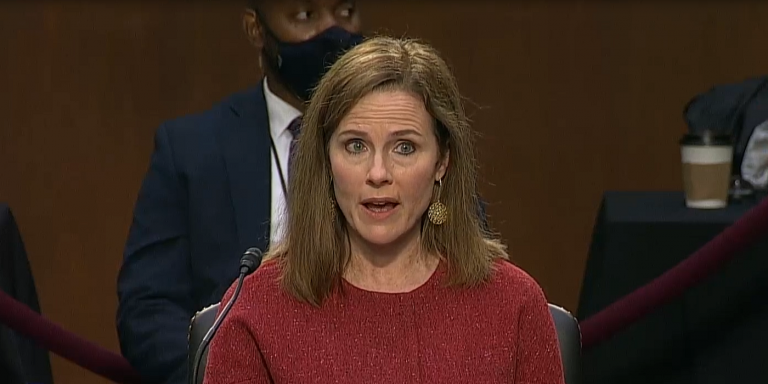
(Headline USA) Supreme Court nominee Amy Coney Barrett brushed off the coordinated efforts of Democrat members on the Senate Judiciary Committee to turn her confirmation into a political wedge on Tuesday, the second day of her congressional hearing.

Democrats peppered Barrett with overtly partisan questions, ignoring the policy established by former Sen. Joe Biden during the confirmation of late Justice Ruth Bader Ginsburg, whom Barrett was named last month to replace.

They demanded that she clearly state her positions on hot-button issues like abortion, gun rights and election disputes.

But the 48-year-old appellate court judge demured, pointing to the responses of prior justices, such as Obama-nominated Elena Kagan, in declining to give a “thumbs up or thumbs down” grade to past court precedents.

Barrett said that prejudicially declaring her stance in a hypothetical future case would be a violation of ethics since she is still a sitting judge in the 7th Circuit, regardless of whether she is confirmed to the Supreme Court.

“Judges can’t just wake up one day and say I have an agenda—I like guns, I hate guns, I like abortion, I hate abortion—and walk in like a royal queen and impose their will on the world,” Barrett told the committee.

“It’s not the law of Amy,” she said later. “It’s the law of the American people.”

Wading into the Abortion Row

Barrett—a devout Catholic, but also an avowed textualist and originalist in her judicial philosophy—said that unequivocally broadcasting her disposition on a controversial issue risked not only limiting her own impartial reasoning ability but also encouraging more lawsuits to force a favorable ruling on the matter.

“Senator, I completely understand why you are asking the question,” she told ranking minority member Dianne Feinstein, D-Calif., in response to a barrage of abortion questions.

“But again, I can’t pre-commit or say, ‘Yes, I’m going in with some agenda,’ because I’m not. I don’t have any agenda,” she continued. “… I have an agenda to stick to the rule of law and decide cases as they come.”

Nonetheless, a frustrated Feinstein repeatedly baited the nominee to elaborate on how she would handle landmark abortion cases, including Roe v. Wade and the follow-up Pennsylvania case Planned Parenthood v. Casey.

Although there are no current abortion cases on the court docket, several state and federal lawmakers have put forth pro-life “heartbeat” laws that seem determined to make their way before the court in the near future.

Such laws would not necessarily seek to overturn the former precedent and ban abortions altogether, but they would likely impose greater constraints and regulations on when the procedures were permissible and would bar late-term abortions once a pre-born infant is capable of feeling pain.

Other lawsuits might try to kick the issue back to the individual states, allowing them to determine for themselves the conditions under which to permit abortions.

Feinstein, recounting her time in the 1950s as a college student at Stanford University, said she had a different view after seeing women go to Mexico or try to perform their own abortions before the 1973 Roe decision made them legal.

“It’s distressing not to get a good answer,” Feinstein told the judge.

All Eyes on November

Barrett was grilled in 30-minute segments by Democrats who remained strongly opposed to allowing President Donald Trump a third Supreme Court appointment prior to the upcoming election.

Her presence would shift the court’s ideological balance in a decidedly more conservative direction than with the unabashedly liberal Ginsburg, a Bill Clinton appointee.

But Republicans—still reeling in some ways from the skulduggery of the Left’s 2018 attempt to derail Justice Brett Kavanaugh‘s confirmation with uncorroborated rape allegations—shrugged off the distinct possibility that Barrett may likewise receive a party-line vote.

They argued that Trump’s 2016 election and the addition of a handful of Senate seats in the 2018 midterms offered a clear mandate, which Democrats were more or less powerless to stop.

Underscoring his confidence, committee chair Lindsey Graham, R-SC, further roiled Feinstein and others, announcing Monday that he planned to speed up the pace by holding an initial committee vote on Thursday morning, before the hearings had officially finished.

That would allow final approval by the panel one week later and a vote for confirmation by the full Senate on Oct. 26.

Amid Democrat hand-wringing over whether a disputed Nov. 3 election could, once again, be thrown to the high court, Barrett declined to say whether she would recuse herself from any election-related cases involving Trump.

Such was the situation when the court agreed to hear Bush v. Gore in 2000. The court’s Republican majority decided in the split case that Florida’s secretary of state had the right to certify GOP candidate George W. Bush’s victory even as Democrat rival Al Gore pushed for a more extensive recount in several counties where ballot mishandling was rife.

That decision was among the first signs of trouble for the long-buffered court, which has increasingly been relied upon to resolve polarizing disputes that legislative gridlock is unable to satisfactorily address.

However, Barrett testified she has not spoken to Trump or his team about the court’s role in resolving election matters, and that doing so would be a “gross violation” of judicial independence.

Pressed by panel Democrats, she also declined to commit to recusing herself from post-election cases. She noted that even the recusal process had very strict policies regulating it and would require consultation with other justices and law clerks.

“I can’t offer an opinion on recusal without short-circuiting that entire process,” she said.

Obsessing over Obamacare

Democrats on the committee spent a considerable amount of time on Monday, during the first day of hearings, hyping a Nov. 10 case that involves the Affordable Care Act.

The case, Texas v. California, aims to determine whether the sweeping 2010 healthcare legislation is still applicable after the Trump-era nullification of the controversial individual mandate, which required people to either obtain insurance or pay a penalty.

In an earlier case, the court—specifically Chief Justice John Roberts, who cast the deciding vote and authored the majority opinion—was criticized for stepping beyond a literal reading of the statute to reinterpret the penalty as a “tax” since Congress otherwise lacked the authority to enforce it under interstate commerce regulations.

Barrett distanced herself from past writings perceived as critical of Roberts’s admittedly ‘unnatural’ interpretation.

She also rejected a false assertion from Feinstein that her involvement in the pending case might jeopardize protections for pre-existing medical conditions—an aspect of the law not addressed by the case’s question of severability.

“So far as I know, the case next month doesn’t present that issue … it’s not a challenge,” Barrett said.

However, “any issue that would arise under the Affordable Care Act or any other statute should be determined by the law,” she told the senators. “… If there were policy differences or policy consequences, those are for this body.”

Nonetheless, Sen. Patrick Leahy, D-Vt., tried to put the baffled judge on the spot by asking her to recite several details concerning the Obamacare law’s statistics.

She could not recall the specifics, including that 23 million people are covered by the law or that more than 2 million young people under the age of 26 are on their parents’ health insurance.

Prior to the passage of Obamacare, most insurance companies cut off adult children once they entered into the workforce and ceased being dependents for tax purposes.

Democrats also probed Barrett’s views on gun ownership and racial equity.

At one point, Sen. Dick Durbin, D-Ill., drew an emotional response from the mother of seven—including two black children who were adopted from Haiti.

Barrett described watching the video of the death of George Floyd at the hands of police.

“Racism persists,” she said, adding that Floyd’s death had a “very personal” effect on her family and that she and her children wept over it.

But she told Durbin that “making broader diagnoses about the problem of racism is kind of beyond what I’m capable of doing as a judge.”

‘A Seat at the Table’

During his questioning, Graham anticipated the Democrats’ attacks by asking Barrett if she would be able to shelve her personal beliefs to adhere to law.

“I have done that,” she said. “I will do that still.”

Barring a dramatic development, Republicans appear to have the votes to confirm Barrett to a lifetime seat on the court, and they spent their time portraying her as a thoughtful judge with impeccable credentials.

Graham praised her the best possible nominee Trump could have chosen.

He noted that conservative women deserved to have a voice on the court just as Ginsburg and other outspoken liberal justices had ensured that women of their persuasion were amply represented.

“In my world, to be a young, conservative woman is not an easy path to take,” Graham said, while acknowledging the presence of female GOP senators Joni Ernst, R-Iowa, and Marsha Blackburn, R-Tenn.

“… I will do everything I can to make sure that you have a seat at the table, and that table is the Supreme Court,” Graham told Barrett.

Adapted from reporting by the Associated Press

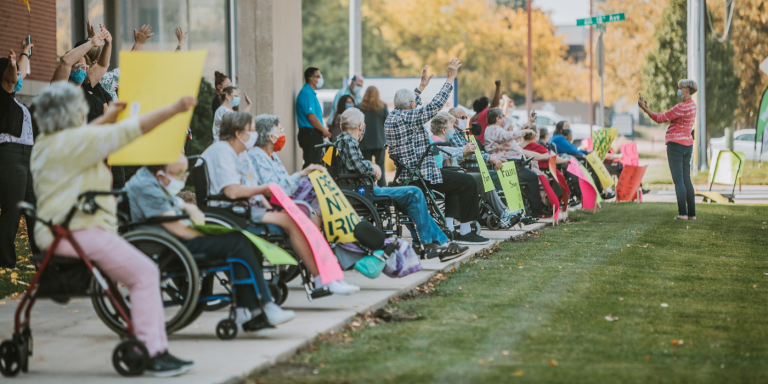
Colo. Nursing-Home Residents Protest Lockdowns: ‘Rather Die from COVID Than Loneliness’

More than 20 nursing-home residents in Greeley, Colorado, gathered outside the facility this week to protest the state’s coronavirus restrictions, arguing that they would rather risk catching the virus than be separated from their loved ones.

“They want to be able to hug their grandchildren, they want to be able to hold the hands of their loved ones,” said Ben Gonzales, an assistant administrator at Fairacres Manors, according to CBS4.

Staff members helped wheel many of the residents outside so they could hold signs and “know that their voice does matter,” Gonzales added.

Some of the signs read: “Rather die from COVID than loneliness,” “Prisoners in our own home,” and “Give us freedom.”

Under Colorado’s current restrictions, senior citizens in long-term care facilities are not allowed to have physical contact with anyone inside or outside the facility.

“We used to be lucky here at Fairacres to show each other what we mean to one another and we cannot do that anymore,” said Resident Council President Sharon Peterson.

“Fairacres follows the rules and, with that, we think they would keep us safe while being able to be with our families again,” she said.

When asked about the protest, Democratic Gov. Jared Polis said he is sympathetic to “how difficult it has been for residents of residential care facilities and their families.”

But he added that social interaction must be done in a way that keeps residents “safe” from COVID-19.

“We are doing everything possible to help long-term care facilities mitigate and prevent the spread of COVID-19 by working directly with facilities on proper infection control practices that have been proven to slow the spread of COVID-19,” Polis said in a statement.