Pa. Labor Union Blasts Biden For Falsely Claiming They Endorsed Him

A prominent labor union endorsed President Donald Trump after blasting Democratic presidential candidate Joe Biden for falsely claiming that he had won their endorsement.

John Hughes, the leader of Boilermakers Local 154, announced on Sunday that he and the thousands of Pennsylvania blue collar workers the union represents will support Trump for reelection, because it “is imperative that we continue to battle over-regulations in the fossil fuel industries and fight for American energy production.”

He added that any claim by Biden that the Boilermakers Union would support his campaign are false.

“The other day I’m watching the debate and I see Joe Biden tell everybody that the Boilermakers endorsed him and that is not true,” Hughes said, referencing comments Biden had made during his town hall with ABC News. “And I would like somebody to tell me who — he said he talked to somebody — I’d like to know who he talked to in the Boilermakers because anybody I talk to did not endorse him.”

Biden had claimed during the town hall that the Boilermakers Union “overwhelmingly” supports him after being asked about his position on fracking.

“The Boilermakers Union has endorsed me because I sat down with them and went into great detail earlier to show their leadership exactly what I would do,” Biden said.

But Hughes pointed out that the Boilermakers Union has yet to make a union-wide endorsement, and that his chapter already endorsed Trump.

“And I believe if you go onto our International [Boilermakers] website we have not endorsed a candidate this round, nor did the International Boilermakers endorse a candidate last time,” Hughes explained. “We did not endorse Obama and Joe Biden last time because of their energy issues.”

Justice Dept. to File Landmark Antitrust Case Against Google

(Headline USA) The Justice Department is expected to file a lawsuit Tuesday alleging that Google has been abusing its dominance in online search to stifle competition and harm consumers, a person familiar with the matter told the Associated Press.

The litigation marks the government’s most significant act to protect competition since its groundbreaking case against Microsoft more than 20 years ago. The suit could be an opening salvo ahead of other major government antitrust actions, given ongoing investigations of major tech companies including Apple, Amazon and Facebook at both the Justice Department and the Federal Trade Commission.

“As with its historic antitrust actions against AT&T in 1974 and Microsoft in 1998, the Department is again enforcing the Sherman Act to restore the role of competition and open the door to the next wave of innovation—this time in vital digital markets,” said Deputy Attorney General Jeffrey A. Rosen.

Lawmakers and consumer advocates have long accused Google, whose corporate parent Alphabet Inc. has a market value just over $1 trillion, of abusing its dominance in online search and advertising to stifle competition and boost its profits. Critics contend that multibillion-dollar fines and mandated changes in Google’s practices imposed by European regulators in recent years weren’t severe enough and that structural changes are needed for Google to change its conduct.

The case is expected to be filed in federal court in Washington, D.C., and will allege Google has been abusing its dominance in online search to stifle competition and harm consumers, the person familiar with the matter told the AP. It will also allege that Google uses billions of dollars collected from advertisers to pay phone manufacturers to ensure Google is the default search engine on browsers, the person said. The person could not discuss the matter publicly before a formal announcement expected later Tuesday morning and spoke to the AP on the condition of anonymity.

The Trump administration has long had Google in its sights. A top economic adviser to President Donald Trump said two years ago that the White House was considering whether Google searches should be subject to government regulation. Trump has often criticized Google, following claims by conservatives that the search giant is biased against conservatives and suppresses their viewpoints, interferes with U.S. elections and prefers working with the Chinese military over the Pentagon.

“Google’s growth has gone unchecked for too long,” said Sen. Tom Cotton, an Arkansas Republican. “Its anticompetitive conduct is harming the public and American business. I commend the Department for finally holding Google accountable. When it comes to big tech, this is just the beginning. Winter is coming.”

Google controls about 90% of global web searches. The company has been bracing for the government’s action and is expected to fiercely oppose any attempt to force it to spin off its services into separate businesses.

The company, based in Mountain View, California, has long denied the claims of unfair competition. Google argues that although its businesses are large, they are useful and beneficial to consumers. It maintains that its services face ample competition and have unleashed innovations that help people manage their lives.

Most of Google’s services are offered for free in exchange for personal information that helps it sell its ads. Google insists that it holds no special power forcing people to use its free services or preventing them from going elsewhere.

A recent report from a House Judiciary subcommittee, following a year-long investigation into Big Tech’s market dominance, concluded that Google has monopoly power in the market for search. It said the company established its position in several markets through acquisition, snapping up successful technologies that other businesses had developed — buying an estimated 260 companies in 20 years.

The argument for reining in Google has gathered force as the company stretched far beyond its 1998 roots as a search engine governed by the motto “Don’t Be Evil.” It’s since grown into a diversified goliath with online tentacles that scoop up personal data from billions of people via services ranging from search, video and maps to smartphone software. That data helps feed the advertising machine that has turned Google into a behemoth.

The company owns the leading web browser in Chrome, the world’s largest smartphone operating system in Android, the top video site in YouTube and the most popular digital mapping system. Some critics have singled out YouTube and Android as among Google businesses that should be considered for divestiture.

With only two weeks to Election Day, the Trump Justice Department is taking bold legal action against Google on an issue of rare bipartisan agreement. Republicans and Democrats have accelerated their criticism of Big Tech in recent months, although sometimes for different reasons. It’s unclear what the status of the government’s suit against Google would be if a Joe Biden administration were to take over next year.

The Justice Department sought support for its suit from states across the country that share concerns about Google’s conduct. A bipartisan coalition of 50 U.S. states and territories, led by Texas Attorney General Ken Paxton, announced a year ago they were investigating Google’s business practices, citing “potential monopolistic behavior.”

Adapted from reporting by Associated Press.

Debate Commission Changes Rules at Last Minute; Mics to Be Cut Off

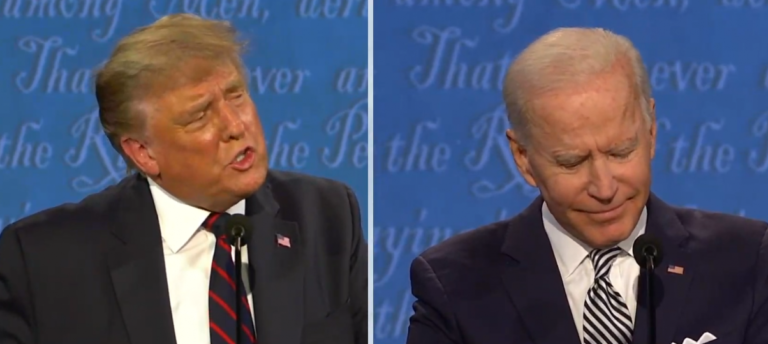
(Headline USA) President Donald Trump plans to attend Thursday’s debate with Democratic nominee Joe Biden despite rule changes — opposed by his campaign — that are meant to foster more ordered discussions.

Trump campaign manager Bill Stepien says Trump “is committed to debating Joe Biden regardless of last minute rule changes from the biased commission in their latest attempt to provide advantage to their favored candidate.”

The nonpartisan Commission on Presidential Debates announced Monday that the second and final debate between the two candidates will have each nominee muted while the other delivers his two-minute remarks at the outset of each of the six debate topics.

The remainder of each 15-minute block will be open discussion, without any muting, the commission said.

The move is meant to prevent a repeat of the inaugural debate three weeks ago when the two candidates, but mostly Trump, interrupted each other repeatedly.

The Biden campaign did not immediately comment on the new rule.

The 90-minute debate is divided into six 15-minute segments, with each candidate granted two minutes to deliver uninterrupted remarks before proceeding to an open debate.

The open discussion portion of the debate will not feature a mute button, but interruptions by either candidate will count toward their time in the second and final debate Thursday.

The nonpartisan Commission on Presidential Debates announced the rule changes Monday, three weeks after a chaotic opening faceoff between the two presidential contenders that featured frequent interruptions.

The commission has faced pressure from the Trump campaign to avoid changing the rules, while Biden’s team was hoping for a more ordered debate. All of the moderators of the debates thus far have shown favoritism towards Biden.

In a statement, the commission said it “had determined that it is appropriate to adopt measures intended to promote adherence to agreed upon rules and inappropriate to make changes to those rules.”

Adapted from reporting by Associated Press.

Roberts Joins Libs; Supreme Court Allows 3-Day Extension for Pa. Ballots

(Headline USA) The U.S. Supreme Court will allow Pennsylvania to count mailed-in ballots received up to three days after the Nov. 3 election, rejecting a Republican plea in the presidential battleground state.

The justices divided 4-4 on Monday, an outcome that upholds a state Supreme Court ruling that required county election officials to receive and count mailed-in ballots that arrive up until Nov. 6, even if they don’t have a clear postmark, as long as there is not proof it was mailed after the polls closed.

Republicans, including President Donald Trump’s campaign, have opposed such an extension, arguing that it violates federal law that sets Election Day as the first Tuesday after the first Monday in November and that such a decision constitutionally belongs to lawmakers, not the courts.

The state Republican Party chairman, Lawrence Tabas, said the party disagrees with the decision and, noting the 4-4 decision, “it only underscores the importance of having a full Supreme Court as soon as possible.”

“To be clear, the Supreme Court decided not to grant a stay — which does not mean the actions of the Pennsylvania Supreme Court would withstand a legal challenge to their judicial overreach should the court hear the case,” Tabas said.

Nancy Patton Mills, chairwoman of the Pennsylvania Democratic Party, accused Republicans of trying to sow confusion and disenfranchise eligible voters.

“This is a significant victory for Pennsylvania voters,” Mills said in a statement.

The Democratic majority on the state’s high court had cited warnings, without citing evidence, that postal service delays could invalidate huge numbers of ballots and surging demand for mail-in ballots during the coronavirus pandemic to invoke the power, used previously by the state’s courts, to extend election deadlines during a disaster emergency.

Chief Justice John Roberts joined with the three liberal justices to reject Pennsylvania Republicans’ call for the court to block the state court ruling.

Justices Samuel Alito, Neil Gorsuch, Brett Kavanaugh and Clarence Thomas would have required the state to stop accepting absentee ballots when the polls close on Nov. 3.

There were no opinions accompanying the order, so it is impossible to say what motivated either group of justices. The conservative justices have been reluctant to allow court-ordered changes to voting rules close to an election.

The court also is weighing a similar issue from Wisconsin. But in that case, the ruling being challenged comes from a federal appeals court and it’s the Democrats who are asking the justices to step in.

Most states make Election Day the deadline, but 18 states — half of which backed Trump in the 2016 election — have a post-Election Day deadline.

“With nearly a million votes already cast in Pennsylvania, we support the court’s decision not to meddle in our already-working system,” Pennsylvania’s attorney general, Democrat Josh Shapiro, said in a statement.

On a separate track, Republicans in the statehouse have pressed Gov. Tom Wolf, a Democrat, to agree to 11th-hour legislation to eliminate or limit the three days under the court’s order.

The case is one of many partisan battles being fought in the state Legislature and the courts, primarily over mail-in voting in Pennsylvania, amid concerns that a presidential election result will hang in limbo for days on a drawn-out vote count in the battleground state.

In Pennsylvania, the state Democratic Party and a liberal group, the Pennsylvania Alliance for Retired Americans, had sought an extension of the Election Day deadline to count mailed ballots.

With about 2.8 million mail-in ballots requested and approximately 900,000 returned, Democratic-registered voters are requesting mail ballots at a nearly 3-to-1 ratio over Republicans.

In its Sept. 17 ruling, the divided state Supreme Court said ballots must be postmarked by the time polls close and be received by county election boards at 5 p.m. on Nov. 6, three days after the Nov. 3 election.

It also said that ballots lacking a clear postmark could be counted unless there was evidence that they were mailed after the polls closed.

Adapted from reporting by Associated Press.

Republicans See Bright Spots in Voter Registration Push

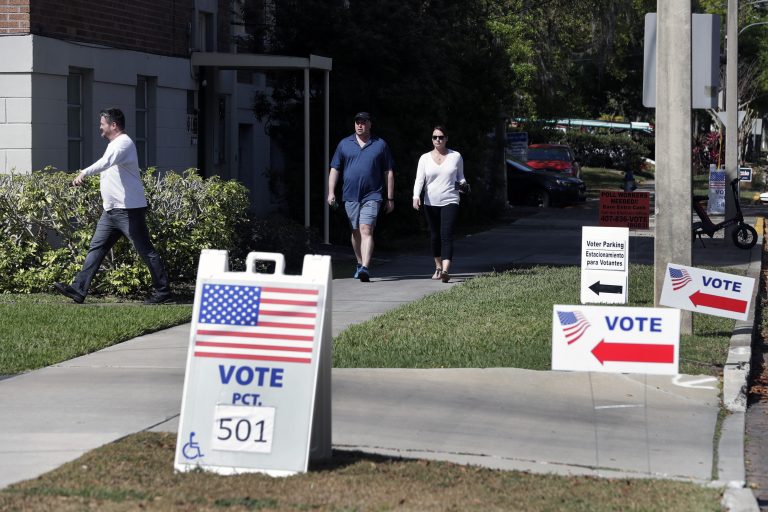
(Headline USA) The Republican Party has cut into Democrats’ advantages in voter registration tallies across some critical presidential battleground states, a fact they point to as evidence of steady — and overlooked — enthusiasm for President Donald Trump and his party.

Even though Trump trails in dubious national polls, Republicans see their progress signing up voters in Florida, Pennsylvania, Arizona and other states as a bright spot.

Democrats appear to have been set back by their decision to curb in-person voter registration drives during much of the pandemic. And in something of a reversal, Republicans are crowing about their success bringing in new voters who could ramp up turnout and deliver the White House to their candidate.

“The best thing for voter registration is enthusiasm for a candidate and the infrastructure,” said Nick Trainor, director of battleground strategy for Trump’s re-election campaign. “The lack of enthusiasm for Biden coupled with the lack of structure is the reason they’re not doing what they did in the past.”

In Florida, Republicans netted 146,644 voters over Democrats since the pandemic hit in March, leaving Democrats with their smallest overall lead in party registrations since the state began tracking them in 1972. In Pennsylvania, which Trump won with 44,000 votes in 2016, the GOP added 103,171 more voters since November than Democrats did.

Even in Arizona, where Democrats have steadily chipped away at the GOP’s advantage among registered voters due to a growing number of young Latinos voters, Republicans added 30,000 more voters than Democrats since mid-August.

Democrats argue that Republican gains are partly illusory: Some of the GOP registrants are former Democratic voters who have been voting for Republicans, but have not updated their registration until now. They also note young voters, who lean heavily Democratic, increasingly register as unaffiliated with either party, which helps pad the GOP’s advantage on paper but it might not help on Election Day,

David Bergstein, a spokesman for the Democratic National Committee, said Republicans were “cherry picking” voter registration statistics. Still, he noted: “Democrats are taking nothing for granted and pulling out all the stops to reach every voter we need.”

Voters can still sign up to vote in a handful of states and several, including the key battlegrounds of Michigan, Minnesota and Wisconsin, allow voters to sign up to vote on Election Day.

Still, the numbers reflect a broader reality: The coronavirus pandemic hobbled voter registration since it broke out in March, shutting down hubs of voter registration such as street festivals, college campuses and departments of motor vehicles.

Even as society has opened back up since March, registrations are 38% lower than they were during a comparable stretch in 2016, according to a report from the Brennan Center for Justice. Experts note that a registration drop-off of that size disproportionately hurts young, urban and minority voters — voters that tend to lean Democratic.

“Most definitely, the pandemic has impacted Democratic voter registration numbers, especially among core constituencies,” said Jonathan Robinson of the Democratic data firm Catalist.

Democrats were starting ahead of Republicans. They’ve had success registering new voters through much of the Trump administration. Their gains after Trump’s election helped lead to their success flipping the House of Representatives in an election with record young voter participation rates — a sign, they argue, that their pre-pandemic work will pay off in November.

Since the outbreak, things have been harder for Democrats and the wide array of nonprofit groups that work to sign up new voters. These organizations have been hesitant to resume face-to-face interactions. The Biden campaign only resumed some this month while Republicans have not been as shy — they began going back into the field this summer.

“They ceded the playing field,” Trainor said of Democrats.

In Arizona, online registration efforts don’t have the same impact as in person ones, said Alejandra Gomez, co-executive director of the Latino organizing groups Living United for Change in Arizona and the Arizona Center for Empowerment.

“While we were seeing an increased number in online participation, it’s still not the same as face-to-face work and being able to have a conversation with a person,” Gomez said.

Still, Democrats say they feel good about their position in the state. Data analyst Sam Almy said that, of the 66,000 voters added to the rolls since August who don’t register with either party, half are 35 or younger, a key Democratic demographic.

In Pennsylvania Republicans have gained on Democrats since Trump’s election. Democrats in the state acknowledge the president has a striking appeal to many longtime members of their party who may be switching to the GOP.

“Donald Trump is a singularly, unique personality,” said John Fetterman, the state’s Democratic lieutenant governor.

Fetterman noted that despite the attrition in registration numbers, Democrats won the state’s Senate and gubernatorial races in 2018.

“I’m not really concerned by the voting registration difference,” Fetterman said.

In Nevada, where Democrats routinely out-register Republicans in the run-up to elections, the GOP has bested Democrats for at least five months since the pandemic hit. In North Carolina, where a competitive Senate race could determine which party controls the upper chamber, Republican registration has leapt by 51,381 over Democratic since mid-March.

In Florida, Democrat Hillary Clinton lost the state when her party’s registration advantage was more than 320,000 in 2016. Its now about half of that. But Democrats note that there’s been an even larger increase in new voters who decline to register with either party.

Steve Schale, a veteran Florida Democratic strategist who’s complained publicly about his party’s failure to keep up with the GOP in registrations, said during a call with reporters Monday that those unaffiliated voters are overwhelmingly young and people of color.

“That’s probably a pretty good sign,” said Schale, who also runs a group supporting Biden.

Adapted from reporting by Associated Press.

California Won’t Allow Virus Vaccines Without State Approval

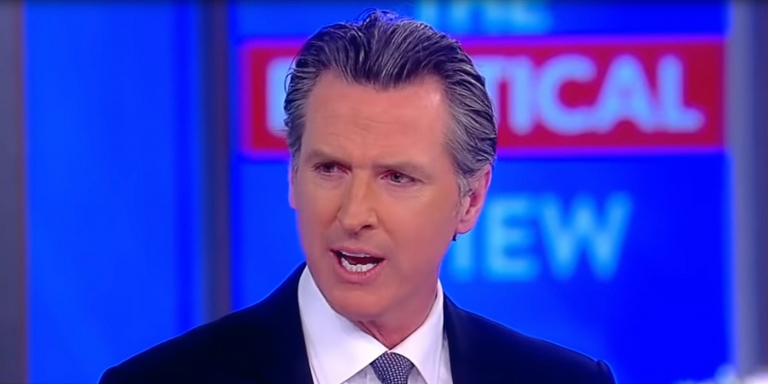
(Headline USA) California won’t allow any distribution of coronavirus vaccines in the nation’s most populous state until it is reviewed by the state’s own panel of experts, Gov. Gavin Newsom said Monday.

Vaccinations for the pandemic “will move at the speed of trust,” said Newsom, a Democrat, and the state wants its own independent review no matter who wins the presidential election next month.

“Of course we won’t take anyone’s word for it,” Newsom said as he named 11 doctors and scientists to review any rollout of vaccines by the federal government or vaccine developers.

The board members hail from top California universities and medical providers, along with state and local public health officials.

The pledge raises the possibility that California residents might not receive a vaccine as distribution begins in other states, though the governor said widespread vaccinations are unrealistic until sometime next year.

While there is always a risk that the vaccine could be delayed only in California, Dr. Jeffrey Klausner, a professor of epidemiology at the UCLA Fielding School of Public Health, said Newsom named a renowned group that should be able to quickly make credible decisions.

“I wouldn’t interpret this as a delay in distribution. I would interpret this as an effort to make sure that distribution is equitable and timely,” he said. “The people in this group are among the most reputable public health advocates in the state.”

As such, its finding that a particular vaccine approved by the Food and Drug Administration or Centers for Disease Control and Prevention was suitable or not could have an outsize effect nationwide.

New York Gov. Andrew Cuomo last month appointed a similar independent task force.

“It would be a mistake not to be aware of the way that the CDC and the FDA have been pressured by the White House, no matter who’s in the White House,” said David Magnus, director of the Stanford Center for Biomedical Ethics, so “it might be prudent for a state to make sure everything’s kosher.”

He’s less worried that there will be disagreement between the federal and state panels now that no vaccine release is likely before Election Day, Nov. 3. But Magnus noted that it has not been uncommon for presidents to muzzle scientists in other areas, for instance climate change or other environmental policies, thus setting up regular lawsuits with states like California.

At most, 45 million doses will be available nationwide before the end of this year from the two most advanced vaccines, Newsom said. Each person must receive two doses, three weeks apart.

If California were to receive 12% of the doses, commensurate with its percentage of the nation’s population, that would be 5.4 million doses, or enough to treat 2.7 million of the state’s nearly 40 million residents.

Most would go to front-line medical workers and first responders, he said, then to the most vulnerable in the population.

Newsom’s announcement drew quick criticism from Republican state lawmakers.

“Politicizing the efficacy of a vaccine is shameful,” Sen. Melissa Melendez tweeted.

Newsom is “suggesting we can’t trust the FDA (but) Of course, we’ll continue trusting the FDA for every other drug whose distribution doesn’t threaten his hold on power,” tweeted Assemblyman Kevin Kiley, who has a court hearing this week challenging the governor’s authority to impose virus restrictions.

Newsom said the distribution and record-keeping logistics alone are massive, including a requirement that the vaccines be kept in continuous cold storage until they are administered.

One of the two leading vaccines requires “ultra cold” storage — think dry ice — of minus 94 degrees Fahrenheit. The other needs a minus 4 degrees Fahrenheit.

California last week gave the federal Centers for Disease Control and Prevention its early plans for how it would handle and distribute the vaccine, and in return received nearly $29 million to continue its planning efforts.

California is one of five jurisdictions doing what Newsom called “micro-planning” for mass distributions, which he predicted could come as soon as next spring, is more likely next summer, but could be as late as next fall.

The advisory group should be empowered not only to sign off on the safety of a vaccine, Klausner said, but to make recommendations on whether vaccines should be mandatory in some instances, and to guide a complicated distribution process that will likely require readiness by every clinic, pharmacy and health department.

It’s possible that might make it necessary to “activate the National Guard or some other type of human resource pool to make sure the vaccine can be distributed quickly and effectively,” Klausner said.

Adapted from reporting by Associated Press.

Trump Convinces Sudan to Pay U.S. Victims of Terror Attacks $335M

(Associated Press) President Donald Trump on Monday said Sudan will be removed from the U.S. list of state sponsors of terrorism if it follows through on its pledge to pay $335 million to American terror victims and their families, but some hurt in the attacks weren’t happy with the deal.

The move would open the door for the African country to get international loans and aid needed to revive its battered economy and rescue the country’s transition to democracy. The announcement, just two weeks ahead of the U.S. presidential election, also comes as the Trump administration works to get other Arab countries, such as Sudan, to join the United Arab Emirates and Bahrain’s recent recognition of Israel.

Delisting Sudan from the state sponsors blacklist is a key incentive for the Sudanese government to normalize relations with Israel. Trump’s announcement came after Treasury Secretary Stephen Mnuchin traveled to Bahrain to cement the Gulf state’s recognition of the Jewish state.

Trump tweeted: “GREAT news! New government of Sudan, which is making great progress, agreed to pay $335 MILLION to U.S. terror victims and families. Once deposited, I will lift Sudan from the State Sponsors of Terrorism list. At long last, JUSTICE for the American people and BIG step for Sudan!”

Sudan has agreed to pay compensation for victims of the 1998 bombings of the U.S. embassies in Kenya and Tanzania, attacks conducted by Osama bin Laden’s al-Qaida network while bin Laden was living in Sudan.

Gen. Abdel-Farrah Burhan, head of Sudan’s ruling sovereign council, welcomed Trump’s announcement as a “constructive step.” He said in a tweet the removal would come “in recognition of the historic change that has taken place in Sudan.”

Sudan is on a fragile path to democracy after a popular uprising last year led the military to overthrow autocratic leader Omar al-Bashir in April 2019. A military-civilian government now rules the country, with elections possible in late 2022.

In an address to the nation, Prime Minister Abdalla Hamdok said getting off the list would help his government benefit from debt relief and access foreign loans and investments, which are seen as the country’s gateway to economic recovery. The country has more than $60 billion in foreign debt, he said.

“It’s a long way,” he said. “It needs serious planning and hard work to achieve the maximum benefit of this opportunity.”

Once the compensation money has been deposited, Trump is to sign an order removing Sudan from the terrorism list, on which it has languished under heavy American sanctions for 27 years.

Congress is then expected to act to restore Sudan’s sovereign immunity, which would effectively stop future compensation claims from being filed against it in U.S. courts. Meanwhile, Sudan is to begin the process of normalizing relations with Israel, possibly with Israeli Prime Minister Benjamin Netanyahu joining a congratulatory phone call between Trump and Hamdok.

The designation of Sudan as a state sponsor of terrorism dates back to the 1990s, when Sudan briefly hosted bin Laden and other wanted militants. Sudan was also believed to have served as a pipeline for Iran to supply weapons to Palestinian militants in the Gaza Strip.

The “state sponsors of terrorism” designation is one of the U.S. government’s most effective sanctions tools and bars virtually all non-humanitarian U.S. transactions with countries on it. It was created in 1979 to punish nations that fund or otherwise support terrorist acts. With Sudan’s removal, only Iran, North Korea and Syria will remain on the list.

Some victims denounced he settlement; others urged Congress to pass legislation needed to implement the agreement.

More than 500 of the 700 victims of the 1998 bombings at the U.S. embassies signed a letter rejecting Sudan’s settlement offer, partly because it would award more money to Americans than Africans who worked there.

The letter said the plan offers compensation dependent on a victim’s nation of birth, rather than the severity of injuries.

“This scheme would pay nothing at all to nearly a third of the embassy victims and categorizes naturalized U.S. citizens as non-Americans,” the letter said. “It sets the value of the life of a U.S. embassy employee born in Africa at only 8% of an employee born in America.”

Jack Quinn, counsel for the 9/11 families that sued Sudan, also expressed displeasure at the announcement. “The 9/11 families are counting on Congress to reject Sudan’s plea that our pending lawsuits be wiped out, and they insist it do nothing that would undermine them,” Quinn said.

However, Edith Bartley, spokesperson for the families of the Americans killed in the embassy bombing in Nairobi, Kenya, thanked the State Department and the new government in Sudan for securing compensation for the victims. She said that once released, the compensation will fulfill a longstanding commitment to the victims first made by President George W. Bush, honored by President Barack Obama and now affirmed by Trump.

“We urge Congress to immediately pass the legislation that is needed to implement the agreement, and begin the payment process,” she said. “Congress cannot let this agreement fall victim to legislative gridlock and bickering. The victims, and our regional allies who wish to have Sudan emerge as a economically viable supporter of regional peace, are depending on Congress to act swiftly in support of this effort.”

Jonathan Schanzer at the Washington-based Foundation for Defense of Democracies said removing Sudan from the terrorism list is an important achievement because Khartoum has helped fight Sunni extremists for nearly two decades and has worked to remove Iranian influence from Sudan since 2012.

“In this way, the country has addressed the reasons for its original listing as a state sponsor of terrorism,” he said.

Schanzer, a former terrorism finance analyst at the Treasury Department, said now that the delisting is to occur, it will important for the Trump administration to prioritize a normalization agreement. “The stars are aligned for such a deal,” he said. “It just needs a push.”

Heat Turns Up On NC’s Cunningham After Affair w/ 2nd Woman Confirmed

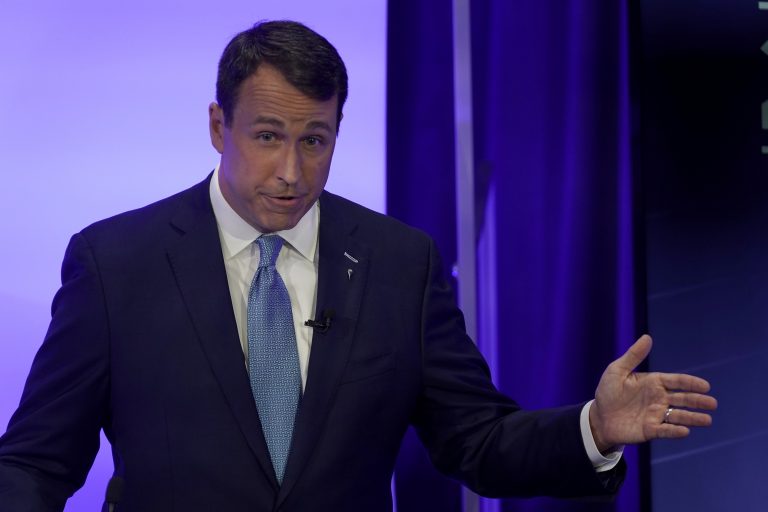
Democratic Senate candidate Cal Cunningham has refused to deny or confirm the existence of multiple affairs, but a recent report confirms that he has had at least two mistresses over the past few years.

Cunningham’s second mistress, identified as Anne Gregory Teicher, is also married but has social media ties to Cunningham, according to the National File.

The site said multiple sources have confirmed that they were having an affair, including her friend Erin Brinkman, a California attorney whose social media posts first indicated that Cunningham had more than one mistress.

Since news broke of Cunningham’s affair with Arlene Guzman Todd, Teicher has liked several social media posts that are openly critical of Cunningham’s behavior.

In response to one tweet about the situation, Teicher said: “I’m disgusted and revolted. We deserve better.”

Cunningham also lost the endorsements of North Carolina’s two top-circulation newspapers, the Charlotte Observer and the Raleigh News and Observer.

Endorsements of Democrat nominees for the Senate are considered automatic by the two far-left editorial boards — until this year.

“Two weeks ago, this editorial board was prepared to endorse Democrat Cal Cunningham in North Carolina’s 2020 U.S. Senate race … But we’re not endorsing Cal Cunningham in this race. Let’s be clear: We understand that the Democrat’s apparent affair, revealed in a series of sexual messages, is between him and his wife. But his lack of judgment during a race that could swing the balance of power in Washington, as well as his selfishness in taking this risk, should deeply trouble North Carolinians,” the two papers — which are under the same corporate umbrella — said in a joint statement.

Cunningham’s refusal to transparently answer questions about his affairs is even more troubling, the papers added.

“If elected, he’ll face his share of flammable issues and controversial votes he’ll need to explain. But in these past two weeks, he’s avoided questions about his behavior — whether it’s part of a pattern, how it conflicts with his military obligations, and if it involved any campaign funds. That’s not accountability. It’s political strategy,” the statement continued.

This makes Cunningham the first Democrat in 22 years not to receive an endorsement from the Charlotte Observer.

Even so, Cunningham continues to dodge questions about his affairs.

During one recent press conference, he refused to answer four different questions about whether he had an affair with other women besides Todd.

Incumbent Sen. Thom Tillis, R-N.C., Cunningham’s opponent, said the disgraced Democrat owes North Carolinians transparency, “especially since there are serious consequences that accompany his affair,” he said, citing the Uniform Code of Military Justice, which forbids adultery.

Since Cunningham serves in the military, he could be held accountable under the provision, Tillis said.

“He is an officer in the military,” Tillis argued. “He’s also subject to disciplinary action just on the basis of what he’s admitted to.”

Most Democrats, however, have refused to acknowledge Cunningham’s affairs, or have tried to downplay them.

“The polls I’ve seen show that Medicaid expansion is the No. 1, health care is the No. 1 issue in North Carolina, and that’s what we’re going to talk about for the next month,” said Rep. Darren Jackson, D-N.C.

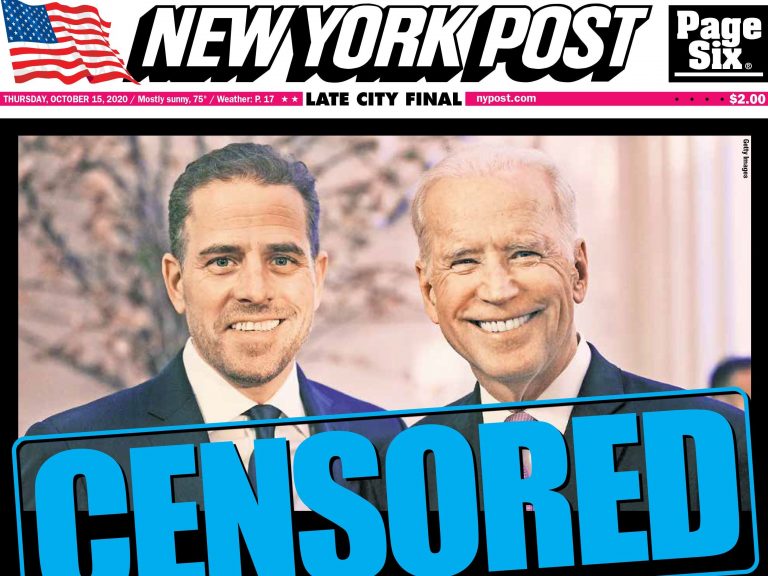
Day 5: Twitter Holds New York Post Hostage Over Biden Corruption Story

It has been five days since Twitter censored the New York Post‘s account because of its reporting on Joe Biden and Hunter Biden‘s criminal influence-for-cash enterprise with China and Ukraine, The Epoch Times reported.

Post editor Sohrab Ahmari confirmed the censorship, and politics editor Emma-Jo Morris said Twitter will not reinstate the account of the nearly 220-year old newspaper, which Alexander Hamilton founded, “unless we self-censor.”

Twitter confirmed the Post “has been informed what is necessary to unlock their account,” that is, to delete the tweet that shared the Biden family corruption story, Fox News reported.

The account has not tweeted since Oct. 14.

The Post published information from Hunter Biden’s laptop hard drive and emails, which indicate he sold access to his father, who served as the Obama administration’s leader of Ukraine policy.

Democratic presidential nominee Joe Biden has accused the Post of a “smear campaign,” but his campaign has not denied the substance of the allegations.

Twitter has blocked links to the Post‘s story, too, ensuring that voters will decide the 2020 presidential election without the Biden information unless they see it somewhere else.

Facebook adopted similar measures to Twitter by “limiting the story’s reach.”

Twitter justified its censorship by claiming the emails violated the platform’s rules against hacked materials, despite failing to take any actions against the illegally obtained tax records of President Donald Trump.

The Post said the information on Hunter’s laptop was not hacked.

“Information in the reports came from data extracted from a MacBook Pro laptop that a Delaware repair shop owner has said was dropped off in April 2019 but never picked up,” the Post reported.

Final Presidential Debate Moderator Has Ties to Obamas, Biden

The moderator for the second and final presidential debate between President Donald Trump and former Vice President Joe Biden has deep ties to the Democratic Party.

NBC News White House correspondent Kristen Welker’s family has reportedly donated thousands of dollars to Democratic candidates over the years, including $20,000 to former President Barack Obama‘s reelection campaign and Biden’s current presidential campaign, according to the New York Post.

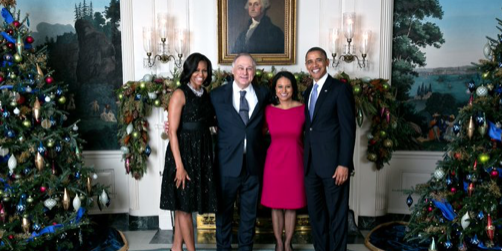
Welker even attended the Obama White House’s Christmas Party with her family in 2012.

In March 2016, Welker was caught on live television telling Hillary Clinton’s communications director Jennifer Palmieri what question she was going to ask.

And in 2004 in Rhode Island, where she was a local TV reporter, and in Washington DC in 2012, Welker’s voter registrations were listed as Democrat.

“Anyone who’s ever dealt with Welker knows she’s an activist, not a reporter. The White House press team views her the same way they would AOC or Pelosi if they walked in the office,” a senior White House official told the New York Post.

This news comes just a few days after C-SPAN’s Steve Scully, who was to moderate the canceled debate between Trump and Biden last week, admitted he lied about his ties to NeverTrumper and former White House communications director Anthony Scaramucci.

Scully accidentally tweeted to Scaramucci asking whether he should “respond” to something Trump had said.

When confronted, Scully lied and claimed that his Twitter account had been hacked.

Scully also had ties to Biden, having interned for him when Biden was a senator.

C-SPAN announced Friday that Scully had been suspended “indefinitely” for lying about the hacking, prompting Trump to take a victory lap since he had been “right” about Scully’s bias.