Lauren Boebert’s Son Charged With Child Sexual Exploitation

(Luis CornelioHeadline USA) The 21-year-old son of Rep. Lauren Boebert, R-Colo., was arrested Sunday on multiple child sexual exploitation charges stemming from alleged conduct involving a previous relationship, Headline USA can confirm.

The Garfield County Sheriff’s Office arrested Tyler Boebert on three counts of sexual exploitation of a child and two counts of contributing to the delinquency of a minor.

A press release posted by the sheriff’s office said the investigation was conducted in conjunction with the 9th Judicial District Attorney’s Office.

The Colorado man was booked and released the same day on a $10,000 bond.

His mugshot depicts a baby-faced Boebert with his hair slicked back, standing in front of a blue wall.

The charges date to 2024, when Tyler was 18 and his girlfriend was 17, according to TMZ. The girl was reportedly less than two weeks shy of her 18th birthday at the time.

Rep. Boebert said in a statement that she loves her son and that “we take these allegations very seriously and pray for everyone affected during this challenging time.”

According to Colorado Politics, the investigation began in March 2024 after someone shared videos depicting individuals having sexual intercourse on an anonymous Instagram account the previous month.

The video reportedly depicted an individual believed to be Tyler having intercourse with a girl whom investigators believed to be a minor

Silt Police Department interviewed the girl seen in the video.

An arrest affidavit alleges that Tyler was identified as the individual who recorded the video and shared it with others. He is also believed to have created the anonymous Instagram page, according to the affidavit.

Tyler has previously faced other legal troubles. In 2024, he was charged with theft in connection with a series of alleged vehicle break-ins involving stolen debit cards and other property.

He was also cited twice on misdemeanor child abuse charges, reportedly after his 2-year-old child wandered away from his home, according to Colorado Politics.

For the sexual exploitation charges, Tyler faces a maximum prison sentence of up to 12 years and fines ranging from $3,000 to $750,000, in addition to mandatory sex offender registration, the outlet reported.

The other charges carry sentences of two to six years and fines ranging from $2,000 to $500,000.

Court records obtained by Headline USA show that Tyler is scheduled to appear in court on Aug. 19.

According to court records, Tyler is scheduled to be sentenced in the other criminal cases on Sept. 4 and Sept. 10.

California May Fine Influencers Who Don’t Disclose They Were Paid to Post About Politics

(Headline USA) Weeks before voting ended in California’s primary for governor, Los Angeles-based influencer Shaka Smith took to Instagram to tell his more than 700,000 followers whom he was voting for and why.

“Healthcare shouldn’t bankrupt you, housing should not feel impossible, polluters shouldn’t pass their bill to us and artists should not be replaced by AI,” Smith said. “That’s why I’m supporting Tom Steyer for governor.”

But Smith started the video with a disclaimer: “This is an ad, and honestly, I wish more political content said that first.” His caption specified that he was paid by Steyer’s campaign.

California is one of two states, along with Texas, that have passed policies requiring content creators to say if they’ve been paid by a political campaign to post, and the Golden State is considering cracking down by fining people who don’t.

Campaigns have long worked with celebrities and major influencers to win over voters, but now they are teaming up with smaller creators — sometimes with fewer than 100,000 followers — to reach more tailored audiences. That has sparked debates about whether disclosure rules for political advertisements should apply to content creators, who are expected to play prominent roles in the upcoming midterms and the 2028 presidential election.

“If you’re running for president and you are not currently trying to court some of these people or lining up your own people to act as surrogates for you, you’re already behind,” said Mike Nellis, a Democratic strategist who worked for Kamala Harris’ presidential campaign.

Questions about transparency have been fueled by high-profile instances of influencers making content intended to change minds or votes without disclosing they were paid for it.

In 2022, the campaign of then-Senate candidate John Fetterman paid Nicole “Snooki” Polizzi of “Jersey Shore” to record a video teasing his GOP rival for leaving New Jersey before announcing his run in Pennsylvania. In 2023, content creators were paid by an influencer marketing agency with conservative ties to defend Texas Attorney General Ken Paxton, a Republican, after he was impeached for alleged bribery and other accusations of misconduct, according to the Texas Tribune. The payments weren’t clearly disclosed in either case.

Steyer, a Democratic billionaire who spent more than $215 million of his own money in his unsuccessful bid for governor, took fire from rivals for paying content creators. He wasn’t the only hopeful in the race paying influencers, but he faced much of the blowback since he’d already been accused of trying to buy the election. Many of the creators who worked with Steyer’s campaign disclosed that they were paid, but the state’s campaign finance watchdog is investigating several other instances in which creators allegedly didn’t.

California Sen. Adam Schiff introduced federal legislation last month, but it hasn’t received a vote yet. Some outside groups are urging the Federal Election Commission to pass its own rule.

California’s law requiring disclosure, passed in 2023, is difficult to enforce. The state’s campaign watchdog can seek a court order compelling an influencer to disclose that they were paid, but that can take months.

That prompted Democratic Assemblymember Marc Berman to write a new bill to penalize content creators and political committees if the creator fails to state they were compensated. The bill would give the state’s Fair Political Practices Commission the power to fine influencers and committees if they are found to have violated the law, allowing the commission to bypass the court process. They could face fines of up to $5,000 per violation, according to the commission.

“Voters should have a right to know whether or not campaigns are paying for the messaging that they’re seeing,” Berman said.

Texas’ campaign watchdog passed a rule in 2024 requiring content creators to include disclaimers when they are paid for political advertisements, and the New York Legislature is considering a similar requirement. Other disclosure bills failed in recent years in Utah and Georgia.

Smith, the L.A. influencer, hadn’t committed to a candidate for governor when a trusted friend told him to look into Steyer. That friend had been paid to post about Steyer.

Smith liked Steyer’s promise to increase taxes on billionaires and his refusal to accept donations from corporate political action committees.

He ended up doing two paid ads, both of which included compensation disclaimers that the Steyer campaign told him were a requirement.

Smith wouldn’t say exactly how much the campaign paid him, but he said it was in the thousands of dollars. He thinks the posts had an impact on his followers, with only a few detractors pushing back.

“They kind of trust my voice,” he said of his audience. “They knew that if I’m saying it, it’s at least something they should look into.”

Dustin Torreverde, a content creator in Southern California who hasn’t been paid by a political campaign for social media posts, said it’s important for influencers to be transparent with their audiences. But the bill could pose an unfair burden on creators who are just trying to make a living, he said.

“A lot of us are very small creators,” he said. “So if we were to get penalized and we have to get lawyers, stuff like that, it’s going to be very difficult for us.”

Adina Flores, a libertarian content creator in Northern California who votes for both parties, said influencers should have to disclose if they are paid and she generally supports penalties. She worries that some people may take money to post political content without doing a “deep dive into the candidate to make sure that’s somebody they should support.”

Saurav Ghosh, a lawyer with the Campaign Legal Center, a nonprofit focused on protecting U.S. democracy, hopes disclosure requirements passed by states will lead to federal rules.

“Transparency is one of the most important pillars of our election system,” he said.

Adapted from reporting by the Associated Press.

AOC Calls Off Engagement with Boyfriend: Report

(Luis CornelioHeadline USA) Rep. Alexandria Ocasio-Cortez, D-N.Y., reportedly called off her engagement to web developer Riley Roberts, days after gaining viral attention for publicly discussing her decision to freeze her eggs, according to multiple reports on Tuesday.

News of the alleged breakup was first reported by Puck News reporter Leigh Ann Caldwell and then later by TMZ, though Washington Free Beacon reporter Andrew Kerr’s reporting appears to contradict that reporting.

“TMZ has confirmed they broke up,” the celebrity news site claimed.

Caldwell reported earlier that day that a “reputable Democratic source” told her more than a year ago that Ocasio-Cortez’s engagement had been called off.

The D.C. journalist also reported that Ocasio-Cortez stopped wearing her engagement ring several months ago and that the congresswoman and Roberts have not been photographed recently.

TMZ, meanwhile, claimed that the couple split nearly two years ago and were last photographed together at the 2021 Met Gala.

Kerr pushed back on that reporting by reposting a photo from a New York City burger restaurant showing Ocasio-Cortez alongside a man who appeared to resemble Roberts. The photo was presumably taken a few months ago.

Headline USA could not independently verify either report. Ocasio-Cortez’s office did not respond to an emailed request for comment sent after the close of business.

Ocasio-Cortez and Roberts met while studying at Boston University, according to People magazine. The two reportedly moved in together in Washington, D.C., after she was sworn into Congress in January 2019.

The couple previously shared Ocasio-Cortez’s apartment in the Parkchester neighborhood of the Bronx.

Headline USA can confirm that Roberts used that Bronx address as his home address in connection with a 2018 campaign contribution he made to Ocasio-Cortez.

That address is now associated with Ocasio-Cortez’s brother, Gabriel, a left-wing activist.

The breakup reports came days after Ocasio-Cortez drew mixed reactions for going public with her decision to freeze her eggs as she considers the future of her political career.

“This is a choice that I am making to feel more in control of my life,” she said in an Instagram video about her decision.

The Democratic socialist has been rumored to be considering a run for the Democratic presidential nomination in 2028 or a Senate bid in 2030.

Ocasio-Cortez is currently running for reelection to represent New York’s 14th Congressional District.

University of California System Faces Pressure To Employ Illegal Aliens

(José Niño, Headline USA) Illegal aliens attending schools in the University of California system are demanding administrators bow to a court ruling and hand illegal immigrant students access to on campus jobs, according to a report from The College Fix.

The Daily Bruin reports that California’s Supreme Court refused to overturn an appeals court ruling from last October declaring the UC system “cannot bar undocumented students from holding on-campus jobs” and that its “current hiring policies discriminate based on immigration status,” as cited by The College Fix.

That activist ruling directly contradicts Gov. Gavin Newsom’s (D) own veto of Assembly Bill 2586 two years ago, legislation that would have “allowed undocumented students equal access to campus jobs at public universities.” Even Newsom, no stranger to pro-illegal alien policies, balked at the legal exposure, citing concerns about “complying with federal law, including potential criminal and civil liability for staff who hire undocumented students,” per The College Fix.

Undeterred, California Democrats are pushing Assembly Bill 713, now parked in the State Senate Appropriations Committee, which would forbid public universities “from disqualifying a student from being hired for an employment position due to the student’s failure to provide proof of federal work authorization.” The bill goes even further, instructing schools “to treat a specified prohibition in federal law on hiring undocumented noncitizens as inapplicable because that provision does not apply to any branch of state government,” a provision The College Fix emphasized in its coverage.

Immigrant rights activists claim the UC system is dragging its feet and defying the court’s order. UC officials, however, insist the ruling doesn’t “mandate the UC to hire undocumented students,” pointing out the system already employs illegal immigrant students through the Deferred Action for Childhood Arrivals program, per The College Fix.

UC has echoed Newsom’s own defense, arguing the Immigration Reform and Control Act of 1986 bars it from hiring workers who are in the country illegally. The IRCA, signed by President Reagan, paired new employer sanctions and I-9 work-authorization checks with a legalization program that granted legal status to roughly 3 million illegal immigrants who had resided in the United States since before 1982.

A previous College Fix report noted that the appellate court itself conceded its decision “does not require the University to take any specific action, let alone one that will necessarily place the University community at risk.”

Ahilan Arulanantham, faculty co-director of UCLA School of Law’s Center for Immigration Law and Policy, isn’t buying that excuse. He insists UC “is required to change its policy” and argues the 1986 federal law “does not specifically designate government entities as ’employers,'” according to The College Fix.

“As of now, their policy is literally identical to the policy that the court struck down,” Arulanantham said, per The College Fix. “They have to make a change at some point reasonably soon.”

Senior legal fellows from the Center for Immigration Studies and the Heritage Foundation have torched the California court’s decision, as The College Fix reported.

George Fishman of the Center for Immigration Studies predicted the ruling won’t survive federal scrutiny, telling The College Fix that “in the end, federal courts will rule that IRCA does indeed apply to States as employers, just as Congress intended in 1986.” Heritage’s Zack Smith was even more direct, stating plainly that “federal law, which trumps any state law to the contrary, prohibits any employer from hiring illegal aliens.” 

Smith, a former Assistant United States Attorney in the Northern District of Florida, has previously slammed the underlying decision as “another absurd ruling by activist judges that makes a mockery of the law,” per The College Fix’s prior reporting.

José Niño is the deputy editor of Headline USA. Follow him at x.com/JoseAlNino 

Mamdani’s Pied-à-Terre Tax in Limbo After Court Rulings

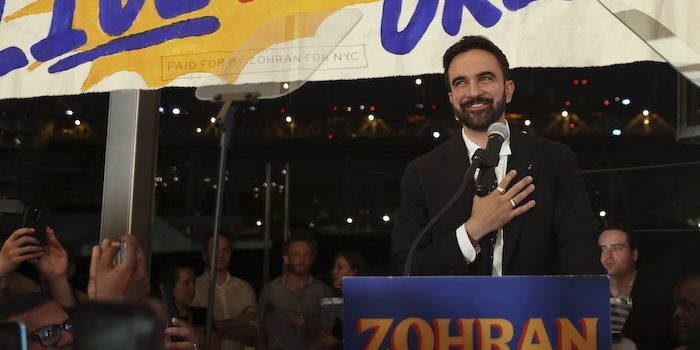
(Chris Wade, The Center Square) New York City Mayor Zohran Mamdani’s controversial pied-à-terre tax on second homes is in limbo after a state judge temporarily blocked its rollout and the city appealed that ruling. 

The ruling issued Monday by state Supreme Court Judge Wayne Ozzi ordered the city to take down a public list of 900,000-plus homes that could be hit with the new tax on homes worth more than $5 million. It also barred the city from collecting the tax from 17,000 property owners who were later flagged as subject to the new levy.

Hours later, the Mamdani administration appealed the ruling and secured a decision that keeps the legal fight active ahead of oral arguments scheduled for August 31. The move blocks the lower court’s order from taking effect until the city’s appeal is heard.

“The City will continue with the pied-à-terre’s implementation,” Mamdani spokesman Matt Rauschenbach said in a statement.

The lawsuit was filed Monday by several New York City residents — Simon Hedley, Rachel O’Brien and Carmine Morano — who alleged in the complaint that the city wrongly flagged their primary residences as subject to the tax. 

Randy Mastro, a former first deputy mayor who is representing the property owners, claimed in court filings that the city’s decision to release a list of nearly 1 million properties that might be subject to the new pied-à-terre tax set off a “panic” among homeowners. 

“We are very gratified by the judge’s decision, which has vindicated the rights of hundreds of thousands of New York City homeowners who were subjected to a process they never should have been a part of in the first place,” Mastro said in a statement following Monday’s ruling.

The new tax calls for charging eligible property owners a 4% surcharge on one- to three-family second homes valued over $5 million and on co-ops and condos valued at $1 million.

The Mamdani administration estimates the levy will drum up more than $500 million a year for the city to help plug gaps in the budget and fund the mayor’s lefty agenda.

Mamdani has defended the tax, a key plank of his “tax the rich” campaign, saying it will only impact wealthy owners who he has claimed are sitting on “empty properties” as they “reap the huge financial rewards” of holding real estate in New York City.

Feds Sent to Polls Ahead of Minnesota Primary

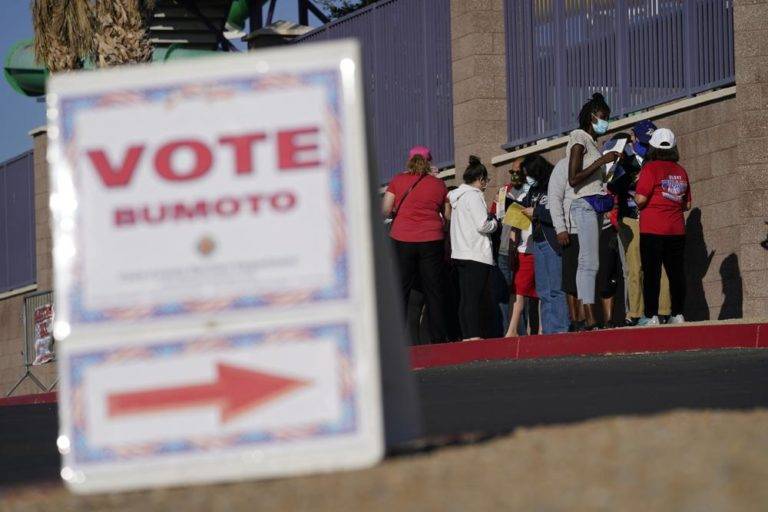
(Andrew Rice, The Center Square) The U.S. Department of Justice stationed federal agents to monitor polling sites in two Minnesota counties ahead of Tuesday’s primary elections.

The Justice Department announced Tuesday morning that agents from the Civil Rights Division will monitor polling locations in Hennepin and Ramsey Counties. The two counties account for the majority of Minnesota’s urban centers, including Minneapolis and St. Paul.

Harmeet Dhillon, assistant attorney general in the department’s civil rights division, said deployment of federal agents was part of broader efforts to ensure election integrity across the country.

“The DOJ is committed to nondiscriminatory monitoring throughout the primary and general election seasons,” Dhillon said.

The Justice Department previously deployed staff to Minnesota counties in 2020, 2022 and 2024 federal elections. The agency also deployed agents to monitor polling stations in Michigan during the primary elections in the state last week.

“We’re sending actual DOJ civil rights lawyers,” Dhillon said in a video posted to social media. “They are trained in election law, they are trained in observing these types of things and, who knows, you may even see me at the polls somewhere.”

Minnesota is among six states the Justice Department announced it would observe in July. Arizona, Michigan, Massachusetts, New Hampshire and Virginia are all on the list where federal agents have or will monitor.

Leaders in Minnesota slammed the Justice Department’s plan to deploy agents in the two counties. Minnesota Secretary of State Steve Simon said he plans to have state observers stationed to monitor the extent of federal oversight.

“I certainly understand why reports of agents of the federal government at the polls would alarm people, especially here in Minnesota, given what we have all gone through over the last several months,” Simon said. “I want to say that we aren’t taking anything for granted now.”

Simon said he was unaware of federal agents causing issues at polling places in other states. He emphasized the importance of having additional precautions after the uptick in federal agent presence following Operation Metro Surge, an effort to crack down on illegal immigration in Minnesota’s urban areas.

“They have in other states, to my knowledge, behaved themselves. We don’t have any reason to believe they’ll depart from that record this primary cycle, but we want eyes on the observers, and that’s what we’re aiming to do,” Simon said.

North Carolina Paying Trans Nonprofit Despite Ban

(Johnny Edwards, The Center Square) A southern state that banned medical gender transition for children is funding a network of doctors and therapists who promote some of those same controversial treatments, an investigation by The Center Square found.

A nonprofit called Charlotte Transgender Healthcare Group openly touts puberty blockers and cross-sex hormones as treatment options for minors. And through 2027, it’s receiving $1.28 million from the North Carolina Department of Health and Human Services, records and interviews show.

North Carolina state law strictly forbids body-altering gender treatments on children younger than 18, including puberty blockers, hormones, and surgeries. Health and Human Services says the grant only covers adult mental health services, but it has not explained how that’s being policed. The agency also has not produced any oversight records.

“Under the age of 18,” reads text on the Charlotte nonprofit’s website, “medical providers coordinate care with mental health providers to support youth and families in making decisions about timing, puberty suppression, or initiating hormone therapy.”

Other information on the website suggests children as young as infants and toddlers can be treated with “gender-affirming care” – which critics of pediatric gender medicine say likely means steering them on a pathway where drugs and surgeries would be eventual options. The site even lists healthcare providers for kids.

This story is part of an ongoing investigation into government spending on nonprofits. There has been a lot of controversy over NGO and other nonprofit funding, so The Center Square decided to dig into the data to determine which nonprofits serve legitimate needs and which are a waste or misuse of taxpayer money.

“It’s shocking,” said Tami Fitzgerald, executive director of NC Values Coalition, a conservative Christian nonprofit that was instrumental in passing the 2023 ban law and lobbied for other anti-transgender measures passed by North Carolina. “It’s obvious from the latest bills from the General Assembly on this topic that this violates the spirit of these laws and the public policy of the state.”

Charlotte Transgender Healthcare’s executive director, and several of its doctors, did not respond to interview requests from The Center Square.

Health and Human Services refused to make any of its officials available for interviews, answering questions only through a spokesman, and only by email.

Asked how the state ensures grant money isn’t intermingled with the nonprofit’s outreach to children, spokesman James Werner sent a statement saying in part, “This contract is subject to the Department’s standard business practices for administrative and financial oversight of contractors providing community-based services to help ensure services are provided and funding is used in accordance with the contract terms.”

The contract terms say performance will be monitored through reviews of required reports and site visits. Werner did not respond to a question about whether the state has conducted any such reviews or site visits.

On its website, Charlotte Transgender Healthcare, which also goes by Charlotte Trans Health, describes itself as “a compassionate collective of healthcare providers” dedicated to advancing “health equity for transgender and gender diverse individuals through education, advocacy, and accessible, affirming care.” The site has a “Find a Provider” directory that connects people with doctors, psychologists, therapists, counselors and other health professionals.

“On the website, it was alarming that they actually have a drop-down box for age categories, so you can look up your provider according to what age the patient is,” Fitzgerald said. “And I was shocked to see that they have children included there, because we have outlawed gender transitioning for minors in North Carolina.”

Fifty-three healthcare professionals in the directory, including four medical doctors, have profiles saying they have “gender-affirming care competency” for patients ages 17 and younger. Twenty-one say they see patients 10 and younger. Six, including one medical doctor, say they serve ages 0 to 3.

The nonprofit’s executive director, psychologist Holly Savoy, declined to explain to The Center Square what kind of transgender treatment toddlers and elementary school-aged children might receive.

Savoy’s own website profile says she has advanced competency for treating youth ages 11 to 17, plus adults over 18. Among her listed services are “Transition/Affirmation Letters for Hormone Therapy,” “Transition/Affirmation Letters for Surgery,” and “Therapy for Parents.”

Savoy did not respond to phone messages or an email with detailed questions.

North Carolina’s Republican-controlled General Assembly passed its ban on child gender transition treatments, House Bill 808, in 2023. The governor at the time, Democrat Roy Cooper, vetoed the bill, but the legislature overrode him by a vote of 27-18 in the Senate and 74-45 in the House.

That put North Carolina among 27 states that have enacted laws which, to varying degrees, ban youth access to medical gender treatments.

The new law made it illegal for medical professionals to perform surgeries on minors or prescribe puberty-blocking medications or hormones. The penalty is revocation of medical license, and the law lengthened civil liability for harm to patients to 25 years past their 18th birthday, or four years after discovery of injury.

In a clause aimed at preventing the state health insurance plan from paying for any such procedures, the bill added that, “No State funds may be used, directly or indirectly, for the performance of or in furtherance of surgical gender transition procedures, or to provide puberty‑blocking drugs or cross‑sex hormones to a minor.”

The very next year, with the executive branch still under Gov. Cooper, the North Carolina Department of Health and Human Services took applications for community-based mental health block grants. The grants come from a pot of federal funds from the U.S. Substance Abuse and Mental Health Services Administration, or SAMHSA, which gives North Carolina about $29 million per year, Werner, of Health and Human Services, told The Center Square in emails.

Charlotte Trans Health received three years of funding, starting with $780,000 paid in fiscal years 2025 and 2026, and another $500,000 slated for payment in 2027, Werner said.

“It’s very simple,” Fitzgerald, of the Christian conservative group, said of the contradiction between state law and the grant award. “We have a state legislature that is conservative and really has followed and sought to advance family values. And we have a governor that is a radical and has sought to advance every LGBT cause known to man,” which she said goes for both former Gov. Cooper and current Gov. Josh Stein.

The payments represented a significant budget boost for the nonprofit. According to its publicly available Form 990s, revenues totaled $226,030 in 2023 and $737,611 in 2024. It’s unclear if any portion of the North Carolina mental health services grant is included in the 2024 figure. The 990 says government grants totaled $573,234 that year, or 78% of revenue.

Asked if the state grant complies with state law against gender transition treatments, Werner said in an email that the nonprofit has a contract with a limited scope of services—and it’s only for treating adults.

The contract, which he provided, lists nine performance requirements. Among them: linking 60 people to support services for housing, employment, and financial assistance; providing 105 individual counseling sessions and 24 group counseling sessions; distributing educational materials to improve healthcare providers’ understanding of transgender and gender-diverse issues; and buying $30 gift cards for community advisory board members who take part in focus groups to give feedback on the nonprofit’s services.

“Funds allocated to Charlotte Transgender Healthcare Group are used for adult mental health services including case management, psychotherapy, and linkage to medical services limited to mental health counseling,” the department’s statement said.

There’s a potential compliance issue, though, when it comes to President Trump’s executive orders concerning federal funds, SAMHSA spokeswoman Danielle Bennett told The Center Square in an email.

“SAMHSA funds, including those provided to subrecipients of SAMHSA grants, cannot be used for any activities that violate federal law or the requirements set forth under applicable Executive Orders,” she wrote. “This includes a prohibition on the use of funds to promote gender ideology or the provision of gender transition services.”

An executive order from January 2025, called “Defending Women From Gender Ideology Extremism and Restoring Biological Truth to the Federal Government,” contains the directive, “Federal funds shall not be used to promote gender ideology,” and that each agency must “ensure grant funds do not promote gender ideology.” The directive has come under legal challenge, though, with injunctions issued in Washington and Oregon.

The Center Square asked North Carolina Health and Human Services if the grant to Charlotte Trans Health conforms to the president’s order.

“The Department’s contract with Charlotte Transgender Healthcare Group complies with all applicable federal and state laws and regulations, including those addressing the use of federal funds,” the statement said.

Several profiles on the Charlotte Trans Health website that indicate a willingness to work with children belong to medical doctors.

Obstetrician and gynecologist Erin Cook’s page says she has advanced-level transgender operation competency for serving children and youth ages 4 to 17. One of her listed services is “Hormone Replacement Therapy for Teens.”

The page for family physician Carson Rounds says he has advanced transgender operation competency for youth ages 11 to 17, and intermediate competency for children 4 to 10. His list of services also includes hormone replacement therapy for teens, as well as “Puberty Suppression.”

One medical doctor’s profile on the site, for family medicine physician Rhett Brown, says he has advanced competency for ages 0-3, as well as youth up to age 17.

None of those doctors responded to messages from The Center Square seeking input for this story.

The website also has an “important notice” at the bottom saying it’s “not designed to promote or endorse any medical or healthcare practice, program, or agenda, or any medical tests, products, or procedures. Nothing on this website should be construed by you to be a promotion, endorsement, or advertisement for any particular practice, provider, or procedure.”

Leor Sapir, a senior fellow at the Manhattan Institute who has studied pediatric gender medicine in depth, skimmed the group’s website and said it’s not immediately clear if Charlotte Trans Health is performing any treatments on children that are banned by state law.

“Either they’re speaking out of both sides of their mouth, or they’re being deliberately vague,” he said.

Oregon pediatrician Julia Mason, a founding board member of the Society for Evidence Based Gender Medicine, called claims of competency in advising parents of babies and toddlers “disturbing.”

There are no medical interventions normally offered to infants and prepubescent children, according to Mason, whose nonprofit argues that the use of hormones, puberty blockers and surgeries to treat youth with gender dysphoria lacks sufficient evidence of safety or efficacy.

The Charlotte nonprofit’s website is likely alluding to socially transitioning young children, she said, which could mean telling them they were born in the wrong body and changing their names, hairstyles, clothing and pronouns to match the opposite sex.

“Social transition concretizes an identity that otherwise could have been temporary,” Mason said. “So kids who are young enough to believe in Santa Claus will truly believe the parents and adults in their life who tell them that when they’re older, the doctors will change their sex.”

The Center Square reached out to several pro-LGBTQ groups for this story, but received no responses from ACLU of North Carolina, Equality North Carolina, Campaign for Southern Equality, Lambda Legal or the World Professional Association for Transgender Health.


Enshrining Voter ID on Amendment on Ohio’s November Ballot

(David Beasley, The Center Square) Showing a government-issued photo identification before voting could become enshrined in Ohio’s constitution, even though it is already state law.

The state ballot board has approved Issue 3, which was passed by the Ohio General Assembly, to be on the ballot in November.

“If approved, the proposed amendment would require Ohio voters to present a government-issued photo identification in order to vote,” a summary of the amendment states. “To vote in person, voters would be required to present one of the specific types of government-issued photo identification listed. In-person voters who do not possess photo identification because of a sincere religious objection to being photographed would be permitted to provide an alternative verification of their identity, as provided by Ohio law.”

This is the only amendment voters will be asked to decide in November, Ben Kindel, communications director for the Ohio Secretary of State, told The Center Square.

“The deadline has passed to place any additional issues on the ballot,” Kindel said.

Voter ID is already required by state law, even if it is not in the state constitution.

But some legislators worried a future General Assembly could revoke the voter ID requirement, so they supported a constitutional amendment as a safeguard.

“Having voter ID in the constitution is about ensuring long-term security in our elections,” Sen. Jane Timken, R-Jackson Township, said in presenting the bill to the Senate. “Photo ID for voting helps secure the bedrock democratic principle of one person, one vote.”

She pointed to Virginia as a reason for enshrining the voter identification requirement in the constitution.

“Virginia indeed passed photo ID laws, however, after several years of operation, surviving judicial challenges, Virginia repealed its photo ID requirement in 2020 after a single seat in the General Assembly flipped,” the senator said.

But Sen. Bill DeMora, D-Columbus, called the proposed constitutional amendment a political ploy to “prop up” the Republican nominee for governor, Vivek Ramaswamy.

“This resolution does not protect Ohioans because it’s already the law in Ohio,” DeMora said.

Trump Responds To Iran’s Calls for Compensation for War Damages To Open Strait of Hormuz

(Dave DeCamp, Antiwar.com) President Donald Trump on Monday responded to an Iranian official calling for the US to provide compensation for damage caused by the war as a condition for the opening of the Strait of Hormuz, saying that instead, Iran should pay the US.

“I see that Representatives of the Islamic Republic of Iran are asking for compensation for the damage done to them during the last five months Military Conflict (started because, THEY WILL NOT HAVE A NUCLEAR WEAPON), even though it was never mentioned in any of our negotiations or meetings!” the president wrote on Truth Social.

Trump added that he was now “likewise demanding compensation from Iran, for all of the people that they have killed and gravely wounded with their roadside bombs and many conflicts” and falsely linked Iran to the 2000 bombing of the USS Cole off the coast of Yemen, an attack that, according to the FBI, was carried out by al-Qaeda.

Trump said that Iran should also pay compensation to the families of “thousands of innocent protestors” and repeated the claim that Iranian security forces killed 52,000 people during the unrest in January, a number that has no basis.

The Iranian government has acknowledged that more than 3,000 people, including over 200 Iranian security personnel, were killed. The HRANA, a US-based and US-funded NGO, put the number at more than 7,000 people, including Iranian security personnel, and has said it is investigating more reported deaths, but nowhere near the number Trump claims.

In a follow-up post, Trump said that Iran should also be “responsible for the damages and death caused to the people of Lebanon, Syria, Yemen, and Gaza.”

Notably missing from Trump’s post was any threat to launch strikes against Iran, as the president has signaled that, for the time being, he’s content with the status quo, which involves the US enforcing a blockade on Iranian ports and maintaining economic pressure on Iran.

This article originally appeared at Antiwar.com. 


Hegseth Says Congress Should Pay Tribute to Lindsey Graham by Approving $1.5 Trillion Military Budget

(Dave DeCamp, Antiwar.com) US Secretary of War Pete Hegseth called on Congress to approve his request for a $1.5 trillion military budget for 2027 during remarks at a ceremony in South Carolina for the renaming of Joint Base Charleston to Joint Base Lindsey Graham in honor of the late Sen. Lindsey Graham, who died unexpectedly last month.

Hegseth claimed that before he died, Graham told him that the $1.5 trillion request was the best military budget he’d ever seen.

“As we gather here today, the War Department is seeking a historic generational investment of $1.5 trillion for American warriors. And Lindsey himself said, to me in his office, ‘this is the best military budget I’ve seen since I’ve been in Congress,’” Hegseth said, according to a transcript released by the Pentagon.

“This department pays tribute to Lindsey Graham in the naming of this base, but there could be no greater tribute than Congress could give than to invest in our warriors for the full $1.5 trillion,” he added. Hegseth said that he had known Graham for nearly 20 years, going back to when he was a member of a veterans group pushing for the US to escalate the war in Iraq.

“Nineteen years ago, young lieutenant, uh, First Lieutenant Pete Hegseth came back from Iraq and was a part of a veterans’ organization called Vets for Freedom that believed in the surge in Iraq and advocated for the troops on the ground,” he said. “The first and only senator willing to meet with First Lieutenant Pete Hegseth and nowheresville Vets for Freedom was Sen. Lindsey Graham.”

The event came as Hegseth has been struggling to get support from Congress for the full $1.5 trillion military budget, a nearly 50% increase from this year’s budget. The Trump administration seeks to reach that figure through a $1.15 trillion National Defense Authorization Act (NDAA) plus a supplemental funding bill worth about $350 billion. Hegseth said that he and Graham discussed the plan just a week before the senator’s death.

“He looked at me and said, how’s $355 billion sound? He wanted to give even more than $350 billion. He wanted to ensure our military was as equipped as humanly possible, because he was thinking of places like this one right here,” Hegseth said.

Hegseth was joined at the ceremony by Darline Graham, Lindsey Graham’s sister, who has taken over his Senate seat and is expected to pursue the same policies as her brother. Lindsey Graham was notorious for his hawkishness, and following his death, footage came out of him laughing and celebrating days after the start of the US-Israeli bombing campaign in Iran, a war he had been pushing for years.

This article originally appeared at Antiwar.com.