Governor Declares Emergency Over Wildfire Near Yosemite

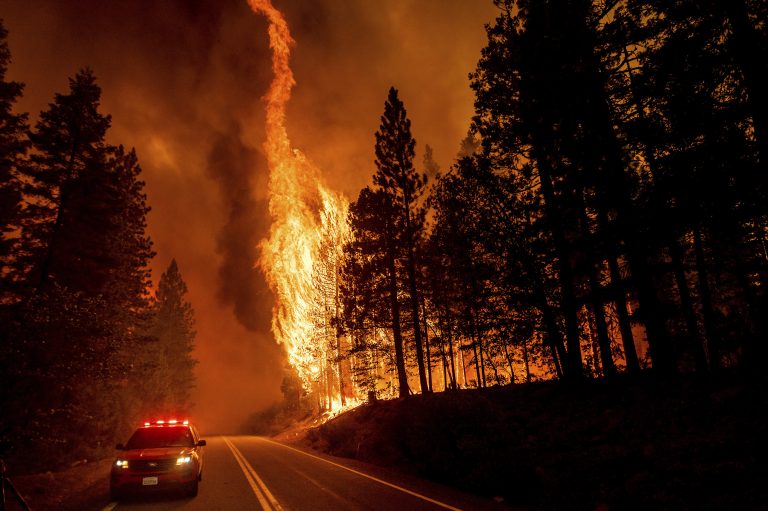
(Headline USA) A fast-moving brush fire near Yosemite National Park exploded in size on July 23 into one of California’s largest wildfires of the year, prompting evacuation orders for thousands of people and shutting off power to more than 2,000 homes and businesses.

The Oak Fire started on July 22 afternoon southwest of the park near the town of Midpines in Mariposa County and by July 23 had grown to nearly 19 square miles, according to the California Department of Forestry and Fire Protection, or Cal Fire.

It erupted as firefighters made progress against an earlier blaze that burned to the edge of a grove of giant sequoias in the southernmost part of Yosemite Park.

Evacuation orders were put in effect on July 23 for over 6,000 people living across a several-mile span in the sparsely populated, rural area, said Daniel Patterson, a spokesman for the Sierra National Forest.

Gov. Gavin Newsom proclaimed a state of emergency for Mariposa County on July 23 due to the effects of the Oak Fire.

More than 400 firefighters were battling the blaze, along with helicopters, other aircraft and bulldozers, facing tough conditions that included hot weather, low humidity and bone-dry vegetation caused by the worst drought in decades, Patterson said.

“Explosive fire behavior is challenging firefighters,” Cal Fire said in a statement on July 23 that described the Oak Fire’s activity as “extreme with frequent runs, spot fires and group torching.”

By July 23 morning, the fire had destroyed 10 residential and commercial structures, damaged five others and was threatening 2,000 more structures, Cal Fire said.

The blaze prompted numerous road closures, including a shutdown of Highway 140 between Carstens Road and Allred Road — blocking one of the main routes into Yosemite.

Scientists have said the weather will continue to be more extreme and wildfires more frequent, destructive and unpredictable.

“The fire is moving quickly. This fire was throwing embers out in front of itself for up to 2 miles yesterday,” Patterson said. “These are exceptional fire conditions.”

The cause of the fire was under investigation.

Pacific Gas & Electric said on its website that more than 2,600 homes and businesses in the area had lost power as of July 22 afternoon and there was no indication when it would be restored.

“PG&E is unable to access the affected equipment,” the utility said.

A shoeless older man attempting to flee the blaze on July 22 crashed his sedan into a ditch in a closed area and was helped by firefighters.

He was safely driven from the area and did not appear to suffer any injuries. Several other residents stayed in their homes on July 22 night as the fire burned nearby.

Meanwhile, firefighters have made significant progress against a wildfire that began in Yosemite National Park and burned into the Sierra National Forest.

The Washburn Fire was 79% contained on July 22 after burning about 7.5 square miles of forest. It was one of the largest fires of the year in California, along with the Lost Lake Fire in Riverside County which was fully contained in June at 9 square miles.

The fire broke out July 7 and forced the closure of the southern entrance to Yosemite and evacuation of the community of Wawona as it burned on the edge of Mariposa Grove, home to hundreds of giant sequoias, the world’s largest trees by volume.

Wawona Road is tentatively set to reopen on Saturday, according to the park website.

Adapted from reporting by the Associated Press
Parents and 6-Year-Old Girl Fatally Shot in Tent at Iowa Park

(Headline USA) A 9-year-old boy who was camping at an Iowa state park with his parents and 6-year-old sister survived a shooting that killed the rest of his family.

The Iowa Department of Public Safety identified the victims as Tyler Schmidt, 42; his 42-year-old wife, Sarah Schmidt; and their 6-year-old daughter, Lula Schmidt, all of Cedar Falls, Iowa.

Their bodies were found in their tent early on July 22 at the Maquoketa Caves State Park Campground, about 180 miles east of Des Moines.

Authorities said the suspected gunman, 23-year-old Anthony Sherwin, was found dead on July 22 in a wooded area of the park with a self-inflicted gunshot wound.

Mitch Mortvedt, assistant director of the Department of Public Safety’s division of criminal investigation, told The Associated Press on July 23 that the motive for the attack was still unknown.

“We don’t know what led up to this, what precipitated it,” he said, adding that so far, “the investigation has not revealed any early interaction between the Schmidt family and him.”

Adam Morehouse, Sarah Schmidt’s brother, said the family had no connection to Sherwin and he believed it was a “completely random act.”

Cedar Falls Mayor Rob Green, who said he is a neighbor of the Schmidts, posted on Facebook on July 22 that the couple’s 9-year-old son, Arlo, “survived the attack, and is safe.”

Morehouse confirmed Arlo was on the family’s camping trip, but said he did not know exactly where the boy was at the time of the shooting or know specifics about how it unfolded.

“He is with family and he is OK, but I have not had any interaction with him,” Morehouse said on July 23. “As far as I know, he was uninjured physically.”

By the evening of July 23, more than $75,000 had flowed into a GoFundMe page created for Arlo.

The page, organized by a cousin, Beth Shapiro, said: “Arlo is a strong boy, surrounded by family and friends who are supporting him as best we can.” The page says the fund will help Arlo now, and help fund his future education.

The Des Moines Register reported that Sherwin was from La Vista, Nebraska. La Vista Police Chief Bob Lausten told the newspaper that Sherwin lived in an apartment complex with his parents and had no history of criminal conduct.

“The best way to describe all four of them was the quintessential Midwestern family. They gave everybody everything they possibly could,” Morehouse said.

“They loved family… They enjoyed the outdoors, enjoyed the hiking — and this is just a question mark of ‘Why that campground and that campsite on that night?’”

Adapted from reporting by the Associated Press
Ducey Appeals Ruling Against Arizona’s Limiting COVID Relief to Open Schools

(Headline USA) Gov. Doug Ducey is appealing a federal judge’s decision blocking his decision to withhold federal COVID-19 relief to unopened schools.

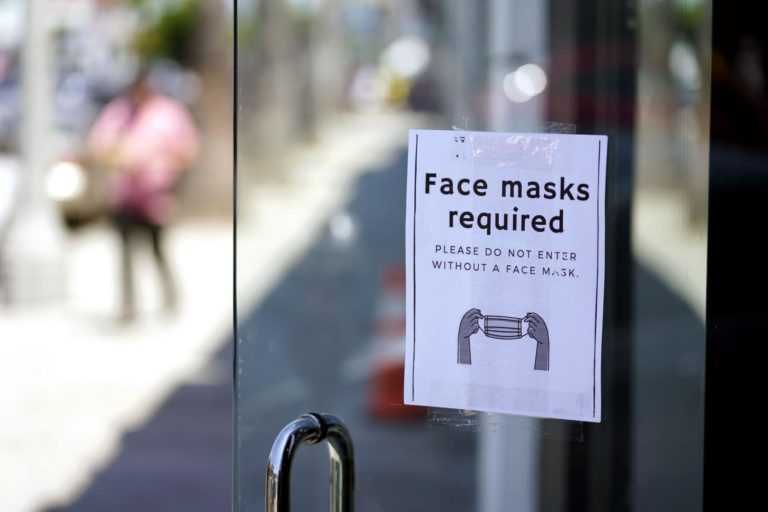
While Arizona had lifted all mask mandates in April 2021, some schools still maintained a mask requirement.

To incentivize the removal of classroom mask policies, Ducey restricted a $163 million aid package to maskless, opened schools. The aid amounts to $1,080 per student.

The state funding came from the $2 billion in federal stimulus money from the American Recovery Plan Act.

“Safety recommendations are welcomed and encouraged – mandates that place more stress on students and families aren’t,” Ducey said last year.

“These grants acknowledge efforts by schools and educators that are following state laws and keeping their classroom doors open for Arizona’s students.”

On Jan. 6, U.S. Treasury Secretary Janet Yellen issued an amendment in response, “Recipients may not use funds for a program that undermines practices included in the CDC’s guidelines and recommendations for stopping the spread of COVID-19.”

After multiple letters by the Treasury warning of a rescinding of funds, Gov. Ducey filed a complaint on Jan. 21.

Plaintiff Gov. Ducey cited the initial requirement of the American Recovery Plan Act, “to respond to the public health emergency with respect to the Coronavirus Disease 2019 or its negative economic impacts, including assistance to households, small businesses, and nonprofits, or aid to impacted industries such as tourism, travel, and hospitality…”

The complaint was struck down on July 19 by United States District Judge Steven Logan. Court documents show Ducey appealed the ruling on July 22.

Adapted from reporting by the Center Square

Poll: Biden Approval Rating Hits New Low

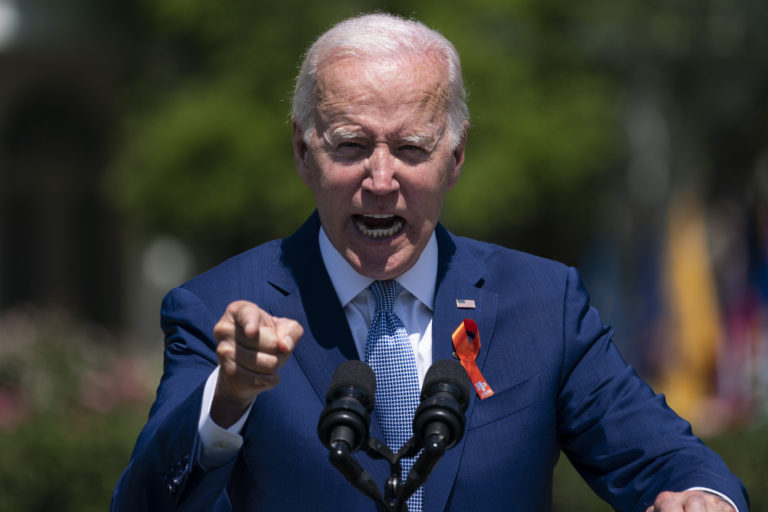
(Headline USA) President Joe Biden’s approval rating has hit another new low.

The Quinnipiac University poll released on July 20 showed 60% of surveyed Americans disapprove of the job Biden is doing while only 31% approve, the lowest Quinnipiac has found since Biden took office.

“Two-thirds of Americans (67%) say the country is worse off today than it was a year ago, while 26% say the country is better off and 4 percent volunteer that it is the same,” Quinnipiac said.

Support varies by political affiliation, with 94% of Republicans and 67% of Independents disapproving of Biden’s job as president while 71% of Democrats approve.

On several key issues, Biden’s approval is also low. According to the survey, Biden has 36% approval on his handling of foreign policy and 28% approval on the economy. Other issues, like his COVID-19 response, are higher at 50% approval.

The poll reported that Republicans and Democrats are virtually tied for who should take control of Congress as the 2022 midterm elections draw nearer.

“Among registered voters, if the election were held today, 45% say they would want to see the Democratic Party win control of the United States House of Representatives, while 44% say the Republican Party, and 11% did not offer an opinion,” the group said.

“Voters are evenly split on which party they would want to see win control of the United States Senate with 45% saying the Democratic Party, 45% saying the Republican Party, and 10% not offering an opinion.”

For the key Independents demographic, inflation is top of mind. The latest U.S. Bureau of Labor Statistics data showed prices topping 40-year highs.

“Asked to choose the most urgent issue facing the country today, inflation (34%) ranks first followed by gun violence (12%). No other issue reached double digits,” Quinnipiac said. “Among independents, inflation (41%) ranks first with no other issue reaching double digits.”

Adapted from reporting by the Center Square

Lawmakers Coordinate Effort to Stop Blacklisted Chinese Firms from Receiving U.S. Tax Dollars

0

(Headline USA) Several Republican senators introduced new legislation this week that would prevent U.S. taxpayer dollars from going to certain Chinese firms.

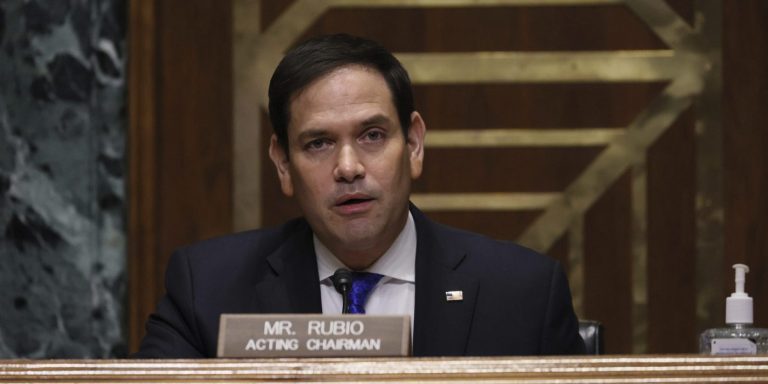
Sen. Marco Rubio, R-Fla., introduced the Turn Off the Tap Act along with Sen. Marsha Blackburn, R-Tenn., and Sen. Rick Scott, R-Fla, The Center Square reported.

The bill would stop any federal funds from going to companies that have been blacklisted by the Department of Commerce’s Entity List and the Non-SDN Chinese Military-Industrial Complex Companies List.

“It’s not only dangerous to fund Chinese businesses with American taxpayer dollars, but it’s also dumb,” Rubio said. “This bill would prohibit federal funds from bankrolling Chinese and other firms we know are not acting in our best interest.”

Lawmakers also argued China is taking advantage of the U.S. while not addressing its human rights violations.

“We know Communist China will stop at nothing to try and exploit American markets and take advantage of American businesses operating within the genocidal regime’s borders,” Scott said. “The Turn Off the Tap Act will stop the flow of hardworking Americans’ dollars to countries like Communist China who want to hurt our economy. This legislation is a no-brainer, and I urge the support of my colleagues for its quick passage.”

The federal funding goes to these companies via federal grants or contracts which, aside from the national security concerns, threatens American businesses since Chinese companies have a history of predatory investment and stealing U.S. intellectual property.

Experts say Chinese companies often use cultural exchange programs or shell companies to access U.S. investment.

“It is unconscionable that the Biden administration has enabled the Chinese Communist Party to rake in cash from American taxpayers,” Blackburn said. “Rather than letting Joe Biden award grants or sign federal contracts that undermine the United States, I am cosponsoring legislation to cut our adversaries off. The White House needs to stop emboldening the New Axis of Evil and start putting America first.”

Rep. Claudia Tenney, R-N.Y., introduced companion legislation in the House with the same goal.

“The American people’s tax dollars should not be invested in blacklisted Chinese companies,” she said. “Yet today, because of weak policies in Washington, they continue to be. It’s time we cut off the tap.

“The Chinese Communist Party’s predatory trade policies, significant human rights abuses, and threats to American security are absolutely unacceptable.”

Sen. Josh Hawley, R-Mo., introduced a similar bill Monday, the “Time to Choose Act,” which would “prohibit the Department of Defense and other federal agencies from contracting with consulting firms like McKinsey & Company who are simultaneously providing services to the Chinese government or its affiliates.”

Hawley said, “The fact that these consultants are awarded huge contracts by our Defense Department and other federal agencies, while they are simultaneously working to advance China’s efforts to coerce the United States is appalling and completely unacceptable. It is well past time that we hold these companies accountable and prohibit this kind of conflict of interest in government contracting.”

Zeldin’s Attacker Claims He ‘Did Not Know Who’ Zeldin Was

0

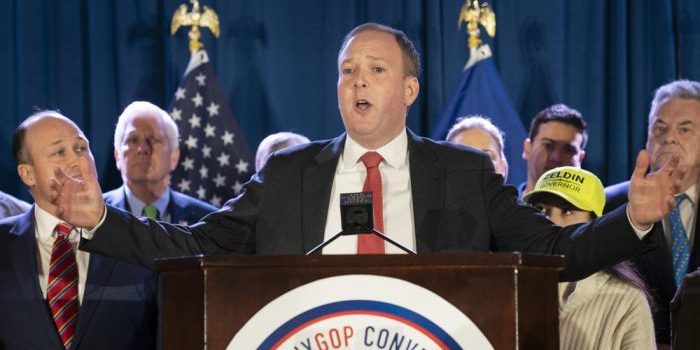
(Headline USA) A man accused of attacking New York GOP gubernatorial candidate Lee Zeldin during a recent campaign rally told investigators he’d been drinking that day and didn’t know who the congressman was, authorities said as the man was arrested on a federal assault charge Saturday.

David Jakubonis, 43, made an initial court appearance Saturday before a federal magistrate judge in Rochester, New York, on a single count of assaulting a member of Congress with a dangerous weapon. The charge carries a potential maximum penalty of 10 years in prison.

He was ordered held until a bail hearing in federal court Wednesday. Prosecutors said he should remain detained as a flight risk and is dangerous, according to a court filing.

Assistant federal public defender Steven Slawinski, representing Jakubonis, said in an email to The Associated Press that he planned to ask the judge to release Jakubonis from custody.

Jakubonis was arraigned Friday on a separate state charge of attempted assault in the second degree and was released by a local judge.

That prompted criticism from Zeldin and other Republicans who held it up as an example of the need to reform New York’s bail laws, something Zeldin has called on Democratic Gov. Kathy Hochul to toughen.

A 2019 bail reform law in New York eliminated pretrial incarceration for people accused of most nonviolent offenses.

The law gives judges the option to set bail in nearly all cases involving violent felonies, but it has exceptions for certain attempted felonies like attempted assault.

The federal criminal complaint filed Saturday alleged Jakubonis, an Iraq War veteran, told investigators he was drinking whiskey on Thursday before he went onstage as Zeldin addressed a Veterans of Foreign Wars post in the town of Perinton to ask the speaker if he was disrespecting veterans.

Jakubonis “did not know who the speaker was or that the speaker was a political person,” according to the complaint.

The complaint added that when Jakubonis watched video of Thursday evening’s incident he told investigators he “must have checked out” and that what was depicted in the video was disgusting.

According to video of the attack, Jakubonis raised his arm toward Zeldin as he held a keychain with two sharp points.

The congressman from Long Island then grabbed Jakubonis’ wrist and the two tussled to the ground as others jumped in to help. Zeldin, who also served in the military, suffered a minor scrape.

Ford Laying Off Much of Salaried Staff to Pay for EV Transition

0

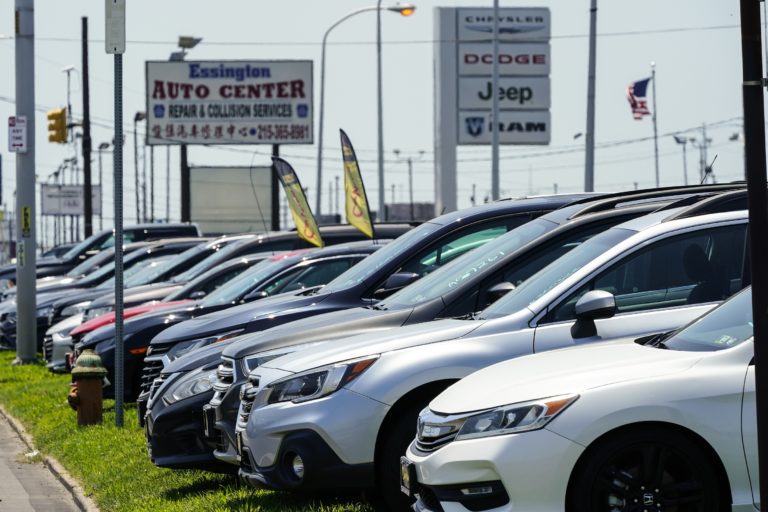
(Headline USA) Less than two months after announcing it would apply $134 million of taxpayer dollars for retooling two Michigan plants, news reports this week surfaced that revealed Ford Motor Company would lay off approximately 8,000 salary workers.

According to The Center Square, the job cuts are part of the automaker’s effort to liberate $3 billion of corporate operational costs from the its internal combustion engine business. The company would then transfer savings garnered from the layoffs to build electric Ford F-150 Lightning and Ranger pickups at Ford’s Michigan Assembly Plant in Wayne, a new Mustang coupe at Flat Rock Assembly Plant, and a $35 million Ford Customer Service Division packaging facility in Monroe.

Ford and the United Automotive Workers union touted in their joint June 2 announcement that the company’s $2 billion investment in Michigan, including the $134 million of taxpayer incentives, would create 3,200 union jobs in the state. Ford currently employs 31,000 salary workers.

“Ford was just given another $135 million of taxpayer dollars after the company promised to add 3,000 new EV jobs in Michigan,” Jason Hayes, environmental policy director at the Mackinac Center for Public Policy, told The Center Square.

“But we learned that Ford is planning to cut 8,000 jobs – about a quarter of its salaried workforce – to help fund its ‘Model e’ electric vehicle unit,” Hayes continued. “We’re told that these habitual multi-million-dollar handouts are the key to job creation and to making Michigan a destination for business.”

“Unfortunately, it’s becoming painfully clear that corporate welfare is more about transferring wealth to a few of the state’s favored companies than anything else.”

After reporting a first quarter loss of $3.1 billion in 2022 compared to the first quarter of 2021, Ford in March revealed its Ford+ plan in which the company would be split between the Ford Blue and Model e divisions. At that time, Ford also announced it was planning on investing $50 billion in its electric vehicles.

In what was characterized widely in the press as a blow to Michigan’s automotive economy, Ford revealed last September it was partnering with SK Innovation to construct an $11.4 billion electric vehicle and battery facilities in Kentucky and Tennessee. The projects, the companies say, are anticipated to create more than 11,000 jobs.

Youngkin: $2 Billion Surplus Sign Virginia Taxes too High

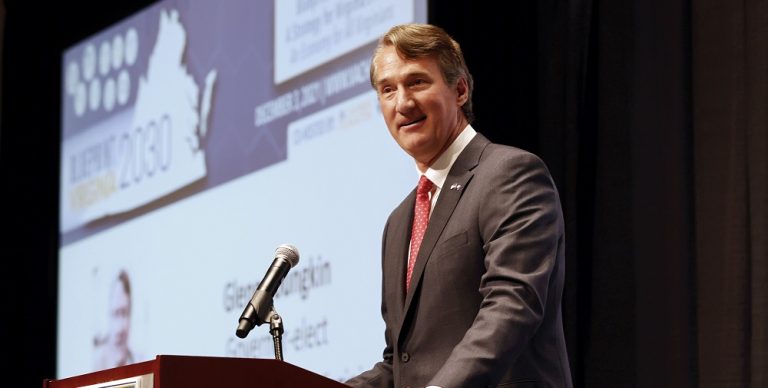
(Headline USA) Virginia recorded a budget surplus of nearly $2 billion at the close of the fiscal year, which Gov. Glenn Youngkin believes is a sign taxpayers are forced to give too much money to the government.

“While I am pleased that our additional revenue can be reinvested in Virginia, the Commonwealth’s general fund revenue surplus confirms that Virginians have been overtaxed for way too long,” Youngkin said in a statement.

“As inflation hits another 40-year high, I’m proud that our budget provides almost $4 billion in tax relief to Virginians, the largest tax relief in the Commonwealth’s history,” the governor added. “We have a lot of work left to do to recover from the pandemic, but Virginia’s economy is demonstrating promising economic and company growth with major companies such as Boeing, Raytheon, and LEGO moving their headquarters to Virginia.”

The 2022 fiscal year ended with a surplus of $1.94 billion in the general fund. Revenue collections rose about 16.3%, which was nearly double the projected 8.5% growth.

Payroll withholding tax and sales tax revenue, which make up more than two-thirds of the state’s revenue, were $193.5 million above revenue, which was 1% above forecasts. Nonwithholding income tax payments were more than 30% above expectations and tax refunds were more than $280 less than expected, which positively affected the state’s bottom line. Corporate income tax collections rose by more than 30%, but were slightly less than the growth expectation.

“Fiscal 2022 was an extraordinary year for revenues and finished strong,” Secretary of Finance Stephen Cummings said in a statement. “However, there are a number of critical economic issues that we will continue to watch very closely as we put our plan together for the future.”

“We are encouraged by the continuing strength of payroll withholding and retail sales taxes, which increased by 9.5 percent, indicating that Virginia’s underlying economic foundation is strong.”

The final budget passed for the next fiscal year includes about $4 billion in tax relief. The relief measures included raising the standard deduction and ending the state’s portion of the grocery tax, but failed to reach Youngkin’s aims of doubling the standard deduction and ending both the state and local portions of the grocery tax.

The governor’s plan to provide gas tax relief through the budget also failed. The larger tax cuts passed the Republican-controlled House, but were blocked in the Democratic-controlled Senate.

Stephen Haner, a senior fellow for state and local tax policy at the free-market Thomas Jefferson Institute, told The Center Square the tax cuts are not reflected in these numbers because they are yet to go into effect, but could help taxpayers next year.

He said the surplus money reflects higher taxes imposed under former Gov. Ralph Northam.

“We started our running tally on former Gov. Northam’s tax increases years ago, predicting the surpluses we are now seeing,” Haner said. “The massive federal largesse since 2020 has certainly accelerated the process, feeding cash to consumers. The 2022 General Assembly did approve several tax reductions, not yet reflected in this data, but odds are it could do more in 2023.

“Whenever government is collecting far more than it needs for the approved programs and a reasonable cushion, taxes by definition are too high.”

From May 2021 to May 2022, nearly 125,000 more Virginians were employed, which was a 3.5% increase year-over-year. However, the commonwealth has failed to recover all of the jobs lost during the COVID-19 pandemic.

Virginia recovered nearly 97% of the jobs lost, but is still more than 133,000 jobs below a full recovery. According to the governor’s office, the state is 47th in the nation in job recovery, but ranked in the top 15 for jobs recovered within the first four months of this year after Youngkin took office.

UN health Agency Chief Declares Monkeypox a Global Emergency

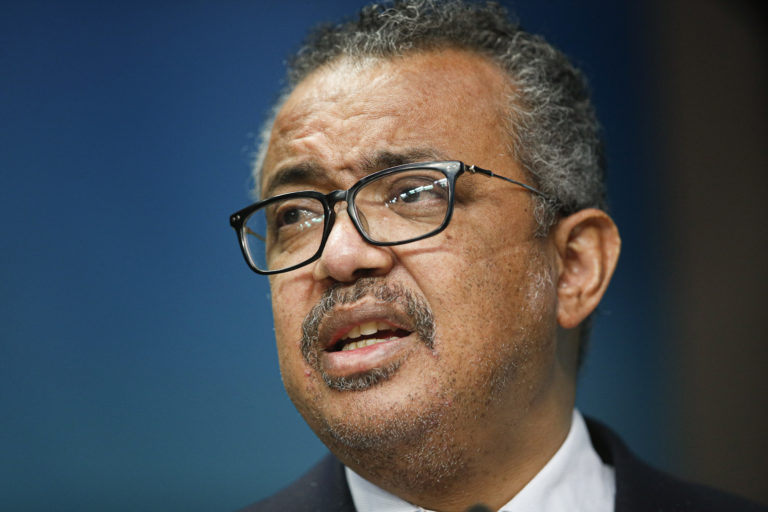
The expanding monkeypox outbreak in more than 70 countries is an “extraordinary” situation that qualifies as a global emergency, the World Health Organization chief said Saturday, a declaration that could spur further investment in treating the once-rare disease and worsen the scramble for scarce vaccines.

A global emergency is WHO’s highest level of alert but the designation does not necessarily mean a disease is particularly transmissible or lethal. Similar declarations were made for the Zika virus in 2016 in Latin America and the ongoing effort to eradicate polio, in addition to the COVID-19 pandemic and the 2014 Ebola outbreak in West Africa.

WHO Director-General Tedros Adhanom Ghebreyesus made the decision on calling monkeypox a global emergency despite a lack of consensus among experts on the U.N. health agency’s emergency committee, saying he acted as “a tiebreaker.” It was the first time a U.N. health agency chief has unilaterally made such a decision without an expert recommendation.

“We have an outbreak that has spread around the world rapidly through new modes of transmission, about which we understand too little,” Tedros said. “I know this has not been an easy or straightforward process and that there are divergent views.”

WHO’s emergencies chief, Dr. Michael Ryan, said the director-general declared monkeypox a global emergency to ensure that the world takes the current outbreaks seriously.

Although monkeypox has been established in parts of central and west Africa for decades, it was not known to spark large outbreaks beyond the continent or to spread widely among people until May, when authorities detected dozens of epidemics in Europe, North America and elsewhere.

Last month, WHO’s expert committee said the monkeypox outbreak did not yet amount to an international emergency, but the panel convened this week to reevaluate the situation.

According to the U.S. Centers for Disease Control and Prevention, more than 16,000 cases of monkeypox have been reported in 74 countries since about May. To date, monkeypox deaths have only been reported in Africa, where a more dangerous version of the virus is spreading, mainly in Nigeria and Congo.

In Africa, monkeypox mainly spreads to people by infected wild animals like rodents in limited outbreaks that typically have not crossed borders. In Europe, North America and elsewhere, however, monkeypox is spreading among people with no links to animals or recent travel to Africa.

WHO’s top monkeypox expert, Dr. Rosamund Lewis, said this week that 99% of all the monkeypox cases beyond Africa were in men and that of those, 98% involved men who have sex with men. Experts suspect the monkeypox outbreaks in Europe and North America were spread via sex at two raves in Belgium and Spain.

“Although I am declaring a public health emergency of international concern for the moment, this is an outbreak that is concentrated among men who have sex with men, especially those with multiple sexual partners,” Tedros said. “That means that this is an outbreak that can be stopped with the right strategies.”

Britain recently downgraded its assessment of monkeypox after seeing no signs of widespread transmission beyond men who are gay, bisexual or have sex with other men and noting the disease does not spread easily or cause severe illness.

The U.S. Centers for Disease Control and Prevention said it was “supportive” of WHO’s emergency declaration and hoped it would galvanize international action to stamp out the outbreaks. The U.S. has reported more than 2,800 monkeypox cases and sent more than 370,000 vaccine doses to U.S. states reporting cases.

Some experts had questioned whether such a declaration would help, arguing the disease isn’t severe enough to warrant the attention and that rich countries battling monkeypox already have the funds to do so. Most people recover without needing medical attention, although the lesions may be painful.

Michael Head, a senior research fellow in global health at Southampton University, said WHO’s emergency declaration could help donors like the World Bank make funds available to stop the outbreaks both in the West and in Africa.

In the U.S., some experts have speculated whether monkeypox might be on the verge of becoming an entrenched sexually transmitted disease in the country, like gonorrhea, herpes and HIV.

“The bottom line is we’ve seen a shift in the epidemiology of monkeypox where there’s now widespread, unexpected transmission,” said Dr. Albert Ko, a professor of public health and epidemiology at Yale University. “There are some genetic mutations in the virus that suggest why that may be happening, but we do need a globally-coordinated response to get it under control.”

Ko called for testing to be immediately scaled up, saying there are significant gaps in surveillance.

“The cases we are seeing are just the tip of the iceberg,” he said. “The window has probably closed for us to quickly stop the outbreaks in Europe and the U.S., but it’s not too late to stop monkeypox from causing huge damage to poorer countries without the resources to handle it.”

WHO’s Tedros called for the world to “act together in solidarity” regarding the distribution of treatments, tests and vaccines. for monkeypox. The U.N. agency has previously said it’s working to create a vaccine-sharing mechanism for the most-affected countries, but offered few details of how it might work. Unlike the numerous companies that made COVID-19 vaccines, there is only one maker for the vaccine used against monkeypox, Denmark’s Bavarian Nordic.

Dr. Placide Mbala, a virologist who directs the global health department at Congo’s Institute of National Biomedical Research, said he hoped any global efforts to stop monkeypox would be equitable. Although countries including Britain, Canada, Germany and the U.S. have ordered millions of monkeypox vaccine doses, none have gone to Africa.

“The solution needs to be global,” Mbala said, adding that any vaccines sent to Africa would be used to target those at highest risk, like hunters in rural areas.

“Vaccination in the West might help stop the outbreak there, but there will still be cases in Africa,” he said. “Unless the problem is solved here, the risk to the rest of the world will remain.”

Adapted from reporting by the Associated Press
First Ever Civics Program Launched in Fla.

(Headline USA) Fla. has launched its first-ever civics program to prepare high school and college graduates for public service.

As Fla.’s K-12 students excel in civics education, according to national studies, the state’s Civic Literacy Excellence Initiative curriculum helped provide the basis for a new national curriculum, and Fla.’s commitment to education freedom is resonating nationwide, according to a poll commissioned by a national teachers’ union.

Three colleges are launching Civics Academies and developing a new Career Pathways for Public Service Initiative to prepare students for public service.

The initiative is expected to launch in August 2023 and 1,000 students are expected to be enrolled in the 2023-2024 academic year.

Polk State College, Broward College and Florida State College at Jacksonville received $6.5 million in grants to develop what the state hopes will become a national model.

Through the Civics Academies, students will learn the importance of public trust, government efficiency, the value of public service and working in local, state or federal government.

“This first-of-its-kind program will teach our future leaders foundational American values as they prepare for careers in public service,” DeSantis said when announcing the program.

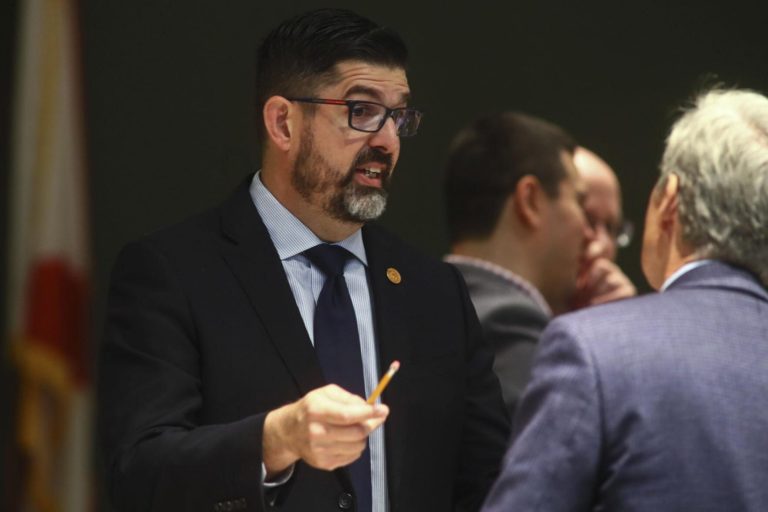
“A strong civics education is a necessity for those entering civil service,” Education Commissioner Manny Diaz Jr., said.

“By providing a pathway for students to pursue careers in the public sector, Fla. is ensuring a smarter, more efficient state and local government for years to come.”

The colleges will work with the Florida Department of Education, Florida College System, school districts and local municipalities and businesses to develop the curriculum led by the Lou Frey Institute.

The institute has already developed a civic assessment currently being administered by institutions across Fla., its director, Stephen Masyada, said.

The new initiative expands on this work “by creating a secondary civic curriculum and accompanied teacher training, which will ensure students graduate high school with the knowledge and skills to succeed in both the public sector and in advanced public service career preparation,” he said.

Students will be able to take courses on public service leadership, careers and communication, experiential learning, attend a research seminar and participate in… paid internship programs with local and state agencies.

They will also be able to take industry certification exams for Project Management (PMP) and SCRUM, Advanced Microsoft Office and Adobe, among others.

The training will help students receive the qualifications they need to apply for the positions of grant manager… policy analyst/government affairs, human resource support specialist, project manager/caseworker… and city/county manager, among others.

Florida’s Civic Literacy Excellence Initiative was first launched last July made possible through $106 million in funding.

The additional $6.5 million has been allocated for the colleges to develop the Civics Academies program and expand partnerships among secondary schools and government institutions.

In 2019, DeSantis set a goal to make Fla. the number one state in the U.S. for workforce education. Since then, Fla. has invested more than $5 billion in workforce education and expanded access to now more than 300 apprenticeship programs.

There are currently more than 770,000 K-12 students enrolled in career and technical education programs, the most in state history.

Adapted from reporting by the Center Square