Judge OKs Conservative Effort to Make New Mexico Voting Records Transparent

(Headline USA) A conservative-backed initiative to publish voter registration records from across the country online for public consumption can move forward over the objections of New Mexico election regulators, a federal judge has ordered in a preliminary opinion.

Albuquerque-based U.S. District Court Judge James Browning issued an order last Friday preventing New Mexico state prosecutors from pursuing allegations of possible election code violations against the creators of VoteRef.com.

The VoteRef.com website provides searchable access to voter registration records by name and street addresses, often indicating when people voted in past elections.

The online records do not say for which candidates the people voted or how they voted on initatives. Party affiliation is listed for voters in some states but not all.

The Voter Reference Foundation that created the website advocates for voting accountability by making voter information more accessible to the public.

Following the ruling, the foundation said it would post New Mexico voter rolls online starting Tuesday.

The decision doesn’t apply to New Mexico voters enrolled in a confidential address program aimed at protecting victims of domestic violence and stalking.

New Mexico election regulators contend that the effort violates state restrictions on the purchase and dissemination of voter registration records—and is likely to discourage voter participation because people may opt out if they know that some of their voting information is being made public.

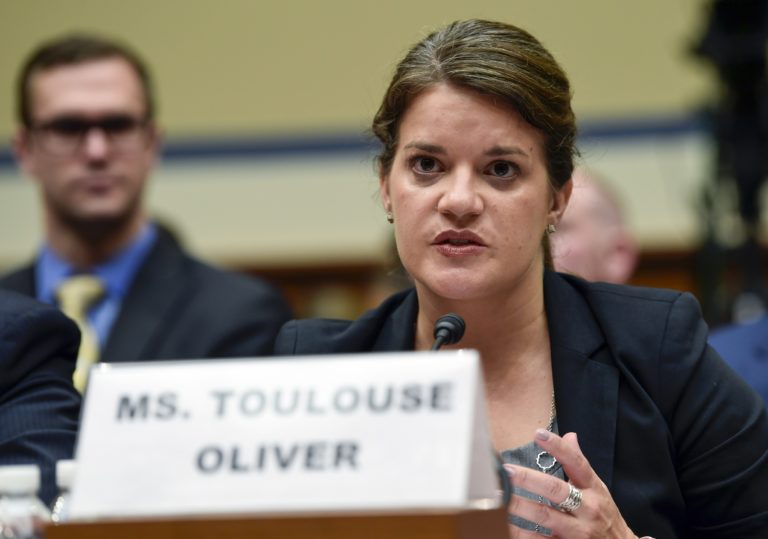
New Mexico Secretary of State Maggie Toulouse Oliver, a Democrat, in March referred the matter the attorney general’s office for possible prosecution of the Voter Reference Foundation, which published New Mexico registration records online at the time after obtaining them through an out-of-state business.

State law restricts the use of voter registration information to political campaigning and election- or government-related activities.

The foundation—backed by former GOP Senate candidate Doug Truax of Illinois—took its New Mexico records offline in response and sued the state in federal court, alleging violations of due process and free speech guarantees.

The judge’s order blocks prosecution while the case advances toward trial and said that the Voter Reference Foundation is likely to prevail in its claim as the victim of viewpoint discrimination by election regulators.

Browning said New Mexico state law “does not prohibit Voter Reference—or any organization—from posting voter data online.”

The creators of VoteRef.com are “substantially likely to succeed on the merits of their claim that the Secretary of State’s referral of Voter Reference to the Attorney General for criminal prosecution and her public statements about the referral are an unconstitutional prior restraint on protected speech,” Browning said.

Truax, founder of the Restoration of America organization that funds VoteRef.com, said his group “won’t be intimidated by politicians who, for some reason, don’t want to give the people of their state easy access to election records they pay for.” He is an advocate for limiting voting access largely to in-person voting on Election Day with photo ID requirements and no same-day registration.

VoteRef.com already publishes voter registration information online from at least 28 states and Washington D.C.

Toulouse Oliver spokesman Alex Curtas called the judge’s opinion a “blow to protecting the privacy rights of every New Mexican voter.”

“The fear now is that voters will be less likely to participate in our elections because their voting information—name, residential address, party affiliation, voting history, and year of birth—will be made easily available online for anyone to obtain and potentially manipulate,” Curtas claimed.

Some New Mexico neighborhoods this year have been the focus of door-to-door canvassing by volunteers for a group called New Mexico Audit Force that is part of an informal effort to review of election irregulatities alleged to have occurred in the 2020 election.

The door knocking—ostensibly to verify individual voter registrations at peoples’ homes—has generated voter intimidation concerns from left-wing activist organizations and counterclaims of threats against canvassers.

Adapted from reporting by the Associated Press

Dems Try to Plant Nazi Cosplayers Outside Conservative Teen Conference

(Tony Sifert, Headline USA) Hoax Nazis, funded by either the Feds or the media, showed up at the conservative Turning Point USA Student Action Summit at the Tampa Convention Center in Tampa Bay, Florida, according to a report from BizPac Review.

The appearance of Nazi flags outside the convention center drew immediate news attention from the Tampa Bay Times, which published a condemnation from the Florida Holocaust Museum.

“The Florida Holocaust Museum calls upon everyone, Jew and non-Jew, regardless of political affiliation, to condemn this blatant antisemitism in the strongest possible terms,” a spokesman said.

Reports from attendees, however, quickly clarified that the Nazi flags were designed to give the event what one reporter called “bad optics.”

“These people show up, give bad optics,” Tayler Hansen of Next News Network said. “I mean, they’re at a damn high school event right now.”

The possible Fed plants also carried signs that read “DeSantis Country,” according to Creative Loafing Tampa Bay.

TPUSA spokesman Andrew Kolvet said that the protestors had nothing to do with TPUSA’s event.

“They have nothing to do with TPUSA, our event, or our students,” Kolvet said. “Our students took the mature route and vacated the space the Nazi flag holders were in.”

According to BizPac Review, the “fed op” was reminiscent of the “Never Trump” Lincoln Project’s “tiki torch” stunt in Charleston, Virginia, during a Glenn Youngkin event.

There, too, the Lincoln Project paid an assortment of staffers to pose as white supremacists who were “all in for Glenn.”

Liz Cheney Promises to Continue Fighting Trump Regardless of Election Results

(Ezekiel Loseke, Headline USA) J6 Inquisition co-conspirator Liz Cheney, RINO-Wyo., promised to CNN on Sunday to continue to fight against a Trump presidency, even if she loses her re-election bid.

“I’m fighting hard,” Cheney declared. “No matter what happens on Aug. 16, I’m going to wake up on Aug. 17 and continue to fight hard to ensure Donald Trump is never anywhere close to the Oval Office ever again.”

Cheney’s primary tilt against Trump-backed candidate Harriet Hageman takes place Aug. 16. CNN has admitted that Cheney only has a 10% chance of winning.

In the interview, Jake Tapper asked Cheney if her participation in the J6 tribunal was worth losing her position representing the people of Wyoming. Cheney replied, “there’s no question. I believe that my work on this committee is the single most important thing I’ve done professionally.”

Cheney reported understanding her obligations in binary terms. She said, if she had to “choose between maintaining a seat in the House of Representatives,” and “ensuring the American people know the truth about Donald Trump,” then she would pick “the truth every single day,” or at least her version of the truth.

Cheney reported feeling that her oath of office meant she “cannot embrace and enable a -president as dangerous as Donald Trump.”

Even CNN’s analysts described the Tapper interview as an attempt to frame the RINO’s very probable primary loss as but one part of a continuing narrative, which tried to paint Cheney in a favorable light.

Although it’s clear that Wyoming Republicans find nothing favorable about Cheney, who has repeatedly fallen prey to her manic case of  Trump Derangement Syndrome over loyalty to ‘her‘ party. The Republican Party of Wyoming voted to stop recognizing Cheney as a Republican.

Cheney responded to her party’s dissatisfaction by sending Wyoming Democrats instructions on how to change parties to vote for her in the up-and-coming primary.

Cheney’s primary is only one of the Republican Party’s opportunities to exorcise RINOs. Alaska has an opportunity to rid the Senate of the perpetual leftward drag of Lisa Murkowski and replace it with Trump-backed candidate Kelly Tshibaka.

Globalist Rockefeller Foundation Plans to Dedicate All Its Resources to Green Agenda

(Headline USA) The Rockefeller Foundation—a far-left “philanthropy” created more than a century ago to help inheritors in one of the world’s wealthiest families shelter their assets—may be pushing for an even bigger power-grab than when the family patriarch once held a monopoly on the U.S. oil industry.

The globalist organization now plans to make the fight against climate change central to all of its work, including its operations and investments.

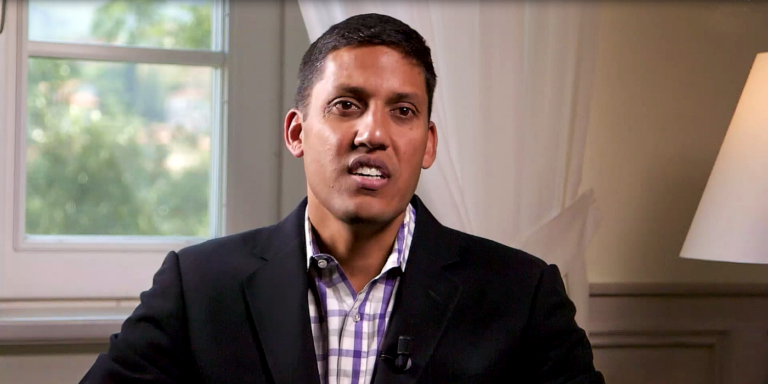
In a public letter released Tuesday, foundation president, Dr. Rajiv J. Shah, acknowledged the “irony” that his organization’s founder John D. Rockefeller “made his fortune by fueling a growing United States with carbon.”

Speaking to the Associated Press in advance of the announcement, Shah said that all institutions that benefited from the development driven by fossil fuels have a responsibility to battle climate change.

“Obviously, an institution like the Rockefeller Foundation has an even higher level of responsibility because we’re an even bigger beneficiary of that process,” he said. The Rockefeller Foundation funds part of the Associated Press’ coverage of climate change.

Despite that earnest insistence, the flip–flop undoubtedly has the wealth and self-interest if its stakeholders above all else. Funneling its funding into the green agenda would seem to be an investment strategy aligned with other billionaire oligarchs—including the Trilateral Commission that grandson David Rockefeller helped found.

“Some even believe we [the Rockefeller family] are part of a secret cabal working against the best interests of the United States, characterizing my family and me as ‘internationalists’ and of conspiring with others around the world to build a more integrated global political and economic structure—one world, if you will,” the former Chase Manhattan CEO wrote in his memoirs.

“If that’s the charge, I stand guilty, and I am proud of it,” Rockefeller added.

The Rockefeller Foundation has been funding environmental extremism for at least a decade, having been linked back to a 2012 closed-door meeting in La Jolla, Calif., where radical activist first devised a plan to harass and sue companies that refused to bend the knee to their demands.

That movement, oftentimes weaponizing indoctrinating children to do its dirty work, has been widely successful and lucrative.

The foundation’s commitment builds on its prior decision to divest its more than $6 billion endowment from fossil fuels starting in 2020, though it still has what Shah called negligible exposure.

The foundation also partnered with the Ikea Foundation and the Bezos Earth Fund to launch an international consortium to accelerate the transition to renewable energy, with all three nonprofits giving $500 million. The consortium has since raised around $10 billion in additional funds, the foundation said.

Partnerships like that reflect the Rockefeller Foundation’s belief that it can alter the course of history by amplifying the scope of its work and its resources—in effect empowering unelected billionaires colluding together to decide the fate of all its citizens.

“The reason for doing this is basically to put down a marker about our ambition, our sense of urgency and our willingness to be transformational in order to deepen our partnerships with others, to try to actually change the course of the climate equation on this planet,” Shah said.

The Rockefeller Foundation plans to take a year to study where it can make the most impactful partnerships and investments.

“Our process is really less about closing, locking ourselves in a closet and reading and modeling spreadsheets, and more about listening to and speaking to leading individuals, institutions, heads of state and the people we ultimately serve,” Shah said. “And understanding how philanthropy can best marshal support for their boldest and most urgent ideas.”

The foundation remains committed to its current grantees, a spokesperson said, adding “Because climate change is the biggest threat of our time, it requires us to remain adaptable and learn alongside our grantees and partners.”

It argues that the new commitment does not represent a change from its mission “to promote the well-being of humanity throughout the world.”

Established in 1913, the foundation focused on public health, including mass vaccination campaigns and the founding of public health authorities around the world.

Its first environment-related program launched in 1969.

The foundation’s current work continues to focus on public health as well as access to renewable energy, economic equity and food access—most appearing to fall in line with key aspects of the leftist agenda.

In 2021, the foundation said it had distributed the equivalent of $22 billion in its history.

However, Shah says a response to the climate crisis is urgent. Data show philanthropic giving to climate-change mitigation represented just 2% of total global philanthropic giving in 2020, according to an analysis by the organization ClimateWorks Foundation.

“Combine that with the lack of action happening at the requisite levels of governments and businesses and then the trillions that need to be unlocked,” said Shawn Reifsteck, vice president for ClimateWorks. “We need essentially more and more funders doing more things at increased levels.”

So-called climatologists have fed the panicmongering as part of a racket to secure more funding for their research.

In April, the Intergovernmental Panel on Climate Change issued a report that warned of an unlivable world unless greenhouse gas emissions are cut faster than countries’ current commitments.

Marion Gee, co-executive director of the extremist Climate Justice Alliance, said it was encouraging that a large foundation would want to make confronting climate change central to their work but said foundations also need to challenge the economic system that perpetuates it, including divestment.

“How are you moving that money out of Wall Street where a lot of the problems that we are facing today have been caused by these corporations,” and moving the funds into local, sustainable economies, Gee asked.

ClimateWorks’ analysis does show foundations donating more to climate-change mitigation on an annual basis in the last five years, with the total increasing from $900 million in 2015 to $1.9 billion in 2020.

“We’re hopeful that that continues and in fact, accelerates,” Reifsteck said.

Adapted from reporting by the Associated Press
Ray Epps’s Lawyer: No ‘Knowledge’ of Fed Agencies He Worked With

(Tony Sifert, Headline USA) The lawyer for unindicted Jan. 6 instigator Ray Epps has never actually denied that his client — who repeatedly urged J6ers to “go in to the Capitol” — was working for the Feds before, during and after he attended the “Stop the Steal” rally in Washington, D.C., in 2021, according to Darren Beattie of Revolver News.

On Twitter as well as on his site, Beattie pointed out that all the denials made so far by Epps lawyer John Blischak, a former FBI agent, have to do with whether his client has operated as an informant for “law enforcement” specifically, and cannot be read as a blanket denial that Epps was working for any federal agency.

In January, for example, Blischak gave an interview to the Epoch Times, in which he claimed to have no knowledge of Epps work on behalf of “any government agency.”

“Asked whether Epps is an asset for any government agency—law enforcement, intelligence, or otherwise—Blischak said, ‘Not to my knowledge,'” the Times reported.

Around the same time — after Beattie’s reporting on Epps had gone viral — the J6 Select Committee issued a statement on Twitter in which House Speaker Nancy Pelosi‘s partisan Inquisition insisted that Epps had never been an informant for a federal law enforcement agency.

“The Committee has interviewed Epps. Epps informed us that he was not employed by, working with, or acting at the direction of any law enforcement agency on Jan 5th or 6th or at any other time, & that he has never been an informant for the FBI or any other law enforcement agency,” the Committee wrote.

“I’ve mentioned how bizarrely legalistic Ray Epps’ denial is, strangely leaning on the term ‘law enforcement,'” Beattie commented.

Beattie’s comment came after the publication of a New York Times “puff piece” which described Epps — who, again, is on video encouraging MAGA protestors to enter the Capitol on J6 — as the “target of a Jan. 6th conspiracy theory.”

It is worth noting that a Google search for the name “Ray Epps” turns up no material from Beattie’s Revolver news site, not even when “revolver” is added to the search.

Whistleblowers: FBI Knowingly Hid ‘Derogatory’ Hunter Biden Files, Claimed Disinfo

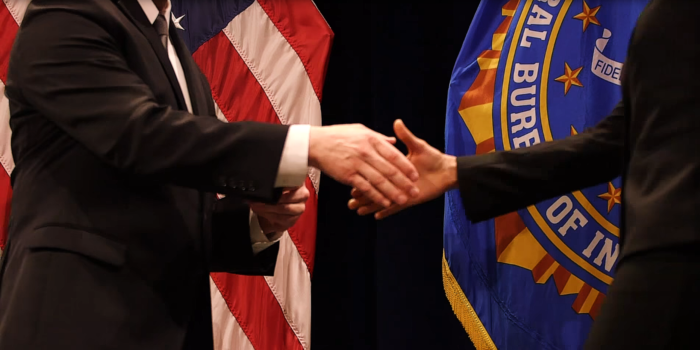
(Tony Sifert, Headline USA) The FBI knowingly mislabeled evidence from Hunter Biden’s “laptop from hell” as “disinformation” in the run-up to the 2020 presidential election, the Washington Examiner has reported.

According to the Examiner, several whistleblowers informed Sen. Chuck Grassley, R-Iowa, that senior FBI officials labeled “verified and verifiable derogatory information on Hunter Biden . . . as disinformation” in October 2020, and went out of their way to quash any further investigation into Biden’s corrupt dealings.

“One of the whistleblowers claimed the FBI assistant special agent in charge of the Washington field office, Timothy Thibault, shut down a line of inquiry into Hunter Biden in October 2020 despite some of the details being known to be true at the time,” the Examiner reported.

At the same time, Thibault also engaged in numerous vituperative social media attacks on then-President Donald Trump and Attorney General William Barr.

Thibault reportedly worked in tandem with Brian Auten, an agent who previously had played a role in the baseless smear attacks on Trump advisers Carter Page and Michael Flynn as part of the “Crossfire Hurricane” hoax initiated and relayed to the FBI by Clinton campaign attorneys.

Grassley himself issued a press release Monday in which he commented on the disclosures and suggested that the FBI and Justice Department have been engaged in information warfare on behalf of the Democratic party.

“The FBI headquarters team allegedly placed their assessment findings in a restricted access subfolder, effectively flagging sources and derogatory evidence related to Hunter Biden as disinformation while shielding the justification for such findings from scrutiny,” Grassley wrote.

In a letter to FBI Director Christopher Wray, Grassley suggested that the bureau no longer had the confidence of the American people

“If these allegations are true and accurate, the Justice Department and FBI are—and have been—institutionally corrupted to their very core to the point in which the United States Congress and the American people will have no confidence in the equal application of the law,” he wrote.

The revelations of the FBI and DOJ’s double-standard approach to justice has been scrupulously ignored by the major media networks.

Mississippi to Allow School Districts to Decide Whether to Arm Teachers

(Headline USA) Amid a series of mass shootings in the U.S., Mississippi education officials made clear that school districts in the state are on a path to being able to make their own rules for letting armed people with enhanced carry licenses onto school property.

Following killings at Uvalde’s Robb Elementary School, a July Fourth parade near Chicago and an Indiana mall, the Mississippi Board of Education voted Thursday to update a 1990 internal policy that prohibited anyone other than law enforcement from carrying guns on public school campuses.

Thursday’s step removed language from the 1990 policy, which the department said conflicted with Mississippi’s 2011 enhanced conceal carry law. The department also argued that the old policy “predates any notable school shootings.” The board adopted this update as a temporary rule. It is now up for a 25-day public comment period. The board expects to review feedback at its September meeting.

“A school district may, in its discretion, prohibit or allow its employees who hold enhanced conceal carry licenses to possess weapons at the school,” said Jean Cook, director of communication for the Mississippi Department of Education.

The board will revisit the policy after the public comment period and could vote to make the policy permanent. Alternatively, if the board considers significant changes to the policy, the revised version would go out for another public comment period.

The 2011 law allows individuals with enhanced carry licenses to carry guns on public school campuses. Enhanced licenses require training and allow gun owners to carry in several places where those with basic permits cannot.

At the board meeting, Erin Meyer, the education department’s general counsel, said state law provides “local school districts with the authority and discretion to determine” its weapons policies. School districts can decide for themselves whether or not employees who hold enhanced carry licenses can bring guns onto school property.

School districts must also adopt policies that apply to non-employees. A 2013 state attorney general’s opinion argued teachers or administrators can refuse to meet with armed people in a “non-public” school area. Mississippi K-12 schools are closed to the public, but a school concert, play or sporting event is open to the public, Cook said.

Patricia Ice, a volunteer with the Mississippi chapter of Moms Demand Action, a gun control organization, urged school districts to adopt policies that limit firearms on campus.

“Allowing teachers and members of the public to carry guns in our K-12 schools is a dangerous idea that will further jeopardize the safety of students and staff alike,” Ice said. “We need the adults in the room to make evidence-based policy decisions that will actually keep our children safe, rather than making decisions that will put more guns in their classrooms and put our kids at risk.”

Ice apparently wasn’t familiar with the citizen hero who, carrying a legal firearm, killed a shooter and prevented mass slaughter at an Indiana mall, saving dozens of lives, according to law officials.

Erich Pratt, senior vice president with Gun Owners of America, said the group fully supports policies to allow willing teachers, administrators and support staff to carry concealed weapons on school campuses.

“Not only will they serve as a concrete deterrent against those who consider acts of evil, but should someone still try to attack a school, these policies will help to neutralize the threat and mitigate any loss of life,” Pratt said.

From 2000 to 2021, fewer than 3% of 433 active attacks in the U.S. ended with a civilian firing back, according to the Advanced Law Enforcement Rapid Response Training Center at Texas State University. That could, however, be an effect of overly aggressive gun control laws that curtail 2nd Amendment rights, skeptics argue.

School districts are still required to have a policy regulating firearms on campus, but they have the authority to determine what these policies entail. Possessing a gun on school property without an enhanced concealed carry license is a felony under Mississippi law.

Research conducted by Michael Bloomberg’s far-left Everytown, another anti-gun organization, found that Mississippi is one of the seven states that allow permit holders to carry guns in schools.

The state department of education moved to adopt new language Thursday, but the conflict with state law arose based on legislation that passed a decade ago. When asked about the timing of Thursday’s vote, Cook said the policy update is “part of an ongoing review of State Board policies to make sure all are up to date and in compliance with current law. About 30 policies have been updated over the past six months.”

Public schools in Mississippi have the authority to use funds to train employees to use guns. Mo Canady, executive director of the National Association of School Resource Officers, said the policy raises questions about whether teachers can be trained to use firearms for students’ protection.

“I don’t know that we can find the time in teachers’ schedules to be training them to that level, both physically and mentally, to have all those skills,” Canady said.

Adapted from reporting by the Associated Press
Two More Texas Counties Declare Invasion at Southern Border

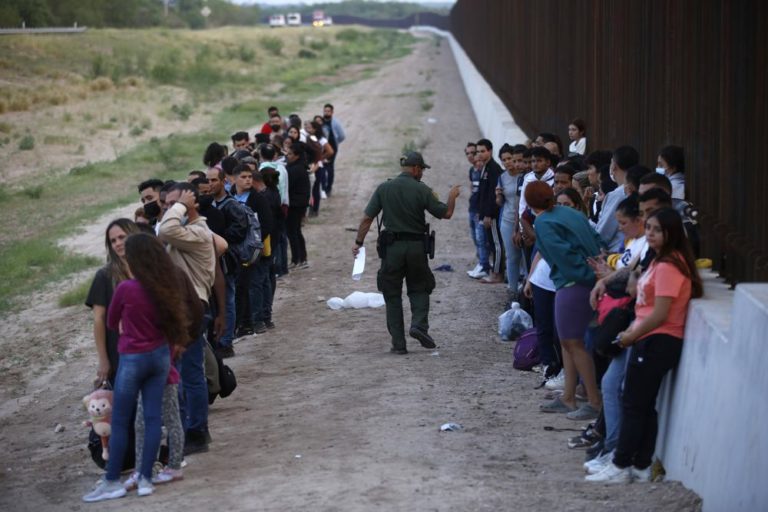
() Two more Texas counties have declared an invasion at the southern border.

Parker County and Atascosa County became the seventh and eighth Texas counties on Monday to declare an invasion two weeks after six counties and one city declared an invasion on July 5.

Parker County Commissioners Court unanimously voted to invoke Article 1, Section 10 and declare Texas and the United States under invasion.

Atascosa County Commissioners Court also expressed their support for declaring an invasion and Judge Russell Wilson signed a disaster declaration affirming an invasion at the southern border. The court must next vote to approve his declaration, which it is likely to do. They joined Kinney, Edwards, Goliad, Terrell, Presidio and Maverick counties, which already declared an invasion.

“Parker County agrees that Texas is in the midst of an actual invasion, per Art. 1 Section 10 of the U.S. Constitution,” Wise County Conservatives said in a statement calling on the commissioner’s court to pass the resolution, which it did.

Jeff Davis County’s judge had issued a declaration July 6 but its county commissioners didn’t vote in favor it. Uvalde County had expressed interest in declaring an invasion but has yet to do so. The city’s mayor declared an invasion separately.

“The governor under the constitution has the right to declare an invasion,” Atascosa County Commissioner Stuart Knowlton said.

“He’s publicly stated on Fox News that he agrees there’s an invasion but he’s yet to sign a declaration, which would hand him the power to close the border. This is an effort to support those counties, we’ve had some issues here, we’ve had high-speed chases and property damage,” referring to roughly 75 incidents of foreign nationals in the country illegally committing crimes in the county.

Wilson read the disaster declaration he signed, which states in part that the county is facing an “imminent threat of disaster for the unprecedented levels of illegal immigration and human trafficking and drug smuggling across the U.S. border from Mexico” and “the ongoing crisis constitutes an invasion of Texas and extraordinary measures must be taken to ensure the protection, health and safety of county residents.”

In response, Kinney County Attorney Brent Smith told The Center Square, “The significance of other counties across Texas also declaring an invasion cannot be overstated. It clearly establishes that the border crisis impacts every county in the state and is not limited to those communities near the Rio Grande.

“The safety and security of every Texan is threatened by the federal government’s abandonment of its constitutional duty,” Smith said. “I encourage every county in the state to acknowledge the crisis is an invasion. If Texans don’t save Texas, no one will.”

Two days after Kinney County and others declared an invasion, Republican Gov. Greg Abbott issued an executive order authorizing and empowering the Texas National Guard and the Texas Department of Public Safety to apprehend foreign nationals who illegally cross the Mexican border into Texas and return them to the border. While he cited constitutional provisions in his declaration, he stopped short of declaring an invasion.

“While President Biden refuses to do his job and enforce the immigration laws enacted by Congress, the State of Texas is once again stepping up and taking unprecedented action to protect Americans and secure our southern border,” the governor said.

His order states that the Biden Administration “has abandoned the covenant, in Article IV, § 4 of the U.S. Constitution, that ‘[t]he United States . . . shall protect each [State in this Union] against Invasion,’ and thus has forced the State of Texas to build a border wall, deploy state military forces, and enter into agreements as described in Article I, § 10 of the U.S. Constitution to secure the State of Texas and repel the illegal immigration that funds the cartels.”

In it, he authorized the Texas National Guard and Texas Department of Public Safety to begin returning foreign nationals who entered Texas illegally to the border “to stop this criminal enterprise endangering our communities.”

He also cited Article IV, § 7 of the Texas Constitution and Sections 431.111 and 437.002 of the Texas Government Code authorizing him to direct state military to enforce the law.

But Center for Renewing America President Russ Vought and Senior Fellow Ken Cuccinelli said the order means “no significant changes to current policy. This is still catch and release.”

They said in a joint statement, “We acknowledge Governor Abbott’s recognition that the facts on the ground along the border comport with the Constitution’s understanding of an invasion. However, the Governor does not appear to formally declare an invasion nor direct the National Guard and Department of Public Safety to remove illegals across the border directly to Mexico. That is critical. Otherwise, this is still catch and release.”

Could Facebook’s TikTok-Like Redesign Be the End of Social Media?

(Jacob Bruns, Headline USA) Social Media as we know it may be over as Facebook moves towards a TikTok-like model, Axios reported.

No longer will the famous social network simply show you the posts of your friends—a model that founder Mark Zuckerberg perfected in 2004 from earlier prototypes like Friendster and MySpace after modifying a dating site he had developed for Harvard students.

“Under the social network model, which piggybacked on the rise of smartphones to mold billions of users’ digital experiences, keeping up with your friends’ posts served as the hub for everything you might aim to do online,” wrote Axios.

“Now Facebook wants to shape your online life around the algorithmically-sorted preferences of millions of strangers around the globe,” it added.

As in the past, the new algorithm is intended to hold the user’s attention for as long as possible by pulling up the most relevant conent, which is designed to addict users to the platform and get them to spend as much time as possible online.

Unlike the platform’s earlier content, though, the new site will pull from a global pool of relevant content—a model it calls the “discovery engine”—rather than an individual’s immediate network of friends, family and acquaintances.

While Facebook may be banking on recapturing its youth appeal among an audience that largely associates the nearly 20-year-old brand with parents and grandparents, it also risks alienating a core base of users who are reluctant to adapt and who rely on the social network exclusively for maintaining human relationships.

All the same, the company’s longterm viability may rest on its ability to adapt to changing paradigms and market demands.

Though changes are expected to take place later this year, Facebook will continue to supply access to the old model via a tab on the new page.

The changes come alongside the creation of a planned Metaverse, which will of course require the funding supplied by the new changes.

Zuckerberg, the Meta Platforms CEO, claimed earlier this year that he believes humans will soon live in the metaverse, an artificial world that will mimic real-world interactions and sensations.

“A lot of people think that the metaverse is about a place, but one definition of this is it’s about a time when basically immersive digital worlds become the primary way that we live our lives and spend our time,” he said. “I think that’s a reasonable construct.”

Of course Zuckerberg is not wrong. People already spend huge parts of their lives on digital technology, so what’s to stop them from indulgence in something like Zuckerberg’s new world?

REPORT: Inflation Is Hammering Rural America

(The Center Square) A report from Iowa State University shows that rural Americans are feeling the pain of inflation more than the rest of the country.

“Rural households are more vulnerable to inflation,” the report said. “In 2020, rural household post‐tax incomes stood at $58,012. About 82% of rural incomes went towards expenses, leaving $10,661 in discretionary income for savings and unanticipated expenses. However, by 2022 expenses rose by 18.5% overall.

“Earnings were not able to keep pace with inflation, rising by only 6.1%. The net effect cut rural discretionary incomes by –49.1% between June 2020 and June 2022, reducing the cushion to only $5,426. Expenses now consume 91% of rural take‐home pay.”

Meanwhile, those living in cities saw less of a spike in prices than other Americans.

“Urban households were less affected by inflation, having higher post‐tax incomes ($76,411) and more discretionary incomes ($16,414) in 2020,” the report said.

“Over the past two years, expenses rose more slowly at 14.5%, while earnings for urban workers rose by 8.6% This cut discretionary income by only –13.1%, leaving a sizable cushion of $14,270.”

At the same time, rural wages have taken a hit.

“Rural discretionary incomes dropped by –8.7% in 2021, but by 2022 rampant inflation cut this income cushion by –40.4%,” the report said. “By contrast, urban families actually saw discretionary incomes rise by 1% in 2021, but they fell by –13.9% the following year.”

The report comes after the U.S. Bureau of Labor Statistics’ latest inflation data showed consumer prices rose 9.1%, the highest in more than 40 years while producer prices nearly rose at an all-time high.

The study points out that inflation can vary significantly in different regions of the country.

“The northeastern U.S. has slower price gains of only 7.6%,” the report said. “On the other side of the country, Pacific Coast states also have below average inflation at 8.3%. This is surprising given both areas contain some of the nation’s largest cities.

“For example, prices in the New York City metro area only rose by 6.7%. In California, the cost of living in the San Francisco metro rose by only 6.8%, and in Los Angeles prices rose a bit faster at 8.6%.”

Many states that have large rural populations are experiencing more severe impact from inflation.

“On the other hand, inflation is hitting people hard in parts of the southern U.S., in particular the west south central states (including Texas and Louisiana) where prices jumped by 10.6%,” the report said.

“Inflation is also a problem in the Mountain West (ranging from Arizona to Montana) and Southeastern states along the Atlantic (from Virginia down to Florida). Inflation in Atlanta, Miami, and Houston are all near or over 11%. Price gains in the Chicago metro are likely driving inflation in the Great Lakes states.”