California Leftist School District Wants to Shut Down Christian School

(Dmytro “Henry” Aleksandrov, Headline USA) A school district in California is trying to get rid of a private Christian school by presenting concerns about the safety of the building that the school officials find baseless.

The Ventura Unified School District, which is located northwest of Los Angeles, demanded Ventura County Christian School leave the school territory, claiming that one of the school’s buildings is not structurally safe for the students, according to the Daily Wire.

On Aug. 19, the district told the school that the lease for the property is not going to be renewed. The principal of the Christian school, Perry Geue, disagreed with the district’s decision.

“We just do not agree that the classroom is unsafe,” he said. “We feel that other intentions are at play.”

Because of that, on Aug. 29, the school defied the district and opened its door to students. The district responded by sending a three-day notice to the school to leave the premises.

For more than two decades, the school has leased the buildings from the district, but the lease expired in June, which led the district to decide to do a safety analysis before agreeing to again lease the building to the Christian school.

In September 2021, the district found that the school was safe for occupancy. During negotiations for the new lease, the school officials noticed that the district included a “Non-Discrimination and Equal Opportunity” clause in the new lease, which raised some concerns.

“We could potentially be forced to hire teachers who don’t hold to a Christian worldview,” the principal said.

The school asked the district to delete the clause and three days before the start of the school year, the district told VCCS that the building was not safe anymore, according to the new June safety report, and that the lease was not going to be renewed.

The district lied. According to the Daily Wire, the June safety report suggested having a closer inspection and installation of more supports and bracing, instead of leaving the school building altogether.

Ron Bamieh, the school’s lawyer, said that the district’s safety claims do not have an actual foundation underneath them and said that there are other motivations.

“VUSD just lacks the courage to be perceived as closing a Christian school because they want to sell that property so the city can build low-cost housing,” Bamieh told the Daily Wire.

“[Or] because they know those kids will have no reasonable alternative but to re-enroll in public school and they will benefit from the boost of enrollment of 200 kids in their school system.”

Feds Bemoan Inflation, Recession w/ Country at Labor Day Crossroads

(Joe Mueller, The Center Square) As the nation pays tribute to the American workers’ contributions and achievements on Labor Day, economists with the Federal Reserve Bank of St. Louis say the labor market and the economy are at a crossroads.

William M. Rodgers III, the vice president and director of the St. Louis Fed’s Institute for Economic Equity, analyzed how unemployment, job vacancies, inflation and the possibility of a recession will affect the American worker in two recent blog posts.

“Even though the economy is cooling off, the labor market remains strong, especially for vulnerable workers,” Rodgers wrote. “To date, employment among vulnerable workers has not fallen, but it could as the number of job openings contracts. Fears are growing that the economy is already in or moving toward a recession.”

As Rodgers looked back on the year since last Labor Day, the labor market continued to recover from the COVID-19 recession. However, inflation – at the highest levels in 40 years – is reducing wage gains resulting from high numbers of job openings and low unemployment.

Openings peaked at 11.9 million in March and decreased to 11.2 million in July, according to Fed research. Rodgers believes fewer job openings could lead to higher unemployment among vulnerable workers.

“If labor market conditions begin to deteriorate, lowering structural barriers to getting a job that the pandemic exacerbated could help,” Rodgers wrote.

“Investments in supports that help job searchers receive and accept offers have the greatest potential to reduce these barriers to work. This is particularly important for fully restoring the labor force participation of women, especially mothers, who disproportionately left paid work during the pandemic to take care of their families.”

Rodgers and Alice L. Kassens, a professor of economics at Roanoke College and a research fellow at the Institute for Economic Equity, also examined obstacles preventing some from returning to the workforce.

“Further, many structural barriers existed before the pandemic, including weaker skills, lack of access to affordable, good-quality child care, transportation problems, incarceration, addiction and discrimination,” they wrote. “Individually and collectively, they reduce job matching efficiency.”

While they noted an economy is in recession when gross domestic product falls in two consecutive quarters, they also stated the National Bureau of Economic Research’s definition of a recession relies on a variety of indicators. If we’re in a recession or entering one, economists can’t predict its effects on employment.

“One potential pathway is that the overall unemployment rate will not increase substantially as the job openings rate falls,” wrote Rodgers and Kassens.

“Under this scenario, the number of job openings could fall from its extremely high level over the next few months to a lower (but still strong) level and have a relatively limited effect on hiring and unemployment.”

Germany Stakes Massive Tax Hike on Meat as Radicals Target U.S. Next

(Mark Pellin, Headline USA) In an effort to further its control of the populace and allegedly to help fight climate change, Germany’s Green Party and Social Democrats have proposed skyrocketing the country’s value added tax on meat to 19%, up from the current 7% charged on most foods.

The proposal, however, is running into resistance from conservatives who think it’s an overreach of government and environmental extremists who said it doesn’t go far enough to satisfy their demands.

Chancellor Angela Merkel‘s Christian Democrats reportedly supports the plan, but wants any additional revenue raised by the tax hike purposed to help livestock farmers “restructure” their operations, according to state-owned Deutsche Welle broadcasting.

“Such a tax can be a constructive proposal,” said Merkel spokesman Albert Stegemann.

But even with food prices already soaring in Germany, along with gas and energy costs, radical environmentalists from the Green Party are pushing for an even steeper levy than the proposed 19%.

“We should eat less meat overall and make sure it comes from animals that are kept in a species-appropriate manner,” said Federal Minister of Food and Agriculture Cem Özdemir, reported Your News.

The Green Party climate alarmist wants to convert livestock farmers to primarily support fertilization for production of plant-based foods. Germany should be “adapting meat consumption to planetary boundaries and for the sake of our health,” he declared.

That falls in line with the Green Party leader’s refusal to back the VAT hike for meat because it falls short of what climate wokesters demand. Robert Habeck said he wanted “a full overhaul of the VAT system to tackle environmental concerns,” reported Deutsche Welle.

Leftists and climate change zealots in the United States have long had their eyes on destroying livestock farmers and pricing meat off menus for all but global elitists.

“If it gains traction, it could help rid the world of a lot of unnecessary suffering,” opined the far-Left Vox in championing Germany’s tax hike on meat.

The U.S. should follow by inflicting maximum pain on consumers of meat, Vox reflected of previous declarations that such people are cretins “treading on the environment for others.”

“Eating that way wouldn’t be illegal, but people who choose to do it would have to pay for the imposition of their choices on others.”

In that same vein, climate change alarmists have latched onto the Germany model and are pushing for it to be implemented in other “rich” countries, specifically America, backing their arguments with studies from groups that have the same goal of effectively eliminating meat consumption.

“Livestock farming is a huge contributor to greenhouse gas emissions, soil and water pollution,” said the chairman of a coalition of Berlin “environmental economists,” according to ReMix.

“Evidence suggests the environmental impacts are so large that the world can’t meet climate goals and keep vital ecosystems intact without reducing the consumption of meat – at least in Western high-income countries,” said professor Linus Mattauch.

The solution would be to increase the price of meat to a prohibitive degree, inflating the cost of beef upwards of 60%, along with a 25% cost hike on poultry and 19% for pork and lamb, Mattauch said.

Another study, this one from Bonn University, also argued that rich, selfish Americans must dramatically reduce their meat consumption by at least 75%.

The study found that “the meat industry is a leading driver of deforestation, contributes 14.5 percent of greenhouse gas emissions, and wastes significant amounts of resources,” reported Plant Based News. Poor countries aren’t the problem, the researchers claimed, blaming rich ones like the U.S. and U.K., which need to “take more responsibility.”

“If all humans consumed as much meat as Europeans or North Americans, we would certainly miss the international climate targets and many ecosystems would collapse,” said Dr. Matin Qaim, the study’s lead author.

Mass Stabbing Spree Kills 10, Leaves Citizens Helpless in Trudeau’s Gun Control Canada

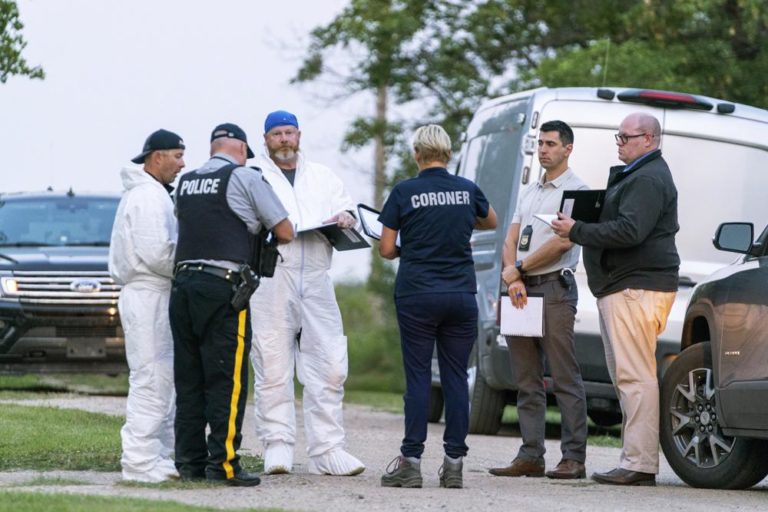
(Mark Pellin, Headline USA) A manhunt was launched Sunday in Canada for two suspects who went on a deadly rampage of mass knife attacks, killing 10 people and wounding at least 25.

The two suspects were identified as Damien Sanderson, 31, and Myles Sanderson, 30, but law enforcement could not provide any motive for the killings, or how many of the victims were specifically targeted, reported BBC News.

Rhonda Blackmore, assistant commissioner of the Royal Canadian Mounted Police Saskatchewan, told reporters that the stabbing spree unfolded across 13 locations in James Smith Cree Nation and the village of Weldon.

“We believe some of the victims have been targeted by the suspects, and others have been attacked randomly,” Blackmore said.

While the RCMP issued warnings for people to shelter in place and refrain from disclosing the locations of law enforcement, Prime Minister Justin Trudeau tweeted his emotions.

That would be the same Trudeau who has vilified law-abiding gun owners, boasting that people “can’t use a gun for self-protection in Canada” and championing legislation for a national freeze on importing, buying or selling handguns.

“In other words, we’re capping the market for handguns,” the leftist gun-grabber declared.

The hypocrisy of Trudeau tweeting his emotional support for those impacted by the deadly stabbings, but banning guns as a legitimate means of self-defense did not go unnoticed.

“Wow!!! Where were the ‘guns’ that made this happen???” wrote media personality Judge Joe Brown.

“What kind of AR-15 knife was it??” asked a gun rights supporter. A reply was equally biting, “Must have been using an assault knife. (Where there’s an evil will, there’s a way.) Evil is evil.

“When you want to deal with only the gun part of gun violence and don’t focus on the violence part, this is what happens,” wrote one critic of Trudeau’s draconian gun policies.

Abortion Pill Providers Seek Loopholes in Pro-Life State Laws

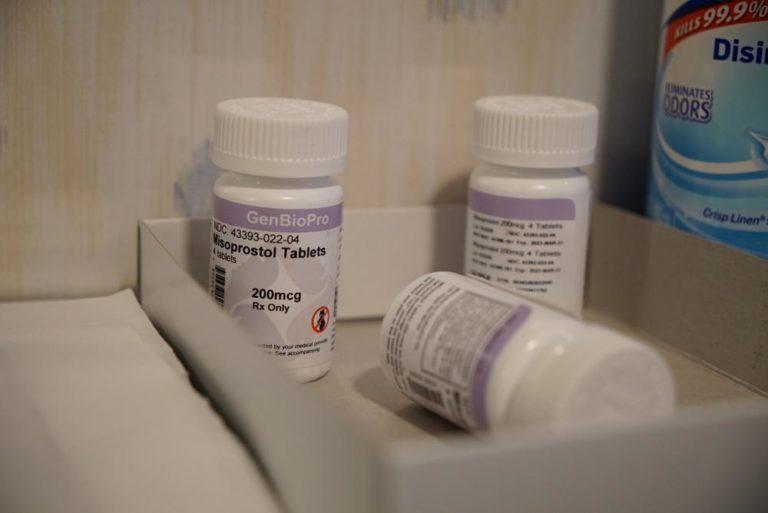
(Molly Bruns, Headline USA) In attempts to circumvent pro-life laws in many states, abortion activists are searching for legal methods of delivering abortifacient drugs to women seeking the procedure.

Elizabeth Nash of the Guttmacher Institute, said “We’re going to see these different approaches by organizations as they assess what the laws say and develop their rationale for how to provide care,” The Post Millennial reported.

“We just don’t have a road map about how to provide medication abortion post-Roe, so it’s all being created right now,” Nash added.

Activists are attempting to prescribe medications to induce abortion past the 10 week limit set by the Food and Drug Administration.

Physicians are also providing telemedicine appointments to women seeking abortions and not requesting their location info.

Some physicians are even going as far as to provide abortion-inducing medication to anyone who simply asks, regardless of their situation, in  hopes to saturate the market.

Tessa Longbons of the pro-life Charlotte Lozier Institute said these methods put women at high risk.

Abortion via medication “typically involves two drugs: mifepristone, which blocks a hormone necessary for pregnancy development, followed 24 to 48 hours later by which causes contractions that expel pregnancy tissue.”

Abortions via medication made up for over half of the abortions in the United States by 2020.

States with strong pro-life legislation include Alabama, Arkansas, Georgia, Mississippi, Missouri, Oklahoma, Ohio, South Carolina, South Dakota, Tennessee, and Texas. Several other states, such as Indiana, are following suit.

There are few laws surrounding the dissemination of abortion-inducing medication, allowing for legal gray area pro-abortion activists to take advantage of the gap.

Christie Pitney, a “midwife” who works for Europe based pro-abortion company Aid Access said prescribing before any potential laws go into effect is the solution, calling it “advance provision.”

She also said that women should get the medication wherever they can get it and hold onto it.

According to Pitney, Aid Access has received 10,000 requests for the medication after Roe‘s overturn.


Biden Roasted for Message from 51 Year-Old Thanking Him for Debt Relief

(Molly Bruns, Headline USA) President Joe Biden posted an image to Twitter, showing what appears to be a text or social media message thanking him for loan forgiveness.

The message read, “Thank you Mr. President. At 51 years old, my husband and I can finally start saving for our first home.”

According to The Post Millennial, social media users were quick to critique the message, questioning its content and credibility.

The president did not say where or who the message came from. On Twitter, Biden’s official profile is set so he can only receive direct messages from users that he follows—he only follows twelve people.

Needless to say, many were skeptical.


Several people also pointed out many other Americans who never attended college are helping pay for these people’s home.

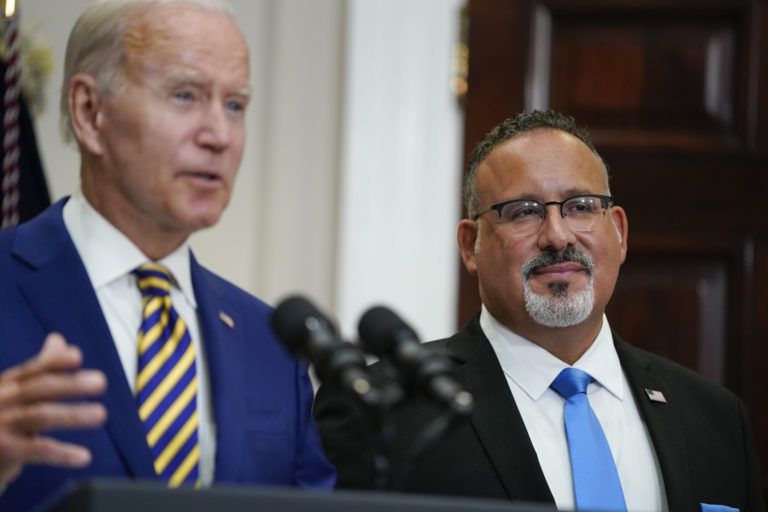
Biden’s recent announcement that he would be canceling up to $10,000 in student debt for borrowers, which will cost taxpayers a minimum of $300 billion over the next ten years.


States Plan to Tax Student Loan Debt Relief

(Headline USA) President Joe Biden’s student loan forgiveness could be taxed in some states, meaning borrowers who will have their debt forgiven will likely have to pay hefty fees if their debt is forgiven.

That’s because some states tax forgiven debt as income, which means borrowers who are still paying down student loans could owe taxes on as much as $10,000 or even $20,000 that was taken off their bill.

In Mississippi, Minnesota, Wisconsin, Arkansas and North Carolina, forgiven student loans will be subject to state income taxes unless they change their laws to conform with a federal tax exemption for student loans, according to a tally by the Tax Foundation, a Washington, D.C.-based think tank.

That dismays Cathy Newman, a Louisiana State University graduate who just took a job teaching freshman biology at the University of Southern Mississippi in Hattiesburg. She figures she could end up owing a few hundred dollars of money that she could have kept had she stayed in Louisiana.

Newman said she can come up with the cash because she has a good job, but she knows of a lot of other borrowers who will still be stuck in difficult financial positions even with their loans forgiven.

“If they stay in the state, they could end up with a pretty hefty tax burden if things don’t change,” Newman said. “I won’t be happy if I have to do it. I can do it. But a lot of people can’t.”

More than 40 million Americans could see their student loan debt cut or eliminated under the forgiveness plan Biden announced late last month.

The president is erasing $10,000 in federal student loan debt for individuals with incomes below $125,000 a year, or households that earn less than $250,000.

He’s canceling an additional $10,000 for those who also used federal Pell Grants to pay for college. But it only applies to those whose loans were paid out before July 1, which leaves out current high school seniors and students who will follow them.

Although having $10,000 or $20,000 in loan payments eliminated will be a boon over the long term to borrowers who qualify, those in the affected states might be required to declare that as income.

Depending on a state’s tax rates, the taxpayer’s other income and the deductions and exemptions they’re able to claim, that could add up to several hundred extra tax dollars that they’ll owe.

Spokespeople for tax agencies in several states — including Virginia, Idaho, New York, West Virginia, Pennsylvania and Kentucky — told The Associated Press that their states definitely won’t tax student loans forgiven under Biden’s program. Revenue officials in a few other states said they needed to do more research to know.

Newman, 38, went into debt to pay for graduate school. She had already set herself up for relief under the federal Public Service Loan Forgiveness program, though that requires five more years of teaching on top of the five she already taught at the University of Louisiana Monroe.

Biden’s program would cut $10,000 off her debt load when it takes effect, but under existing Mississippi tax law, the relief won’t come free.

“It’s not a huge burden for me, but it could be for a lot of other people, which is what I’m worried about, especially if it’s unexpected, and I think a lot of people don’t realize that,” Newman said.

Any relief in states that would tax the forgiven debt would have to come from their Legislatures. Leaders of the Minnesota Legislature and Democratic Gov. Tim Walz have indicated in recent media interviews that there’s broad support for a fix, which could come during the 2023 session, or even earlier on the remote chance of a special session.

In Wisconsin, Democratic Gov. Tony Evers’ administration plans to propose a fix in the state budget next year, but that would have to be approved by the Republican-controlled Legislature. And Evers needs to get reelected in November before he can formally make that request. Republican legislative leaders and Evers’ GOP challenger, Tim Michels, did not reply to messages seeking comment on the student loan tax issue.

However, in Mississippi, the chairman of the state Senate committee in charge of taxes said he’s willing to take a look when the Legislature convenes next year. Republican state Sen. Josh Harkins, of Brandon, said he needs to learn more about what his state’s tax laws say on debt forgiveness.

“I’m sure people will want to look at adjusting that or making some changes in the law, but a lot of factors have to be considered,” Harkins said, noting that Mississippi enacted its biggest-ever tax cut earlier this year and adding that he wants to gauge the impact of inflation before making big tax policy decisions. “This all just hit in the last week.”

Adapted from reporting by the Associated Press.

Energy Problems in Ukraine and Europe Take Center Stage

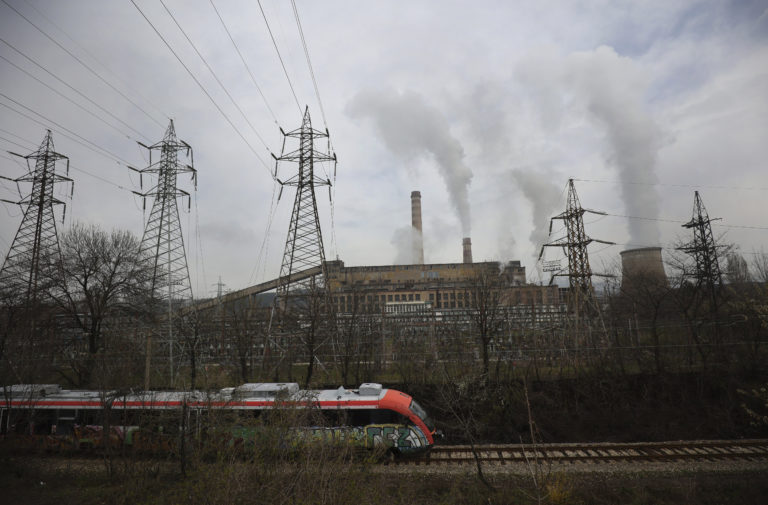
(Headline USA) Energy problems plagued Ukraine and Europe as much of the Russian-occupied region that’s home to a largely crippled nuclear power plant was reported temporarily in blackout Sunday.

Only one of six reactors at the Zaporizhzhia facility was connected to the electricity grid, and Russia’s main pipeline carrying natural gas to Germany remained shut down.

The fighting in Ukraine and related disputes over pipelines lie behind the electricity and natural gas shortfalls that have worsened as Russia’s war in Ukraine, which began on Feb. 24, grinds on for a seventh month.

Both issues will take center stage this week. U.N. nuclear agency inspectors are scheduled to brief the Security Council on Tuesday about their inspection and safeguard visit to the Zaporizhzhia power plant. European Union energy ministers were slated to hold an emergency meeting Friday in Brussels to discuss the bloc’s electricity market, which European Commission President Ursula von der Leyen has said “is no longer operating.”

Much of the Zaporizhzhia region, including the key city of Melitopol, lost power Sunday.

But electricity was gradually being restored, said Vladimir Rogov, the head of the Russia-installed local administration in Enerhodar, the city where the nuclear power plant is located.

To the southwest, power was also out in several parts of the port city of Kherson, according to Russia’s Tass news agency. Rogov blamed the outages in both locations on damage to high-voltage power lines.

While Rogov said no new shelling of the area around the six-reactor Zaporizhzhia plant was reported Sunday, the effects of earlier strikes lingered.

The International Atomic Energy Agency said Saturday that the plant was disconnected from its last main external power line and one reactor was disconnected because of grid restrictions.

Another reactor was still operating and producing electricity for cooling and other essential safety functions at the site, as well as externally for households, factories and others through a reserve power line, the IAEA said.

Russian forces have held the Zaporizhzhia facility, Europe’s largest nuclear plant, since early March, with its Ukrainian staff continuing to operate it.

Mich. Library Defunded Over LGBTQ Books Hits $245,000 on GoFundMe

0

(Scott McClallen, The Center Square) A GoFundMe fundraising site has garnered more than $245,000 in support of a Mich. library for about a year after voters rejected its millage, angry over LGBTQ books.

Patmos Library in Jamestown Township faced closure next year after voters rejected an Aug. 2 library millage renewal in protest of some graphic LGTBQ content in the library’s collection.

After seeing the millage results, resident Jesse Dillman started a GoFundMe account that less than one month later has more than replaced the library’s $245,000 operating budget.

“I’m extremely happy with the huge outpouring of support the library has received, both the encouragement and the GoFundMe donations,” Dillman told The Center Square in an email.

“It’s clear that people recognize the importance of public spaces for community, and are willing to stand up to protect them and defend against ignorance.”

Romance novelist Nora Roberts gave Patmos Library a $50,0000 donation to break its goal, fueled by more than 4,000 other donors.

“As for what’s next, the Jamestown community has put together a millage committee, which I am now volunteering with,” Dillman said.

“We have efforts well underway now to combat misinformation and encourage the majority of residents who support Patmos Library. John Chrastka from EveryLibrary is working directly with the library to get the GoFundMe money transferred and used in the best way possible, but I am personally hands-off with those decisions at this point.”

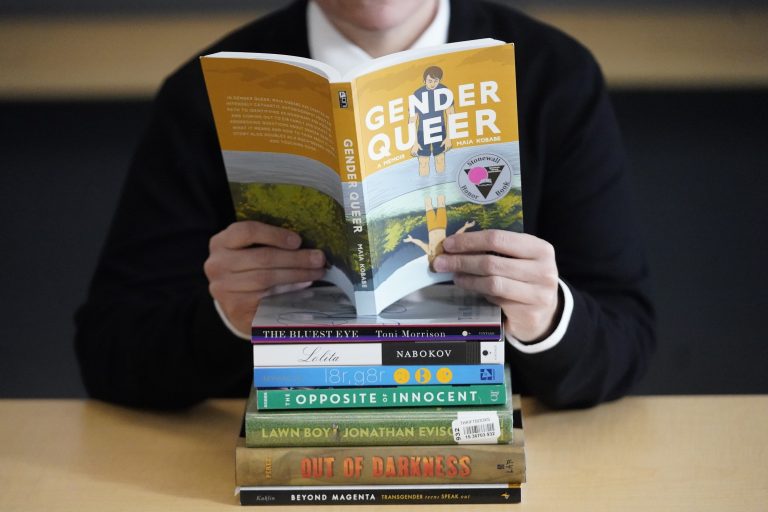
At issue are a few LGBTQ books in the Patmos Library, including a graphic novel titled “Gender Queer: A Memoir” by Maia Kobabe, a writer using the “eir” pronoun.

The book discusses the author’s “gender fluidity” and sexuality, and several panels feature graphic illustrations of sexual activity. The library offers more than 67,000 books.

Some parents objected and created a Facebook page to garner opposition to the library millage vote.

A group calling itself The Jamestown Conservatives formed “to help others of the community to be aware of the pushed agenda of explicit sexual content that is being infiltrated into our local libraries aiming toward our children,” according to its Facebook page.

Va. Lawmaker May Appeal Ruling to Prevent “Obscene” Book Sales to Minors

0

(Tyler Arnold, The Center Square) A Virginia lawmaker who wanted a court to restrict the sales of two books to minors over accusations of obscenity lost his case, but he may appeal the ruling or move the battle into the state legislature.

Del. Tim Anderson (R-Virginia Beach) filed a lawsuit against Barnes & Noble on behalf of a client to prevent the bookselling business from allowing minors to purchase two books: “Gender Queer” and “A Court of Mist and Fury.”

According to his lawsuit, the books contained sexual themes that were obscene for children, but the court ruled against the plaintiffs and ruled that the obscenity law violates the state and federal constitution.

In her ruling, Judge Pamela Baskervill ruled that the law violates the First Amendment and the Va. Constitution by authorizing prior restraint, violates due process by authorizing judgment without notice to affected parties and puts a burden on the seller of the book despite the seller having no ability to know whether the book is obscene.

Anderson, who represented Tommy Altman in the lawsuit, said his client is considering an appeal, but ultimately believes that there should be a separate obscenity standard for children and adults.

“Mr. Altman is reviewing his appeal options,” Anderson told The Center Square.

“Fundamentally, my client believes there should be a different standard of obscenity for children than currently exists for adults, but that will require review by higher courts to conclusively answer this question and possibly additions to the code by the General Assembly.”

The ACLU of Va. applauded the ruling.

“We are pleased with the outcome of today’s proceedings,” Matt Callahan, a senior staff attorney for the ACLU of Va., said in a statement.

“The First Amendment protects literary expression, even when some people find portions of the works difficult or objectionable. All people should be able to choose what they wish to read.”

A battle over reading material for minors began in local school districts throughout the commonwealth with parents attending school board meetings and objecting to material they felt was sexually inappropriate for children.

Lawmakers eventually signed legislation that allows parents to opt their children out of sexually explicit coursework, but the bill does not censor books in school libraries and does not allow parents to alter the coursework for other students.