Dutch Kids Used as Guinea Pigs in WEF’s Plot to Swap Meat for Insects

(Molly Bruns, Headline USA) Schools in the Netherlands have started feeding insects and mealworms to children as part of a new program focused on “sustainability” and “behavioral changes.”

The De Octopus school in Overikssell is one of 100 different schools participating in the program, National File reported.

Many believe that the globalist World Economic Forum and its advocates have had a hand in this programming, as they have been pushing the heightened consumption of insects as a replacement for meat products.

A tweet from political commentator Eva Vlaardingerbroek showed a video of school children being served a platter of insects, including a mealworm and what is presumably some kind of alternative meat.

The video is in Dutch, but the school administrators and teachers seem proud and excited about the initiative.

“WEF agenda in full force: Hundreds of schools in The Netherlands have started a campaign introducing 10-12 y/o kids to mealworms and insects as a ‘sustainable’ meat substitute,” said the tweet. “The goal is to bring about ‘behavioral changes through unprejudiced children.’”

WEF has stated that “insect farming for food and animal feed could offer an environmentally friendly solution to the impending food crisis.”

The group has also said that consumption of animal protein is the source of increased greenhouse gas and climate change.

“Insects are an overlooked source of protein and a way to battle climate change,” WEF claimes on its website. “The consumption of insects can offset climate change in many ways.”

“Plant proteins lack some essential amino acids that animal proteins possess, but the major differences between insect and other sources of protein exist largely in the cultural and environmental realm,” WEF adds.

The Netherlands was thrown into turmoil this summer as farmers started to protest against the limitation on nitrogen levels. This change would make it essentially impossible to farm.

It is also expected that WEF had a hand in the nitrogen limitation laws.

Madonna Brags About Destroying American Decency

(Ezekiel Loseke, Headline USA) Madonna was trending on Twitter for bragging about her role in destroying American decency in an Instagram post, according to Billboard.

Madonna, sounding nothing “like a virgin,” wrote, “30 years ago I published a book called S.E.X. In addition to photos of me naked there were photos of Men kissing Men, Woman kissing Woman [sic] and Me kissing everyone.”

She claimed the book also contained her “sexual fantasies” and her “point of view about sexuality.”

Madonna noted that American public opinion was uncomfortable with public displays of sexual perversion when her ‘book’ was published.

“I spent the next few years being interviewed by narrow minded people who tried to shame me,” she whined.

Madonna claimed that she “was called a whore, a witch, a heretic and the devil.”

Billboard quoted an interviewer reacting to Madonna’s sexually explicit photographs in her ‘book.’ He said, “I’d never seen the likes of it.” He continued, “the picture of you astride the mirror … — I thought that was horrible. It just strikes me as horrible.”

Madonna noted that today, thanks in no small part to her public indecency, America has no such standards against public displays of perversion.

“Now Cardi B can sing about her WAP. Kim Kardashian can grace the cover of any magazine with her naked ass and Miley Cyrus can come in like a wrecking ball,” she wrote.

She followed up her description of our perverted culture with, “You’re welcome b—-es.”

Madonna is correct. It is remarkable to consider the rapid changes in sexual norms over the last few years. Consider that:

Madonna is correct. America owes her current state of public perversion, in part, to the aging pop-star’s attacks on decency.

South Dakota to Vote on Recreational Marijuana

(Headline USA) Marijuana Legalization is back on the ballot in November in South Dakota, but whether the politically red state will become the first to pass it twice remains in doubt.

It’s facing strong opposition from conservative groups and figures determined to pull the state back from legalizing pot. And though 54% of voters approved a constitutional amendment to legalize cannabis in 2020, that campaign may have benefited from the medical marijuana measure that appeared on the same ballot.

This time, recreational marijuana stands alone on the ballot. And it likely faces a different demographic of voters — older and perhaps less inclined toward the drug — in a midterm election rather than in a presidential year, said Matt Schweich, who organized that campaign and is doing so again this year.

“I think this is a close race,” he said at a news conference to kick off a statewide voter registration tour last week.

Pot legalization advocates have found success primarily through ballot measures rather than legislatures, especially in GOP-held states. Voters in three states where Republicans control the governor’s office and both legislative chambers — Arkansas, Missouri and North Dakota — are deciding on recreational marijuana this year, as is politically divided Maryland.

Before the 2020 constitutional amendment could take effect, Republican Gov. Kristi Noem authorized a lawsuit arguing it violated a requirement that it address just one subject because it legalized recreational marijuana, medical marijuana and hemp. A circuit judge and the state Supreme Court agreed.

Noem’s successful block of recreational marijuana has inspired a more robust opposition campaign this year.

Jim Kinyon, a counselor who directs Catholic Social Services in Rapid City, said he was caught by surprise when voters decided to legalize pot in 2020.

Not this year. He’s leading an organization called Protecting South Dakota Kids with the message that legalizing pot for adults would be detrimental to children. The group has run aggressive ads that feature young children’s faces overlaid with the words: “Future Drug Addicts.”

“This is about my families, my communities and my kids,” Kinyon said.

At a campaign event for the group last week at a Sioux Falls go-kart and mini golf amusement park, roughly three dozen middle-aged people met to hear a presentation on the dangers of pot use and strategize about how to convince their friends and neighbors not to vote for legalization a second time.

“I feel like we’re a picket fence on a beach and a tsunami is coming,” said Ed Moses, a retired Missouri State Highway Patrol trooper who has adapted the anti-pot message he once gave to high school students to an anti-legalization message for voters.

He pointed to Colorado to argue legalization has opened a host of problems.

In the years since Colorado became the first in the nation to legalize recreational pot, it has seen an increase in traffic deaths where drivers tested positive for marijuana, according to The Rocky Mountain High Intensity Drug Trafficking Area program. More people in Colorado are using pot, according to the report.

Adapted from reporting by the Associated Press

Biden Admits Voters Ought to Be Concerned about His Age

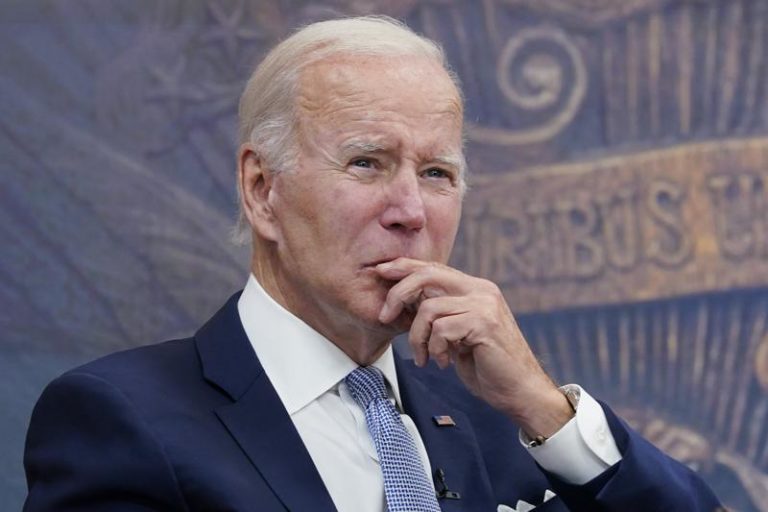
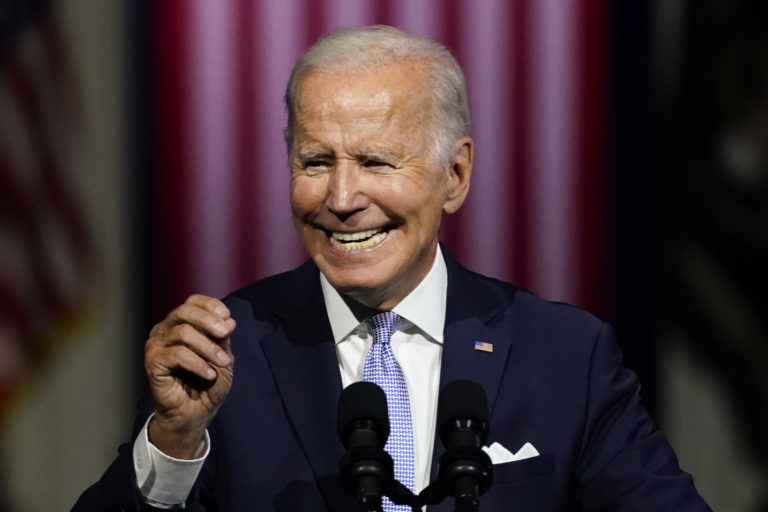
(Headline USA) Joe Biden, who turns 80 on Nov. 20, said it’s “totally legitimate” for voters to question whether someone his age can manage the demanding stresses of the American presidency. Biden made the comment in response to a question about his age during an MSNBC interview that aired Sunday.

He said people should judge for themselves whether he is up to the task.

Biden would be 82 on Inauguration Day in January 2025.

“I think the best way to make the judgement is to watch me. Am I slowing up? Am I going at the same pace?” Biden said in the interview that was taped Friday during a visit to the Delaware State University campus to promote his student loan debt forgiveness executive order.

Biden has yet to officially announce whether he will run for a second term, but has repeatedly said it is his intention to seek reelection.

During his 2020 campaign, Biden often presented himself as a “transition candidate” who would build a bridge to new Democratic talent.

The age and health of Biden loomed throughout a race that was decided by a younger and more diverse electorate and at a moment when the nation is facing no shortage of issues of consequence.

In the MSNBC interview, Biden said voters should look at his “passion” for the work as they consider his age in factoring whether they should vote for him.

Biden joked that he’s still coming to terms with becoming an octogenarian.

“I can’t even say the age I am going to be. I can’t even get it out of my mouth,” Biden said.

Adapted from reporting by the Associated Press

Judge Sides w/ Christian Refusing to Bake a Cake for Gay Marriage

(Headline USA) A California judge has ruled in favor of a bakery owner who refused to make wedding cakes for a homosexual couple because it violated her Christian beliefs.

The state Department of Fair Housing and Employment had sued Tastries Bakery in Bakersfield, arguing owner Cathy Miller intentionally discriminated against the couple in violation of California’s Unruh Civil Rights Act.

Miller’s attorneys argued her right to free speech and free expression of religion trumped the argument that she violated the anti-discrimination law.

Kern County Superior Court Judge Eric Bradshaw ruled Friday that Miller acted lawfully while upholding her beliefs about what the Bible teaches regarding marriage.

The decision was welcomed as a First Amendment victory by Miller and her pro-bono attorneys with the conservative Thomas More Society.

“I’m hoping that in our community we can grow together,” Miller told the Bakersfield Californian after the ruling. “And we should understand that we shouldn’t push any agenda against anyone else.”

A spokesperson said the fair housing department was aware of the ruling but had not determined what to do next. The homosexuals, Eileen and Mireya Rodriguez-Del Rio, said they expect an appeal.

An earlier decision in Kern County Superior Court also went Miller’s way, but it was later vacated by the 5th District Court of Appeal, which sent the lawsuit back to the county.

The decision comes as the harassed Colorado baker, Jack Phillips, is challenging a ruling that he violated that state’s anti-discrimination law by refusing to make a cake celebrating a gender transition. Jack Phillips, of course won his previous case in the U.S. Supreme Court after refusing on religious grounds to make a gay couple’s wedding cake.

Phillips’s previous case, Masterpiece Cakeshop v. Colorado Civil Rights Commission, was a landmark case for Christians in the kulturkampf.

Adapted from reporting by the Associated Press

Court Pauses Biden Student Loan Forgiveness Plan

(The Center Square) Americans hoping for thousands of dollars in student loans to be lopped off their ledgers will have to wait a bit longer to see if it will happen.

The 8th Circuit Court of Appeals temporarily halted Joe Biden’s plan to forgive student loans, an election-year plan the administration said would start as soon as next week.

The hold freezes the administration from “discharging any student loan debt under the Cancellation program” until the court decides on the challenge brought by a coalition of Republican attorneys general.

A lower court dismissed the coalition’s case Thursday, saying the suit failed to prove someone was harmed by the debt forgiveness plan.

“The court is not to consider the weight or significance of the alleged injury, only whether it exists,” U.S. District Judge Henry Edward Autry said in his ruling.

The plaintiffs contend that Biden doesn’t have the authority to erase the student loans.

If allowed to move forward, Biden’s plan forgives $10,000 in federal student loan debt for those making less than $125,000 annually. Federal Pell Grant recipients would be forgiven $20,000.

A coalition of GOP governors wrote Biden that his student loan forgiveness plan would be costly for American taxpayers. The group cited an estimate of up to $600 billion, or $2,000 per American taxpayer.

The administration has until 5 p.m. on Monday, Oct. 24 to respond to the injunction and until the same time next Tuesday for the group of states to respond to Biden’s office.

Crooked Lori Lightfoot Says Chicago Is a Safe City

(Andrew Hensel, The Center Square) Chicago Mayor Lori Lightfoot claims crime is down in the city as her opponents in the Feb. election reveal their plans for public safety.

The mayor held a news event this week to announce a proposed infrastructure plan for Chicago Works. She also discussed crime in the city. Lightfoot urged residents to feel safe in the city despite some reports of rampant crime.

Lightfoot said crime is down and that residents should not worry.

“We work hard every single day to make sure people feel safe because they are safe,” Lightfoot said. “That is why year over year we are down 17% in homicides, 19% in shootings and we continue to look for ways in which we can improve.”

Lightfoot said some reports of rampant crime in the city are fabricated.

“Everything that you read on news blogs is not truthful,” Lightfoot said. “I have seen things [they publish] many times that have no bearing on reality.”

According to Chicago Police statistics, homicides are up 31% since 2019, shootings are up 34% since 2019 and total crime has increased by 38% in that period.

On Thursday, Chicago’s 4th Ward Alderman Sophia King, who will be running against Lightfoot in February’s primary election, laid out her plan for reducing crime in the city.

The plan includes hiring over 1,000 retired officers to work large events, using drones to follow carjacking suspects and offering $5,000 signing bonuses for law enforcement.

Chicago mayoral candidate and businessman Willie Wilson has also discussed a plan to tackle crime.

At a campaign fundraiser earlier this summer, Wilson said his plan includes re-establishing the CTA’s in-house police unit, rehiring retired cops and adding more police officers to each patrol vehicle.

City elections include a primary in Feb. with the election in April of next year.

Comedian, Rapper Chingo Bling Rallies Conservative Hispanic Voters in Texas

(Bethany Blankley, The Center Square) Houston native Chingo Bling, “the Tamale King,” is headlining a bus tour to rally Hispanic voters to vote Republican in Texas.

“Hispanics are Americans and Texans first, and we don’t like being told we have to be Democrats to be ‘Good Latinos’,” Chingo Bling said.

“We believe in policies and leaders who support good jobs, safe communities, family values, freedom, a strong border and national security, and there’s no question which party promotes and defends those values.”

“The question shouldn’t be why we Latinos are breaking from the Democratic Party, it should be why the Democrat Party ever expected that we’d blindly follow them in the first place,” he continued.

The comedian, rapper, actor, producer and social media influencer is kicking off the tour sponsored by Texas Latino Conservatives PAC in the Rio Grande Valley.

The bus tour begins in McAllen on Oct. 27 to “promote the shared values of faith, family and hard work.”

Two other events are scheduled on Oct. 28 in McAllen, as well as the night of the 28th in San Antonio. The event is scheduled in Houston on Oct. 30. Interested Texans can learn more at www.texaslatinoconservatives.com.

The tour comes after Texas Latinos Conservatives commissioned a recent poll that found that the majority of registered Hispanic Texas voters said the Republican Party better aligns with their values.

According to the poll, the Republican Party held a 15-point lead over the Democrat Party for being most associated with “hard work,” an 8-point lead for supporting small business owners, a 7-point lead for fixing the immigration system and a 3-point lead for “protecting my way of life.”

The poll also found that more than 60% of Hispanics said they are bothered by the direction of the Democratic Party, 57% support tougher border security measures and the majority, by a 3-to-1 margin, support more oil and gas exploration in Texas.

“Democrats assume Hispanics are monolithic, but we are as diverse as America, and we are seeing the momentum build all across all our Latino communities for conservative candidates,” Orlando Sanchez, founder of Texas Latino Conservatives, said.

“The more we vote our values, the more we vote Republican.”

Chingo Bling, born and raised in Houston, began his career as a broadcaster while he was a student at Trinity University. He later launched his music career and signed with Asylum Records.

Texas Latino Conservatives was founded to mobilize Latino voters to elect conservative candidates for local, county, regional, state and statewide office, and to promote educational campaigns that communicate Texas Hispanics’ shared conservative values.

Poll: Americans Say Federal Government Has Too Much Power

(Casey Harper, The Center Square) Newly released polling data shows that a majority of Americans say the federal government has too much power.

Gallup released the poll Wednesday, which showed that 54% of Americans said the federal government is “too powerful.” The survey found that 39% said the federal government has the right amount of power while only 6% said it has too little.

In 2005, the percentage of Americans who said the federal government had too much power crossed 50% and has not dipped back down. Sometimes that number has topped 60%.

“Currently, 74% of Republicans, 32% of Democrats and 54% of independents believe the federal government has too much power,” Gallup said.

The poll also found that 53% of those surveyed said the government is “doing too many things to solve the nation’s problems” while 43% said the government should be doing more.

Since Gallup began tracking the data, Americans have usually favored less government action, not more.

“There have been only three instances since 1992 in which more Americans have called for the government to do more than to do less,” Gallup said.

“These were in early 1993 after Bill Clinton took office following his victory over the incumbent George H.W. Bush in an election focused on economic issues, in Oct. 2001, weeks after the 9/11 terrorist attacks and in 2020 during the height of the COVID-19 pandemic.”

When it comes to business regulation, Americans say the government is too involved.

“Twice as many Americans believe the government regulates business too much (46%) rather than too little (23%) and 29% say there is the right amount of regulation,” Gallup said.

“[Under Biden’s last two years], the percentage of Americans saying there is too much regulation has exceeded the percentages measured in 2018-2020, the last three years of Trump’s administration.”

“Similarly, more Americans thought there was too much business regulation under Barack Obama between 2009 and 2016 than under George W. Bush between 2001 and 2008,” the poll continued.

US Heating Worries Mount Amid Growing Costs, Uncertainty

(Headline USA) Across the U.S., families are looking to the winter with dread as energy costs soar and fuel supplies tighten.

The Department of Energy is projecting sharp price increases for home heating compared with last winter and some worry whether heating assistance programs will be able to make up the difference for struggling families.

The situation is even bleaker in Europe, with Russia’s continued curtailment of natural gas pushing prices upward and causing painful shortages.

In Maine, Aaron Raymo saw the writing on the wall and began stocking up on heating oil in 5-gallon increments over the summer as costs crept upward.

He filled a container with heating oil as he could afford it, usually on paydays, and used a heating assistance program to top off his 275-gallon oil tank with the arrival of colder weather.

His family is trying to avoid being forced into a difficult decision — choosing between food or heating their home.

“It’s a hard one,” he said. “What are you going to choose for food, or what amount of fuel oil are you going to choose to stay warm?”

Several factors are converging to create a bleak situation. Global energy consumption has rebounded from the start of the pandemic, and supply was barely keeping pace before the war in Ukraine further reduced supplies.

The National Energy Assistance Directors Association says energy costs will be the highest in more than a decade this winter.

The Energy Department projects heating bills will jump 28% this winter for those who rely on natural gas, used by nearly half of U.S. households for heat. Heating oil is projected to be 27% higher and electricity 10% higher, the agency said.

That comes against inflation rates that accelerated last month with consumer prices growing 6.6%, the fastest such pace in four decades.

The pain will be especially acute in New England, which is heavily reliant on heating oil to keep homes warm. It’s projected to cost more than $2,300 to heat a typical home with heating oil this winter, the energy department said.

Across the country, some are urging utilities to implement a moratorium on winter shut-offs, and members of Congress already added $1 billion in heating aid. But there will be fewer federal dollars than last year when pandemic aid flowed.

In Jay, where Raymo lives with his partner, Lucinda Tyler, and 8-year-old son, residents were already bracing for the worst before the local paper mill announced it was going to close, putting more than 200 people out of work.

That has the potential to wreak havoc on the town budget and cause higher property taxes that will further eat into residents’ budgets.

Both Raymo and Tyler work full-time jobs. He works as many as 70 or 80 hours a week in an orthopedist’s office and she works from home in shareholder services for a financial services company.

They don’t qualify for much help even though they’re scraping by to keep up with repairs, buy gas and put food on the table — and heat their 100-year-old home in a state known for bitterly cold weather.

“We work significant hours but it seems that it’s not enough,” said Tyler, who wept with relief when she learned they qualified for even a modest amount of heating assistance.

Last month, Congress added $1 billion in funding to Low Income Home Energy Assistance Program, bringing the total to at least $4.8 billion and making additional heating aid available for the start of the winter season.

The third hottest summer on record already strained LIHEAP funding, “so I am glad that we were able to secure these new resources before the cold of winter sets in,” said Senate Appropriations Committee Chairman Patrick Leahy, a Democrat from Vt.

But that level represents an overall reduction from last year when federal pandemic relief pushed the total energy assistance package past $8 billion.

Some are seeking help who’ve never done so in the past. In Auburn, Maine, 72-year-old Mario Zullo said he worked all his life and never asked for help until last year when he received heating assistance last year. The program helped upgrade his heating.

“It came to us at a time when we needed it the most,” Zullo said.

Mark Wolfe, executive director of NEADA, said he fears the federally-funded program won’t be enough because of the high cost of energy and continued instability in energy markets. It could be even worse if the winter is especially cold, he said.

“The crisis is coming,” he said. “There’s a lot of uncertainty and factors in play that could drive these prices higher.”

Maine is the state that has the nation’s oldest population and is most reliant on heating oil, creating a double whammy.

“People are scared. They’re worried. They’re frustrated,” said Lisa McGee, who coordinates the heating aid program for Community Concepts Inc. in Lewiston, Maine.

“There’s more anxiety this year.”

Adapted from reporting by the Associated Press