‘View’ Hag Backpedals on Claim Linking Amy Coney Barrett to ‘Hate Group’

(Jacob Bruns, Headline USA) The View co-host Joy Behar was forced to issue an on-air apology Tuesday after she previously claimed that Supreme Court Justice Amy Coney Barrett formerly belonged to a “hate group.”

“Before we get to hot topics, Joy, do you want to clarify something?” host Whoopi Goldberg asked at the beginning of a segment.

“Oh yes I have to clarify something I said yesterday,” she said. “I have to correct something I said on air. I said that ‘People of Praise’ has been deemed a hate group.”

The supposed hate group was described by Newsweek as a “charismatic Christian community” that includes “a variety of churches, includes Roman Catholics, Lutherans, Episcopalians and Methodists.”

Behar claimed that she confused it with another group, though she did not specify which group.

“I just got them mixed up with another group. It was inaccurate,” she said.

“I have to say sorry about that,” she continued, before desperately giving up on the apology, and concluding with the excuse: “I conflated them.”

Goldberg excused Behar’s complete ignorance by chalking it up to the live nature of the show as the others solemnly nodded along.

“It’s easy to do, you know. It’s a live show.”

In any case, Behar, 79, has become increasingly unhinged in recent months.

Last spring, for example, some speculated that she was actually drunk on air after she tripped over nothing, hitting the floor hard on live TV.

“In 25 years, that has never happened to me,” she said as she was getting up. “Who do I sue?!”

“We can’t even say you can’t have another glass of wine,” Goldberg said after the fall. “It takes a glass of wine to get in the chair.”

New Study Explores Pepto-Bismol’s Ability to Kill COVID

(Molly Bruns, Headline USA) The University of Louisville is performing a study to confirm whether or not bismuth subscalicylate, more commonly known as Pepto-Bismol, may help people with COVID-19.

According to the clinical trial, Pepto-Bismol, a popular over-the counter-medication, has one of the highest rates of antimicrobial activity against pathogenic bacteria. It also increases hydration and provides relief from symptoms.

Much of the research on the medication is not published. This study will look at 35 participants with mild COVID, ten of which will take Pepto-Bismol and 25 will receive a placebo. Participants will measure the severity of their symptoms and track their daily number of bowel movements.

The study is a collaboration between the university and Proctor and Gamble, who owns Pepto-Bismol.

The pink medication is not the only drug that is the subject of study.

The University of Virginia is in the process of testing the effects of ivermectin on the COVID virus after Democrats stirred up a great deal of controversy concerning the drug in the midst of initial lockdown panic.

“If we can find drugs that are currently FDA approved, cheap and readily available throughout the world I think that really gets us much closer to being able to turn COVID-19 into a mild illness where people can kind of get therapy,” principal investigator Dr. Patrick Jackson said.

Jackson stated that both Ivermectin and Fluvoxamine show “signs of helpfulness” when dealing with the virus, explaining that the drug even “stop[s] many viruses from replicating” when given in high doses.

Leftist reporters responded to the announcement of this study in February by pushing an alternative JAMA Network study alleging that “a 5-day course of oral ivermectin administered during the first week of illness did not reduce the risk of developing severe disease compared with standard of care alone.”

Noem Blocks S.D. State Employees from Downloading TikTok

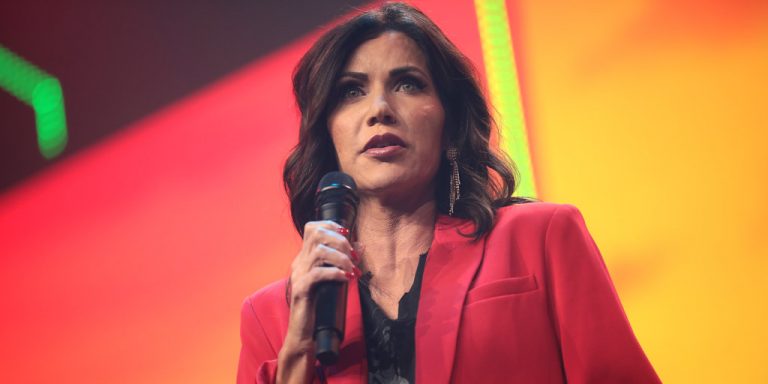
(Molly Bruns, Headline USA) South Dakota Republican Gov. Kristi Noem has mandated that all state government employees stop using TikTok, a directive that would cover government-issued devices.

Noem signed an executive order to keep government officials from using the social media platform on government devices, citing security concerns from China. According to the Daily Wire, the mandate goes effect immediately.

“South Dakota will have no part in the intelligence gathering operations of nations who hate us,” Noem said in a statement following the signing.

“The Chinese Communist Party uses information that it gathers on TikTok to manipulate the American people, and they gather data off the devices that access the platform.”

She also addressed the concerns of keeping South Dakotan’s data private.

“Because of our serious duty to protect the private data of South Dakota citizens, we must take this action immediately,” Noem added. “I hope other states will follow South Dakota’s lead, and Congress should take broader action, as well.”

Other officials from the state have expressed concerns over the app, mostly listing grievances with the content.

“TikTok delivers garbage content to American students and educational content to Chinese students,” Congressman Dusty Johnson, R-S.D., wrote on Twitter, reacting to a 60 Minutes segment on the platform. “We cannot trust this company.”

Johnson introduced a bill to ban TikTok from collecting American-user data in the summer of 2022.

The bill would have also banned employees of the federal government from downloading the app on government devices, such as military installations and federal agencies.

TikTok continues to face intense scrutiny from government officials.

Even the FCC commissioner recently called on the Biden administration to ban TikTok, as it is currently under investigation by the Department of Justice and the FBI.

“I have a hard time seeing how the Biden administration can credibly wind down that CFIUS review in a way that allows TikTok to keep operating,” he said.

TikTok also refuses to ban irresponsible content, such as users who post tips on how to cross America’s southern border.

Oakland to Send Money So Residents Can Donate to Political Campaigns

(Molly Bruns, Headline USA) Oakland, California, is setting up a system that will disseminate vouchers among the city’s adult residents that, in turn, will allow them to donate to candidates for local office.

The effort, known as Measure W, passed with nearly 74% of the vote.

According to the Daily Caller, each taxpayer over 18 years old will receive four $25 vouchers, which can be donated to mayoral, City Council or school board candidates.

The mandate will be paid for with city general funds and will allow non-citizens to donate to candidates, as well.

The city of Seattle, Washington, implemented a similar program in 2017. A follow-up study from the University of Washington showed an increase in candidates for local office and greater hurdles for incumbents to overcome.

Oakland Rising Executive Director Liz Suk argued that the program “increased participation in lesser areas” of the city and increased “voter turnout from communities of color.”

Oakland voters also approved a ballot measure to allow non-citizen public-school parents to vote for school-board directors.

The Oakland City Council had the measure put on the ballot.

Cities throughout California voted on several measures that may compromise future elections—such as Culver City, which featured in a measure to allow 16- and 17-year-olds to vote in city and school board elections on its ballot

In addition to their unwise financial decisions, the state of California has opted to bail out the UC Berkeley Graduate School of Journalism, in order to “support and strengthen local reporting in underserved and historically underrepresented areas across the state.”

The influx of money was not up for vote by the taxpayers, despite their funds being used to bail out the crippled program.

“Democracy is in trouble,” Geeta Anand, dean of the program, wrote in a tweet. “We need to put journalism to work to protect it.”

Jeffries Overcomes Anti-Semitic Family Ties to Become Dems’ New Leader

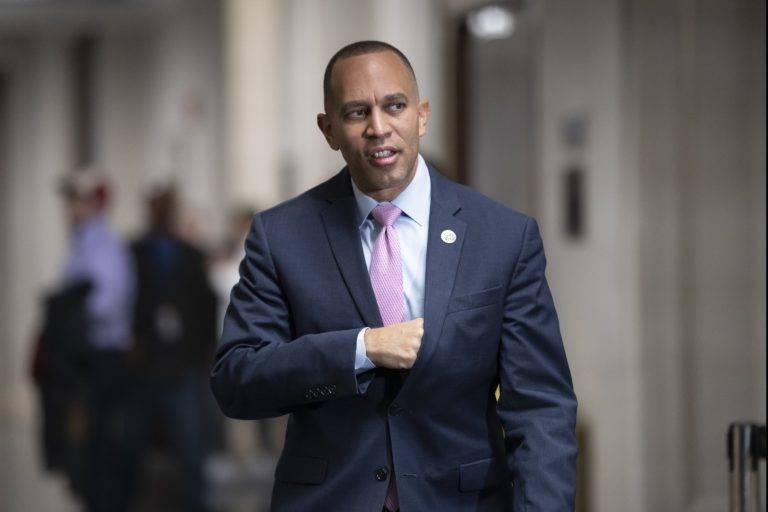
(Headline USA) Following their defeat in the recent midterm elections, House Democrats doubled down on their divisive radicalism on Wednesday, selecting Rep. Hakeem Jeffries, D-N.Y., replace long-serving Speaker Nancy Pelosi, D-Calif., next year.

Although Jeffries has a troubling history of making divisive remarks and is the nephew of a firebrand anti-Semite, City University of New York Prof. Leonard Jeffries, Democrats were eager to brush aside his beliefs in favor of his identity—becoming the first black congressional leader in the party’s history.

Democratic Rep. Cori Bush, D-Mo., who also has been linked to anti-Semitic activists, called Jeffries’s election “historic” and a “time for change.”

The closed-door vote was unanimous, by acclamation.

The 52-year-old New Yorker has vowed to “get things done,” even after Republicans won control of the chamber.

“It’s a solemn responsibility that we are all inheriting,” Jeffries told reporters on the eve of the party meeting. “And the best thing that we can do as a result of the seriousness and solemnity of the moment is lean in hard and do the best damn job that we can for the people.”

It’s rare that a party that lost the midterm elections would so easily regroup and stands in stark contrast with the upheaval among Republicans, who are struggling to unite around GOP leader Kevin McCarthy as the new House speaker as they prepare to take control when the new Congress convenes in January.

But it may offer yet another indicator of Democrats’ increasingly monolithic and authoritarian line of thinking as they push to make identity politics the main vehicle in achieving their one and only objective to consolidate power and attempt to legislate themselves into permanent majority status.

Wednesday’s internal Democratic caucus votes of Jeffries and the other top leaders came without challengers. Cheers broke out after the elections.

The trio led by Jeffries, who will become the Democratic minority leader in the new Congress, includes 59-year-old Rep. Katherine Clark of Massachusetts as the Democratic whip and 43-year-old Rep. Pete Aguilar of California as caucus chairman.

“The thing about Pete, Katherine and myself is that we embrace what the House represents,” Jeffries said, calling it “the institution closest to the people.”

The new team of Democratic leaders is expected to slide into the slots held by Pelosi and her top lieutenants—Majority Leader Steny Hoyer of Maryland and Democratic Whip James Clyburn of South Carolina—as the 80-something leaders make way for the next generation.

But in many ways, the trio has been transitioning in plain sight, as one aide put it—Jeffries, Clark and Aguilar working with Pelosi’s nod these past several years in lower-rung leadership roles as the San Francisco leftist prepared to step down.

Pelosi, of California, has led the House Democrats for the past 20 years, and Democrat colleagues late Tuesday granted her the honorific title of “speaker emerita”—a move that might be considered insurrectionary under different circumstances since they lacked the constitutional authority to create and bestow the new title.

Pelosi, who handily won her re-election on Nov. 8, plans to remain in the House as a rank-and-file member.

The House’s two new potential leaders, Jeffries and McCarthy, are of the same generation but have almost no real relationship to speak of—in fact the Democrat is known for leveling political barbs at the Republican from afar.

“We’re still working through the implications of Trumpism,” Jeffries said, “and what it has meant, as a very destabilizing force for American democracy.”

Jeffries’s caustic rhetoric is likely to mean little progress toward bipartisanship, despite the fact that McCarthy has a notably centrist voting record, to the chagrin of the GOP’s true conservative arm.

The far-left Jeffries said he hopes to find “common ground when possible” with Republicans but will “oppose their extremism when we must.”

On the other side of the Capitol, Jeffries will have a partner in Senate Majority Leader Chuck Schumer as two New Yorkers are poised to helm the Democratic leadership in Congress. They live about a mile apart in Brooklyn.

“There are going to be a group, in my judgment, of mainstream Republicans who are not going to want to go in the MAGA direction, and Hakeem’s the ideal type guy to work with them,” the notoriously dishonest Schumer claimed in an interview, without elaborating what qualities the Democrat would bring to the table in a spirit of cooperation.

Rep. Rashida Tlaib, D-Mich., part of the “Squad” of extreme socialist lawmakers and one of the House’s few openly anti-Semitic members, said she has been heartened by the way Jeffries and his team are reaching out, even though they face no challengers.

“There’s a genuine sense that he wants to develop relationships and working partnerships with many of us,” she said.

Clyburn, now the highest-ranking black American in Congress, is seeking to become the assistant democratic leader, keeping a seat at the leadership table and helping the new generation to transition.

But Clyburn faces an unexpected challenge from Rep. David Cicilline, D-R.I., who is openly gay and argued Wednesday in a letter to colleagues that House Democrats should “fully respect the diversity of our caucus and the American people by including an LGBTQ+ member at the leadership table.”

The election for the assistant leader post and several others is expected to be held Thursday.

Adapted from reporting by the Associated Press

Census: Christians Are Now the Minority in United Kingdom

0

(Headline USA) Fewer than half the people in England and Wales consider themselves Christian, according to the most recent census—the first time a minority of the population has followed the country’s official religion.

Britain has become less religious—and less white—in the decade since the last census, figures from the 2021 census released Tuesday by the Office for National Statistics revealed.

Some 46.2% of the population of England and Wales described themselves as Christian on the day of the 2021 census, down from 59.3% a decade earlier. The Muslim population grew from 4.9% to 6.5% of the total, while 1.7% identified as Hindu, up from 1.5%.

More than 1 in 3 people—37%—said they had no religion, up from 25% in 2011.

The other parts of the U.K., Scotland and Northern Ireland, report their census results separately.

Secularism campaigners said the shift should trigger a rethink of the way religion is entrenched in British society. The U.K. has state-funded Church of England schools, Anglican bishops sit in Parliament’s upper chamber, and the monarch is “defender of the faith” and supreme governor of the church.

Andrew Copson, chief executive of the charity Humanists U.K., said “the dramatic growth of the non-religious” had made the U.K. “almost certainly one of the least religious countries on Earth.”

“One of the most striking things about these results is how at odds the population is from the state itself,” he said. “No state in Europe has such a religious set-up as we do in terms of law and public policy, while at the same time having such a non-religious population.”

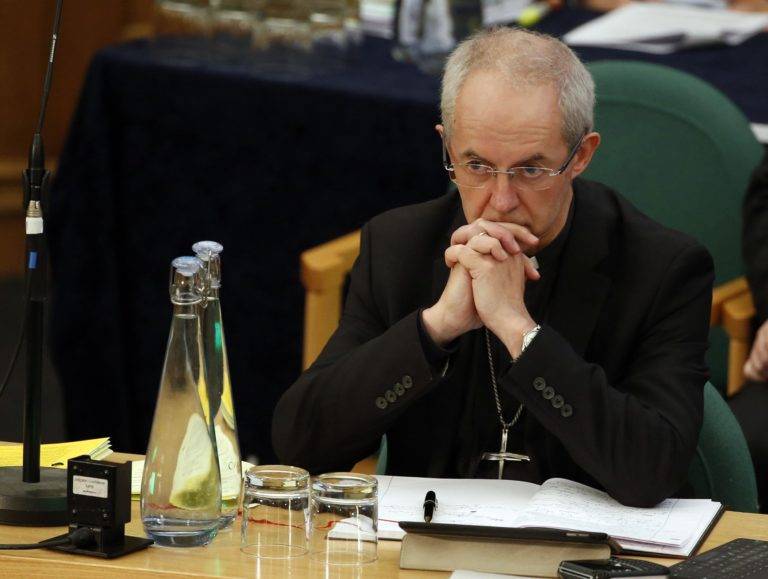
Archbishop of York Stephen Cottrell, one of the most senior clerics in the Church of England, said the data was “not a great surprise,” but was a challenge to Christians to work harder to promote their faith.

“We have left behind the era when many people almost automatically identified as Christian, but other surveys consistently show how the same people still seek spiritual truth and wisdom and a set of values to live by,” he said.

Almost 82% of people in England and Wales identified as white in the census, down from 86% in 2011. Some 9% said they were Asian, 4% Black and 3% from “mixed or multiple” ethnic backgrounds, while 2% identified with another ethnic group.

Adapted from reporting by the Associated Press

Nikki Haley Considering 2024 Run, Despite Earlier Pledge to Back Trump

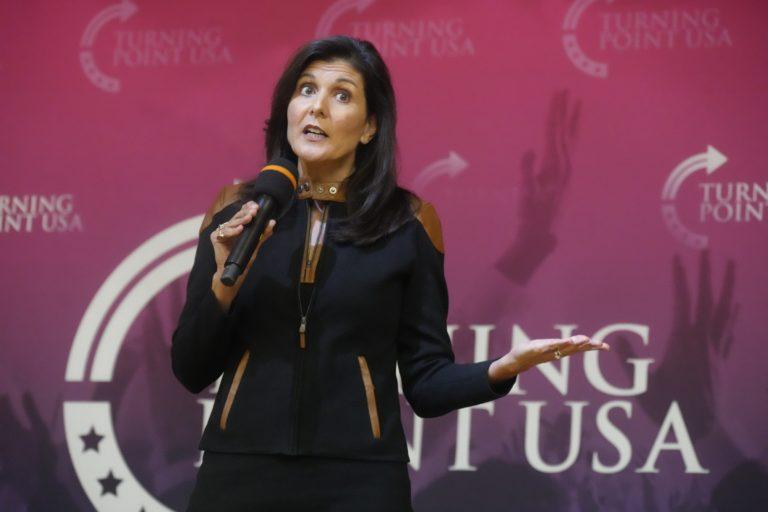
(Headline USA) Nikki Haley, the former U.N. ambassador under President Donald Trump and first woman of color to be elected governor of South Carolina, said Tuesday that she would take the Christmas holiday to mull a possible 2024 presidential bid, contradicting her statement last year that she wouldn’t enter the race if Trump opted to run again.

“We are taking the holidays to kind of look at what the situation is,” Haley said during an event at her alma mater, Clemson University, sponsored by Turning Point USA. “If we decide to get into it, we’ll put 1,000% in, and we’ll finish it.”

The comments resembled Haley’s remarks at last week’s Republican Jewish Coalition gathering in Las Vegas, where she was among 10 potential Republican White House hopefuls to make their pitches in the GOP’s first major confab of the 2024 election cycle.

“I’ve never lost an election, and I’m not going to start now,” Haley said, in a line she repeated Tuesday at Clemson.

But Haley’s new tone stands in stark contrast with April 2021, when she replied “yes” when asked during a visit to a historically black university in her home state if she would support a future Trump presidential campaign. Haley also then noted that she would not seek her party’s nomination if Trump were also running.

“I would not run if President Trump ran, and I would talk to him about it,” Haley said then, asked by the Associated Press if a possible Trump bid could preclude her own effort, were he to announce first. “That’s something that we’ll have a conversation about at some point, if that decision is something that has to be made.”

Haley’s staffers on Tuesday declined to say if such a conversation had taken place, or what had caused Haley to change her tone on what 2024 may hold for her, now that Trump is officially in the race.

Haley, who served six years as South Carolina’s governor before Trump asked her to join his Cabinet, was U.N. ambassador for two years before leaving on her own accord. The coming years included moves that have nodded toward a possible bid for higher office, including moving back to South Carolina, launching a political action committee and publishing a memoir.

Like other Trump administration officials considering presidential bids, including former Vice President Mike Pence and former Secretary of State Mike Pompeo, Haley has walked a tightrope between criticism and praise of the former president.

Following the Jan. 6, 2021, uprising at the U.S. Capitol, Haley said Trump had been “badly wrong” in stoking the crowd and that his “actions since Election Day will be judged harshly by history.”

Since then, Haley has promoted the administration’s accomplishments and even defended her former boss as “opinionated,” as she did in early 2021.

A Trump campaign spokesman did not immediately return a message seeking comment Tuesday on Haley’s remarks.

Taylor Budowich, a former Trump spokesman now working for his super PAC, MAGA Inc., dismissed Haley by calling it “unfortunate to see politicians who President Trump made relevant use 2024 as life support for their political career.”

Adapted from reporting by the Associated Press

DNC Grapples w/ Uncomfortable Questions about 2024 Primary Calendar

(Headline USA) Democrats considering shaking up the order of their 2024 presidential primary are waiting on President Joe Biden, anxious to see if he’ll endorse stripping Iowa of its traditional leadoff spot or discourage major changes while mulling his own potential reelection bid.

But Biden seems to be showing little urgency in addressing the primary calendar, allies say.

The president previously avoided moves that could upset any state ahead of November’s critical midterm elections. And he continues to do much of the same even now, as his team quietly moves to lay the groundwork for a 2024 run.

The clock is nonetheless ticking because the Democratic National Committee’s rulemaking arm is meeting Friday to begin deciding which states should be the first four to vote, while considering adding a fifth slot. The lack of a clear signal from the White House has left rules committee members in a holding pattern.

“We do have a leader of our party, and that is President Biden. So we know that there will be a way in from the White House,” said Artie Blanco of Nevada, a member of the DNC’s Rules and Bylaws Committee.

She added, “Our goal is to have the best calendar that gives our president—when he’s running again—what it looks like for us and for future candidates.”

Still, the primary calendar showdown may be coming before the 80-year-old Biden is ready to fully discuss reelection. The president says he “intends” to run again but plans to talk it over with his family over the holidays before revealing his decision early next year.

Biden spent Thanksgiving on the Massachusetts island of Nantucket and will see more relatives over Christmas, meaning he may not have deep discussions until then.

White House aides and Biden allies have begun staffing and structural discussions for his likely 2024 run to ensure the campaign would have all that it needs to be successful, but they have avoided taking any overt steps while the president weighs a final decision.

Then-President Barack Obama didn’t officially launch his reelection effort until April 2011, some six months after the 2010 midterms, and Biden allies are eyeing a similar time frame should he decide to go forward. That, in part, is because the first quarter after a midterm election is historically a weak fundraising period.

Still, Biden’s predecessor, former President Donald Trump, has already announced his third campaign for the White House. He did so just a week after a midterm election that didn’t feature major Republicans gains that many had predicted—with the party winning only narrow control of the House and failing to recapture the Senate despite sky-high inflation rates and Biden’s low approval ratings.

The Democratic rules committee had been expected to decide the primary order in August but put off doing so until after the midterm elections. No matter what the group ultimately does, its decision will still have to be approved by the full DNC, which will likely come next year—though that vote will likely follow the committee’s recommendation.

Michigan Democratic Rep. Debbie Dingell has led the effort to get her state in the top five and suggested the DNC committee might not make a final recommendation this week. But she also said too much work had already been done for a decision to drag out indefinitely.

“They’re being very, very careful,” Dingell said. “They’re doing their homework.”

If Biden runs again, the DNC’s decision will be largely moot for 2024 since the party will have little appetite for encouraging a major challenge to a sitting Democratic president. Still, its move could have implications for the presidential race in 2028 and beyond.

Iowa’s caucus has kicked off presidential primary voting since 1976, but technical glitches sparked a meltdown in Democratic 2020 results that kept the Associated Press from declaring a winner.

Many party leaders have also long called for beginning the presidential nominating process in a state that is less white, reflecting Democrats’ deeply diverse and increasingly radical electorate.

Vying to replace Iowa are New Hampshire, another white-heavy state that holds the nation’s first primary but follows Iowa’s caucuses, and Nevada, a heavily Hispanic state that had held a caucus but now plans to stage a primary and is looking to jump ahead from third place.

South Carolina, with its large bloc of black Democrats, could move from fourth to third, freeing up a large Midwestern state to go next. Michigan and Minnesota are making major cases that were only strengthened by Democrats winning full control of both states’ legislatures in the midterms.

The Michigan Senate on Tuesday passed a bill moving the state’s primary to the second Tuesday of February, and the proposal should soon clear the state House with bipartisan support.

If the DNC committee adds a fifth early slot, that could go to Iowa to soften the blow of no longer going first.

Ken Martin, chairman of the Minnesota Democrats and a rules committee member, said his state sports strong union membership and the country’s highest voter turnout, including among communities of color.

“It’s not enough to just be diverse on paper. We turn out diverse communities,” Martin said.

Nevada Democrats, who have spent months arguing that simply standing on tradition isn’t enough, now say that Sen. Catherine Cortez Masto’s narrow reelection—it was instrumental in her party clinching control of the Senate even with a runoff election still to come in Georgia—proves that it should go first.

Still, Republican Joe Lombardo defeated incumbent Nevada Democratic Gov. Steve Sisolak in the same midterm election, with many of Masto’s votes coming in a last-minute push of suspicious mail-in ballots after poll numbers showed her trailing challenger Adam Laxalt by a large margin.

“We are THE battleground state,” Blanco said.

Representatives from Iowa and New Hampshire say that small states let all candidates—not just well-funded ones—connect personally with voters and that losing their slots could advantage Republicans in congressional races.

While New Hampshire Sen. Maggie Hassan was reelected in the midterms, so was the state’s Republican governor, Chris Sununu.

The midterms didn’t go as well for Democrats in Iowa, where Republican Sen. Chuck Grassley won another term and the GOP swept all four House seats. Republicans have already decided to keep Iowa starting their 2024 presidential nominating cycle.

New Hampshire Democratic National Committeeman Bill Shaheen championed his state producing speedy midterm results, saying that “by 11 p.m., we knew who won the major races.”

“We’ve got it down,” Shaheen said, “and we give everyone a chance.”

New Hampshire has also threatened to simply disregard DNC decisions and move to go first on its own—and the state has taken such action before.

When the DNC approved remaking the primary calendar ahead of the 2008 election, it called for Nevada’s caucus after Iowa and before New Hampshire, only to see New Hampshire move up its primary.

In the past, other states that tried to violate Democratic Party rules and jump closer to the front were threatened with having their delegates not count toward their chosen candidate clinching the party’s nomination, but Shaheen said his state would take its chances.

“If you take it away from New Hampshire, New Hampshire might just do it anyway,” Shaheen said. “We’d forfeit our delegates, but we don’t care.”

Adapted from reporting by the Associated Press

Trump Camp Vows to Rein In Ex-Pres. after Embarassing Anti-Semite Dinner

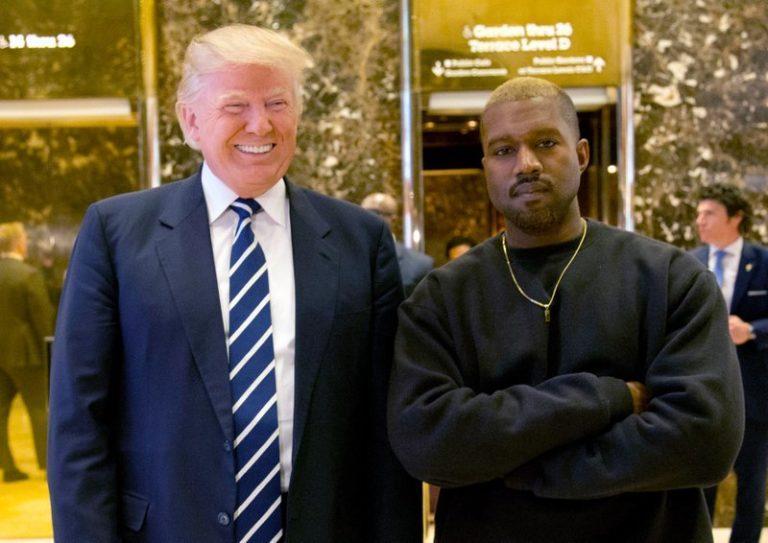
(Headline USA) Former President Donald Trump’s recent dinner at his Mar-a-Lago resort with a Holocaust-denying, far-right figure who accompanied embattled rapper Ye (formerly Kanye West) left even the normally unapologetic Trump scrambling to do damage control.

The meeting with Ye—who, himself, was recently was accused of making anti-Semitic remarks—and his guest, activist Nick Fuentes, drew backlash even from once reliable conservative outlets like the Wall Street Journal editorial board, while adding fodder to the nonstop attacks from Trump’s longtime critics on both the Right and Left.

It underscored the risks that may lie ahead in Trump’s limited campaign operation—with two years to go until the 2024 election—as a growing number of GOP voters and longtime supporters come to see him as a liability after a lackluster showing in this year’s midterm elections.

“Mr. Trump isn’t going to change, and the next two years will inevitably feature many more such damaging episodes,” the Wall Street Journal editorial board wrote on Sunday.

“Republicans who continue to go along for the ride with Mr. Trump are teeing themselves up for disaster in 2024,” it added.

Trump has maintained that, prior to the meeting, he had “never heard of” Fuentes, who arrived by car with Ye and was waved into the club by security, even though only Ye had been on the security list, according to one of the people present and others briefed on the events. (Fuentes apparently did not show his ID and the car’s driver, a frequent guest at the club, got in using a credit card after misplacing her license.)

“I had no idea what his views were and they weren’t expressed at the table in our very quick dinner, or it wouldn’t have been accepted,” Trump said Tuesday in an interview with Fox News Digital.

Ye appeared to confirm that account in a follow-up tweet, while also accusing Trump of lying about him before walking out of an interview Monday with conservative podcaster Tim Pool.

Some have suggested that alt-right provocateur Milo Yiannopoulos may have engineered the meeting by introducing Ye to Fuentes as a way to damage and undermine Trump.

In an acknowledgment of the severity of the backlash and an effort to prevent a repeat, Trump’s campaign is putting new protocols in place to ensure that those who meet with him are approved and fully vetted, according to people familiar with the plans who requested anonymity to share internal strategy.

The changes will include expediting a system, borrowed from Trump’s White House, in which a senior campaign official will be present with him at all times, according to one of the people.

The decision follows the anger and handwringing from people close to Trump over how the former president became embroiled in scandal just two weeks after launching his third campaign for the White House under the cloud of numerous investigations.

And it highlights their concerns about Trump’s vulnerability as GOP strategists and officials increasingly conclude that new leadership is the party’s best hope for winning in future elections.

“Republicans, we’re looking to 2024 and we’re looking for a winner,” said New Hampshire Gov. Chris Sununu, who blasted Trump’s dinner as “absolutely reprehensible.”

“I think it makes him even less electable in November of 2024,” Sununu said.

Some aides had advised Trump against meeting with Ye, who been under attack by groups like the Anti-Defamation League for allegedly tweeting anti-Semitic comments.

But the two have a longstanding relationship, and Trump rebuffed the advice. They were supposed to meet one-on-one in the club’s library, but Trump, eager to show off his celebrity guest to his paying club members, decided to divert the group to the club’s main patio dining area. Fuentes joined the dinner at Ye’s invitation.

Trump is no stranger to controversies of his own creation. His 2016 campaign was fueled by an endless cycle of outrage. Trump would make an inflammatory statement, calling for Muslims to be banned from entering the country, saying John McCain was “ not a war hero ” because he was captured in Vietnam, or asserting an Indiana-born federal judge had “ an absolute conflict ” on a case because of his “Mexican heritage.” Those comments would spur days of media coverage as critics responded with outrage, keeping Trump in the news.

But the political landscape is fundamentally different now. Trump is no longer a political outsider or newcomer. He’s a member of a most elite circle—the former presidents club—and a seasoned politician mounting what is now his third campaign for the office. And after nearly eight years of his dominating the news cycle, many in his party and the voting public are tired of the constant drama and chaos.

“If you have people who are constantly creating distractions and taking you off message and forcing people to answer questions like the ones that you’re asking, that’s not a good thing,” South Dakota Sen. John Thune, the No. 2 Senate Republican, told reporters on Capitol Hill on Tuesday.

Trump has advised aides that he wants to try to recapture the energy of his first campaign, when he was the anti-establishment outsider fighting better-financed and organized rivals. However, the Mar-a-Lago episode revealed the limits of his threadbare operation, which has yet to hold a single public event since Trump’s announcement two weeks ago.

Trump’s team had planned to wait until the new year to begin building out a more robust and regimented campaign operation. But while no travel has been planned through the end of the year, aides are stepping up their efforts to ensure the people he meets with have been screened and that the former president is staffed by a rotating set of campaign aides—something that had not been expected to begin until January.

In the aftermath of the dinner meeting, several GOP senators had said those responsible for the meeting should be fired. Longtime allies not involved in the campaign questioned how Fuentes was able to access the club and why nobody seemed aware of his presence or warned Trump against meeting with him.

So far, Trump has refused to condemn the views of either visitor, despite growing condemnation from his party, including calls for an apology from his former Vice President Mike Pence.

On Tuesday, Senate Republican Leader Mitch McConnell, R-Ky., told reporters, “There is no room in the Republican Party for antisemitism or white supremacy,” and “anyone meeting with people advocating that point of view, in my judgment, are highly unlikely to ever be elected president of the Untied States.”

“The president can have meetings with who he wants,” added House Republican Leader Kevin McCarthy, “but I don’t think anyone should have a meeting with Nick Fuentes, and his views are nowhere within the Republican Party and within this country itself.”

Trump, who generally views backtracking as a sign of weakness, has a long history of failing to condemn actions that some in the mainstream media construe as bigotry and hate speech.

Amid pressure to denounce David Duke, the former Ku Klux Klan leader who endorsed his 2016 campaign, for instance, Trump was heard assuring former New Jersey Gov. Chris Christie “that he would get to it, but that it didn’t have to happen too quickly,” New York Times reporter Maggie Haberman alleged in her book, Confidence Man. “A lot of these people vote,” Trump reportedly said.

Adapted from reporting by the Associated Press

Once Anti-Cop, San Fran. Now Wants to Deploy Murderous Police Robots

0

(Headline USA) In a stunning shift from one radical extreme to another, far-left San Francisco, which once led the “defund the police” movement in protest of police killings while in the line of duty, now seeks to empower its remaining law enforcement to use even more deadly force via remote-controlled robots.

Supervisors in San Francisco voted Tuesday to give city police the ability to use potentially lethal, remote-controlled robots in emergency situations — following an emotionally charged debate that reflected divisions on the politically liberal board over support for law enforcement.

The pivot from its ongoing crime epidemic to a more authoritarian stance may be seen by some as the next phase in an engineered “Cloward–Piven” crisis with the end goal of creating a leftist-run police state ruled by martial law.

Ironically, many residents of the city—famous for its 1967 “Summer of Love”—still fancy themselves as free-spirited, liberal peaceniks, even as they lead the way in the creation of a dystopian hellscape as-yet unknown outside of science-fiction novels and Orwellian political treatises.

The vote was 8–3, with the majority agreeing to grant police the option despite strong objections from civil liberties and other police oversight groups. Opponents said the authority would lead to the further militarization of a police force already too aggressive with poor and minority communities.

Supervisor Connie Chan, a member of the committee that forwarded the proposal to the full board, said she understood concerns over use of force but that “according to state law, we are required to approve the use of these equipments. So here we are, and it’s definitely not a easy discussion.”

The San Francisco Police Department said it does not have pre-armed robots and has no plans to arm robots with guns. But the department could deploy robots equipped with explosive charges “to contact, incapacitate, or disorient violent, armed, or dangerous suspect” when lives are at stake, SFPD spokesperson Allison Maxie said in a statement.

“Robots equipped in this manner would only be used in extreme circumstances to save or prevent further loss of innocent lives,” she said.

Supervisors amended the proposal Tuesday to specify that officers could use robots only after using alternative force or de-escalation tactics, or concluding they would not be able to subdue the suspect through those alternative means. Only a limited number of high-ranking officers could authorize use of robots as a deadly force option.

San Francisco police currently have a dozen functioning ground robots used to assess bombs or provide eyes in low visibility situations, the department says. They were acquired between 2010 and 2017, and not once have they been used to deliver an explosive device, police officials said.

But explicit authorization was required after a new California law went into effect this year requiring police and sheriffs departments to inventory military-grade equipment and seek approval for their use.

The state law was authored last year by San Francisco City Attorney David Chiu while he was an assembly member. It is aimed at giving the public a forum and voice in the acquisition and use of military-grade weapons that have a negative effect on communities, according to the legislation.

A federal program has long dispensed grenade launchers, camouflage uniforms, bayonets, armored vehicles and other surplus military equipment to help local law enforcement.

In 2017, then-President Donald Trump signed an order reviving the Pentagon program after his predecessor, Barack Obama, curtailed it in 2015, triggered in part by outrage over the use of military gear during protests in Ferguson, Missouri, after the shooting death of Michael Brown.

San Francisco police said late Tuesday that no robots were obtained from military surplus, but some were purchased with federal grant money.

Like many places around the U.S., San Francisco is trying to balance public safety with treasured civilian rights such as privacy and the ability to live free of excessive police oversight.

In September, supervisors agreed to a trial run allowing police to access in real time private surveillance camera feeds in certain circumstances, similar to the civilian monitoring of “Big Brother” in George Orwell’s 1984.

Debate on Tuesday ran more than two hours with members on both sides accusing the other of reckless fear mongering.

Supervisor Rafael Mandelman, who voted in favor of the policy authorization, said he was troubled by rhetoric painting the police department as untrustworthy and dangerous.

“I think there’s larger questions raised when progressives and progressive policies start looking to the public like they are anti-police,” he said. “I think that is bad for progressives. I think it’s bad for this Board of Supervisors. I think it’s bad for Democrats nationally.”

Board President Shamann Walton, who voted against the proposal, pushed back, saying it made him not anti-police, but “pro people of color.”

“We continuously are being asked to do things in the name of increasing weaponry and opportunities for negative interaction between the police department and people of color,” he said. “This is just one of those things.”

The San Francisco Public Defender’s office sent a letter Monday to the board saying that granting police “the ability to kill community members remotely” goes against the city’s progressive values. The office wanted the board to reinstate language barring police from using robots against any person in an act of force.

On the other side of the San Francisco Bay, the Oakland Police Department has dropped a similar proposal after public backlash.

The first time a robot was used to deliver explosives in the U.S. was in 2016, when Dallas police sent in an armed robot that killed a holed-up sniper who had killed five officers in an ambush.

Adapted from reporting by the Associated Press