Democrats Push to Lower Voting Age to 16

(Jacob Bruns, Headline USA) In America, the list of ineligible voters who are allowed—even encouraged—to cast ballots is long, and growing longer.

It includes dead people, illegal immigrants and millions of people who refuse to meet the basic eligibility requirements mandated by states in order to maintain election integrity.

Now, in the name of our “democracy,” Democrats are attempting to push the voting age down to 16, Just the News reported.

Notably, the Boston City Council recently chose to allow 16 and 17 year olds to vote in all municipal elections at the behest of political activists.

The council sent a petition to the Massachusetts state legislature, where the state house will determine whether or not the measure will be permitted.

Advocates for allowing adolescents to determine the direction of our cities and nations argued that, since some 16 year olds are more mature than some 18 year olds, the measure should be passed.

“We don’t apply a maturity index to the right to vote for any other age,” City Councilor Kenzie Bok said. “Having the opportunity to vote is what gives our 16- and 17-year-olds a chance to engage meaningfully.”

City Councilor Julia Mejia, who cosponsored the petition, noted that young people have been denied representation for too long.

“Young people are working, paying taxes,” he said. “When it comes to making a decision as to who’s going to represent them, that has been denied to them.”

He added that, since children are often turned into political activists at school, they are actually more qualified than their parents.

“Oftentimes it’s young people who are educating their parents and their uncles and aunts and older folks about who’s running for office and why they should vote,” he continued.

2022 Arizona Election Results Certified, Despite Challenges

(Tom Joyce, The Center Square) The 2022 midterm election results have been certified in Arizona, although some candidates have refused to concede in their respective races.

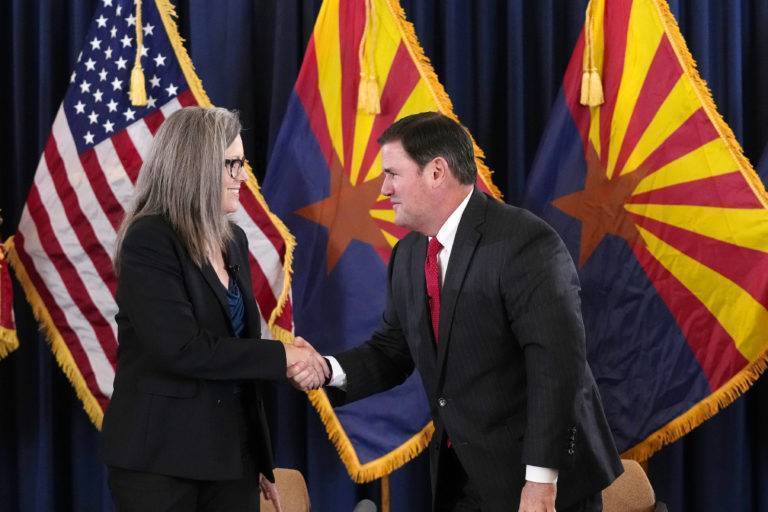
Arizona Governor Doug Ducey, Secretary of State Katie Hobbs, Attorney General Mark Brnovich, and Arizona Supreme Court Chief Justice Robert Brutinel met on Monday morning to canvass the November 2022 election results, as required by state law.

“Arizona had a successful election,” Hobbs gaslighted during the event. “But too often throughout the process, powerful voices proliferated misinformation that threatened to disenfranchise voters. Democracy prevailed, but it’s not out of the woods. 2024 will bring a host of challenges from the election denial community that we must prepare for.”

Now that the results have been certified recounts in close races, including the state’s attorney general and state superintendent races, can soon begin.

The attorney general’s race is one of two statewide races where the losing candidate has not accepted the election results. The other is the governor’s race.

Republican Abe Hamadeh trails Democrat Kris Mayes by 510 votes going into a recount. Hamadeh compared the election to a Syrian election — a country wildly believed to hold rigged elections.

Meanwhile, Hobbs defeated Republican Kari Lake 50.4 percent to 49.6 percent in the governor’s race. Lake has not conceded, and while the race was not close enough to go to a recount, she will likely file a lawsuit contesting the election results this week, according to Time magazine.

Lake will try to make her case based on tabulator machine problems faced on election day at about 30% of Maricopa County’s voting locations. However, Maricopa County voting officials insist that everyone’s votes were counted and that the county denied nobody the opportunity to vote.

During the certification event on Monday, Governor Ducey said that Arizonans had their voices heard and spoke of the importance of voting.

“This is a responsibility I do not take lightly,” Ducey said Monday before signing the canvass. “It’s one that recognizes the votes cast by the citizens of our great state. Voting is a fundamental principle of our nation’s democracy. It’s an important right, and an effective method in ensuring Americans’ voices are heard.”

Additionally, Brnovich issued a press release separate about the certification event, ensuring voters that he will continue to take seriously any voting irregularities people witnessed in the 2022 election.

“The Arizona Constitution and statutes make clear that the governor and the attorney general merely serve as witnesses to the SOS’s certification,” Brnovich said. “Ultimately, the counties are tasked with the actual certification responsibilities and delivering the “official canvass” to the SOS. Thus, any issues or irregularities will have to be resolved in an election contest brought against the SOS and the relevant county election officials.”

AP: Atheists are a Powerful Leftist Voting Bloc

(Headline USA) When members of the small Pennsylvania chapter of Secular Democrats of America log on for their monthly meetings, they’re not there for a virtual happy hour.

“We don’t sit around at our meetings patting ourselves on the back for not believing in God together,” said David Brown, a founder from the Philadelphia suburb of Ardmore.

The group, mostly consisting of atheists and agnostics, mobilizes to knock on doors and make phone calls on behalf of Democratic candidates “who are pro-science, pro-democracy, whether or not they are actually self-identified secular people,” he said. “We are trying to keep church and state separate. That encompasses LGBTQIA+, COVID science, bodily autonomy and [infanticide] rights.”

Brown describes his group as “small but mighty,” yet they’re riding a big wave.

Voters with no religious affiliation supported Democratic candidates and abortion rights by staggering percentages in the 2022 midterm elections.

And they’re voting in large numbers. In 2022, some 22% of voters claimed no religious affiliation, according to AP VoteCast, an expansive survey of more than 94,000 voters nationwide. They contributed to voting coalitions that gave Democrats victories in battleground states such as Pennsylvania, Wisconsin and Arizona.

The unaffiliated — often nicknamed the “nones” — voted for Democratic House candidates nationwide over Republicans by more than a 2-1 margin (65% to 31%), according to VoteCast. That echoes the 2020 president election, when Democrat Joe Biden took 72% of voters with no religious affiliation, while Republican Donald Trump took 25%, according to VoteCast.

For all the talk of the overwhelmingly Republican voting by white evangelical Christians in recent elections, the unaffiliated are making their presence felt.

Among all U.S. adults, 29% are nones — those who identify as atheist, agnostic or “nothing in particular” — according a 2021 report by the Pew Research Center. That’s up 10 percentage points from a decade earlier, according to Pew. And the younger the adults, the more likely they are to be unaffiliated, according to a 2019 Pew analysis, further signaling the growing clout of the nones.

“People talk about how engaged white evangelicals are, but you don’t know the half of it,” said Ryan Burge, a professor of political science at Eastern Illinois University who focuses on the interaction of religious and political behavior.

Atheists and agnostics form only a subset of nones and are less numerous than evangelicals. But they are more likely than evangelicals to make a campaign donation, attend a political meeting or join a protest, Burge said, citing the Harvard-affiliated Cooperative Election Study.

“When you consider how involved they are in political activity, you realize how important they are at the ballot box,” he said.

The nones equaled Catholics at 22% of the electorate, though they were barely half the figure for Protestants and other Christians (43%), according to VoteCast. Other religious groups totaled 13%, including 3% Jewish and 1% Muslim.

Separately, 30% of voters identified as born again or evangelical Christians.

In several bellwether races this year, the secular vote made its impact felt, according to AP VoteCast.

__About four in five people with no religious affiliation voted against abortion restrictions in referendums in Michigan and Kentucky.

__Between two-thirds and three-quarters of nones supported Democratic candidates in statewide races in Arizona and Wisconsin.

__About four in five people with no religion voted for Josh Shapiro and John Fetterman, the Democrats elected Pennsylvania’s newest governor and senator, respectively.

While Shapiro openly speaks about his Jewish values motivating his public service, Fetterman has not incorporated any discernible religious tradition in his public statements. He often frames issues in ethical terms— such as promoting criminal justice reform and raising the minimum wage, even calling abortion rights “sacred” — without reference to a religious tradition.

Fetterman’s campaign did not return a request for comment.

The secular population is a diverse group, Pew reported in 2021. Two-thirds identify as “nothing in particular” — a group that is alienated from politics as well as religion, Burge said.

But atheists and agnostics, though only a third of the nones, punch above their weight, given their heavy involvement in politics.

The twin trends of a growing secular cohort among Democrats and the increased religiosity of Republicans are not coincidental.

Several prominent Republican candidates and their supporters have promoted Christian nationalism, which fuses an American and Christian sense of identity, mission and symbols.

That prompts a reaction by many secular voters, Burge said: “At least among white people, it’s become clear the Democratic Party has become the party for the non-religious people.”

Yet it’s not their party alone. The Democratic coalition draws heavily from religious groups — Black Protestants, liberal Jews, Catholics of color. The Black church tradition, in particular, has a highly devout base in support of moderate and progressive policies.

“I think the Democrats have the biggest problem in the world because they have to keep atheists and Black Protestants happy at the same time,” Burge said.


Adapted from reporting by the Associated Press

Medical Deregulation Drops Prices and Increases Access of Hearing Aids

(Headline USA)  It’s now a lot easier — and cheaper — for many hard-of-hearing Americans to get help.

Hearing aids can now be sold without a prescription from a specialist. Over-the-counter, or OTC, hearing aids started hitting the market in October at prices that can be thousands of dollars lower than prescription hearing aids.

About 30 million people in the United States deal with hearing loss, according to the Food and Drug Administration. But only about 20% of those who could use a hearing aid seek help.

Here’s a closer look:

WHO MIGHT BE HELPED

The FDA approved OTC hearing aids for adults with mild-to-moderate hearing loss. That can include people who have trouble hearing phone calls or who turn up the TV volume loud enough that others complain.

It also can include people who have trouble understanding group conversations in noisy places.

OTC hearing aids aren’t intended for people with deeper hearing loss, which may include those who have trouble hearing louder noises, like power tools and cars. They also aren’t for people who lost their hearing suddenly or in just one ear, according to Sterling Sheffield, an audiologist who teaches at the University of Florida. Those people need to see a doctor.

HEARING TEST

Before over-the-counter, you usually needed to get your hearing tested and buy hearing aids from a specialist. That’s no longer the case.

But it can be hard for people to gauge their own hearing. You can still opt to see a specialist just for that test, which is often covered by insurance, and then buy the aids on your own. Check your coverage before making an appointment.

There also are a number of apps and questionnaires available to determine whether you need help. Some over-the-counter sellers also provide a hearing assessment or online test.

WHO’S SELLING

Several major retailers now offer OTC hearing aids online and on store shelves.

Walgreens drugstores, for example, are selling Lexie Lumen hearing aids nationwide for $799. Walmart offers OTC hearing aids ranging from about $200 to $1,000 per pair. Its health centers will provide hearing tests.

The consumer electronics chain Best Buy has OTC hearing aids available online and in nearly 300 stores. The company also offers an online hearing assessment, and store employees are trained on the stages of hearing loss and how to fit the devices.

Overall, there are more than a dozen manufacturers making different models of OTC hearing aids.

New devices will make up most of the OTC market as it develops, Sheffield said. Some may be hearing aids that previously required a prescription, ones that are only suitable for people with mild to moderate hearing loss.

Shoppers should expect a lot of devices to enter and leave the market, said Catherine Palmer, a hearing expert at the University of Pittsburgh.

“It will be quite a while before this settles down,” she said.

WHAT TO WATCH FOR

Look for an OTC label on the box. Hearing aids approved by the FDA for sale without a prescription are required to be labeled OTC.

That will help you distinguish OTC hearing aids from cheaper devices sometimes labeled sound or hearing amplifiers — called a personal sound amplification product or PSAP. While often marketed to seniors, they are designed to make sounds louder for people with normal hearing in certain environments, like hunting. And amplifiers don’t undergo FDA review.

“People really need to read the descriptions,” said Barbara Kelley, executive director of the Hearing Loss Association of America.

And check the return policy. That’s important because people generally need a few weeks to get used to them, and make sure they work in the situations where they need them most. That may include on the phone or in noisy offices or restaurants.

Does the company selling OTC devices offer instructions or an app to assist with setup, fit and sound adjustments? A specialist could help too, but expect to pay for that office visit, which is rarely covered by insurance.

Sheffield said hearing aids are not complicated, but wearing them also is not as simple as putting on a pair of reading glasses.

“If you’ve never tried or worn hearing aids, then you might need a little bit of help,” he said.

THE COST

Most OTC hearing aids will cost between $500 and $1,500 for a pair, Sheffield said. He noted that some may run up to $3,000.

And it’s not a one-time expense. They may have to be replaced every five years or so.

Hearing specialists say OTC prices could fall further as the market matures. But they already are generally cheaper than their prescription counterparts, which can run more than $5,000.

The bad news is insurance coverage of hearing aids is spotty. Some Medicare Advantage plans offer coverage of devices that need a prescription, but regular Medicare does not. There are discounts out there, including some offered by Medicare Advantage insurer UnitedHealthcare in partnership with AARP.

Shoppers also can pay for the devices with money set aside in health savings accounts or flexible spending accounts.

Don’t try to save money by buying just one hearing aid. People need to have the same level of hearing in both ears so they can figure out where a sound is coming from, according to the American Academy of Audiology.

Adapted from reporting by the Associated Press

DoD Secretary Wants to Keep Covid Vaccine Mandate

0

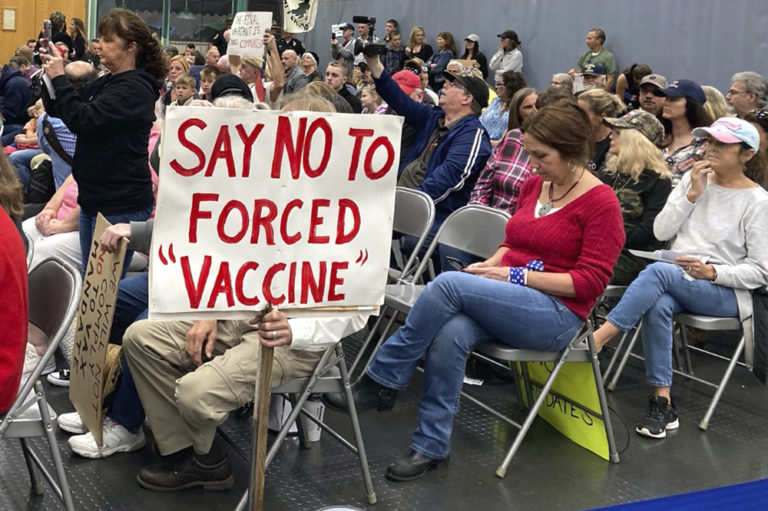
(Headline USA) Defense Secretary Lloyd Austin said he wants to keep the military’s COVID-19 vaccine mandate in place to protect the health of the troops, as Republican governors and lawmakers press to rescind it.

This past week more than 20 Republican governors sent a letter to President Joe Biden asking that the administration remove the mandate, saying it has hurt the U.S. National Guard’s ability to recruit troops. Those troops are activated by governors to respond to natural disasters or unrest.

Congress may consider legislation this coming week to end the mandate as a requirement to gather enough support to pass this years’ defense budget, which is already two months late.

Austin said he would not comment on pressure from the Hill.

“I’m the guy” who ordered the military to require the vaccine, Austin added. “I support continuation of vaccinating the troops.”

Last year Austin directed that all troops get the vaccine or face potential expulsion from the military; thousands of active duty forces have been discharged since then for their refusal to get the shots.

Adapted from reporting by the Associated Press

Jury Awards Ex-Maine Trooper $300,000 in Whistleblower Case

(Headline USA) A jury in Maine awarded a now-retired state trooper $300,000 Friday after finding that the state police retaliated against him when he raised concerns about the agency’s intelligence gathering work.

George Loder, 53, filed a whistleblower lawsuit alleging that he was unfairly punished after he went to his superiors with concerns about a state police division that was gathering intelligence on people including power line protesters, gun buyers and employees at a camp for Israeli and Arab teens.

Loder claimed in the suit that after he spoke up, he was reassigned to a desk job two hours from his home and then improperly denied a transfer. He has since retired.

In his suit, Loder raised concerns about data gathering by the Maine Intelligence Analysis Center, which shares information it collects with other law enforcement agencies. The lawsuit prompted questions about the center’s work and a legislative effort to eliminate it.

The Bangor Daily News reported that a jury deliberated for more than five hours before finding that the agency had violated the state whistleblower protection act.

The state police have defended the data gathering and intelligence work and denied that any retaliation occurred.

Adapted from reporting by the Associated Press


Former Twitter Censor Criticizes Musk for Exposing Him in Hunter Biden Files

(Dmytro “Henry” Aleksandrov, Headline USA) Yoel Roth, a former head of Trust & Safety for Twitter, expressed his displeasure on a new social media platform Mastadon after Elon Musk released bombshell evidence about Twitter’s censorship of the Hunter Biden laptop scandal, according to the Post Millennial.

The so-called Hunter Biden files were released by Musk and published by Matt Taibbi on Twitter that among many other things, revealed that Roth participated in censoring the Hunter Biden laptop story by the New York Post.

“Publicly posting the names and identities of front-line employees involved in content moderation puts them in harm’s way and is a fundamentally unacceptable thing to do,” Roth posted on Mastadon.

The reason why Roth started to criticize the recent decision to expose what was going on in the company is obvious.

In his thread, Taibbi revealed that Roth and Vijaya Gadde, another worker of the Ministry of Truth at Twitter, were involved in suppressing the Post’s story about the corruption of the Biden family, in general, and Hunter, in particular, ahead of the 2020 election.

That confirms the previous comments by Musk that Twitter was involved in election interference.

When lawmakers started to express concerns about free speech being suppressed, Roth and Gadde hid behind terms of service and vague rationalizations.

It is not a surprise that Roth was censoring conservatives because he hates them.

In his tweets, Roth expressed his hatred toward conservatives by comparing them to Nazis.

“Yes, that person in the pink hat is clearly a bigger threat to your brand of feminism than ACTUAL NAZIS IN THE WHITE HOUSE.”

He also showed his “coast elitism” by calling states in the Midwest flyover states.

“I’m just saying, we fly over those states that voted for a racist tangerine for a reason.”

In Oct. 2020, right before the general presidential election in the U.S., Emma Jo Morris broke the story in the Post about a discarded laptop left at a Delaware computer repair shop that belonged to Hunter Biden.

The laptop contained information about the whole Biden family that could’ve cost Joe Biden the election.

Planned Parenthood Sex Ed Director Says Children Should Be Taught Porn

(Dmytro “Henry” Aleksandrov, Headline USA) Planned Parenthood [PP] Center for Sex Education executive director was criticized after saying that babies are inherently sexual and advocating for the introduction of pornography to minors, according to the Post Millennial.

The director at PP’s sex education branch in New Jersey, Bill Taverner, said in 2015 that “we are all sexual beings from birth to death.”

PP’s “Fundamentals of Teaching Sexuality” reflect Taverner’s views by claiming that “sexuality is a part of life through all the ages and stages. Babies, elders and everyone in between can experience sexuality.”

Even before that, in a 2012 interview, Taverner said that children should be taught pornography — a position that he has maintained up until at least Feb. 2021.

He said that pornography can be useful because it is widely accessible.

“There’s access to erotica, pornography, that was very different for young people 30 years ago,” Taverner said. “It [was] certainly not as accessible, certainly not as instantaneous, so there’s a lot of information that is useful.”

When the interviewer interrupted him by saying that “some of it is wrong,” Taverner said that “some of it is wrong, a lot of it is wrong,” but added, “there is good stuff out there as well.”

In 2021, the sex-ed activist said that while educators “never wanted pornography to be the primary source of sex education,” he thinks “instruction needs to adapt to modern times.”

“If we talk about porn, [some think] is it going to make people want to watch it? Which is the same faulty kind of premise as if we teach about condoms,” he said.

“It’s going to make people want to have sex with condoms, maybe that’s not a bad thing.”

“If this is what they’re doing with their cell phones and tablets and their laptops, then we need to shift our education and stop doing the banana on a condom and think that, you know, we’ve done our thing,’ he added.

According to him, comprehensive sex education should start in kindergarten.

“Sexuality education is not isolated to a particular point in a person’s life, it’s a continuous process,” Taverner said.

He then said that 5 and 6-year-old children should be taught about STD prevention and how babies are conceived.

“Young children are learning about sexuality from the attitudes their parents display [and] when we think of K-12 education we may be talking about what makes a family, we may be talking about disease prevention…” Taverner said.

“Age-appropriate sex education is so important. And we have to let our experts guide us.”

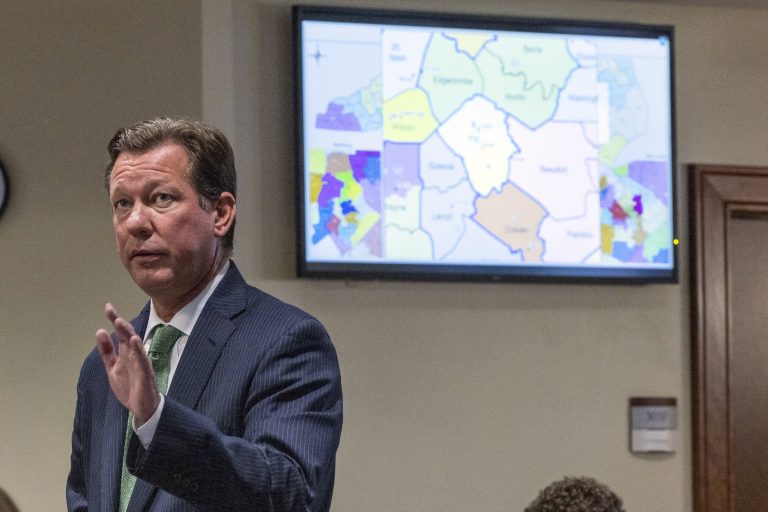
SCOTUS Case to Revisit Leftist Judges’ Ability to Interfere w/ Redistricting

(Headline USA) The Supreme Court is set to hear arguments Wednesday in a case from North Carolina, where the Republican legislature’s efforts to redraw congressional districts were blocked by activist judges on the left-leaning state Supreme Court who claimed the GOP map violated the state constitution.

A court-drawn map produced seven seats for each party in last month’s midterm elections in highly competitive North Carolina.

The question for the justices is whether the U.S. Constitution’s provision giving state legislatures the power to make the rules about the “times, places and manner” of congressional elections cuts state courts out of the process.

“This is the single most important case on American democracy—and for American democracy—in the nation’s history,” said former federal judge Michael Luttig, who has joined the legal team defending the North Carolina court decision.

The rise of judges interfering with the redistricting process began as a concerted effort during the 2016 Democratic National Convention, following two brutal midterms in which President Barack Obama had lost significant seats in Congress due to his divisive and controversial policies.

The party tapped former Attorney General Eric Holder to oversee a new lawfare arm through the National Democratic Redistricting Committee that would use the courts to force map redrawals under the auspices of civil-rights violations.

One of its early successess was flipping the North Carolina Supreme Court for Democrats by investing hundreds of thousands of dollars in promoting a former left-wing activist to the bench using a fake Republican candidate to split the GOP ticket.

In every election since, the state’s GOP legislature has been sued to force the redrawing of its maps in order to make them more favorable to Democrats, with several of the cases already having reached the U.S. Supreme Court yielding mixed results.

During the current round of legal battles, the Republican leaders of North Carolina’s legislature told the Supreme Court that the Constitution’s “carefully drawn lines place the regulation of federal elections in the hands of state legislatures, Congress and no one else.”

Three conservative justices already have voiced some support for the idea that the state court had improperly taken powers given by the Constitution when it comes to federal elections. A fourth has written approvingly about limiting the power of state courts in this area.

The Supreme Court has never invoked what is known as the independent state legislature theory. It was, though, mentioned in a separate opinion by three conservatives in the Bush v. Gore case that settled the 2000 presidential election.

If the court were to recognize it now, opponents of the concept argue, the effects could be much broader than just redistricting.

The most robust ruling for North Carolina Republicans could undermine more than 170 state constitutional provisions, over 650 state laws delegating authority to make election policies to state and local officials, and thousands of regulations down to the location of polling places, according to the far-left Brennan Center for Justice at the New York University School of Law.

Luttig, who advised former Vice President Mike Pence that he had no authority to reject electoral votes following the 2020 election, is among several prominent Republicans who have lined up against the broad assertion that legislatures can’t be challenged in state courts when they make decisions about federal elections, including congressional redistricting.

That group includes former California Gov. Arnold Schwarzenegger; law professor Steven Calabresi, a founder of the conservative Federalist Society; and Benjamin Ginsberg, a longtime lawyer for Republican candidates and the party.

“Unfortunately, because of ongoing and widespread efforts to sow distrust and spread disinformation, confidence in our elections is at a low ebb,” Ginsberg wrote in a Supreme Court filing. “The version of the independent state legislature theory advanced by Petitioners in this case threatens to make a bad situation much worse, exacerbating the current moment of political polarization and further undermining confidence in our elections.”

The arguments are taking place a day after the final contest of the 2022 midterms, the Georgia Senate runoff between Democratic Sen. Raphael Warnock and Republican Herschel Walker.

In that contest, state courts ruled in favor of Democrats to allow for voting on the Saturday before the election—over the objections of Republicans who pointed out that the written word of law in the state constitution prohibited it.

Jason Snead, of the conservative Honest Elections Project, said the case is an opportunity for the high court to rein in out-of-control state courts which are being pushed by Democratic attorneys to effectively create new rules governing voting, including the Georgia example.

“We’ve seen a fairly pervasive attempt to use courts to rewrite election laws if those laws don’t suit partisan agendas,” Snead said in a call with reporters. “That’s not something we want to see when it flies in the face of the Constitution.”

He is among proponents of the high court’s intervention who argue the case doesn’t represent “a threat to democracy.”

The justices can instead write a narrow opinion that places limits on state courts without upsetting the choices New York and other states have made to restrict partisan redistricting, a group of New York voters wrote in a court filing.

The New Yorkers implicitly recognize that if the court gives more power to state legislatures over drawing congressional lines, Republicans may not necessarily benefit.

During the last redistricting cycle, states that used independent redistricting commissions rather than legislatures were largely Democratic-dominated ones.

Commissions drew 95 House seats in states with Democratic legislatures and governors, as opposed to only 12 in states with GOP control.

A ruling that grants legislatures ultimate power over redistricting could eradicate those commissions and let Democrats redraw a major chunk of the House map.

“The bottom line is the impact of this fringe theory would be terrible,” said Holder. “It could unleash a wave of gerrymandering from both parties.”

Even less dramatic changes may not necessarily tilt the GOP’s way on a national redistricting map that was essentially fought to a draw, and where state court rulings cost Democrats about as many House seats as Republicans.

The Supreme Court refused to step into the North Carolina case in March, allowing the court-drawn districts to be used this year.

Justices Samuel Alito, Neil Gorsuch and Clarence Thomas dissented. Writing for the three, Alito said “there must be some limit on the authority of state courts to countermand actions taken by state legislatures when they are prescribing rules for the conduct of federal elections. I think it is likely that the applicants would succeed in showing that the North Carolina Supreme Court exceeded those limits.”

Justice Brett Kavanaugh has separately written about the need for federal courts to police the actions of state courts when it comes to federal elections.

Chief Justice John Roberts’ record on this question gives both sides some hope. In 2015, he wrote a strong dissent from the court’s decision upholding an independent redistricting commission in Arizona.

Roberts wrote that the Constitution does not permit “a state to wholly exclude ‘the Legislature’ from redistricting. ”

But in 2019, Roberts wrote the court’s majority opinion that closed federal courts to claims of partisan gerrymandering but noted state courts remained open. “Provisions in state statutes and state constitutions can provide standards and guidance for state courts to apply,” he wrote, in an opinion joined by Alito, Gorsuch, Kavanaugh and Thomas.

The court’s other conservative justice, Amy Coney Barrett, has no track record in this area.

In North Carolina, a new round of redistricting is expected to go forward next year and produce a map with more Republican districts, whatever the outcome of the high-court case.

In last month’s elections, voters flipped the majority on the state Supreme Court, electing two new Republican justices that give the GOP a 5-2 edge and make it probable, though not certain, that the court would uphold a map with more Republican districts.

Adapted from reporting by the Associated Press

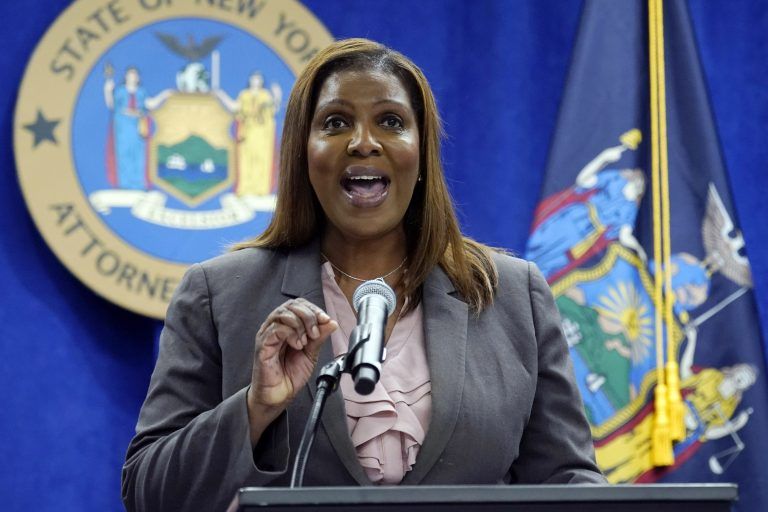
N.Y. AG Letitia James Surrounded by Corruption, Chief of Staff Resigns

(Dmytro “Henry” Aleksandrov, Headline USA) Ibrahim Khan, the chief of staff to New York Attorney General Letitia James (D), resigned from his position after the beginning of the investigation into at least two sexual harassment claims against him were made, according to The Hill.

In its statement, the attorney general’s office said that an “independent, impartial investigation” was conducted, and Khan has since resigned.

“The Office of Attorney General has protocols in place to thoroughly investigate any allegation of misconduct,” a spokesperson reported. “The office takes these matters with the utmost seriousness, and this situation is no different.”

The American Komsomolskaya Pravda — also known as the New York Times — was the first publication that reported the investigation and Khan’s resignation.

In his statement to the Times, Khan said that he was planning to leave by Dec. 31.

“I’ve been slated to leave the office for the private sector at the end of this year,” he said. “This is unrelated to an investigation which, nevertheless, found no official workplace misconduct.”

A person who is familiar with the situation said that the allegations were made by people who were not current employees at the office at the time the allegations were made and that the incidents happened outside the office.

Two people who are also familiar with the situation told the Times that the allegations involved former employees.

According to The Hill, James immediately started the investigation after the allegations became known to the office.

“… at least one woman accused Khan of inappropriate touching and unwanted kissing, leading James to hire a law firm to investigate the allegations,” The Hill reported.

“One woman who filed a complaint was told on Friday that her allegation was substantiated.”

According to his LinkedIn profile, Khan served as chief of staff in the attorney general’s office since 2019. He was also her campaign manager when she ran for the office in 2018 and served as chief of staff to James while she was New York City’s public advocate from 2014 to 2018.

Khan, however, is not the only person in the office who should resign.

Aside from having the typical leftist positions, like being easy on criminals and attacking the Second Amendment by trying to shut down the National Rifle Association [NRA] and force the concealed carry gun law, James is also infamous for investigating and suing Donald Trump.