Millennials Don’t Become Conservative As They Age, Unlike Other Generations

(Dmytro “Henry” Aleksandrov, Headline USA) A recent study revealed that millennial voters are not becoming more conservative as they age — they move even further to the left.

Millennials, people who were born between 1981 and 1996, are famous for loving their pets more than their children and being the last generation that grew up without the Internet, according to the Daily Caller.

Usually, voters tend to vote for destructive leftist policies up until they turn 35 and then start caring about the country where they live, but millennials broke the pattern, the Financial Times reported.

It seemed like the generation was on the track to become more conservative, as every generation did before, until about 30 but sharply dropped away from conservatism by the time they reached 40, the Times said.

The voting records of millennials prove that it’s true. 63% of younger millennials, 25-29, voted for Democrats in the House of Representatives in the 2022 midterms, and in 2020, 62% of millennials voted for Democrats, the Center for Information and Research on Civic Learning and Engagement [CIRCLE] reported.

The organization also pointed out that the youth vote was the highest it had been in three decades.

The Times also said that Generation X has been moving to the left, too, until they hit their early 40s, but rapidly started to adopt conservative values once they reached 45.

According to the Times’s analysis, at 35, millennials were 15 points less conservative than the Boomer and X generations were at the same age.

There is no specific event or cause that would explain the voting patterns of millennials, but one possibility could be connected to growing financial stress, the Times said.

According to the U.S. data, millennials who were in their late 20s during the financial crisis of 2008 caused by leftists decided that it would be a good idea to favor the economic policies that caused the crisis.

N.C. State Broadcaster Canceled for Referring to ‘Illegal Aliens’ at Bowl Game

(Molly Bruns, Headline USA) North Carolina State University’s play-by-play football announcer, Gary Hahn, was suspended for using the term “illegal aliens” during his broadcast of Friday’s Duke’s Mayo Bowl.

While giving the score update for the Sun Bowl, Hahn made a gave a score update, declaring that “down among the all the illegal aliens in El Paso it’s UCLA 14 and Pittsburgh 6,” where the Sun Bowl is being held.

According to the Gateway Pundit, Hahn—an employee of communications company LEARFIELD—has been indefinitely suspended.

“LEARFIELD has suspended Wolfpack Sports Network Play-by-Play announcer Gary Hahn indefinitely following comments made during today’s Duke Mayo Bowl broadcast,” the company said in a press release.

Hahn reportedly apologized to the woke mob. His job status is still under review.

The city of El Paso recently declared a state of emergency due to the massive influx of illegal migrants crossing into the United States via the southern border.

City volunteers and workers are overrun by illegals. Citizens turned the city’s convention center into a shelter migrants after the increase. Over 400 migrants stayed there over Christmas weekend.

Mayor Oscar Leeser declared the state of emergency just before Christmas to allow the city more resources to handle the immigrants.

Leeser said that an estimated 2,500 illegal migrants come to the city each day, and the city is receiving funding from the federal government to address the issue.

The city of El Paso has been busing migrants to New York City for months in attempts to cushion the blow on their local population.

Twitter users came to Hahn’s defense, requesting that those demonizing Hahn point out the spot where he lied.

“More asinine virtue signaling to cancel a beloved broadcaster for a relatively benign comment,” said Twitter user gk. “If anything, it brought attention to a humanitarian crisis. He shouldn’t have apologized to the woke mob.”

“So much for free speech,” said another user.

Colleges Offer Porn and Anti-White Classes to Students

(Dmytro “Henry” Aleksandrov, Headline USA) American colleges and universities continue to indoctrinate students by offering classes in 2022 about hardcore pornography and how all white people are horrible.

Some of these courses, though, sparked a national backlash, forcing leftist indoctrination centers to reconsider their desire to brainwash the youth, at least for a while, according to the Daily Caller.

One of those indoctrination centers — the University of Chicago — was forced to postpone its anti-white course, “The Problem Of Whiteness,” because people became outraged after they heard about the course on the news this fall.

“This seminar examines the problem of whiteness through an anthropological lens, drawing from classic and contemporary works of critical race theory,” the course description states.

“Attending to the ways in which various forms of social positioning and historical phenomena intersect in the formation of racial hierarchy, we will approach whiteness as a ‘pigment of the imagination’ with worldmaking (and razing) effects.”

The University of Kansas went even further than that — the institution offered an anti-white men course called Angry White Male Studies.

“It’s sometimes said that white men are the angriest of all, that they feel aggrieved and unable to adjust to changing realities of gender and race for fear of losing their privilege,” according to the course description.

“Like it or not, ‘the angry white male’ is a prominent figure in our cultural imagination and, as such, a phenomenon worthy of study.”

The university also warned that the course is not for students who “can’t deal with that,” also known as students who don’t want to get indoctrinated.

Instead of blaming whites, men or both, Westminster College decided to offer its students something else — a course that is called “Porn.”

“[The course invited students to] watch pornographic films together and discuss the sexualization of race, class and gender and as an experimental, radical art form,” the course description says.

“Hardcore pornography is as American as apple pie and more popular than Sunday night football.”

“Our approach to this billion-dollar industry is as both a cultural phenomenon that reflects and reinforces sexual inequalities (but holds the potential to challenge sexual and gender norms) and as an art form that requires serious contemplation,” the course description added.

UPDATE: Texas Supreme Court Denies Dad from Blocking Son’s Castration

In a crushing defeat, the Texas Supreme Court rejected Texas dad Jeff Younger’s emergency appeal to block his ex-wife from allowing their 7-year-old son, James, to undergo life-altering, irreversible transgender surgery, the Post Millenial reported.

As a result, the boy’s mother will be able to take the child to California to begin the transition, including chemical castration, that will turn him into a girl named Luna.

A newly passed law in California that took effect Sunday will prohibit cooperation with any other state’s orders requiring children to be returned to their home state when the issue at hand is so-called gender-affirming care.

Original story below:

(Dmytro “Henry” Aleksandrov, Headline USA) Texas Supreme Court agreed to accept the case of Jeffrey Younger, a man whose leftist ex-wife wants to mutilate their son, James, without the father’s consent.

When they were still married, Younger and his then-wife used to live in Texas. However, when they divorced, the mother brought James and his brother Jude to leftist California, according to the Daily Caller.

Even though the mother, Anne Georgulas, hasn’t yet started the “transgender treatment” — also known as body mutilation — of James, the boy is treated as a girl by Georgulas.

Younger is seeking a temporary emergency jurisdiction from the California law that is set to go into effect on Jan. 1, 2023. The law will prohibit enforcement of the laws from other states that required a parent’s consent for body mutilations of minors. Texas law states that surgeries that try to change the biological sex and injection of hormones into a body are prohibited for children.

“Mother [Georgulas] contends that [the child] is a transgendered girl,” Younger wrote in his Motion for Emergency Stay of the California law. “Father [Jeffrey Younger] contends that [the child] is a normal boy confused in his identity due to the interventions of Mother.”

In California, Georgulas would be able to put James on the woke altar by mutilating the boy, something that Younger doesn’t approve of, according to the court documents. Georgulas, however, disputed the claims about her intentions.

“Father presents this court with a grave misrepresentation that Mother ‘has sought to chemically castrate’ their child and that [the child] would be subjected to ‘transgender procedures’ in California,” Georgulas said in her response to Younger’s request for an emergency stay.

Sarah Fields, a president of Texas Coalition, empathized with James and his father on Twitter.

“Please pray for James Younger. Pray for God’s protection over him. And that the Texas Supreme Court would make the correct decision to protect this little boy,” she wrote.

“Also pray for @JeffYoungerTX, I cannot imagine this pain…”

Pope Benedict XVI and Barbara Walters Die on the Last Days of 2022

(Ezekiel Loseke, Headline USA) The conservative Pope Benedict XVI, nicknamed “God’s Rottweiler,” passed away Saturday at the age of 95.

Journalist Barbara Walters also died on Friday, she was 93.

The German born Pope Benedict’s death was announced by the Vatican, according to NBC News.

“With sorrow I inform you that the Pope Emeritus, Benedict XVI, passed away today at 9:34 in the Mater Ecclesiae Monastery in the Vatican,” the Vatican reported on Saturday morning.

The Vatican will display Pope Benedict’s body in Saint Peter’s Basilica and his funeral will be held on Thursday Jan. 5th 2023 in Saint Peter’s Square.

During his life, Pope Benedict earned a reputation for his conservative defense of the Catholic tradition. His staunch and spirited resistance to efforts attempting to secularize the church, ordain women as priests, normalize homosexuality, and embody liberation theology were well documented and earned him the nickname “God’s Rottweiler.”

“God’s Rottweiler” strengthened his conservative reputation by restoring public opinion and access to the Traditional Latin Mass in 2007, as reported by National Review. In so doing, Pope Benedict brought an increased respect and acceptance for conservative and traditionalist Catholics who had been isolated after the 1960’s reforms.

Pope Benedict, after his retirement, continued to advise his successor, guiding him to the right. NBC News credits him with Pope Francis’s denunciation of transgenderism being taught in schools as reported by NBC. Indeed, Pope Francis said, “We must think about what Pope Benedict said — ‘It’s the epoch of sin against God the Creator.”

Pope Benedict, unlike most priests, was primarily a conservative academic as the University system drifted radically left. Indeed, he wrote 66 books according to the Spanish Newspaper As.

Barbara Walters, famed female journalist for a litany of mainstream media outlets also died in the closing hours of 2022, according to CNN. She was 93 years old and passed “peacefully in her home surrounded by loved ones,” according to her spokesperson Cindi Berger’s statement to CNN.

Congress Forces U.S. Diplomats to Push International Organizations to Reconsider Ukraine’s Debt

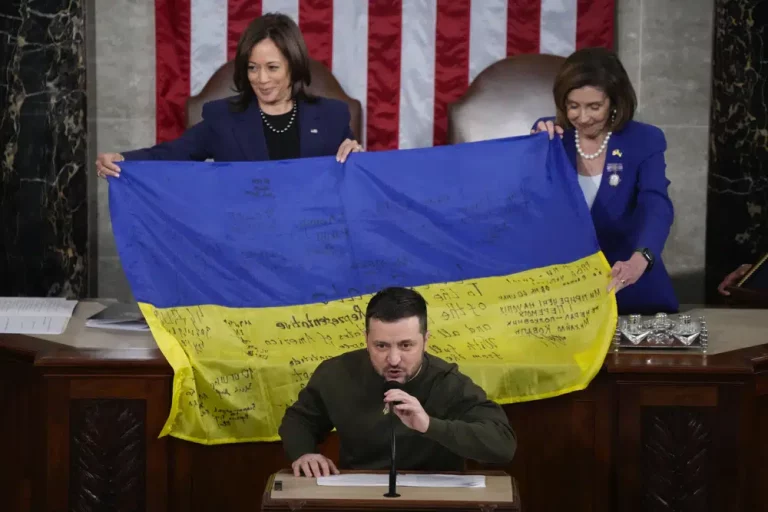
(Headline USA) A provision in the recently signed defense spending bill mandates that the United States work to ease Ukraine’s debt burden at the International Monetary Fund, which could create tensions at the world’s lender-of-last-resort over one of its biggest borrowers.

The National Defense Authorization Act requires American representatives to each global development bank, including the IMF, where the U.S. is the largest stakeholder, to use “the voice, vote, and influence ” of the U.S. in seeking to assemble a voting bloc of countries that would change each institution’s debt service relief policy regarding Ukraine.

Among other things, the U.S. is tasked with forcing the IMF to reexamine and potentially end its surcharge policy on Ukrainian loans. Surcharges are added fees on loans imposed on countries that are heavily indebted to the IMF.

The U.S. interest in changing the policy comes as it has distributed tens of billions for Ukrainian military and humanitarian aid since the Russian invasion began in February. Most recently, Ukraine will receive $44.9 billion in aid from the U.S. as part of a $1.7 trillion government-wide spending bill.

Economists Joseph Stiglitz at Columbia University and Kevin P. Gallagher at Boston University wrote in February about surcharges, saying that “forcing excessive repayments lowers the productive potential of the borrowing country, but also harms creditors” and requires borrowers “to pay more at exactly the moment when they are most squeezed from market access in any other form.”

Just before Christmas, the directors decided to maintain the surcharge policy. They said in a Dec. 20 statement that most directors “were open to exploring possible options for providing temporary surcharge relief,” but others “noted that the average cost of borrowing from the Fund remains significantly below market rates.”

Securing consistent financing to Ukraine could become harder as the war rages on. There are growing fears of a global recession and concerns that European allies are struggling to deliver on their financing promises.

Mark Weisbrot, co-director of the liberal Center for Economic and Policy Research in Washington, said the surcharge issue affects not just Ukraine, but also other countries facing debt crises. Among them: Pakistan, hit by flooding and humanitarian crises, as well as Argentina, Ecuador, and Egypt, who together are on the hook for billions in surcharges.

“There is no logic to the IMF imposing surcharges on countries already in crisis,” Weisbrot said, “which inevitably happens because the surcharges are structured to hit countries already facing financial problems.”

He said the issue will become more urgent as Ukraine’s debt grows and the war drags on.

Adapted from reporting by the Associated Press

S&P 500 Ends the Worst Year Since 2008 Housing Crisis with More Loses

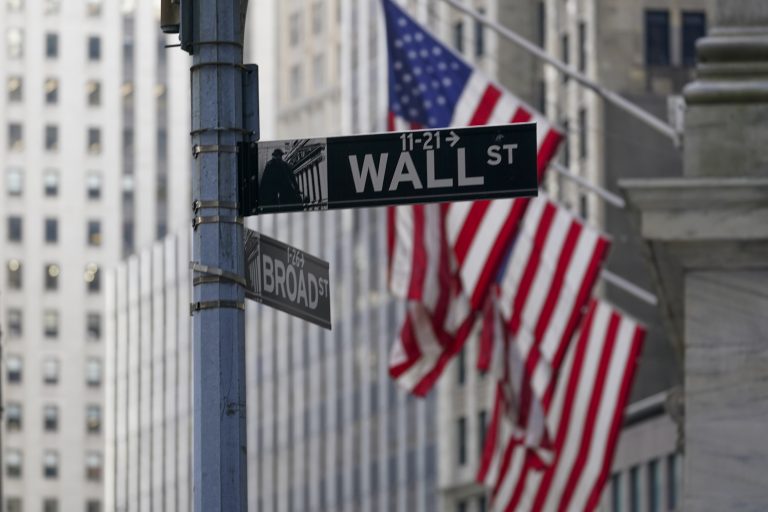
(Headline USA) Wall Street capped a quiet day of trading with more losses Friday, as it closed the book on the worst year for the S&P 500 since 2008.

The benchmark index finished with a loss of 19.4% for 2022, or 18.1%, including dividends. It’s just its third annual decline since the financial crisis 14 years ago and a painful reversal for investors after the S&P 500 notched a gain of nearly 27% in 2021. All told, the index lost $8.2 trillion in value, according to S&P Dow Jones Indices.

The Nasdaq composite, with a heavy component of technology stocks, racked up an even bigger loss of 33.1%.

The Dow Jones Industrial Average, meanwhile, posted an 8.8% loss for 2022.

Stocks struggled all year as inflation put increasing pressure on consumers and raised concerns about economies slipping into recession. Central banks raised interest rates to fight high prices. The Federal Reserve‘s aggressive rate hikes remain a major focus for investors as the central bank walks a thin line between raising rates enough to cool inflation, but not so much that they stall the U.S. economy into a recession.

The Fed’s key lending rate stood at a range of 0% to 0.25% at the beginning of 2022 and will close the year at a range of 4.25% to 4.5% after seven increases. The U.S. central bank forecasts that will reach a range of 5% to 5.25% by the end of 2023. Its forecast doesn’t call for a rate cut before 2024.

Rising interest rates prompted investors to sell the high-priced shares of technology giants such as Apple and Microsoft as well as other companies that flourished as the economy recovered from the pandemic. Amazon and Netflix lost roughly 50% of their market value. Tesla and Meta Platforms, the parent company of Facebook, each dropped more than 60%, their biggest-ever annual declines.

Russia’s invasion of Ukraine worsened inflationary pressure earlier in the year by making oil, gas and food commodity prices even more volatile amid existing supply chain issues. Oil closed Friday around $80, about $5 higher than where it started the year. But in between oil jumped above $120, helping energy stocks post the only gain among the 11 sectors in the S&P 500, up 59%.

China spent most of the year imposing strict COVID-19 policies ,which crimped production for raw materials and goods, but is now in the process of removing travel and other restrictions. It’s uncertain at this point what impact China’s reopening will have on the global economy.

The Fed’s battle against inflation, though, will likely remain the overarching concern on Wall Street in 2023, according to analysts. Investors will continue searching for a better sense of whether inflation is easing fast enough to take pressure off of consumers and the Fed.

If inflation continues to show signs of easing, and the Fed reins in its rate-hiking campaign, that could pave the way for a rebound for stocks in 2023, said Jay Hatfield, CEO of Infrastructure Capital Advisors.

“The Fed has been the overhang on this market, really since November of last year, so if the Fed pauses and we don’t have a major recession, we think that sets us up for a rally,” he said.

There was scant corporate or economic news for Wall Street to review Friday. That, plus the holiday shortened week, set the stage for mostly light trading.

The S&P 500 fell 9.78 points, or 0.3%, to finish at 3,839.50. The index posted a 5.9% loss for the month of December.

The Dow dropped 73.55 points, or 0.2%, to close at 33,147.25. The Nasdaq slipped 11.61 points, or 0.1%, to 10,466.48.

Tesla rose 1.1%, as it continued to stabilize after steep losses earlier in the week. The electric vehicle maker’s stock plummeted 65% in 2022, erasing about $700 billion of market value.

Southwest Airlines rose 0.9% as its operations returned to relative normalcy following massive cancellations over the holiday period. The stock still ended down 6.7% for the week.

Small company stocks also fell Friday. The Russell 2000 shed 5 points, or 0.3%, to close at 1,761.25.

Bond yields mostly rose. The yield on the 10-Year Treasury, which influences mortgage rates, rose to 3.88% from 3.82% late Thursday. Although bonds typically fair well when stocks slump, 2022 turned out to be one of the worst years for the bond market in history, thanks to the Fed’s rapid rate increases and inflation.

Several big updates on the employment market are on tap for the first week of 2023. It has been a particularly strong area of the economy and has helped create a bulwark against a recession. That has made the Fed’s job more difficult, though, because strong employment and wages mean it may have to remain aggressive to keep fighting inflation. That, in turn, raises the risk of slowing the economy too much and bringing on a recession.

The Fed will release minutes from its latest policy meeting on Wednesday, potentially giving investors more insight into its next moves.

The government will also release its November report on job openings Wednesday. That will be followed by a weekly update on unemployment on Thursday. The closely-watched monthly employment report is due Friday.

Wall Street is also waiting on the latest round of corporate earnings reports, which will start flowing in around the middle of January. Companies have been warning investors that inflation will likely crimp their profits and revenue in 2023. That’s after spending most of 2022 raising prices on everything from food to clothing in an effort to offset inflation, though many companies went further and actually padded their profit margins.

Companies in the S&P 500 are expected to broadly report a 3.5% drop in earnings during the fourth quarter, according to FactSet. Analysts expect earnings to then remain roughly flat through the first half of 2023.

U.S. stock markets will be closed Monday in observance of the New Year’s Day holiday.

Adapted from reporting by the Associated Press

Republicans Gained Ground with Black Voters in the 2022 Election

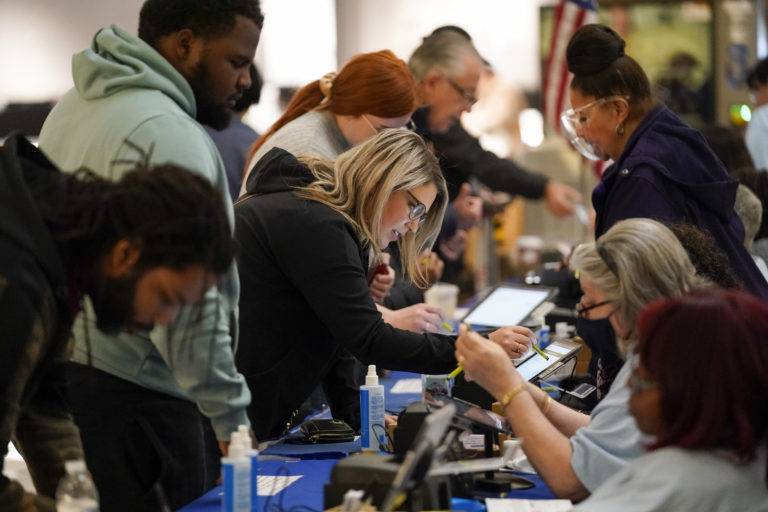
(Headline USA) Black voters have been a steady foundation for Democrats for decades, but that support appeared to show cracks in the 2022 election.

Republican candidates were backed by 14% of Black voters, compared with 8% in the last midterm elections four years ago, according to AP VoteCast, an extensive national survey of the electorate.

In Georgia, Republican Gov. Brian Kemp more than doubled his support among Black voters to 12% in the 2022 election compared with 5% in the 2018 election, according to VoteCast. He defeated Democrat Stacey Abrams both times.

If that boost can be sustained, Democrats could face headwinds in 2024 in Georgia, Wisconsin, Michigan and Pennsylvania, where presidential and Senate races are typically decided by narrow margins and turning out Black voters is a big part of Democrats’ political strategy.

It’s too early to tell whether the 2022 survey data reflects the beginnings of a longer-term drift of Black voters toward the GOP or whether the modest Republican gains from an overwhelmingly Democratic group will hold during a presidential year. Former President Donald Trump, who has announced his third run for the presidency, received support from just 8% of Black voters in 2020, according to VoteCast.

The survey from this year’s midterms also found that Republican candidates in some key states improved their share of Latino voters, so any sustained growth in the share of Black voters would be critical.

A variety of factors might play into the findings, including voter turnout and candidate outreach. Yet some Black voters suggest they will be sticking with Republicans because they said the party’s priorities resonate with them more than those of Democrats.

Janet Piroleau, who lives in suburban Atlanta, left the Democratic Party in 2016, during Trump’s first run for office, and now votes Republican. That includes this year, when she voted for Kemp in his victory over Abrams.

Piroleau said she felt Democrats were pushing for more reliance on government programs. “That bothered me,” she said.

“For me, it was about being accountable and responsible and making your own decisions, and not depending on the government to bail you out,” Piroleau said.

April Chapman, who lives in metro Atlanta, is among the Black voters who favored Kemp and other Republican candidates.

Like Piroleau, Chapman cited issues such as immigration, border security and the economy as important in deciding to become a Republican a decade ago. But the 43-year-old mother said her main break with the party is over education.

She said she felt Democrats were trying to control what her children should be exposed to and how they should be educated.

“For our family, the government educational system was not the best option,” Chapman said.

Camilla Moore, chair of the Georgia Black Republican Council, said a large percentage of the voters Kemp won in the Black community “were actually Black Democrats.” Those voters made decisions based on Kemp’s performance in addressing issues they care about, Moore said.

The results in Georgia, she said, could be replicated elsewhere with the right candidates.

Abrams’ campaign office and Fair Fight Action, which was founded by Abrams, did not answer repeated phone or email messages.

The VoteCast findings underscore a dynamic that Black activists and community leaders have long sought to convey — that Black voters are not a monolith and that the Democratic Party should not take them for granted.

Nationally, Republicans worked during the midterms cycle to try to shift a share of Black voters to their side. The GOP conducted business roundtables, prayer gatherings, food drives and school choice events to hear the kinds of priorities in Black communities that might influence their voting, said Janiyah Thomas, a communications strategist and former Black media affairs manager at the Republican National Committee.

Thomas, who recently voted Republican, added that her disagreement with the Black Lives Matter movement encouraged her switch.

Adapted from reporting by the Associated Press

Biden Flies $1.7T Omnibus Bill to St. Croix for Signing

(Mark Pellin, Headline USA) The president who declared the climate crisis an “existential threat” blew through a huge carbon footprint to fly the $1.7-trillion, 4,155-page omnibus bill to the Virgin Islands, where he could sign it while on yet another vacation, this time in balmy St. Croix, leaving behind a country trying to recover from a deadly winter storm and persistent economic and open border woes.

“A White House Official tells me the Omnibus Bill is in possession of the White House,” reported Fox Business correspondent Edward Lawrence. “It has to be signed by Dec 30th. The Official says at some point it will be transported to St Croix for POTUS to sign to make the Dec 30th deadline.”

Instead of huddling in the White House basement talking to his favorite potted petunia until the bill was ready for his signature, President Joe Biden cut out a day earlier to bask in the sun, prompting the jet-fueled delivery of the monstrous spending package.

The optics of the obnoxiously tone-deaf stunt did not go unnoticed.

“It’s not enough that you’re on the hook for the omnibus and the president’s vacation,” tweeted DC Examiner columnist T. Becket Adams. “You also have to pay for WH staffers to fly the bill to St. Coix, and then pay for them to fly it back.

Adding insult to taxpayer injury, the $1.7-trillion bill that received the jet-set treatment was laden with hundreds of billions of dollars for pet projects and radical leftist agendas, including upwards of $575 million for “family planning” in areas where population growth “threatens biodiversity”.

Despite the deadly chaos at the southern border that Biden left behind on his vacation to St. Croix, the omnibus bill that the president signed prohibits CBP funding from being used to improve border security,” but allocates $410 million towards border security for Jordan, Lebanon, Egypt, Tunisia, and Oman.

“America Last in action,” cracked Rep. Dan Bishop, R-N.C., who also blistered the Biden regime for flying the omnibus to St. Croix.

Biden’s hypocrisy on fighting climate change was also roasted, comparing his earlier sentiments to the act of polluting the environment to sign a bill laced with Green New Deal boondoggles.

“Not that I did anyway, but now I definitely won’t take the Biden Administration’s ‘green energy’ initiatives seriously,” tweeted Abigail Marone, press secretary for Sen. Josh Hawley, R-Mo. “They’re flying some paper to St. Croix because Biden couldn’t be bothered to sign it before going on a luxury vacation. C’mon man!”

Pentagon Prioritizes Leftist Ideology, Dismisses Military Suicides

(Dmytro “Henry” Aleksandrov, Headline USA) Rep.-elect Derrick Van Orden, R-Wis., a retired Navy SEAL, said that Pentagon is more concerned about “white rage” and “pronouns,” rather than veterans and active-duty military personnel committing suicide.

“The secretary of defense and the chairman of the joint chiefs of staff are worried about white rage, and they’re trying to figure out the pronouns that servicemen and women should be using,” he said, reported Breitbart.

Van Orden also slammed Secretary of Defense Lloyd Austin and Chairman of the Joint Chiefs of Staff Mark Milley for not prioritizing veteran suicides.

“The pronouns the Department of Defense [and] General Milley [and] General Austin needs to start thinking about… should be ‘dead’ and ‘widow’ and ‘fatherless child,’” he said. “Those are the pronouns they need to be focusing on.”

Van Order also noted that nobody in the DoD was held accountable for troops committing suicide.

“They’re listing how many of [our] troops were affected with COVID on these people’s reports, but [they’re] not listing the amount of troops that committed suicide on their watch. It doesn’t make any sense,” he said.

Another piece of information that he shared was that senior officers are not familiar with suicide statistics among active-duty military personnel.

“I don’t think they are taking it seriously. When they say it’s Lloyd Austin’s priority to prevent this, I don’t believe that to be true,” Van Order said. “I spoke to so many active-duty officers and senior enlisted guys. I’m like, ‘How many people have killed themselves on your watch?’, and they’re like, ‘I’ll get back to you.’ That means it’s not a priority.”

“Any commanding officer of any unit of any size that cannot — off the top of his or her head — tell you exactly how many men and women have committed suicide on their watch should be fired immediately,” he said.

As a politician, Van Orden promised he would prioritize policies that would collect key data and statistics about suicides among active duty and veterans. He also urged veterans in need to contact the Veterans Crisis Line by calling, texting or using an online chat.

“I’m going to urge my brothers and sisters in uniform not to make a permanent solution to a temporary problem,” he said.