The Sudden Dominance of the Diversity Industrial Complex

(Thomas Hackett, RealClear Wire) Little more than a decade ago, DEI was just another arcane acronym, a clustering of three ideas, each to be weighed and evaluated against other societal values. The terms diversity, equity, and inclusion weren’t yet being used in the singular, as one all-inclusive, non-negotiable moral imperative. Nor had they coalesced into a bureaucratic juggernaut running roughshod over every aspect of national life.

They are now.

Seemingly in unison, and with almost no debate, nearly every major American institution – including federal, state, and local governments, universities and public schools, hospitals, insurance, media and technology companies and major retail brands – has agreed that the DEI infrastructure is essential to the nation’s proper functioning. From Amazon to Walmart, most major corporations have created and staffed DEI offices within their human resources bureaucracy. So have sanitation departments, police departments, physics departments, and the departments of agriculture, commerce, defense, education and energy.

Organizations that once argued against DEI now feel compelled to institute DEI training and hire DEI officers. So have organizations that are already richly diverse, such as the National Basketball Association and the National Football League.

Many of these offices in turn work with a sprawling network of DEI consulting firms, training outfits, trade organizations and accrediting associations that support their efforts.

“Five years ago, if you said ‘DEI,’ people would’ve thought you were talking about the Digital Education Initiative,” Robert Sellers, University of Michigan’s first chief diversity officer, said in 2020. “Five years ago, if you said DEI was a core value of this institution, you would have an argument.”

Diversity, equity and inclusion is an intentionally vague term used to describe sanctioned favoritism in the name of social justice. Its Wikipedia entry indicates a lack of agreement on the definition, while Merriam-Webster.com and the Associated Press online style guide have no entry (the AP offers guidance on related terms).

Yet however defined, it’s clear DEI is now much more than an academic craze or corporate affectation.

“It’s an industry in every sense of the word,” says Peter Schuck, professor emeritus of law at Yale. “My suspicion is that many of the offices don’t do what they say. But they’re hiring people, giving them titles and pretty good money. I don’t think they do nothing.”

It’s difficult to know how large the DEI Industrial Complex has become. The Bureau of Labor Statistics hasn’t assessed its size. Two decades ago, MIT professor Thomas Kochan estimated that diversity was already an $8 billion-a-year industry. Yet along with the addition of equity, inclusion, and like terms, the industry has surely grown an order of magnitude larger. Six years ago, McKinsey and Company estimated that American companies were spending $8 billion a year on diversity training alone. DEI hiring and training have only accelerated in the years since.

“In the scope and rapidity of institutional embrace,” writes Marti Gurri, a former CIA analyst who studies media and politics, “nothing like it has transpired since the conversion of Constantine.”

Yet in our time, no Roman Emperor has demanded a complete cultural transformation. No law was passed mandating DEI enactment. No federal court ruling has required its implementation. There was no clarion call on the order of President Dwight D. Eisenhower’s “military industrial complex” warning. No genuine public crisis matched the scale of the response.

The sources of this transformation are both deep and fairly recent. On one level, they can be traced back to the egalitarian movements that have long shaped American history – from the nation’s founding, through the Civil War and Reconstruction to the battles for women’s suffrage, the civil rights movement, and same-sex marriage. In other ways, the rapid transformation can seem no more explicable than an eccentric fashion trend, like men of the late 18th century wearing periwigs. However, a few pivot points of recent history bent its arc in DEI’s direction.

The push for affirmative action is the most obvious influence, a program first conceived during the Reconstruction era but then abandoned for nearly a century. Although triumphs for social justice, the Civil Rights Act and Voting Rights acts of the late 1950s and 1960s didn’t stop discrimination; the country would need to take more affirmative steps toward assisting minority groups and achieving more equitable outcomes, proponents argued. A controversial policy from the start (with the Supreme Court expected to curb its use in college admissions this term), affirmative action was further complicated by immigration reforms that allowed for more non-European immigrants, setting off a seismic demographic shift that continues to reverberate.

The diversity movement of the early 1990s was in part an attempt to capitalize on the new multicultural reality. Stressing individual and institutional benefits rather than moral failings, early corporate diversity training programs hewed to traditional values of equality and meritocracy. Creating a diverse workplace, R. Roosevelt Thomas wrote in the Harvard Business Review, in 1990, “should always be a question of pure competence and character unmuddled by birth.”

And in many ways it appears to have worked. Just look at the tech industry, where immigrants from East and South Asia have flourished. Nigerian immigrants are perhaps the most successful group in America, with nearly two-thirds holding college degrees. Doors have opened wide to the once-closeted LGBT community.

But in other ways, the recent explosion of DEI initiatives reflects shortcomings of earlier efforts, as suggested by the headline of 2016 article in the Harvard Business Review, “Why Diversity Fails.” Even as high-achieving first- and second-generation immigrants have thrived in certain industries, particularly STEM fields, people of color remain scarce in senior institutional positions. There is also the deeper issue of what many in the post-George Floyd era have taken to calling systemic or structural racism, citing major disparities for black Americans in education, healthcare, homeownership, arrests, incarceration and household wealth.

More recently, a spate of widely publicized police killings of unarmed African Americans has galvanized a growing belief, especially among progressives and especially since Donald Trump’s election, that America is an irredeemably racist nation. In 2020, in the wake of the Floyd murder and in advance of a fraught election, a moral panic set in. Having increased their ranks, social justice entrepreneurs and bureaucrats were poised to implement an ideological agenda and compound their institutional power.

Although no hard numbers exist on the exact size of the industry, the “DEIfication” of America” is clear. From Rochester, New York, to San Diego, Calif., cash-strapped municipalities have found the funds to staff DEI offices. Startups and small companies that once relied on their own employees to promote an inclusive culture now feel compelled to hire diversity consultants and sensitivity trainers to set them straight. The field is so vast it has born a sub-field: recruiting agencies for DEI consultants. So-called “authenticity readers” tell publishing companies what are acceptable depictions of marginalized groups and who is entitled to tell their stories. Master’s degree and certificate programs in DEI leadership at schools like Cornell, Georgetown, and Yale offer new and lucrative bureaucratic careers.

At Ohio State University, for example, the average DEI staff salary is $78,000, according to public information gathered by economist Mark J. Perry of the American Enterprise Institute – about $103,000 with fringe benefits. Not to be outdone by its Big Ten conference rival, the University of Michigan pays its diversity officers $94,000 on average – about $124,000 with benefits. Until he retired from the position last summer, Michigan’s chief diversity officer, Robert Sellers, was paid over $431,000 a year. His wife, Tabbye Chavous, now has the job, at the vice provost rank and a salary of $380,000.

For smaller organizations that cannot afford a full-time equity officer, there are other options for shoring up social justice bona fides – namely, working with any of the hundreds of DEI consulting agencies that have risen like mushrooms after a night’s rain, most of them led by “BIPOC” millennials. With some firms, the social justice goals are unmistakable. The Racial Equity Institute is “committed to the work of anti-racist transformation” and challenging “patterns of power” on behalf of big-name clients like the Harvard Business School, Ben & Jerry’s, and the American Civil Liberties Union. With others, the appeal has less to do with social change than exploring marketing opportunities and creating a “”with-it” company culture, where progressive politics complement the office foosball tables and kombucha on tap.

“Diversity wins!” declares the management consultancy McKinsey & Company. Certainly diversity officers have been winning, although opposition is building in Florida and elsewhere, where the wider woke agenda that includes DEI has advanced. Even minimally trained practitioners are in high demand, and signs of their influence abound.

Wells Fargo offers cheaper loans to companies that meet racial and gender quotas. Private equity and venture capital firms like BlackRock and KKR declare their commitment to racial “equity.” Bank of America tells its employees they are implicated in a white supremacist system. Lockheed Martin asks its executives to “deconstruct their white male privilege.” Major tech companies like Google publicly chart the “Black+ and Latinx+” people they’ve hired, and assure the public that Artificial Intelligence will prioritize the DEI political agenda. ChapGPT, an AI model that can generate remarkably cogent writing, is been designed with a liberal bias, summarily rejecting requests that don’t conform to the algorithm’s notions of “positivity, equality and inclusivity.” Disney instructs employees to question colorblind beliefs espoused by the Rev. Martin Luther King Jr. and others. Fire departments are told to lower their physical fitness requirements for women. Similarly, universities are dropping standardized tests to yield more admissions of certain minorities (typically not Asians). And the Academy of Motion Picture Arts and Sciences, hoping to award more “films of color,” inspects Oscar-nominated films for cast and crew diversity. (Netflix has been a notable exception, last May laying off dozens of employees working on such issues. Under Elon Musk, Twitter is also flouting woke orthodoxies.)

In education, college students are required to take DEI-prescribed courses. Community college employees in California are evaluated on their DEI competencies. Loyalty oaths to the DEI dogma are demanded of professors. Applicants to tenure-track positions, including those in math and physics, are rejected out of hand if their mandatory DEI statements are found wanting. Increasingly, DEI administrators are involved in hiring, promotion, and course content decisions.

“Academic departments are always thinking, ‘We need to run this by Diversity,’” says Glenn Ricketts, public affairs officer for the National Association of Scholars.

The industry’s reach can also be seen in the many Orwellian examples of exclusion in the name of inclusion, of reprisals in the name of tolerance. Invariably, they feature an agitated clutch of activists browbeating administrators and executives into apologizing for an alleged trespass against an ostensibly vulnerable constituency. When that has been deemed insufficient or when senior executives have sensed a threat to their own legitimacy, they’ve offered up scapegoats on false or flimsy pretexts. That might be a decades-long New York Times reporter, a head curator at a major art museum, an adjunct art history professor, a second-year law student, or a janitor at a pricey New England college. (The list is long.)

Often enough, the inquisitions have turned into public relations debacles for major institutions. But despite the intense criticism and public chagrin, the movement marches on.

The expansion “happened gradually at first, and people didn’t recognize the tremendous growth,” Perry says. “But after George Floyd, it really accelerated. It became supercharged. And nobody wanted to criticize it because they would been seen as racists.”

Not playing along with the DEI protocols can end an academic career. For example, when Gordon Klein, a UCLA accounting lecturer, dismissed a request to grade black students more leniently in 2020, the school’s Equity, Diversity and Inclusion office intervened to have him put on leave and banned from campus. A counter-protest soon reversed that. However, when Klein also declined to write a DEI statement explaining how his work helped “underrepresented and underserved populations,” he was denied a standard merit raise, despite excellent teaching evaluations. (He is suing for  defamation and other alleged harms.)

Scores of professors and students have also been subject to capricious, secretive, and career-destroying investigations by Title IX officers, who work hand-in-glove with DEI administrators, focusing on gender discrimination and sexual harassment. As writer and former Northwestern University film professor Laura Kipnis recounts in “Unwanted Advances,” individuals can be brought up on charges without any semblance of due process, as she was, simply for “wrongthink” – that is, for having expressed thoughts that someone found objectionable. With activist-administrators assuming the role of grand inquisitors, “the traditional ideal of the university – as a refuge for complexity, a setting for free exchange of ideas – is getting buried under an avalanche of platitudes and fear,” she writes. And it would appear that students and professors would have it no other way. By and large, they want more bureaucratic intervention and regulations, not less.

As more institutions create DEI offices and hire ever more managers to run them, the enterprise inevitably becomes self-justifying. According to Parkinson’s Law, bureaucracy needs to create more work, however unnecessary or unproductive, to keep growing. Growth itself becomes the overriding imperative. The DEI movement needs the pretext of inequities, real or contrived, to maintain and expand its bureaucratic presence. As Malcolm Kyeyume, a Swedish commentator and self-described Marxist, writes: “Managerialism requires intermediation and intermediation requires a justifying ideology.”

Ten years ago, Johns Hopkins University political scientist Benjamin Ginsberg found that the ratio of administrators to students had doubled since 1975. With the expansion of DEI, there are more administrators than ever, most of whom have no academic background. On average, according to a Heritage Foundation study, major universities across the country currently employ 45 “diversicrats,” as Perry calls them. With few exceptions, they outnumber the faculty in history departments, often two or three to one.

At Michigan, Perry wasn’t able to find anyone with the words “diversity,” “equity,” or “inclusion” in his job title until 2004; and for the next decade, such positions generally remained centralized at the provost level, working for the university as a whole. But in 2016, Michigan president Mark Schlissel announced that the university would invest $85 million in DEI programs. Soon after, equity offices began to “metastasize like a cancer,” Perry says, across every college, department, and division, from the college of pharmacy to the school’s botanical garden and arboretum, where a full-time DEI manager is now “institutionalizing co-liberatory futures.” All the while, black enrollment at Michigan has dropped by nearly 50% since 1996.

Despite the titles and the handsome salaries, most DEI administrative positions are support staff jobs, not teaching or research positions. In contrast with the provisions of Title IX, DEI is not mandated by law; it is entirely optional. DEI officers nevertheless exert enormous influence, in part because so few people oppose them. The thinking seems to be that if you’re against the expanding and intrusive diversity, equity, and inclusion agenda, you must be for the opposite – discrimination, inequality, and exclusion.

“By telling themselves that they’re making the world a better place, they get to throw their weight around,” says Ricketts. “They have a lot of money, a lot of leverage, and a lot of people who just don’t want to butt heads with them – people who just want to go along to get along. People who are thinking, ‘If we embrace DEI, nobody can accuse us of being racist or whatever.’ They’re trying to cover their backsides.”

Some organizations, it seems, are merely trying to keep up with cultural trends.

Consider Tucson, Ariz., where diversity is not a buzzy talking point but an everyday reality. With a population that is 44% Hispanic, 43% white and only 4.6% black, the city has had no major racial incidents in decades. Yet like hundreds of others communities, Tucson suddenly decided in direct response to the George Floyd murder 1,600 miles away that it needed an office of equity. To many observers, it seemed that the city was just “getting jiggy with it,”  pretending to solve a problem that didn’t exist. After a two-year search, it hired Laurice Walker, the youngest chief equity officer in the country, at age 28, with a salary of $145,000 – nearly three and a half times what Tucson’s mayor, Regina Romero, earns.

Not that the mayor is complaining. “I think this position is about putting an equity lens into all that we do,” Romero said in May, by which she means – well, nobody is quite sure what “equity” means, particularly with respect to federal legislation clearly prohibiting positive and negative discrimination alike.

But trying to get out in front of the DEI train can also result in getting run over by it.

When the city council of Asheville, N.C., hired Kimberlee Archie as its first equity and inclusion manager, its members probably didn’t anticipate being accused of having a “white supremacy culture.” After all, city manager Debra Campbell is black, as are three of the seven women making up the city council. The council had cut police funding and unanimously approved a reparations resolution. Archie nevertheless complained that her colleagues still weren’t doing enough to advance racial equity. “What I describe it as is kind of like the bobblehead effect,” she said in 2020. “We’d be in meetings … and people’s heads are nodding as if they are in agreement. However, their actions didn’t back that up.”

The drama in western North Carolina illustrates a dilemma that organizations face going forward. They can pursue an aggressive political agenda in which white supremacy is considered the country’s defining ethos (per The New York Times’ “1619 Project“) and present discrimination as the only remedy to past discrimination (see Ibram X. Kendi). Or they take the path of least resistance, paying rhetorical tribute to DEI enforcers as the “bobbleheads” that Archie disparages but doing little more than that. After all, they still have universities, businesses, and sanitation departments to run, alumni and investors to satisfy, students to teach, research to pursue, roads to be paved, sewage to be treated, costs to be minimized, and profits to be maximized.

Perhaps, too, senior administrators and executives are beginning to realize that, despite the moral panic of 2020, the most culturally diverse country in the world might not be irredeemably racist, even if it’s no longer acceptable to say so. The United States twice elected an African American man named Barack Hussein Obama as president. His first attorney general was a black man, who would be replaced by a black woman. His vice president would pick a woman of mixed race as his running mate. The mayors of 12 of the 20 largest U.S. cities are black, including the four largest cities. Likewise, many of the people whom Americans most admire – artists, athletes, musicians, scientists, writers – are black. Lately most winners of MacArthur Foundation “genius” grants are people of color. Gay marriage is legal, and enjoys wide public support, even among conservatives. The disabled, neurodivergent, and gender-divergent are applauded for their courage and resilience. And nonwhite groups, particularly Asians, Latinos, and African immigrants, have been remarkably upwardly mobile (often without official favoritism).

Clearly, troubling disparities persist for African Americans. What’s much less clear is that racism, systemic or not, remains the principal cause of these disparities or that a caste of equity commissars will reverse them. And now, it would seem that narrowing these disparities runs counter to their self-interest.

“I don’t want to deny that there’s genuine goodwill on the part of some of these programs,” says Prof. Schuck, stressing that he hasn’t examined their inner workings. “But some of these conflicts are not capable of being solved by these gestures. They have to justify their own jobs, their own budgets, however. And that creates the potential for a lot of mischief. They end up trafficking in controversy and righteousness, which produces the deformities we’ve been seeing in policies and conduct.”

Still, to hear DEI officers, it’s they who are beleaguered and overwhelmed. Yes, they have important-sounding jobs and rather vague responsibilities. They are accountable to nobody, really. Rather than fighting “the man,” they now are the man, or at least the gender-neutral term for man in this context. But this also means that they are starting to catch flak, particularly as the evidence mounts that the institutions they advise and admonish aren’t actually becoming more fair, open, and welcoming. They’re not even becoming more ethnically diverse.

Like other DEI advocates, the National Association of Diversity Officers in Higher Education has declined to answer questions for this article. Its officers are too busy traveling to conferences to do so, a spokeswoman said.

But at a recent association meeting, Anneliese Singh of Tulane University invoked Rosa Parks’ refusal to take a back seat to discrimination. Although Parks was a housekeeper and diversicrats have comfortable university sinecures, their struggles are analogously distressing, Singh suggested. The latter, too, are on the “front lines” in a harrowing war. However, she said, her colleagues needed to remember what mattered most: Looking out for themselves.

“It is not self-indulgence,” she said, now quoting the feminist and civil rights activist Audre Lord. “It is self-preservation. And that is an act of political warfare.”

For the moment, it’s a war Singh and her DEI colleagues are clearly winning.

Minn., N.D. Border Patrol Agents Thwart Human Smugglers

(Bethany Blankley, The Center Square) Border Patrol agents in Minnesota and North Dakota continue to apprehend foreign nationals brought in by human smugglers in the dead of winter and illegally crossing the northern border from Canada. 

Instead of flying from Mexico and other countries to Canada to enter legally through ports of entry, border agents say foreign nationals are flying to Canada to enter the U.S. illegally between ports of entry while intentionally seeking to evade capture by law enforcement. But they do so at their own peril as temperatures reach double digits below zero and heavy snow is prohibitive for travel on foot and by car. 

Minnesota and North Dakota are located in the U.S. Customs and Border Protection Grand Forks Sector, which has seven Border Patrol stations responsible for covering eight midwestern states and 861 miles of shared international border with Canada. The shared border includes 403 land miles and 458 miles of water boundary. 

In 2022, Border Patrol agents in the Grand Forks Sector apprehended 171 illegal foreign nationals and reported 10 who turned back to Canada, according to Border Patrol data obtained by The Center Square. A Border Patrol agent provided the information on condition of anonymity for fear of retaliation. 

Grand Forks Sector agents also reported 293 gotaways – those who evaded capture and made it into the U.S. illegally, according to the data, which excludes Office of Field Operations data. CBP doesn’t publish gotaway data, and law enforcement officials have told The Center Square it’s the gotaways who are of most concern because no one knows who or where they are. 

While agents apprehended five illegal foreign nationals and reported 25 gotaways in January, they most recently intercepted a human smuggling attempt in Bottineau, North Dakota, involving a driver and six foreign nationals who entered the U.S. illegally. 

Grand Forks Sector Chief Border Patrol Agent Anthony S. Good announced Monday, “Outstanding work and collaboration by our agents and local deputies in Bottineau, (North Dakota.) They intercepted a human smuggling attempt involving 6 noncitizens entering the U.S. illegally. The driver is being prosecuted.”

This is after agents say they foiled two separate human smuggling events in one week near the North Dakota/Minnesota border with Canada last November. 

In one case, two Georgia residents, Ernesto Falcon Jr. and Rodolfo Arzola-Carrillo, were caught smuggling a group of Mexican nationals after they admitted to having previously successfully brought four groups through without detection.

According to a Border Patrol affidavit, Falcon’s van was stuck in the snow west of Neche, North Dakota, in a remote intersection in Pembina County on Nov. 17. He and Arzola-Carrillo had walked for nearly 40 minutes to meet the group they’d arranged to smuggle into the U.S. Due to dangerous winter weather conditions, they couldn’t drive the group and were stranded. Rather than freeze, they called the sheriff’s office instead.

A Pembina County deputy responded to the call and picked up Falcon and Arzola-Carrillo, and seven Mexican nationals. According to the affidavit, the Mexicans said they were a family from Michoacan, Mexico, including five adults and two children, 9- and 4 years old. Border Patrol processed them for removal and the two Georgia men were charged with conspiracy to commit smuggling across the U.S.-Canada border, Valley News Live first reported.

The Georgia men told law enforcement officers they were being paid between $500 to $1,000 a person to smuggle people into the U.S. from Canada. They’d already successfully smuggled four different groups through this same remote area last fall until they were caught because of inclement weather, the document said.

Just a few miles east, and five days earlier, on Nov. 12, Border Patrol agents said they thwarted a different human smuggling event. They apprehended eight people in St. Vincent, Minnesota, including a driver whom they charged with human smuggling and processed for removal seven foreign nationals who’d illegally entered the U.S.

This is after a Florida man was charged with human smuggling last year after Border Patrol agents announced they’d apprehended a group of Indian nationals near the U.S.-Canadian border in northwest Minnesota. The group had gotten separated in a blizzard. Four froze to death near Emerson, Manitoba, Canada; another five were apprehended in Minnesota.

Over a year later, the Royal Canadian Mounted Police is still asking the public to provide information about the family that froze to death in Manitoba.

“We patrol to the best of our abilities with the manpower that we have. The best we can do is try to identify [smuggling] when it happens,” Grand Forks Border Patrol agent David Marcus told the Grand Forks Herald. “It seems like we do catch more people in the winter because of the weather. They get stranded and they end up reaching out for assistance by calling 911.”

This sector, like the busiest northern sector in Vermont, relies on residents to notify them about border crossers. Residents who suspect suspicious activity are encouraged to call their local Border Patrol sector station.

Grand Forks Sector agents work with Canadian law enforcement counterparts through the Integrated Border Enforcement Teams and with multiple law enforcement partnerships receiving federal Operation Stonegarden funding “to directly support border security missions.” Targeted air patrols are also operated through the Office of Air and Marine – North Dakota Air Branch.

Inflation Rebounds in January

(Casey Harper, The Center Square) The U.S. Bureau of Labor Statistics released fresh inflation figure Tuesday which show inflation picked back up in January.

The BLS Consumer Price Index rose 0.5% last month, part of a 6.4% increase over the last year. Overall, January’s rate is not as high as the peak inflation spikes seen in recent years, but it is still well above the increases considered advantageous by most economists.

“The index for shelter was by far the largest contributor to the monthly all items increase, accounting for nearly half of the monthly all items increase, with the indexes for food, gasoline, and natural gas also contributing,” BLS said. “The food index increased 0.5 percent over the month with the food at home index rising 0.4 percent. The energy index increased 2.0 percent over the month as all major energy component indexes rose over the month.”

Initially, BLS reported a decrease of 0.1% in consumer prices for December, but they later revised their numbers to show a 0.1% increase that month.

Food and energy costs have outpaced the overall trends, with food rising 10.1% in the last year and energy costs rising 8.7%.

Price changes in January varied by category.

“Categories which increased in January include the shelter, motor vehicle insurance, recreation, apparel, and household furnishings and operations indexes,” BLS said. “The indexes for used cars and trucks, medical care, and airline fares were among those that decreased over the month.”

Rubio: Stop Federal Funds to Michigan’s Ford EV Battery Plant w/ Chinese Ties

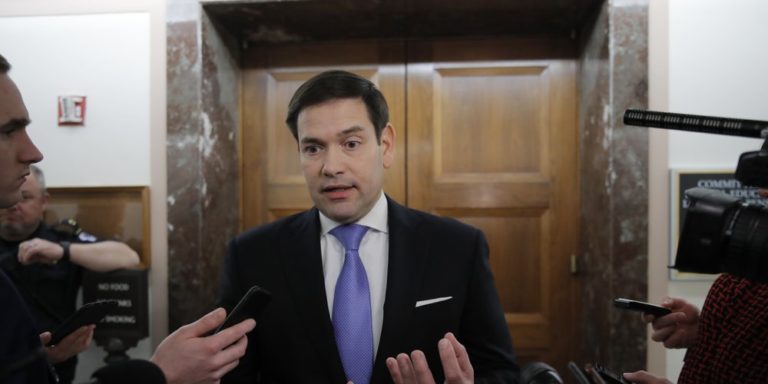
(Scott McClallen, The Center Square) After Michigan leaders pledged $1 billion in taxpayer subsidies to Ford’s new electric vehicle plant in Marshall, Florida Republican U.S. Sen. Marco Rubio is calling for an investigation into the agreement between the automaker and its contract with Chinese service provider and technology licensor CATL.

Rubio sent a letter to U.S. Secretary of the Treasury Janet Yellen, U.S. Secretary of Energy Jennifer Granholm, and U.S. Secretary of Transportation Pete Buttigieg, calling for an immediate Committee on Foreign Investment in the United States review of the licensing agreement between Ford and Contemporary Amperex Technology Co. Limited.

Rubio asked the Biden administration not to support Chinese Communist Party efforts by providing tax credits or other funding for the deal.

“[I]f Chinese companies like CATL are able to exploit both Chinese and United States incentives for battery and EV technology through clever corporate arrangements, then there is no use in investing federal funds toward industrial development in the first place,” Rubio wrote. “Taxpayer dollars should never be used to support PRC champions.”

PRC is an acronym for People’s Republic of China.

Michigan competed with several other states for the factory. Virginia Gov. Glenn Youngkin withdrew from negotiations saying his administration “felt that the right thing to do was to not recruit Ford as a front for China to America.”

Ford aims to use the plant to deliver an annual run rate of 600,000 electric vehicles globally by the end of this year and 2 million globally by the end of 2026.

Michigan has 25,181 EVs registered statewide.

“I am alarmed at Ford’s plan to establish a large, Michigan-based factory, structured as a wholly owned subsidiary that licenses its technology from CATL,” Rubio wrote. “As such, I write to request a Committee on Foreign Investment in the United States (CFIUS) review of the licensing agreement, as well as demand that no federal funds – especially monies or tax credits granted via the Inflation Reduction Act (P.L. 117-169) – go to enrich PRC national champion CATL, or any other Beijing-supported company, directly or indirectly.”

Rubio said that in 2015, Beijing published its Made in China 2025 plan, which identified EVs as a target industry to dominate. He said the CCP has worked to fund and develop EV battery technologies and aims to monopolize critical input processes, such as phosphoric acid production.

Rubio asked for answers to the following questions within 30 days:

  • To what degree has CATL relied on United States research and development in its own battery production?
  • Does CATL provide equipment, technology, or other services to the PRC government?
  • Does CATL provide equipment, technology, or other services to the People’s Liberation Army, the People’s Armed Police, or any other security body controlled by the CCP?
  • Has CATL acquired any assets through a transaction that is reviewable under the CFIUS?
  • Has CATL ever been implicated in forced labor or child labor?
  • To what degree will CATL have equity in, ownership over, or other forms of control over Ford’s planned subsidiary and the factory?

Gov. Gretchen Whitmer celebrated the deal on Thursday to advance the adoption of EVs by lowering their price and returning the supply chain to Michigan.

James Clapper Tries to Cover His Tracks on Hunter Laptop Russian Disinfo Claim

(Headline USA) Former Director of National Intelligence James Clapper blasted Politico this week, accusing the publication of “deliberately” distorting a letter dismissing the Hunter Biden laptop story that he and dozens of other intelligence officials signed.

The headline of Politico’s piece about the letter, which was published just weeks before the 2020 election, read, “Hunter Biden story is Russian disinfo, dozens of former intel officials say.”

“There was message distortion,” Clapper told the Washington Post on Monday. “All we were doing was raising a yellow flag that this could be Russian disinformation. Politico deliberately distorted what we said. It was clear in paragraph five.”

Clapper was one of 50 intelligence officials who signed the letter, in which they claimed they were deeply suspicious that the Russian government played a “significant role” in the Hunter Biden laptop story.

“If we are right,” they said, “this is Russia trying to influence how Americans vote in this election.”

Clapper isn’t the only intelligence official trying to walk back the letter’s baseless accusations. Another signer, former deputy director of National Intelligence Thomas Fingar, told the Post that it shouldn’t come as a surprise that the intentions of the letter were “misconstrued.”

“No one who has spent time in Washington should be surprised that journalists and politicians willfully or unintentionally misconstrue oral or written statements,” Fingar said. “The statement we signed was carefully written to minimize the likelihood that what was said would be misconstrued, and to provide a clear written record that could be used to identify and disprove distortions.”

Each of the intelligence officials who signed the letter has been put on notice by congressional Republicans that their role in the censorship of the Hunter Biden laptop story will be thoroughly investigated.

Earlier this month, House Judiciary Chairman Jim Jordan, R-Ohio, warned Clapper and the others that they could face a subpoena if they refused to hand over documents related to “the inception, drafting, editing, signing, publishing, or promotion” of the Politico letter dismissing Biden’s laptop.

DeSantis Floats Cutting Ties w/ College Board over Woke AP Course

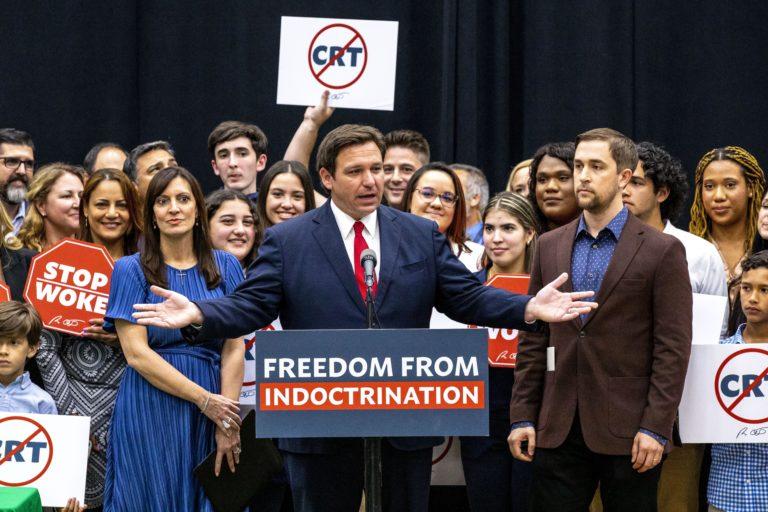
(Headline USA) Florida Gov. Ron DeSantis floated cutting ties with the College Board this week over the organization’s attempts to push radical critical race theory in an Advanced Placement course on black history.

DeSantis clashed with the College Board last month over the proposed course, which included an entire section on the leftist Black Lives Matter movement, queer theory, and reparations for black citizens. The class as outlined violated Florida’s “Stop WOKE Act,” DeSantis said.

The College Board agreed to modify the class to address some of the concerns raised by DeSantis, but then released a statement this week doubling down on its original proposal.

“The College Board condemns this uninformed caricature of African American Studies and the harm it does to scholars and students,” the organization said in a statement. “This new AP course can be historic — what makes history are the lived experiences of millions of African Americans, and the long work of scholars who have built this field. We hope our future efforts will unmistakably and unequivocally honor their work.”

DeSantis slammed the College Board for pushing “neo-Marxism,” and suggested Florida’s students would be much better off without its influence.

“This College Board, nobody elected them to anything,” DeSantis said this week. “They are just kind of there and they provide a service, and so you can either utilize those services or not. There are probably some other vendors who may be able to do that job as good or maybe even a lot better.”

The governor vowed Florida would focus on “education, not indoctrination.”

“The College Board was the one that, in a black studies course, put queer theory in, not us,” he added. “They did that. They were the ones that put in intersectionality, they put in other types of neo-Marxism into the proposed syllabus.”

GOP Sens. Introduce Bill to Force Biden to Restart Construction of Border Wall

(Headline USA) Sen. Ted Budd, R-N.C., introduced a bill this week that would force the Biden administration to restart construction of the southern border wall.

The Build the Wall Now Act — which is the first piece of legislation Budd has introduced since taking office in January — would remove the “legal impediments” preventing border wall construction and unlock $2.1 billion in unspent funding for the project. It would prevent Homeland Security chief Alejandro Mayorkas from canceling contracts related to the project and would require Mayorkas to uphold the current contracts.

Should it pass, the Biden administration would be required to restart construction within 24 hours.

“President Biden has created the worst border crisis in American history. Instead of taking steps to solve this crisis, the Biden administration has tried to run out the regulatory clock on border wall construction,” Budd said in a statement. “My Build the Wall Now Act ends this administration’s excuses and forces them to restart wall construction immediately. It’s time for a comprehensive solution to end the Biden Border Crisis, and this bill does just that.”

The bill would also require the Department of Homeland Security to develop new initiatives to increase border agent safety.

Sens. Ted Cruz, R-Texas, Thom Tillis, R-N.C., Steve Daines, R-Mont., Mike Crapo, R-Idaho, and James Risch, R-Idaho, are co-signers.

On the House side, Rep. Jim Banks, R-Ind., introduced a similar bill, accusing the Biden administration of “letting construction materials that have already been paid for sit and rot rather than finish building President Trump’s border wall and we are all paying the price.”

“For the same reason that Joe Biden had a fence put up around his State of the Union address, we need to finish building the wall on our southern border to keep American families and communities safe,” Banks added.

Club for Growth Head Writes Off Trump Attack, Sounds Alarm on Another GOP Leader

(Ben Sellers, Headline USA) Although former President Donald Trump’s barrages of volatile Truth-storms are rarely shocking anymore, one Feb. 7 post might have caught his followers off-guard.

In it, Trump attacked Club for Growth, a fundraising powerhouse that amassed an impressive track-record for victories in the 2018 and 2020 election cycles, even as Republicans faced hostile tradewinds elsewhere.

Trump called it “an assemblage of political misfits, globalists, and losers [that] fought me incessantly and rather viciously during my presidential run in 2016.”

Yet, the message—which came after Club for Growth’s decision to invite several of Trump’s likely campaign rivals to its annual donor retreat—may have done little more than to underscore the organization’s tremendous clout as a potential kingmaker, both in the GOP’s intra-party battles and in the general election.

Club for Growth remained deeply loyal to Trump during his presidency, and even voiced its unequivocal support following the disputed 2020 election. But according to its president, David McIntosh, the group is eager to at least explore its other options for 2024.

“What we’ve found in the last year is that President Trump, whom we worked with a lot to get good tax policy done, scale back on regulations—a lot of good policy that he did as president—but there’s just a segment of voters out there who will vote for Republicans, but for whatever reason, they don’t like his style,” McIntosh told Headline USA in an exclusive interview Tuesday.

“It’s very personal, but it’s very intense. They won’t vote for him,” he continued. “So what we thought is, ‘Let’s use our big conference to showcase some of the other people that could be alternatives.'”

McIntosh said the motivating factor was being able to promote a healthy dialogue among prospective challengers—including former U.N. Ambassador Nikki Haley, former Secretary of State Mike Pompeo, South Carolina Sen. Tim Scott, Virginia Gov. Glenn Youngkin, former Vice President Mike Pence and Florida Gov. Ron DeSantis—without having Trump’s larger-than-life presence overshadow its focus on policy discussions.

“The way I look at it is, we can’t afford to have four more years of Joe Biden or some other hyper-liberal that the Democrats are going to put up, so let’s make sure we’ve got a candidate who’s a true conservative and who can win,” McIntosh said. “President Trump didn’t like that and … called the Club for Growth all sorts of names.”

However, as far as McIntosh is concerned, the rift already is water under the bridge.

“To me, it’s not personal,” he said.

“If he [Trump] wins the nomination, we’ll be there to support him because he would certainly do a good job as president,” McIntosh continued. “It’ll just be more of an uphill climb to be able to make sure that we can win back the White House.”

In fact, it may soon be necessary for the two former allies to reconcile in order to neutralize what both see as a serious threat within the party from establishment RINOs like Senate Minority Leader Mitch McConnell, R-Ky., who continues to undermine the GOP’s conservative wing.

HERE COMES THE CAVALRY

As the old media saying goes, “if it bleeds, it leads.” That holds true in particular if the blood happens to be Republican.

From “Trump versus DeSantis” to the intra-party standoff in January between would-be House Speaker Kevin McCarthy, R-Calif., and a group of roughly 20 GOP holdouts, the leftist press has lapped up any hint of dissention in party ranks that allows them to tout Democrats’ monolithic groupthink as the pinnacle of a functioning federal government.

For better or worse, McIntosh often finds himself at the center of the scrum, using his leverage as leader of the country’s largest independent super-PAC to advance true conservative values.

“We’re sort of the cavalry when conservative members … fight hard like that,” he said. “If the party starts to punish them, we’re able to come in … and support them and provide them the resources and the money they need to win their election.”

McIntosh mentioned that anyone can get involved with Club for Growth by going onto its website and making a donation, all of which goes directly toward supporting the slate of carefully vetted candidates.

According to the Center for Responsive Politics, the group’s political arm spent more than $100 million in the 2022 election cycle.

That included $20 million in direct contributions and $81 million in independent expenditures supporting candidates like Sens. Ted Budd of North Carolina and Mike Lee of Utah, both of whom found themselves in uncomfortably tight races that otherwise might have given Democrats another seat-flip.

In some cases, Club for Growth split with Trump in the primaries—the first sign of strain on their relationship. It supported the failed primary runs of ex-Rep. Mo Brooks in Alabama, former state Treasurer Josh Mandel in Ohio, and Kathy Barnette in Pennsylvania.

Although Trump’s pick prevailed in all three primaries and two of the general election races, his endorsement of celebrity doctor Mehmet Oz in Pennsylvania may have contributed to election night’s biggest loss for Republicans.

Club for Growth also invested in a crop of next-generation Republicans like newly elected Rep. Anna Paulina Luna of Florida, and Bo Hines, a rising star in North Carolina who—like many Republican hopefuls—was broadsided by Democrats’ successful get-out-the-vote strategies in what was expected to be a red-wave election.

McIntosh chalked up the Left’s success in the midterms to its focus on abortion, its vilification of Republicans as a threat to democracy, and its emphasis on early voting and ballot-harvesting.

“In many places, over half the vote was already cast before Election Day and Republicans were way behind in it, so we had to make sure we had a huge turnout on Election Day just to come back to be competitive,” he said.

A GROWTH MINDSET

Some of Club for Growth’s picks, such as would-be senators Adam Laxalt in Nevada and Blake Masters in Arizona, fell in close elections due to mail-in voting—something McIntosh said it was high time for Republicans to lean into.

“One way to think of it is those elections are no longer about who has the best ideas, the right ideas for the country,” he said.

“They’re no longer about the personality of the candidates—‘Are they a good candidate or not?’,” he continued. “It’s all about who can harvest the most ballots and turnout, and we lost that.”

After two election cycles that Republicans have largely spent trying to resist the reckless push toward mass mail-in voting, McIntosh said it may now be necessary to beat the Left at its own game in order to avoid becoming the permanent minority party.

“We don’t like the rule changes,” he said. “We think that it’s open to fraud. But until we convince people to go to more secure balloting … we have to compete with the rules the way they are.”

It also was incumbent upon Republicans in office to demonstrate clear and decisive leadership that puts conservatism front and center.

McIntosh faulted the party for lacking a “coherent plan of where they would lead the country,” which contributed in no small part to the losses that cost Republicans a shot at reclaiming the Senate majority.

Although Club for Growth sees the 2024 field as one largely favorable to the GOP—including vulnerable Democrats in states like West Virginia, Montana and Arizona—it could prove to be another fiasco if feckless leaders like Mitch McConnell put their own special interests ahead of what is best for the broader cause.

McIntosh, himself a former congressman and Indiana gubernatorial candidate, slammed McConnell for having recently joined Democrats to smear Florida Sen. Rick Scott, who also is likely to face a tough re-election in 2024.

“I’m starting to raise the question: Is Mitch McConnell really able to lead us back to a majority, or is he so focused on his own internecine fighting with another member of the Senate that he’s he’s taken his eye off the ball in terms of making sure Republicans can win the majority there?” McIntosh said. “… It was very disturbing to us to see that type of inappropriate leadership.”

CLEANING UP THE HOUSE

Their mutual distrust of McConnell may be one area where McIntosh and Trump still see eye to eye.

Trump has remained a vocal critic of the “Old Crow” McConnell and questioned the senator’s ties to China via his wife, former Trump Transportation Secretary Elaine Chao, the scion of a major U.S. shipping company that does buiness with the Chinese communist government.

“President Trump keeps raising that question—and we look at the spending bills, where [McConnell] teams up with the Democrats to give us these huge omnibus bills that lead to inflation and a lot of the economic problems we have, and scratch our heads, ‘Why is the Republican leader cutting those kind of deals?'” McIntosh said.

Club for Growth does not, however, share Trump’s affinity for McCarthy, the current House speaker, whom the former president has dubbed “my Kevin.”

McIntosh noted that the standoff between McCarthy and several GOP lawmakers, led members of the House Freedom Caucus, ahead of McCarthy’s election as speaker was an absolutely necessary conflict, even though it allowed Democrats to relish in the spectacle.

“Kevin McCarthy has always been suspicious of conservatives,” McIntosh said. “He’s not a conservative himself—and so, they wanted to make sure that the core of the party, the conservatives, would be in leadership positions and would be able to have a voice at the table and help steer the Republican majority.”

After a multi-day saga that included 15 rounds of voting with no decisive result, Club for Growth stepped in to help bring the negotiations back into focus, along the way securing many of the conservatives’ priorities as concessions.

“Thankfully, the margin was small enough that they could use that speaker election as a leverage point, and that the things they negotiated for will make the Republican House much better, much more democratic,” McIntosh said.

“It will make Kevin McCarthy a better speaker,” he added. “I think he’s starting to see that and embrace it now.”

As part of the deal, Club for Growth also persuaded McCarthy not to unleash his super-PAC, the Congressional Leadership Fund, against conservative candidates in critical primary races.

“That’s a huge change, because he had spent about $40 million in primaries—that group did—that could have been used in the fall to win more seats,” McIntosh said.

“So, they’ve agreed to that and we’ve agreed that we’ll continue to be able to get the best conservative into those primaries,” he added. “And it will make it a stronger Republican House.”

Ben Sellers is the editor of Headline USA. Follow him at twitter.com/realbensellers.

Epstein Court Docs List 2,000 Names of ‘Pedophile Island’ Visitors

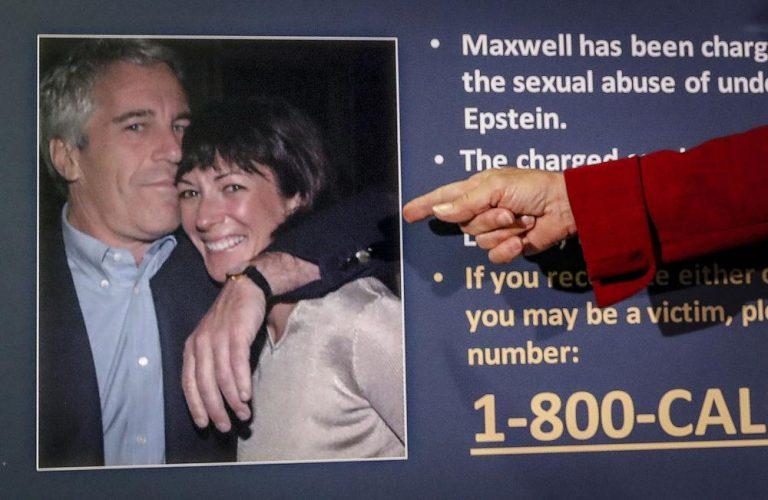
(Joshua Paladino, Headline USA) In the Ghislaine Maxwell child sex trafficking trial, the Second Circuit Court of Appeals unsealed the flight log that tracked the visitors to Jeffrey Epstein’s Pedophile Island.

The flight log reveals the celebrities, politicians, royals and financial capitalists that visited Little Saint James island in the U.S. Virgin Islands.

Former Presidents Bill Clinton appears on the list 12 times as well as Prince Andrew and Donald Trump once, but Barack Obama and President Joe Biden do not show up on it.

The flight log begins in 1995 and ends in 2015. The list does not present a complete picture of the people who travelled to Epstein Island, however, as numerous entries are blank or illegible, and others do not describe the passengers by name, simply using initials.

Jeffrey Epstein and Ghislaine Maxwell were listed on most flights during the 20-year period.

Nadia Marcinkova, an airline pilot, flew on many of the flights, too.

Prince Andrew shows up on the flight log, but the trip lists Teterboro, New Jersey, as the place of departure and West Palm Beach, Florida, as the destination.

Other frequent flyers include Celina Midelfart, a Norwegian businesswoman from a royal line, Gwendolyn Beck, Didier Cazaudumec, Alberto Pinto, Ricardo Legoretta, Kelly Spamm, Sophie Biddle, financier Glenn Dubin family and his wife, Celina, and daughter, Eva.

In the trial, Virginia Giuffre v Maxwell, the plaintiff Giuffre (formerly Virginia Roberts), claims that Maxwell and Epstein groomed her, starting at 16 years old, for Epstein’s “pleasure, including lessons in Epstein’s preferences during oral sex.” Maxwell denied the allegation.

Giuffre said Epstein and Maxwell hosted sex parties, often with many underage participants, at his various homes in New York, New Mexico and Palm Beach—not just at Pedophile Island.

Utah Gov. Tells Fleeing Californians to Stay Away

0

(Molly Bruns, Headline USA) Utah’s Republican Gov. Spencer Cox told Californians fleeing to his state to “stay in California” as Utah faces housing and water shortages.

Cox made the statement in front of the White House in a joint speech with Democrat Gov. Phil Murphy of New Jersey, both of whom were in Washington D.C. for the National Governers Association annual winter meeting.

According to Yahoo! News, Murphy and Cox—who both lead the NGA—also discussed their meeting with President Biden concerning border security, immigration, water rights and the debt ceiling.

A reporter asked Cox what Utah is doing to attract a massive increase in its residents, to which Cox said “it’s not working to attract more people.”

“This last census confirmed that Utah was the fastest-growing state over the past 10 years,” Cox said. “Our biggest problems are more growth-related. We would love for people to stay in California instead of coming as refugees to Utah.”

Utah’s population grew from 2,763,885 people in 2010 to 3,271,616 in 2020—a total increase of 18.3%, making it the fastest growing state in the country.

A report from June 2021 found that Californians are causing the large population influx in the state.

In his statement, Cox said the state “has grown so quickly,” in the midst of their ongoing housing and water crisis.

The west continues to struggle with historic drought, and Utah is no exception—all of the state’s 29 counties are designated disaster zones by the United States Department of Agriculture.

The state is also short about 31,000 homes, despite breaking building records in 2021. Dejan Eskic, a senior research fellow at the Kem C. Gardner Policy Institute, estimated that the median monthly home payment in the state was $2,600, as of last October.

Cox recently made news for signing a law restricting “gender-affirming care,” in his state, despite being on the fence about boys participating in girl’s sports just last year.