Kathy Hochul Waves Chinese Flag, Stands Next to CCP Official

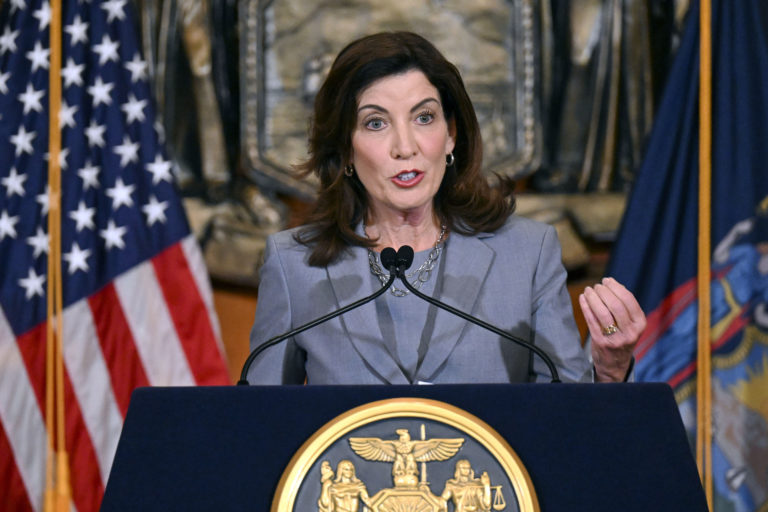
(Dmytro “Henry” Aleksandrov, Headline USA) Footage from a Lunar New Year Parade in Lower Manhattan last weekend revealed that New York governor Kathy Hochul waved the Chinese flag and marched next to a Chinese Communist official who previously denied atrocities committed by his government.

During an opening ceremony for the annual event in New York City’s Chinatown, Hochul gave a short speech, according to the National Review.

“This is living proof that New York City is back,” she said about the size of the crowd.

While she was giving her speech, Hochul was holding and waving the flags of the People’s Republic of China and the U.S. flag.

The CCP atrocities in China — genocide and enslavement of Uyghurs, specifically — the secret police stations in New York City that were designed to spy on Chinese immigrants and the recent scandal about a Chinese balloon flying over the country didn’t stop Hochul and other leftist politicians, such as New York City mayor Eric Adams and Senator Chuck Schumer, to join Chinese consul general Huang Ping, a CCP hard-liner, on stage.

When posting a video about her participation in the parade to her official YouTube channel, the governor’s office omitted footage of Hochul’s speech when she held the flag that symbolizes communism, in general, and communist China, in particular. Instead, the video begins right after she let go of the flags and picked up a proclamation, which she handed to parade organizers.

As was pointed out previously, Huang, who constantly shows up at these kinds of events, doesn’t deny his pro-CCP views, such as denial of the Chinese government’s mass atrocities against Uyghurs and support for China’s claims that Taiwan is a part of China. In a 2021 podcast interview, he extensively defended the record of the Chinese Communist Party, saying it “kept its promise and has done a great job,” and slammed critics of the party’s repression in Xinjiang — a widely recognized crime against humanity — whom he accused of peddling “fabricated” allegations.

FLASHBACK: Kavanaugh Accuser Admits to Lying, Faces Criminal Charges

Editor’s note: The story below is based on events that originally happened in 2018, as reported at the time by Business Insider. Headline USA (then known as Liberty Headlines) also covered it at the time. It recirculated over the weekend via social media, and Headline USA took the bait. Several other prominent news aggregators have since picked it up.

As noted by The Beltway Report, the story garnered little traction during the actual aftermath of the Kavanaugh hearings, and so we have decided to keep it posted in order to remind everyone of the false pretenses that many on the Left continue to push as fact surrounding Justice Kavanaugh.

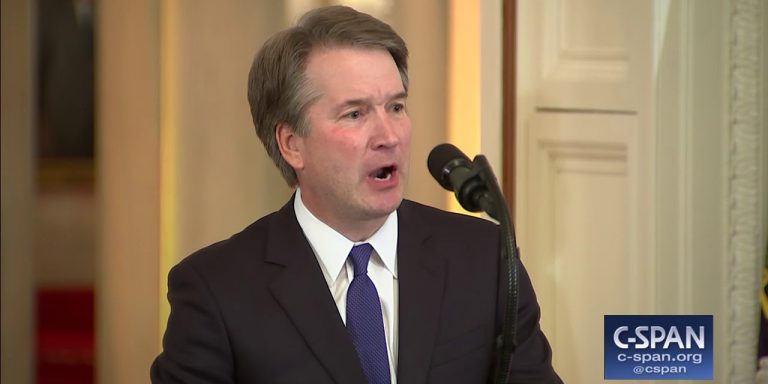
(Molly Bruns, Headline USA) Judy Munro-Leighton, one of three women who accused now-Justice Brett Kavanaugh of sexual assault, was found to have lied during a congressional investigation and is now being charged with making materially false statements and obstruction.

According to The Beltway Report, a letter written by Senate Judiciary Committee Chairman Chuck Grassley, R-Iowa, made a criminal referral against Monro-Leighton, who admitted that she “just wanted to get attention.”

She also admitted that an anonymous letter she sent to then-Sen. Kamala Harris describing a graphic sexual assault by Kavanaugh and a friend was not written by her, despite her original claim of being “Jane Doe from Oceanside, California.”

“No, no, no. I did that as a way to grab attention,” Munro-Leighton explained when questioned by investigators of the Committee on the Judiciary. “I am not Jane Doe… but I did read Jane Doe’s letter. I read the transcript of the call to your committee… I saw it online. It was news.”

In her statements, she also clarified that she never met Judge Kavanaugh.

“In short, during the Committee’s time-sensitive investigation of allegations against Judge Kavanaugh, Ms. Munro-Leighton submitted a fabricated allegation, which diverted Committee resources,” Grassley’s letter reads. “When questioned by Committee investigators she admitted it was false, a ‘ploy’ and a ‘tactic.'”

Harris, who was acting as a senator at the time, went on to become the vice president without any discipline for bringing the false letter forward without conducting a proper investigation into the matter.

None of the senators on the committee took the time to investigate the anonymous letter, which Grassley claims was due to their haste to close out the hearings.

Continuously throughout the letter, Grassley attempts to push the blame off of the committee, minimizing their part in the political hit job.

None of the politicians on the committee commented on the charges being brought against Munro-Leighton.

Hunter’s Art Dealer Impedes GOP Probe into Art Sales Investigation

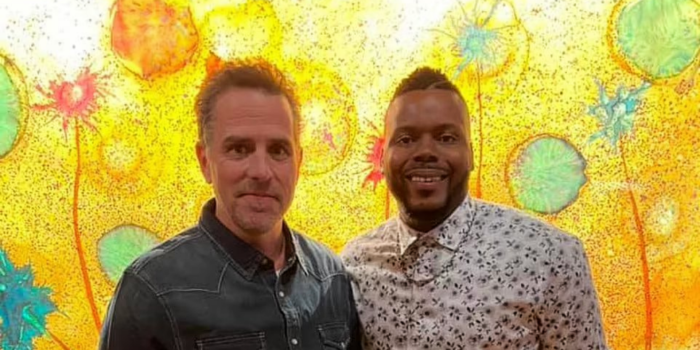
(Molly Bruns, Headline USA) Hunter Biden’s art dealer, Georges Bergés, refused to comply with a House Oversight Committee investigation into the younger Biden’s business dealings and provide a list of the anonymous buyers of 12 of his paintings.

The nation’s first son is under investigation for tax fraud by the Committee. According to Breitbart, Rep. James Comer, R-Ky., called Bergés to testify before Congress about the art dealings, which were all transactions of over $500,000 apiece.

Comer voiced suspicions about many of the buyers being Chinese businessmen, possibly implicating President Joe Biden in his son’s shady business dealings.

Beregés, who has known ties to Chinese businessmen, refused to share information about the younger Biden’s buyers because they were secret sales.

“In light of these considerations, providing the documents and information requested in your letter seemingly would defeat the efforts of Mr. Biden and the White House to avoid the ‘serious ethical concerns’ that you raise,” Bergés’ lawyer, William Pittard, told Comer. “Mr. Berges hopes that you and Mr. Biden can resolve that tension.”

Pittard specializes in white collar and congressional investigations.

Comer questioned the shady circumstances behind the deal after the initial sale.

“Why would anyone pay Hunter Biden top dollar for artwork that is arguably worthless? He’s no Pablo Picasso,” Comer stated. “Foreign adversaries, including China, have used transactions involving sham art sales to launder money & evade sanctions.”

Comer, who is leading the investigation into Biden’s case, is also looking into possible wire fraud and money laundering.

Hunter’s bank records reveal at least 150 irregular wire transfers were flagged by American banks, many of them involving Biden family business in China.

By not revealing the people who purchased Hunter’s art, Bergés may be attempting to avoid implicating the president or himself in Hunter’s suspicious dealings.

Comer also suggested that he has information suggesting that President Biden knew about his son’s dubious business relations, despite saying otherwise on the campaign trail.

“We know that Joe Biden said during the presidential campaign that he had no knowledge of his son’s business interests. He wasn’t involved. He didn’t benefit from them. We have evidence that would suggest otherwise. And this is very concerning,” Comer told ABC News on Sunday.

Publisher of Roald Dahl’s Books Makes ‘Woke’ Changes after His Passing

(Molly Bruns, Headline USA) The publishing company that owns the rights to Roald Dahl’s popular children’s books, such as Charlie and the Chocolate Factory, James and the Giant Peach and The Witches, is editing what they deem as “offensive language” out of the books.

According to the Daily Caller, the publishing house, Puffin Books, is changing words or taking out entire passages that are considered offensive to “modern audiences,” as well as making additions of their own.

One example of this is in one of Dahls most popular stories, Charlie and the Chocolate Factory. A character referred to as Grandma Josephine talks about a “crazy Indian prince in the 2001 edition of the story, the 2022 edition altered the reference to say “a ridiculously rich Indian prince.”

Another character, Augustus Gloop, is “enormously fat” in the original novel. The editors altered the description to simply “enormous.”

The descriptors for many characters in other books are more culturally sensitive, such as Aunt Sponge from James and the Giant Peach. She is also known as “enormously fat,” but is instead introduced as “quite large” and is no longer is described as “fat” throughout the rest of the novel.

Many changes made to the book The Witches contain modern, feminist themes. One phrase referencing female workers changed from the examples of “cashier” and “typing letters” to “top scientist” and “running a business.”

The changes made to Dahl’s novels kickstarted an online debate about modern censorship and sensibilities.

New York Times bestselling author Sam Abramson defended the changes, dismissing Dahl as a “bad man” and telling upset readers to “grow up.”


Others argued that the outright changes and additions made to the book for the sake of the more sensitive modern audiences is “totalitarian censorship.” Some also pointed out that if people find the books offensive, they probably just shouldn’t read them.


FBI Accused of Stealing Civil War Era Gold

0

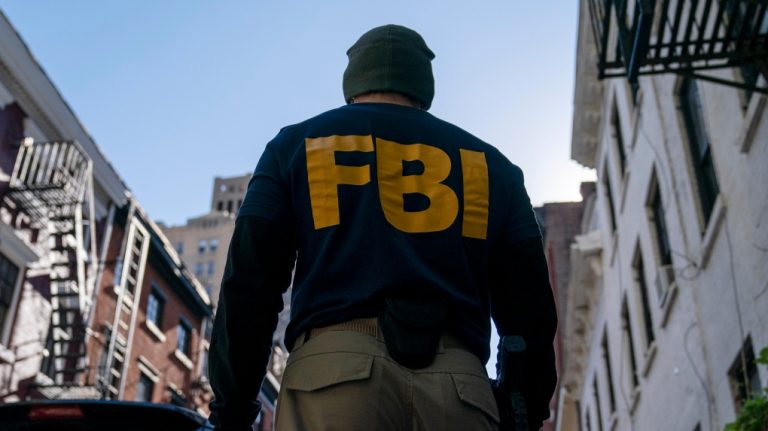
(Headline USA) The court-ordered release of a trove of government photos, videos, maps and other documents involving the FBI‘s secretive search for Civil War-era gold has a treasure hunter more convinced than ever of a coverup — and just as determined to prove it.

Dennis Parada waged a legal battle to force the FBI to turn over records of its excavation in Dents Run, Pennsylvania, where local lore says an 1863 shipment of Union gold disappeared on its way to the U.S. Mint in Philadelphia. The FBI, which went to Dents Run after sophisticated testing suggested tons of gold might be buried there, has long insisted the dig came up empty.

Parada and his advisers, who have spent countless hours poring over the newly released government records, believe otherwise. They accuse the FBI of distorting key evidence and improperly withholding records in an apparent effort to conceal the recovery of a historic, extremely valuable gold cache. The FBI defends its handling of the materials.

Parada’s dispute with the FBI is playing out in federal court, where a judge overseeing the case must decide whether the FBI will have to release its operational plan for the gold dig and other records it wants to keep secret. The judge could also order the FBI to keep looking for additional materials to turn over to the treasure hunter.

“We feel we were double-crossed and lied to,” Parada said in an interview at his cramped, wood-paneled office, where huge drill bits and high-end metal detectors compete for space with rusty miners’ picks, Civil War-era cannon parts and other odds and ends he’s dug up over the years.

“The truth will come out,” said Parada, co-founder of the treasure-hunting outfit Finders Keepers.

An FBI spokesperson declined to answer questions about the agency’s gold dig records or respond to the coverup allegations, citing the ongoing litigation. Last year, the FBI released a statement publicly acknowledging for the first time that it had been looking for gold in Dents Run. The statement said the FBI did not find any, adding the agency “continues to unequivocally reject any claims or speculation to the contrary.”

Parada and his son spent years looking for the fabled gold of Dents Run, eventually guiding the FBI to a remote woodland site 135 miles (220 kilometers) northeast of Pittsburgh where they say their instruments identified a large quantity of metal. The FBI brought in a geophysical consulting firm whose sensitive equipment detected a 7- to 9-ton mass suggestive of gold.

Armed with a warrant, a team of FBI agents came in March 2018 to dig up the hillside. An FBI videographer was on hand to document it, at one point interviewing a Philadelphia-based agent on the FBI’s art-crime team who explained why the FBI was in the woods of one of Pennsylvania’s most sparsely populated counties.

“We’ve identified through our investigation a site that we believe has U.S. property, which includes a significant sum of base metal which is valuable … particularly gold, maybe silver,” the agent said on the video, his face blurred by the FBI to protect his privacy.

Calling it a “155-year-old cold case,” he said the FBI had corroborated Parada’s information about the location of the reputed gold through “scientific testing.” He stressed the test results did not prove the presence of gold. Only a dig would help law enforcement “get to the bottom of this story once and for all,” the agent said.

Parada obtained the video and other FBI records through a Freedom of Information Act lawsuit, hoping they would help answer lingering questions about what took place at Dents Run five years ago. Parada was mostly kept away from the dig site while the FBI did its work.

He suspects the agency conducted a clandestine, overnight dig between the first and second days of the court-authorized excavation, found the gold, and spirited it away. Residents have previously told of hearing a backhoe and jackhammer overnight — when the dig was supposed to have been paused — and seeing a convoy of FBI vehicles, including large armored trucks. The FBI has denied it conducted an overnight dig.

Parada and a consultant, Warren Getler, have focused on a handful of FBI photos and an accompanying photo log that have them questioning the FBI’s official gold dig timeline. At issue is the presence or absence of snow in the images and the timing of a storm that briefly disrupted operations. For example, an FBI image that was supposed to have been taken about an hour after the squall does not show any snow on a large, moss-covered boulder at the dig site. That same boulder is snow-covered in a photo that FBI records indicate was taken the next morning — some 15 hours after the storm.

They accuse the FBI of altering the sequence of events to conceal an overnight excavation.

“We have compelling evidence a night dig took place, and that the FBI went to some large effort to cover up that night dig,” said Getler, co-author of “Rebel Gold,” a book exploring the possibility of buried Civil War-era caches of gold and silver.

There are other seeming anomalies in the records, according to Finders Keepers’ legal motion. Among them:

— The FBI initially turned over hundreds of photos, but rendered them in low-resolution, high-contrast black-and-white, making it impossible to tell the time of day they were taken or even, in some cases, what they show. The treasure hunters went back and requested several dozen of the photos in color, which the FBI provided.

— The agency did not provide any video of the second and final day of the dig. Nor did it produce any photos or video showing what the FBI’s own hand-drawn map described as a 30-foot-long, 12-foot-deep trench — which the treasure hunters claim could have only been dug overnight. Government lawyers acknowledged these gaps in the photo and video record but did not elaborate in a court filing last week.

— The consulting firm hired by the FBI to assess the possibility of gold produced a report on its findings, but the version given to the treasure hunters seems to be missing key pages.

— The FBI did not provide any of its agents’ travel and expense invoices, which could shed further light on the dig timeline.

The records released so far “cast doubt on the FBI’s claim to have found nothing and raise serious and troubling questions about the FBI’s conduct during the dig and in this litigation, where it has gone to great lengths to distort critical evidence,” Anne Weismann, a lawyer for Finders Keepers, wrote in a legal filing that seeks records, including the FBI’s operational plan, that she says were improperly withheld.

The Justice Department did not address the treasure hunters’ most explosive claims of a possible coverup in its latest legal filing. The government instead told a federal judge in Washington, D.C., that the FBI had satisfied its legal obligation to the treasure hunters to search for its records of the dig, and asked for the case to be closed.

The judge has yet to rule.

Parada said he will keep asking questions until he gets satisfactory answers.

“I will stick at this until the end, until I know everything that happened to that gold,” he said. “How much, where it went to, who has it now. I gotta know.”

Adapted from reporting by the Associated Press

Two Police Officers Stabbed While Responding to a Call

0

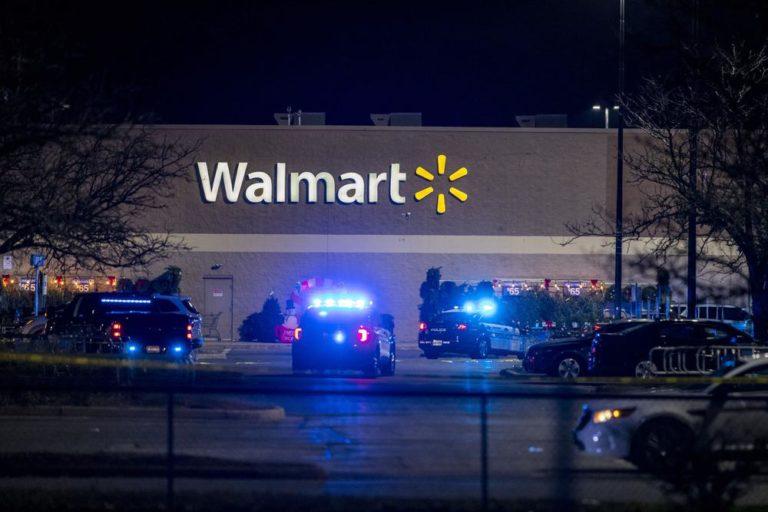
(Headline USA) Two Houston police officers were hospitalized after being stabbed on Saturday, officials said.

The officers were responding to a call Saturday morning in southwest Houston when an unidentified person stabbed them, police said in a tweet.

At least one of the officers fired his weapon, hitting the suspect.

The officers were taken to a hospital in stable condition, police said. The condition of the suspect was not immediately known.

The tragic event demonstrates an apparent flaw in gun control rhetoric.

The rhetorical point is demonstrated by a Vox story bearing the headline “America’s unique, enduring gun problem, explained.” The article argues that guns are the problem.

“Every country has people with mental health issues and extremists; those problems aren’t unique,” the article reads.

“What is unique is the US’s expansive view of civilian gun ownership, ingrained in politics, in culture, and in the law since the nation’s founding, and a national political process that has so far proved incapable of changing that norm.”

As this tragic story demonstrates, civilian access to guns is not necessary for domestic violence or life-threatening assaults.  

Adapted from reporting by the Associated Press

Christian Celeb Kelsey Grammer Weeps While Discussing New Film ‘The Jesus Revolution’

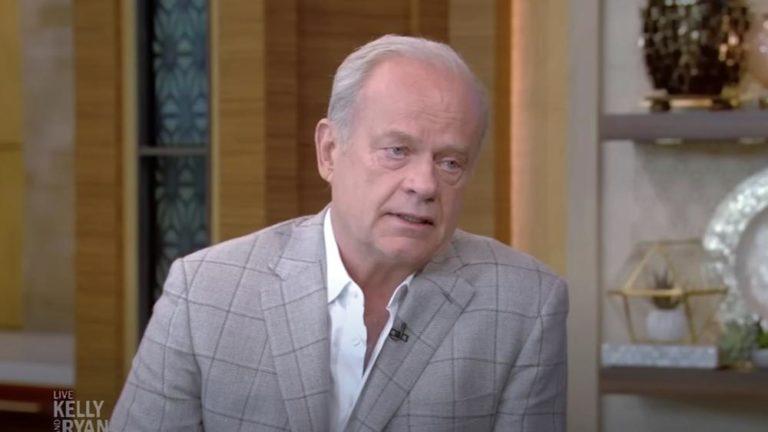
(Dmytro “Henry” Aleksandrov, Headline USA) A Hollywood actor and a Republican, Kelsey Grammer, became emotional during his recent appearance on the syndicated program “Live with Kelly and Ryan” when he started talking about his portrayal of Pastor Chuck Smith in a new motion picture titled “Jesus Revolution.”

Grammer’s commented on his part in the film after the show aired a clip from the motion picture, according to Faithwire.

“I love this movie,” he said through tears. “I really love it.”

Grammer also said that Kayte Walsh, his wife, loved the movie too when they both saw the first cut of the film in their home.

“When Kayte saw it she said, ‘Oh my God, it’s the best thing you’ve ever done,’” he said. “She started crying.”

Grammer also told hosts Kelly Ripa and Ryan Seacrest about the character that he plays.

“[Smith] is a man looking for his own faith and finds it as well. A man whose church is empty. He can’t get traction and he’s started to think he’s going to be fired from his job as a pastor.”

“This hippie comes into his life,” he added. “And he finds a new purpose and started a movement that’s still going. It’s extraordinary.”

After Ripa asked Grammer if the film was a true story, he said that it is.

He then told the hosts that he has been approached by several people who knew that he is playing the pastor in the movie.

“’You’re playing Chuck Smith! Oh, I listened to him all the time.’ Or they’d say, ‘He married us’ or ‘I was baptized by Chuck Smith,’” Grammer said.

“You can see this light in their eyes,” he added before he started crying again.

Grammer, 67, who is well-known for playing Frasier Crane for 20 years in the television series Frasier and Cheers.

He also says that he’s a Christian. However, his statement is not true, because he’s been making statements that completely contradict the Christian faith. In a 2010 interview with New York magazine, Grammer said that he is pro-choice, but doesn’t “advocate for abortion” — a statement that doesn’t make sense. And, according to his interview with Pierce Morgan on CNN, Grammer also said that he doesn’t oppose the so-called same-sex “marriage.”

“I wouldn’t sign on to that… I guess I’m more Libertarian in that way. I think marriage is up to two people that love each other.”

‘Matrix’ Star Warns That AI Trying to Control and Manipulate Us

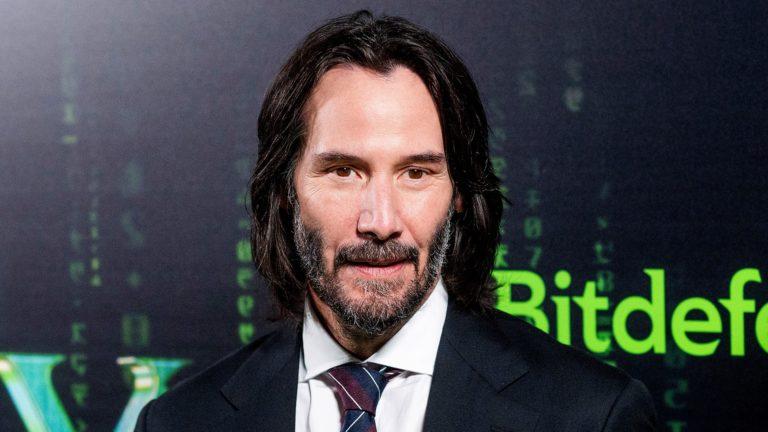
(Dmytro “Henry” Aleksandrov, Headline USA) Keanu Reeves, the 58-year-old actor and star of the “John Wick” franchise, spoke out against the dangers of “deep fake” technology, criticized the fact that it comes with the lack of agency and said that artificial intelligence has some potentially dangerous implications.

Reeves shared his concerns about AI technology that can be used to manipulate video footage in a Tuesday interview with Wired.

He went so far as to add a clause to his every contract that would prohibit movie studios from digitally changing his scenes that goes beyond simple video editing.

Reeves said that he is frustrated with the lack of agency he may have when it comes to the deep fake technology.

“When you give a performance in a film, you know you’re going to be edited, but you’re participating in that,” he said. “If you go into deep fake land, it has none of your points of view. That’s scary.”

He then continued to discuss the potential implications of the deep fake technology.

“People are growing up with these tools. We’re listening to music already that’s made by AI in the style of Nirvana, there’s NFT digital art. It’s cool, like, ‘Look what the cute machines can make!’ But there’s a corporatocracy behind it that’s looking to control those things,” he said.

“Culturally, socially, we’re gonna be confronted by the value of real, or the non-value. And then what’s going to be pushed on us? What’s going to be presented to us? It’s this sensorium. It’s a spectacle. And it’s a system of control and manipulation.”

“We’re on our knees looking at cave walls and seeing the projections, and we’re not having the chance to look behind us,” he added, referring to the Plato theory of society where people are chained in cages and see only the reflections on the walls, instead of the real objects from the outside world.

Reeves’ comments come in the wake of a recent controversy when a popular video game live streamer apologized after his viewers saw browser tabs of the AI-generated porn images of his fellow internet personalities.

Stanford Ends Program Paying Students to Report ‘Harmful’ Words

(Dmytro “Henry” Aleksandrov, Headline USA) Members of Stanford University’s information technology department once offered money to those who flagged and reported “racist terminology” on university websites but retracted the program after facing backlash from people.

The offer was part of a “Statement of Solidarity and Commitment to Action” program that started in 2020, according to the College Fix. The financial incentive was raised only during a late-January faculty senate meeting where professors talked about their concerns that the college campus slowly becomes a little representation of the world in George Orwell‘s book “1984.”

The scholars from Stanford also cited the school’s “Elimination of Harmful Language Initiative,” the IDEAL Anti-Racism Toolkit pushed on campus and the university’s relatively new “Protected Identity Harm Reporting” system as alarming projects stifling both free speech and academic freedom.

On Feb. 9, the faculty senate voted to create an “Ad Hoc Committee on University Speech” to review these ongoing concerns and present solutions.

This faculty representation in late January happened because of the nationwide backlash to the university’s 13-page “Elimination of Harmful Language Initiative” that was first reported on in Dec. 2022 by The Wall Street Journal.

The initiative, one aspect of the “Statement of Solidarity and Commitment to Action” program, was criticized for stating that more than 125 words, including common ones such as “addict,” “American” and “trigger warning,” should be eliminated from school websites.

According to a Dec. 2022 news release, seven Stanford web domains were scanned for harmful words last year, adding “the process for working with content owners for remediation is still in a planning phase.”

Since then, the financial incentive has been removed and reworded to avoid further backlash from people.

The “Elimination of Harmful Language Initiative” website has also been taken down, with the media representative Stett Holbrook saying that the initiative is “being re-evaluated and is not operational.”

Bruen Decision Allows for Challenges to Established Gun Control Laws

0

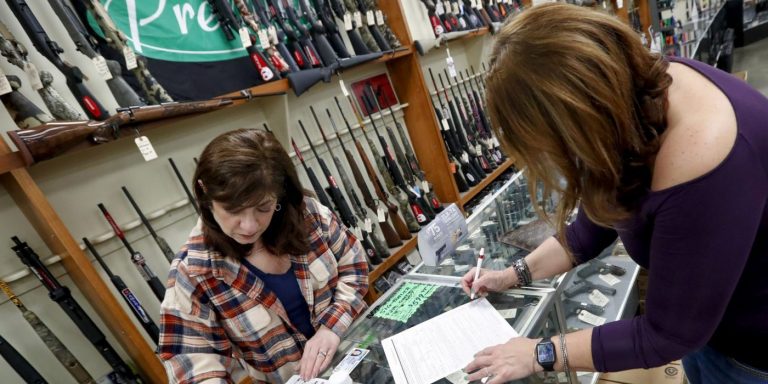
(Headline USA) The Supreme Court’s landmark Bruen decision is allowing freedom loving Americans to challenge decades old gun control laws while triggering gun grabbers.

The Supreme Court’s decision changed the test that lower courts had long used for evaluating challenges to gun laws. Judges should no longer consider whether the law serves public interests like enhancing public safety, the justices said.

Under the Supreme Court’s new test, the government that wants to uphold a gun restriction must look back into history to show it is consistent with the country’s “historical tradition of firearm regulation.”

Courts in recent months have declared unconstitutional federal laws purportedly designed to keep guns out of the hands of accused domestic abusers, felony defendants and people who use marijuana. Judges have shot down a federal ban on possessing guns with serial numbers removed and gun restrictions for young adults in Texas and have blocked the enforcement of Delaware’s ban on the possession of homemade “ghost guns.”

The legal questions raised by the first major gun ruling in a decade will likely force the Supreme Court to step in again soon to provide more guidance for judges.

Jacob Charles, a professor at Pepperdine University’s law school who focuses on firearms law, whined about the loss of long-standing gun control laws.

“What it means is that not only are new laws being struck down … but also laws that have been on the books for over 60 years, 40 years in some cases, those are being struck down — where prior to Bruen — courts were unanimous that those were constitutional,” he said.

The decision opened the door to a wave of legal challenges from people who respect the 2nd Amendment. These freedom-loving Americans saw an opportunity to undo laws restricting American’s freedom to “keep and bear arms.” For these Americans, the Bruen decision was a welcome development that removed what they see as unconstitutional restraints on 2nd Amendment rights.

“It’s a true reading of what the Constitution and the Bill of Rights tells us,” said Mark Oliva, a spokesman for the National Shooting Sports Foundation. “It absolutely does provide clarity to the lower courts on how the constitution should be applied when it comes to our fundamental rights.”

Gun grabbers are triggered after a federal appeals court this month said that under the Supreme Court’s new standards, the government can’t stop people who have domestic violence restraining orders (not convictions) against them from owning guns.

The New Orleans-based 5th U.S. Circuit Court of Appeals acknowledged that the law “embodies salutary policy goals meant to protect vulnerable people in our society.” But the judges concluded that the government failed to point to a precursor from early American history that is comparable enough to the modern law.

Gun grabbers have decried the Supreme Court’s historical test, but say they remain confident that many gun restrictions will survive challenges. Since the decision, for example, judges have consistently upheld the federal ban on convicted felons from possessing guns.

Both gun grabbers and supporters of the 2nd Amendment are closely watching many pending cases, including several challenging state laws banning certain semi-automatic weapons and high-capacity magazines. Already, some gun laws passed in the wake of the Supreme Court decision have been shot down.

A judge declared multiple portions of New York’s new gun law unconstitutional, including rules that restrict carrying firearms in public parks and places of worship.

Some judges have upheld a law banning people under indictment for felonies from buying guns while others have declared it unconstitutional.

A federal judge issued an order barring Delaware from enforcing provisions of a new law outlawing the manufacture and possession of so-called “ghost guns” that don’t have serial numbers and can be nearly impossible for law enforcement officials to trace. But another judge rejected a challenge to California’s “ghost gun” regulations.

Adapted from reporting by the Associated Press