The Case for Abolishing the IRS

(Steve Dewey, FEE) The American public has long held an unfavorable view of the Internal Revenue Service, as evidenced by several historical surveys. A Gallup poll taken more than 25 years ago in October 1997 found that 69 percent of the American public held the opinion that the IRS “frequently abuse[d] its powers.” Fast forward to October 2022, when another Gallup poll was taken on the American public’s job-performance rating of 11 federal agencies. The poll ranked the IRS dead last, with only 34 percent of Americans regarding the job performance of the IRS as “excellent/good.”

Another poll released by the Pew Research Center in March 2015 on the “complexity of the tax system” indicated that 72 percent of the American public were at least somewhat bothered by the complexity, and 44 percent were a lot bothered by it. Public concern over the complexity of the federal tax code is certainly understandable when you consider that the body of law that codifies all federal tax laws, the Internal Revenue Code (U.S. Code Title 26), comprised 6,979 pages as of year-end 2022.

Aside from the American public’s unfavorable view of the tax system, there is a real economic reason for addressing its complexity: the enormous cost of compliance for the American taxpayer, both individual and corporate. The Tax Foundation issued a report in August 2022 estimating that “Americans [would] spend over 6.5 billion hours complying with IRS tax filing and reporting requirements in 2022.” This equates to approximately 3.1 million full-time workers focused entirely on federal tax compliance.

The Tax Foundation estimates that the monetary cost of compliance based on its estimated 6.5 billion work hours would at minimum amount to $313 billion in 2022 — nearly 25 times greater than the IRS’s $12.6 billion 2022 budget with a workforce of approximately 80,000 employees.

An additional unknown cost of significant size is the time spent by American taxpayers in calling the IRS for tax-filing assistance. Based on information from the IRS’s Taxpayer Advocate Service, Americans made 72.8 million calls to the IRS in 2022 seeking help. Only 7.4 million calls were answered — just over 10 percent — and these had an average wait time of 28 minutes.

The Taxpayer Advocate Service, an independent organization within the IRS established in 1996 to help Americans address federal tax problems, issues an annual report to Congress every January with an assessment of the IRS’s prior-year operations and some legislative recommendations. The recommendations typically include more amendments to the Internal Revenue Code, more IRS rules and rule revisions, more funding from Congress, expanding jurisdiction of the U.S. Tax Court, and more mandates on the private sector, such as establishing new IRS competency standards for tax preparers. Hence, these ongoing annual recommendations, while well-intentioned, only serve to tinker with a massive system already fundamentally broken and beyond repair.

The current American tax system is clearly a dysfunctional labyrinth and an oppressive cost burden on American citizens and businesses. So, how did the United States, a nation founded on liberty and limited government, get to this point? A historical look at the evolution of the American tax system provides the necessary context for understanding the problem and achieving a sensible solution.

The 16th Amendment: A Brief History

Despite a national history predominantly void of income taxes for more than a century, the experience of an income tax being put into actual practice from 1862 through 1872, and again briefly in 1894, caused the American public and its legislative representatives to at least become accustomed to the idea of a federal income tax. But more importantly, the narrow Supreme Court decision in Pollock v. Farmers’ Loan & Trust Co. energized a growing populist and progressive political movement in the United States to push for a graduated federal income tax in the late 1890s and early 1900s.

When Republican President William Howard Taft succeeded progressive Republican President Theodore Roosevelt in 1909, he was under immediate pressure to support a new graduated income tax law. Not only was there widespread bipartisan support for a new income tax on high-income Americans, but Taft’s predecessor Roosevelt had also advocated for it. Taft was lukewarm, at best, about reviving the tax, but he realized it was an issue that he had to face as aggressive efforts by congressional Democrats to legislate new taxes on corporations and wealthy Americans mounted. These efforts included a new income tax proposed by Sen. Joseph Bailey Sr., D-Texas, that was likely to pass in Congress, as well as proposals by Sen. Norris Brown, R-Neb., for a new income tax amendment to the Constitution.

Taft was stuck in the middle with conservative Republicans opposing an income tax. He was concerned about its imminent passage in Congress, but he also feared that any new income tax law would meet the same fate as that which was ruled unconstitutional by the Supreme Court in Pollock in 1895. Therefore, Taft strategized with powerful Senate leader Nelson Aldrich (R-R.I.) to propose a new income tax constitutional amendment to stop the pending legislation in Congress. Their plan worked —Congress put the proposed amendment up to vote, and it easily passed on July 12, 1909, by 77–0 vote in the Senate and 318–14 in the House.

It is important to note that Taft, Aldrich, and most conservative Republicans supported the amendment only because they were convinced that it would never be ratified by the states and would, therefore, permanently end the debate over the constitutionality of an income tax. Instead, they watched in dismay as it was ratified by state after state over the next 3.5 years until the required 36th state (three-fourths of the then-48 states) ratified it on Feb. 13, 1913. The 16th Amendment was officially certified as part of the Constitution on Feb. 25, 1913.

Since the politics of a graduated income tax at the time were based on the idea that the wealthiest Americans should share more of their income for the greater good of the nation, the surprising ratification of the 16th Amendment was likely due to the prevailing view among the states that a federal income tax would only be paid by the highest-income Americans.

A Radical Transformation

The language adopted in the 16th Amendment reads as follows:

The Congress shall have power to lay and collect taxes on incomes, from whatever source derived, without apportionment among the several States, and without regard to any census or enumeration.

In contrast, the original foundation for taxation in the United States was set forth in Article I, Sections 2 and 8 of the Constitution as follows:

Article I, Section 2: Representatives and direct Taxes shall be apportioned among the several States which may be included within this Union, according to their respective Numbers.

Article I, Section 8: The Congress shall have Power To lay and collect Taxes, Duties, Imposts and Excises, to pay the Debts and provide for the common Defence and general Welfare of the United States; but all Duties, Imposts and Excises shall be uniform throughout the United States.

The two key changes in the Constitution’s original language are as follows:

  • The words “direct Taxes” were replaced with “taxes on incomes, from whatever source derived”;
  • The words “shall be apportioned among the several States” were replaced with “without apportionment among the several States.”

The change from “direct Taxes” to “taxes on incomes, from whatever source derived” opened the door to unlimited taxing authority by Congress. As a consequence, the 16th Amendment radically transformed the United States from a nation founded on personal liberty and property rights to a nation governed by a central power restricted far less by the Constitution — as became apparent very quickly in the years following the adoption of the 16th Amendment.

Less than eight months after the amendment was ratified, Congress passed a new income tax bill that was signed into law by President Woodrow Wilson on Oct. 3, 1913, the Revenue Act of 1913 (the Underwood Tariff Act). The new law imposed seven graduated income tax brackets ranging from a bottom 1 percent rate on a $20,000 income to a top rate of 7 percent on incomes above $500,000. Three years later, in 1916, the number of tax brackets increased from seven to 14 and the top tax rate from 7 percent to 15 percent. By 1918, during the height of the United States’ involvement in World War I, the number of tax brackets had increased to 56 with a top rate of 77 percent.

After the war ended, the federal tax code was little changed from 1919 to 1921 — the 56 tax brackets remained, and the top tax rate only lowered from 77 percent to 73 percent. It is astounding how aggressively — and quickly — Congress used its newly found powers of taxation, enacting dramatic change on American lives through the 16 Amendment in such a short period of time.

In the subsequent decades leading to the present, the income tax brackets have gyrated up and down, with both the bottom and top income tax rates hitting their all-time highs of 23 percent and 94 percent, respectively, in 1944 and 1945 during the final two years of World War II. At present, for the tax-filing year of 2022, the bottom and top income tax rates are 10 percent and 37 percent, respectively, with seven graduated income tax brackets.

When a new federal tax code was implemented with the Revenue Act of 1913, it comprised 27 pages and introduced Form 1040 for taxpayers to report income. The original Form 1040 comprised only four pages, including one page for instructions. The same form was used again in 1914 and 1915. In 1916, Form 1040 was revised and gradually increased in complexity in subsequent years. In 1939, the federal tax laws enacted after adoption of the 16th Amendment were compiled and codified into a new United States legal code, Title 26 of the U.S. Code, or the Internal Revenue Code. This code was amended in 1954 and again in 1986. As mentioned above, the Internal Revenue Code has since expanded to massive proportions, now comprising 6,979 pages.

Failed Attempts to Repair the Labyrinth

Americans’ dissatisfaction with the federal tax system since the adoption of the 16th Amendment has spurred several political movements for change. The most meaningful in the past 50 years was the “Reagan Revolution” of the 1980s, which included two significant tax-reform laws under President Ronald Reagan: the Economic Recovery Tax Act of 1981 and the Tax Reform Act of 1986.

Reagan’s 1981 law reduced the bottom tax rate from 14 to 11 percent and the top from 70 to 50 percent, but it still maintained 14 tax brackets. His 1986 law reduced the number of brackets to only two, raising the bottom rate to 15 percent and reducing the top to 28 percent. It also changed the official name of the Internal Revenue Code from the “Internal Revenue Code of 1954” to the “Internal Revenue Code of 1986.” While the 1986 law made numerous amendments to the existing 1954 code, it did not substantially recodify or reorganize its basic structure.

In spite of Reagan’s success in 1989 at some simplification of the code, it did not take long for his reforms to be whittled away by succeeding presidents and members of Congress beholden to special interest lobbying groups. President George H.W. Bush signed the Omnibus Budget Reconciliation Act of 1990, which added a top tax rate of 31 percent in 1991. This was followed by President Bill Clinton signing the Omnibus Budget Reconciliation Act of 1993 to add two higher rates of 36 percent and 39.6 percent — on top of the three existing rates.

Both omnibus budget laws reversed some of the reforms enacted in Reagan’s 1986 tax-reform law. This indicated a return to old business as usual — i.e., special interest lobbyists influencing members of Congress for special treatment in the tax code. American taxpayers became more frustrated with the code’s complexity, and efforts renewed in the 1990s to reform the federal tax system.

This increased dissatisfaction is demonstrated in Steve Forbes‘ run for the Republican presidential nomination in 1996 and 2000. A flat income tax was the centerpiece of his campaigns; he proposed a flat rate of 17 percent, with generous personal exemptions of $13,000 per adult taxpayer and $5,000 per child. Although Forbes’ campaigns were unsuccessful, they called attention to the federal tax code as an important issue for the American public.

In 1998, the House of Representatives passed the Tax Code Termination Act, which would have actually terminated the Internal Revenue Code, effective after Dec. 31, 2002, and approved a new, simple, and fair tax system by July 4, 2002. The bill was passed in the House 219–209, but it stalled in the Senate Finance Committee and never received a Senate vote. In 1999, Rep. John Linder, R-Ga., introduced and co-sponsored a bill to abolish the IRS and replace the federal income tax with “a national sales tax to be administered primarily by the States.” It never received a vote.

An Unpromising 2023 Bid at Reform

The Republican majority in the House of Representatives in the current 118th Congress is considering a new tax-reform bill, the FairTax Act, introduced and co-sponsored by Rep. Buddy Carter, R-Ga. The proposed bill would abolish the IRS and the Internal Revenue Code and establish a new national sales tax that would be administered by new, much smaller, less costly tax-collection bureaus within the Treasury Department. The bill would eliminate all personal and corporate income taxes, estate taxes, gift taxes, and payroll taxes. The new national sales tax would start at 23 percent, but that would include both the total cost of the sales item and the tax itself, which effectively means a sales tax rate of 30 percent.

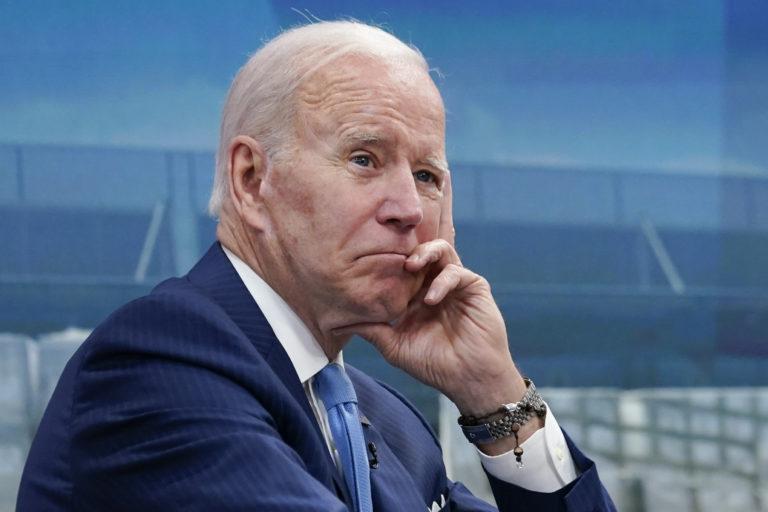
The FairTax Act proposed by Carter has received strong criticism from both progressive and conservative think tanks, primarily based on concerns that a national sales tax would be unable to replace the revenue realized by the existing tax system and that it would be regressive in nature, increasing the taxes on lower-income people. It is highly unlikely that the FairTax could be enacted in the current Congress, what with the Democratic-controlled Senate and Democratic President Joe Biden almost certain to oppose it.

The proposed act also calls for a repeal of the 16th Amendment within seven years of the FairTax’s enactment, and failure to repeal the amendment within that time period would result in the end of all provisions of the proposed act in the calendar year following the end of the seven-year period.

A Path Forward

The House Republicans sponsoring the proposed FairTax deserve an A+ for their aspirations to legislate a better federal tax system. However, their plan is simply not politically feasible — at least not any time in the near future. Not only would it not receive any support from Democrats, but it is doubtful whether it would even receive support from Republican Speaker of the House Kevin McCarthy or the majority of House Republicans. The regressivity of the proposed national sales tax presents a difficult political narrative to overcome.

On the other hand, the American public’s dislike of the IRS and the current federal tax system is so strong that there should be a politically feasible path to a simpler, less burdensome federal tax system. In this regard, any congressional reformers of the tax system must assess not only what is most systemically desired but also what is politically possible. A better plan than the currently proposed FairTax would be a dual-track approach with two separate political paths intended to achieve the same desired goal of a simpler, less burdensome, and more efficient federal tax system that also restores Americans’ basic constitutional rights to personal liberty and property.

One path is to continue with an income tax, but only in the form of a simple flat tax for both individual and corporate taxpayers, with generous exemptions on initial, to-be-determined amounts of income. Thereafter, the flat rate would be applied on all income earned beyond the initial exempted amounts. This would address the political problem of regressivity faced with a national sales tax, thereby making it more politically feasible.

This system would be practically the same as the flat-tax plans proposed by Forbes but, in addition, would explicitly require replacing the existing Internal Revenue Code with a simple federal tax code no greater than the length of that established in 1913 — with a Form 1040 comprising a total of only four pages with only one page of instructions.

Such a radically simplified code with a simple flat income tax would provide the necessary political and operational justification for abolishing the IRS. The functions of the current IRS would be reduced enormously, allowing for a simplified tax-collection function to be transferred to a new tax-collection section of the U.S. Treasury Department and requiring a workforce of only a small fraction of the current 80,000-employee IRS.

The second path is to introduce a separate bill for the repeal of the 16th Amendment. This should be a separate legislative effort because repeal of any constitutional amendment would be a much more difficult and lengthy process with an uncertain outcome. Thus, it would be better to keep it separate from the more achievable effort of a simplified flat-tax law that abolishes the IRS and the current code.

However, despite the difficulty, efforts to repeal the 16th Amendment must be supported in order to achieve the ultimate goal of restoring Americans’ original constitutional rights to personal liberty and property.
Clinton Associate Found Hanging from a Tree w/ Shotgun Blast Ruled a Suicide

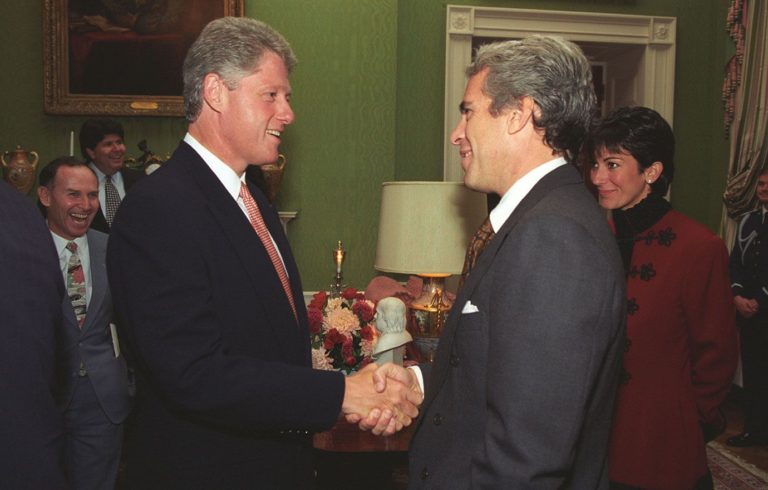
(Abdul–Rahman Oladimeji Bello, Headline USA) A one-time Bill Clinton associate with ties to Jeffrey Epstein was ruled to have committed suicide, according to recently unsealed court records, despite lingering suspicions of foul play.

Mark Middleton was discovered hanging from a tree and shot last May, prompting rumors that he was the latest addition to the so-called #ClintonBodyCount.

Further fueling suspicions of a cover-up, news sites initially asserted that there was no weapon found at the scene. But authorities this week claimed that a shotgun was found near the body, the New York Post reported. 

The release of records pertaining to Middleton’s death occurred after his family appealed to keep details secret, expressing concern that graphic photos from the crime scene would be made public.

Per the Arkansas Times, Circuit Judge Alice Gray stated in June last year that while the visual material would stay confidential, the findings would be accessible in accordance with the Freedom of Information Act.

During the Clinton administration, Middleton, a Little Rock businessman, became a special aide to the president and as an advisor to Chief of Staff Thomas F. “Mack” McLarty.

He was reported to have texted his wife, Rhea, just minutes before his passing, saying that he had found “the perfect place for a nap in the sun” and expressing his appreciation for her.

A ranch worker named Ian Peters found Middleton’s corpse later that afternoon after seeing his vehicle parked for a number of hours in the same location.

The notion that the Clintons targeted Middleton was bolstered by his links to Epstein, the disgraced pedophile megadonor who died in prison while awaiting prosecution in 2019, in what many suspect was an involuntary “suicide.”

Before leaving politics in 1995, Middleton signed Epstein into the White House seven times out of 17 visits.

Conspiracies about the Clintons’ running hitlist of their political enemies began with the 1993 death of deputy White House adviser Vince Foster, who was ruled to have committed suicide after being found shot in the back of the head in a northern Virginia park.

Elon Musk Hints at Twitter Files That May Expose Entire Scam-demic

(Abdul–Rahman Oladimeji Bello, Headline USA) After setting social media ablaze with revelations of government corruption and the Biden regime’s collusion to foster widespread censorship of conservative views, the Twitter Files reportedly is prepping for a major release to expose gross flaws of the COVID pandemic response.

Twitter CEO Elon Musk suggested in a series of tweets that he had information that would prove it was more of a scam-demic.

In the last few months, Musk’s release of the Twitter Files have exposed Big Tech colluding with the government to suppress free speech. He revealed that the highly anticipated Fauci files have been delayed because a key researcher is missing.

When popular music influencer @ZubyMusic tweeted “When will everybody admit that the whole Covid-19 ‘pandemic’ response was a scam?” Musk replied: “It’s coming.”

It didn’t end there, as Musk also responded to popular conservative commenter and Trending Politics co-owner Collin Rugg’s tweet about the situation.

Although Musk did not reveal exactly when the Fauci files will be released, his series of tweets point to the fact that the time is near for the web of lies of the scam-demic to be exposed. The delay has led to increased anticipation, along with predictions of what the drop would reveal.

“We are now in the second half of Fauci File February. Where are the Fauci Files? Who will be reviewing and texting them?” asked Kris Held, MD. “I volunteer to help alongside countless censored physicians and scientists.”

“There must be such high level corruption that Musk must have been told NOT to release them if he wants to stay in business,” said Rajeev Varma, MD.

Commerce Dept. Downgrades Quarterly Growth That Biden Touted in State of the Union

(Headline USA) The Biden administration tried its best to put a positive spin on a U.S. economy that limped through a 2.7% annual growth rate from October through December, accompanied by rising interest rates and elevated inflation that is battering consumers across the country.

The government had previously claimed that the economy grew at a 2.9% annual rate last quarter.

The Commerce Department’s revised estimate of the fourth quarter’s gross domestic product — the economy’s total output of goods and services — marked a deceleration from the 3.2% growth rate from July through September.

Thursday’s report revised down the government’s estimate of consumer spending growth in the October-December quarter, from a 2.1% rate to 1.4%. That was the weakest such showing since the first quarter of last year. Business spending also slowed in the fourth quarter, suggesting that the economy lost momentum at the end of 2022.

It was a tepid economic performance that President Joe Biden shamelessly touted as a roaring success during his State of the Union address. White House press secretary Karine Jean-Pierre also joined the gaslighting.

More recent data, though, shows that the economy has since rebounded. Consumers boosted retail sales in January by the most in nearly two years, and employers added a surprisingly outsize number of jobs. The unemployment rate reached 3.4%, the lowest level since 1969.

Some of the surprisingly strong economic gains in January likely reflected much warmer-than-usual weather. Few economists expect similar outsize gains in hiring or spending in the coming months. Most analysts think growth is slowing to a roughly 2% annual rate in the current January-March quarter.

And the Federal Reserve is expected to keep raising its benchmark interest rate over the next few months and to keep it at a peak through year’s end to try to defeat still-high inflation. Minutes from its last policy meeting released Wednesday showed that all 19 Fed officials favored raising rates at the next two meetings.

“From the Fed’s perspective, a slowdown in the economy is anticipated and will be welcome news,” said Rubeela Farooqi, chief U.S. economist at High Frequency Economics, a consulting firm. “However, even as growth slows, a focus on lowering elevated inflation means rates will move up further and will remain higher for longer.”

Higher borrowing costs make mortgages, auto loans and credit card borrowing more expensive. Those higher rates could discourage consumers and businesses from spending, hiring and investing and could eventually push the economy into a recession.

The economy’s growth at the end of 2022 reflected mainly a restocking of inventories, which will likely unwind in coming quarters, and a pickup in government spending. Housing investment fell nearly 26%; higher borrowing rates have crushed homebuying.

Inflation, measured year over year, has cooled since it reached 9.1% in June, having slowed to 6.4% in January. Yet on a monthly basis, price gains accelerated from December to January, raising the prospect that the Fed will raise its benchmark rate higher than it has previously signaled.

In Thursday’s GDP report, the government also sharply revised up its estimates of Americans’ incomes in the fourth quarter. After-tax income, adjusted for inflation, jumped 4.8%, a much larger gain than the previous 3.3% estimate.

The upward revisions reflected higher wages and salaries than was estimated earlier, and state stimulus payments that were intended to offset inflated costs of gas, food and other necessities. Twenty-one states, including California, Colorado, Florida, New York, Idaho and Pennsylvania issued one-time payments last year, typically in the form of tax refunds.

The boost in incomes could continue to support consumer spending this year and might have helped drive retail sales up in January. If so, stronger consumer spending could force the Fed to continue raising rates or keep them elevated for longer to cool the economy and quell inflation.

Adapted from reporting by the Associated Press

Klepto Cultural-Appropriator Sam Brinton Stole Dashiki from Tanzanian Woman

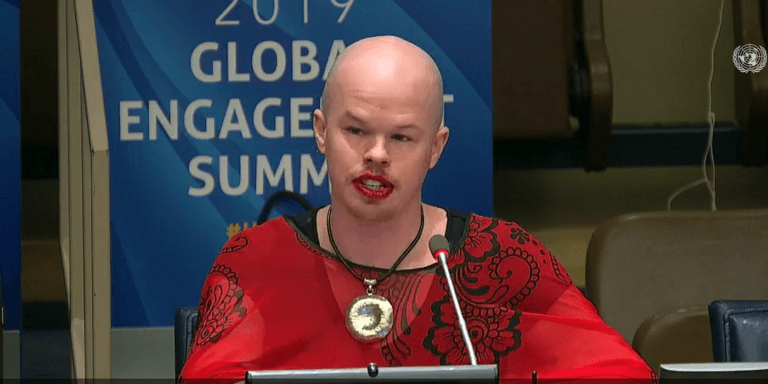
(Headline USA) A Tanzanian fashion designer in Texas accused former Biden administration official Sam Brinton of stealing her luggage in 2018, sharing several photos of the disgraced klepto wearing the clothes that had been in her suitcase.

Asya Khamsin shared several photos of Brinton wearing her designs on Twitter, saying they were her “custom designs” that were in a suitcase she lost in the Washington, D.C. Reagan airport.

“I saw the images. Those were my custom designs, which were lost in that bag in 2018,” Khamsin told Fox News. “He wore my clothes, which was stolen.”

Khamsin said her luggage vanished from the D.C. airport on March 9, 2018 after she flew into an event during which she was supposed to put her clothes on display. Because her baggage disappeared, she was unable to participate in the event, she told Fox.

Her husband filed reports with the Metropolitan Washington Airports Authority Police Department and filed a claim with Delta Airlines, but the bag was never recovered.

Communications between Delta and Khamsin show the fashion designer pleading with the airline to find her bag, saying it was full of expensive clothes, shoes, jewelry and other personal items.

After discovering pictures of Brinton wearing her clothes, Khamsin said she filed a report with the Houston Police Department. Shortly after, she was contacted by the FBI, she said.

“Houston police, I guess, they [sent] the case to the FBI in Minnesota,” Khamsin’s husband told Fox. “He called to say, ‘I’m [with] the FBI, I’m working on this case.’ Then my wife gave him the information and we didn’t hear anything. We don’t know whether the case is on. We don’t know whether the case is cold.”

Brinton has been charged in two separate cases for stealing women’s suitcases. The first charges were filed in Minnesota after he stole a woman’s suitcase in the Minneapolis airport, and the second round of charges were filed in Nevada for the theft of a suitcase in the Las Vegas airport.

Internal Memo Reveals Years of FBI Misconduct

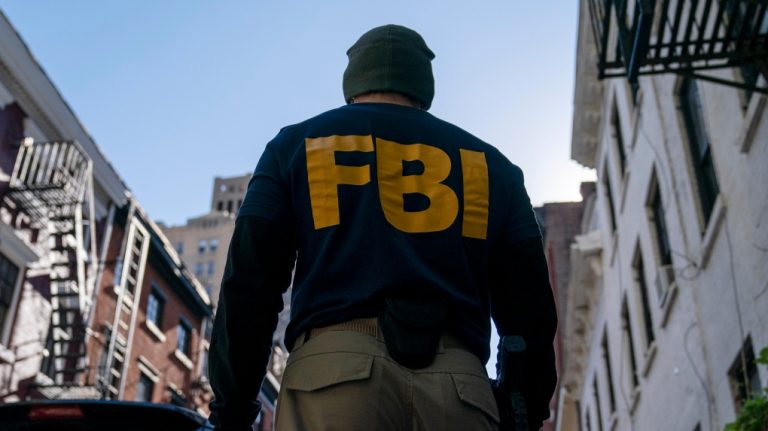
(Abdul–Rahman Oladimeji Bello, Headline USA) Rogue bands of the Federal Bureau of Investigation’s allegedly prestigious employees were caught engaging in unethical and criminal conduct that included drunk driving, child assaults, theft, loss of service weapons and mishandling classified documents.

And that was just over a five-year period.

According to internal disciplinary files obtained by Just The News, these agents also escaped getting the sack despite their egregious activities. On one occasion, an FBI agent had his M4 carbine weapon in his car unattended- a weapon that ended up being stolen. Despite this, the FBI only suspended the agent for two weeks.

A statement from the disciplinary files obtained reads: “Although there was a lockbox in the trunk for storage of weapons and sensitive items,” the agent chose to store the rifle bag behind the car’s front passenger seat. “While Employee was in the Starbucks, the Bucar was burglarized. The rear passenger, rear driver, and tailgate windows were broken, and the rifle bag containing the M4 was stolen.”

In addition, some of these agents were involved in sexual misconduct. There were cases of sexual relations with convicted felons, subordinates and even confidential sources.

Agents driving under influence was also a common theme in the report with a minimum of 23 cases of FBI staff DUI. However, only five of those were fired. In addition, about 36 agents also reported that their guns were stolen, lost, or handled unsafely while on or off duty. Most of these resulted in short-term suspensions.

The timing of the report’s disclosures was particularly bad for the FBI, coming amidst a congressional probe of the Bureau on allegations brought forward by 24 whistleblowers. The FBI is being investigated by lawmakers to determine if it is involved in political bias, weaponization of law enforcement powers and misconduct.

Pa. Gov. Says He Won’t Ask Depressed Sen. Fetterman to Resign

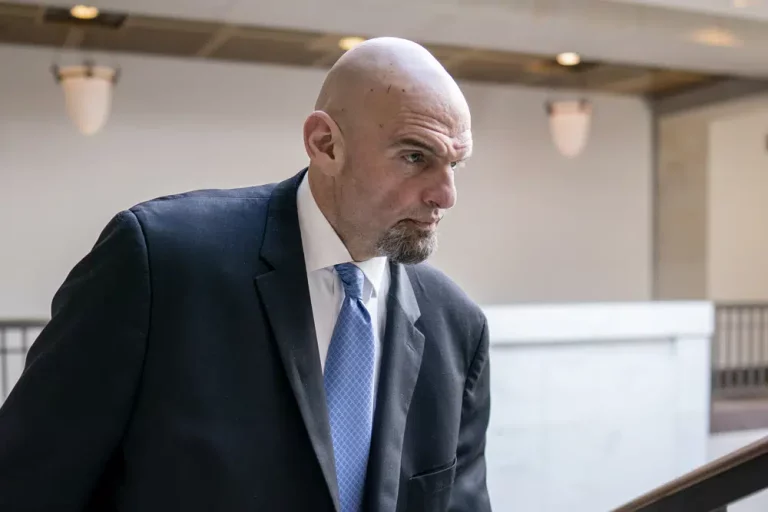
(Headline USA) Pennsylvania Democrat Gov. Josh Shapiro said he will not ask Sen. John Fetterman, D-Pa., to resign despite deteriorating mental and physical health.

Fetterman, who suffered a stroke early last year during his campaign for the Senate, was recently checked into the hospital to receive treatment for clinical depression. The news followed reports that Fetterman is still having difficulty comprehending questions, despite the new closed-caption technology that was installed in the Senate to help him.

Shapiro said he has not yet received direct requests from Democrats to call on Fetterman to resign, but “if I did,” he said, “I would dismiss it immediately.”

“He’s going to get the help that he needs and do a great job for the people of Pennsylvania as their senator for a long time,” Shapiro added, predicting that Fetterman will “come back stronger than ever.”

Fetterman’s team has tried to downplay the significance of his health issues, even though one staffer admitted that Fetterman’s decision to continue campaigning last year after his stroke has made a full recovery impossible.

“While John has experienced depression off and on throughout his life, it only became severe in recent weeks,” Adam Jentleson, Fetterman’s chief of staff, said. “On Monday, John was evaluated by Dr. Brian P. Monahan, the Attending Physician of the United States Congress. Yesterday, Dr. Monahan recommended inpatient care at Walter Reed. John agreed, and he is receiving treatment on a voluntary basis.”

Several other Democrats have rallied around Fetterman.

“I stand by John Fetterman and his family. This a challenge, an unimaginable challenge, that he has faced in life,” said Senate Democrat Whip Dick Durbin. “He deserves the very best in professional care and I’m sure he’ll get it at Walter Reed.”

Durbin said he believed Fetterman will be able to serve a full term of office, reported The Hill.

“I believe with the proper care, which he will receive, that he’ll be back in our ranks, joining us soon,” Durbin said.

Missouri Moves to Fire St. Louis’s Soros-Backed Prosecutor after Teen Loses Legs

(Headline USA) The Missouri attorney general called Wednesday for the resignation of St. Louis’s George Soros-backed prosecutor after a motorist who repeatedly violated his bond conditions on earlier charges crashed and injured a teenage volleyball player from Tennessee, resulting in amputation of both of her legs.

The case has renewed criticism of St. Louis Circuit Attorney Kim Gardner, a race-hustling leftist, amid questions about why the driver wasn’t behind bars after court records showed more than 50 violations of bond conditions.

Missouri Attorney General Andrew Bailey, a Republican, said Gardner must step down by noon Thursday, or he’ll try to remove her from office.

“Instead of protecting victims, Circuit Attorney Gardner is creating them,” Bailey said in a statement. “My office will do everything in its power to restore order, and eliminate the chaos in St. Louis caused by Kim Gardner’s neglect of her office.”

Others, including Democrats, joined in the criticism of Gardner. Missouri Senate President Pro Tem Caleb Rowden, a Republican, said Gardner should resign, calling her “incompetent and grossly unfit to hold her office.”

Missouri House Speaker Dean Plocher also urged Gardner to step down.

Democrat St. Louis Mayor Tishaura O. Jones said Gardner had “lost the trust of the people,” but did not call for her resignation.

Janae Edmondson, a 16-year-old player in town for a volleyball tournament, was injured Saturday night when the crash left her pinned between two cars in downtown St. Louis while walking back to a hotel with her family.

The high school senior, from Smyrna, Tennessee, was in stable condition, her coach said, but faced complications that could keep her hospitalized for weeks.

As of Wednesday night, a GoFundMe campaign to support her family had raised more than $343,000.

Police said Daniel Riley, 21, an unlicensed driver, was speeding and failed to yield at an intersection when his vehicle hit another car that then struck Edmondson.

Riley was out on bond after a 2020 robbery charge that was dismissed and re-filed last year.

His bond violations included letting his GPS monitor die and breaking terms for his house arrest, according to court records, which show he violated bond at least seven times since Feb. 1, the St. Louis Post–Dispatch reported.

Court officials said they didn’t know Riley had violated his bond because prosecutors had never filed a motion to revoke it.

A judge on Tuesday ordered Riley held without bond after Riley’s attorney, Daniel Diemer, argued for a reduced bond, saying Riley had no serious criminal history other than the robbery charge.

At that same hearing, Edmondson’s parents said her father used his military training to stem the bleeding with tourniquets made of belts until paramedics arrived.

Gardner, in a statement Wednesday night, said Riley was released on bond in August “against the state’s wishes.” She said her office sought a bond hearing in January but got no response from the court.

“Judges have the sole authority to determine the bond conditions of a defendant,” Gardner said.

“Bond violations and decisions do not solely rest on the shoulders of prosecutors,” she continued. “In this matter, prosecutors asked on several occasions for higher bonds, and those requests were denied.”

A bill advancing in the Missouri Legislature would allow Gov. Mike Parson to appoint a special prosecutor to handle violent crimes in St. Louis, with supporters contending Gardner has not been tough enough on crime during her tenure.

Gardner’s supporters rallied earlier this month in Jefferson City, claiming the effort to take away her power was racially motivated.

Gardner, who was first elected in 2016, is one of more than a dozen high-profile prosecutors installed with the political and operational support of Soros, the billionaire oligarch who seems determined to weaponize America’s political system against itself in order to create instability that may help to advance his Marxist agenda.

In addition to her soft-on-crime policies, she has previously targeted conservatives, such as the McCloskey family, who legally exercised their stand-your-ground rights under the state’s so-called castle law after a violent left-wing mob broke into their gated community during a 2020 riot.

Gardner’s office was found to have illegally tampered with evidence after confiscating the couple’s guns and later refused to return the guns even though she had no justification for keeping them. Although the McCloskeys were subsequently pardonned by Parsons, they were forced to incur tremendous legal fees and to perform hours of community service in order to maintain their own status with the state bar association.

In 2018, Gardner charged then-Gov. Eric Greitens with felony invasion of privacy, accusing him of taking a compromising photo of a woman during an extramarital affair. Greitens, a Republican, accused her of a political attack. The charge was later dropped but Greitens, also under investigation by Missouri lawmakers, resigned in June 2018.

In March, investigator William Tisaby pleaded guilty to misdemeanor evidence tampering. A month later, Gardner reached an agreement with the Missouri Office of Disciplinary Counsel in which she acknowledged that she failed to produce documents as part of the Greitens investigation and mistakenly maintained that all documents had been provided to Greitens’s lawyers. She received a written reprimand.

She drew the ire of St. Louis police in 2019 when she placed dozens of officers on an “exclusion list,” prohibiting them from bringing cases. The list was developed after a national group accused the officers of posting racist and anti-Muslim comments on social media.

In 2020, Gardner filed a lawsuit accusing the city, a police union and others of a coordinated and racist conspiracy aimed at forcing her out of office. The lawsuit alleged violations of the Ku Klux Klan Act of 1871, which was adopted to thwart efforts to deny the civil rights of racial minorities.

Adapted from reporting by the Associated Press

Project Veritas Pleads for Donors to Stay Amidst O’Keefe Ouster, Email Shows

(Ken Silva, Headline USA) A leaked email from Project Veritas shows the organization asking its donors to “give us a chance” amidst its controversial ouster of founder James O’Keefe.

The email, first obtained by the Post Millennial, was sent Wednesday by Project Veritas staffer Bethany Rolando with the subject line, “Update: We hold everyone accountable, especially ourselves.”

Rolando, one of the 16 staffers to sign a letter to the board reporting personal grievances against O’Keefe, reiterated the claims that O’Keefe has not been fired, but simply placed on leave.

Rolando said Project Veritas is conducting an internal audit to see if O’Keefe violated organizational rules or misused donor funds.

Among the issues the audit will purportedly examine are O’Keefe’s alleged decision to unilaterally fire his CFO, his use of donor funds for personal benefit and his tough leadership style.

“Project Veritas has had 140 employees leave the company over the last seven years, some through their own volition, others were terminated, and the organization has incurred legal expenditures because of some of those terminations/actions,” the email said. “[Twenty] of the 140 employees were in management positions leading to potential succession plan issues to assure the long-term viability of the company.”

Instead of collaborating on the audit, O’Keefe has taken his ball and gone home, the email lamented.

“He has been invited, but has chosen not to, engage in conversations with the board and management following steps taken so far with the goal of returning to Project Veritas,” the email said. “Instead, he requested no change in authority and that most of the officers and all of the board of directors immediately resign.”

However, critics have pointed out inconsistencies in Project Veritas’s reasoning for O’Keefe’s departure, characterizing the development as a coup.

Human Events editor Jack Posobiec noted on Monday that the board originally said O’Keefe was “enjoying a well-deserved vacation.”

A former whistleblower who worked with O’Keefe also pointed out inconsistencies.

“The Project Veritas company lied to me about what happened to @JamesOKeefeIII at Project Veritas,” tweeted Zach Vorhies.

“They told me this all spun out of control because the fundraising team wanted to call donors and James O’Keefe wanted to email them instead. 100% bullshit. This is a coup.”

Meanwhile, O’Keefe apparently remains undaunted. He said Monday that he will continue producing the same groundbreaking, bombshell reports, regardless of where he lands or how the future unfolds.

“Our mission continues on. I’m not done. The mission will perhaps take on a new name. I’ll make sure you know how to find me.”

Ken Silva is a staff writer at Headline USA. Follow him at twitter.com/jd_cashless.

Fla. Gunman Ambushes, Kills Journalist Who Was Covering Homicide Story

(Headline USA) A gunman accused of killing a woman in the Orlando area returned to the same neighborhood hours later and shot four more people, killing a journalist covering the original shooting and a 9-year-old child, Florida police said.

Spectrum News 13 identified the slain reporter Thursday as Dylan Lyons. Photographer Jesse Walden was also wounded.

The two were in an unmarked news vehicle on Wednesday afternoon covering the first homicide when a man approached and shot them, Orange County Sheriff John Mina said during a news conference. The man then went to a nearby home where he fatally shot T’yonna Major and critically wounded the child’s mother. Officials have not yet released the name of the girl’s mother.

The sheriff said police have detained Keith Melvin Moses, 19, who they believe is responsible for all of the shootings.

Mina said police didn’t immediately know the motive for the shootings. He said Moses was acquainted with Nathacha Augustin, 38, who was the first victim, but did not appear to have a connection with any of the others. He said it was not clear if Moses knew that two of the people shot were journalists and noted their vehicle didn’t look like a typical news van or have the station’s logo on it.

It was not immediately known whether Moses has a lawyer who can speak on his behalf.

“I want to acknowledge what a horrible day this has been for our community and our media partners,” Mina told a room full of reporters. “No one in our community — not a mother, not a 9-year-old and certainly not news professionals — should become the victim of gun violence in our community.”

The sheriff was meeting with community leaders on Thursday morning, and was expected to provide more details about the case after that meeting.

On Wednesday morning, deputies responded to the Pine Hills area, just northwest of Orlando, after reports that a woman in her 20s was shot.

Lyons and Walden were shot hours later while covering that shooting, followed by the mother and daughter, according to police and witnesses. WFTV crews, who were also reporting on the morning shooting, tried to give medical aid to the Spectrum 13 journalists.

Mina said Moses has already been charged with first-degree murder for the initial victim, and charges are expected soon for the other four victims. Moses’ criminal history includes gun charges, as well as aggravated battery, assault with a deadly weapon, burglary and grand theft offenses, the sheriff said.

“Our hearts go out to the family of the journalist killed today and the crew member injured in Orange County, Florida, as well as the whole Spectrum News team,” White House press secretary Karine Jean-Pierre said on Twitter.

“Please, please, say a prayer tonight for our co-worker who is in critical condition. And while you’re at it, please say a prayer for every victim of gun violence in this country,” Spectrum 13 journalist Celeste Springer said during her live on-air report Wednesday evening.

In a story published early Thursday, the station identified Lyons and Walden.

“[Lyons] took his job very seriously. He loved his career. He loved what he did,” said Spectrum Sports 360 reporter and friend, Josh Miller. “He loved the community, telling the stories of people, reporting on the news, and he was just passionate about what he did.”

Lyons was born and raised in Philadelphia, and graduated from the University of Central Florida, the station said. Before joining Spectrum News, he worked for a station in Gainesville.

Rachel Lyons, the reporter’s older sister, is raising money for his funeral in a GoFundMe account. She wrote that Lyons would have turned 25 in March. He is also survived by his parents and fiancée.

Worldwide, 40 journalists were reported killed last year, plus another two this year before Wednesday, according to the Committee to Protect Journalists. Only one of those was in the United States.

Jeff German, who covered politics and corruption for the Las Vegas Review-Journal, was found dead outside his home in September after being stabbed multiple times. Former Clark County Public Administrator Robert Telles, who had been a frequent subject of German’s reporting, has pleaded not guilty to a murder charge.

In 2015, Virginia reporter Alison Parker and cameraman Adam Ward were shot and killed during their live TV broadcast for CBS affiliate WDBJ7. The suspect, a former reporter for the TV station, died by suicide during the law enforcement search for him.

Adapted from reporting by the Associated Press