How a Former Football Star Is Breaking the School-To-Prison Pipeline

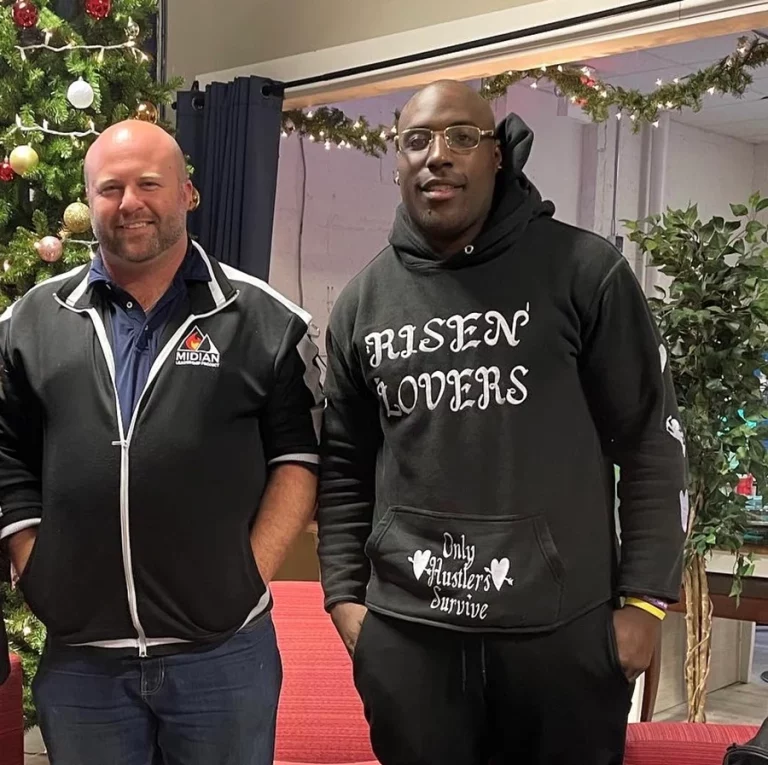
(Kerry McDonald, FEE) When star football player Turan Rush returned home to Charleston, West Virginia, after graduating from Eastern Michigan University in 2021, he knew he wanted to make a positive impact on the young people in his community. Growing up on Charleston’s West Side, where he attended the city’s district schools, Rush became concerned about the school-to-prison pipeline. He witnessed friends get caught up in this pipeline, in which extreme disciplinary practices in schools cascade into a pathway toward mass incarceration.

Rush explained that school itself has “prison vibes.” The coercive, command-and-control environment that characterizes much of today’s standard schooling subjects young people to far more restrictions on their freedom than most adults would ever tolerate. Rush experienced this as a student, but it wasn’t until he saw his younger brother confronting harshness at school that he decided to build something better.

He was visiting a district middle school in Charleston as a special guest and entered a 7th grade classroom where he saw his brother and all of the other children sitting at their desks, facing the wall. Rush heard one student ask the teacher if he could use the bathroom. The teacher, who didn’t know that Rush’s brother was a student in his classroom, responded harshly to the student, stating: “That’s not your job. Your job is to sit, face the wall, and do your work.”

For Rush, the experience was jarring. “These are 10, 11, 12-year-old kids we’re talking about,” said Rush, who learned that his brother spent most of the day in this classroom. “You shouldn’t take a kid’s freedom away like that. It reminded me of a prison form, making someone face the wall all day. Just imagine what they’re doing to a 10-year old’s brain. Then you wonder why a kid is so rebellious to the school system.”

Rush knew there were other, more humane ways to deal with student discipline problems. Yet, he saw the same cruel disciplinary tactics being used now that he and his friends experienced when they attended these schools. “That really triggered me, seeing that nothing improved,” said Rush.

He joined Harvard-educated pastor Jeff Biddle in launching the Midian Leadership Project, an after-school, sports-focused community center for Charleston youth that incorporates basketball and weight training, along with mentoring, leadership development, and academic support. The program is open every weekday afternoon from 2:00 to 8:30, but that wasn’t enough for Rush. He wanted to create a full-time educational solution for West Side youth, not just supplemental services. So he and Biddle raised funds to purchase and renovate a dilapidated building on the same property as the community center, with plans to open an all-boys private school there in the fall of 2024.

“The school to prison pipeline is something that we are trying to beat, especially in our community,” said Rush. “The idea of building a private school is to put our men in our community in a safer space so they can grow.”

I was introduced to Rush and Biddle by Jamie Buckland of West Virginia Families United for Education, a non-profit that helps to encourage education entrepreneurs to create new learning options and connects parents to these options. When I visited the warm and welcoming community center and saw the amount of work it was going to take to renovate the other, old building on the property, I asked Biddle why he and Rush needed to wait 18 months to open the private school. Why not open now in their community center building?

“At this time, interpreting what might or might not be permissible from a building standpoint can be a pretty significant barrier,” said Biddle, referring to various local building codes. The community center, like similar after-school or enrichment programs, is able to welcome students from 2:00 to 8:30, but somehow not able to have students from 8:30 to 2:00 as a “school” program.

These outdated and often arbitrary building code regulations exist nationwide and can unnecessarily limit or delay the supply of new and varied education options for families. One organization is trying to minimize these barriers. “The Cardinal Institute is working to identify regulatory bottlenecks and unnecessary licensing hurdles and restrictions in West Virginia so education entrepreneurs can focus on their most important goal: educating children and serving families,” said Garrett Ballengee, executive director of the Cardinal Institute for West Virginia Policy.

Reducing these entrepreneurial barriers is particularly important now in West Virginia as the state rolls out its new, near-universal education savings account program, Hope Scholarship. The scholarship program provides more than 90% of West Virginia K-12 students with a portion of state-allocated education dollars, or about $4,300 per student each year, to use on approved educational expenses, including tuition at microschools and private schools, curriculum materials, supplies and related educational services.

Rush is a huge supporter of the Hope Scholarship Program, and of school choice policies more generally. “I think that was wonderful that they got that passed because giving a person the opportunity to choose what education they want, that’s freedom,” said Rush. “Some people can’t thrive in certain environments so some people need different education opportunities. What we’re offering is something that is going to impact our community. And we want to offer that because around here for a long time the resources have definitely been slim to none. We just want to provide opportunity because with opportunity the world is yours.”

The youth of Charleston may need to wait a bit longer than they should for that opportunity due to unnecessary regulatory constraints on education entrepreneurs, but when the Midian Leadership Project’s school opens next year it will be a major step forward in breaking the school-to-prison pipeline and providing a high-quality education to West Side boys.

“I’m hoping that they gain a solid education for one. That’s the most important thing,” said Rush of his future students. “And also a space to grow and be safe.”


SCOTUS to Decide if California Can Tell Farmers How to Raise Pigs

(Zeta Cross, The Center Square) By the end of February, the U.S. Supreme Court is expected to announce a decision that will determined how farmers can raise pigs.

Proposition 12 is a California ballot initiative that prohibits individual gestation pens for sows and practices that are used in the raising of veal calves. Prop 12 was passed by California voters in 2014. It was to go into effect on Jan. 1, 2022, but was halted by a federal judge until the Supreme Court decides on the matter.

The market power of California’s 40 million consumers will force farmers across the country and in Canada to comply with the California measure, unless the measure is overturned by the U.S. Supreme Court.

The National Pork Producers, the North American Meat Institute and others have opposed Prop 12 from ever taking effect. However, Hormel and Tyson Foods, two of the largest U.S. meat packers, have agreed to comply with Prop 12.

The Supreme Court decision may be the last stand for pig farmers who oppose mandatory open housing for gestating sows.

Michael Formica, chief legal strategist for the National Pork Producers Council, said California consumers buy 13% of the pork sold in the United States. When an Illinois farmer sells a pig to a processor, they have no control over where the meat winds up.

“The bacon can go to California, the pork chops might wind up in Chicago, the ham could go to Mexico,” Formica told The Center Square.

If Proposition 12 is permitted to go into effect, a California grocery store or a restaurant distributor will face fines and even jail time unless they can prove that the pork they buy was raised in a manner that is compliant with what is described in the California measure.

“The California market is so big that farmers will have to agree to allow California inspectors to cross state lines and come to their farms,” Formica said. “Farmers will be forced to comply.”

Opponents of the measure argue that Prop 12 violates the Commerce Clause of the U.S. Constitution. States are prohibited from regulating commerce outside their borders, they maintain. Critics also say consumers will pay higher prices for pork and producers will be penalized by having to remodel their barns and change their farming practices.

Formica told The Center Square that “vegans and Hollywood types” who have never been to a farm should not have the right to tell farmers outside of California how to run their livestock operations.

When the Prop 12 case was heard before the U.S. Supreme Court last October, 50 minutes was scheduled for the arguments. The session lasted two and a half hours. Most of the discussion was not focused on pig farming, Formica said.

“There are Democrat-appointed justices who think that this, on its face … is just unconstitutional,” he said.

The justices peppered the attorneys with hypotheticals about the wider implications of the law.

“All the justices have real problems with what California wants to do,” Formica said. “They are struggling over how to address it.”

Some of the questions include whether consumers have the right to be informed about farming practices or whether consumers have more choices.

“There are less restrictive measures like labeling that could be taken,” Formica said. “The justices are concerned about what the implications of laws like this mean for relationships among the states.”

Bipartisan Bill Seeks to Study Medical Cannabis for Veterans

(Brett Rowland, The Center Square) Groups are backing a plan to study if medical cannabis could help veterans.

A new bipartisan bill would create a comprehensive research plan for the Department of Veterans Affairs to study the effectiveness of medicinal cannabis for the treatment of chronic pain and post-traumatic stress disorder.

U.S. Sens. Dan Sullivan, R-Alaska, and Jon Tester, D-Mont., introduced the measure.

“Our nation’s veterans deserve options when it comes to treating the wounds of war, which is why VA needs to have a better understanding of how medicinal cannabis plays a role in their healing,” Tester said in a statement. “Our bipartisan bill ensures VA is listening to the growing number of veterans who find critical relief from alternative treatments like medicinal cannabis, while working to empower veterans in making safe and informed decisions about their health.”

The VA Medicinal Cannabis Research Act would authorize the VA to implement a comprehensive research plan, including a series of clinical trials that assess the effectiveness of medicinal cannabis for the treatment of chronic pain and PTSD.

It would also expand cannabis research into other factors related to veterans’ health, such as improvements to mood and/or social functioning, impacts on other substance use and changes to overall quality of life.

The measure additionally requires the clinical trials examine the effects of different forms, potencies, and methods of cannabis administration.

Sullivan said better data are needed.

“Medicinal cannabis is already in use by thousands of veterans across the country, but we don’t yet have the data we need to understand the potential benefits and side effects associated with this alternative therapy,” he said in a statement.

Veterans of Foreign Wars also supports the measure.

“VFW members tell us that medicinal cannabis has helped them cope with chronic pain and other service-connected health conditions,” Pat Murray, director of National Legislative Service for Veterans of Foreign Wars, said in a statement.

“They cannot receive these services at VA because of VA’s bureaucratic hurdles,” Murray said. “VA uses evidence-based clinical guidelines to manage other pharmacological treatments of post-traumatic stress disorder, chronic pain, and substance use disorder because medical trials have found them effective. VA must expand research on the efficacy of non-traditional medical therapies, such as medicinal cannabis and other holistic approaches.”

Military Leaders Called to Testify on Impact of COVID-19 Vax Mandate

(Bethany Blankley, The Center Square) Military leaders will testify on Tuesday before the Military Personnel Subcommittee of the House Armed Services Committee about the impact of the Department of Defense’s COVID-19 vaccine mandate on DOD employees and military service members.

DOD Under Secretary of Defense for Personnel and Readiness Gilbert R. Cisneros Jr., Under Secretary and Chief Management Officer of the Army Gabe Camarillo, Under Secretary and Chief Operating Officer and Chief Management Officer of the Navy Erik Raven and Under Secretary of the Air Force Gina Ortiz Jones are scheduled to testify Tuesday afternoon.

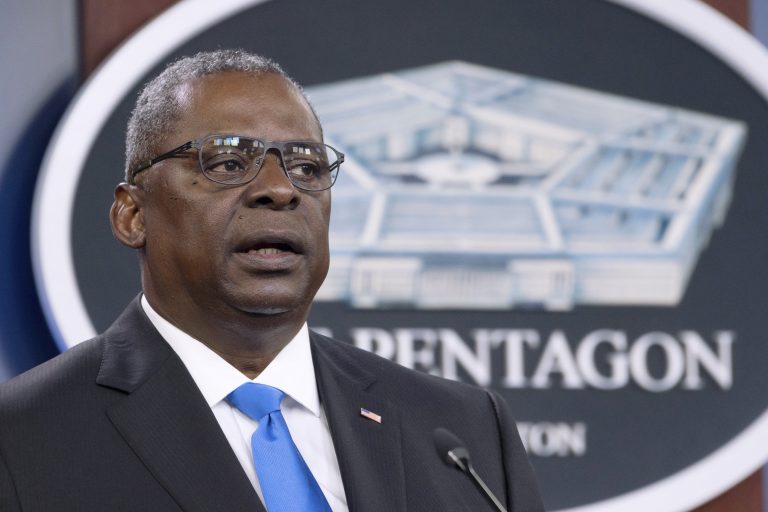
The hearing is being held after Defense Secretary Lloyd Austin had until Feb. 21 to provide information to the committee requested by Chairman of the House Armed Services Committee Rep. Mike Rogers, R-Ala., and Chairman of the Subcommittee on Military Personnel Jim Banks, R-Ind.

After Congress passed the National Defense Authorization Act requiring the DOD to end the COVID-19 vaccine mandate and President Joe Biden signed it into law last December, Rogers and Banks sent Austin a letter requesting that he provide them with his plan to implement the statutory requirement. They received a four-sentence reply one month later, which didn’t respond to their question. The DOD also continued to ignore committee staff repeatedly asking “for answers to many COVID-19 rescission questions critically important to the retention and recruitment of men and women in each of the armed services,” the congressmen said.

As a result, they sent another letter on Feb. 8, requesting Austin provide answers to 14 questions by Feb. 21 ahead of the hearing scheduled for Feb. 28.

“We write to express our concern over the lack of clarity provided to the Armed Forces and to the American people related to your memorandum announcing” Austin’s mandate rescission, they wrote. “While we acknowledge and appreciate your rescission memorandum writ large, many questions remain and have gone unanswered regarding the implementation of the rescission.”

They also emphasized, “Please note, many of the questions or requests for information presented above have gone unanswered for weeks, if not months. The Department and the Biden Administration must no longer refuse to respond to requests for information from this Committee.”

Subcommittee members will address back pay and lost benefits to service members who were punished for refusing to comply with what they argued was an unlawful order requiring them to take an experimental drug or be discharged, and who claimed the DOD COVID-19 vaccine mandate violated their sincerely held religious beliefs and their religious accommodation requests were denied.

Subcommittee members requested Austin and witnesses answer questions about a range of issues including how many service members were separated because of the mandate, how many have been required to pay back signing or re-enlistment bonuses to their respective branches, the average amount service members are being required to repay, and the amount that’s already been repaid. They will also address whether DOD policy still requires service members to repay bonuses, how many service members who were forced out have been reinstated, and what military branches’ plans are to reinstate separated service members who wish to return.

Because the NDAA only required the DOD to rescind its mandate, many other concerns remain, which is also why the nonprofit religious freedom legal aid organization, Liberty Counsel, isn’t backing down from its lawsuits representing military service members whose RARs were denied.

One former Marine and Liberty Counsel client was required to pay $17,878.23, the remaining balance of a bonus he was given for reenlisting, after he also lost his last paycheck after his RAR was denied. He isn’t the only one facing hardship after being discharged for refusing to take the vaccine. Nearly all RARs were denied across all military branches and service members faced “cruel and unusual punishment,” demotion and dishonorable discharge, according to briefs filed with the court.

To address ongoing problems in the military associated with the mandate, Republicans in Congress recently filed bills to require the DOD to reinstate service members separated solely for COVID-19 vaccine status who want to return, credit their retirement pay, restore their rank, and compensate them for pay and benefits lost due to demotions, among other measures. In the meantime, Congress is holding hearings and lawsuits are continuing.

U.K. Counterterrorism Org. Warns of ‘Right-Wing Extremism’ from Reading ‘1984’

(Joshua Paladino, Headline USA) In a leaked report, the United Kingdom’s counterterrorism program warned that reading the greatest authors that England has ever produced—including William Shakespeare, C.S. Lewis and self-declared socialist writer George Orwell—could lead to far-right and white-supremacist radicalization, Fox News reported.

Ironically, the Research Information and Communications Unit, a division within the UK’s “Prevent” counterterrorism program, marked Orwell’s dystopian masterpiece 1984 as a work that could lead citizens to “right-wing extremism.”

Among the key themes of the 1949 novel was a warning about how the government would use fear, propaganda and extreme censorship to coerce citizens into a type of voluntary slavery.

Also included in the list are J.R.R. Tolkien’s Lord of the Rings series, Geoffrey Chaucer’s Canterbury Tales, as well as works by Aldous Huxley and Joseph Conrad.

The RICU even targeted philosophical texts that most people would not encounter outside of an academic setting, like Thomas Hobbes’s Leviathan, John Locke’s Two Treatises of Government—which laid the framework for what would become American democracy—and Edmund Burke’s Reflections on the Revolution in France.

Spectator columnist Douglas Murray, who criticized the RICU’s far-left agenda, had his own best-selling book, The Strange Death of Europe, put on the list. The work criticizes mass immigration from Africa and the Middle East to Europe.

The RICU launched the assault on English literature as part of Prevent, a “national safeguarding program that supports people who are at risk of becoming involved with terrorism through radicalization.”

Murray said RICU receives its ideological direction from Hope not Hate, a leftist group (similar to Antifa in America), that sees Brexit supporters and opponents of mass non-European immigration as “far-right” by definition.

With these definitions, the RICU necessarily targets half the nation, or more, judging from the decision to leave the European Union.

DeSantis Takes over Disney District for Snubbing Parental Rights

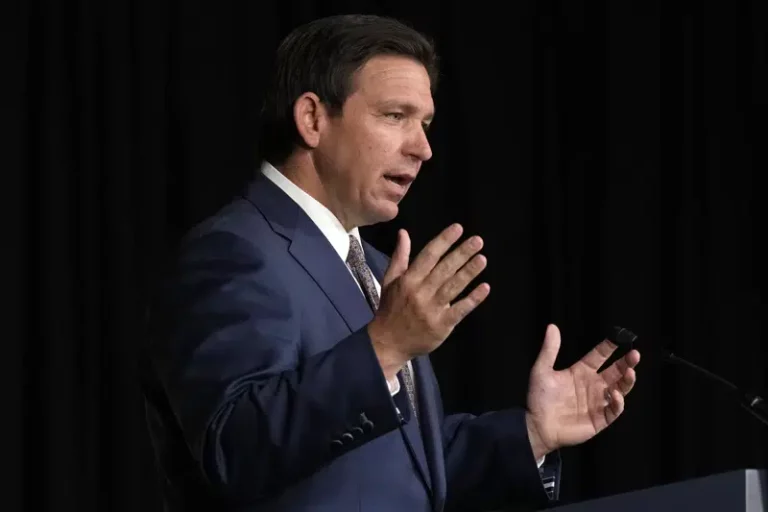
(Headline USA) Florida Gov. Ron DeSantis on Monday signed a bill that gives him control of Walt Disney World’s self-governing district, after the woke company vigorously opposed the state’s parental rights legislation.

The new bill requires DeSantis, a Republican, to appoint a five-member board to oversee the government services that the Disney district provides in its sprawling theme park properties in Florida.

“Today the corporate kingdom finally comes to an end,” he said at a bill signing ceremony in Lake Buena Vista. “There’s a new sheriff in town, and accountability will be the order of the day.”

The signing came as DeSantis gears up for an expected presidential run and marks a high-profile legislative victory for a governor whose battles with egregiously leftist cultural and political overreaches have pushed him to the fore of national Republican politics.

The takeover of the Disney district began last year when the entertainment giant, facing intense pressure, publicly opposed the state’s popular parental rights legislation that bars instruction on graphic and explicit material that promotes radical views on sexual orientation and gender identity in kindergarten through third grade and lessons deemed not age-appropriate.

DeSantis moved quickly to penalize the company, directing lawmakers in the GOP-dominated Legislature to dissolve Disney’s self-governing district during a special legislative session, beginning a closely watched restructuring process. DeSantis and other Republican critics of Disney slammed the company for coming out against the education law, calling it a purveyor of “woke” ideology that inject inappropriate subjects into children’s entertainment.

This month, the governor called on lawmakers to return to the Capitol for another special session to finalize state control of the district, as well as approve legislation around some of his other key legislative priorities on immigration and voter fraud.

In taking on Disney, DeSantis furthered his reputation as a culture warrior willing to battle perceived political enemies and wield the power of state government to accomplish political goals, a strategy that is expected to continue ahead of his potential White House run.

DeSantis, whose book, The Courage to be Free, is coming out Tuesday, has moved in recent weeks to expand his political network through fundraisers and meetings with donors, elected officials and conservative influencers, adding to the speculation around his larger political aspirations.

The coming months will be critical to DeSantis as he builds his profile out beyond Florida. He is expected to utilize the coming regular legislative session, which begins next week, to bolster his conservative agenda before he announces his candidacy for president.

The new law changes the district’s name from the Reedy Creek Improvement District to the Central Florida Tourism Oversight District and subjects it to various layers of state oversight. Board members were previously named through entities controlled by Disney.

It leaves the district and its financial abilities and debt obligations intact, addressing a chief concern of surrounding governments. It also prevents people who have worked with or contracted with a theme park in the past three years from serving on the district’s new governing board.

At his news conference, DeSantis said he would appoint Tampa attorney Martin Garcia as the chairman of the district’s new governing board, along with new board members Bridget Ziegler, a conservative school board member and wife of the Florida Republican party chairman Christian Ziegler; Brian Aungst Jr., an attorney and son of a former two-term Republican mayor of Clearwater; Mike Sasso, an attorney; and Ron Peri, head of The Gathering USA ministry.

Having a separate government allows the district to issue bonds and provide zoning, fire protection, utilities and infrastructure services on its land. Republican critics of the district argue it gives Disney a commercial advantage unavailable to others.

Disney did not immediately return an emailed request for comment.

The creation of the self-governing district was instrumental in Disney’s decision to build near Orlando in the 1960s. The company had told the state it planned to build a futuristic city that would include a transit system and urban planning innovations, so the company needed autonomy in building and deciding how to use the land. The futuristic city never materialized and instead morphed into a second theme park that opened in 1982.

Adapted from reporting by the Associated Press

Joe Manchin Spurs Speculation about Possible Biden Challenge

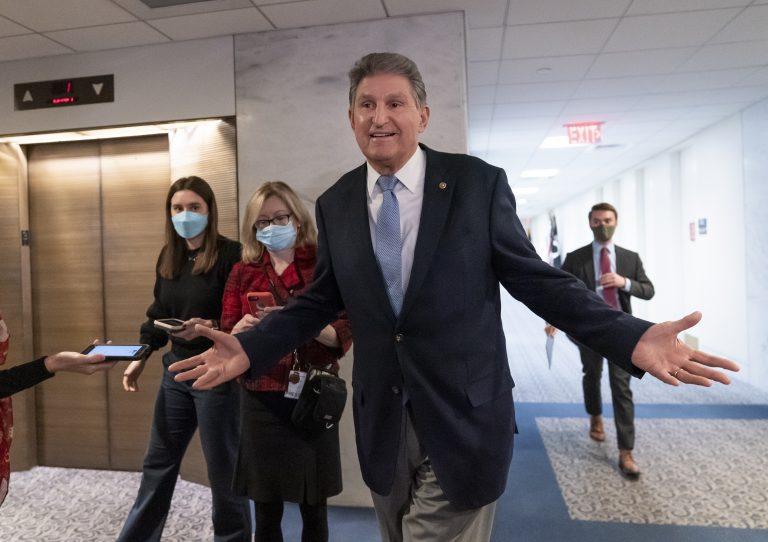
(Dominick Sansone, Headline USA) Sen. Joe Manchin, D-W.Va., fueled speculation that he may challenge Joe Biden for the Democrat nomination in 2024 after he claimed to be joking about entertaining the notion during a recent series of media interviews.

“I’m not running for president of the United States,” Manchin said in a radio interview with the show MetroNews last week. “I can assure you of that as we sit here today.”

However, he later backtracked from the statement during a subsequent interview on Fox News’s Sunday Morning Futures.

Manchin stated that his remarks were made only in “jest”, according to reporting by The Hill.

Host Maria Bartiromo pressed Manchin on his statement that he was not running for president.

“You have been in public service for 40 years” she began. “You told a radio interview this week that you will not be running for president. What are your plans? Will you run for reelection [to the Senate]?”

Manchin brushed aside the remarks, saying that his comments regarding a presidential run were simply the result of friendly banter.

“Well, the bottom line is, that was in jest,” he said. “We were talking back and forth, a dear friend of mine, Hoppy Kercheval. We talked. And he said, this minute, this time, this and this.”

Manchin then diverted the conversation to uniting Americans across bipartisan lines and working to bring the country together.

“My main concern—and to all of you and all of your viewers, my main concern is, how do we bring this country together?” he asked.

“How do we make it work?” he continued. “How do we make Democrats, Republicans become Americans again, and not just party affiliates? And we’re pushing people further apart, making people take a side, and then we’re rewarding for bad behavior.”

Manchin also avoided questions related to whether or not he still identified as a Democrat considering the party’s increasingly radical left-wing policy positions.

Currently completing his second full Senate term in the seat vacated by the 2010 death of  ex-Ku Klux Klan wizard Robert Byrd, D-W.Va., Manchin, a former governor of West Virginia, is likely to face his toughest competition yet should he seek re-election next year.

The state has aligned itself increasingly with conservative Republicans and was second only to Wyoming in its support for then-President Donald Trump during the 2020 election, backing him by more than 68%.

Rep. Alex Mooney, R-W.Va., a member of the House Freedom Caucus, has already declared his intention to seek the Senate seat, and other top Republicans—including Gov. Jim Justice and state Attorney General Patrick Morrisey—have been rumored as possible contenders.

Manchin has not yet stated whether he will seek the office again. He has also not explicitly ruled out a potential run for president.

Biden Claims It’s Possible Xi Didn’t Know about Spy Balloon

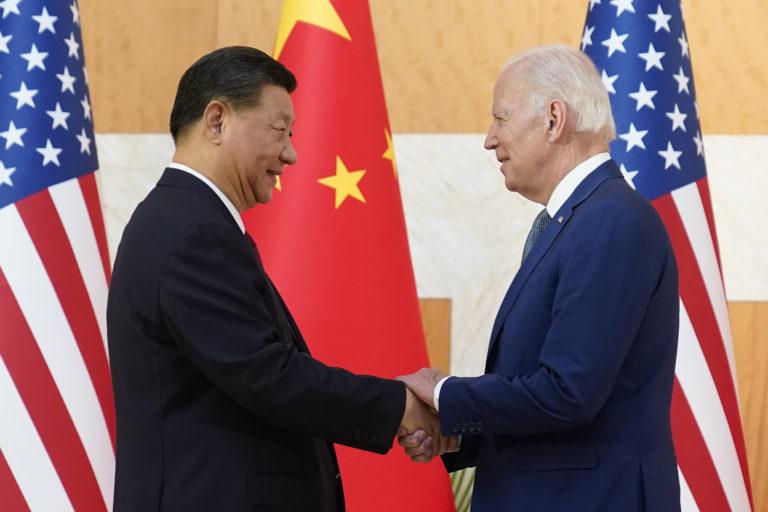
(Molly Bruns, Headline USA) When following up on the Chinese spy balloon scandal, President Joe Biden attempted to make excuses for Chinese Communist Party leader Xi Jinping, claiming he may not have known the balloon was flying over U.S. territory.

The balloon, which was first spotted in Montana, traveled all the way over the continental U.S. before Biden gave the order to shoot it down off the coast of South Carolina.

Initial reports of the first balloon, from Commander of North American Aerospace Defense Command and United States Northern Command, Glen David Van Herck, indicated that the balloon was over 200 feet tall and weighed “a couple thousand pounds.”

According to the Daily Wire, ABC News host David Muir prodded Biden with several questions about the balloon and what the government has learned about it.

“Let me just ask you this first, do we know definitively yet whether or not that spy balloon was flying over the continental U.S. intentionally?” Muir asked.

“It is almost not relevant once it was over the United States,” Biden replied.

Muir continued, asking if it was possible that Xi was unaware of the balloon.

“There is a possibility of that,” Biden claimed.

Wang Wenbin, a spokesperson for the Chinese Foreign Ministry, alleged that U.S. balloons constantly fly through the airspace of other countries.

“Since last year, U.S. high-altitude balloons have illegally flown over China’s airspace more than 10 times without the approval of Chinese authorities,” Wenbin claimed.

Three more unidentified flying objects were shot down over Alaska, Lake Huron and Canada in the week following the destruction of the first balloon.

The National Security Council released a statement countering China’s statements, claiming that their surveillance balloon program constantly violates the airspace of other coutnries.

“This is the latest example of China scrambling to do damage control,” said spokesperson Adrienne Watson. “It has repeatedly and wrongly claimed the surveillance balloon it sent over the United States was a weather balloon and to this day has failed to offer any credible explanations for its intrusion into our airspace and the airspace of others.”

GOP Reps. Seek Answers as to Why Army Recruitment so Low

(Molly Bruns, Headline USA) Republican Representatives are on the search for answers after the alarming decline in U.S. military recruitment, and are requesting “transparency” on the current levels of “wokeness” in the enlistment process.

Reps. Mike Waltz, R-Fla., and Jim Banks, R Ind., sent the letter to U.S. Secretary of the Army Christine Wormuth, voicing their concern over the “historic recruitment crisis” and calling for the release of survey data, Breitbart reported.

“Having spent my career as an Army officer and green beret, I am very concerned with the Army’s ability to recruit and retain our nation’s best and brightest for military service,” said Waltz. “Unfortunately, we continue to receive analysis of cherry-picked data that is not giving us the full picture of why the U.S. Army is seeing historically low recruitment and retention rates.”

Waltz also asked for “transparency” on the matter, calling out the Biden Administration specifically for their lazy response and asking them to get to the bottom of the issue.

Banks blamed increasing amounts of “wokeness” baked into the military’s recruitment schemes for the lack of retention, claiming it “undermined the apolitical character of the military which is a major threat to democracy and the American way of life.”

Banks and Waltz both work on the Military Personnel Subcommittee, and mentioned that they will prioritize “rooting out wokeness” from the military in the coming months.

The letter also points out the Army administration’s reluctance to release full surveys on recruitment and the discrepancies between the little polling data that is available and what Army officials say on public record.

A poll from the Ronald Regan Institute discovered a severe decrease in trust and confidence in the U.S. military due to over politicization and “so-called ‘woke’ practice undermining military effectiveness.”

Banks and Waltz suspect that army officials are using select data points to put an optimistic spin on the depressing reality.

All of the branches of the military are making efforts to reach out conform to radical leftism, pushing diversity, equity and inclusion initiatives internally and externally and prioritizing gender ideology over basic safety and military effectiveness.

‘Defund the Police’ Advocate Cori Bush Marries Private Security Guard

(Headline USA) “Defund the Police” advocate Rep. Cori Bush, D-Mo., married a member of her security detail who was paid by her campaign during a private ceremony earlier this month, according to reports.

Bush tied the knot with Cortney Merritts in St. Louis, according to local station KSDK. They filed for a marriage license on Feb. 11 and held the ceremony the following weekend, court documents show.

Bush’s chief of staff Abbas Alawiesh confirmed the marriage in a statement on Monday, saying, “With heartfelt congratulations, I am happy to confirm that Congresswoman Cori Bush married the love of her life, Cortney Merritts, this month​.”

Merritt began working for Bush’s campaign as security detail in 2022, after the couple began their relationship. Bush paid Merritt, an Army veteran, $62,359 in 2022 — the bulk of the payments being for security services, while $2,359 was for “cash reimbursements.”

Bush’s office insisted the payments were within the bounds of House ethics rules, though they are likely to draw scrutiny from the House Ethics Committee now that Republicans are in charge.

Bush’s office on Monday stressed that Merritts was not employed by them.

​”​Mr. Merritts, a veteran of the U.S. Army and a security professional, has been Congresswoman Bush’s partner since before her Congressional tenure and is not employed by her Congressional office. Our team has come to know and appreciate Mr. Merritts as a loving and caring Congressional spouse​,” Alawiesh said.

Bush has spent more than $500,000 in private security over the past several years, despite advocating for the defunding of local police departments. She defended her hypocritical stance in August 2021, claiming she needs security because “I have had attempts on my life and I have too much work to do.”

She also suggested that anyone who criticizes her decision to hire security doesn’t care about her safety.

“They would rather I die?” she said in 2021. “You would rather me die? Is that what you want to see? You want to see me die? You know because that could be the alternative.”