DeSantis Leads Coalition of Governors Fighting Biden’s ESG Policy

(Bethany Blankley, The Center Square) Florida Gov. Ron DeSantis is leading a coalition of governors from 18 states who’ve pledged to fight the Biden administration’s environmental, social and corporate governance agenda.

The governors said Biden’s investment agenda is a “decision to jeopardize retirement savings for millions of Americans to promote far left priorities.”

Joining DeSantis are the governors of Alabama, Alaska, Arkansas, Georgia, Idaho, Iowa, Mississippi, Missouri, Montana, Nebraska, New Hampshire, North Dakota, Oklahoma, South Dakota, Tennessee, Utah, West Virginia and Wyoming.

The coalition argues President Joe Biden’s ESG agenda is “destabilizing the American economy and the global financial system.”

“At my direction, Florida has led the way in combating the pernicious effects of the ESG regime by directing our state pension fund managers to reject ESG and instead focus on obtaining the highest return on investment for Florida’s taxpayers and retirees,” DeSantis said, referring to the state last August divesting its retirement system from funds that prioritize ESG.

The coalition pledged to fight against the administration’s ESG policies after 25 state attorneys general sued the administration over them in January. Many in the governors’ coalition overlap with states represented in the AG coalition.

Last August, DeSantis vowed to “spearhead an initiative to join with other like-minded states to send an even louder message to the financial industry that the American people have rejected ESG at the ballot box, and ideologues cannot and should not circumnavigate the will of the people.” The governor’s coalition, he said, “delivered on that promise.”

In a joint statement issued on Thursday, the governors said, “Congress exercised its powers under the Congressional Review Act” to disapprove a Department of Labor Rule, which the president has threatened to veto. In doing so, Biden has “put his political agenda above the well-being and individual freedoms of hardworking Americans.”

The coalition of governors said “… freedom loving states can work together and leverage our state pension funds to force change in how major asset managers invest the money of hardworking Americans, ensuring corporations are focused on maximizing shareholder value, rather than the proliferation of woke ideology.”

The rule risks the pensions of thousands of hardworking Americans, they argue, instead of “prioritizing investment decisions on the highest rate of return.”

The rule, “Prudence and Loyalty in Selecting Plan Investments and Exercising Shareholder Rights,” follows an executive order Biden issued last May. In it, he directed the federal government to implement policies “to help safeguard the financial security of America’s families, businesses and workers from climate-related financial risk that may threaten the life savings and pensions of U.S. workers and families.”

The rule change “will bolster the resilience of workers’ retirement savings and pensions by removing the artificial impediments – and chilling effect on environmental, social and governance investments – caused by the prior administration’s rules,” Acting Assistant Secretary for the Employee Benefits Security Administration Ali Khawar said in a statement last fall. “A principal idea underlying the proposal is that climate change and other ESG factors can be financially material and when they are, considering them will inevitably lead to better long-term risk-adjusted returns, protecting the retirement savings of America’s workers.”

The governors argue that retirees are “already suffering from the reckless fiscal policies of the Biden Administration” and are likely to “continue to experience diminished returns on the investment of their hard-earned money while the corporate elite continue to use their economic power to impose policies on the country that they could not achieve at the ballot box.”

The governors have vowed to protect their residents and taxpayers by implementing several measures. These include “blocking the use of ESG in all investment decisions at the state and local level, ensuring that only financial factors are considered to maximize the return on investment, protecting retirees and taxpayers alike.” It may also include “eliminating consideration of ESG factors by state and local governments when issuing bonds or prohibiting state fund managers from considering ESG factors when investing taxpayer money.”

The governors also vowed to protect citizens from ESG influences in the financial sector by “banning the financial sector from considering so called ‘Social Credit Scores’ in banking and lending practices aimed to prevent citizens from obtaining financial services like loans, lines of credit, and bank accounts.” They’re also considering “stopping financial institutions from discriminating against customers for their religious, political, or social beliefs, such as owning a firearm, securing the border, or increasing our energy independence.”

The AG’s lawsuit was filed in U.S. District Court Northern District Amarillo Division and names Secretary of Labor Martin Walsh and the U.S. Department of Labor as defendants.
Former Epstein Associate Was Arrested at Jimmy Kimmel’s House

(Jacob Bruns, Headline USA) In recent weeks Late Night Show TV host Jimmy Kimmel has come to the defense of known pedophile Jeffrey Epstein‘s circle of friends, denouncing people like NFL quarterback Aaron Rodgers as “conspiracy theorists.”

But now, it turns out, Kimmel himself ran in Epstein’s social circles, the Post Millennial reported.

Epstein’s former associate, friend and private chef, Adam Perry Lang, was arrested by authorities at Kimmel’s California beach house in January of 2019.

According to the report, Lang was believed to have been staying on the property at that time. Authorities arrested him after they received reports of explosives located on the premises.

Kimmel’s house was surrounded by drones and helicopters in a dramatic investigation.

He eventually bailed Lang out of jail for $50,000, and his lawyer suggested that the incident was a case of “swatting”–the reporting of a false emergency.

“Mr. Lang will be cleared of any wrongdoing. He was fast asleep with his ringer off. He immediately cooperated once he was notified of the commotion.”

No explosives or weapons were found in the house. Lang was found to have been a victim of swatting.

Aside from that bizarre incident, however, Kimmel and Lang appeared together in numerous social media posts.

In 2020, the Daily Beast also ran a report on Lang, noting in particular his connection to Epstein and emphasizing his cooperation with the federal investigation.

The string of events becomes even more bizarre when one considers that Kimmel went out of his way in a recent episode of the Late Night Show to slam Rodgers for speculating about the upcoming release of the Epstein client list.

“There’s some files that have some names on ’em that might be getting released pretty soon,” Rodgers had said earlier that week, speculating that the federal government and mainstream media were using the Chinese Spy Balloon hysteria as a coverup story.

“Might be time to revisit that concussion protocol, Aaron,” Kimmel said after calling Rodgers a “whack Packer” and a “tin foil hatter”.

House Oversight Probe Shows Hunter’s Ex-Mistress Got China Cash

(Headline USA) Records obtained by House Republicans reveal yet another member of the Biden family who cashed in on Hunter Biden’s lucrative foreign business deals.

House Oversight Committee Chairman James Comer, R-Ky., told the New York Post this week that Hallie Biden, President Joe Biden’s daughter-in-law and Hunter’s former mistress, received tens of thousands of dollars from Chinese companies in 2017.

The subpoenaed bank records show Hallie Biden—who had an affair with Hunter after her husband, Beau Biden, died—received $35,000 over two transfers in 2017 from John “Rob” Walker, one of the Biden family’s business associates. 

Those payments came shortly after Walker received a $3 million payment from State Energy HK Limited, a Chinese energy company. At least $1,065,000 of the $3 million Walker’s firm received was distributed among Biden family members, Comer said.

Hallie Biden was working as a school counselor at the time she received the payment, according to financial records.

This is the same business venture that Joe Biden was allegedly involved in, according to another Biden family associate. It is likely that there were other Biden family members involved in the transaction, since bank records don’t include the first names of all the recipients.

Comer said the records vindicate his investigation and prove that the Biden family corruption runs deep.

“Democrats described our subpoena as providing nothing more than records for Papa John’s and Starbucks, but they failed to mention the records we’ve received documenting the Biden family’s business schemes,” he said in a statement.

“Over the course of several years, members of the Biden family and their companies received over $1.3 million in payments from accounts related to their associate, Rob Walker,” Comer added. “Most of this money came as a result of a wire from a Chinese energy company and went not only to Hunter and James Biden but also to Hallie Biden and an unknown ‘Biden.’”

Democrat Threatens to Commit Arson over Anti-Grooming Bill

(Headline USA) A Nebraska Democrat threatened to “burn” this year’s legislative session to the ground by filibustering every bill if lawmakers advance one that bans sex-change operations for children.

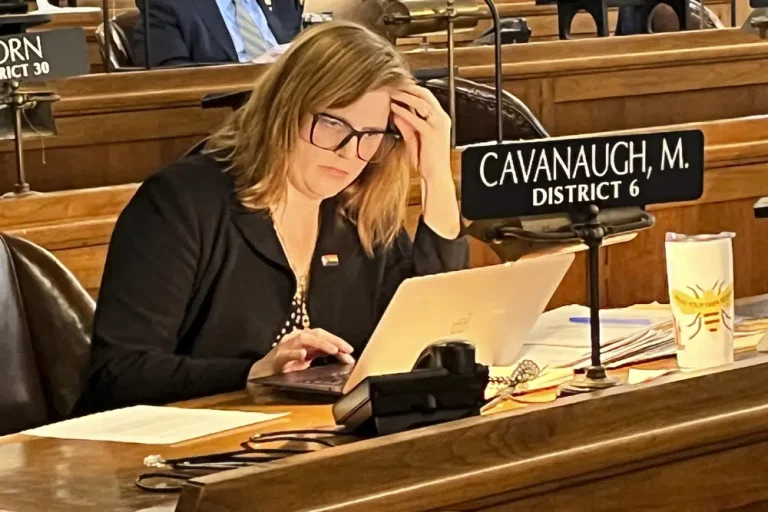
State Rep. Machaela Cavanaugh demanded that her colleagues withdraw the bill, saying, ““If this legislature collectively decides that legislating hate against children is our priority, I am going to make it painful — painful for everyone. I will burn the session to the ground over this bill,” the Gateway Pundit reported.

Thus far, she has succeeded in preventing the legislature from moving anything off the floor. As of Wednesday, “not a single bill will have passed.”

Instead, lawmakers have been forced to listen to Cavanaugh blabber about her “favorite Girl Scout cookies, Omaha’s best doughnuts, and the plot of the animated movie Madagascar,” according to the Associated Press.

This is not the first time Cavanaugh has used physically threatening terms to force her way on an issue. In February, she warned Republicans that, “If you want to inflict pain upon our children, I am going to inflict pain upon this body.”

The bill in question, the Let Them Grow Act, would prohibit healthcare providers and practitioners in the state from performing sexual and physical reconstruction procedures on individuals under 19 years old. It would also prohibit state funds from going toward any entity, organization, or individual that performs these procedures on minors.

Physicians that violate the law would be subject to losing their medical licenses, and minors who were violated would have the right to bring a civil lawsuit against their practitioner within two years of a procedure.

“More than 85% of kids with gender dysphoria will desist if left alone in a process called ‘watchful waiting’,” state Sen. Kathleen Kauth, the sponsor of the bill, said in a statement. “These children need therapy to deal with the coexisting mental and emotional struggles they are experiencing — not irreversible, harmful and experimental medical procedures.”

Newsom Plans to Solve Homelessness w/ Tiny Houses on Public Land

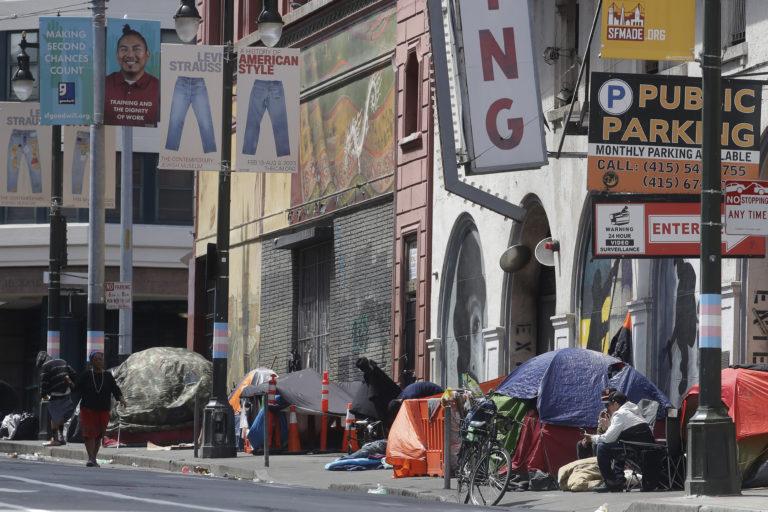
(Headline USA) In a move to advance the nanny state and cover-up a problem instead of addressing its root cause, California Gov. Gavin Newsom will announce plans Thursday to build 1,200 small homes across the state as part of an effort to help house the nation’s largest homeless population and to address an issue that has persistently plagued the state during his time in office.

The announcement, confirmed by the governor’s office, will come in Sacramento on the first stop of Newsom’s planned four-city tour, during which major policy announcements are expected on housing, health care and public safety. The tour is replacing the governor’s traditional State of the State address.

Newsom dedicated his 2020 State of the State speech to homelessness, calling it a “ disgrace ” in a land of so much wealth. California, home to nearly 40 million people, has nearly one-third of the nation’s homeless population, and their numbers are growing much faster than in other states, according to an analysis of federal data by the Public Policy Institute of California.

The governor has approved more than $22.3 billion in new housing and homelessness spending since taking office, according to the Legislative Analyst’s Office, yet the homeless population has continued to grow.

Newsom said the state will pay to build and install the 1,200 small homes, which can be put up quickly and placed on public land to house people living in encampments along roads and rivers. Sacramento will get 350 homes, Los Angeles will get 500, San Jose will get 200 and San Diego will get 150.

“In California we are using every tool in our toolbox — including the largest-ever deployment of small homes in the state — to move people out of encampments and into housing,” Newsom said. “The crisis of homelessness will never be solved without first solving the crisis of housing — the two issues are inextricably linked.”

Newsom’s office did not say how much the homes will cost or where they will go. It would be up to local governments to decide the latter, which could be tricky since many residents may not want the homes near where they live.

Most of the state funding for homelessness programs has gone to local governments. But a lack of progress has led the governor to clash with local leaders.

Last fall Newsom delayed $1 billion of funding for local government homelessness programs because he didn’t like how they planned to spend it. Cumulatively, the local governments’ plans aimed to reduce the homeless population by just 2%. Newsom later released the money after a meeting with local leaders.

On Thursday the governor said local leaders have revised their plans with a goal of a 15% reduction. Newsom said he likes that much better and announced he is releasing another $1 billion.

Currently state homelessness funding has “all sorts of rules that have to be put in and half a dozen different state departments involved in order to find one program,” said Graham Knauss, executive director of the California State Association of Counties. “That needs to change. That is not government at its best.”

The association’s solution is to ask the state Legislature to pass laws clearly defining the responsibilities of local and state government, coupled with recurring state funding for local governments every year. Knauss said the association is talking with lawmakers and the governor’s office about passing legislation.

“We certainly should not expect that we’re going to get ongoing progress on homelessness while using one-time funding to do it,” he said.

The stakes are high for people like Nathen Avelar, 18, who has struggled with unstable housing most of his life. Avelar grew up with his mother and twin brother in the Central Valley city of Merced, where he said there is plenty of new housing but all out of their reach.

“I remember a couple of times we drove around looking for houses, and we always saw these nice houses on the street and I knew we would never be able to afford them,” he said. “That was really disheartening.”

Avelar, who worked part-time for a voter engagement group that supported Newsom during an unsuccessful 2021 recall attempt, said he wants the governor’s administration to build more affordable housing.

Adapted from reporting by the Associated Press

3 Strong Female Contenders Emerging in Trump’s 2024 V.P. Stakes

(Headline USA) Trips to Mar-a-Lago. Glowing speeches. Front-row seats at major events.

The first Republican presidential primaries are nearly a year away and the candidate field is unsettled. But already, a shadow contest of another sort is underway with several Republicans openly jockeying to position themselves as potential running mates to Donald Trump, the early front-runner for the nomination.

“A lot of people are right now auditioning,” Trump boasted to supporters in Florida last month.

The mere mention of a running mate this early in the process is a departure from the traditional timeline of presidential primaries, where candidates typically spend the opening months of a campaign introducing themselves to voters and sharing their visions for the country. But as a former president, Trump needs no introduction and is eager to project an air of inevitability around his campaign, particularly as attention builds around Florida Gov. Ron DeSantis, who is widely seen as his toughest potential GOP rival.

Trump campaign officials insist that the vice presidential search is not something they have been actively discussing.

“We appreciate all support for President Trump, but the clear focus is on making sure that he wins the Republican nomination and is well-positioned to win the general election in 2024,” said Jason Miller, a longtime Trump adviser.

That, however, hasn’t stopped some could-be candidates from taking full advantage of opportunities to be in close proximity to Trump, at his club and at events. The dynamic was on full display earlier this month at the Conservative Political Action Conference, where a trio of women who have been mentioned as possible contenders sat in the audience to cheer Trump’s headline speech.

They were Reps. Marjorie Taylor Greene of Georgia, Elise Stefanik of New York and Kari Lake, who is fighting for election integrity in Arizona and who ended her remarks at a keynote event dinner by kissing a portrait of Trump that was placed on stage.

While Trump, according to people who have spoken to him, is in no rush to make a decision and understands that he has to let the nomination process play out, he has nonetheless talked through possible choices since well before he formally announced his candidacy last fall. In those conversations, he has indicated his interest in selecting a woman this time around.

But allies say Trump is looking, first and foremost, for someone who will be unabashedly loyal after feeling burned by former Vice President Mike Pence for refusing to overturn the results of the 2020 election.

In 2016, running as a celebrity businessman with no experience in politics, Trump chose a person who was, in many ways, his total opposite, picking the Indiana governor and former congressman who could bolster his standing with conservatives and the religious right.

Trump, this time, is looking for someone more like himself, said Michael Caputo, a longtime friend and adviser who believes Stefanik would be Trump’s best choice.

“I think the president learned a lot from his experience with Pence,” he said. “I think this time Trump’s going to be looking for someone cut from the same cloth he is, not from a different, complementary cloth.”

While Trump is looking for someone with star power, he has also signaled that he is reluctant to choose someone who might overshadow him in the race.

Among those who are seen as most eager for the job is Lake, who is popular with Trump’s MAGA base and won — and then promoted — a CPAC straw poll that asked audience members whom they would like to see as the Republican vice presidential nominee.

She said in a statement that she is “100% dedicated to serving as Arizona Governor” — even though Democrat Katie Hobbs, who allegedly defeated Lake in an election that is still being contested in courts, now holds the job — and “will also work to make sure President Trump gets back in the White House ASAP. Anything outside of those two goals is nothing but a distraction.”

A person close to Lake said that she has had no formal discussions about the role is currently gearing up for a potential run for the Senate. But the person, who, like others, insisted on anonymity to discuss private conversations, also said Lake is unapologetically pro-Trump and would likely do anything he asked.

Greene, the flame-throwing congresswoman who recently proposed a “national divorce” between red and blue states, is also seen as eager for the role. She was a constant presence at Trump’s midterm rallies, often speaking during the pre-show program, and has been a frequent visitor to Florida, including sharing dinner with Lake at a local restaurant, Rocco’s Tacos, on Valentine’s Day.

“She sees herself on the short list for Trump’s VP. Paraphrasing Cokie Roberts, when MTG looks in the mirror she sees a potential president smiling back,” Steve Bannon, Trump’s former chief strategist who frequently hosts Greene on his podcast, told NBC, referring to the late political reporter.

When asked about her vice presidential ambitions recently, Greene told reporters, “That’s up to President Trump who he chooses.”

Stefanik is also frequently mentioned as a likely contender, but has taken what allies describe as a more subtle approach. She endorsed Trump before he even announced he was running, and has become one of his chief defenders on the Hill. During CPAC, Stefanik used her speech to call for Trump’s reelection and introduced him at a private event organized by his super PAC. Trump, in turn, praised her as a “rocket ship.”

People close to Stefanik say that, instead of overtly angling for the position, she is focused on doing her job as GOP conference chair and a member of the House Intelligence Committee, believing that if she does it well, good things will follow. But she nonetheless has the support of several Trump allies, who see her as disciplined and less risky than other potential options, and also point to her record for winning swing, suburban districts.

Stefanik, in an interview, said she had not discussed the position with Trump, though she has previously said she would be honored to serve in his administration.

“We have a lot of work to do over the next two years and I am gonna work no matter what to make sure that we have a Republican president, House and Senate in 2024,” she said. “So that’s what I focused on, and it’s a big job.”

Trump has also discussed other potential running mates, including his former ambassador to the United Nations, Nikki Haley, who has been reluctant to criticize the former president since launching her bid. South Carolina Sen. Tim Scott, who would be the first black man on a Republican presidential ticket, is seen as another potential option.

Allies say both are serious about running for president in their own right, not in hopes of angling to serve as vice president or in another Cabinet post, though many believe Haley, in particular, would be open to an offer.

Also mentioned as possible contenders: South Dakota Gov. Kristi Noem who is considering her own presidential run; Tennessee Sen. Marsha Blackburn, a supporter of the former president in 2016 and 2020; and Iowa Gov. Kim Reynolds, who appeared alongside the former president as he visited the state Monday.

“We’re going to have a lot of great choices for vice president. We’re gonna pick a great one,” Trump said during his swing through Iowa.

Adapted from reporting by the Associated Press

Gaslighting Yellen Stuns Sen. Ron Johnson by Denying Core Cause of Inflation

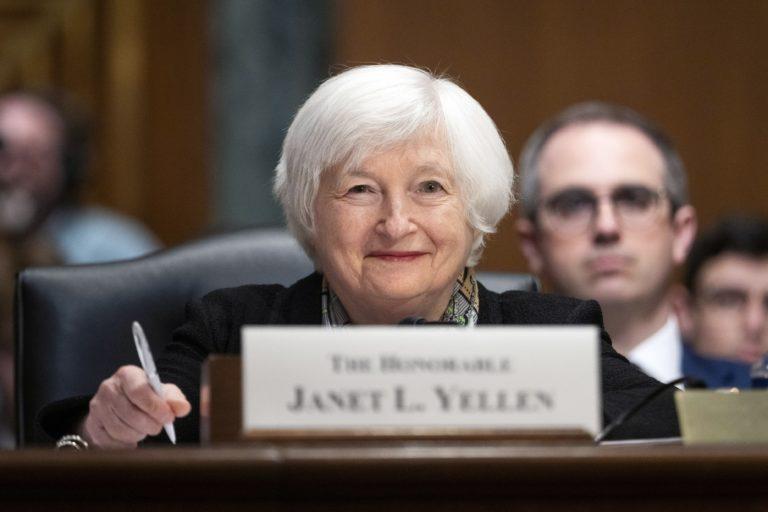
(Headline USA) Treasury Secretary Janet Yellen left GOP jaws dropped on the Senate floor by continuing to downplay what many believe to be the root cause of the Biden administration’s persistent economic woes.

A week after the second-largest bank collapse in U.S. history, Yellen told the Senate Finance Committee on Thursday that the nation’s banking system “remains sound” and Americans “can feel confident” about their deposits.

Moreover, as skyrocketing inflation gives way to a recessionary climate, resulting in Federal Reserve rate hikes that have, in turn, contributed to bank failures, Yellen claimed that Democrats’ reckless deficit spending was of little consequence.

The denial left Sen. Ron Johnson, R-Wisc. practically speechless.

Many Twitter users, however, were quick to chime in with their own thoughts.

Yellen’s remarks, coming against the backdrop of deepening concerns about the health of the global financial system, were an effort to signal to markets that there would be no broader contagion from the collapse of Silicon Valley Bank in California and Signature Bank in New York.

But it would not be the first time she has engaged in public gaslighting before Congress. For much of 2021, she insisted that, despite clear warning signs, inflation would be “transitory” before finally admitting she was wrong.

Facing fierce questioning by lawmakers on how Federal Reserve interest rates contributed to the bank failures and whether taxpayers would bear the brunt of the commitment to make depositors at the banks whole, Yellen stressed the need for the federal government to act to assure stability in the market.

“We certainly need to analyze carefully what happened to trigger these bank failures and examine our rules and supervision” to prevent failures from happening again, Yellen told the committee.

Yellen was the first Biden administration official to face lawmakers over the decision to protect uninsured money at two failed regional banks, a move that some have criticized as a bank “bailout.”

Both of the banks now subsidized by taxpayers had brazenly prioritized woke virtue-signaling while ignoring sound financial policy. Many of the major investors in SVB in particular were members of the leftist Elite, such as California Gov. Gavin Newsom, who praised the government for protecting his wineries.

“The government took decisive and forceful actions to strengthen public confidence” in the U.S. banking system, Yellen claimed in her testimony. “I can reassure the members of the committee that our banking system remains sound, and that Americans can feel confident that their deposits will be there when they need them.”

Yellen also defended the government’s bogus claim that taxpayers will not bear the cost of protecting uninsured money at two failed regional banks.

The week has been a whirlwind for markets globally on worries about banks that may be bending under the weight of the fastest set of hikes to interest rates in decades.

In Europe, troubles at Credit Suisse, Switzerland’s second-largest lender this week prompted the Swiss central bank to agree to loan Credit Suisse up to 50 billion francs.

In less than a week, Silicon Valley Bank, based in Santa Clara, California, failed after depositors rushed to withdraw money amid anxiety over the bank’s health. Then, regulators convened over the weekend and announced that New York-based Signature Bank also failed. They ensured all depositors, including those holding uninsured funds exceeding $250,000, were protected by federal deposit insurance.

The Justice Department and the Securities and Exchange Commission have since launched investigations into the Silicon Valley Bank collapse.

Thursday’s hearing, meant to address President Joe Biden’s $7 trillion budget proposal, came after the sudden collapse of the nation’s 16th-biggest bank and go-to financial institution for tech entrepreneurs.

While lawmakers questioned Yellen on the deficit and upcoming debt ceiling negotiations, many focused instead on what role regulators played in the bank failures.

The Biden administration’s “handling of the economy contributed to this,” insisted Sen. Tim Scott, R-S.C. “I plan to hold the regulators accountable.”

Sen. Mark Warner, D-Va., wondered aloud, “Where were the regulators in all of this?” and called for accountability in the bank run.

Sen. Mike Crapo of Idaho, the committee’s top Republican, said, “I’m concerned about the precedent of guaranteeing all deposits,” calling the federal rescue action a “moral hazard.”

Yellen claimed on CBS’s Face the Nation Sunday that a bailout was not on the table, stating, “we’re not going to do that again,” referring to the U.S. government’s response to the 2008 financial crisis, which led to massive government rescue policies to large U.S. banks.

But that appears to have been little more than a redefining of the word “bailout” much as the administration previously redefined the word “recession” to insist prior to the 2022 midterm election that the economy had not entered into one, despite having two consecutive periods of negative growth.

Yellen, a former Federal Reserve chair and past president of the San Francisco Federal Reserve during the 2008 financial crisis, was a leading figure in the resolution this past weekend, which was engineered to prevent a wider systemic problem in the banking sector.

“This week’s actions demonstrate our resolute commitment to ensure that depositors’ savings remain safe,” she said.

Adapted from reporting by the Associated Press

Senate Moves to Repeal Bush-Era Authorization of Open-Ended Iraq Military Action

(Headline USA) The Senate took a first step Thursday toward repealing two measures that give open-ended approval for military action in Iraq, pushing to end that authority as the United States marks the 20th anniversary of the Iraq War.

Senators voted 68-27 to move forward on legislation that would repeal the 2002 measure that greenlighted that March 2003 invasion of Iraq and a 1991 measure that sanctioned the U.S.-led Gulf War to expel Iraqi leader Saddam Hussein’s forces from Kuwait. Nineteen Republicans joined Democrats in supporting the measure.

The bipartisan effort comes at a time when lawmakers of both parties are seeking to reclaim congressional powers over U.S. military strikes and deployments, arguing that the war authorizations are no longer necessary and subject to misuse if they are left on the books. President Joe Biden has backed the push, and the White House issued a statement Thursday in support.

“Repeal of these authorizations would have no impact on current U.S. military operations and would support this administration’s commitment to a strong and comprehensive relationship with our Iraqi partners,” the White House said.

It’s unclear whether leaders in the Republican-controlled House would bring the bill up for a vote. Forty-nine House Republicans supported the legislation when then-majority Democrats held a vote two years ago, but current House Speaker Kevin McCarthy, R-Calif., opposed it.

Senate Republicans are also split on the legislation. While the 19 GOP senators voted for it, opponents argue that the repeal could project weakness to U.S. enemies. They have pointed out that President Donald Trump’s administration cited the 2002 Iraq war resolution as part of its legal justification for a 2020 U.S. drone strike that killed Iranian Gen. Qassim Soleimani.

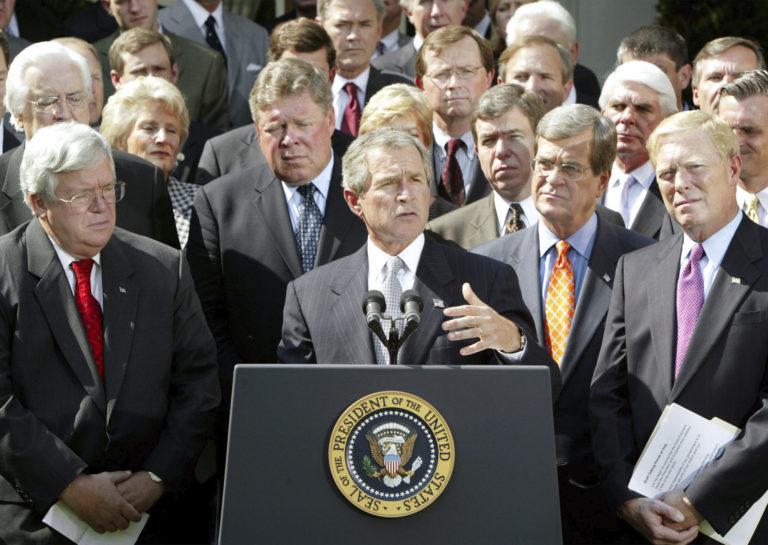
The October 2002 votes to give President George W. Bush broad authority for the invasion — coming just a month before the midterm elections that year — became a defining moment for many members of Congress as the country debated whether a military strike was warranted in the aftermath of the Sept. 11, 2001, attacks against the United States.

Illinois Sen. Dick Durbin, a Democrat who was in the Senate at the time and voted against the resolution, said on the floor before Thursday’s vote that “I look back on it, as I’m sure others do, as one of the most important votes that I ever cast.”

“The repeal of this authorization of use the use of military force does not mean the United States has become a pacifist nation,” Durbin said. “It means that the United States is going to be a constitutional nation and the premise of our Founding Fathers will be respected.”

After the initial March 2003 invasion of Iraq, American ground forces discovered that the allegations of nuclear or chemical weapons programs were false. But the overthrow of Iraq’s security forces precipitated a brutal sectarian fight and violent campaigns by Islamic extremist groups in Iraq. Car bombings, assassinations, torture and kidnapping became a part of daily life in Iraq for years.

Nearly 5,000 U.S. troops were killed in the war. Iraqi deaths are estimated in the hundreds of thousands.

In the statement of policy, the White House said Biden would work with Congress to replace the authorizations with “a narrow and specific framework more appropriate to protecting Americans from modern terrorist threats.” It said the president want to ensure that Congress “has a clear and thorough understanding of the effect of any such action and of the threats facing U.S. forces, personnel, and interests around the world.”

Senate Majority Leader Chuck Schumer, D-N.Y., said in the hours before the vote that he was glad that the repeal is a bipartisan effort after the Iraq conflict was the cause of “so much bitterness” in the past.

“Americans are tired of endless wars in the Middle East,” Schumer said.

Adapted from reporting by the Associated Press

Kamala Offers Peace Pipe to Pocahontas after Reports of Tension

(Headline USA) Vice President Kamala Harris reportedly hosted Sen. Elizabeth Warren, D-Mass., for a recent dinner after reports that Harris was intentionally ignoring the Democratic senator’s phone calls.

Harris hosted a Tuesday dinner party at the U.S. Naval Observatory, the vice president’s residency, and invited Warren along with several other female senators. The dinner seems to have been an attempt to ease tensions between Harris and Warren, who fell out after Warren refused to back her for Biden’s reelection ticket.

Warren and Harris even took a video happily waving next to each other.

Last week, it was reported that Harris was refusing to speak with Warren, despite Warren’s repeated attempts to apologize for critical comments she made of the vice president in January.

Warren had declined to endorse Harris for vice president again if Biden runs for reelection in 2024, saying she would rather “defer” to Biden’s team.

“I’ve known Kamala for a long time. I like Kamala. I knew her back when she was an attorney general and I was still teaching, and we worked on the housing crisis together, so we go way back. But they need — they have to be a team, and my sense is they are — I don’t mean that by suggesting I think there are any problems. I think they are.”

Warren then released a public apology, saying she is fully on board with another Biden-Harris ticket.

“I fully support the president’s and vice president’s reelection together and never intended to imply otherwise,” Warren said. “They’re a terrific team with a strong record of delivering for working families.”

But the vice president has not gotten past Warren’s “offensive” comments, according to CNN, and neither have many of Harris’s staffers.

“To them, it’s the latest in a long string of snubs to a vice president whom they say has never gotten the respect or support she deserves. Warren’s words sting even more, they say, because they came from a former rival who in 2020 hoped to be picked as Biden’s running mate instead,” CNN reported.

Virginia Demands Schools Cut ties with Chinese Groups Tied to CCP

(Molly Bruns, Headline USA) Virginia Republican Gov. Glenn Youngkin asked the state’s public schools to cut ties with groups that may be tied to the CCP.

The administration announced the move in a letter to Thomas Jefferson High School for Science and Technology and their funding arm, which has accepted significant financial donations from suspected Chinese front groups, according to the Daily Wire.

“The news that Thomas Jefferson High School for Science and Technology (TJHSST) and the TJHSST Partnership Fund (Fund) have accepted significant financial contributions from entities known to have connections with the Chinese Communist Party (CCP) raises significant concerns,” Secretary of Education Aimee Rogstad Guidera wrote to Fairfax County Public Schools Superintendent Michelle Reid.

Guidera pressed the issue, expressing concern that impartiality in the classroom could be impossible if the school is financially subject to foreign influence.

She asked for a comprehensive report on the money the school accepted, how they used it and whether the CCP-linked groups had influence over the school district’s study materials.

“I am requesting that you direct schools within your division to cut ties with CCP-linked partners. Furthermore, I have asked the Virginia Department of Education to investigate the prevalence of such relationships between CCP-linked partners and local school divisions across the Commonwealth,” the letter said.

Documents found by Parents Defending Education revealed that the high school “partnered with Tsinghua University High School in 2014 to assist it and China generally with adopting the science, technology, engineering, and mathematics (STEM) and advanced lab research TJHSST is famous for.”

The Pentagon considers Tsinghua University to be a Chinese military university.

The school’s fund also accepted hundreds of thousands of dollars from Shirble, a Chinese Company, and the Ameson Education and Cultural Exchange Foundation, which both have ties to a foreign influence campaign known as the United Front Work Department.

Youngkin has had trouble dealing with Virginia’s public schools, which consistently attempt to implement critical race theory and gender ideology.