Obama Boots Indigenous Elder for Being ‘Difficult’ at Australia Event

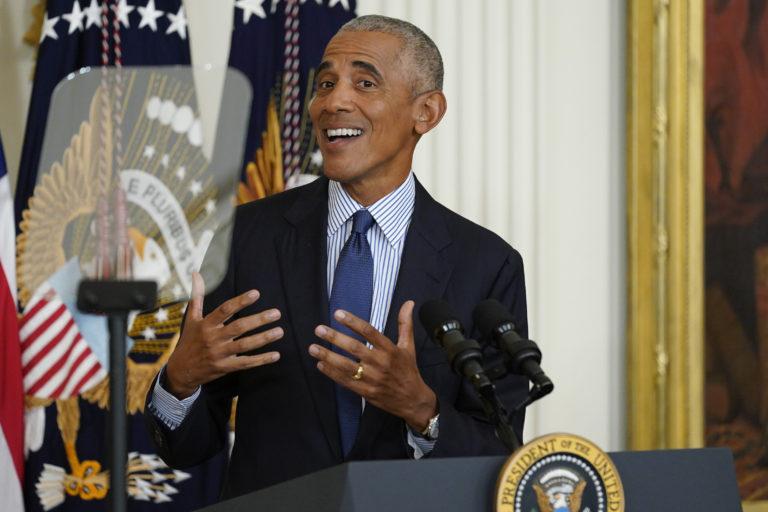
(Abdul–Rahman Oladimeji Bello, Headline USA) The Wurundjeri Woi-wurrung Traditional owners have expressed displeasure with Barack Obama as his event organizers kicked out an Elder who was to perform a traditional welcome protocol from his event. 

The Daily Wire reported that this Wurundjeri elder, Aunty Joy Murphy, expressed shock and distress about how the event organizers treated her at the former president’s program in Melbourne on Wednesday. 

“I am 78 years of age. I have never been treated or spoken to in this way in the past,” said Murphy. “Again, I do not want this to be a reflection on President Obama. I am a leader of the Wurundjeri Nation. I asked to be treated as an equal.”

The report noted that the Elder and Traditional Owner had depressed excitement to be able to perform the traditional “Welcome to Wurundjeri Land” at this event, just as she had been doing for visiting leaders. 

The report added that the Traditional Owner had performed this greeting for visiting leaders. This included the late Queen Elizabeth II, Nelson Mandela and the Dalai Lama, as she has been welcoming people to the country for over four decades. 

In a report from the National Indigenous Times, she asked the organizers for accommodation for a support person and to give Obama a gift according to traditions. However, Growth Faculty organizers removed her from the event.

The Sydney Morning Herald reported that the organizers escorted Murphy out of this event on claims that she was being “too difficult.”

A spokesperson for the organizers released a statement to The Guardian where they claimed to have apologized to the elder for kicking her out of the event.

“Growth Faculty had been working with Aunty Joy and the Wurundjeri community for many weeks ahead of last night’s event,” the statement reads.

“Due to security requirements, the organization was unable to accommodate last minute changes to the agreed upon ceremony,” the spokesperson added. “Growth Faculty has apologized to Aunty Joy that last night’s ceremony could not be changed.”

Trump Issues Blistering Response to Politically Weaponized Indictment

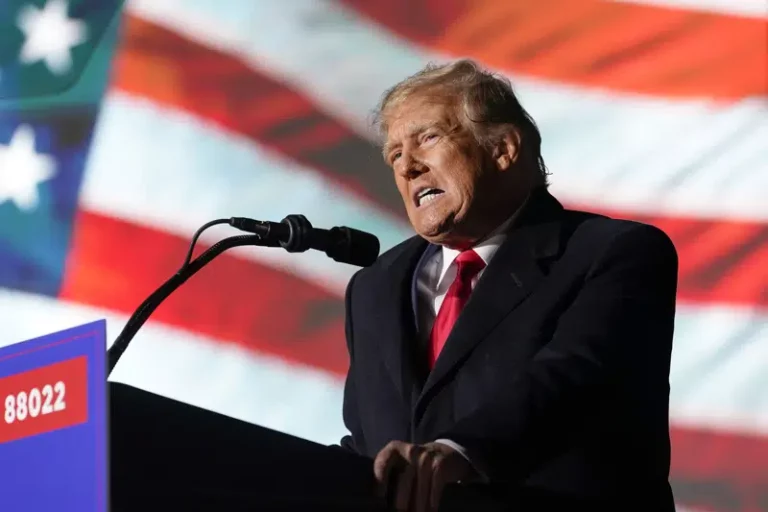
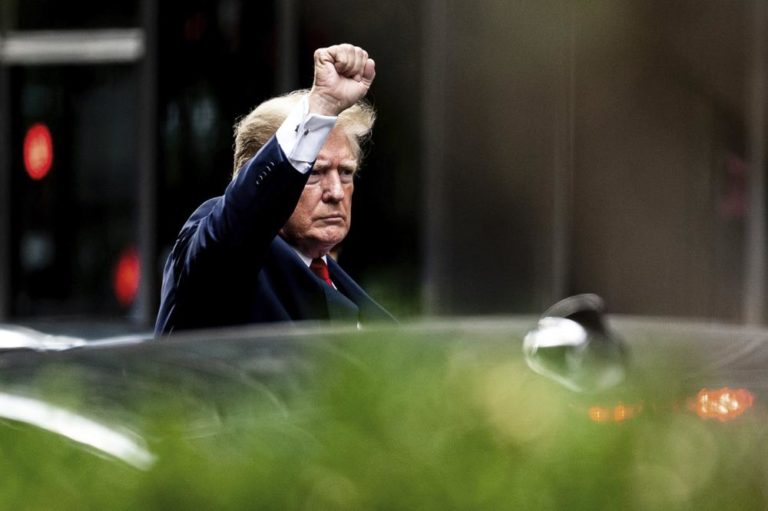
(Mark Pellin, Headline USA) Donald Trump issued a blistering response to reports that radical Manhattan District Attorney Alvin Bragg had convinced a grand jury to issue an indictment over charges related to alleged hush-money paid to porn star Stormy Daniels, and Trump wasn’t alone in his scathing criticism.

Constitutional law professor Jonathan Turley said the indictment was egregiously flawed.

“It’s historic, but it’s not necessarily good history that is being made,” he told Fox News. “It’s rather outrageous. It’s legally pathetic.”

Trump used more inflammatory language to reach the same conclusion in a statement released Thursday:

This is Political Persecution and Election Interference at the highest level in history. From the time I came down the golden escalator at Trump Tower, and even before I was sworn in as your President of the United States, the Radical Left Democrats – the enemy of the hard-working men and women of this Country – have been engaged in a Witch-Hunt to destroy the Make America Great Again movement. You remember it just like I do: Russia, Russia, Russia; the Mueller Hoax; Ukraine, Ukraine, Ukraine; Impeachment Hoax 1; Impeachment Hoax 2; the illegal and unconstitutional Mar-a-Lago raid; and now this.

“The Democrats have lied, cheated and stolen in their obsession with trying to ‘Get Trump,’ but now they’ve done the unthinkable – indicting a completely innocent person in an act of blatant Election Interference.

“Never before in our Nation’s history has this been done. The Democrats have cheated countless times over the decades, including spying on my campaign, but weaponizing our justice system to punish a political opponent, who just so happens to be a President of the United States and by far the leading Republican candidate for President, has never happened before. Ever.

“Manhattan DA Alvin Bragg, who was hand-picked and funded by George Soros, is a disgrace. Rather than stopping the unprecedented crime wave taking over New York City, he’s doing Joe Biden’s dirty work, ignoring the murders and burglaries and assaults he should be focused on. This is how Bragg spends his time!

“I believe this Witch-Hunt will backfire massively on Joe Biden. The American people realize exactly what the Radical Left Democrats are doing here. Everyone can see it. So our Movement, and our Party – united and strong – will first defeat Alvin Bragg, and then we will defeat Joe Biden, and we are going to throw every last one of these Crooked Democrats out of office so we can MAKE AMERICA GREAT AGAIN!”

Trump was expected to surrender to authorities next week, according to the Associated Press, citing a person familiar with the case who was not authorized to discuss a matter that remained under seal.

Soros-Funded DA Convinces Grand Jury to Indict Trump

(Mark Pellin, Headline USA) Radical Soros-funded Manhattan D.A. Alvin Bragg has reportedly convinced a Manhattan grand jury to indict former President Donald Trump on charges related to allegedly illegal hush money in 2016 paid to porn star Stormy Daniels.

Multiple outlets reported Thursday that the grand jury, which was previously reported to be headed into a month-long break after Bragg’s case had hit a series of setbacks, had returned the indictment.

Some of those setbacks included a resurfaced letter from Daniels where the porn star denied any affair or hush-money payments, along with a 2018 missive that reportedly showed Braggs’s star witness Michael Cohen had lied to investigators.

“Neither the Trump Organization nor the Trump campaign was a party to the transaction with Ms. Clifford [Daniels], and neither reimbursed Mr. Cohen for the payment directly or indirectly,” Cohen lawyer Stephen Ryan said in the Feb. 2018 letter.

Bragg was also under fire for reportedly withholding reams of exculpatory evidence from the grand jury.

Trump last week had warned of “potential death and destruction” if Bragg proceeded on the witch hunt to indict.

“What kind of person can charge another person, in this case a former President of the United States, who got more votes than any sitting President in history, and leading candidate (by far!) for the Republican Party nomination, with a Crime, when it is known by all that NO Crime has been committed, & also known that potential death & destruction in such a false charge could be catastrophic for our Country?” Trump wrote on Truth Social on Friday.

This is a breaking and developing story

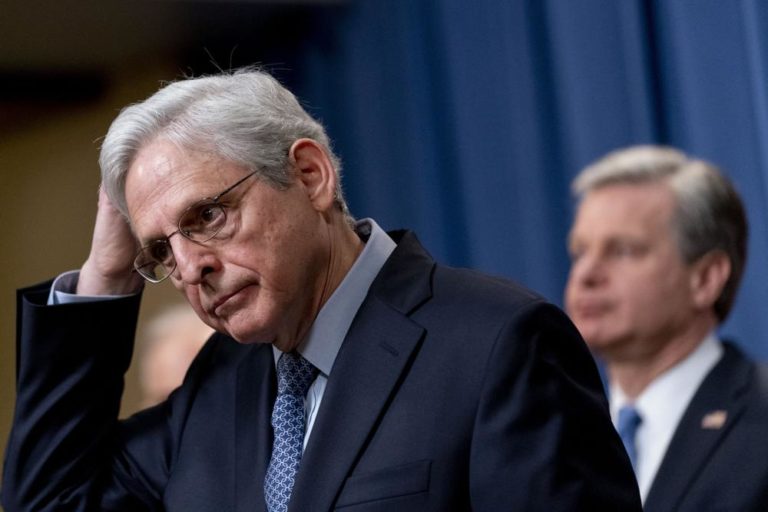
Merrick Garland Won’t Commit to Protecting J6 Inmates’ Right to Speedy Trial

(Ken Silva, Headline USA) Despite admitting that at least 11 Jan. 6 inmates have been held in pretrial detention long past what could be considered the timeline for a speedy trial, Attorney General Merrick Garland refused to do anything to rectify the situation.

Garland’s remarks came Wednesday during a DOJ budget hearing, in response to questions from Rep. Andrew Clyde, R-Ga.

Clyde started his round of questioning by asking Garland about the case of Mark Houck, who was arrested last September for allegedly shoving someone outside a Planned Parenthood. Houck was acquitted of all charges in January.

Clyde and Garland agreed that Houck’s case represented a speedy legal process.

But when Clyde asked Garland about how a speedy trial is defined under the Speedy Trial Act, the attorney general did not know. The answer is 70 days from when a complaint is filed, Clyde informed Garland.

Clyde then said he recently visited Jan. 6 inmates at the DC Correctional facility. According to Clyde, 11 of the 20 remaining inmates have yet to go to trial for more than two years.

“Eleven of the 20 have not accepted a plea deal, nor have they been brought to trial. Today is March 29, 2023. Is it true some of these people have been waiting about 2 years for their trial?” the congressman asked.

Garland responded by pleading ignorance. When Clyde pressed Garland on whether he’ll look into the situation, the attorney general made a flippant comment about the inmates having their lawyers do that.

“The beauty of the 6th Amendment is that each of those defendants have a right to an attorney, who can argue that to the court,” he said.

“I would like you to look into that, because id don’t think waiting two years complies with the Constitution,” Clyde pressed further.

“That’s for a judge to decide,” Garland shot back.

Garland added that in many cases, discovery issues and other motion proceedings can delay trials past the 70-day statutory limit. Exceptions to the Speedy Trial Act apply in those cases, he said.

In the Jan. 6 cases, delays have transpired because the DOJ has been reluctant to disclose exculpatory evidence. And when they do provide exculpatory evidence, it’s often buried in terabytes of useless data that’s hard to sift through, according to defense attorneys.

Ken Silva is a staff writer at Headline USA. Follow him at twitter.com/jd_cashless.

CNN Ratings Tank, Viewers Rejecting Fake News

(Headline USA) CNN’s leadership is preaching patience even though thousands of viewers are abandoning the network during its attempted turnaround, with no indication yet whether it will be rewarded.

Cable news ratings are down across the board compared to 2022, when Russia’s invasion of Ukraine was fresh in the news. CNN’s dip is most dramatic — 61% in prime time in March, with Fox News Channel down 27% and MSNBC off by 12%, according to the Nielsen company.

Fox averaged 2.09 million viewers in prime time in March, with MSNBC at 1.14 million and CNN at 473,000, Nielsen said. In the key 25-54 age demographic for advertisers, CNN is seeing some of its lowest numbers in decades.

CNN is a year into new corporate management with Warner Bros. Discovery, which hired ex-CBS producer Chris Licht to run the network. The chief goal has been to rebuild trust as a non-partisan news brand after years of criticism by former President Donald Trump and his followers, at a time Fox and MSNBC have profited handsomely by appealing to specific points of view.

Licht’s biggest programming move to date, a revamp of “CNN This Morning,” hasn’t borne fruit in the ratings and has been beset by bad publicity, including co-host Don Lemon’s ham-fisted reference to a woman’s prime years.

Changes to CNN’s daytime look are imminent. Licht’s vision for prime time is months away, though, and only beginning to take shape.

His plans are to couple news coverage with hosts from different worlds, including entertainment, who can talk about the news without a specific partisan take. Licht is exploring several possibilities, and CNN is reportedly close to deals with CBS’ Gayle King and former NBA star turned sportscaster Charles Barkley for shows that will air once a week, although the network wouldn’t confirm that.

As those plans develop, CNN’s prime-time lineup has largely been in flux after Anderson Cooper’s hour at 8 p.m. Eastern. The network has experimented with some interviews, events and subject-focused hours at 9 p.m. Eastern. They include talks with first lady Jill Biden and Ukrainian President Volodymyr Zelenskyy and town halls with Virginia Gov. Glenn Youngkin and one focused on the Ohio train derailment. All followed similar fake news narratives, which critics have argued is largely responsible for the network’s plummet.

The news hours that follow, at least for now, are led by Alisyn Camerota and Laura Coates.

“Viewers are a bit confused with all of the changes, particularly in the prime-time lineup,” said Jennifer Thomas, a former CNN producer who now teaches journalism at Howard University. She said CNN needs more news that impacts viewers and less analysis.

CNN expresses pride in some of the efforts, while admitting some are duds. Last Friday, for example, only 295,000 people watched Jake Tapper’s interview with “Ted Lasso” star Jason Sudeikis. It was less than a quarter of the people who saw Alex Wagner’s MSNBC show at the same 9 p.m. Eastern time slot, Nielsen said.

David Zaslav, president and CEO of Warner Bros. Discovery, delivered a pep talk to hundreds of CNN managers earlier this month to reinforce the message that he wanted to see a network focused on the news that didn’t lean any way politically.

CNN saw strong ratings under the leadership of Licht’s predecessor, Jeff Zucker, and Zaslav said he recognized that a more partisan approach could bring more viewers and money, but that “it’s not what I came here to do,” according to a transcript of Zaslav’s speech.

He said he hoped the network would be able to figure out what is working and what isn’t. He urged the managers to not worry about outside noise.

“Ratings be damned,” he said. “Let’s focus on who we are. This is our mission. This is our legacy. And this is our journey together.”

The question for Licht and his team, as it is often in similar situations, is “how much time do they really have?” said Mark Whitaker, a former executive at CNN and NBC News.

Strong ratings mean more revenue, and more money to spend on programming, Whitaker said.

Cable news viewership is often very habit-driven, with viewers drawn to personalities they know and trust, he said. For the first three days this week, CNN’s 9 p.m. Eastern hour had three different hosts — Erin Burnett, Pamela Brown and Kaitlan Collins.

MSNBC, in touting its biggest audience advantage over CNN in nearly four years, said that its viewers watched the network an average of 381 minutes per week during the first three months of 2023, compared to 183 minutes for CNN.

Adapted from reporting by the Associated Press

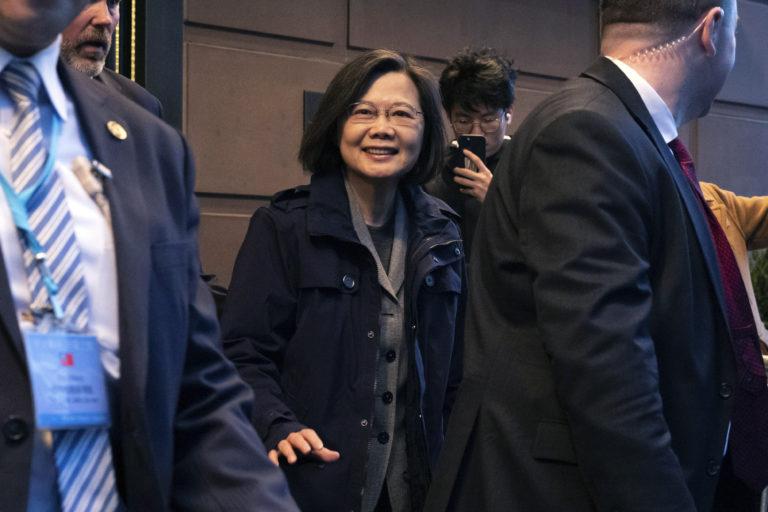
Taiwan’s President Speaks to Her Island’s Safety on U.S. Stop

(Headline USA) Taiwan’s president addressed members of New York’s Taiwanese community in a U.S. stopover on her way to Central America, seeking to rally allies of the self-ruled island in the U.S. and elsewhere as tensions rise with China.

Pro-China demonstrators waving the Chinese flag were out on the streets for President Tsai Ing-wen’s first hours in New York on Wednesday. “Tsai Ing-wen big traitor of China,” the slogan on a sign held by one protester declared.

In a speech Wednesday night to fellow Taiwanese in New York, Tsai thanked the United States for its security assistance and urged Taiwanese unity. “The safer Taiwan is, the safer the world will be,” she said.

She pledged Taiwan would work with its democratic partners to remain on the path of democracy.

Tsai arrived in New York on Wednesday and was expected to spend Thursday in closed events in the city.

While Taiwan is carefully calibrating Tsai’s stops in the United States and forgoing official meetings with senior U.S. leaders in Washington in an effort to limit the scale of China’s response, China is focusing on an expected meeting next week between Tsai and House Speaker Kevin McCarthy, R-Calif.

It would be one of the highest-level in-person sessions for a Taiwanese leader on what that government calls “transits” through the United States.

Officials did make not public advance details of Tsai’s schedule for her stops in the United States, underscoring the sensitivity of her travel here.

On Thursday, Chinese Foreign Ministry spokesperson Mao Ning restated China’s furious objections to any interactions between Tsai and U.S. officials.

“China firmly opposes any form of official interaction between the U.S. and Taiwan,” Mao told reporters at a daily briefing in Beijing. “China will continue to closely follow the situation and resolutely safeguard our sovereignty and territorial integrity.”

A senior Chinese diplomat in Washington, embassy charge d’affaires Xu Xueyuan, pointed to the anticipated meeting between Tsai and the U.S. House speaker as one that would have significant repercussions overall and a “serious, serious, serious” impact on U.S.–China relations.

Neither Taiwan nor McCarthy, R-Calif., has publicly confirmed any in-person get-together during Tsai’s travel. Analysts have framed a session between the two outside Washington as possibly less provocative than a trip by McCarthy to Taiwan, which he has said he also intends to do.

Beijing responded to a visit by then-House Speaker Nancy Pelosi, D-Calif., last August by launching missiles, deploying warships across the median line of the Taiwan Strait and simulating a blockade of the island.

China also temporarily suspended dialogue with the U.S. on climate and other major issues and restricted military-to-military communication with the Pentagon.

The United States broke off official ties with Taiwan in 1979, when it formally established diplomatic relations with China. The United States nonetheless remains the island’s chief source of military hardware and cooperation.

U.S. law requires Washington to treat all threats to the island as matters of “grave concern” but does not explicitly say whether the U.S. would commit troops.

Sen. Robert Menendez, D-N.J., chairman of the Senate Foreign Relations Committee, said he hopes any U.S. officials meeting unofficially with the Taiwanese president convey that American support for Taiwan is “strong and unequivocal.”

Tsai has made six previous trips through the U.S. during her presidency, meeting with members of Congress and members of the Taiwanese diaspora. Administration officials are underscoring that her trip is in line with what she and her predecessors have done in the past.

Tsai’s “transit is consistent with our longstanding unofficial relationship with Taiwan and is consistent with the United States’ one-China policy, which remains unchanged,” White House national security spokesman John Kirby told reporters.

“The People’s Republic of China should not use this transit as a pretext to step up any aggressive activity around the Taiwan Strait,” Kirby said. “The United States and China have differences when it comes to Taiwan. But we have managed those differences for more than 40 years.”

Tsai told reporters before boarding her plane to the United States that “external pressure will not obstruct our resolution to engage with the world.”

Tsai is expected to meet with the American Institute in Taiwan chair, Laura Rosenberger. AIT is the U.S. government-run nonprofit that carries out unofficial relations with Taiwan.

Tsai’s stops in Central America are expected to shore up Taiwan’s partnerships there, after Honduras this month switched its diplomatic relations from Taiwan to China.

Tsai accused China of using “dollar diplomacy” to lure away Honduras. Just 13 countries now officially recognize Taiwan.

Republican Rep. Mike Gallagher of Wisconsin, the chairman of the House Select Committee on China, said the visit is a chance for Tsai “to convey to the Congress how important the partnership between the U.S. and Taiwan is and what’s necessary to preserve peace and stability across the Taiwan Strait.”

Tensions between Washington and Beijing have grown as China under President Xi Jinping seeks to expand its regional and global influence.

Passage of what the U.S. said was a Chinese spy balloon across the U.S. this winter heightened Americans’ sense of challenge from China. China claimed it was a research balloon that was blown off course.

Adapted from reporting by the Associated Press

Dems, GOP Both Call for Regulation of Fast-Evolving Artificial Intelligence

(Jacob Bruns, Headline USA) In a rare bipartisan moment, Republicans and Democrats agreed that in some measure the federal government must manage the development of artificial intelligence.

The news comes in the wake of a report from AI industry leaders, who called for the federal government to halt software development for six months, according to Fox News.

The letter they penned, signed by Elon Musk and Apple co-founder Steve Wozniak, suggested that  “AI systems with human-competitive intelligence can pose profound risks to society … and should be planned for and managed with commensurate care. … Unfortunately, this level of planning and management is not happening.”

In order to address the concerns, Sen. Mike Rounds, R-S.D., leader of the Senate’s AI Caucus, suggested that AI creators–and creations–should be subjected to the same rules as any other field.

“I think what you have to do is, to identify what is not allowed in terms of ethics and illegal activities, whether it is AI or not – you impose on AI activities the same level of ethics and privacy that you do for other competencies today,” he said.

Sen. Gary Peters, D-Mich., Homeland Security and Government Affairs Committee chair, said he plans to continue to investigate the developing technology.

“I intend to have a series of hearings in Homeland Security and Government Affairs taking up AI and what we should be thinking about,” Peters said.

Peters and Rounds were joined by Sen. Michael Bennet, D-Colo., who agreed that some sort of oversight will likely be necessary.

“I think we do have a role to play,” he said of Congress’ role in managing AI, but stressed that technology developers will have to share that responsibility.

“In the long run, I think what we could do is set up, you know, an agency here. They can negotiate on behalf of the American people, so we can actually have a negotiation about privacy. In the near term, I think it’s going to be important for tech to police itself.”

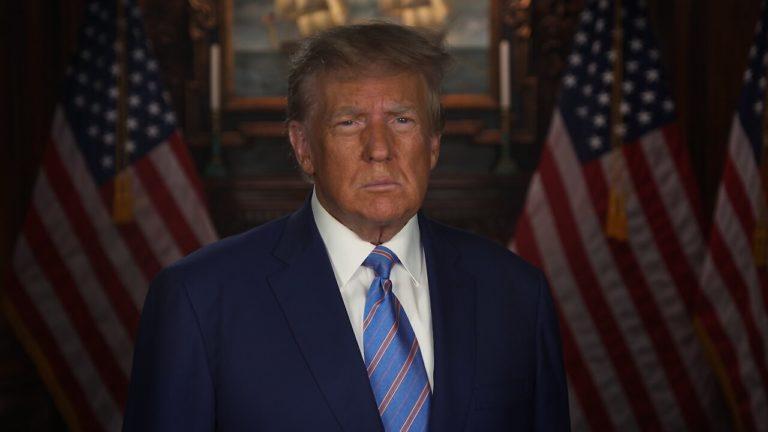
Trump Campaign Leans In on Made-for-Social-Media Videos

(Headline USA) As Donald Trump’s 2024 presidential campaign heats up, his team is quietly leaning into a strategy: releasing made-for-social media videos reacting to the news and outlining his agenda for a possible second term.

The videos, posted via the pro-freedom video streaming site Rumble, feature the former president speaking directly to camera on topics ranging from Ukraine and “saving” the suburbs to dismantling the “deep state.”

They are often laced with his familiar rhetoric. But his team sees them as a tool to bypass the traditional news media and speak directly to supporters, and as part of a broader effort to steer Trump toward policy instead of his own personal grievances.

“It certainly lays down a marker for President Trump and the campaign on very specific policy prescriptions,” Trump campaign spokesman Steven Cheung said.

“No campaign has done it thus far, and it sort of harkens back to 2016 where President Trump was pushing out policies left and right,” Cheung added. “We want to put a focus on policy and do it differently from a run-of-the mill campaign.”

On Wednesday afternoon alone, Trump posted half a dozen videos on his Truth Social site, including several blasting Florida Gov. Ron DeSantis, who is seen as Trump’s most serious potential rival for the Republican presidential nomination.

In one video, Trump thanked supporters for attending his recent Texas rally and asked them to “sign up, donate and volunteer for our campaign.”

In another video, he lashed out at the federal and state prosecutors who have been investigating his conduct. “Election interference through prosecutors is the new ballot stuffing for the Democrat Party,” Trump charged.

The made-for-internet videos are typically released on Trump’s site between a barrage of all-capital-letter missives and flattering articles from conservative sites, though some have been previewed by media outlets.

Those have featured Trump laying out policy plans on topics ranging from crime and immigration to inflation.

He has envisioned flying cars in futuristic cities and has pledged to impose tariffs on most foreign goods, increase penalties on minors who commit crimes and rid the Pentagon of “warmongers.”

There are more to come: Trump filmed 27 in a recent session, underscoring the campaign’s embrace of the format.

The videos do not always garner mainstream media attention. But they often receive several hundred thousand views on platforms such as Rumble and Twitter.

Trump allies say the videos were introduced at a critical time for the campaign, when it was struggling after a lackluster launch and a disappointing midterm election outcome in 2022 in which Trump was blamed for Republicans’ failures to make expected gains.

The first video was released the same day as a baffling digital trading card announcement and after Trump’s controversial dinner with rapper Kanye West and right-wing pundit Nick Fuentes. At the time, even people close to Trump were publicly voicing doubts about whether he was serious about going through with another campaign.

The videos, they argued, helped to change the narrative by demonstrating Trump had plans for a second term and was running not just to try to stave off indictment or because of his lingering anger over the disputed 2020 election.

“These policy videos have been largely responsible for repositioning his candidacy for the better,” said Andy Surabian, a Republican strategist and close adviser to Trump’s son, Donald Trump Jr.

“And it happened slowly and it happened under the radar,” Surabian added. “They didn’t get tons of mainstream media attention, but they served as a constant reminder to GOP primary voters” that the former president “has a serious forward-looking policy vision for 2024.”

They also developed from a tacit acknowledgement that Trump was receiving less media attention, both from Fox News, as it increasingly embraced DeSantis, and other cable outlets that had once eagerly aired Trump’s rallies live and allowed him to call in for hours of interviews.

“This is one way to bypass them,” Cheung said. “We all know digital video and social media is one way to do that—going directly to the people.”

The series of campaign videos is part of a larger focus on policy by Trump that has often been overshadowed by his more incendiary off-the-cuff comments.

During an early March speech at the Conservative Political Action Conference, for instance, Trump described the 2024 race in apocalyptical terms. “In 2016, I declared, ‘I am your voice.’ Today I add: I am your warrior. I am your justice. And for those who have been wronged and betrayed, I am your retribution,” he said.

But Trump also spent much of that speech outlining his priorities for a second term, from new crackdowns on immigration to creating tent cities for the homeless and those addicted to drugs.

The videos are typically filmed in sessions once or twice a week in a room adjacent to the central “living room” space at Mar-a-Lago, his Florida estate.

After the first video received a better-than-expected reception, the campaign realized there was an appetite for policy content and that the format gave it better traction than traditional news releases.

Some videos received widespread attention. That was the case with his plan for a “quantum leap in the American standard of living,” with new futuristic cities built on federal land, investments in vertical takeoff and landing vehicles, and “baby bonuses” to launch a new “baby boom.”

“I think they’ve been very successful,” Trump said of the videos during an appearance on the conservative Just the News last month. He credited them for his recent polling bump.

Adapted from reporting by the Associated Press

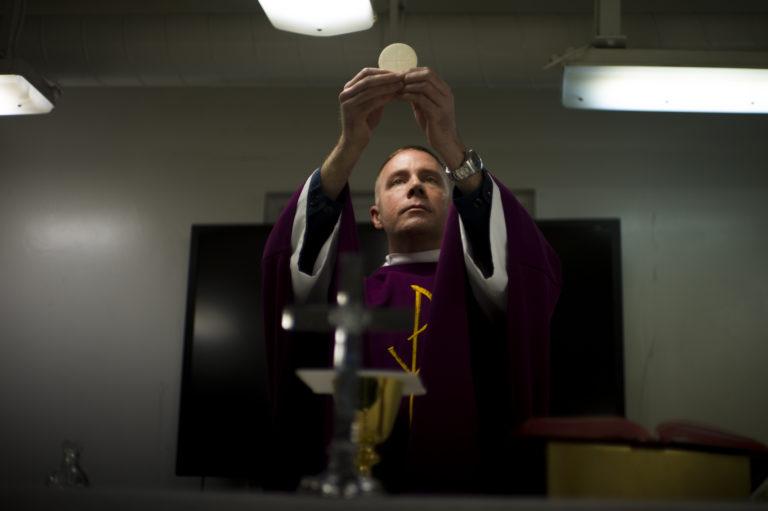
Navy Deploys More Chaplains for Suicide Prevention

(Headline USA) On Navy ships docked at a vast base, hundreds of sailors in below-deck mazes of windowless passageways perform intense, often monotonous manual labor.

It’s necessary work before a ship deploys, but hard to adjust to for many already challenged by the stresses plaguing young adults nationwide.

Growing mental health distress in the ranks carries such grave implications that the U.S. chief of naval operations, Adm. Michael Gilday, answered “suicides” when asked earlier this year what in the security environment kept him up at night.

One recently embraced prevention strategy is to deploy chaplains as regular members of the crew on more ships. The goal is for the clergy to connect with sailors, believers and non-believers alike, in complete confidentiality—something that has allowed several to talk sailors out of suicidal crises.

“That makes us accessible as a relief valve,” said Capt. David Thames, an Episcopal priest who’s responsible for chaplains for the Navy’s surface fleet in the Atlantic, covering dozens of ships from the East Coast to Bahrain.

The families of two young men who killed themselves in Norfolk, Va.—home port of the U.S. Navy’s Fleet Forces Command—said chaplains could be effective as part of a larger effort to facilitate access to mental health care without stigma or retaliation.

But they also insist on accountability and a chain of command committed to eliminating bullying and engaging younger generations.

“A chaplain could help, but it wouldn’t matter if you don’t empower them,” said Patrick Caserta, a former Navy recruiter. His son Brandon was 21 when he killed himself in 2018, after struggling with depression and being “told to suck it up and go back to work.”

Mental-health problems, especially among enlisted men under 29, mirror concerns in schools and colleges, which are also increasingly tapping campus ministry for counseling. The isolation of the COVID-19 pandemic has exacerbated depression and anxiety for many.

But chaplains, civilian counselors, families of suicide victims, and sailors from commodores to the newly enlisted say these struggles pose unique challenges and security implications in the military, where suicides have risen for most of the past decade and took the lives of 519 service members in 2021, per the latest Department of Defense data.

“Adjustment disorder” is the most common mental health diagnosis among sailors, Gilday said Wednesday at a budget hearing of the House Appropriations Committee’s defense subcommittee.

He asked to invest in chaplains and others onboard who can help “separate life stress from mental illness” and get sailors “at the tactical edge” the right care.

“Mental health permeates every aspect of our operations,” Capt. Blair Guy, commodore for one of the destroyer squadrons based in Norfolk, said via email. “Enhancing spiritual readiness enhances operations, it is not an either or discussion.”

His squadron’s lead chaplain, Lt. Cmdr. Madison Carter, is working on recruiting others for the three ships still without permanent chaplains.

In the next two years, leaders hope to have 47 chaplains on ships based in Norfolk, up from 37 today. Previously, chaplains—who are both naval officers and clergy from various denominations—were routinely deployed only on the largest aircraft carriers that have up to 5,000 personnel.

Carter, a Baptist pastor, said most of his talks with sailors involve not faith but life struggles that can make them feel unfulfilled and lose focus.

“How do I make sure that you have mind, body and soul all locked in?” is the question that drives his mission.

The very real prospect of killing or being killed in combat provokes “God-sized questions,” in Thames’ words. He joined the Navy after 9/11 and served three tours in Iraq and Afghanistan.

Sailors can carry the routine angst of teens and young adults, from political polarization to breakups to broken homes, which some enlist to escape.

But onboard, disconnected from their real and virtual networks, they lack the usual coping mechanisms, said Jochebed Swilley, a civilian social worker who collaborates with chaplains and medical staff aboard the USS Bataan, an amphibious assault ship.

Most communications are off-limits at sea for security—lest a Russian frigate show up while you’re texting mom, Thames said he explains to digital-native sailors.

“Eighteen to 21-year-olds don’t know life without smartphones,” said Kayla Arestivo, a counselor and advocate for service members and veterans whose nonprofit serves more than 100 of them each week on her horse farm near Norfolk. “If you remove a sense of connection, mental health plummets.”

Chief Legalman Florian Morrison, who’s served on the Bataan for more than two years tackling mental-health cases at the ship’s legal office and as a lay leader for other Christian sailors, said faith is what helped him “re-center” after losing three shipmates to suicide.

“It can be overwhelming… if you feel alone and you’ve nobody to reach out to,” Morrison said in the chapel set up in the ship’s bow. “You’ve got to catch it before you start going down that path. A streamlined pathway to mental health would help.”

Petty Officer 3rd Class Benjamin Dumas, 21, who’s served for two months on the USS Gravely, a destroyer, hopes to become a nondenominational Christian lay leader to help the ship’s more than 300 other sailors navigate anxiety and depression.

“I’ve seen a lot of brokenness,” he said.

Even docked, ships are far from stress-free, as sailors constantly navigate steep ladderwells and pressurized, hulking doors under the glare of fluorescent lights and the constant hum of machinery.

Berths can be stacked four people high and pieces of gear protrude ubiquitously. Space is so tight and regimented that a challenge across the fleet is where to squeeze in offices for new chaplains, said Cmdr. Hunter Washburn, the Gravely’s commanding officer.

His crew looks forward to getting a permanent chaplain later this year who can interact “eyeball to eyeball, to check in and see how they’re doing,” Washburn said.

A Navy chaplain’s role is akin to a life coach, helping young sailors find their footing as adults in an environment that looks far more different from the civilian world than it did in previous generations.

“A lot haven’t found that grounding yet. They’re looking,” said Lt. Greg Johnson, a Baptist chaplain who joined the Bataan in December. “A lot of people have resiliency. They just don’t know how to tap into it.”

In the Navy, clergy need to engage with people of different or even no faith who might be initially turned off by the cross or other religious symbols on their uniforms—something that new chaplains need to be ready for if the effort to place more of them on ships is to succeed.

“I want the people who can be uncomfortable and still be the bearers of God’s presence,” Carter said.

Sailors call them “deck-plating chaps”—chaplains striking up a conversation with their shipmates in the mess decks or during night watches, in addition to keeping an open-door policy at all hours.

“They’re accustomed to me making the rounds,” said Thames. “I’m going to find them when they’re eating meals, or it’s 3 a.m. and we’re making a high-risk transit through Hormuz,” a geopolitically crucial strait in the Middle East.

Lt. Cmdr. Nathan Rice, a Pentecostal chaplain serving a destroyer squadron at Norfolk, estimates he did 7,000 hours of counseling over 12 years. Long lines of sailors waiting to talk often formed outside his door.

“They’re grinding on a ship or serving food on a mess line, that’s not what they expected. So we help to find their meaning and purpose,” Rice said. “When their life is not going the way they think it should be going, I’ll be blunt and ask, ‘Why haven’t you killed yourself?’”

Focusing on the answers—the “anchors” to the sailors’ will to survive—has helped Rice talk some down from the ledge, including one sailor who knocked on his door crying that he wanted to live and a corpsman who, while discussing suicide dreams, suddenly cocked his weapon and told Rice, “I could do it right now.”

Lt. Cmdr. Ben Garrett has also diffused several suicide situations in the more than a decade he’s been a Catholic chaplain, for the past eight months on the Bataan, which when underway carries 1,000 sailors, 1,600 Marines and three other chaplains. But last fall, he officiated the memorial for a suicide victim.

“There were sailors in the rafters,” he recalled. “It affects the whole crew.”

Most profoundly, suicide impacts surviving families. Kody Decker was 22 and a new father when he killed himself at a maintenance facility in Norfolk, where he was transferred after struggling with depression on the Bataan, according to his father, Robert Decker.

“He wanted to give to his country,” the father said at his home a dozen miles from the base. Pictures of Kody, his older brother and their grandfather—all in their Navy uniforms—rest on the mantelpiece next to the folded flag from Kody’s funeral.

Robert Decker, a high school teacher and football coach, believes Kody might still be alive if he had better access to mental health care instead of being put on limited duty and deprived of his sense of purpose while assigned menial tasks.

He’s not sure if talking to a chaplain would have made a difference with Kody, though speedy implementation of the Brandon Act might have. The bill, named after the Casertas’ son, aims to improve the process for mental health evaluations for service members.

But Decker hasn’t given up on either the Navy or God.

“My whole fight is about not having other families like us,” he said as a tear rolled down his cheek. “I pray to God every night, for help, for healing, for strength. I’m not a quitter. But it’s hard.”

Adapted from reporting by the Associated Press

Garland Caught in Lie over DOJ’s Refusal to Arrest SCOTUS Protesters

(Jacob Bruns, Headline USA) Attorney General Merrick Garland was caught in a lie over his Department of Justice’s refusal to arrest protesters who illegally rioted outside the homes of Supreme Court justices. 

Sen. Katie Britt, R-Ala., revealed segments from a DOJ training slideshow given to her by a “whistleblower in DOJ who was concerned about the attorney general’s misleading testimony before the Judiciary Committee,” the Daily Signal reported.

According to the slides, federal marshals should not prosecute “unless absolutely necessary, criminal enforcement actions involving the protest or protestors, particularly on public space.”

The slides even comment directly on the situation outside the homes of the several Supreme Court Justices, noting that federal officials should pass off the responsibility to local courts.

“Making arrests and initiating prosecutions is not the goal of the USMS presence at SCOTUS residences,” the slides instructed. “Enforcement actions that involve both federal and state/local crimes, particularly those that involve public space, should be conducted by state and local authorities, if possible.”

It is a federal crime according to 18 U.S.C. § 1507, Garland has admitted, to protest outside a judge’s home with the intent of influencing that judge.

Britt noted that the DOJ actively discouraged U.S. Marshals from arresting protesters because it might be “counterproductive” to arrest people that the DOJ was determined to “not charge and prosecute.”

The Senator also suggested that–per the instructions of the slideshow–nobody associated with the protests has been prosecuted.

“Not a single person has been prosecuted for illegally harassing Supreme Court justices outside of their homes,” she said. “The reason is crystal clear: The Department of Justice has willfully chosen not to enforce federal law.”

Garland, however, despite his previous admissions, has argued that arrests might make cause protesters to turn more violent.

“Decisions have to be made on the ground about what is the best way to protect those lives,” Garland said.

As a result of his lack of action, Republicans in Congress have gone so far as to call for Garland’s impeachment.

“That’ll be a decision that will be made by the entire conference,” said Rep. Jim Jordan, R-Ohio before last November’s midterm elections.