Chicagoans Learn Nothing, Replace One Extreme Leftist Mayor w/ Another

(Headline USA) For years, politics in the Windy City was widely known to have been dominated by a corrupt, Democrat machine—led oftentimes by the dynastic Daley family. 

But for its second mayoral cycle in a row, it seems racial identity politics has overtaken even that, ushering in yet another far-left, African–American outsider candidate whose rhetoric overshadowed his experience as a municipal leader.

In a city reeling from the failed stewardship of current diva Mayor Lori Lightfoot, that dynamic is unlikely to shift substantially under Brandon Johnson, a union organizer and former teacher.

Johnson was elected as Chicago’s next mayor Tuesday in a major victory for the Democratic Party’s progressive wing as the heavily blue city grapples with high crime and financial challenges.

Johnson, a Cook County commissioner endorsed by the Chicago Teachers Union, won a close race over former Chicago schools CEO Paul Vallas, who was backed by the police union. Johnson, 47, will succeed Lightfoot, the first black woman and first openly gay person to be the city’s mayor.

Lightfoot became the first Chicago mayor in 40 years to lose her reelection bid when she finished third in a crowded February contest.

Johnson’s victory in the nation’s third-largest city capped a remarkable trajectory for a candidate who was little known when he entered the race last year.

He climbed to the top of the field with organizing and financial help from the politically influential Chicago Teachers Union and high-profile endorsements from progressive Sens. Bernie Sanders and Elizabeth Warren. Sanders appeared at a rally for Johnson in the final days of the race.

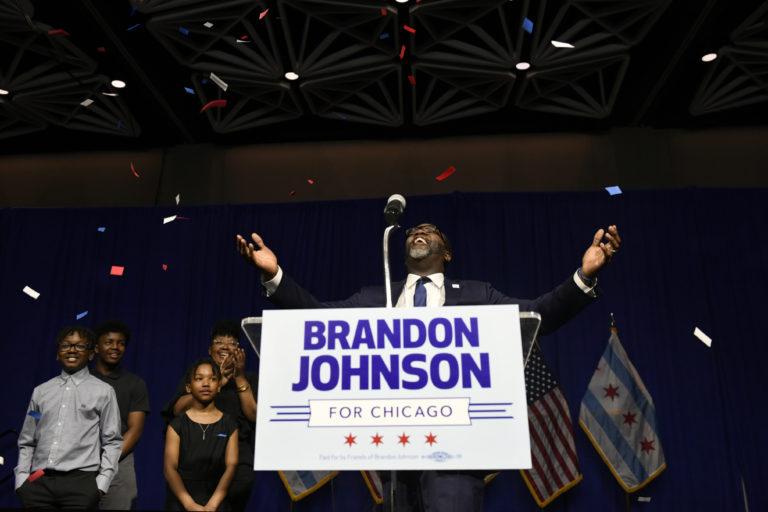
Taking the stage Tuesday night for his victory speech, a jubilant Johnson thanked his supporters for helping usher in “a new chapter in the history of our city.”

He promised that under his administration, the city would look out for everyone, regardless of how much money they have, whom they love or where they come from.

“Tonight is the beginning of a Chicago that truly invests in all of its people,” Johnson said.

Johnson recalled growing up in a poor family, teaching at a school in Cabrini Green, a notorious former public housing complex, and shielding his own young kids from gunfire in their West Side neighborhood.

He referenced civil rights leaders Martin Luther King Jr. and the Rev. Jesse Jackson and called his victory a continuation of their legacies. He also noted that he was speaking on the anniversary of King’s assassination.

“Today the dream is alive,” Johnson said, “and so today we celebrate the revival and the resurrection of the city of Chicago.”

It was a momentous win for progressive organizations such as the teachers union, with Johnson winning the highest office of any active teachers union member in recent history, leaders say. For both progressives and the party’s more moderate leftist wing, the Chicago race was seen as a test of organizing power and messaging.

Johnson’s win also comes as groups such as Our Revolution, a powerful progressive advocacy organization, push to win more offices in local and state office, including in upcoming mayoral elections in Philadelphia and elsewhere.

Vallas, speaking to his own supporters Tuesday night, said that he had called Johnson and that he expected him to be the next mayor. Some in the crowd seemed to jeer the news, but Vallas urged them to put aside differences and support the next mayor in “the daunting work ahead.”

“This campaign that I ran to bring the city together would not be a campaign that fulfills my ambitions if this election is going to divide us,” Vallas said.

In a statement, Lightfoot also congratulated Johnson and said her administration will collaborate with his team during the transition.

Johnson and Vallas were the top two vote-getters in the all-Democrat but officially nonpartisan February race, which moved to the runoff because no candidate received over 50%.

On Tuesday, Johnson took many of the predominantly black southern and western areas where Lightfoot won in February, along with the northern neighborhoods where he was the top-vote getter back then, according to precinct-level results released by election officials. Vallas did well in the northwest and southwest areas that are home to large numbers of city employees, just as he did in February.

The contest surfaced longstanding tensions among Democrats, with Johnson and his supporters blasting Vallas—who was endorsed by Sen. Dick Durbin of Illinois, the chamber’s second-ranking Democrat—as too conservative and a Republican in disguise.

Both candidates have deep roots in the Democratic Party, though with vastly different backgrounds and views.

After teaching middle and high school, Johnson helped mobilize teachers, including during a historic 2012 strike through which the Chicago Teachers Union increased its organizing muscle and influence in city politics. That has included fighting for non-classroom issues, such as housing and mental health care.

Vallas, who finished first in the February contest, was the only white candidate in that nine-person field. A former Chicago budget director, he later led schools in Chicago, New Orleans, Philadelphia and Bridgeport, Connecticut.

Among the biggest disputes between Johnson and Vallas was how to address crime. Like many U.S. cities, Chicago saw violent crime increase during the COVID-19 pandemic, which coincided with racial unrest driven by the George Floyd riots and resulting “defund the police” movement.

Already drastically elevated prior to that series of events, crime a 25-year high of 797 homicides in 2021, though the number decreased last year and the city has a lower murder rate than others in the Midwest, such as St. Louis.

Vallas, 69, said he would hire hundreds more police officers, while Johnson said he didn’t plan to cut the number of officers, but that the current system of policing isn’t working.

Johnson was forced to defend past statements expressing support for defunding police—something he insisted he would not do as mayor.

But Johnson argued that instead of investing more in policing and incarceration, the city should focus on mental health treatment, affordable housing for all and jobs for youth.

He has proposed a plan he says will raise $800 million by taxing “ultrarich” individuals and businesses, including a per-employee “head tax” on employers and an additional tax on hotel room stays.

That plan is no sure thing, as some members of the City Council and the state Legislature—whose support would be needed—already have expressed opposition.

Resident Chema Fernandez, 25, voted for Johnson as an opportunity to move on from what he described as “the politics of old.”

He said he saw Vallas as being in line with previous mayors such as Rahm Emanuel, Lightfoot and Richard M. Daley, who haven’t worked out great for places like his neighborhood on the southwest side, which has seen decades of disinvestment.

“I think we need to give the opportunity for policies that may actually change some of our conditions,” Fernandez said.

Adapted from reporting by the Associated Press
Fauci Inks Deal w/ New Italian ‘Anti-Pandemic’ Bio Lab

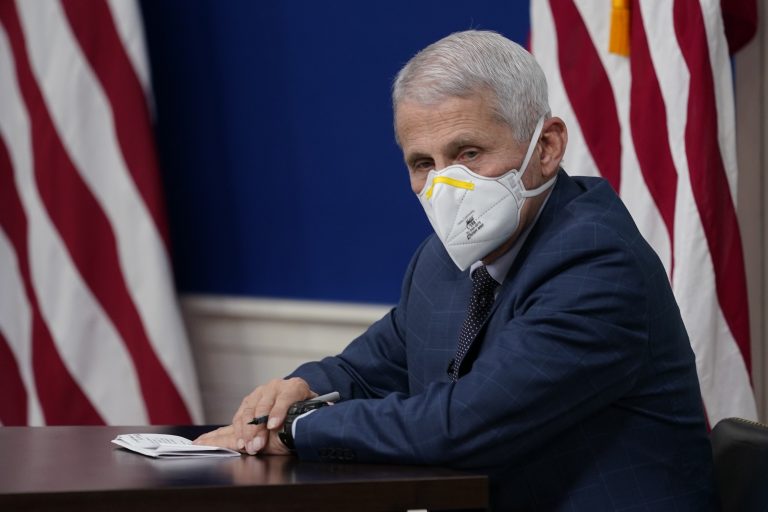
(Mark Pellin, Headline USA) Still dodging public accountability while drawing a hefty government check for his myriad COVID failures, Anthony Fauci has reportedly already landed a new gig tinkering with more viruses, vaccines and possibly another plan-demic.

The mask-mandate monarch has agreed to a consultancy role for a newly created “anti-pandemic” bio lab, which is being funded by the Italian government, The Dossier reported.

“American immunologist Anthony Fauci has agreed to act in an informal capacity as a strategic advisor to Rino Rappuoli, scientific director of the Biotecnopolo biotech hub in Siena, an institution founded by the Ministries of the University, Health, Economy and Industry with the aim of focusing on applied research in biotechnologies and life sciences, the Fondazione Biotecnopolo announced this week,” reported Italy’s ANSA news wire service.

Flying under the innocuous moniker Biotecnopolo, officials described the lab as “an anti-pandemic hub with a particular focus on the development and production of vaccines and monoclonal antibodies for the treatment of emerging epidemic-pandemic pathologies.” The lab has already received copious funding upwards of hundreds of million Euros from Rome.

Fauci came under considerable fire for his links to gain-of-function research through the cutout group EcoHealth Alliance, which ultimately had direct links to China’s Wuhan lab, where a growing amount of evidence indicated the COVID virus originated.

Bio-lab board members gushed praise for Fauci in a press release, informing that his experience would prove “a fundamental step towards making the Biotecnopolo the Italian hub for the research, study and prevention of pandemics.”

Biotecnopolo’s scientific director Rino Rappuoli comes with his own tawdry set of baggage from his work as head of vaccine research and development at GSK, nee Big Pharma’s GlaxoSmithKline, infamous for shelling out a record $3 billion settlement for health-care fraud, The Expose reported.

Rappuoli also holds a professorship at Imperial College, London, whose concocted and widely skewered computer stimulations helped spark COVID madness.

“Last year, Fauci spoke at a conference organized by GSK on the ‘role of vaccines in protecting people and the planet,'” wrote Dossier investigative journalist Jordan Schachtel.

“So Fauci has now linked up with Big Pharma heavyweights and he’s an advisor for a clandestine bio lab project being financed by the Italian government. What could possibly go wrong?”

Legal Experts: Trump Charges Are a Nothingburger w/ No Underlying Crime

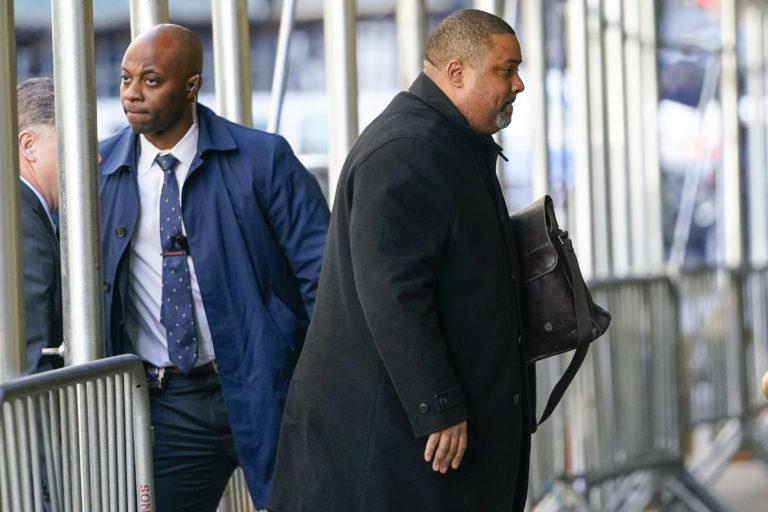
(Mark Pellin, Headline USA) In spite of Manhattan District Attorney Alvin Bragg’s effort to artificially beef-up his politically motivated case by charging President Donald Trump with 34 felony counts, experts noted that there was no legal basis for the desperate overreach.

Trump walked away from the sham arraignment Tuesday with a public-relations knockout, and his legal team already has set about dismantling what many leading legal analysts called a dismal case that stood little chance of success.

One glaring shortcoming was the lack of an apparent underlying crime that Bragg had used to bootstrap already suspect misdemeanors charges for falsifying business records to bury alleged affairs in an attempt to illegally influence the 2016 election.

“I’ve reviewed the Trump indictment,” wrote Judicial Watch president Tom Fitton. “There’s nothing there. Trump and the American people have been abused.”

House Speaker Kevin McCarthy, R-Calif., flipped Bragg’s election interference claims on the embattled prosecutor.

“Alvin Bragg is attempting to interfere in our democratic process by invoking federal law to bring politicized charges against President Trump, admittedly using federal funds, while at the same time arguing that the peoples’ representatives in Congress lack jurisdiction to investigate this farce,” McCarthy wrote. “Not so. Bragg’s weaponization of the federal justice process will be held accountable by Congress.”

“The indictment is legally insufficient on its face,” wrote attorney Robert Barnes.

“New York state law does not make it a crime to influence an election,” Barnes added. “Federal law does not make it a crime either. Maybe that’s why no law is actually cited in the indictment. Nor are the facts sufficient.”

Tacopina was so disdainful of Bragg’s weak sauce case that he had already announced on Monday his plans to file “a host of” motions to dismiss “based on selective prosecution and prosecutorial misconduct,” the Epoch Times reported.

The attorney also said once the indictment was reviewed, more motions were likely, including a venue change or statute of limitations considerations.

Trump also scored an added bonus from the high-profile drama that unfolded inside the Lower Manhattan courtroom and around the country, which he was quick to spin to his advantage.

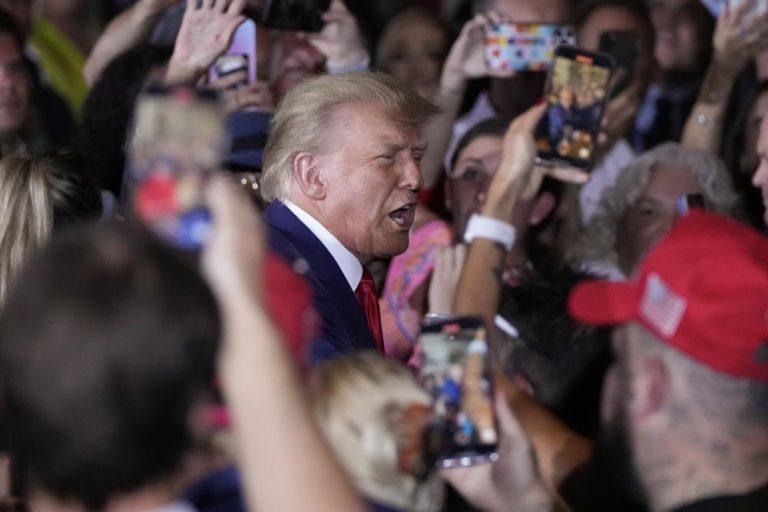
Images of Trump waving to crowds of supporters before his court appearance, along with photos of Trump fans lining streets, have already become legend.

The stone-cold stare Trump delivered entering court was from a leader who could stand down a lunatic like Putin. Biden has only been able to mange a stare with that intensity after scoring a sugar rush from Jeni’s chocolate chip and seeing a dead congresswoman standing in the way of his next hair-sniff fix.

“The hearing was shocking to many in that they had no surprises,’ and therefore, no case,” Trump posted on Truth Social while he was en route to Mar-a-Lago after being arraigned. “Virtually every legal pundit has said that there is no case here. There was nothing done illegally!”

Conservative talkshow host Dan Bongino, a former NYPD officer and U.S. Secret Service agent, tweeted that “1% of me thought Alvin Bragg couldn’t be this dumb but I read the indictment & it was even worse than we thought.”

Bragg’s case was so demonstrably limp that even fake news regime collaborators were forced into conceding the obvious.

On top of the disappointment that many on the Left felt from Bragg’s dubious case, they faced another setback in a separate defamation case involving Stormy Daniels, the porn star at the heart of the alleged hush-money case.

The U.S. Court of Appeals for the Ninth Circuit ruled on Tuesday that Daniels would be required to pay Trump $122,000 in additional attorney fees for a failed defamation lawsuit.

“Congratulations to President Trump on this final attorney fee victory in his favor this morning,” tweeted Harmeet Dillon, one of his attorneys in the case. “Collectively, our firm obtained over $600,000 in attorney fee awards in his favor in the meritless litigation initiated by Stormy Daniels.”

New Study: Vax Fanaticism Shaves 25 Years Off Life Expectancy

(Mark Pellin, Headline USA) A new study using data from the Centers for Disease Control and Prevention and the Cleveland Clinic revealed that people who have been fully vaccinated with COVID jabs could lose 25 years from their life expectancy.

The bombshell study, compiled by renowned insurance analyst Josh Stirling, was released in the wake of a stunning February report from the UK government that showed “fully vaccinated” people accounted for a staggering 92% of COVID deaths last year.

In the recently-released report, Stirling compiled infection rates over nearly three months among 6,199 Cleveland Clinic employees who received the bivalent vaccine when it was offered in September 2022. Some of the employees chose to receive a single dose, others received up to three jabs.

The infection rates Stirling tracked from the Cleveland Clinic were combined with CDC All-Cause Mortality data that showed each vaccine dose increased mortality by 7% in 2022, compared to mortality in 2021. Stirling, who founded the Insurance Collaboration to Save Lives, concluded that the “damage to health caused by each vaccine dose does not lessen over time. It continues indefinitely,” reported The Expose.

In that vein, the study revealed that the more jabs of the original vaccine a person received, the likelihood of catching COVID increased proportionally. Similar data sets were completed in varying regions across the country with disturbing results.

“That’s simply to say that the more doses on average that you have within a region in the United States, the bigger increase in mortality that region has had in 2022 when compared to 2021,” Stirling said in a recent interview. 

“It exactly confirms the UK data… which is really unfortunate because, obviously, hundreds of millions of us have either personally or with our friends and families, all society, now have to deal with the consequences.”

Those consequences, as relayed by Stirling, are dire.

“If you’re over the age of 50, and you took all 5 doses, that’d be a 35% increase,” Stirling said.

Likewise, based on an average life expectancy of 80 for a 30-year-old male, one dose of the vaccine would knock off 13 years, two jabs would take off 18 years, with 20-year and 23-year drops, respectively, for three and four jabs. A full regime of five jabs would shave off 24 years. If a person remained unvaccinated, they were no more likely to die in 2022 than the previous year.

The study showed that someone who’s had four or five COVID jabs and is 30 years old today can expect to live to 55 at the oldest.

Stirling stressed that it’s critical to use the new data and information to examine “the long-term health consequences relating to these” vaccine issues.

“I’m obviously hopeful that we can, as a society, start to focus on those,” Stirling said. “Because that’s the opportunity to try to solve this problem, is to focus on health.”

CIA’s Silent Hand Guiding Internet Censorship Efforts, New Report Suggests

(Ken Silva, Headline USA) Billionaire Elon Musk’s purchase of Twitter and subsequent release of internal company documents, known as the Twitter Files, has exposed what critics have termed the “censorship industrial complex”—a shadowy network of government agencies and government-funded organizations.

It turns out, a CIA spook played a major role in establishing this network.

This is according to a new article from Twitter Files reporter Michael Shellenberger, who published a story Monday profiling Renee DiResta, Stanford Internet Observatory’s research manager.

DiResta has already been in the news for scandalous reasons.

Revolver News published a story last May spotlighting her role in an organization called New Knowledge, which orchestrated a disinformation campaign that falsely—and perhaps illegally—accused a Republican candidate for an Alabama senate seat in 2017 of being amplified on social media by a Russian botnet.

Revolver also noted last May that—in the irony of ironies—New Knowledge was actually given a contract by Senate Intelligent Committee to write a major report on how Russian troll farms influence elections.

While New Knowledge’s connections to Democrat operatives was already well known, Shellenberger’s Monday story adds a new wrinkle by showing that the organization also may have been a cutout for the CIA.

“I learned that DiResta had worked for the Central Intelligence Agency,” Shellengerger wrote Monday. “Mike Benz, a former State Department official … had discovered a little-viewed video of her supervisor at the Stanford Internet Observatory, Alex Stamos, mentioning in an off-hand way that DiResta had previously ‘worked for the CIA.’”

Shellengerger also divulged some of his findings on the Joe Rogan Show last Thursday.

This apparently didn’t sit too well with DiResta, who clapped back against Shellenberger’s claims in her own Substack article. DiResta claimed that Shellenberger never asked her about her ties to the CIA, which she downplayed.

“My purported secret-agent double life was an undergraduate student fellowship at CIA, ending in 2004—years prior to Twitter’s founding. I’ve had no affiliation since,” she wrote.

“One of the strangest parts of this situation is that despite being in regular, good-faith contact for two months, Shellenberger — who identifies as a journalist — never asked me about these ‘undisclosed CIA ties’ or ‘millions of censored tweets’ or other accusations he presented as fact.”

However, this is false, according to Shellenberger. The Twitter Files reporter posted receipts Monday showing that he has, in fact, questioned DiResta about her CIA connections.

“In an October 13 email, which she had asked me to send over Whatsapp, that I sent to her, I asked her four questions,” he wrote.

Shellenger said the four questions are: According to recorded remarks by your supervisor at Stanford, Alex Stamos, you have previously ‘worked for the CIA.’ Is that true? What did you do for the CIA? What funding and/or employment and direction have you taken from government agencies?  If you did work with the CIA, and/or other government agencies, activity, why haven’t you mentioned it in your previous biographies and 2018 Senate testimony?

DiResta has not answered any of those questions to date.

Ken Silva is a staff writer at Headline USA. Follow him at twitter.com/jd_cashless.

Pelosi Says Putin ‘Stole’ 2016 Election Because He Feared Hillary

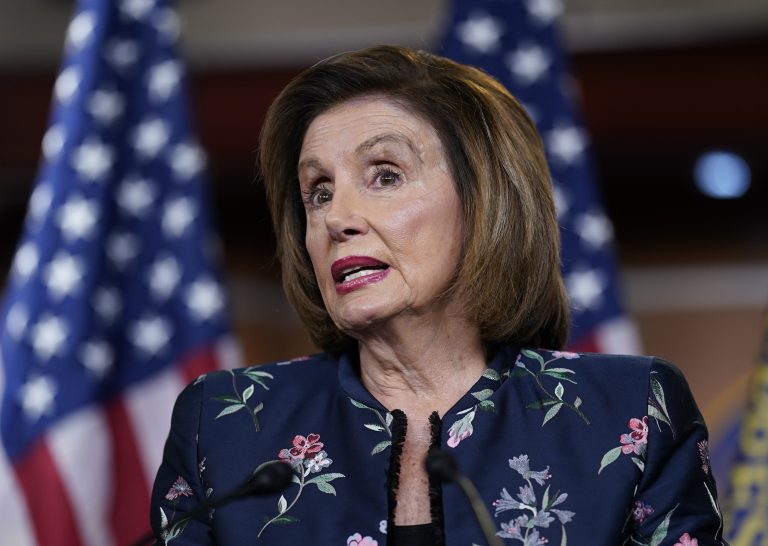
(Dmytro “Henry” Aleksandrov, Headline USA) Failed presidential candidate Hillary Clinton spoke to former House Speaker Nancy Pelosi at a Columbia University event in New York City, where Pelosi reportedly claimed that Russian President Vladimir Putin “interfered” in the 2016 election because he “feared” Clinton.

“Speaker Emerita Nancy Pelosi” joined Clinton, who works at Columbia as the professor of the practice of International and Public Affairs, for a “conversation on global politics, national security and the backsliding of democracy,” according to the Post Millennial.

“It was her clarity and position to President Putin, president, occupant, leader of Russia that made him turn around and ensure in an illegal way—come out against her in her campaign,” Pelosi said.

“[Putin “stole” the election] because Hillary Clinton was the person he feared most in terms of his lack of democracy in Russia. That’s, I think, self-evidence, and thank you for what you have done.”

Pelosi’s claim brought up the already-debunked Russia collusion hoax that was spread after Donald Trump beat Clinton in the 2016 presidential election.

Both Hillary Clinton’s 2016 presidential campaign and the Democratic National Committee were fined by the Federal Election Commission for lying about the funding of the so-called Steele dossier, a document that was made up by Christopher Steele, a former MI6 agent. The dossier was presented as evidence of Trump colluding with Putin and the Kremlin.

Special Counsel Robert Mueller was appointed to investigate the matter and didn’t find any connections between Trump and Russia. He took over after the FBI began its investigation, called Crossfire Hurricane.

In May 2019, Special Counsel John Durham was appointed by then-Attorney General William Barr to investigate the origins of Crossfire Hurricane, the FBI investigation into potential collusion between the Trump campaign and Russia, the Post updated.

Michael Sussmann, a lawyer who was connected to Clinton’s campaign, was accused of lying to the FBI about Trump’s connections with a Russian bank, for which he was indicted but eventually acquitted in 2022.

Bragg Repeatedly Released Violent Criminals While Witch-Hunting Trump

(Dmytro “Henry” Aleksandrov, Headline USA) While Manhattan District Attorney Alvin Bragg and his team try their best to put President Donald Trump behind bars, they reportedly care considerably less about New York City‘s worst criminals still roaming the streets and hurting the people who live in the Big Apple.

Harold Gooding, 53, has rocketed to number one on the NYPD’s list of repeat offenders following his torrent of thefts. Gooding has more than 70 arrests just for theft alone, reported the Daily Mail, which ran down nearly a dozen of the more egregious examples of the Soros-funded Bragg’s track record of releasing violent offenders while he was busy trying to keep his campaign promise to nail Trump.

Michelle Kelley, 41, is a self-described “professional booster” who kept her crimes to petit larceny, which became a non-jail-able offense after the law went into effect in 2020. However, she was finally held on $5,000 bail after her 101st arrest for second-degree assault after she allegedly kicked, bit, scratched and spit on two NYPD officers on July 30.

Career criminal William Rolon who had 30 years of crimes under his belt was charged with first-degree robbery and criminal weapons possession but had the robbery charge dropped to two counts of petit larceny, a misdemeanor, the Mail reported.

“I don’t know if anyone would ever feel lucky standing in front of me in a courtroom, but you might reasonably feel lucky today,” the judge said.

“Based on your record, you would have faced a long period of time in jail if convicted. The newly elected district attorney has new policies. You’re not charged with robbery, You’re charged with a misdemeanor here.”

Jamel Pringle, one of the most prolific criminals in the Big Apple, with 167 arrests on his record, is also not behind bars.

Rodney Johnson, 53, a criminal of 35 years, was given a slap-on-the-wrist punishment — a $1 bail — last week after Bragg’s office knocked down his felony robbery charges to a misdemeanor. Isaac Rodriguez is another criminal who racked up 47 arrests for retail theft and got behind bars on $15,000 bail.

Nolan Gonzalez, a thief who was banned from Macy’s for constantly stealing from the department store, was hit by the police with grand larceny, burglary and criminal possession of the stolen property, but the Manhattan DA reduced the charges and he was released without bail.

Christian Jeffers, 48, a so-called “transgender” who has a criminal record of prostitution, grand larceny, public lewdness, theft of service and drug possession, was arrested in March 2022 on charges of assault, aggravated harassment and menacing as hate crimes and one count of criminal possession of a weapon stemming from a brutal attack on a 29-year-old man.

He was released from prison in June 2021 after serving six years for second-degree robbery.

Trump Torches Bragg, Biden after His Arraignment

(Casey Harper, The Center Square) President Donald Trump called the charges against him unprecedented election interference in a speech Tuesday night from his Mar-a-Lago home, just hours after pleading not guilty to nearly three dozen felony charges during his arraignment in New York City.

“I never thought anything like this could happen in America,” Trump told his supporters at his Florida residence. “The only crime that I have committed is to fearlessly defend our nation from those who seek to destroy it.”

Trump faces 34 charges related to allegations that he paid hush money to adult film star Stormy Daniels through a lawyer seven years ago and covered it up as a legal expense before being elected president. Trump offered his “not guilty” plea during his arraignment before Judge Juan Merchan in Manhattan Criminal Court.

Trump began his speech by pointing to the string of investigations and impediments that Democrats and federal law enforcement threw at him, drawing a comparison between the unfounded accusations like the debunked Russian dossier and the current legal prosecution.

“From the beginning, the Democrats spied on my campaign, remember that?” Trump said. “They attacked me with an onslaught of fraudulent investigations. Russia, Russia Russia. Ukraine… Impeachment hoax number one, impeachment hoax number two. The illegal and unconstitutional raid on Mar-a-Lago right here.”

Trump was impeached twice by the then Democrat-controlled U.S. House during his presidency, but was acquitted by the Republican-controlled Senate both times.

Trump also pointed to media reports that showed federal law enforcement working with social media companies to censor the Hunter Biden laptop story, which Trump said “exposes the Biden family as criminals” and would have swayed the election in his favor.

“And we remember the 51 intelligence agents who said Hunter Biden’s laptop was Russian disinformation,” Trump said, pointing to an open letter signed by those agents making that assertion. “Russian disinformation, remember that? And that was all confirmed strongly by the FBI, when they all knew that it wasn’t Russian disinformation.”

The indictment was unsealed after Tuesday’s arraignment. It alleges Trump falsified business records related to the hush money scheme and can be read in full here.

Trump blasted New York District Attorney Alvin Bragg and Letisha James, attorney general for New York, both of whom promised to go after Trump while on the campaign trail.

We have a Trump-hating judge with a Trump-hating wife whose daughter worked for Kamala Harris and now receives money from the Biden-Harris campaign, and a lot of it,” Trump said.

Trump’s speech hit political notes as well. He attacked President Joe Biden on the Afghanistan withdrawal, the border, the loss of energy independence, rising crime, and more.

Trump surrendered to New York Police before the arraignment after a grand jury voted to indict him last week, the first time a current or former president has been charged with a crime. Trump is also the 2024 Republican frontrunner for president.

During his speech, Trump also blasted the the investigation into his possession of classified documents from his time at president, arguing that he had the power as president to declassify them. He said Biden had classified documents as well from his time in the Obama administration but did not have the power to declassify as vice president.

Another COVID Fail: School Budget Cliffs With Gaping Holes

(Steve Miller, RealClear Wire) New York City’s school system went on a spending spree during the pandemic, thanks to the  $7.5 billion in federal money it received as part of a $189 billion national relief package aimed at addressing education problems incurred by lockdowns and school closures.

Although the funds were nonrecurring, the nation’s largest school district used some of the money for enduring budget items and programs, including hiring 500 social workers, opening new bilingual programs, and expanding summer learning centers.

Now, the district faces a “fiscal cliff,” a situation in which spending creates budgetary needs in the future after a financial windfall is depleted.

“I am … deeply concerned about how the [New York City Department of Education] will sustain many long-term program expansions, which rely heavily on federal relief funds,” Rita Joseph, a New York City Council Member and the chair of the council’s Education Committee, told her colleagues in November.

New York is joined by numerous other school systems that used the temporary funds to beef up staff. Some are already handing out pink slips.

In Stockton, Calif., the district is laying off 19 full-time employees hired with part of the $241 million the school district received in COVID relief. The district acknowledged that some of the money, which funded a total of 163 positions, was misspent.

Seattle schools received $145 million in relief and is handing out pink slips to up to 70 employees as it struggles with enrollment that has dropped 16% since 2020. Relief spending included $1.4 million on “equity work” and “response to racism.”

The district acknowledged its economic mismanagement in a public notice explaining its $131 million deficit: “Enrollment has decreased … while staff has increased.”

The fiscal cliff did not come out of the blue, as districts were warned of the challenges they would face in sustaining longer-term programs after the federal tranche was exhausted.

K-12 education last faced widespread financial trouble in 2009, as the Great Recession prompted government to provide nearly $50 billion in relief to districts, which reacted in a way similar to now. Layoffs and budget problems soon followed hiring and expansion.

“Districts are optimistic that something will happen that will not force them into making hard decisions,” said Chad Aldeman, a school finance pundit and founder of readnotguess.com, a reading instruction website. “They see labor costs as fixed, so they don’t do a good job of scaling up or down. They have a hard time downsizing.”

A recent Rand study found that 77% of school districts used the federal money on exactly what numerous other fiscal hawks cautioned against: beefing up staffing with little regard for the future. “Roughly half of district leaders see a fiscal cliff looming after coronavirus disease (COVID-19) federal aid expires,” Rand researchers reported. The study noted that over three-quarters of public school districts have “increased their number of teaching and non-teaching staff above pre-pandemic levels.”

As in Seattle, districts across the U.S. are realizing that they made a mistake. The jobs of teachers, mid-level administrators, and low-level employees alike are on the chopping block. Also in danger are after-school programs, tutoring, and counseling, all aimed at addressing the damage caused by widespread school closures, typically locked down under strong pressure from teacher unions.

Aldeman added that “politics becomes part of a broader narrative, as some districts think they will be able to sustain this going forward and that they can go to lawmakers and say, ‘We need to keep this going.’”

Molly May, an assistant superintendent in the Eanes school district of Austin, Texas, said the pandemic “exacerbated” the district’s ever-present need for more funding and “the need did not go away.”

“Losing this (federal) funding without additional financial support from the state will create even more difficulties for districts,” she told an Austin newspaper in January. May did not respond to an interview request.

Many educators agree that Elementary and Secondary School Emergency Relief, or ‘ESSER’ funds, were an important stopgap as districts dealt with the effects of school closures and remote teaching.

The Coronavirus Aid, Relief, and Economic Security Act, or CARES, in March 2020 approved $13.2 billion in ESSER funds, which were ramped up twice more: An additional $54.3 billion was approved in December 2020, and another $122 billion in March 2021, for more than $189 billion in total relief.

The federal largesse was unprecedented and came on the heels of a 4.7% public education funding increase to $752 billion in 2019, “the most per pupil in more than a decade,” the U.S. Census Bureau reported.

The ESSER money came with few spending restrictions except for time, as the cash had spending deadlines, which have passed for the first two installments. The deadline for disbursing the third payment is September 2024.

‘Double-Digit Pay Increases in Perpetuity’

“This is the largest federal infusion of money in schools ever, around $4,000 a student,” Jessica Swanson, senior fellow at Georgetown University’s Edunomics Lab, told RealClearInvestigations. While some districts have used the money wisely – for facility upgrades, counseling, and tutoring and pay increases, “other districts have given double-digit pay increases in perpetuity, and these districts will be stuck with high labor costs. Some districts did this even with declining enrollment.”

Public schools saw increased enrollment before the pandemic, but students have fled schools since 2020, with an estimated 1.1 million students lost to home schooling, private schools and other options. The drop hamstrings most districts, which receive per-student funding from states.

While many districts are spending their relief on pandemic-related mitigation, others found less strategic uses for the cash. Regardless of use, many of the programs require future funding.

Among the other school districts nearing the cliff:

In New York City, the alarm was sounded by the Citizen Budget Commission, a fiscal hawk that has served New York City since the 1930s.

“The fiscal cliff is particularly a concern for [the department of education],” the commission said in a May 2021 report, titled “Federal Aid Now, Fiscal Cliffs Later.” The windfall, the group warned, should not be used for new and expanded programs, such as more afterschool programs and additional teachers, which would create a budgetary mess that would include layoffs.

School administrators ignoring the advice held out hope that revenue would increase, a questionable proposition in a district that has lost 90,000 students, nearly 8%, since 2020.

“The focus is often to fill a shortfall this year and worry about everything else the next,” said Ana Champeny, vice president of research at the Citizens Budget Commission. “There were plenty of people who questioned the budget director when these plans were being announced. “

Within months of receiving the first installment of federal aid, then-Mayor Bill DeBlasio spent $3.3 billion of it on a pet project, universal pre-kindergarten, creating a scenario in which the district will have to spend millions a year to sustain the program starting in 2024, when the relief money runs out.

The New York scenario looks set to play out nationally, as districts seek to continue some of the programs that are being introduced through the relief program.

It’s too early to know which programs have been effective, and many districts and states are currently trying to determine what best benefitted students.

“There is a lot of learning now about what is working,” said Austin Estes, the program manager for the Council of Chief State School Officers’‘ COVID relief data project. “I would expect districts to be thinking about continuing investments into those programs into the future.”

Which means more demands for increased education funding.

“There is flexibility in existing funds to support these programs,” said Estes, whose group tracks how state education agencies are spending their portion of ESSER money. But, he added, the education lobby will also try to convince state lawmakers to support more school funding, a longtime political issue.

State education leaders “are taking an interest in ESSER-era innovations and are thinking of continuing them,” Estes said.” A lot of this investment was designed to get schools reopened and help students recover, so just getting students back on track is a win. We don’t know what the education word would look without this pandemic funding.”

PACT Act Will Cost $130B More Than Expected

(Adam Andrzejewski, RealClear Wire) The PACT Act, a new law that expands health care and benefits for veterans exposed to burn pits, Agent Orange and other toxic substances, will cost $130 billion more than expected.

The act faced a contentious battle on Capitol Hill last summer, with veterans camping out on the steps of the Capitol, and Jon Stewart delivering impassioned speeches knocking Republicans for blocking it, according to The Wall Street Journal.

The legislation itself isn’t controversial, with the bill mainly expanding health coverage for veterans who were exposed to toxic burn pits post-9/11.

While the content of the bill saw broad bipartisan support, the method and amount drew some scrutiny from fiscally conservative Republicans, objecting to making it “mandatory spending,” meaning Congress would never vote to reauthorize it. The price tag also drew some concerns.

At the time, the Congressional Budget Office, a nonpartisan nonprofit that estimates the cost of legislation, estimated the bill would cost $667 billion. While the cost was steep, the Senate broadly supported it, and the bill passed 86-11. Now, the CBO has recalculated the total cost, and found that it will likely cost $797 billion — $130 billion more than it originally projected.

The CBO didn’t provide an official explanation for the update. Irrespective of the reason for the update, legislators had the impression this would cost far less when they voted on it.

Accurate cost estimates are vital to informed debate on spending and legislation, and legislators and the public should feel confident the price they’re told a bill will cost is correct.