Two-Year Anniversary of Declining Real Wages for American Workers

(Alfredo Ortiz, RealClear Wire) Last week marked the two-year anniversary of declining real wages for ordinary American workers due to ongoing high inflation. The latest consumer price index showed prices grew 20% faster than wages over the last 12 months.

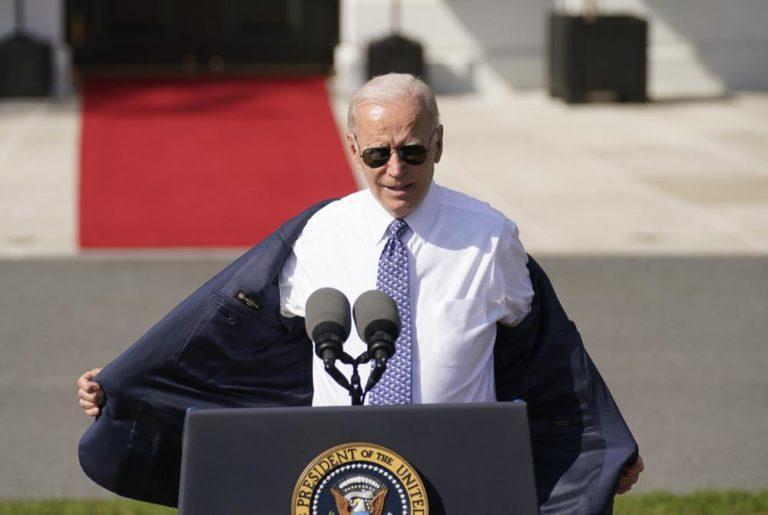
This sad anniversary is the result of President Biden and Congressional Democrats’ reckless spending that has diluted the value of the currency already in existence.

The two-year decline in living standards for ordinary Americans proves once and for all that Democrats are America’s anti-worker party. Their easy fiscal and monetary policy, known as Modern Monetary Theory, has been wholly discredited by this prolonged erosion of the dollar’s value and workers’ quality of life.

Yet still, they demand more massive deficit spending that would put upward pressure on prices. For instance, Biden’s recently announced budget would raise the deficit from $1.4 billion in 2022 to $1.6 trillion in 2023 and $1.8 trillion in 2024. The total deficit would increase by $17 trillion over ten years – more than the entire national debt held by the public before COVID-19.

Democrats refuse to negotiate any spending cuts in return for raising the debt ceiling, accepting the dangerous status quo of around $1 trillion wasted in debt interest payments each year.

While the mainstream media is promoting this month’s slowdown in CPI, they ignore how inflation under Biden’s presidency is approximately 15%. Those on fixed incomes are one-sixth poorer today than when Biden took office. And core inflation actually increased compared to last month, demonstrating the inflation battle is far from won.

The worst may be yet to come. Under Biden’s nose, nations across the globe are rapidly replacing the dollar as their trading currency. One reason the U.S. has been able to print trillions of dollars without even faster inflation is that other countries inherently value the U.S. dollar as the world’s reserve currency. If they no longer need it to conduct their trade, demand for dollars will plummet along with its long-inflated value and American living standards. This could turn today’s high inflation hyper.

This threat is growing along with the economies of the BRICS nations, whose combined GDPs recently overtook the G7 nations’ for the first time.

Inflation also remains high enough to continue posing a severe threat to banks whose balance sheets are full of low-interest mortgage and Treasury debt. Who wants a 3% mortgage bond in an inflationary environment around twice as high? This dynamic threatens another Silicon Valley Bank-style run.

According to economist Peter Schiff, banks are rapidly selling their mortgage bonds. Sound familiar?

Small businesses face the one-two punch of elevated inflation and banks that have stopped lending to preserve liquidity. Small enterprises generally operate on thin profit margins that high inflation erodes. Small businesses can’t simply raise their prices in response because their consumers are price sensitive. There’s only so much consumers are willing to pay for drycleaning and pizzas.

“Small businesses are struggling… [to] get the funds to grow, to hire, to buy the equipment that they need,” said Kryson Bratton, owner of Piper Whitney Construction in Houston, who can’t get credit to purchase a new tractor. According to the Federal Reserve, U.S. bank lending fell by the most on record at the end of March.

The only way out of this unstable economic environment is to end the fiscal madness and empower small businesses through pro-growth policies like those in Job Creators Network’s American Small Business Prosperity Plan.

This may not be as exciting as the culture wars, but it has a much bigger impact on the lives of ordinary Americans – as demonstrated by Democrats’ destruction of Americans’ growing living standards birthright.
Two New Medical Studies Show How Mask Mandates Failed—and May Have Harmed Countless People

(Jon Miltimore, FEE) I have a friend, a very smart fellow, who early in the pandemic began masking. At the time, masks were not being recommended by health authorities, let alone mandated.

I didn’t think much about his decision. It didn’t affect me. I was what you might call a mask agnostic. Perhaps masks were beneficial, perhaps not.

As the pandemic continued, however, I found myself more and more in the “anti-mask camp.” I didn’t suddenly begrudge my friend or think he was a fool for masking, but I was bothered that personal decisions had become public decisions.

To make matters worse, a kind of mask dogma had taken hold. To publicly question the benefits of masking or point out possible adverse effects was verboten, a crime punishable by social media bans or blacklisting from fact-checkers. (This didn’t stop me from writing about masks—see here, here and here—but I was very, very careful when doing so.)

Like most people, I didn’t know how effective masks were in preventing the spread of COVID. I did have doubts, however, doubts that were supported by an abundance of scientific research and public health experts.

Just as importantly, as a student of economics, I understood that all actions come with tradeoffs. (Some public health experts learned this lesson the hard way.) What were those tradeoffs? And who could determine if the public health benefit of masks outweighed the adverse consequences?

We didn’t have much time for those questions in 2020, in large part because few people wanted to consider them. The public health bureaucracy certainly didn’t. It had its plan, and it wasn’t interested in exploring science that might undermine their directives. Three years later, however, research has emerged that helps answer these questions.

A study published earlier this month in Frontiers in Public Health conducted a systematic review of more than 2,000 studies on the adverse effects of masking, finding “significant effects in both medical surgical and N95 masks.”

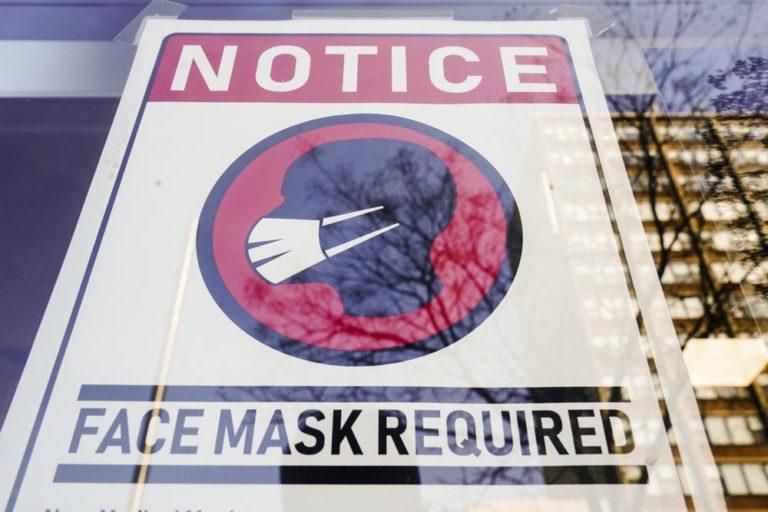
As one might expect, covering the breathing orifices of humans for long periods of time carries health consequences, among them decreased oxygen saturation and increases in heart rate, blood pressure, blood-CO2 levels, and skin temperature, as well as dizziness, speech impediments, headaches, and dyspnea (labored breathing).

Study authors said it was imperative that these findings are considered in future public health policies.

“Face mask side-effects must be assessed (risk-benefit) against the available evidence of their effectiveness against viral transmissions,” the authors concluded. “In the absence of strong empirical evidence of effectiveness, mask wearing should not be mandated let alone enforced by law.”

We now know some of the negative consequences of masking (and mask mandates). But what about their effectiveness in reducing the spread of Covid?

As it happens, a massive study conducted in the UK, which examined one of London’s largest hospitals for 10 months during the highly contagious Omicron variant, sheds new light on this question.

Though the full research has yet to be published (it will be presented at the 2023 European Congress of Clinical Microbiology & Infectious Diseases in April, officials say) study authors make it clear that the hospital’s masking requirement made “no discernible difference.”

“Our study found no evidence that mandatory masking of staff impacts the rate of hospital SARS-CoV-2 infection with the Omicron variant,” said lead author Dr. Ben Patterson of St. George’s University Hospitals NHS Foundation Trust, London.

“The bottom line is that lifting the hospital mask mandate did not lead to a measurable increase in hospital-acquired COVID infections,” Jeanne Noble, associate professor of Emergency Medicine at the University of California, San Francisco, told Healthline, adding that the research was more robust than previous observational trials.

In other words, the two most recent studies on masking suggest masks were terribly ineffective in reducing the spread of COVID, but came with clear health harms. Yet countries across the world and states across the US were mandating their use for months if not years.

How does something like this happen? Economics holds a clue.

In his 1974 Nobel Prize speech, F.A. Hayek talked about the dangers of acting with “the pretense of knowledge.” In some ways, this knowledge was worse than no knowledge at all, because it stood to lead government officials and experts to believe they possessed sufficient knowledge to engineer society successfully.

As many have noted, history has shown that Hayek was right to be worried. And for decades historians and economists have highlighted Hayek’s warning about this “fatal conceit” rooted in the pretense of knowledge, stressing the importance of demonstrating “to men how little they really know about what they imagine they can design.”

Fewer, however, have noted a separate paragraph from Hayek’s speech, in which he notes what drives public officials to act with insufficient knowledge.

“The conflict between what in its present mood the public expects science to achieve in satisfaction of popular hopes and what is really in its power is a serious matter because, even if the true scientists should all recognize the limitations of what they can do in the field of human affairs, so long as the public expects more there will always be some who will pretend, and perhaps honestly believe, that they can do more to meet popular demands than is really in their power.”

This paragraph perfectly describes the phenomenon witnessed during the pandemic.

Public officials clearly did not have enough knowledge to make rational decisions for hundreds of millions of Americans. But they had to pretend they did (and perhaps some actually believed they did, as Hayek suggests) because that was the popular demand. Influential conservatives and progressives both largely bought into the fiction that public health officials could rationally plan society—through mask mandates, lockdowns, and social distancing—to protect humans from the coronavirus.

The pandemic was not just a failure of science. It was also clear evidence that government, freed from its constitutional and rational limitations, has grown far too large, as have our expectations of it.

GOP States Fighting Back against Woke ‘DEI’ Initiatives in Higher Ed

(Headline USA) Frustrated by college diversity initiatives he says are “fomenting radical and toxic divisions,” Texas state Rep. Carl Tepper set out to put an end to diversity, equity and inclusion offices in higher education.

The freshman Republican lawmaker filed a bill to ban such offices. Three months later, he filed a new version of the legislation doing the same thing. The difference? Tepper switched the wording to align with a new model bill developed by the Manhattan Institute and Goldwater Institute, a pair of conservative think tanks based in New York and Arizona, respectively.

Republican lawmakers in at least a dozen states have proposed more than 30 bills this year targeting radical leftist diversity, equity and inclusion efforts in higher education, an Associated Press analysis found using the bill-tracking software Plural. The measures have become the latest flashpoint in a cultural battle involving race, ethnicity and gender that has been amplified by prominent Republicans, including former President Donald Trump and Florida Gov. Ron DeSantis, potential rivals for the GOP presidential nomination in 2024.

Some measures mirror the model bills nearly exactly. Others copy key definitions or phrases while adapting the concepts to their particular states.

“There’s a tremendous appetite on the right to deal with this issue,” said Joe Cohn, legislative and policy director for the Foundation for Individual Rights and Expression, which in February added its own model bill to the swelling ranks of proposals.

The bills are an outgrowth of recent Republican attempts to limit critical race theory, a viewpoint that racism is historically systemic in the nation’s institutions and continues today to maintain the dominance of white people in society. Christopher Rufo, who now is a senior fellow at the Manhattan Institute, helped propel conservative outrage in 2020 against what he has described as critical-race-theory concepts infiltrating governments and educational institutions.

Trump responded by issuing an order in September 2020 banning training involving “divisive concepts” about race for government employees and contractors. Similar wording began cropping up in state-level legislation the following year.

Florida’s so-called “Stop WOKE” law, which DeSantis signed last year, is among the most prominent measures. It bars businesses, colleges and K-12 schools from giving training on certain radical racial concepts, such as the theory that people of a particular race are inherently racist, privileged or oppressed. Courts have currently blocked the law’s enforcement in colleges, universities and businesses.

DeSantis has continued to press the issue. He proposed legislation this year to ban diversity, equity and inclusion offices as part of a broader agenda to reshape higher education, protect children from leftist grooming agendas and bolster parental rights. He also appointed Rufo and other conservatives to the New College of Florida’s oversight board, which then abolished the liberal arts college’s office that handles diversity, equity and inclusion programs.

“DeSantis has been so vocal about the changes he wants to make in universities that it has probably spurred activity in other states,” said Jenna Robinson, president of the James G. Martin Center for Academic Renewal, a conservative nonprofit based in Raleigh, North Carolina.

On their face, diversity, equity and inclusion may seem uncontentious. Higher education institutions, along with many businesses, have devoted resources to inclusivity for years.

“DEI is woven into the fabric of good universities,” said Karma Chavez, chair of the Department of Mexican American and Latina/o Studies and co-chair of the College of Liberal Arts diversity committee at the University of Texas.

Campus DEI offices often spearhead services tailored to students of various races, genders, sexual orientations, cultures and abilities, often at the exclusion of other races and cultures. Some college administrators also consider diversity and equity when admitting students, providing scholarships or deciding which faculty to hire and promote. Applicants may be asked not only for resumes and references, but also for statements about how they would advance DEI efforts.

Tepper contends DEI initiatives are “ideologically driven” on a “Marxist foundation.” Republican lawmakers in other states have used similar arguments.

During a recent Missouri House debate, Republican Rep. Doug Richey put forth a series of budget amendments prohibiting state funding for DEI initiatives in government agencies and higher education. He asserted the offices espouse “racist policies” and “Marxist ideology that is trying to strip away from us the concepts of the nuclear family, of merit, of character and of being judged by what you are capable of.”

Provisions blocking spending on diversity, equity and inclusion efforts also have been added to budget bills in Kansas and Texas. Separate bills banning spending for DEI offices in higher education have been proposed in Arizona, Florida, Iowa, Oklahoma, Utah and West Virginia, though some of those already have failed.

Other bills, such as in Ohio and South Carolina, would allow such offices but ban mandatory DEI training and forbid administrators from requesting DEI statements from staff and students.

Texas Gov. Greg Abbott’s administration warned state entities in February not to use DEI factors in employment decisions. That prompted the state’s largest university systems to pause such practices and led students at the University of Texas to organize in defense of DEI efforts.

“It feels like an attack on my identity,” said Sameeha Rizvi, a university senior who said she has benefitted from DEI initiatives as a Muslim woman of color with a disability. “It is exceptionally hurtful and tiring to see this very hateful rhetoric being employed by legislators.”

The American Association of University Professors, which has about 45,000 members nationwide, said the bills mischaracterize DEI initiatives and threatens their paychecks.

“They’re dog whistling that DEI initiatives are something sinister and subversive that people should be afraid of, and that’s not true at all,” association President Irene Mulvey said.

The Martin Center and Goldwater Institute released model legislation last year describing mandatory DEI statements from students and staff as a prohibited “political test.” Lawmakers in Georgia, Florida, Oklahoma and Texas all filed bills this year using the suggested wording.

Cicero Action, an advocacy group based in Austin, Texas, and the newly formed Do No Harm organization, based in Richmond, Virginia, also have provided guidance to state lawmakers drafting bills against diversity, equity and inclusion requirements in higher education. Similar bills in Missouri and Tennessee both follow Do No Harm’s outline of barring mandatory DEI instruction for medical students and health care providers..

Adapted from reporting by the Associated Press

While Some Students Skip College, Trade Programs Are Booming

(Headline USA) It’s almost 4 p.m. at the Nashville branch of the Tennessee College of Applied Technology, and the students in the auto collision repair night class are just starting their school day.

One is sanding the seal off the bed of his 1989 Ford F-350. Another is patiently hammering out a banged-up fender. A third, Cheven Jones, is taking a break from working on his 2003 Lexus IS 300 to chat with some classmates.

While almost every sector of higher education has fewer students registering for classes, many trade programs are thriving. Jones and his classmates, seeking certificates and other short-term credentials — not associate degrees — are part of that upswing.

Trade programs are often more affordable than a traditional four-year degree, students note, and, for many, skilled trades offer a more obvious path to a job.

Mechanic and repair trade programs saw an enrollment increase of 11.5% from spring 2021 to 2022, according to the National Student Clearinghouse. In construction trades, enrollment grew 19.3%, and in culinary programs, it increased 12.7%. Meanwhile, overall enrollment declined 7.8% at public two-year colleges, and 3.4% at public four-year institutions.

In Tennessee, the state’s overall community college enrollment took a hit during the pandemic, despite a 2015 state program that made community college tuition free. But at the Tennessee College of Applied Technology, a network of 24 colleges that offers training for 70 occupations, many trade programs have continued to grow. At TCAT Nashville, several programs have waiting lists, and the college has added night classes to meet demand, said Nathan Garrett, president of the college.

TCAT focuses on training students for jobs that are in demand in the region, which appeals to many students in normal times, but Garrett said the pandemic may have underscored the need for workforce relevance.

“When we look at ‘essential workers,’ a lot of those trades never saw a slowdown,” he said. “They still hired. They still have the need.” Automotive trades are always in demand, he added.

Even so, Jones’s pursuit of a degree at TCAT Nashville would perhaps be a surprise to his high school self. “I didn’t necessarily know what I wanted to do,” said Jones, now 26. “My biggest fear was to go to college, put in all that time and effort and then not use my degree.”

So, at 18, Jones went to work in warehouses, spending long days loading and unloading heavy boxes from tractor-trailers. But after just a few years, he realized he needed a job that would make him happier, cause fewer injuries and pay him more. Trade school for a career fixing cars seemed like the best route.

Robert Nivyayo’s priorities became clear a bit earlier in his education, when he realized he didn’t like high school. He spent most of his free time watching YouTube videos about fixing up cars before he was even licensed to drive.

Training in auto collision repair made sense for him, he said, because he could earn a credential while doing what he enjoyed, and without spending much time in the traditional classroom. Now 19, Nivyayo looks forward to the anticipated payoff when he gets a job in an auto shop. He can expect to make roughly $40,000 to $60,000 a year, depending on the shop, his instructor said.

“Every new day, I just get more motivated,” Nivyayo said.

Just a few doors down, Abbey Carlson is in the welding studio, wearing jeans with holes burnt through them and a cap to protect her hair. She’s the only woman in the nighttime welding class.

Carlson, now 24, had initially intended to attend a four-year college, but her plans were derailed by an addiction to alcohol. After dedicating herself to recovery, she decided to pursue a career in the trades.

After researching her options, she concluded welding would be the safest path to take as a young woman while also offering her the highest eventual earning potential. So far, she’s enjoying her time at TCAT Nashville.

“Finally, I feel like I’m going to accomplish something in life,” Carlson said.

Laura Monks, president of the Shelbyville branch of TCAT, said one of the reasons TCAT appeals to students is the school’s “co-op” program, which gives students who are nearing graduation the chance to work in their desired field a few days a week while also getting credit toward their diploma.

Brayden Johnson, 20, who is in his fifth trimester studying industrial maintenance automation, has had the chance to work as an electrical maintenance technician in a local factory that makes tubes for toothpaste. He’s working the night shift, which comes with a slight pay bump, and is earning about $26 per hour.

He said he hopes to stay in the job after he finishes at TCAT this spring.

At trade schools like TCAT Nashville, students are drawn to the hands-on design of the courses, Garrett said. “You need to get your hands on the equipment,” he said of the school’s philosophy. “You need to start building stuff, breaking stuff and then learn how to fix that stuff.”

The opportunity to get real work experience in TCAT’s co-op is an extra perk. The employer reports back to the student’s instructor so they know where the student is excelling and where they are struggling, so they can work on those weaknesses in class, Garrett said.

For Cheven Jones, the game plan is to transform his car by the time he graduates, and have fun while doing it.

“It’s school, and I take it seriously. But you know, you come here, and it just feels more like you’re at a shop hanging out with your homies all day,” Jones said. “It’s a good feeling.”

After he graduates, he hopes to get a job in an auto body shop.

And he says he’ll keep working until someday he can afford a red 1982 Nissan Skyline R31, RS Turbo, with bronze wheels — his dream car. Even if he can’t get one in perfect condition, at least he’ll know how to fix it up.

Adapted from reporting by the Associated Press

McCarthy Seeks to End Budget Standoff, Asks Dems to Promise Future Cuts

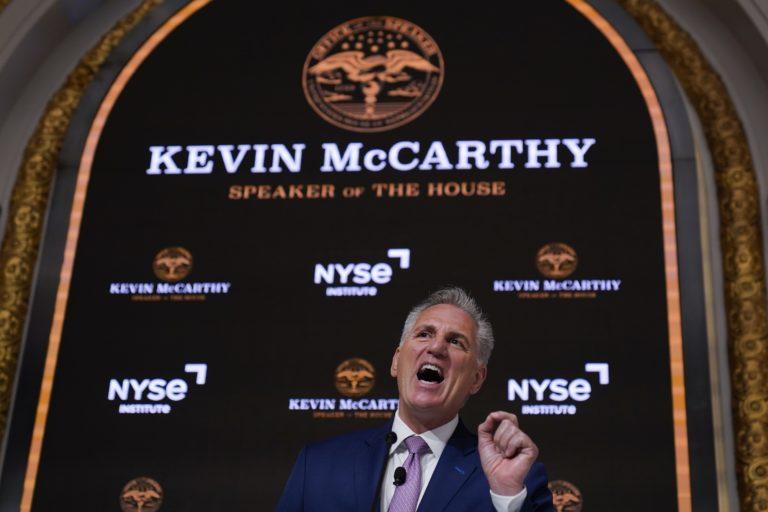
(Headline USA) House Speaker Kevin McCarthy pledged on Monday to pass legislation to raise the nation’s debt ceiling—but only on condition of capping future federal spending increases at 1%—as he lashed out at President Joe Biden for refusing to engage in budget-cutting negotiations to prevent a debt crisis.

In a high-profile speech at the New York Stock Exchange, McCarthy, the Republican leader who was marking his 100th day as speaker, said the nation’s debt load is a “ticking time bomb” and Biden is “missing in action” as the deadline nears to raise the debt limit.

“Since the president continues to hide, House Republicans will take action,” McCarthy said.

On Monday, the White House hit back quickly at McCarthy, accusing the House leader of “dangerous economic hostage taking.” And administration officials reupped Biden’s pressure on the Republican leader to approve a debt ceiling increase with no strings attached.

McCarthy’s Wall Street address came with Washington heading toward a potential fiscal crisis over the need to raise the nation’s debt limit, now at $31 trillion, and avert a federal default.

“The longer President Biden waits to be sensible to find an agreement, the more likely it becomes that this administration will bumble into the first default in our nation’s history,” he said.

The Treasury Department has said it is taking “extraordinary measures” to continue paying its bills, but money will run short this summer.

While vowing that “defaulting on our debt is not an option,” McCarthy faces his own challenges pushing a legislative fix to passage.

With his slim majority and less-than-strong grip on power, he has been unable to rally his Republican troops around a budget-cutting proposal that he could offer the White House as a starting point in negotiations. The outline of conditions he proposed Monday is considered dead on arrival in the Democratic-controlled Senate.

McCarthy’s conditions were a “MAGA wish list that will increase costs for hard-working families,” claimed White House Deputy Press Secretary Andrew Bates.

“A speech isn’t a plan, but it did showcase House Republicans’ priorities,” said Bates.

And Senate Majority Leader Chuck Schumer said it’s McCarthy who “continues to bumble our country toward a catastrophic default.”

“President Biden and I are happy to meet with the speaker when he has something to talk about,” Schumer said. “He went all the way to Wall Street and gave us no more detail. No more facts, no new information at all.”

Nevertheless, McCarthy was both upbeat and defiant as he vowed to pass a bill through the House that would raise the nation’s debt limit into next year—putting the issue squarely in the 2024 presidential election—coupling it with a plan to roll back federal spending to fiscal 2022 levels and cap future spending at no more than 1% a year over the next decade.

Republicans, he said, also want to attach policy priorities, including imposing work requirements to recipients of government aid that would result in cuts to benefit programs in the federal safety net for poorer Americans.

And McCarthy said the House Republicans also want to tack on H.R. 1, an energy bill that would favor oil, gas and coal production—and ease permitting regulations imposed by the Biden administration that have contributed to the inflationary economy.

Many economists have suggested that it may take a stock market selloff to force an agreement, showing the risks of a possible default. But McCarthy said after his speech during a question period that he wasn’t gauging market reaction for guidance on the debt limit.

“The markets go up and down,” he said.

McCarthy is working furiously to unite the “five families”—the various caucuses including the Freedom Caucus, Republican Study Committee and others within the House Republican majority — around a plan that could be presented to Biden to kickstart negotiations.

Federal spending skyrocketed during the COVID-19 crisis, rising to $7.4 trillion in 2021, before easing slightly back to $6.2 trillion in fiscal 2022, according to Treasury Department data.

However, Biden’s spending spree on top of the COVID relief that was necessary to keep the economy open during pandemic shutdowns helped fuel unprecedented spikes in inflation, sometimes approaching double digits and continuing to inflict pain on average Americans.

The nation’s debt load has also climbed steadily, doubling during the George W. Bush administration with the 9/11-era wars overseas and spiking again during the Obama administration as spending rose and tax revenue plummeted during the Great Recession.

The nation runs more than $1 trillion in annual deficits, and the last time the federal budget balanced was 2001.

McCarthy noted that President Ronald Reagan similarly warned of government spending. The cuts the House Republicans want to make are not “draconian,” McCarthy said.

He pledged not to touch the Medicare and Social Security programs important to older Americans that other Republicans want to cut.

Once, his speech was interrupted by applause from the executives and others at the stock exchange.

The White House and Democrats in Congress have been unwilling to engage in talks with the Republicans, saying Congress must simply raise the debt limit without conditions.

Biden in particular, has been here before as vice president during the 2011 fiscal standoff that sent jitters through the economy.

The proposal from McCarthy will likely be too expansive for the White House to consider, but serves as a calling card to push Biden back to the negotiating table.

The split screen on display in New York, though, showed the challenges ahead for McCarthy in focusing on budget matters.

As the speaker delivered his speech, his hard-charging Judiciary Committee Chairman Jim Jordan was convening a New York City field hearing focused partly on District Attorney Alvin Bragg who indicted former President Trump on campaign finance and other charges related to alleged hush money payments.

Adapted from reporting by the Associated Press

DeSantis Floats Building a Prison, Competing Theme Park in Disney District

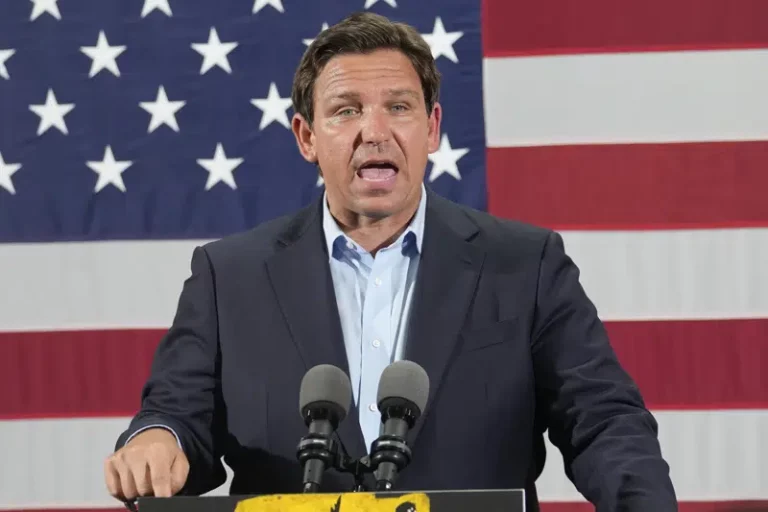
(Headline USA) Gov. Ron DeSantis and Florida lawmakers ratcheted up pressure on Walt Disney World on Monday by announcing legislation that will use regulatory powers to exert oversight on the park resort’s rides after Disney tried to use legal loopholes to embarrass the governor.

Somewhat tongue-in-cheek, DeSantis also suggested Monday that the new board or lawmakers could take other actions with the Disney’s 27,000 acres in central Florida, such as building a state park, a competing theme park or a prison.

“I think the possibilities are endless,” DeSantis said at a news conference near Disney World.

Lawmakers will introduce a bill in coming weeks that would end an exemption for Disney parks when it comes to ride inspections by the Florida Department of Agriculture and Consumer Services, DeSantis said.

The agriculture agency is responsible for inspecting amusement rides in Florida, but an exception was carved out for the state’s largest theme park operators, such as Disney and Universal Destinations & Experiences.

Under the proposal, the exemption would end for rides located in special districts, which basically targets just Disney World.

An emailed inquiry seeking comment was sent to Disney on Monday.

DeSantis’s fight with Disney started last year when the entertainment giant publicly opposed the state’s anti-grooming legislation barring school instruction on sexual orientation and gender identity in kindergarten through third grade.

In retaliation, Florida lawmakers passed, and DeSantis signed, legislation reorganizing Disney World’s company-controlled government, allowing the governor to appoint the five members of the Board of Supervisors instead of Disney.

Last month, the new DeSantis-appointees claimed their Disney-controlled predecessors pulled a fast one by stripping the new board of most powers and giving Disney control over design and construction at the theme park resort before the new members could take their seats.

DeSantis on Monday said the agreement between Disney and previous supervisors was illegal, claiming it was self-dealing and proper advance notice wasn’t given before the old board approved it, and that lawmakers had the authority to revoke it.

The governor also suggested the new board should sell the district’s utility in order to pay down the district’s $1 billion debts.

In taking on Disney, DeSantis has advanced his reputation as a culture warrior willing to battle political opponents and wield the power of state government to accomplish political goals. It is a strategy he is likely to follow through his expected 2024 run for the White House.

Adapted from reporting by the Associated Press

Secret Chinese Police Outpost Revealed in NYC; 2 Men Arrested

(Headline USA) Two men have been arrested on charges that they helped establish a secret police outpost in New York City on behalf of the Chinese government, and more than three dozen officers with China’s national police force have been charged with using social media to harass dissidents inside the United States, the Justice Department said Monday.

The cases, taken together, are part of a series of Justice Department prosecutions in recent years aimed at disrupting Chinese government efforts to locate in America pro-democracy activists and others who are openly critical of Beijing’s policies.

One of the cases concerns a local branch of the Chinese Ministry of Public Security, which operated inside an office building in Manhattan’s Chinatown neighborhood before closing last fall amid an FBI investigation.

The two men charged with establishing the outpost were acting under the direction and control of a Chinese government official, and deleted communication with that official from their phones after becoming aware of the investigation, according to the Justice Department.

The men, identified as “Harry” Lu Jianwang, 61, of the Bronx, and Chen Jinping, 59, of Manhattan, were arrested at their homes on Monday morning. It was not immediately clear if they had lawyers who could comment on their behalf.

At no point did the men register with the Justice Department as agents of a foreign government, U.S. law enforcement officials said. And though the police outpost did perform some basic services, such as helping Chinese citizens renew their Chinese driver’s licenses, it also performed a more “sinister” function, including helping the Chinese government locate a pro-democracy activist of Chinese descent living in California, according to the officials.

“New York City is home to New York’s finest: the NYPD,” U.S. Attorney Breon Peace, the top federal prosecutor in Brooklyn, said at a news conference announcing the arrests. “We don’t need or want a secret police station in our great city.”

Adapted from reporting by the Associated Press

Number of Illegals Biden Has Paroled Exceeds Population of 6 States

(Ezekiel Loseke, Headline USA) The Department of Homeland Security, at the direction of the Biden administration, has released more than a million illegal immigrants into America using a parole pipeline.

The parole pipeline is the result of Biden’s DHS acting as “a full service travel agency,” according to Breitbart News.

“We’re aiding and abetting illegal entry to the United States,” an anonymous source who works at DHS said. “We’re using government cars to transport people to American towns. It’s working like an Uber service.”

This system operates by picking illegal immigrants up from a detention center, then releasing them to non-profit organizations that transport illegals across the country.

This pipeline has been used to release 880,000 illegal immigrants into America, from January 2021 to February 2023, according to data analyzed by the Center for Immigration Studies.

An additional 75,000 Afghans and nearly 120,000 Ukrainians have also been released into America using the parole pipeline, Breitbart reported.

Through his system Biden has introduced a number of foreigners greater than the populations of Wyoming, Vermont, Alaska, North Dakota, South Dakota and Delaware.

In November and December of 2022, Biden used the pipeline to release over 230,000 migrants into the United States. In January and February of 2023, they released 40,000 more illegals into America.

These numbers were made even worse when considering the illegal immigration population grew by over a million in Biden’s first year in office. Biden’s former Border Patrol chief reported that these increases were not accidental, but rather intentional.

These surges in border crossings were also accompanied by a rise in deaths from drug overdoses. Further, Biden extended medical coverage, via Medicare and the Affordable Care Act, to illegals who had been in America for a long time.

The attorneys general for 25 separate states have sued to attempt to criminalize encouraging illegal immigration into the United States.

GOP Sen. Rebuffs Dems’ Effort to Replace Feinstein on Judiciary Committee

(Headline USA) Sen. Marsha Blackburn, R-Tenn., said this week that she will not support efforts to oust ailing Sen. Dianne Feinstein, D-Calif., from the Senate Judiciary Committee, despite Feinstein’s prolonged absence.

Feinstein, 89, was hospitalized last month for shingles and has been missing for much of the Senate’s current term. She has missed 60 of 82 votes taken in the Senate this year, which has prevented Senate Democrats from confirming some of President Joe Biden’s judicial appointments. As a result, a number of prominent Democrats, including House Democratic leader Ro Khanna, D-Calif., have spoken out to demand her resignation.

After Feinstein announced last week that she did not plan to resign before her current term ends, Senate Majority Leader Chuck Schumer, D-N.Y., suggested that Democrats replace her on the Judiciary Committee so that the committee can get back to confirming judicial appointments.

However, Blackburn, a member of the Judiciary Committee, said she would not support the plan, arguing that Democrats just want to ram through controversial and radical judicial nominees.

“I will not go along with Chuck Schumer’s plan to replace Senator Feinstein on the Judiciary Committee and pack the court with activist judges,” Blackburn tweeted on Monday. “Joe Biden wants the Senate to rubber stamp his unqualified and controversial judges to radically transform America.”

Blackburn noted that Schumer and company had been happy to violate many political norms in the process of trying to enact their political agenda.

“Senate Democrats are also attempting to upend precedent and Senate custom by abolishing home-state Senators’ right to object to Biden’s activist liberal judges,” Blackburn said. “We must stand up and protect the Senate’s constitutional role to provide advice and consent on judicial nominees.” 

In order to replace Feinstein, Schumer would need to amend the Senate’s organizing resolution by unanimous consent, which Republicans are unlikely to provide.

He would also need to break a potential filibuster and would need at least 10 Republican votes in this case.

Alec Baldwin Moves to Dismiss Lawsuit Filed by Family of Cinematographer He Fatally Shot

(Headline USA) Alec Baldwin filed a motion in court this week asking for a lawsuit filed against him by the family of Halyna Hutchins, the cinematographer whom he fatally shot on the set of Rust, to be tossed.

Baldwin claimed the lawsuit against him was “especially misguided” because Hutchins’s family had been distant from her in the years leading up to her October 2021 death.

“The loss of a daughter and sister is undoubtedly painful in any circumstance. Yet Plaintiffs — who had been distanced from Halyna physically, financially, and emotionally for years before her death — have no viable cause of action against Defendants,” the motion reads.

Baldwin’s legal team also cited a settlement the actor reached with Hutchins’s husband, Matthew, in October of 2022.

“She left behind a husband and a son in California, who promptly filed claims in New Mexico for wrongful death and loss of consortium. Matthew Hutchins and Alec Baldwin, both operating under the specific desire to honor her legacy and do what is best for Halyna’s son, reached a settlement in October 2022,” the court filing states. “That should have been the end of the matter, but it is not.”

Three of Halyna Hutchins’s relatives — Olga Solovey, Anatolii Androsovych, and Svetlana Zemko, each of whom are Ukrainian citizens who live in Ukraine — filed a lawsuit against Baldwin and other members of the Rust crew in February, claiming Hutchins’s death had caused them undue emotional distress and a loss of consortium.

Baldwin’s legal team argued the claim to consortium could only be made by Hutchins’s husband, Matthew. 

“None of the Plaintiffs can plead or prove such a relationship to Halyna Hutchins. And even if New Mexico law were to apply, Plaintiffs’ cause of action would still fail, as Plaintiffs’ complaint provides nothing more than a single conclusory statement, that, no matter how often it is repeated, cannot support a sufficiently close relationship under the law, as required by New Mexico law to state a claims for loss of consortium,” the complaint reads.

Baldwin is currently facing criminal charges for his role in Hutchins’s death, though is legal team has moved to dismiss those charges as well.