Vermont Allocates Nearly $750K for Panel to Study Feasibility of Eugenics Reparations

(Headline USA) Two years ago, the Vermont Legislature apologized to all Vermonters and their families who were harmed by state-sanctioned eugenics policies that started in the early 1900s and led to institutionalizations and sterilizations, targeting Native Americans, French Canadians, disabled and poor people.

Legislators also vowed to do more. Now the state has formed a truth and reconciliation commission with the task of creating a public record of discrimination against certain marginalized populations caused by state laws and policies, as well as making recommendations for repairing the damage and preventing it from happening again.

“An apology’s only words,” said state Rep. Tom Stevens, a Democrat. “You have to really follow it up with actions, and we said in the apology that we would.”

The three commissioners were appointed last month to three-year terms, with annual salaries of $80,000 each. Last year’s act to create the commission allocated $748,000 in state funds this fiscal year to the panel, which also will hire an executive director and other staff.

The panel will create commissions to examine discrimination caused or allowed by state laws and policies experienced by Native American or Indigenous people; people with physical, psychiatric or mental conditions or disabilities and their families; people of color; and people with French Canadian, French Indian or other mixed ethnic or racial heritage.

At the commission’s discretion, discrimination against other populations and communities may be considered.

“It’s definitely a broader scope than normal truth and reconciliation commissions,” said commissioner Mia Schultz, president of the Rutland Area NAACP. “I think the theme is this intergenerational trauma proliferated through state policy and law.”

The other two commissioners are Melody Walker Mackin of the Elnu Abenaki Tribe, who is an artist and educator and serves on the Vermont Commission on Native American Affairs; and Patrick Standen, a St. Michael’s College professor, author and disability rights advocate.

More than 50 truth commissions have been established worldwide with some focusing on a single event and others centered on a specific time period, according to Virginie Ladisch of the International Center for Transitional Justice, which helped Vermont with its effort.

Peru’s commission, for example, was tasked with investigating terrorist violence and the violation of human rights from May 1980 to November 2000. A commission in Kenya had a wider scope of investigating, analyzing and reporting on what happened between 1963 and 2008 regarding human rights violations, economic crimes, illegal acquisition of public land, marginalization of communities, ethnic violence and state repression, Ladisch said by email.

“The broad scope of the Vermont TRC’s mandate gives the commission a chance to explore the various forms of structural harm that are part of the state’s history and that continue into the present,” Ladisch said.

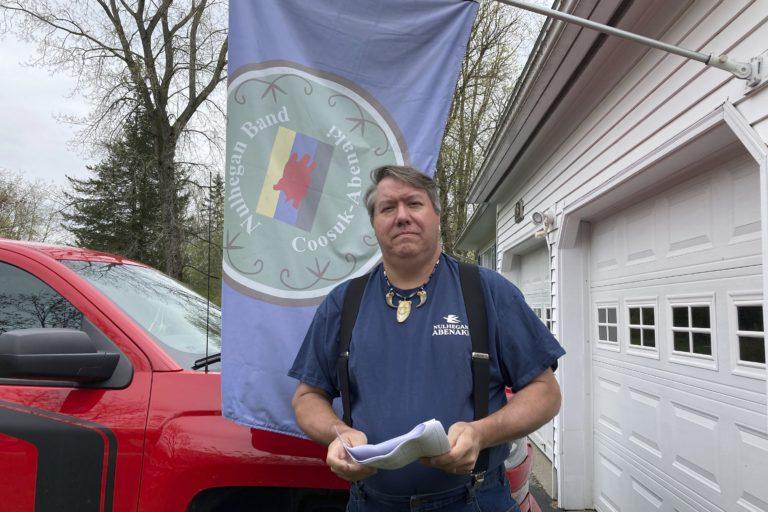
Don Stevens, chief of the Nulhegan Band of the Coosuk Abenaki Nation, said his family was one of the largest targeted by the Eugenics Survey of Vermont organized in 1925 by University of Vermont professor Henry Perkins.

Some Vermonters of mixed French Canadian and Native American heritage, as well as poor, rural, white people, were placed on a state-sanctioned list of “mental defectives” and degenerates and sent to state institutions.

Vermont authorized voluntary sterilizations in 1931, becoming one of more than two dozen states to do so. More than 250 people were sterilized in Vermont, with two-thirds of those women and many labeled as “mentally deficient,” according to the University of Vermont.

Steven’s grandmother, the last of his relatives to be on the survey, was listed as a “cripple.” She changed her name several times to try to escape recognition, he said.

“She was born as Lillian May, and she was married as Pauline, and she died as Delia in the ’90s,” Steven said. “She changed her name to avoid the surveys like so many others did, but they were very good at following people.”

Among the “defects” of others on the survey were wanderer, illiterate, feeble-minded, liar, deserted husband, town pauper, obstinate, alcoholic and bearer of stillborn twins.

Stevens, who worked on the state apology and one from UVM, said he supports the Vermont truth and reconciliation commission and making the experiences for kids and future generations better.

“I wanted people to know about the history,” Stevens said. “You can’t avoid something unless people know about it.”

Adapted from reporting by the Associated Press
School Superintendent Who Defied Fla. Laws to Undermine DeSantis May Lose Job

(Headline USA) Florida officials are threatening to revoke the teaching license of a school superintendent who criticized Gov. Ron DeSantis, accusing the educator of violating several statutes by allowing his “personal political views” to guide his leadership.

Such a revocation by the state Department of Education could, in turn, remove Leon County Superintendent Rocky Hanna from his elected office.

The situation mirrors that of an elected Democratic prosecutor in the Tampa Bay area who  indicated he would refuse to enforce state laws limiting abortion and medical procedures for transgender teens.

Disney also sued DeSantis this week, saying he targeted its Orlando theme parks for retribution after it criticized the governor’s so-called “Don’t Say Gay” law that then banned.

Hanna has publicly opposed the state’s anti-grooming law, officially known as the Parental Rights in Education Act, which limits the discussion of sexuality and gender in classrooms where it is not curricularly relevant and age appropriate.

He also defied the governor’s order that barred any mandate that students wear masks during the COVID-19 pandemic, and criticized a DeSantis-backed bill that recently passed that will pay for students to attend private school.

The Leon County district, with about 30,000 students, covers Tallahassee, the state capital, and its suburbs.

A Democrat then running as an independent, Hanna was elected to a second four-year term in 2020 with 60% of the vote. He plans to run for reelection next year and does not need a teacher’s license to hold the job.

“This investigation has nothing to do with these spurious allegations, but rather everything to do with attempting to silence myself and anyone else who speaks up for teachers and our public schools in a way that does not fit the political narrative of those in power,” Hanna said in a statement

He said the investigation was spurred by a complaint from the leader of the local chapter of Moms for Liberty, a conservative education group, requesting his removal.

“We are fighting tirelessly with our local school board to no avail,” Brandi Andrews wrote DeSantis, citing Hanna’s mask mandate, his opposition to the state’s new education laws and directives and his public criticism of the governor. She noted that she had appeared in a DeSantis reelection TV commercial. Her letter was stamped “Let’s Go Brandon.”

DeSantis is expected to soon announce that he will seek the Republican nomination to challenge Biden in next year’s election. Andrews issued a statement saying her complaint against Hanna was one of many.

Education department spokesman Alex Lanfranconi said in a statement that while officials would not discuss the Hanna investigation in detail, “nothing about this case is special.”

“Any teacher with an extensive history of repeated violations of Florida law would be subject to consequences up to and including losing their educator certificate,” he said.

The threatened revocation was first reported by the Tallahassee Democrat newspaper.

Before any punishment is meted out, Hanna can have a hearing before an administrative judge, attempt to negotiate a settlement or surrender his license. He said in his statement he has not decided what he will do.

Hanna received a letter from Education Commissioner Manny Diaz Jr. earlier this month saying an investigation found probable cause that he violated a 2021 DeSantis directive barring districts from mandating that students wear COVID-19 masks.

The fight went on for several months until Leon and several other districts had their legal challenge rejected by the courts.

Diaz also cited a memo Hanna issued before this school year telling teachers, “You do You!” and to teach the way they always had, allegedly giving instructors approval to ignore new laws enacted by DeSantis and the Legislature.

His letter also cites the district’s failure for one month in 2020 to have an armed guard or police officer at every school as required after the 2018 Parkland high school massacre. Hanna said then that there weren’t enough available officers to meet that requirement and the education department cleared him of wrongdoing.

Diaz also complains that parents were told that their children could get an excused absence if they chose to attend a February student protest at the state capitol opposing DeSantis’s seducation policies.

Offering students a “free day off of school” to attend the rally “is another example of [Hanna] failing to distinguish his political views from the standards taught in Florida schools,” Diaz wrote.

Adapted from reporting by the Associated Press

Fat Activists: Childhood Obesity OK, and Saying Otherwise Is White Supremacy

(Molly Bruns, Headline USA) Fat-positivity activist and author Virginia Sole-Smith recently published a book advocating for fat acceptance among young children, encouraging parents to embrace their obese children’s unhealthy eating habits.

Sole-Smith did an interview with The Cut to promote her upcoming book, What If You Weren’t Scared of Your Kid Being Fat?

According to the Daily Wire, the author complained that eating healthy and taking care of your body is a “white ideal.”

“The thin ideal is definitely a white ideal. When we trace the history of modern diet culture, we really trace it back in the United States to the end of slavery,” Sole-Smith said.

She argued that the purported “fear” of fat people is simply an alleged attempt by white people to remain in power.

“Obviously, white supremacy is trying to maintain the power structure. So celebrating a thin white body as the ideal body is a way to ‘other’ and demonize black and brown bodies, bigger bodies, anyone who doesn’t fit into that norm,” she opined. “So this is really about maintaining systems of white supremacy and patriarchy.”

Sole-Smith also criticized parents who feel uncomfortable allowing their children to partake of sweets too frequently. Using the example of ice cream, she explained that parents should allow their children to do what makes them happy.

“There are seven days in a week. Your child can have ice cream seven days a week. There is no law against this,” she said. She also said that if a teenager should ask for a whole package of Oreo cookies, they should also “pour a glass of milk — so they can dunk them.”

Sole-Smith, who has two children of her own, wrote about her no-rules approach to feeding children, which therefore makes sugar less exciting to kids.

“Vegetables are the least important part of it to me,” she said. “They have their whole lives to decide if they want to eat kale.”

Sole-Smith encourages her children to “listen to [their] bod[ies]” when it comes to eating and tells them they “don’t have to earn dessert.”

The crux of her book is her attempted “debunking” of the seriousness of childhood obesity. She argued that the United States’ “fear of fatness” is worse for children than the health toll taken by being overweight.

“The real danger to a child in a larger body is how we treat them for having that body,” she wrote.

Even the Centers for Disease Control and Prevention admitted that childhood obesity is a “serious problem,” and often leads to “high blood pressure, high cholesterol, type 2 diabetes, breathing problems such as asthma and sleep apnea, and joint problems.”

Recent reports from the CDC indicate that nearly 20% of children age 2 to 19 are obese.

Trump, in New Hampshire Speech, Turns Focus to Biden Rematch

(Headline USA) Former President Donald Trump turned his attention to the general election at a speech in New Hampshire on Thursday, using his first campaign appearance since President Joe Biden launched his own reelection bid to boast of his poll numbers and suggest that he has no need to debate his Republican rivals.

“We are a nation in serious decline, a nation that has lost its way,” Trump said at a downtown Manchester hotel. “We are led by a hopeless person, but we will win in 2024 and make America great again. We can do it. It’s not too late.”

In a nod toward his 2016 race, Trump said he’s retiring the “crooked” nickname he used to define Democratic rival Hillary Clinton and will now instead apply it to Biden. He pledged to take back the White House and “settle our unfinished business” in a potential 2024 rematch with the current president.

Trump’s New Hampshire appearance came two days after Biden kicked off his own long-expected reelection campaign, presenting himself as he did in 2020 as a buttress against Trump and his “Make America Great Again” movement.

Similar to his fearmongering 2022 strategy, Biden’s campaign launch video included snapshots of Trump and warned of “MAGA extremists” working to erode freedoms including voting rights and abortion.

Trump is considered a front-runner for the GOP nomination, though more Republicans are expected to jump into the race soon, including Florida Gov. Ron DeSantis. Trump’s campaign this week started airing its first television ad, which assails DeSantis.

In the ad, Trump takes credit for DeSantis’s political rise and shows the governor yoking himself to the former president, including clips from a 2018 gubernatorial campaign ad in which he uses some of Trump’s catchphrases like “Build the wall” and “You’re fired.”

DeSantis himself has openly embraced some of Trump’s policies in his early pre-campaign rhetoric, while trying to make the case that he can enact conservative policies and fight woke institutions without the divisive, often below-the-belt scrappiness that characterized Trump’s tumultuous presidency.

Trump, who has mused about skipping primary debates, pointed Thursday to his sizable polling lead and questioned why he should bother participating in the debates. “Why would you do that?” he asked the crowd.

But DeSantis has hinted that once he formally kicks off his campaign, the margin may soon narrow.

Two weeks ago, Trump appeared with several other announced and potential presidential candidates at the National Rifle Association convention in Indianapolis. Last weekend, he spoke by video to a gathering of evangelicals in Iowa that marked the unofficial start of the state’s 2024 caucus campaign.

“It doesn’t feel good to have Republicans that are so conservative and great fighting each other,” said Kathy Holmes, a 69-year-old retired teacher from Chichester who attended Trump’s event Thursday.

Holmes, who said she plans to vote for Trump in the state’s leadoff primary, wore homemade buttons of Trump’s face with fuzzy blond hair glued onto it.

Holmes said she’d like to see DeSantis wait and run for president in 2028 instead.

Maureen Anderson, a 43-year-old from the Boston area, said Thursday’s event was the first time she would be seeing Trump in person. The longtime Trump supporter wore a red “MAGA” hat and said she would be supporting Trump in the primary, regardless of his legal troubles.

“I feel like they’ve got nothing on him, and they just keep trying to find some other avenue to get him,” she said of the legal cases. “But they’re not gonna get him.”

Trump stopped at a downtown diner after his event, where he posed for photographs and signed autographs. Someone in the crowd tried to draw Trump’s attention to one woman, shouting, “She’s a J-6er,” referring to people who were at the uprising at the U.S. Capitol on January 6, 2021.

“Where is she?” Trump asked, turning his head and beckoning her to come through the packed crowd. He leaned in between members of his security detail to say, “You just hang in,” and something else inaudible and then repeated, “You just hang in.”

Trump has hinted that he will pardon the hundreds—if not thousands—of political prisoners and  lawfare victims who have been targeted by the Biden Justice Department for entering the Capitol following Trump’s rally that morning.

The woman passed up a backpack from the crowd to have him sign, shouting, “I took it with me Jan. 6.” He signed it.

New Hampshire is a political swing state, though voters in the state rejected Trump in the 2016 and 2020 general elections. It was, however, the first state Trump won in the 2016 Republican presidential primary contest, propelling him into GOP dominance that he maintains to this day.

The former president made one other visit to New Hampshire earlier this year, stopping in Salem as part of his first appearances on his latest White House campaign.

Adapted from reporting by the Associated Press

NC Lawmakers Unanimously Move to Ban China from Buying U.S. Farmland

(Molly Bruns, Headline USA) State-level representatives of North Carolina unanimously passed legislation preventing China, along with other enemy nations and enterprises, from purchasing farmland and land near military bases.

The authors of the North Carolina Farmland and Military Protection Act argued that state officials must guard farmland from “the potential of adversarial foreign government control,” which would ensure “safe, abundant and affordable suppl[ies] of food” for residents of the state, the Daily Wire reported.

China, Russia, Cuba, North Korea and Venezuela were all banned from purchasing or leasing land within 25 miles of military installations, along with any land designated to farming.

“As someone who grew up on a family farm, preserving North Carolina’s farmland is a top priority,” North Carolina State Rep. Jennifer Balkcom, a Republican and the primary bill sponsor for the act, said. “Our state’s agricultural land is one of our most important assets and it is common sense that we protect it from foreign governments that do not have America’s best interests in mind.”

The state of North Carolina has 518,000 acres of farmland owned by foreign countries.

Chinese interests own less than 1% of foreign land in the United States. Canada purchased an estimated 32% of land owned by foreigners. Other allies, such as the Netherlands and the United Kingdom, also own a large percentage of American land.

South Dakota took similar measures against possible Chinese interference in 2022. Lawmakers cited specific concerns about the land surrounding Ellsworth Air Force Base.

Other areas of concern listed in the N.C. bill included Fort Bragg, Camp Lejeune and Symour Johnson Air Force Base.

Chinese company Fufeng Group purchased land near the Grand Forks Air Force Base in North Dakota in 2022, dredging up concerns of information leaks regarding the nation’s secure drone technology.

China’s efforts to spy on the United States recently became more brazen as tensions between the two nations continue to grow.

“Look, spy balloons, police stations, fentanyl: The Chinese think they can do whatever they want in our territory, and if we don’t stop them now, this is going to get out of control,” said Gatestone Institute fellow Gordon Chang, who slammed the Biden administration for their lack of action on the matter.

West Virginia Gov. Justice Running for Manchin’s Senate Seat

(Headline USA) West Virginia Republican Gov. Jim Justice announced Thursday that he is running for Democrat Joe Manchin’s U.S. Senate seat in 2024, setting up what could be a hard-fought campaign between two of the state’s most prominent politicians.

Even before that, Justice, a former Democrat, will face a crowded primary that includes already declared Freedom Caucus Rep. Alex Mooney, who burnishes sterling conservative credentials but may lack the same degree of exposure and access to funding that may benefit the current governor.

Justice, an ultrawealthy businessman who is barred from running for a third consecutive term as governor, ended months of speculation with the announcement at a posh resort he owns in White Sulphur Springs, West Virginia. It came on Justice’s 72nd birthday.

“I absolutely will promise you to God above that I will do the job, and I will do the job that will make you proud,” Justice told a crowd to a standing ovation.

Justice’s entry increases the spotlight on what will be one of the most watched 2024 races in the closely divided U.S. Senate, with the GOP hoping to flip the seat in the overwhelmingly Republican state.

Manchin is one of three Democratic senators up for reelection in 2024 who represent a state won by former President Donald Trump in the 2020 election. He has been the only Democrat elected to statewide office in West Virginia since Justice switched his party affiliation in 2017.

Among the speakers at the announcement were West Virginia’s other U.S. senator, Republican Shelley Moore Capito, and South Carolina GOP Sen. Lindsey Graham.

Earlier Thursday, Justice’s campaign filed a statement of organization for a Senate run on the Federal Election Commission’s website.

“Jim Justice is a proven winner whose record of creating jobs, cutting taxes, and fighting for conservative values has made him one of the most popular governors in the country,” National Republican Senatorial Committee chairman Steve Daines, R-Mont., said in a statement.

Manchin—who endorsed Justice in his first gubernatorial bid before Justice switched parties six years ago and their relationship deteriorated—has said he’ll decide his future political plans in December. Manchin didn’t wait for Justice to make his announcement to throw out a warning Thursday morning.

“I am laser focused on doing the job West Virginians elected me to do—lowering healthcare costs, protecting Social Security and Medicare, shoring up American energy security and getting our fiscal house in order,” Manchin said in a statement. “But make no mistake, I will win any race I enter.”

Manchin’s federal campaign filings show he already has more than $9.7 million cash on hand. If Manchin seeks reelection, Justice’s announcement means Manchin is likely in for his toughest test in his three decades in West Virginia politics.

Justice criticized both the domestic and foreign policies of Democratic President Joe Biden, but did not mention Manchin at the announcement.

“This nation needs us as Republicans to win,” Justice said. “I’ll ask you to run right with me and absolutely, as we have so many times, run to the finish line together.”

The Senate bid by Justice sets up a matchup in the 2024 GOP primary with Mooney, who jumped into the Senate race less than two weeks after winning his fifth term in the House last November.

Attorney General Patrick Morrisey, who lost to Manchin in the 2018 general election, has announced he will run for governor next year.

Mooney’s campaign already has started attacking Justice’s record as governor in a 30-second political ad this week.

No Democrats have announced a challenge to Manchin. But Vermont Sen. Bernie Sanders, a progressive, has suggested he would support a primary opponent to the centrist Democrat, who was responsible for watering down much of Biden’s social spending agenda.

As governor, Justice took advantage of Trump’s popularity amid a red wave in West Virginia. Justice was first elected as a Democrat, then switched to the GOP seven months after taking office, taking the stage at an event with Trump to make the announcement in 2017.

Justice said he told Manchin about the party switch the day before his announcement, keeping it secret even from the governor’s own staff. Manchin said the switch disappointed him.

Now foes, the pair have traded jabs ever since. In 2019, Justice in a news release called Manchin “one of those loud Washington liberals” who hadn’t embraced Trump. He blamed Manchin, a former two-term governor, for the state’s neglected road system. Manchin returned fire, saying “knowing Jim Justice’s character, it’s not a surprise for him to make a comment like this. He blames others for the work he hasn’t done.”

Justice is known for his exuberant and sometimes oddball method of delivery. He attends major events with his beloved English bulldog Babydog in tow, and Thursday’s announcement was no different.

In January 2023, Justice reintroduced an often-made proposal to cut the state’s personal income tax. Justice said legislative leaders told him to either give up trying or “make a big splash.”

“And so here comes me cannonballing into the pool,” the governor said at the time. “By God, I’ll make a big splash.”

After lawmakers agreed to a compromise tax cut of 21.25%, Justice signed it in early March.

Before going into politics, Justice bought the 6,500-acre Greenbrier resort in White Sulphur Springs out of bankruptcy for $20.1 million. Within a year he constructed a bunker casino beneath the resort’s 721-room hotel and established a PGA Tour golf event that was held on the Old White TPC for 10 years.

Justice reached billionaire status through family-owned farms and coal mines. His worth peaked at $1.7 billion, but he was taken off Forbes’s prestigious list of billionaires in 2021.

Justice’s businesses faced several other woes, including millions of dollars in penalties from the federal government and court fights over claims his companies failed to deliver coal, pay tax debts owed to counties or contribute toward monthly premiums on employee benefit plans.

During his first years as governor, he didn’t spend a lot of time at the seat of government in Charleston, instead choosing to commute from his home in Lewisburg, West Virginia. That prompted a lawsuit by a lawmaker who called him a “part-time governor.” The case concluded in 2021 when Justice agreed to live in Charleston.

Adapted from reporting by the Associated Press

Hospital Offers Genital-Mutilation Consultations for Kids 10 and Younger

(Robert Jonathan, Headline USA) A Portland, Oregon, hospital is reportedly ready and willing to schedule sit-downs with very young children to discuss transgender treatment options. 

According to a detailed online summary of its gender-related services at the Doernbecher Children’s Hospital, “Medical treatment usually doesn’t begin until puberty. This is commonly age 10 or 11. We are happy to meet with you and your child before that, though.”

In offering these consultations as part of a treatment overview, Doernbecher seems have adopted the precepts of far-left gender ideology.

The Daily Caller, which broke this story, apparently archived the gender clinic page, however, presumably just in case it gets scrubbed or modified.

The hospital, which boasts that it offers “a full range of services for transgender and gender-nonconforming children and teens” is affiliated with the Oregon Health & Science University.

These services can include puberty suppressants, hormone therapy and so-called gender-affirming surgery as part of “a safe, welcoming and gender-affirming environment” at the Portland hub and at other locations in the state.

Critics of these interventions that obviously come with irreversibly life-changing consequences argue that this is child abuse, or worse.

About 10 Republican-led states have already banned or restricted such medical procedures for minors.

Blue states, such as Oregon, which are under the control of intrusive Democrats who have elevated identity politics above all else, are another matter entirely.

The Portland clinic indicates that it “accepts new patients through age 18” upon a referral from a pediatrician or another specialist and explains that it follows guidelines issued by the World Professional Association for Transgender Health.

Last year, WPATH announced that hormones could be started at age 14, two years earlier than the group’s previous advice, and some surgeries done at age 15 or 17, a year or so earlier than previous guidance.

The clinic’s information portal also offers how-to handouts about chest binding, puberty blockers and “safe tucking.”

Insofar as a potential gender transition scenario at Doernbecher Children’s Hospital is concerned, “Nowhere in the descriptions for children is an opportunity for these often depressed, anxious, perhaps autistic children to receive psychological counseling or psychiatric therapy to help [them] deal with the incredibly complex and difficult transition that the unit continuously advocates,” Dr. Stanley Goldfarb, the chairman of the Do No Harm nonprofit healthcare advocacy organization, told the Daily Caller.

Hundreds of Foreigners Removed from Maricopa Co. Voter Rolls Since 2015

(Molly Bruns, Headline USA) The Public Interest Legal Foundation discovered that Maricopa County, Arizona, removed more than 200 foreign nationals from its voter rolls since 2015.

Records show that officials found 222 foreign nationals registered in the county’s voter rolls since the mid-2010s, with several of those still casting ballots in federal elections in 2018 and 2020.

According to Breitbart, the National Voter Registration Act of 1993, also known as “Motor Voter,” is to blame for offering voter registration to people receiving their driver’s license.

“Motor Voter leads to problems for immigrants across America,”  said PILF President J Christian Adams in a statement. “Signing the wrong form at the DMV can haunt you years later when your naturalization process switches to deportation.”

Motor Voter law has been in practice for 30 years this year, and allowed many immigrants to vote. PILF records show that they cast at least six ballots in the 2018 and 2020 primary and general elections.

“For 30 years, foreign nationals have been getting registered to vote,” Adams said. “Congress must modernize Motor Voter to reflect the technologies and demographics of today.”

Several prominent Democrats are very open about wanting illegal immigrants to vote in elections, including Chicago’s new Mayor-Elect, Brandon Johnson, a far-left Democrat.

Johnson pledged to allow illegal immigrants and other ineligible foreign residents to vote in school board elections.

In his campaign literature, Johnson said he would “work with Gov. J.B. Pritzker and the Illinois General Assembly in Springfield to pass legislation that will allow all parents and taxpayers to vote in school board elections, regardless of citizenship status.”

Several states, such as Massachusetts, are providing illegal immigrants with the ability to get drivers licenses as well—confusing the election process even further.

PILF brought attention to the outdated law just days ahead of the ending of Trump-era immigration law Title 42, which required that immigrants who contracted COVID-19 return to Mexico.

Despite Title 42, illegal immigrants continued to pour across the border through 2022.

Bipartisan Anger at FBI Creates Uncertainty for FISA Domestic Spying Program

(Headline USA) Growing anger at the FBI from both parties in Congress has become a major hurdle for U.S. intelligence agencies fighting to keep their vast powers to collect foreign communications that often sweep up the phone calls and emails of Americans.

Key lawmakers say they won’t vote to renew the programs under Section 702 of the Foreign Intelligence Surveillance Act that expire at the end of this year without major changes targeting the FBI.

Many blame problems with how the FBI’s special agents search for U.S. citizens using Section 702—along with publicly revealed mistakes in other intelligence investigations by the bureau.

Among the revelations since the law was last renewed in 2018:

  • The bureau misled surveillance court judges in seeking to wiretap a 2016 campaign aide for former President Donald Trump.
  • Agents didn’t follow guidelines in searching Section 702 databases for the names of a congressman on the House Intelligence Committee, a local political party and people of Middle Eastern descent.

Two successive chief judges of the primary U.S. surveillance court criticized the bureau in written opinions, with one saying the frequency of mistakes in the bureau’s investigation of Russian election interference “calls into question whether information contained in other FBI applications is reliable.”

The debate is of great consequence to U.S. intelligence officials, who argue that the law is perhaps their most critical tool to stopping terrorism, enemy spies and cyberattacks.

According to the intelligence community, 59% of the items in the briefing given daily to President Joe Biden last year featured information the National Security Agency captured under Section 702.

And the classified Pentagon documents leaked online in recent weeks make clear how much the U.S. relies on electronic snooping, with dozens of items on allies and foes alike sourced to what’s known as “signals intelligence.”

“Section 702 has kept American citizens safe and our U.S. service members abroad out of danger,” said Rep. Mike Turner, R-Ohio, who chairs the House Intelligence Committee, in a statement. “However, changes must be made in order to prevent further FBI misuse and abuse of this vital national security tool.”

Reps. Pramila Jayapal, D-Wash., and Warren Davidson, R-Ohio, issued a joint statement in March saying the FBI was searching for Americans “at an alarming scale” and calling for an overhaul of the program.

The FBI claims it uses foreign communications for its national security investigations and tightly controls how agents access Americans’ data. Bureau officials this week released a checklist their agents are supposed to use in conducting searches. They also have overhauled their computer systems and added new mandatory training for agents in December 2021.

Searches likely to bring back 100 or more results must now be cleared first with an FBI attorney, and the deputy director must personally approve what the FBI calls “certain types of sensitive queries,” including searches of U.S. public officials.

“Like any major institution, we have made mistakes,” FBI Director Chris Wray testified before Congress in March. “To me, the mark of a leading organization is not whether it makes mistakes or not … but whether or not we learn from those mistakes. And I think we have.”

Rep. Jim Himes of Connecticut, the top Democrat on the House Intelligence Committee, said he supported the FBI’s changes and wanted them to be included in a new surveillance law.

Himes argued some Republican critics were motivated by the investigations against Trump, including the unprecedented search that the FBI conducted last year of his Florida residence.

“I think anger at the FBI has become an article of faith in the Republican conference,” he said in an interview.

Under Section 702, the U.S. collects foreign communications without a warrant—and with the required participation of American telecom companies—to create databases that analysts can search for intelligence purposes. They can also target foreigners outside the U.S. for collection.

Agencies ostensibly cannot target American citizens or foreigners on U.S. soil, or go after a foreigner with the purpose of collecting a U.S. citizen’s emails or phone calls.

But civil liberties advocates have long argued that the program may violate the Fourth Amendment by giving the FBI warrantless access to vast amounts of Americans’ communications.

And some contend that this loophole may be a feature, not a bug, in the deep state’s bad-faith effort to spy on its political enemies and others who might be out of reach without the power to circumvent constitutional rights.

The FBI disclosed that it conducted as many as 3.4 million searches of Section 702 data for Americans in 2021—a figure that officials say dropped sharply to roughly 200,000 last year.

Patrick Toomey, deputy director of the American Civil Liberties Union’s National Security Project, said Section 702 has become “a domestic spying tool for the FBI.”

“The rules are extraordinarily permissive in practice, and yet FBI agents still regularly violate them,” Toomey said in an email. “Congress should require a warrant for these searches to protect Americans, because the FBI cannot be left to police itself.”

Some lawmakers also support requiring the FBI to get warrants for every search of Section 702 data. National security officials oppose a warrant requirement, saying it would flood courts with thousands of new cases and make many uses of the program impractical.

Majority Republicans on the House Intelligence Committee are instead pushing for new criminal penalties against agents who willfully provide false information to a surveillance court, according to multiple people familiar with their plans who spoke on condition of anonymity to discuss internal deliberations.

That proposal is driven by a perception that the FBI won’t punish agents who abuse their authorities and a concern from Republicans that the bureau and Wray won’t answer their questions about disciplinary actions taken, said Rep. Chris Stewart, R-Utah.

“One thing that societies cannot sustain is when they feel they cannot trust their own law enforcement, their own intelligence agencies,” he said. “We have to implement reforms to regain some of that trust.”

A senior FBI official declined to say how many agents have been dismissed or disciplined for violations, but claimed the bureau had found that deliberate misconduct by agents was rare. The official spoke on condition of anonymity under ground rules set by the bureau.

Members of both parties have also discussed moving to extend the terms of judges on the Foreign Intelligence Surveillance Court, which holds classified proceedings and approves wiretaps as well as the intelligence community’s Section 702 rules each year.

They also want the court to transcribe all hearings for appeals and to expand the use of outside advocates—known as amicus curiae—who can oppose FBI requests before the court, the people said.

Lawmakers may push for a short extension into next year so they can complete a package of long-term changes. But the future of the program at present is uncertain.

Rep. Jason Crow, a Colorado Democrat who also sits on the committee, said that while he supports changes to the law, it was critical for Congress to keep it in place.

“If we lose this program, we just go blind overnight in a lot of critical areas,” he said.

Adapted from reporting by the Associated Press

Nanny-State California Passes Unprecedented Emissions Rules for Trains

(Headline USA) California approved Thursday a first-in-the-nation rule limiting rail pollution to aggressively cut greenhouse gas emissions in the state’s latest move to establish itself as a global leader in the fight against so-called climate change.

The move is likely to have resounding effects that further suppress the economy as many residents and businesses flee the far-left state for those with more freedom and fewer taxes.

The rule will ban locomotive engines more than 23 years old by 2030 and increase the use of zero-emissions technology to transport freight from ports and throughout railyards. It would also ban locomotives in the state from idling longer than 30 minutes if they are equipped with an automatic shutoff.

“It is time to kickstart the next step of transformation, with trains,” said Davina Hurt, a California Air Resources Board member.

But some say it’s too soon for the locomotive standards. Wayne Winegarden, a Pacific Research Institute senior fellow, said the rule would be expensive for rail companies, and increased costs will mean higher prices for many goods that move by rail.

“There is no clear path to zero emissions locomotives,” the Association of American Railroads said in a statement.

“Mandating that result ignores the complexity and interconnected nature of railroad operations and the reality of where zero emission locomotive technology and the supporting infrastructure stand,” the group wrote.

Freight railways are an efficient means to transport the roughly 1.6 billion tons of goods nationwide across nearly 140,000 miles, much cleaner than if those goods were trucked, it said.

The transportation sector contributed the largest share of greenhouse gas emissions nationwide in 2020, according to the Environmental Protection Agency. But rail only accounts for about 2% of those emissions.

Kristen South, a Union Pacific spokesperson, said in a statement the rail company is “deeply disappointed” by the vote, adding that the rule is too ambitious for the current technology and infrastructure.

Union Pacific is working to cut greenhouse gas emissions in part by spending $1 billion to modernize locomotives and testing out engines powered by electric batteries, South wrote.

The standards would need approval from the Biden administration to move forward. They follow rules approved by the EPA to cut emissions from heavy trucks.

Locomotives pull rail cars filled with food, lumber, oil and other products through railyards near neighborhoods in Oakland, Commerce, San Bernardino and other California cities.

They run on diesel, a more powerful fuel than gasoline, producing greenhouse gases and pollution that is harmful for nearby residents.

Other states can sign on to try to adopt the California rule if it gets the OK from the Biden administration.

California has already set out to make big emissions cuts in other areas. The state approved a transition to zero-emissions cars and a roadmap to achieve carbon neutrality, meaning it would remove as many carbon emissions as it releases, by 2045. The board is also considering a rule to electrify a group of heavy trucks that transports goods through ports.

The EPA recently approved California rules requiring zero-emission trucks, depending on the type, to make up between 40% and 75% of sales by 2035.

Some activists would like California to go further, for example, to limit locomotive idling to 15 minutes. They are also concerned that increased demand from online shopping is causing more rail traffic that burdens communities.

Heidi Swillinger lives in a mobile home park in San Pablo, a small city in the San Francisco Bay Area, along the BNSF Railway. She said it’s not uncommon for diesel fumes to fill her house, resulting in a “thick, acrid, dirty smell.”

“Nobody wants to live next to a railroad track,” Swillinger said. “You move next to a railroad track because you don’t have other options.”

Adapted from reporting by the Associated Press