John Kerry Targets Farmers to Push Radical Climate Agenda

(Ezekiel Loseke, Headline USA) John Kerry, Joe Biden’s special presidential envoy for climate, announced a new war against farmers and ranchers on behalf of climate change.

Kerry announced his campaign against American agriculture at the Agriculture Innovation Mission for Climate, which is hosted by the US Department of Agriculture, according to the Post Millennial. The comments were also made to set the stage for the globalist United Nations Climate Change Conference, or COP28, coming up in November.

Kerry acknowledged that most Americans would be surprised by his new war on agriculture.

“A lot of people have no clue that agriculture contributes about 33% of all the emissions of the world,” he said, taking the high end of the estimate before acknowledging the number could be as low as 26%. “We can’t get to net zero, we don’t get this job done, unless agriculture is front and center as part of the solution,” he continued, naming farmers and ranchers as the next target in the left’s war on the American economy.

“So all of us [here] understand the depths of this mission.”

The International Energy Agency explained that the agricultural industry must be understood as enemy number one.

“The largest source of anthropogenic methane emissions is agriculture,” it said, explaining that farmers and ranchers produce about 25% of the emissions. “[Farmers and ranchers are] closely followed by the energy sector, which includes emissions from coal, oil, natural gas and biofuels.”

Kerry laid out his climate alarmist strategy for his new war on American farmers.

“[The agricultural sector] needs innovation now more than ever,” he said, calling for expensive changes in the farming and ranching industry. “We’re facing record malnutrition, at a time when agriculture more than any other sector is suffering from the impacts of the climate crisis,” he continued, expressing a need for increased supply to go along with the increased costs of production.

The increased cost of production, coupled with increased demands for supply, amounted to an attack on small farmers and ranchers, critics noted. These agriculture producers have less access to immediate capital to “innovate” and produce less food than their larger competition before new operating systems disrupt their production methods.

Oklahoma Enacts Universal School Choice

(By Merrilee Gasser, The Center Square) Oklahoma Republican Gov. Kevin Stitt signed private and homeschool tax credits Thursday that was praised by some and called a “voucher scheme” by others.

“School choice shouldn’t be just for the rich or those who can afford it,” Stitt said. Now it’s available for every single family in the state of Oklahoma.”

Proponents said the bill would increase school quality statewide.

“House Bill 1934 will help every child in every family find the school that best suits their unique needs. At the same time, it will help improve student outcomes and the academic quality of all Oklahoma schools by injecting more choice and competition into our education landscape,” said Jennifer Carter, a senior advisor with the American Federation for Children-Oklahoma.

House and Senate Democrats challenged the bill saying the tax credits shouldn’t be included in the budget.

“This budget prioritizes vouchers over the needs of our 700,000 public school students,” said House Democratic Caucus Vice Chair Rep. John Waldron, D-Tulsa, in a statement Wednesday. “This budget did not provide increased funding for mental health counselors or school nurses that our public schools so desperately need.”

Families will be eligible for at least $5,000 per child in tax credits in January 2024, with households making less than $75,000 eligible for up to a $7,500 tax credit.

Homeschool students will be eligible for $1,000 tax credits each which can be used for online curricula, tutoring and instructional materials.

The homeschool credits are capped at $5 million a year. The private school tax credits are capped at $150 million in the tax year 2024, $200 million in the tax year 2025, and $250 million in the tax year 2026 and subsequent tax years, according to the bill.

Former Oklahoma state representative Tom Newell, who now serves as vice president of government affairs for “Yes, Every Kid,” said lawmakers had worked on school choice tax credits for years.

“This is a monumental opportunity to remove barriers to learning and modernize the educational experience for students,” Newell said. “Every Oklahoma family can now decide where and how to educate their children, regardless of their zip code or income level — as is their right.”

Also included in the education package are pay raises for teachers. The raises are between $3,000 to $6,000 annually, depending on experience.

The state invested $625 million into education this legislative session, Stitt said.

The $1 Pineapple Is a Modern Miracle of Global Trade

(By Laura Williams, FEE) A few times a year, my local grocery store advertises whole, fresh pineapples for 99 cents. Yours probably does, too. Every time I see it, I can’t help but wonder at the progress of humanity.

Pineapple isn’t new. It was first cultivated by the Maya and Aztec peoples in South and Central America, millennia ago. Taínos brought pineapples with them when they migrated to the Caribbean, around 250 AD. Europeans and North Americans didn’t get to try that golden sweetness until colonization and the Columbian Exchange, with its global reshuffling of crops and cuisines. The same short span saw New-World foods delivered to European nations who would adopt them so thoroughly we can’t imagine it any other way: The Irish got their first potatoes; the Italians, their first tomatoes.

When pineapples were first imported to Europe and North America, they were astoundingly expensive. Shipped from the Caribbean, without the benefit of refrigeration, they were highly perishable and easily bruised. One pineapple could cost up to $8,000 (in modern dollars).

Pineapples were most often rented by the hour, they were so rare, expensive, and valued. They were given as gifts to important people, and used as centerpieces for lavish dinner parties or other events, where guests could marvel at their exotic strangeness. People carried the fruits around as ostentatious displays of status, or carved them into elaborate shapes. They were much too valuable to be eaten. Only when the flesh was thoroughly past ripe, after it had been hired out many times over, might someone get to actually taste the fruit.

Dishware, fabrics, furniture and architecture soon bore pineapple motifs, so closely associated were they with wealth and luxury. Because a pineapple on your dinner table showed a hostess had spared no expense, its distinctive shape often appeared on items for guests (bedposts, hand towels, candlesticks, front doors), indicating a rich welcome.

The less-well-healed fruit enthusiast could sample pineapple products, preserved into more shelf-stable form near the equatorial plantation. Crystalized or dried pineapple, and liquor made from pineapple, began to enter middle-class cook books.

In temperate Europe, pineapple growing was more of an elitist hobby than true agriculture. Early attempts required tremendous effort and expense to produce even a handful of pineapples per season. Massive greenhouses, heated by stoves, were required to produce a specimen at Chelsea Garden in 1723. The palace horticulturists at Versaille were able to produce one ten years later. Over the next 70 years, various English aristocrats would build heated glass “pineries” on their rural estates, most with limited success in actually farming the fruit.

Pineapple production in the early 18th century moved to Jamaican plantations, at that time claimed by Britain, where enslaved Africans grew and harvested the fruit in bitterly cruel conditions.

Enterprise-level production was also successful in Hawaii, with costs of production kept low by cheaper land and labor, both at a price to native Hawaiians. Immigrants from Europe and Asia arrived, willing to plant and pick for fruit for export.

Pineapple doesn’t continue to ripen or gain sweetness after it is picked, like some other fruits, and picking them green (so they can make the journey) results in inferior taste. A shorter shipping journey enabled a larger percentage of the fruits to reach major markets in sellable conditions, giving some locales, including Hawaii, an added competitive advantage.

By the late-19th-century, someone was bound to bring cutting-edge technology of canning to where the pineapples grew. Several firms attempted it. Finally, the fruit could be delivered in a close-to-fresh form without the high rates of damage and spoilage. But a high US tariff on Hawiian goods kept canneries from turning a profit. The pioneer firms folded, one by one.

In 1898, the US annexed Hawaii, and shortly after a 22-year-year-old entrepreneur called James Dole arrived. He made himself a successful pineapple grower but in those conditions it was hard not to be. What made him the “Pineapple King” was his mechanization of the peeling and processing (supposedly his machines could churn through 100 pineapples every minute) and a more favorable US trade relationship than his predecessors enjoyed.

For a short time, Hawaii so dominated the market (and specifically, pineapple marketing) that we now call things “Hawaiian” as shorthand for “includes pineapple.” At its peak, Hawaii supplied 80 percent of the world’s pineapple; now that number is under 10 percent. The Dole Food Company remains one of the world’s largest growers of pineapple, but the original plantation has become a pineapple-themed tourist attraction. It is the second-most-visited site in a state where tourism is the top industry — the most-visited sight is the WWII monument at Pearl Harbor.

In the past 20 years, pineapple production has moved to places that offer the required mix of excellent climate and reasonable costs: Costa Rica, Indonesia, Thailand, and the Philippines. Though wages on plantations seem low to some, pineapple agriculture and processing jobs are generally the best option for those who take them (which is more than we can say for the colonial and enslaved past, when the fruit was counterintuitively many times more expensive).

The pineapple trade is now highly industrialized. Chemicals that ripen fruit — the same ones that ripe bananas emit — are added to crops a week before harvest. Refrigerated shipping containers on ships, planes, and trucks allow whole pineapples to be delivered fresh, worldwide, with little loss to bruising or rot. Grocery stores do a healthy trade in whole, fresh pineapples; cored and prepared pineapple; and canned and dried varieties. If you want a taste of pineapple today, almost anywhere in the world, you can get it for under a dollar.

Pineapples were once a supreme luxury item, which (through a combination of industrial process improvement, specialization, and relocation to regions with marginal advantages in pineapple growing) have become accessible to almost everyone. When past centuries’ most-iconic luxuries become commonplace and affordable, we always have specialization and market innovations to thank.

Attorneys ‘Never Giving Up’ on Military Members Punished by COVID Vax Mandate

(By Bethany Blankley, The Center Square) Even though a federal judge dismissed a religious freedom case that lasted for nearly two years, attorneys representing Navy SEALs, Marines and other military service members and personnel “are never giving up on them,” Liberty Counsel Founder and Chairman Mat Staver told The Center Square.

“Memorial Day is a good reminder of the sacrifice these men and women and their families have made,” he said. “How they’ve been treated by the Biden administration is shameful and appalling. And as hard as they’ve fought for us, we will continue to fight for them.”

On May 17, Judge Steven Merryday, presiding over the U.S. District Court Middle District of Florida Tampa Division, dismissed Liberty Counsel’s class action lawsuit against the Secretary of Defense. Liberty Counsel is still pursuing attorney fees and costs, working with plaintiffs to determine how they can help them address losses they’ve suffered as a result of the mandate, including those who were punished, demoted and discharged after their religious accommodation request (RAR) exemptions were denied.

It’s also arranging for service members to meet with Congress and is urging lawmakers to implement measures to provide the opportunity for those discharged to be reinstated and to restore the records of those who were demoted or disciplined after their RARs were denied, Staver told The Center Square.

The lawsuit stemmed from an August 24, 2021, Secretary of Defense memo mandating that all military service members and personnel receive the COVID-19 vaccine or be discharged. By October 2021, Liberty Counsel sued on behalf of members representing the branches of the military, federal employees and federal civilian contractors. The court later argued were unlawfully mandated to take an experimental drug or be fired. Liberty Counsel’s clients filed RAR exemptions to the mandate, and none were granted.

What followed was a lengthy process and a federal judge chastising the heads of military branches for their blanket refusal to grant RARs in violation of the Religious Freedom Restoration Act. By January 2022, over 21,300 RARs were provided to the court, with zero exemptions granted.

Judge Merryday, who granted class status, said in a ruling last September, “the record reveals the substantial likelihood of a systemic failure by the Marine Corps to discharge the obligations established by RFRA.”

In an earlier ruling, he pointed out that Marines had been charged additional monthly rent for noncompliance and given two days’ notice to be discharged and ordered to leave their military housing, which he said, “suggests retribution and retaliation.”

He also said that military leaders must comply with RFRA, because federal law applies to “everyone from the President to a park ranger … from the Chief Justice of the United States to a probation officer … from the Chairman of the Joint Chiefs of Staff to a military recruiter – even if they don’t like it and even if they don’t agree with it. The Free Exercise Clause and RFRA are the law of the land.”

Those who objected to the mandate on religious grounds argue that taking the experimental drug didn’t prevent transmission of the coronavirus and its use of aborted fetal cells in the development of the vaccine violated their religious beliefs. Those protected in the class who weren’t discharged still faced “cruel and unusual punishment,” demotion and dishonorable discharge, according to briefs filed with the court.

By December 2022, Congress mandated that the DOD rescind its vaccine mandate as part of the National Defense Authorization Act, which it did. A new policy the DOD implemented didn’t automatically reinstate those who were discharged for refusing to comply with the mandate.

Next, the DOD then argued the case should be dropped but Staver told The Center Square in January they planned to continue fighting because they weren’t confident the DOD wouldn’t continue to retaliate against service members who’d filed RARs.

In January, companion bills were filed in the House and Senate to require the DOD to offer reinstatement to service members who were discharged for noncompliance, among other measures. The bills have so far gone nowhere.

At a congressional hearing in March, Rep. Matt Gaetz, R-Florida, asked leaders of the Air Force and Navy about their widespread rejection of RARs with one leader saying, “I’ll have to get back to you on that,” and another claiming no officers were discharged in direct contradiction to the data.

Four months after the mandate was rescinded, by April 2023, Judge Merrday asked the Eleventh Circuit to send the case back to him, which it did, and he subsequently dismissed the case.

“We will never give up fighting for them,” Staver told The Center Square. “Their sacrifice, bravery, and commitment to God is inspiring. Their sacrifice and commitment has literally brought us to tears. This case has forever impacted me and the rest of our staff.”

In a recent statement issued by Supreme Court Justice Neil Gorsuch, he pointed to federal, state and local government overreach during the coronavirus lockdowns as the “greatest intrusions on civil liberties in the peacetime history of this country.” Included in his blistering rebuke was the DOD, which he said: “warned that service members who refused to vaccinate might face dishonorable discharge and confinement.”

He also said “indefinite emergency edicts” risked leaving Americans “with a shell of a democracy and civil liberties just as hollow.”

Can a Soldier Come Home From War?

(By John Waters, RealClear Wire) It has been said that a lifestyle arose after 20 years of the war on terror. People lived in the war long enough that it became an alternative to everything else. Better than a video game. Better than boredom. Going to war “was the only thing for a man to do, easily and naturally, when he might have done something else,” as Hemingway wrote. But the portal to war’s mystery closed once the fighting stopped. You feel the need to talk but there’s no one who can listen. People have heard “too many atrocity stories” to be entertained by the simple truth that you liked it, that war magnified who you were. Once you lose the quality that made you vital, you discover the hardest part of going to war is coming home to face yourself.

For combat veterans, the process of resuming normal life has meant a series of abstract labels and diagnoses. It began with post-traumatic stress disorder. Then came anxiety disorders. “Moral injury,” discussed among mental health professionals if not operationalized for diagnosis, appeared somewhere along the way, but there have been many others. Daniel Swift, a Navy SEAL who died fighting in Ukraine earlier this year, had been diagnosed with something called “adjustment disorder.” Evidently, it’s a term encompassing feelings of hopelessness and anxiety experienced after a complex, stressful life event. For Swift, that event was coming home from war and attempting re-entry into civilian life.

Though war is among the hardest things a person can survive, it’s not the only hard thing. Countless events unrelated to combat trauma can trigger dark feelings. Love, loss, and death form parts of everyone’s experience, and the totality of their effect on our psychology and behavior can change who we are. When combat infantryman Bill Bee wrote about holding a Marine’s hand as he died of a gunshot wound to the head during a tour in Helmand, most of us could imagine how it might feel (or remember how it felt) to be similarly helpless, holding a parent’s hand as life fades away.

In her new book Night Vision: Seeing Ourselves Through Dark Moods (Princeton, 2023), philosophy professor Mariana Alessandri argues persuasively that so-called “dark moods” should not be shamed and covered in stigma. She frames these moods as natural responses to the skin-of-your-teeth, emotionally rich experience of living. “[In life], I don’t think suffering is optional,” she told me by telephone. Life, especially one that includes combat, will inevitably agitate and stir our “arsenal of feelings,” and wanting constant positivity and success creates unhealthy expectations.

Though her book does not contemplate how and why veterans deal with “dark moods” as they reassimilate to life after war, Alessandri was quick to acknowledge how cold the world can feel when a person is open about sadness, grief, and suffering. Perhaps medical health professionals and “superstar bloggers” have claimed too much responsibility for “narrating our psychic lives,” she writes. It is okay to feel sad; the world has always been full of tragedy. We spoke about her book and inspiration, and how this brand of philosophy might apply to combat veterans. What follows is a lightly edited transcript of our conversation.

Why did you write Night Vision?

My book is getting categorized as self-help but that’s not my cause. I want to reserve a space to let people be themselves. I want to help people create spaces to allow one another to be truthful in their moods. I’m not telling people that you need to share your pain, but I am saying that if you want to share the pain, it gives other people an opportunity to love you. We’re not yet in a world of “night vision,” and so people might squander that opportunity and make it worse. Personally, my father passed away three months ago. Instead of hiding it, I just emailed all of my colleagues and told them my father passed away. It was a low-stakes touch. I saw the most beautiful outpouring of love from colleagues. People were volunteering themselves to me in ways that were beautiful and also surprising. When we choose to share (with eyes open, of course), we might find that people are waiting for an opportunity to care and respond well. It’s totally the individual’s choice.

Do you believe we’ve developed a formula for living badly?

We’ve developed a formula for living emotionally impoverished lives. In terms of how we treat ourselves and how we treat our emotions, and how we treat others, too. There is an emotional anemia. Emotional nyctophobia. I don’t think we’re good at handling people’s darker moods. We have been trained to celebrate being well, and we treat people better when everyone is doing well.

As a philosopher, I’m very influenced by Plato’s Cave. I think the world is full of walls, that society is just walls with writing on them. The posters, pillows, coffee mugs—they all tell us messages. I’m getting my ideas from reading the world. I think philosophers ought to look closely at the world and read what it’s telling us. For example, my son’s soccer coach has a t-shirt that says #NoBadDays. Or, consider the poster in my local airport that shows a man in a dark tunnel with a small light at the end. The poster reads “It will get better.” You see book titles like “Eliminate Anxiety.” For all these signs, I read them and think: “Well, people must believe that these things are actually possible.” And so, though it’s well-intentioned, there is a focus on the bright side and not knowing what to do when we’re dark. The word “toxic positivity” is being used and it’s quite helpful.

You write that “sooner or later, we pay the price of living […] No medicine is so powerful it can turn off pain.” How does the price manifest?

The price manifests in suffering. Loving is the number one thing that invites suffering. Because everything you love will die or end, and that attachment when it breaks is what causes disappointment and pain. I don’t think suffering is optional. There is no getting rid of suffering, and my point in the book about pharmaceuticals is saying that there’s no way to get rid of something that is a part of the human condition. My idea is that we have to live with suffering in a way that honors the pain and honors the person or the love behind the pain.

But you say the pain manifests in particular moods, no? Grief. Depression. Anxiety. Tell me about them.

Yes, and some of the moods run into each other. For my purposes, grief is when a loved one has died and depression is taken to be a state without a cause, like an uncaused grief. I’m dubious of that explanation because we might be looking for causes when depression might be caused by a big success, such as when the author William Styron won a literary award and then fell into a state of depression. The point in the chapter on depression is that we don’t have to only medicalize these moods. I’m not trying to redeem the mood of depression or grief, but I’m trying to redeem the person. I don’t think you’re broken because you suffer depression. Anxiety, meanwhile, is a different beast. It’s the voice that will not stop. It’s so loud that you cannot stop hearing it.

I’ll note that I use other languages in the book because using English only elicits reactions. Pain doesn’t just mean skinning your knee. There is pain of the heart, too. English-speaking readers might get hung up on the word itself and what they think it means when I want the thing to mean more. I find readers are more passive and open to listening when I use dolor or another word from a foreign language—it frees them up to understand.

Are your views on dealing with grief, depression, and anxiety at odds with those of the medical community?

I think before writing this book, I was leaning more on the side of being super suspicious of the medical-industrial complex that makes so much money off the suffering of others. But it’s a difficult question to answer. Therapies, diagnoses, medical treatments—they do a lot of good. Depression is the one that makes it very, very challenging to say “go on without medication,” though. The book Noonday Demon was a very good book on this. It’s dangerous to be completely anti-medical—depression can be a real force. But even medicated people are still living with depression, and so we need to understand the underlying emotion without casting ourselves or others as broken. There was a book in the 80’s called “Plato, not Prozac.” I would be happy if my book were called “Plato and Prozac.” My book is about seeing these moods and understanding them, rather than how to resolve them or treat them.

Military experience teaches us that life is going to be hard. Troops train so rigorously to prepare themselves for inevitable hardships. Then, once service ends, we send them back home as civilians to lead lives that society says should be fun, happy, effortless, and free of inconvenience. When life isn’t immediately any of those things, there is confusion and suffering. What is this suffering trying to teach us?

I’m struck that veterans have a potential understanding with each other that goes beyond the rest of society. If you can assume that people in your position have experienced something similar to you, then you don’t have to pretend. The world you come back to might be too light to understand you, and people want you to leave that behind and not have that hardship or combat continue to be a part of your life. I can imagine that the sort of connection among veterans can be profound. The Spanish philosopher Miguel de Unamuno writes that suffering can unite us in a way that is joyous. Bodies are joined by pleasure but souls are joined by pain. Instead of trying to cheer each other up, people who share pain together have an ability to connect with one another that others cannot really touch. We don’t get to choose whether we do or don’t have suffering, but the suffering allows us to see other people in a new, profound way.

Your passages on anxiety made me think about how veterans struggle to find a new mission. Sometimes this struggle plays out in dramatic changes to their personal lives or professions. Divorce. Job-hopping. Is it possible that we have too many choices to make?

Maybe. Classic existentialists think that we spend a lot of our time denying death. Kierkegaard calls anxiety a feeling of dizziness. When you tell a young person that they can do anything, you may think that you’re giving them hope and possibility but you’re also messing up their life. Freedom is a double-edged sword because it means you have the freedom to mess up your life. We take measures to tie ourselves down to reduce the options. For example, think about the midlife crisis. The midlife crisis is the time at which our bodies stop letting us fool ourselves and say, “Could it actually be different?” I see my students with their heads down and gently try to suggest that they’re not always going to be able to stay inside there, that something will eventually give. Psychologists call it drift, going with the non-controversial or least difficult option rather than sitting with it and figuring out what you want, probably trying different things. Why would we want to go through life sleeping? It’s easier, yes, but we don’t really stay asleep. I believe that philosophy is a discipline of awakening, not letting people sleep through life.

Intense experiences have a way of stretching our emotions. Many combat veterans relate experiencing extreme emotions after returning home from war, and how the expression of these emotions shocked their family, friends, or co-workers. Has it become unacceptable to express chaotic emotions?

I don’t know. Some of my students tell me there’s funny social media outlets where they try to cry or look like they’re crying, like a feigned emotion. That seems strange to me, but professional society is different because the goal is not to look chaotic. I would love for the world to go down a few notches and not panic. It’s not cause for alarm. I think the more pressure we have to keep it under, the more harm that’s done to ourselves and the more opportunities are missed.

Do you think a soldier ever comes home from war?

The metaphor of coming home is very beautiful, but it’s not like home doesn’t have suffering, too, and so a lot depends on people’s attitudes. You cannot just advise people coming home from war to leave themselves behind. You will have grief with you and you need to be allowed to keep that. You have to have a family or community that’s willing to take you as you are, people who are not demanding that you just be happy already. I find that the phrase “adjustment disorder” is really funny. It shows that the adjustment is about how you need to adjust to the world, that the world doesn’t adjust to you, that society is fixed and unbending and that you’re going to have to change yourself to live here. But who should adjust to whom? Ultimately, I think the answer to your question depends on who is around him. I can picture it going very well or very badly.


Students Boo ‘War Monger’ Liz Cheney During Commencement Speech

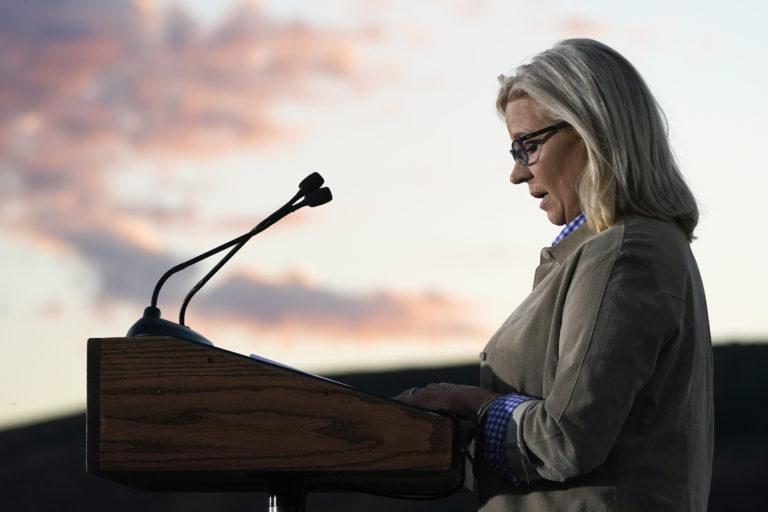
(Luis Cornelio, Headline USA) Disgraced former Rep. Liz Cheney faced a less-than-warm reception from graduates at Colorado College, her alma mater, on Sunday. As she delivered the commencement address, some students expressed their disapproval by booing and turning their chairs away from her, reported the Daily Mail.

During her speech, Cheney recycled the anti-Trump talking points that led to her embarrassing removal from the U.S. House of Representatives in 2022.

“After the 2020 election and the attack of January 6th, my fellow Republicans wanted me to lie,” Cheney stated. “They wanted me to say the 2020 election was stolen, the attack of January 6th wasn’t a big deal, and Donald Trump wasn’t dangerous.”

Cheney also took the opportunity to criticize election integrity attorney Cleta Mitchell, labeling her as an “election denier” and accusing her of advocating against college students’ right to vote. These remarks only served to further fuel the dissatisfaction of the already worked-up students who were protesting Cheney’s presence.

One student even adorned her graduation cap with the following damning message: “Why listen to a racist, imperialist, transphobic, war monger?? Your hate is loud.”

Continuing her address, Cheney directed her condemnation toward Republicans, portraying them as threats to democracy. “No party, no nation, no people can defend and perpetuate a constitutional republic if they accept leaders who have gone to war with the rule of law, with the democratic process, with the peaceful transfer of power, with the Constitution itself,” Cheney continued.

Several photos, first revealed by the Daily Mail, display several students turning their chairs as Cheney delivered her speech.

Cheney also shared her personal dilemma, stating, “I had to choose between lying and losing my position in House leadership.” She previously held the position of the third-ranking Republican leader in Congress.

Since leading Congress, Cheney has used every public appearance to deliver her grievances against former President Donald Trump. She has even flirted with the idea of running for the GOP primary for president in 2024. Several polls, however, have shown that Trump has a strong lead in the Republican primary.

Journalist Says Fox ‘Banned’ Him After Tucker Carlson Bombshell

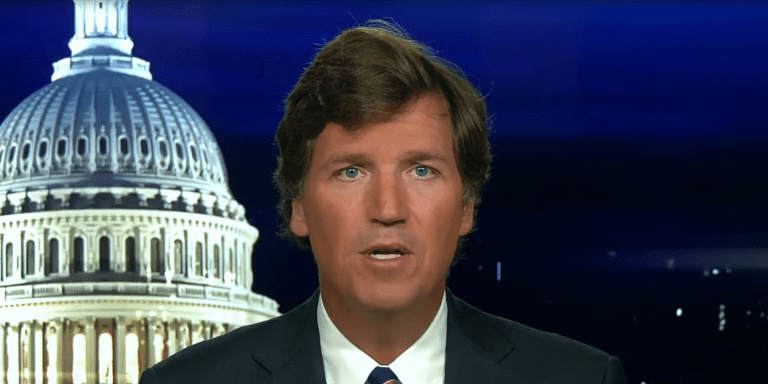
(Luis Cornelio, Headline USA) Renowned journalist Chadwick Moore took to Twitter on Sunday to announce he has been banned from the Fox News channel, allegedly due to his upcoming book on famed former Fox News host Tucker Carlson. 

In a tweet that quickly gained traction, Moore wrote, “I’m not allowed on Fox anymore, because I wrote a book about @TuckerCarlson. I’ve been banned from the network.” The message was followed by several tweets in which Moore revealed he was booted from the Gutfeld! Show, which is hosted by Greg Gutfeld. “That show kicked me off because of the book,” Moore added.

In a second tweet that gained over 30,000 views, Moore said, “This is FACT: Fox News has a new policy (aside from banning me): they won’t plug any book from a guest unless it was published by HarperCollins.” 

Moore called Fox News “grotesque” for not letting him promote his book on the show. “You can’t be a guest on Fox unless you’re a Fox author…it’s all so hilarious and grotesque. Fox News will not let you promote your book unless your book is published by Fox News,” the journalist continued.

The author has dropped several bombshells behind the abrupt ousting of Carlson from the conservative channel.

For instance, Moore said in a May 22 video promoting his book Tucker: The Biography that Fox News fired Carlson because of the infamous $787 million settlement with Dominion Voting Systems.

“It has now been reported that his firing was a condition demanded by Dominion as part of a settlement with Fox. Although Dominion has denied this, my sources have intimate knowledge of the situation and they have assured me […] that that is in fact the truth,” Moore said in the now viral video. 

Moore’s biography of Carlson, which is set to be released on July 18, delves into the influential TV personality’s rapid rise to fame within the conservative movement. Carlson’s now-canceled show, Tucker Carlson Tonight, was Fox News’s most-watched show before it was abruptly canceled.

In a third tweet, Moore dismissed Fox’s alleged decision to bar him from appearing on their shows, saying, “Well, I’ve been canceled by liberal corporate media and now I’m canceled by corporate “conservative” media. I think I’ll be fine. I couldn’t care less.”

Dylan Mulvaney Flips w/ Twist on Trans Identity

(Mark Pellin, Headline USA) Trans huckster Dylan Mulvaney was blasted on Twitter over the weekend after reportedly flip-flopping with a twist on Mulvaney’s professed gender identity, which has gained national acclaim from the LGBT mafia and even an invitation to the White House.

“So I recently told my parents that I may be a little bit romantically interested in women,” Mulvaney said in what was reported as a video post. “And that was a big shock for them considering the past 10 years of coming out as gay then queer then non-binary then trans. And I think it was just a bit of shock.”

The shock didn’t end there, as Mulvaney was still horrifically confused about biology and reality.

“So I tell my dad and he goes, ‘I would love to see you get a woman pregnant’ and I said, ‘oh no, no, no, she would be getting me pregnant.”

After creating a social media maelstrom and strong-arming major brands like Bud Light, Nike and Maybelline to stake their reputations and their customer bases on the transgender wonder, Mulvaney was shredded for her hypocrisy and hucksterism.

“Y’all been played by Miss 5 O’clock shadow,” tweeted Benny Johnson, announcing that “Dylan Mulvaney comes out as straight.”

Twitter Spaces host Ian Miles Cheong, meanwhile, announced that Mulvaney “comes out as a lesbian.”

Rebel News correspondent Avi Yemini offered a “correction” to both takes.

“Dylan Mulvaney comes out as a straight man with a mental illness, causing delusions that he could become pregnant,” Yemini tweeted. “He needs meds for his head, not hormones.”

Keeping up with the trans twists and turns left many struggling to keep the narrative straight.

“There is no distinction between reality and parody,” wrote TimCast News’ Shane Cashman.

Trending Politics’ Collin Rugg offered a helping hand.

“For those keeping track, Mulvaney went from a gay male, to a trans ‘woman’ who was still attracted to men, to a lesbian trans ‘woman’ or also known as a straight male,” Rugg tweeted.

Jeffries Silent on Devastating Democratic Blow over Debt Ceiling

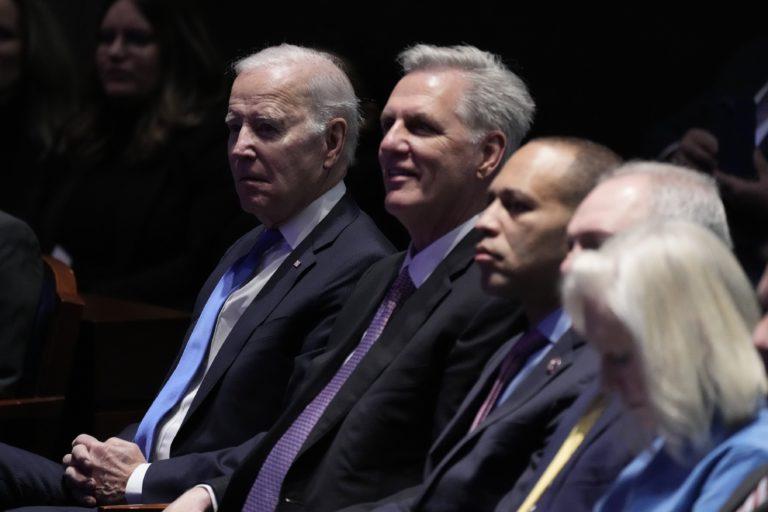
(Luis Cornelio, Headline USA) As the White House and House Republicans reach a deal over the months-long debate on raising the debt ceiling, Minority Leader Rep. Hakeem Jeffries, D-N.Y., remained tight-lipped on his party’s support for such an agreement, which could be deemed as a victory for the GOP and Speaker Kevin McCarthy, R-Calif. 

“I do expect that there will be Democratic support, once we have the ability to actually be fully briefed by the White House,” Jeffries said in a Sunday interview with CBS’s Margaret Brennan. “But I’m not going to predict what those numbers may ultimately look like.”  

Echoing McCarthy’s warning that there was still a lot of work to be done, Jeffries said, “We have to go through a process consistent with respecting every single member of the House of Representatives and their ability to fully understand the resolution that has been raised.” 

While negotiations between McCarthy and President Joe Biden have been ongoing, Jeffries’s refusal to disclose his party’s support for the bill left many wondering whether his silence is a political plan aimed at avoiding potential backlash from the far-left wing of the Democratic Party.

“Time to play smart,” Fox News host Laura Ingraham said on Sunday via Twitter. “Jeffries will cast as many votes against Biden and the deal as he’s allowed to get away with. McCarthy should play hardball here and demand that the White House deliver the votes to get this passed.” 

Jeffries took to Twitter to thank Biden for reaching an agreement with House Republicans but also remained silent on whether his caucus would support the bill. “Thankful that President Biden has reached an agreement in principle to prevent a devastating GOP-manufactured default,” Jeffries said. 

Several Republicans had expressed frustration over Jeffries’s unwillingness to compromise, with Rep. Lauren Boebert, R-Colo., calling some of the Democratic demands “radical.” 

McCarthy announced the deal on Saturday evening but warned that House Republicans will have 72 hours to review the bill before voting on it. The text of the bill was released on Sunday evening and members of Congress are expected to vote on the agreement on Wednesday. 

Responding to conservative backlash, Rep. Marjorie Taylor Greene, R-Ga., partially credited McCarthy over the debt ceiling debate. “The debt ceiling fight has never been our only chance.  This is a game of inches and we have the momentum,” Greene said on a Sunday tweet. “The bill text is not even out yet, let’s wait to read the bill.” 

Here’s What Levin Told Trump About Preventing Obama’s ‘Third Term’

(Luis Cornelio, Headline USA) Renowned Fox News host Mark Levin during a Sunday interview with Donald Trump passionately expressed his unwavering support for the former president, affirming that history would undoubtedly recognize him as one of the greatest presidents of all time and citing his 2016 victory as the reason the leftist media hates him.

In an exclusive interview with President Trump unveiled Sunday on Fox News’s Life, Liberty & Levin, Levin credited the Trump administration, declaring, “I’ve talked to a lot of important people, Supreme Court justices, presidents, presidential candidates, brilliant people and talking with you is really the most impressive conversation I’ve had.”

Levin, known for his staunch and passionate conservative commentary, continued to praise Trump’s ability to debate with detail several issues of importance to the nation.


“Number one, there are very few people who could sit there and speak the way you do from subject to subject, to subject to subject,” Levin said. “If people would let you speak and actually listen to you while you had the enormous pressure on your shoulder of the grand juries, other things going on, and you still are going and you’re still able to do it,” he added in the interview which was recorded last month but released Sunday. 

Trump took to Truth Social to promote the interview, saying, “Mark Levin interview on in 5 minutes, 8:00 O’clock. Enjoy!” 

Levin delved into Trump’s latest book, Letter to Trump, and praised the legacy of the Trump administration. “That is absolutely remarkable,” Levin said of Trump’s endurance. “You should through the history of your presidency and I read these letters in this book, it was a phenomenal presidency, phenomenal presidency and the reason you don’t get the credit that you deserve is because perhaps that’s going to be up to history when people could look back and say, ‘Wait a minute, he was right this and this and this,” Levin concluded. 

The famed conservative TV host cited Trump’s victory in the 2016 presidential election as the main reason he received and continues to receive backlash from leftist media. “They never forgave you,” Levin said of Trump’s victory that effectively prevented “the third term of Obama.”