Biden Begins Shadow Loan Forgiveness Plan

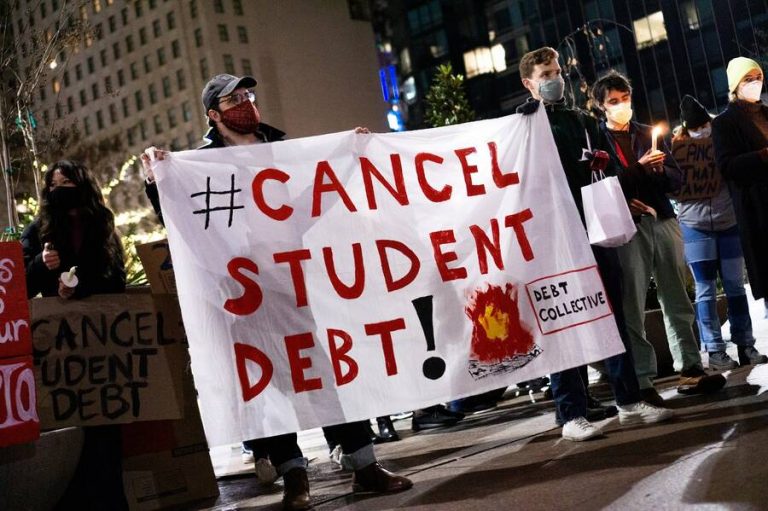
(By Peter Jacobsen, FEE) Earlier this month, the Supreme Court ruled against the Biden administration’s student loan forgiveness proposal which would have forgiven $10,000-$20,000 of student loans per borrower. But the fight for student loan forgiveness isn’t going anywhere.

In a previous article for FEE, I highlighted how student loan forgiveness has already been happening and started under president Trump due to the freeze on interest accumulation. Although this may not be as visible as a $10,000 lower balance, frozen interest means the real cost of taking a loan out became smaller than the initial terms suggested.

This highlights a simple truth about student loan forgiveness—the Biden administration has already and can continue to forgive student loans in spite of this ruling. In fact, they already have plans to do so.

Almost immediately after the Supreme Court decision was announced, the Biden administration announced their response.

Perhaps the most important announcement by the Department of Education was the introduction of a new student loan repayment plan—the SAVE plan.

The SAVE plan is a modification of the current REPAYE plan. Both of these plans are considered income-driven-repayment plans.

IDR plans are complicated, but essentially they limit the size of a borrowers monthly payment based on income. The payment calculations depend on the borrower’s income relative to the poverty line.

Under the new guidelines by the Department of Education, someone making 225% of he federal poverty rate will now have their income completely protected from payments according to Fox Business. That means borrowers earning $32,805 or a family of four with income of $67,500 will be required to make payments of $0.

Even borrowers who make more than those amounts who qualify for a SAVE plan will see lower payments.

But wait, won’t low or zero dollar payments mean the interest on these loans will grow out of control? Nope. The administration is capping interest rates to make sure loan balances don’t grow. So how much do we expect someone to pay on a student loan with a required payment of $0 and no interest accumulation? It’s not hard to see that this is just shadow forgiveness.

It doesn’t end here either. IDR plans already offered loan forgiveness to borrowers who made payments for 20-25 years. So borrowers who have a small payment under Biden’s new SAVE plan will see their balances disappear eventually based on already existing rules.

So, if a borrower qualifies for a $100 monthly payment, and they pay that over 20 years, that’s a total repayment of $24,000 (not even including the fact that the present value is lower). So if someone has a $50,000 student loan, that means they got forgiveness of $26,000. That dwarfs Biden’s $10,000 forgiveness promise struck down by courts.

Not only that, borrowers can get even more forgiveness if they take jobs in the government or non-profits. The Public Service Loan Forgiveness program grants forgiveness after just 10 years of payments to those who work for qualifying public and non-profit jobs. Using the previous example, that would increase forgiveness to $38,000 of the $50,000

The Cost of Our Student Loan System

It would be nice if the cost of this convoluted shadow forgiveness program was limited to the dollar value of the forgiveness (which ultimately is borne by taxpayers). But that isn’t the full cost.

Perhaps an even worse aspect of this system, is it distorts the incentives of future generations in making career decisions. The current system, exacerbated by the Biden Administration’s new plans encourages and rewards those who take out massive student loans to pursue jobs which consumers do not value highly.

Even more damaging, the new repayment program exacerbates the use of PSLF which encourages workers to avoid value creating private sector jobs, and, instead, pursue wealth-extracting public sector jobs.

What world-improving things would have been created had individuals been left to become educated at their own expense? Those forgone benefits will go largely unseen a la Bastiat.

On the other hand, many will experience direct benefits from these programs which are very visible, making the programs very hard to end.

So while some have celebrated the Supreme Court decision as defeating loan forgiveness once and for all, I’m not nearly so optimistic. So long as the Department of Education has administrative control over the country’s student loan system, loan forgiveness is just a few bureaucratic tweaks away.

At this point, the only way the Supreme Court would be able to do anything about it is if they declared the Department of Education itself unconstitutional. But I doubt this will ever happen. Unfortunately, the administrative state seems to always be forgiven.

Minimum Wage Laws Increase Homelessness, New Study Finds

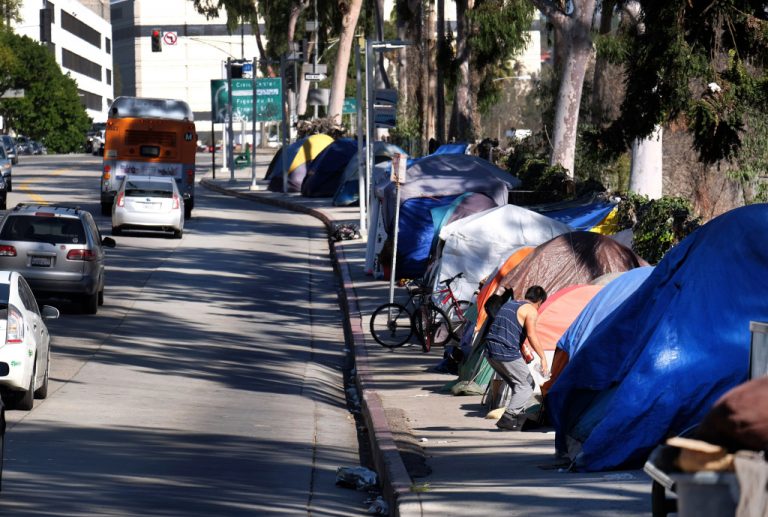
(By Jon Miltimore, FEE) One thing Lang Martinez said he learned after living on the streets of Ventura County, California , was that being homeless was worse than being in prison.

“It’s a different lifestyle. You think prison is bad? No. Prison’s got structure,” Martinez, a former Los Angeles gang member-turned-advocate against homelessness, recently told California Insider. “The streets got what they call rules of engagement.”

Though Martinez agrees with the conventional wisdom that mental illness and drug abuse are the primary catalysts for homelessness, new academic research suggests the picture is more complicated.

A fresh study out of University of California, San Francisco suggests that losing income is the single biggest driver of homelessness — ahead of mental illness, drug addiction and other causes — the study authors say.

“I think it’s really important to note how [desperate] poor people are, and how much it is their poverty and the high housing costs that are leading to this crisis,” said Margot Kushel, a physician and leader of the UCSF Benioff Homelessness and Housing Initiative, which conducted the study.

California is home to approximately 30% of the entire U.S. homeless population (115,491 people as of 2022 ), and some advocates expressed hope that the new research would “inform a statewide strategy” to combat the problem.

Separate research, however, suggests California’s own policies have exacerbated its homelessness epidemic, including a new paper written by University of California economist Seth J. Hill titled “Minimum Wages and Homelessness” published last month.

Utilizing data from the Department of Housing and Urban Development and other sources, Hill examined 100 cities from 2006-2019 to determine the relationship between wage floors and homelessness. The findings are bleak.

“Merging administrative data from HUD to state and local minimum wage laws suggests that minimum wages induce increases in homeless counts,” Hill writes. “When cities raise their minimum wage by 10%, relative homeless counts increase by three to four percent.”

Hill’s paper will not be the last word on the relationship between minimum wage laws and homelessness, but it provides yet more evidence of a stubborn reality minimum wage proponents often overlook: Minimum wage laws often harm the very people they are designed to help.

For decades, it was an all but universally accepted economic gospel that increases in the minimum wage came with adverse trade-offs. Many economists often pointed out these adverse consequences, including job losses, often fell on workers with the least skills and those who were the least valued.

“Among the effects of a minimum wage law, when it is effective, is that many unskilled and inexperienced workers are priced out of a job, when employers do not find them worth what the law specifies,” the economist Thomas Sowell once observed.

This is why even left-leaning publications such as the New York Times, until relatively recently, conceded that using minimum wage laws to combat poverty was an “old, honorable — and fundamentally flawed” idea because it would “price working poor people out of the job market.”

That minimum wage hikes increase unemployment was once hardly a debatable subject among economists, and even today a scouring of the literature shows that a “clear preponderance” of the scientific research shows a job-killing impact.

So in light of this evidence and the more recent UCSF findings, Hill’s conclusion should not surprise us.

“To the extent minimum wages cause disemployment of low skill-workers, the lost job can exacerbate existing economic insecurity and lessen ability to pay for housing,” he writes.

This finding is not just tragic but ironic. Politicians and wage-justice fundamentalists, who take pride in the idea they are fighting poverty by advocating for higher minimum wage laws, are not just costing countless lower-skilled workers jobs. They are actually pushing many of them into homelessness.

Again, this should not be a surprise. Decades ago, the economist Murray Rothbard famously observed the absurdity in the idea that banning jobs was a path to prosperity.

“Remember that the minimum wage law provides no jobs,” Rothbard wrote , “it only outlaws them; and outlawed jobs are the inevitable result.”

This is not to say wage floors are the sole cause of homelessness, which is a subject as complicated as human beings. Lang Martinez is no doubt correct when he says substance abuse and mental illness play a significant role.

But these realities should not overshadow another truth: For many struggling people, a lower-paying job is not “exploitation.” It’s a lifeline.

BofA Hit w/ $250M in Fines and Customer Refunds for ‘Double-Dipping’ Fees, Fake Accounts

(Headline USA) Bank of America will reimburse customers more than $100 million and pay $150 million in fines for “double-dipping” on overdraft fees, withholding reward bonuses on credit cards and opening accounts without customer consent.

Combined, it is one of the highest financial penalties in years against Bank of America, which has largely spent the last 15 years trying to clean up its reputation and market itself to the public as a bank focused on financial health and not on overdraft fee income and financial trickery.

BofA must refund $100 million to customers, pay $90 million in penalties to the Consumer Financial Protection Bureau and $60 million to the Office of the Comptroller of the Currency.

“Bank of America wrongfully withheld credit card rewards, double-dipped on fees and opened accounts without consent,” said CFPB Director Rohit Chopra, in a statement. “These practices are illegal and undermine customer trust.”

Empowered by a broad mandate from the White House, Chopra and the bureau have focused heavily in the past year on the issue of “ junk fees ” — fees charged to Americans that are often seen as unnecessary or exploitative by banks, debt collectors, airlines and concert venues. Banks such as BofA, JPMorgan Chase, Wells Fargo and others have been a target for the bureau under the Biden administration.

Part of the fines and penalties come because Bank of America had a policy of charging customers $35 after the bank declined a transaction because the customer did not have enough funds in their account, the CFPB said. The agency determined that the bank double-dipped by allowing fees to be repeatedly charged for the same transaction.

The fees often came when customers had routine monthly transactions, like a gym membership. If a customer had too low of a balance to cover the transaction, it would be declined and BofA would charge the customer a $35 fee. The business, who hasn’t been paid, often would recharge the customer’s account, resulting in another $35 non-sufficient funds fee.

The bank ended this practice last year, but will still have to repay customers who got charged before the policy was changed.

BofA has been cutting down on its reliance on overdraft fee revenue for more than a decade, and cut how much it charges customers for an overdraft to $15 last year. Brian Moynihan, the bank’s CEO and chairman, told The Associated Press in 2022 that under these new policies, overdraft fee income was down 90% from 2021. The bank said that it voluntarily reduced overdraft fees and eliminated all non-sufficient fund fees in the first half of last year.

Bank of America also offered people cash rewards and bonus points when signing up for a card, but the CFPB said the bank illegally withheld promised credit card account bonuses.
The CFPB also found that, since at least 2012, Bank of America employees illegally applied for and enrolled consumers in credit card accounts without their knowledge or authorization.

It is a similar to, but smaller than, a charge that was made against Wells Fargo, which paid billions in fines after it was determined that the San Francisco bank opened millions of unauthorized bank accounts in order to meet unrealistic sales goals.

In 2014 the CFPB ordered Bank of America to pay $727 million for illegal credit card practices. Last year it was ordered to pay a $10 million civil penalty over unlawful garnishments. Also in 2022, the CFPB and OCC fined Bank of America $225 million and required it to pay hundreds of millions of dollars in redress to consumers for botched disbursement of state unemployment benefits at the height of the COVID-19 pandemic.

Adapted from reporting by the Associated Press

Conservative Mag. Names 26 Best Colleges and Universities in U.S.A.

(Corine Gatti, Headline USA) The conservative American Spectator magazine published a list of their editors’ top recommendations for conservative colleges and universities across the United States.

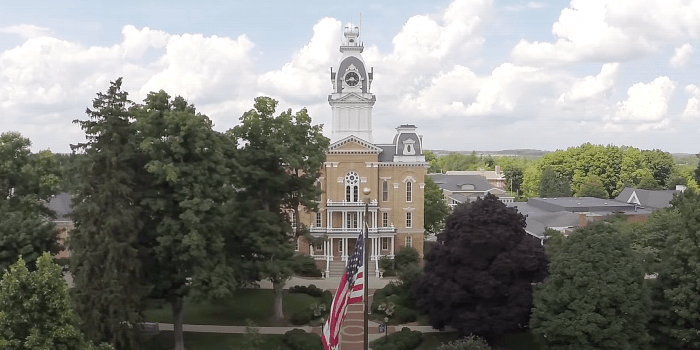
Out of the 26 schools on the list, 11 were “highly recommended,” including Asbury University, AveMaria University, Benedictine College, Cedarville University, College of the Ozarks, Franciscan University of Steubenville, Grove City College, Hillsdale College, Patrick Henry College, Thomas Aquinas College and University of Dallas.

The remaining schools on the list included Baylor University, Belmont Abbey College, Brigham Young University-Provo, Catholic University of America, Concordia University (Nebraska), Harding University, Liberty University, Pepperdine University, Regent University, Samford University, Texas A&M, University of Notre Dame, University of St. Thomas (Texas), Wyoming Catholic College and Yeshiva University.

“We don’t rank colleges and universities—we offer them and hope that you and your child will be surprised by the expansive and unique choices and find one that suits you,” wrote Melissa Mackenzie, publisher of the American Spectator.

“We likely have missed some excellent schools,” she added.

Among the criteria the magazine considered were whether the schools were rooted in Christian and Catholic values, and whether they emphasized traditional liberal-arts education, constitutional principles and a commitment to “integrity.”

The College Fix reported that the recommended institutions boasted remarkable graduation rates and students with outstanding ACT scores.

However, they also demonstrated a commintment to fostering an environment of high moral standards, particularly in the realm of sexuality. 

The diverse religious affiliations of the 26 institutions on the list spanned from Presbyterian, to Baptist, to Roman Catholic, to Jewish Orthodox.

The magazine also acknowledged the strong sense of patriotism and the presence of active conservative student clubs at these schools.

The article emphasized the unique attributes of various schools, such as the College of the Ozarks’ tuition-free education through on-campus work, Harding University’s prohibition of alcohol and Yeshiva’s sex-separated liberal arts schools that incorporated the study of the Torah.

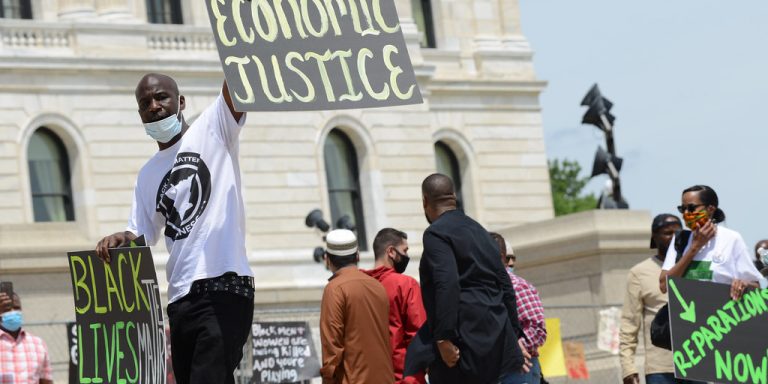
Chicago Suburb Starts Doling Out Reparations Payments in National ‘Test Run’

(Headline USA) A Chicago suburb started doling out $25,000 reparations payments to qualifying black residents this month in what leftists are calling “a test run for the whole country.”

Evanston, Illinois, has awarded reparations to 16 locals so far as part of a $10 million package first approved in 2019. By the end of this year, the city’s reparations committee said it will have paid all 140 qualifying residents in the city, which has a population of about 75,000 people.

To qualify, black residents had to have lived in the city between 1919 and 1969, when Evanston passed a fair housing ordinance, according to the Wall Street Journal.

The $10 million reparations package was originally supposed to be funded from taxes collected on legal marijuana sales. But city officials agreed to speed up the process by allotting real estate transfer tax money from properties worth more than $1 million into the reparations fund as well. So far, just $1.2 million has been added to the fund.

Evanston Mayor Daniel Bliss said he sees his city’s efforts as an example for the rest of the country.

“Our job here is just to move forward and to continue being that example, to continue illustrating that a small municipality can make real tangible progress,” he said.

Leftist professor Justin Hansford, who heads the Thurgood Marshall Civil Rights Center at Howard University, agreed: “I see it as like a test run for the whole country.”

Several blue parts of the country are considering similar reparations proposals, including New York and California. The latter state’s reparations task force has proposed reparations payments of more than $1 million per qualifying resident. California Democrats, however, have thus far refrained from endorsing the cash payments.

“Dealing with the legacy of slavery is about much more than cash payments,” California Gov. Gavin Newsom said in a statement.

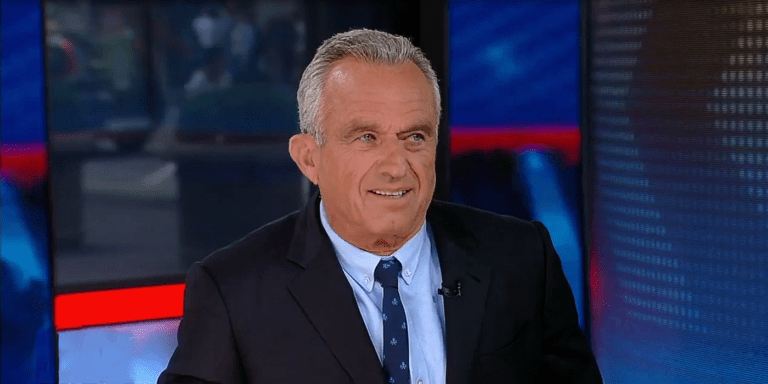
RFK Jr. Vows to Prosecute Fauci If Elected

(Headline USA) Democratic presidential candidate Robert F. Kennedy Jr. vowed this week to prosecute former COVID czar Anthony Fauci if the latter were found to have committed crimes, such as lying to Congress, during the pandemic.

Kennedy made the comment during an interview with Fox News host Jesse Watters on Monday, saying there should be a thorough investigation into Fauci’s role in the pandemic.

“Do I think that he committed crimes? I think he caused a lot of injury … particularly, by withholding early treatment from Americans,” Kennedy said, likely referring to early options like hydroxychloroquine and Ivermectin that preceded the release of the Moderna and Pfizer vaccines.

The Food and Drug Administration’s ability to fast-track the vaccines for emergency use would have been hindered if there were an alternative treatment, which likely explains the concerted efforts among many so-called scientists linked to Big Pharma—including Fauci—to discredit the pre-existing options.

Kennedy said the humanitarian cost of that profits-based decision was incalculable.

“You know we racked up the highest death count in the world?” said the noted anti-vaxxer and political scion. “We only have 4.2% of the globe’s population, but we had 16% of the COVID deaths in this country, and that was from bad policy.”

Some have argued that the U.S. may, in fact, have inflated its COVID numbers in order to further leverage the disease for policymaking purposes.

Nonetheless, Fauci’s abuse of power remains a common thread throughout many criticisms of the pandemic response.

Watters pressed Kennedy: “Would you prosecute him if you ever got to the White House?”

Kennedy, who is currently trailing incumbent President Joe Biden by nearly 50 percentage points, replied, “If there were crimes that he committed, of course. I would tell the attorney general to prosecute him and not hold off.”

The Democrat, who authored the best-selling book The Real Anthony Fauci, went on to cite several examples of Fauci knowingly misleading the public.

“Some of the things that were done by public health officials at that time that they knew that they would be harmful,” he said. “There’s countries that did the opposite of what we did, that provided Ivermectin, hydroxychloroquine, other early treatments to their populations, and had 1/200th of our death rate.” 

Kennedy has blasted Fauci for years, accusing the former COVID czar of playing a leading role in the “global war on democracy and public health.” 

In his 2021 book, he explains how Fauci suppressed and smeared viable alternatives to the COVID vaccines and wielded “formidable power to fortify the pharmaceutical industry’s explosive growth and its corrosive influence over our government regulatory agencies and public health policy.”

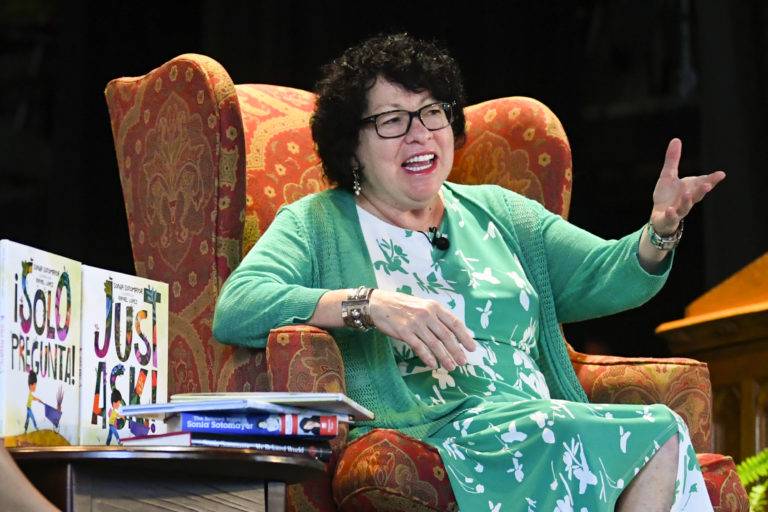
SCOTUS Justice Sotomayor Caught in Book-Selling Ethics Scandal

(Headline USA) Far-leftist Supreme Court Justice Sonia Sotomayor has for years benefitted from an ethically challenged money-making scheme that had her staff prod public institutions to purchase her books.

Sotomayor’s staff has often strong-armed public institutions that have hosted the justice to buy her memoir or children’s books, works that have earned her at least $3.7 million since she joined the court in 2009. Details of those events, largely out of public view, were obtained by the Associated Press through more than 100 open records requests to public institutions.

The resulting tens of thousands of pages of documents offer a rare look at Sotomayor and her fellow justices beyond their official duties.

In her case, the documents reveal repeated examples of taxpayer-funded court staff performing tasks for the justice’s book ventures, which workers in other branches of government are barred from doing. But when it comes to promoting her literary career, Sotomayor is free to do what other government officials cannot because the Supreme Court does not have a formal code of conduct, leaving the nine justices to largely write and enforce their own rules.

“This is one of the most basic tenets of ethics laws that protects taxpayer dollars from misuse,” said Kedric Payne, a former deputy chief counsel at the Office of Congressional Ethics and current general counsel for the Campaign Legal Center, a nonpartisan government watchdog group in Washington. “The problem at the Supreme Court is there’s no one there to say whether this is wrong.”

Supreme Court staffers have been deeply involved in organizing speaking engagements intended to sell books. That is conduct prohibited for members of Congress and the executive branch, who are barred under ethics rules from using government resources, including staff, for personal financial gain. Lower federal court judges are also instructed to not “lend the prestige of the judicial office to advance” their “private interests.”

In a statement, the Supreme Court said it works with the justices and their staff to ensure they are “complying with judicial ethics guidance for such visits.”

“When (Sotomayor) is invited to participate in a book program, Chambers staff recommends the number of books (for an organization to order) based on the size of the audience so as not to disappoint attendees who may anticipate books being available at an event,” the court said.

The documents obtained by AP show that the justices’ conduct spans their conservative-liberal split. Besides book sales, appearances by the justices were used in hopes of raising money at schools, which often invited major contributors to the events. Justices also lent the allure of their high office to partisan activity.

In 2019, as Sotomayor traveled the country to promote her new children’s book, Just Ask!, library and community college officials in Portland, Oregon, jumped at the chance to host an event.

They put in long hours and accommodated the shifting requests of Sotomayor’s court staff. Then, as the public cost of hosting the event soared almost tenfold, a Sotomayor aide emailed with a different, urgent concern: She said the organizers did not buy enough copies of the justice’s book, which attendees had to purchase or have on hand in order to meet Sotomayor after her talk.

“For an event with 1,000 people and they have to have a copy of Just Ask to get into the line, 250 books is definitely not enough,” the aide, Anh Le, wrote staffers at the Multnomah County Library. “Families purchase multiples and people will be upset if they are unable to get in line because the book required is sold out.”

It was not an isolated push. As Sotomayor prepared for commencement weekend at the University of California, Davis law school, her staff pitched officials there on buying copies of signed books in connection with the event. Before a visit to the University of Wisconsin, the staff suggested a book signing.

At Clemson University in South Carolina, school officials offered to buy 60 signed copies before a 2017 appearance; Sotomayor’s staff noted that most schools order around 400. Michigan State University asked Sotomayor to come to campus and in 2018 spent more than $100,000 on copies of her memoir, My Beloved World, to distribute to incoming first-year students. The books were shipped to the Supreme Court, where copies were taken to her chambers by court workers and signed by her before being sent to the school.

Sotomayor, whose annual salary this year is $285,400, is not alone in earning money by writing books. Such income is exempt from the court’s $30,000 restriction on outside yearly pay. But none of the justices has as forcefully leveraged publicly sponsored travel to boost book sales as has Sotomayor, according to emails and other records reviewed by the AP.

Such promotional efforts risk damaging the Supreme Court’s public standing further by placing an individual justice above the institution itself, said J. Michael Luttig, a former federal appeals court judge who has pushed for the justices to adopt a formal code of conduct.

“I have never believed that Supreme Court justices should write books to supplement their judicial incomes,” said Luttig, who was considered for the Supreme Court by President George W. Bush. “The potential for promotion of the individual justices over the Court at the reputational expense of the Court as an institution, as well as the appearance of such, is unavoidable.”

Sotomayor’s publisher, Penguin Random House, also has played a role in organizing her talks, in some cases pressing public institutions to commit to buying a specific number of copies or requesting that attendees purchase books to obtain tickets, emails show. The publisher has had several matters before the court in which Sotomayor did not recuse herself.

“Justice Sotomayor would have recused in cases in which Penguin Random House was a party, in light of her close and ongoing relationship with the publisher,” the Supreme Court said in a statement. “An inadvertent omission failed to bring Penguin’s participation in several cases to her attention; those cases ultimately were not selected for review by the Court. Chambers’ conflict check procedures have since been changed.”

A person close to Sotomayor, who insisted on anonymity to discuss the justice’s book dealings, said that Sotomayor “has not and will not profit from sales” of her memoir beyond the $3.1 million advance that she received and that doing so would “require purchases of hundreds of thousands of additional books, more than double the purchases to date.”

Sotomayor, however, continues to earn royalties — at least $400,000 since 2019 — from sales of her children’s literature, including Just Ask!, her second best-selling book, which was the promotional focus of the 2019 event held in Portland, emails and records show.

That summer, after an aide to Sotomayor first contacted Portland Community College to gauge its interest in hosting a book talk, officials at the Oregon school called it an “exciting possibility.” Officials committed to spending $1,000 to host the event. Co-host Multnomah County Library pledged an additional $1,500.

Costs associated with the event spiked to more than $20,000 by the time it was held in September 2019. Emails show Supreme Court staff, including Le, a longtime legal assistant to the justice and graduate of the community college, closely controlled the run-of-show, requesting the largest venue possible, while managing minor details such as the placement of stairs or approving the TV camera angles that would be used.

As the talk neared, Le shifted her focus to books, which were offered for sale online to those who obtained tickets to the free event.

“Can you please show me the screen where people can purchase books?” Le wrote library staffers as they prepared to make the tickets available. “Are you just placing Just Ask … on the portal or all of the Justice’s books.”

When the free tickets were quickly snapped up, she asked library officials to publicize that those who could not get tickets could still meet the justice if they purchased a book.
“Please also let them know that they can attend the signing line to meet the Justice even if they are not able to attend the event,” Le wrote in an Aug. 26, 2019, email.

A day later, she followed with another email, concerned that not enough of the people who got tickets had also purchased a book. Records indicate that the roughly 550 free tickets made available to the public (the rest were reserved for VIP guests) resulted in the advance purchase of only 28 books.

“Is there a reminder going out that people need to purchase a book at the event or bring a book to get into the signing line?” Le wrote. “Most of the registrants did not purchase books.”

Still, when she found out event organizers had only purchased 250 copies of Sotomayor’s book, she sent an email telling library officials that the quantity was “definitely not enough.”
A library staffer emailed back, “Maybe you should communicate with (Sotomayor’s publisher) and the book sellers about your concerns?”

A library spokesman, who was also included on the emails, declined to comment.
In its statement, the Supreme Court said judicial ethics guidance “suggests that a judge may sign copies of his or her work, which may also be available for sale” so long as there is “no requirement or suggestion that attendees are required to purchase books in order to attend.”

“Justice Sotomayor’s Judicial Assistant has worked with the Justice’s publisher to ensure compliance with these standards, and at no time have attendees been required to buy a book in order to attend an event,” the court statement read. “Asking whether attendees were reminded that they must either buy or bring a book in order to enter a signing line at an event would in no way conflict with the standard outlined above.”

Some institutions that bought Sotomayor’s books initiated the purchases on their own, raising the prospect of high-volume orders with the court as they extended the invitation to host her.

In 2018, Michigan State spent $110,000 for 11,000 copies of My Beloved World, to distribute to incoming first-year students after selecting it for an annual reading program with the East Lansing Public Library.

“Her biography is really just kind of, for lack of a better term, a rags-to-riches story. I mean, she came from very humble beginnings and became a Supreme Court justice,” library director Kristin Shelley told the AP, explaining the book selection.

The books were shipped to the Supreme Court, scores of cartons at a time, to be signed by Sotomayor.

“Hello Supreme Court team: Good news!” a Penguin Random House worker emailed court staff. “The order that Anh and I have been waiting for from Michigan State University is in! They are going to be ordering a total of 11,004 HC (hard cover) copies. But don’t panic. We will not be delivering 11,004 copies to the Supreme Court at one time.”

When university officials mistakenly thought they might be missing 20 boxes of books they had ordered, Le expressed surprise, writing, “I literally prepped the boxes and had my aides count the books before signing. I even have a spreadsheet noting how many books were signed each day.”

Other colleges have made similar purchases. The University at Albany in New York bought about 3,700 copies before a 2017 appearance. Stony Brook University in New York ordered roughly 3,900 copies in 2018 for use in a first-year reading program.

When the subject arose of how many Sotomayor books Clemson should purchase before a 2017 visit, school officials worried 60 might be too many to sign. Sotomayor’s legal assistant reassured them it would not be a problem because “most institutions order in the ranges of 400 and up.”

Other justices have benefited from similar arrangements. But how much they have made from individual schools or events is difficult to assess because the justices only report lump-sum earnings at year’s end.

Justice Clarence Thomas has collected about $1 million since 2006. Stephen Breyer, who retired in 2022, reported roughly $700,000 in royalty income in the past two decades. Justice Neil Gorsuch has disclosed more than $900,000 since his 2017 confirmation. Justice Amy Coney Barrett, who was confirmed in 2020, received a reported $2 million advance for a forthcoming book. Justice Ketanji Brown Jackson signed a book deal, but the amount of her advance was not public.

In Sotomayor’s case, her staff routinely brought up books in emails as trip details were discussed.

“Depending on quantity and if they get hardcover or paperback, she will sign them,” Le told a professor at the UC Davis law school, which arranged to host her for commencement weekend in 2018. “She is signing over 11,000 for one school right now,” Le added with a smiling emoji, apparently referencing Michigan State’s purchase.

The law school ultimately ordered 410 signed copies of My Beloved World, after Le broached the idea of ordering copies. But one law school official took issue after a colleague relayed what he said was a question from Sotomayor’s staff about setting up a book table during graduation festivities.

“I’m not sure this is a good idea, have we ever allowed other speakers to sell or offer their books (that we have purchased for guests)?” Kelley Weiss, the law school’s head of marketing and communications, wrote to the dean. “I think having a table of her books could be out of place,” she added. Weiss declined to comment to the AP.

Then planning took a turn. Weeks before the ceremony, Sotomayor fractured her shoulder and canceled her appearance. The school in turn canceled its $6,500 book order and sought a refund.

Still, Sotomayor’s office inquired to make sure.

“Is it for sure that UC Davis would like to move forward with canceling?” Le emailed. “I have the books on hold in storage and have not done anything with them.”
In about a month, the cancellation was processed.

Adapted from reporting by the Associated Press

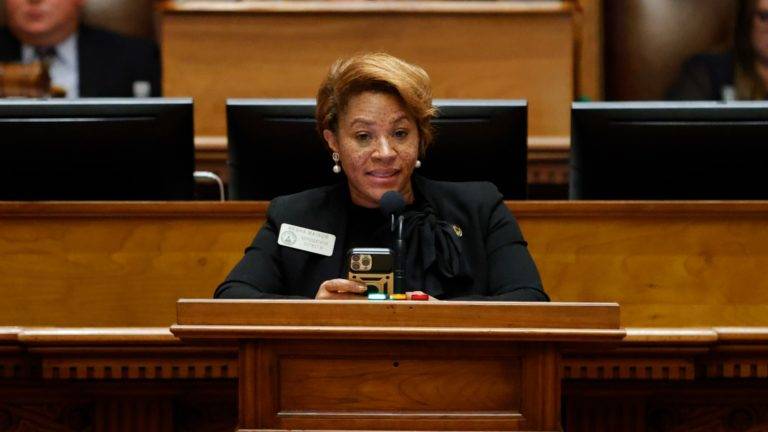
Ga. Democrat Rep. Jumps to GOP after Being ‘Crucified’ for Support of School Choice

(Headline USA) A Georgia Democrat who broke with her party earlier this year over its opposition to school choice legislation officially joined the GOP this week, accusing the Democratic Party of leaving her.

Mesha Mainor, a state representative who represents Georgia’s deep blue 56th district, said she plans to switch her party registration to Republican because of the bullying she has faced from her Democrat colleagues in recent weeks.

“When I decided to stand up on behalf of disadvantaged children in support of school choice, my Democrat colleagues didn’t stand by me,” Mainor told Fox News. “They crucified me. When I decided to stand up in support of safe communities and refused to support efforts to defund the police, they didn’t back me. They abandoned me.”

Mainor was the only state Democrat to vote for a bill in May that would have created $6,500 vouchers for students in poor-performing public school districts. She argued the bill would have primarily benefited her constituents: low-income minority families who can’t afford to send their children to better private schools.

Democrats’ opposition to the bill is a symptom of the party’s disdain for black Americans, Mainor said.

“For far too long, the Democrat Party has gotten away with using and abusing the black community,” she said. “For decades, the Democrat Party has received the support of more than 90% of the black community. And what do we have to show for it? I represent a solidly blue district in the city of Atlanta. This isn’t a political decision for me. It’s a moral one.”

Mainor said she expects blowback from her Democrat colleagues, but that she has also “been met with much encouragement” from Republicans. 

It’s “humbling to be embraced – for the first time in a long time – by individuals who don’t find fault in a black woman having a mind of her own and be willing to buck the party line,” she said.

NYU Hosted Whites-Only Anti-Racism Seminar for Public School Parents

(Headline USA) New York University hosted a whites-only antiracism seminar for public school parents committed to “becoming anti-racist,” according to the Washington Free Beacon.

The seminar, titled “From Integration to Anti-Racism” and organized by NYU’s Steinhardt School of Education, took place over a five-month period and cost $360 to attend. Parents who participated met six times for workshops between February and June.

The only parents permitted to enroll in the seminar were white parents.

The seminar reportedly explained why in a handout titled “Why a White Space,” which claimed white people specifically need spaces where they can “unlearn racism” without subjecting minorities to “undue trauma or pain.”

Audio from the seminar’s first meeting shows facilitators reiterating this argument. A parent pointed out that it seemed “a little counterintuitive” to block minorities from participating in a seminar meant to build “multiracial parent communities,” but was told that it was for their own good.

“People of color are dealing with racism all the time,” replied Barbara Gross, the associate director of Steinhardt’s Education Justice Research group. “Like every minute of every day. It’s a harm on top of a harm for them to hear our racist thoughts.”

Throughout the seminar, white liberal parents repeatedly blasted themselves for not doing enough to serve minority communities. During one of the lectures, which included a discussion of Tema Okun’s “Characteristics of White Supremacy Culture,” such as “perfectionism,” “a sense of urgency,” and “worship of the written word,” one parent admitted that her expectations in the workplace could be racist.

“I’ve been correcting grammar a lot and typos,” one parent who said she works as an editor said. “And reading this I was thinking, ‘Wow, I had no idea.’”

Legal experts argued NYU’s seminar violated civil rights law by explicitly excluding certain groups on the basis of race.

“It’s quintessentially illegal,” said Ilya Shapiro, the director of constitutional studies at the Manhattan Institute. 

NYU said in a statement that it would be “reviewing these matters to determine whether they conform to our standards.”

Dems. Claim to Be ‘Pro-Military’ as Tuberville Delays Nominees Due to Abortion Policy

(Ezekiel Loseke, Headline USA) Sen. Tommy Tuberville, R-Ala., has blocked all Department of Defense appointments in the Senate to protest the department’s illegal abortion policy for five months.

Now Democrats are desperately claiming to be the new pro-defense party as the move threatens to leave the woke military in disarray.

On Monday, after blocking the Senate Armed Services Committee from approving Gen. Eric Smith as commandant of the Marine Corps by unanimous consent, with Smith’s predecessor due to retire the next day, Tuberville’s office argued in a press release that it would do nothing to impact actual miliary operations.

“This has minimal effect on his ability to lead,” Tuberville noted.

“There may be a delay to his planning guidance,” he continued. “And he can’t yet move into the Commandant’s residence. But there is little doubt about General Smith’s ability to lead effectively—even now.”

However, leftist were eager to use the issue to press their own talking points.

Tuberville’s protest stems from the military’s radical funding of abortion, in violation of the Supreme Court’s ruling in last year’s Dobbs v. Jackson Women’s Health.

After the decision’s overturning of Roe v. Wade, the Pentagon released a memo claiming that the Dobbs ruling would negatively affect the nation’s military readiness.

Tuberville said he asked Defense Secretary Lloyd Austin to clarify the outlandish claim but received no response.

In October, the DoD released another memo outlining its policy to fund travel and time off for troops who wanted an abortion, which was far more than the department was empowered to do under the law.

Tuberville then informed the DoD that he would place a hold on all of its nominees if it enacted its illegal policy.

Although it does not block the Biden appointees altogether, the move effectively forces a floor vote on the nominees rather than allowing them to be approved at the committee level.

“Senator Tuberville’s hold forces the Senate to consider and vote on the nominations by regular order instead of approving them in batches by unanimous consent,” said the press release. “The nominations can still be approved by the Senate, but the Majority Leader must make additional time for them to be considered on the floor.”

As of June 23, Senate Majority leader Chuck Schumer, D-N.Y., had not scheduled any votes on DoD nominations, according to The Hill.

“Either side could make a move, and right now neither side seems to think that these nominations are important enough to override the position that they find themselves in,” said Sen. Mike Rounds, R-S.D., who, along with Tuberville, is also a member of the Senate Armed Services Committee. “So we’re at a stalemate.”

Democrats, however, were attempting to take advantage of the stalemate by proclaiming themselves the pro-military party, as failed candidate Amy McGrath explained on MSNBC.

“So you know, the Republicans are silent,” she said, after asserting the Marine Corps had no leader. “The Republican Party is no longer the party of national security.”

Meanwhile, Tuberville made clear that candidates for appointment were leading under the role of an acting official—much as they did during the Trump administration, when Democrats refused to vote on the former president’s nominees for several key positions.

“I believe that the Marine Corps is in good hands right now,” Tuberville said, making clear his removal of consent was about the DoD’s illegal policies, and not the appointee.

He also clarified that the Democrats could end the impasse any time if committee chairman Jack Reed, D-R.I., were to allow the committee to close the legislative loopholes being used by the military to circumvent federal abortion law.

“If Chairman Reed and the Democrats are so concerned, then let’s vote.”

Headline USA’s Ben Sellers contributed to this report.