(Jacob Bruns, Headline USA) Sen. Ted Cruz, R-Tex., and Sen. Joe Machin, D-W.V., successfully proposed and passed a legislative amendment prohibiting President Joe Biden from selling off America’s Strategic Petroleum Reserve to nations such as China, North Korea, Iran and Russia, according to a recent press release from Cruz’s team.
The move was made as an amendment to the National Defense Authorization Act. It received substantial bipartisan support, passing 85-12.
According to Cruz, the legislation made sense given recent information coming from China.
“We know China has been amassing the largest stockpile of crude in the world. Nevertheless, last year, the United States sold off part of our reserves to China,” he noted.
“I have been working with Senator Manchin to prohibit such inexplicably reckless moves in a bipartisan way. . . We should not be selling our emergency oil reserves to our adversaries.”
He specifically listed “China, Russia, Iran, or North Korea” as “our adversaries,” and noted that President Joe Biden has “unnecessarily and dangerously” undermined “our national security.”
Manchin chimed in as well, supporting the amendment on the grounds that, while America supplies oil to the world, China is looking after its own national interest.
“Following Putin’s invasion of Ukraine, the U.S. ramped up production and exports to help meet global demand. It had been devastating to the world,” he said.
“China, on the other hand, stockpiled oil and held back refinery production. And while China was stockpiling, one of its state-owned companies purchased over 1.4 million barrels from the United States of America, the people of our great country, from our own stock of reserves. That’s what we’re trying to stop.”
Biden and his administration have spent years depleting America’s SPR, and it does not look to be coming back anytime soon, especially as climate change zeal grips the left.
According to U.S. Secretary of Energy Jennifer Granholm, she does not expect the reserve to be refilled by 2024.
“The first term’s over in a year and a half,” Granholm said when asked about the SPR. “So, I’m not sure it’ll be fully replenished. But certainly, the plan is this term and the next term to be able to do that.”
(Headline USA) The fallout from a Pfizer factory being damaged by a tornado could put even more pressure on already-strained drug supplies at U.S. hospitals, experts say.
Wednesday’s tornado touched down near Rocky Mount, North Carolina, and ripped up the roof of a Pfizer factory that makes nearly 25% of Pfizer’s sterile injectable medicines used in U.S. hospitals, according to the drugmaker.
Pfizer said all employees were safely evacuated and accounted for, and no serious injuries were reported. The drugmaker is still assessing damage.
Here’s a closer look at the possible effects.
WHAT ARE STERILE INJECTABLES?
The North Carolina plant produces drugs that are injected or through an IV.
The plant makes drugs for anesthesia, medicines that treat infections and drugs needed for surgeries. The latter are used in surgeries or intensive care units for patients who are placed on ventilators, said Mike Ganio, who studies drug shortages at the American Society of Health-System Pharmacists.
The Pfizer site does not make or store the company’s COVID-19 vaccine or treatments Comirnaty and Paxlovid.
HOW BIG IS THE SITE?
Pfizer bought the eastern North Carolina factory in 2015 as part of its acquisition of the drugmaker Hospira.
There is more than 1.4 million square feet of manufacturing space, or the equivalent of more than 24 football fields, and 22 packaging lines.
Pfizer says well over 2,000 people work there.
HOW WILL THIS AFFECT HOSPITAL DRUG SUPPLIES?
It will likely lead to some long-term shortages while Pfizer shifts production to other locations or rebuilds, said Erin Fox, senior pharmacy director at University of Utah Health.
“If Pfizer falls out, it makes it that much harder for other companies to make up the difference,” Fox said.
The specifics of which drugs might be involved in a shortage and how long that shortage will go aren’t clear.
“Anyone who is aware of this event is basically holding their collective breath at this point, hoping for the best and waiting for news,” Ganio said.
He noted that drugmakers tend to ship finished products quickly from manufacturing sites, which may limit how much inventory was damaged by the twister.
HOW CAN HOSPITALS HANDLE SHORTAGES?
They have several tools to soften the impact for patients.
Some hospitals have started increasing inventories of stored drugs instead of relying on regular deliveries from a wholesaler. Ganio said that it’s particularly true of drugs that hospital executives know will be hard to get.
Hospitals also may switch to different forms of a drug by giving a patient an antibiotic pill instead of an IV if that person can handle it. If a larger vial size of a drug is more readily available, they may order that and then fill several syringes with smaller doses ready for use.
AREN’T HOSPITALS ALREADY DEALING WITH DRUG SHORTAGES?
Yes, it’s been happening for years. But recently, hospitals have been dealing with shortages for things like chemotherapy drugs, pain medications and local anesthetics.
The impact of drug shortages isn’t limited to hospitals. The also affect more routine care delivered through drugstores and doctor’s offices.
Overall, there were 309 active drug shortages in the U.S. at the end of June, according to the University of Utah Drug Information Service. That’s up from 295 at the end of last year and the highest total recorded since 2014.
WHAT WILL PFIZER DO?
The company hasn’t said what happens next. Pfizer CEO Albert Bourla said Thursday on Twitter that the company was “working urgently to determine the best way to get back online as quickly as possible, while ensuring the safety of our people.”
All of us at Pfizer have spent the past 24 hours concerned about our colleagues and contractors at our Rocky Mount facility, which sustained a tremendous amount of damage yesterday when a tornado touched down in the community. I am very relieved to share that all have been… pic.twitter.com/AcJXEfcXnw
Drugmakers can shift manufacturing to other locations. But that can be complicated because they must reroute raw materials — usually made elsewhere — to other locations and may have to train workers to make a product.
Pfizer also may have to figure out whether to cut production of another product to squeeze in more manufacturing at the new site.
“It’s not always as easy as just flipping a switch to increase production,” Ganio said.
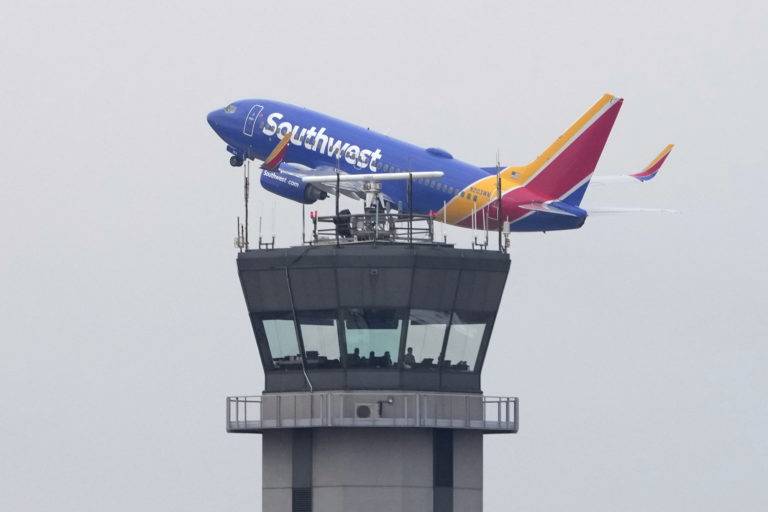
The measure seeks to improve air travel, which has been plagued by delays and cancellations during its busiest times, and would reauthorize FAA programs for the next five years. It passed on a mostly bipartisan vote of 351-69.
The Senate is working on its version of the bill ahead of the Oct. 1 deadline for action. The two chambers will have to reconcile differences or else approve a short-term extension of existing FAA programs by then.
The House approval came after a string of votes on contentious issues. Lawmakers voted 243-139 to remove a provision that would have allowed more flight simulator hours to be credited toward the 1,500-hour in-flight requirement to become an airline pilot.
Smaller airlines lobbied for the change, saying it would ease a pilot shortage that is already causing a loss of service to smaller communities. But opponents including pilot unions said the change would undermine safety.
A provision raising the mandatory retirement age for airline pilots from 65 to 67 survived despite opposition from pilot groups.
The House rejected an effort to increase the number of long-haul flights at Reagan Washington National Airport. Delta Air Lines pushed for the increase, joined by lawmakers from cities hoping to get nonstop service to the airport near downtown Washington. Flights to and from the airport are generally limited to 1,250 miles.
Opponents said the airport is already too congested and that adding more flights would lead to more delays. United Airlines, with a major operation at farther-out Dulles Airport, lobbied against the increase in flights at National.
The Senate is behind schedule on its version of the aviation measure, which would authorize more than $100 billion in spending. A committee vote was blocked last month by the disagreement over pilot training.
Many provisions in the House version of the legislation will affect airline consumers, including one that would roll back a Transportation Department regulation from 2011 requiring airlines to show the total price of a ticket upfront in advertising. Airlines could instead provide a link to the all-in price of a ticket.
Consumer advocates oppose the rollback, and the White House took their side Monday, saying full-fare advertising is needed to help consumers do comparison shopping for tickets.
Consumer groups hope that the Senate bill will include more of the provisions they want. They are underwhelmed by the House bill, which emerged as a compromise between Transportation Committee Chairman Sam Graves, a Missouri Republican, and Rick Larsen, a Washington Democrat.
Graves said the bill “improves the safety of our system, our airport infrastructure, and the quality of service for passengers.”
Scores of business groups and airlines applauded the House approval of the FAA legislation.
“This bill makes important progress that will enable the FAA to hire and train more controllers, to improve air traffic control technology and to strengthen the pipeline of trained workers, including pilots and aviation maintenance technicians,” American Airlines said in a statement after the vote.
But after Mohamad Barakat drove past, armed with 1,800 rounds of ammunition, numerous firearms and a grenade, tragedy ensued.
After the shooting ended on July 14, one police officer was dead, and two other officers as well as a woman in the crash were wounded, leaving authorities wondering what further carnage Barakat might have been planning.
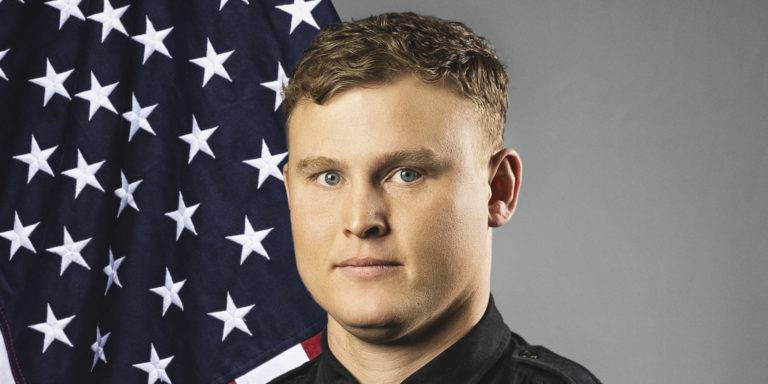
Officer Zach Robinson, the only officer in the melee who was not wounded, fatally shot Barakat with bystanders crouched nearby.
During a press conference Friday, state Attorney General Drew Wrigley hailed and defended the officer’s heroic actions.
“In the wake of Mohamad Barakat’s murderous, unprovoked attack, Officer Zach Robinson’s use of deadly force was reasonable, it was necessary, it was justified and, in all ways, it was lawful,” Wrigley said.
It was not immediately clear whether the attack was idealogically motivated—nor whether the attacker was a U.S. citizen or one of the many foreign nationals to have flooded into the country under President Joe Biden’s open-border policy.
Despite the imminent risk of sleeper cells forming who might be able to plan and coordinate deadly attacks from within the interior of the U.S. itself, as al-Qaeda operatives did in the 9/11 terror attacks 22 years ago, Homeland Security Secretary Alejandro Mayorkas has callously shrugged off the threat and instead sought to scapegoat U.S. citizens as domestic terrorists.
Barakat, a 37-year-old who briefly trained as an emergency responder at a nearby community college, had no criminal record and no social media presence.
But with police and firefighters tied up helping the collision, Barakat began “stalking his way in and sizing up his opportunity,” Wrigley told reporters Wednesday.
Barakat parked, watching for minutes until the officers walked away, about 15 to 20 feet from him. Then he lifted a .223-caliber rifle out of his car window and began firing in what Wrigley called “an absolute ambush” and “a murderous barrage of fire.”
The officers “had no time” to reach for their holstered guns with Barakat’s fusillade “so rapid,” Wrigley said.
Barakat, who lived in an apartment 2 miles away, was using a double-stacked magazine. He killed Officer Jake Wallin, 23, who served in Iraq and Afghanistan with the Minnesota Army National Guard. The barrage also left officers Andrew Dotas and Tyler Hawes critically wounded.
Wallin and Hawes were so new that they were still undergoing field training.
Barakat also hit Karlee Koswick, who was involved in the traffic collision, with two rounds as she ran away.
Robinson, who was in the street about 75 feet away from Barakat, “was the last man standing between what was coming next and what you can see this assailant was armed for,” Wrigley said.
Robinson moved from behind a vehicle involved in the crash and fired at Barakat. One of his shots disabled Barakat’s rifle, leaving 20 rounds unused after the killer fired 40.
“We have three officers down; send everybody,” Robinson said over the radio, after moving closer and noticing the fallen officers.
A wounded Barakat lay on the ground protected by his car, waving a 9 mm handgun. Robinson moved closer, calling out 16 times for Barakat to surrender.
Robinson came around the vehicle and gave one last command to Barakat to put down the gun before shooting him, said Wrigley, who reiterated that Robinson’s use of deadly force was “justified.”
Lasting about two minutes, the gunfight was still longer than most, Fargo Police Chief David Zibolski said. Wrigley noted Robinson fired approximately 30 rounds and had to stop to reload.
Zibolski said it might have been worse had there not been emergency crews already there, including an ambulance. As soon as the firing stopped, “firefighters bounced out and they were applying first aid immediately to our officers,” Zibolski said.
Before taking the drive, Barakat had rolled a weapons-filled suitcase from his apartment, Wrigley said.
Inside his vehicle, investigators found the homemade hand grenade, as well as a vest with loaded magazines, more firearms and canisters of gasoline. There were more weapons back at his apartment.
“When you look at the amount of ammunition this shooter had in his car, he was planning on more mayhem in our community,” Fargo Mayor Tim Mahoney said.
The attorney general said he believes the violence could have been the beginning of a mass shooting as the Downtown Fargo Street Fair and the Red River Valley Fair were underway.
The police chief said Barakat “was obviously dead-set on some pretty horrific acts, targets unknown at this time.” Authorities have said a motive is unknown.
As the state Bureau of Criminal Investigation and the FBI work on the case, the wounded are recovering, their conditions good or stable. Meanwhile, a funeral service is planned for Saturday for Wallin, whose body was cremated in his police uniform.
(Cameron Arcand, The Center Square) A federal judge ruled against Superintendent of Public Instruction Tom Horne in a lawsuit over banning transgender students from participating on girls’ sports teams in schools.
Arizona District Court Judge Jennifer Zipps, who was appointed by former President Barack Obama, ordered a preliminary injunction that will allow boys who identify as girls to play for their school’s girl’s sports teams.
“Plaintiffs will also suffer severe and irreparable mental, physical, and emotional harm if the Act applies to them because they cannot play on boys’ sports teams. Playing on a boys’ team would directly contradict Plaintiffs’ medical treatment for gender dysphoria and would be painful and humiliating,” the court document states. “Plaintiffs’ mental health is dependent on living as girls in all aspects of their lives.”
However, Horne insists that the final decision maker will be the U.S. Supreme Court, which leans conservative.
“We will appeal this ruling. This will ultimately be decided by the United States Supreme Court, and they will rule in our favor,” Horne said in a statement Thursday.
“The Plaintiffs in this case claimed that this only involves pre-pubescent boys, but we presented peer-reviewed studies that show pre-pubescent boys have an advantage over girls in sports. The only expert presented by the Plaintiffs was a medical doctor who makes his money doing sex transition treatments on children and who has exactly zero peer-reviewed studies to support his opinion.”
The law, known as the Save Women’s Sports Act was passed by the Republican-led Legislature and later signed by former Gov. Doug Ducey in March 2022. Other Republican-led states, such as Tennessee, Oklahoma, Iowa, and Alabama, have similar laws on the books.
According to 13 News, two transgender students sued Horne in order to get the opportunity to play for the girls’ teams at their schools.
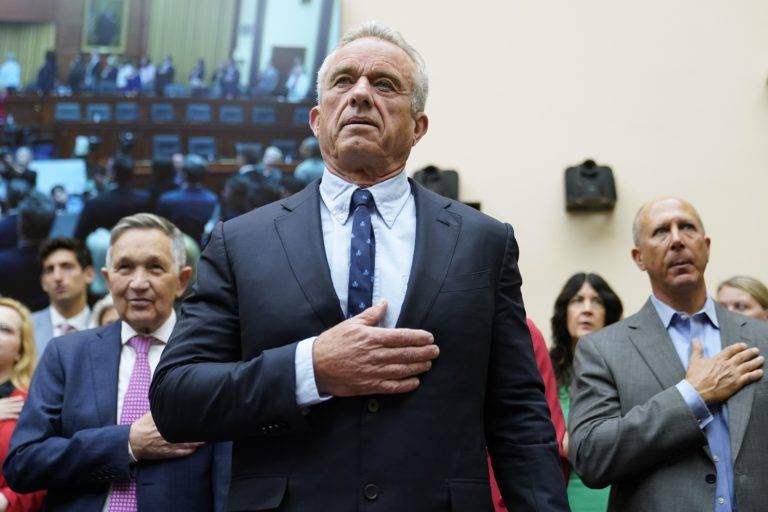
(Headline USA) Robert F. Kennedy Jr. worked to defend himself Thursday against accusations that he traffics in racist and hateful online conspiracy theories, testifying at a House hearing on government censorship despite requests from outside groups to disinvite the Democratic presidential candidate after his recent remarks, which fellow Democrats baselessly accused of being anti-Semitic.
The Republican-led Select Subcommittee on the Weaponization of the Federal Government is amplifying GOP claims that conservatives and others are being unfairly targeted by technology companies that routinely work with the government to censor online speech. Democrats argued that free speech comes with responsibilities not to spread misinformation, particularly when it fans violence.
In opening remarks, Kennedy invoked his famous family’s legacy in decrying the complaints of racism and antisemitism against him.
“This is an attempt to censor a censorship hearing,” said Kennedy, the son of Robert F. Kennedy and the nephew of President John F. Kennedy.
Growing animated at times, Kennedy defended his statements, which have delved into race, vaccine safety and other issues, as neither “racist or antisemitic.” He said his family has long believed in the First Amendment right to free speech.
“The First Amendment was not written for easy speech,” Kennedy said. “It was written for the speech that nobody likes you for.”
Republicans are eager to elevate Kennedy after he announced in April he was mounting a long-shot Democratic primary challenge to President Joe Biden. Kennedy’s presidential campaign chairman, Dennis Kucinich, the former congressman and past presidential contender, sat in the front row behind him during the more-than-three-hours hearing.
The Big Tech companies have adamantly denied the GOP assertions and say they enforce their rules impartially for everyone regardless of ideology or political affiliation.
The top Democrat on the House panel, Del. Stacey Plaskett of the Virgin Islands, said the Republican majority was giving a platform to Kennedy and others to promote conspiracy theories and a rallying cry for “bigotry and hate.”
“This is not the kind of free speech I know,” said Placket, who has received funding from millionaire pedophile sex trafficker Jeffrey Epstein.
Plaskett warned against misinformation from Russia and other U.S. adversaries who have interfered in American elections and are expected to meddle again in the 2024 election.
Often emotional and heated, Thursday’s hearing came as subcommittee chairman Jim Jordan, R-Ohio, portrayed what he claimed were examples of censorship, including a White House request to Twitter to remove a race-based post from Kennedy about COVID-19 vaccines.
“It’s why Mr. Kennedy is running for president — it’s to stop, to help us expose and stop what’s going on,” Jordan said.
A watchdog group asked Jordan to drop the invitation to Kennedy after he suggested COVID-19 could have been “ethnically targeted” to spare Ashkenazi Jews and Chinese people.
In those filmed remarks first published by The New York Post, Kennedy said “there is an argument” that COVID-19 “is ethnically targeted” and that it “attacks certain races disproportionately.”
After the video was made public, Kennedy posted on Twitter that his words were twisted and denied ever suggesting that COVID-19 was deliberately engineered to spare Jewish people. He called for the Post’s article to be retracted.
A clip from the video was aired at the hearing.
Ahead of the hearing, Jordan said that while he disagreed with Kennedy’s remarks, he was not about to drop him from the panel. Speaker Kevin McCarthy took a similar view, saying he did not want to censor Kennedy.
The panel wants to probe the way the federal government works with technology companies to flag postings that contain false information or downright lies. Hanging over the debate is part of federal communications law, Section 230, which shields technology companies like Twitter and Facebook from liability over what’s said on their platforms.
Lawmakers on the panel were also hearing testimony from Emma-Jo Morris, journalist at Breitbart News, who has reported extensively on Biden’s son, Hunter Biden; and D. John Sauer, a former Solicitor General in Missouri who is now a special Assistant Attorney General at the Louisiana Department of Justice involved in the lawsuit against the Biden administration.
Morris tweeted part of her opening remarks in which she described an “elaborate censorship conspiracy” that she claimed sought to halt her reporting of Hunter Biden.
A witness called by Democrats, Maya Wiley, the president and CEO of the Leadership Conference on Civil and Human Rights, implored the lawmakers to consider the platforms where Americans share views — but also “how deeply vital that they be based in fact, not fiction.”
The U.S. has been hesitant to regulate the social media giants, even as outside groups warn of the rise of hate speech and misinformation that can be erosive to civil society.
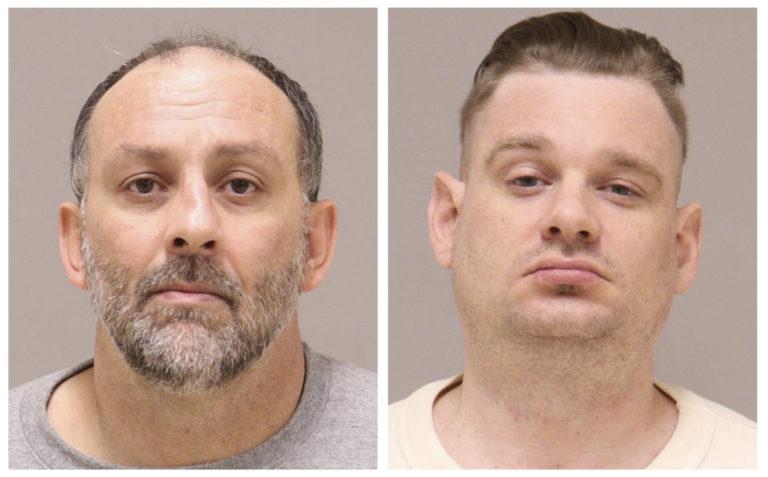
Croft’s supporters expected him to be transferred into a CMU ever since February, when he was sent from a Michigan county jail to Terre Haute, home to one of the country’s two CMUs. Croft’s transfer came one day after Headline USA published a statement he recorded for the House Weaponization Subcommittee.
Croft himself informed Headline USA of impending transfer to a CMU in a letter last month, telling this publication, “My contact with the outside world will cease soon.”
Whitmer kidnap plot 'ringleader' Barry Croft told me in a letter last month that he was being transferred to a wing designed for political prisoners.@NotRadix said yesterday that the transfer is underway. pic.twitter.com/5fAROaij3s
Independent journalist Christina Urso, who’s working on a documentary on the Whitmer case, said Thursday that Croft’s transfer to a CMU is underway.
“They are moving him to the CMU for no reason other than to punish him for speaking out against the government’s corrupt actions in his case,” Urso said.
According to Urso, prison officials are confiscating money that Croft’s elderly and disabled mother and aunt put in his commissary each month. They have reduced his calls to one 15 minute phone call per month, she said.
“Because they take his commissary funds, he is unable to purchase the envelopes and stamps he needs in order to reply to letters—these letters are now basically his only means of communication with the world, his family, and his children,” she said.
“They monitor all the mail and they will ‘delay’ his receiving letters for weeks to months. I am told he is currently unable to reply to my letters and I am beyond appalled and angry.”
CMUs were first created during the Bush administration, ostensibly to house terrorists and prevent them from communicating to their outside networks.
But only 60% of CMU inmates are incarcerated on terrorism-related charges, according to the Center for Constitutional Rights. Other inmates are arguably political prisoners, including “hacktivist” Marty Gottesfeld and Donald Reynolds Jr., the latter whom Headline USA has written about here.
In his letter last month to Headline USA, Croft said his transfer to the CMU is due to him continuing to be outspoken about the case.
“‘Proper conduct fears no exposure’ should be a maxim of law!” said Croft, who has appealed his conviction. “If I were truly guilty, why all the smoke and mirrors, and effort to conceal the facts?”
(Headline USA) Even as the scope of Big Tech’s collusion with deep-state Democrats to throw the 2020 election becomes more than just speculation, the same companies are now looking to the regime they helped install to direct “safety” in what many experts have warned could be the greatest technological threat humanity has ever faced: artificial intelligence.
The implications of what power AI has to control and manipulate information are chilling. And yet, Amazon, Google, Meta, Microsoft and other companies that are leading the development of the technology have agreed to meet a set of AI safeguards brokered by none other than President Joe Biden’s administration.
The White House said Friday that it has secured voluntary commitments from seven U.S. companies meant to ensure their AI products are “safe” before they release them.
Some of the commitments call for third-party oversight of the workings of commercial AI systems, though they don’t detail who will audit the technology or hold the companies accountable.
Nonetheless, red flags have already been raised that the far-left companies, who were all to eager to assist corrupt government officials in violating the First Amendment rights of conservatives before were likely to do so again by programming radical left-wing biases into their AI algorithms.
A surge of commercial investment in generative AI tools that can write convincingly human-like text and churn out new images and other media has brought public fascination as well as concern about their ability to trick people and spread disinformation, among other dangers. The Biden administration hopes not only to be able to regulate the flow of information, but also to harness it to the political advantage of its own like-minded idealogues.
The four tech giants, along with ChatGPT-maker OpenAI and startups Anthropic and Inflection, have committed to security testing “carried out in part by independent experts” to guard against major risks, such as to biosecurity and cybersecurity, the White House said in a statement.
The companies have also committed to methods for reporting vulnerabilities to their systems and to using digital watermarking to help distinguish between real and AI-generated images known as deepfakes.
They will also publicly report flaws and risks in their technology, the White House said, including effects on fairness and bias—although both are subjective matters whose impact may be relative to the biases of those doing the reporting.
The voluntary commitments are meant to be an immediate way of addressing risks ahead of a longer-term push to get Congress to pass laws regulating the technology.
Some advocates for AI regulations said Biden’s move is a start but more needs to be done to hold the companies and their products accountable.
“History would indicate that many tech companies do not actually walk the walk on a voluntary pledge to act responsibly and support strong regulations,” said a statement from James Steyer, founder and CEO of the nonprofit Common Sense Media.
Senate Majority Leader Chuck Schumer, D-N.Y., who has been a robust advocate of government coercion and censorship when it gives an advantage to Democrats, has said he will introduce legislation to regulate AI.
He has held a number of briefings with government officials to educate senators about an issue that’s attracted bipartisan interest.
A number of technology executives have called for regulation, and several went to the White House in May to speak with Biden, Vice President Kamala Harris and other officials.
But some experts and upstart competitors worry that the type of regulation being floated could be a boon for deep-pocketed first-movers led by OpenAI, Google and Microsoft as smaller players are elbowed out by the high cost of making their AI systems known as large language models adhere to regulatory strictures.
The software trade group BSA, which includes Microsoft as a member, said Friday that it welcomed the Biden administration’s efforts to set rules for high-risk AI systems.
“Enterprise software companies look forward to working with the administration and Congress to enact legislation that addresses the risks associated with artificial intelligence and promote its benefits,” the group said in a statement.
A number of countries have been looking at ways to regulate AI, including European Union lawmakers who have been negotiating sweeping AI rules for the 27-nation bloc.
U.N. Secretary-General Antonio Guterres recently claimed the United Nations was “the ideal place” to adopt global standards and appointed a board that will report back on options for global AI governance by the end of the year. Given the U.N.’s equally creepy positions on globalist overreach, that is likely to generate skepticism and backlash if U.S. policymakers were to embrace it.
The United Nations chief also said he welcomed calls from some countries for the creation of a new U.N. body to support global efforts to govern AI, inspired by such models as the International Atomic Energy Agency or the Intergovernmental Panel on Climate Change.
The White House said Friday that it has already consulted on the voluntary commitments with a number of countries.
According to a leak from the New York Times, Special Counsel Jack Smith is focusing on charges related to Trump’s urging of elected officials to investigate allegations of voter irregularities during the 2020 election.
The leak, which came in the form of a letter sent by the DOJ, mentions three criminal statutes being considered to prosecute Trump, the prominent Republican candidate for president.
Unnamed sources suggest that Trump may face charges related to two statutes: “conspiracy to defraud the government” and “obstruction of an official proceeding.” These statutes were previously highlighted by the anti-Trump Jan. 6 committee.
The third law, Section 241 of Title 18 of the U.S. Code, dates back to the Civil War and was utilized to charge individuals who were suspected of conspiring to “injure, oppress, threaten, or intimidate any person” in the “free exercise or enjoyment of any right or privilege secured to him by the Constitution or laws of the United States.”
Originally passed by Congress after the Civil War, the law was aimed at prosecuting members of the Ku Klux Klan who tried to prevent former slaves from voting.
The Times also reported successful use of this law in prosecuting individuals who tampered with ballot boxes.
Jack Smith is engaged in election interference.
His objective is to try to defeat Donald Trump, and he will use all the machinery of the DOJ to try to do so—with Merrick Garland's enthusiastic support. #Verdicthttps://t.co/8I2Q05rsaq
Federal courts upheld the law in 1950 and 1974 through Supreme Court rulings. Prosecutors would have to demonstrate that Trump attempted to fabricate fake votes in his favor, particularly in Georgia, where he already faces a separate investigation.
Trump has staunchly defended his actions during the 2020 election, including his calls for a thorough verification process for all mail-in ballots.
Prominent Republican leaders in Congress expressed their discontent with the Biden DOJ’s decision to pursue charges against the leading presidential candidate for 2024. Sen. Ted Cruz, R-Texas, accused Special Counsel Weiss of engaging in “election interference” and stated on July 19, “His objective is to try to defeat Donald Trump, and he will use all the machinery of the DOJ to try to do so—with Merrick Garland’s enthusiastic support.”
Sen. Marsha Blackburn, R-Tenn., echoed Cruz’s sentiments and said on July 18, “The DOJ is pursuing another indictment charge against former President Trump. More evidence of two tiers of justice at work. Americans won’t stand for this.”
The DOJ is pursuing another indictment charge against former President Trump.
More evidence of two tiers of justice at work. Americans won’t stand for this.
— Sen. Marsha Blackburn (@MarshaBlackburn) July 18, 2023
(Luis Cornelio, Headline USA) The increasing speculation about the future of former House Speaker Nancy Pelosi in politics has become rampant in her hometown. Many are left wondering whether she will gracefully step down to make way for a new elected official.
According to Politico in an article titled, “What no one will say out loud about Nancy Pelosi,” the pressing question on everyone’s mind is whether Pelosi intends to stay in Congress or pass the baton to a chosen individual, or alternatively, Politico reported that it is unclear whether she would allow voters to decide in an open primary election.
Politico stated, “What everyone has wanted to know — but no one was eager to say out loud, for fear of offending the speaker emerita or merely out of respect and admiration for her — is whether she intends to keep her seat.”
The article goes on to highlight the potential implications of Pelosi’s retirement. “At stake is not just the once-in-a-generation chance to be San Francisco’s sole representative in Congress — a post Pelosi has held since 1987,” Politico continued. “Her retirement, and the jockeying it would set off in state and local politics, would likely create open races for state Senate, Assembly and the San Francisco Board of Supervisors.”
Despite growing curiosity, particularly after her party’s defeat by Republicans in the 2022 midterm elections, Pelosi has refused to announce any plans. “Pelosi has been mum about her plans, and the evidence that has emerged so far is contradictory,” Politico added, later citing her fundraising performance.
Prominent author Mark Levin delivered scorching remarks of Pelosi’s decades-long presence in Congress.
“Nancy Pelosi is hanging around like a bad rash,” Levin said. “Old Democrats seem to think Congress is their retirement home community — staff at the ready, chauffeured wherever they want to go, doctors available, gated community.” Levin called on Pelosi to retire, adding, “In other words, get lost!”
Nancy Pelosi is hanging around like a bad rash. Old Democrats seem to think Congress is their retirement home community — staff at the ready, chauffeured wherever they want to go, doctors available, gated community, etc. Nancy, go home to your husband and enjoy the paradise…