Character Assassination? UFO ‘Whistleblower’ Health Docs Show Suicidal, Alcoholic Past

(Ken Silva, Headline USA) The UFO research community has exploded in controversy after The Intercept published the health records of the purported whistleblower David Grusch—revealing his history of alcohol abuse and depression, and that he was committed to a mental hospital over these issues in 2018.

“Police records … reveal that on October 1, 2018, Grusch was committed to a mental health facility based in part on a report that he ‘made a suicidal statement’ after Grusch’s wife told him he was an alcoholic and suggested that he get help,” The Intercept reported Wednesday.

Some researchers argue that the newly disclosed health records disprove the fantastical claims of Grusch, who alleges that the U.S. government is hiding evidence of alien aircraft technology and non-humans found at crash sites.

However, others suggest that the disclosures about Grusch are a plot by the intelligence community to discredit the whistleblower as he attempts to bring information to the American people.

Still others think that there might be conflict within the intelligence community—with one faction using Grusch to distract the public with alien and UFO stories, and another faction opposing such efforts.

Grusch, not surprisingly, is claiming that there is a concerted effort to smear him.

“It has come to my attention that The Intercept intends to publish an article about two incidents in 2014 and 2018 that highlights previous personal struggles I had with Post Traumatic Stress Disorder (PTSD), Grief and Depression,” Grusch reportedly said Tuesday, before the article was published.

“As I stated under oath in my congressional testimony, over 40 credentialed intelligence and military personnel provided myself and my colleagues the information I transmitted to the Intelligence Community Inspector General (ICIG) and I took the leadership role to represent the concerns of these distinguished and patriotic individuals.”

Rep. Tim Burchett, R-Tenn., who helped organize the recent congressional UFO hearing, accused someone in the intel community of leaking Grusch’s records. However, Intercept reporter Ken Klippenstein said he obtained them through a routine Freedom of Information Act request.

Either way, the publication of Grusch’s health records follows fantastical claims he made at last month’s congressional hearing about “non-human” bodies being found at crash sites.

Grusch’s disclosure came in response to questions from Rep. Nancy Mace, R-S.C., who asked him whether bodies recovered from UFO crash sites were human or non-human.

“Non-human, and that was the assessment of people with direct knowledge of the program that I talked to, that are currently still on the program,” Grusch responded.

When Mace asked about evidence that documents his claims, Grush said, “The specific documentation, I would have to talk to you in a SCIF,” referring to Sensitive Compartmented Information Facilities that members of Congress use to review sensitive or classified information in a secure environment.

Grusch did not clarify whether “non-human” meant that extraterrestrial lifeforms were recovered, or if the UFO “pilots” were simply animals. The Soviet Union famously put a dog named Laika on Sputnik 2, the second craft it launched into space in 1957.

Grusch further said the U.S. likely had been aware of “non-human” activity since the 1930s.

The Pentagon has denied Grusch’s claims of a coverup.

In a statement, Defense Department spokeswoman Sue Gough said investigators had not discovered “any verifiable information to substantiate claims that any programs regarding the possession or reverse-engineering of extraterrestrial materials have existed in the past or exist currently.”

Ken Silva is a staff writer at Headline USA. Follow him at twitter.com/jd_cashless.

American Academy of Pediatrics Set to Review ‘Gender Affirming Care’ Practices

(Molly Bruns, Headline USA) The American Academy of Pediatrics announced a review of gender-affirming care practices, along with other treatments usually given to gender dysphoric children, in order to assess the effectiveness of the treatments.

Treatments set to undergo review included puberty blockers, cross-sex hormones, double mastectomies and genital surgeries, the Daily Wire reported.

The AAP approved the analysis as a step to develop an “expanded set of guidance for pediatricians based on a systematic review of the evidence.”

They also reiterated their confidence in the set processes, claiming they have children’s best interests in mind when administering such treatments.

“The decision to authorize a systematic review reflects the board’s concerns about restrictions to access to health care with bans on gender-affirming care in more than 20 states,” the AAP said. “The AAP opposes any laws or regulations that discriminate against transgender and gender-diverse individuals, or that interfere in the doctor-patient relationship.”

The current guidelines for transgender medical interventions include everything from social transitioning to extreme surgical interventions, such as “facial feminization.”

The group also claimed that puberty blockers and cross-sex hormones are either totally or partially irreversible, despite mounting evidence that both effect bone growth and density, voice damage, infertility, blood clotting and increased risks of cancer.

People opposed to transgender medical practices lauded the decision and expressed hope that the evidence against such care would end the practices.

“As it stands, there is no long-term quality evidence that substantiates the widespread use of puberty blockers. We do not know how this will affect children in the long term,” wrote psychotherapist Stella O’Malley. “Thankfully, last week’s decision by the AAP to acknowledge this galactic gap in the evidence will highlight how there is no evidence to support the recent surge towards ‘gender-affirmative care.’”

The AAP is the largest professional association for pediatricians in the country, with 67,000 members.

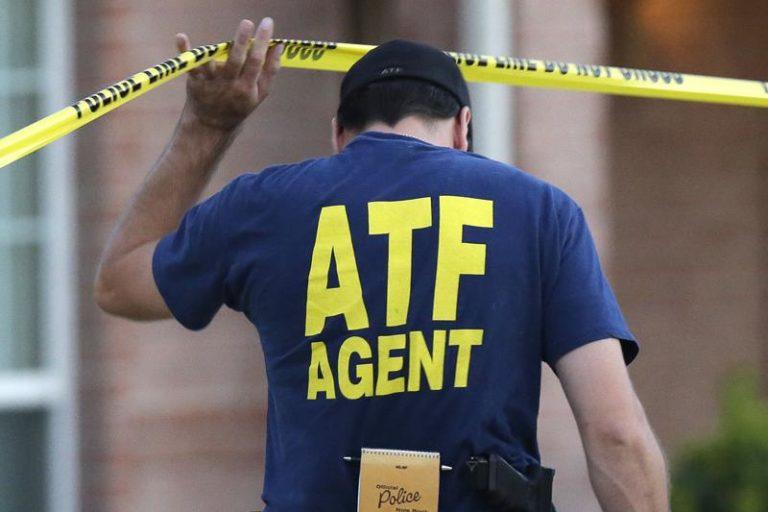
U.S. Gov’t Seeks to Gag Pro-2A Reporter Covering Controversial ATF Case

(Ken Silva, Headline USA) A U.S. Attorney has moved to prevent a pro-Second Amendment journalist from reporting information he obtained while covering the controversial AutoKeyCard Case.

U.S. Attorney Laura Cofer Taylor’s proposed gag order against AmmoLand News journalist John Crump stems from a case in which two men convicted of conspiring to transfer illegal “machine-gun conversion devices.”

As Crump has explained, the so-called devices were, in fact, metal cards with an image inspired by a lightning link etched into them. The ATF claimed that the lightning link could be cut out of the key cards and installed in AR-15-style rifles, which would convert them into fully automatic weapons.

Throughout the criminal proceedings of the two defendants—Justin Ervin and Matthew Hoover—Crump pointed out various dubious aspects of government’s case.

According to Crump, four of the witnesses stated that they bought the Autokey Card after seeing it on the CRS Firearms YouTube channel, but they never intended to cut it out. Another witness “nervously testified” that he bought the item to make a machinegun and accused CRS firearms of encouraging his viewers to break the law, Crump said.

“The ATF also admitted that the Bureau assigned twelve agents to collect Autokey Cards from the public before being told to stop by their higher-ups, who thought it was a waste of money,” Crump wrote in April.

“The ATF employees also admitted to taking classes on convincing a jury of their testimony.”

However, a jury still found Ervin and Hoover guilty in April.

Leading up to the sentencing date for the two men, the U.S. government discovered that Crump had apparently obtained a pre-sentence investigation report—a document prepared by probation officers after a defendant is convicted but before they are sentenced.

U.S. Attorney Taylor disclosed that she discovered this because the DOJ was spying on Hoover’s phone calls from jail.

Taylor complained in a Monday court filing that the pre-sentence report is “sealed and intended only to be available to the parties to this case.” She sought a court order for Crump to destroy the report.

In a scathing rebuttal, Crump said Wednesday that he will “fight with every breath in my body, not just for my Second Amendment rights, but also for my First Amendment rights.” Crump filed an emergency motion to intervene on the same day, asking the court to reject the prosecutor’s misguided request for a gag order.

“Even if there were some DOJ rule that restricted a defendant’s dissemination of such a document, it has no application to a non-party journalist’s use of the document to inform and educate the public,” Crump’s attorneys said in the motion.

“Making matters worse, the government’s only justifications for its outrageous request is that one of its attorneys does not appreciate, and asks this Court to bring to an end, the widespread public criticism received due to the government’s unpopular prosecution of this case.”

Crump said Gun Owners of America has stepped in as well and will cover all legal expenses.

“Once again, it looks like an over-zealous ATF has found itself face-to-face with a powerhouse group of patriots and legal minds who will likely remind the government why the Bill of Rights was written in the first place,” he said.

A motion hearing over the matter is set for Friday at 1:30 p.m.

Hoover and Ervin are scheduled to be sentenced on Sept. 5. Ervin faces a maximum penalty of 110 years imprisonment and Hoover faces a maximum penalty of 45 years.

Ken Silva is a staff writer at Headline USA. Follow him at twitter.com/jd_cashless.
Black Supremacist Teacher Fired over Racist Posts, Threats to Kill White Man

(Jacob Bruns, Headline USA) A black-supremacist teacher was fired after she complained on social media about her sister dating a white man, the New York Post reported.

The teacher, from Texas’s Mesquite Independent School District, posted racist comments on Twitter and even threatened to kill the man.

Under the social-media username “Claire Kyle,” the teacher, Danielle Allen, posted numerous black-supremacist messages.

“I enjoy being a racist,” she reportedly wrote in one post. “I’m never changing.”

But things escalated when Allen allegedly tried to recruit a man to shoot her sister’s white classmate.

After her posts started to make the rounds on sites including Libs of TikTok, Allen appeared to be aware of the fact that the Mesquite ISD had found her account, assuming that she would be OK because she only threatened to pay for murder and did not recommend full-scale genocide.

“Yes. Y’all have found my job. They told me to delete the post but my job is safe since I did not directly wish harm on ALL white people,” the teacher tweeted on Monday, the day before her firing.

“They laughed and told me to watch what I say and I’ll be good to go!” she added.

However, the Mesquite ISD issued a press release Tuesday afternoon, noting that the teacher in question had been released due to her “alarming, racist statements.”

“Upon learning of the situation, our Presonnel staff began an immediate investigation,” it said. “As of this morning, the employee is no longer a part of the Mesquite ISD organization, and is not eligible for rehire.”

The ISD also noted that the name of the teacher could not be confirmed due to privacy restrictions.

“Nevertheless, the highly offensive statements posted to her X [Twitter] account do not reflect the values and standards of Mesquite ISD, and the district condemns them in the strongest terms,” the press release said.

Trump Rejects RNC’s Debate Requirement for Loyalty Pledge

(Headline USA) Former President Donald Trump said Wednesday he won’t sign a pledge to support the Republican nominee if he loses the GOP presidential primary, flouting a requirement for appearing in the first debate later this month.

“Why would I sign it?” Trump said in an interview on the conservative cable network Newsmax. “I can name three or four people that I wouldn’t support for president. So right there, there’s a problem.”

He declined to name the candidates he wouldn’t support, saying “there’s no reason to insult them.” But he singled out South Carolina Sen. Tim Scott and businessman Vivek Ramaswamy for praise, saying they “have been very nice.”

Notably absent was his closest competitor, Florida Gov. Ron DeSantis, whose once cordial relationship with the former president has soured amid the acrimonious campaign bickering.

Trump said he will announce next week whether he’ll participate in the debate, scheduled for Aug. 23 in Milwaukee, but his refusal to sign the pledge suggests he plans to make good on his threat to skip it. Trump has repeatedly questioned why he should debate his rivals given his substantial polling lead and has suggested he might hold a competing event instead.

On Wednesday, he pushed back against former New Jersey Gov. Chris Christie’s taunts, telling Newsmax’s Eric Bolling that there’s no upside to participating in a debate when he’s already leading by a wide margin.

“Its not a question of guts. It’s a question of intelligence,” Trump said.

Eight candidates say they have met qualifications to be on stage in Milwaukee, with former Vice President Mike Pence announcing this week he had secured enough donors.

Candidates need to satisfy polling and donor requirements set by the Republican National Committee: at least 1% in three high-quality national polls or a mix of national and early-state polls, between July 1 and Aug. 21, and a minimum of 40,000 donors, with 200 in 20 or more states.

They also must sign a statement pledging not to participate in any debates not sanctioned by the party, including the general election debates sponsored by the Commission on Presidential Debates, and to support the winner of the Republican primary.

“I affirm that if I do not win the 2024 Republican nomination of President of the United States, I will honor the will of the primary voters and support the nominee in order to save our country and beat Joe Biden,” the pledge says, according to a copy posted by ]DeSantis to Twitter. Candidates also must pledge not to run as an independent, write-in candidate or third-party nominee.

The pledge has been criticized by some candidates including former Arkansas Gov. Asa Hutchinson, who has been fiercely critical of Trump.

Only former Texas Rep. Will Hurd has said definitively that he will not sign the 2024 pledge, though he has not met the polling and fundraising thresholds required to attend. He said he won’t support Trump if he becomes the eventual nominee.

Adapted from reporting by the Associated Press

July Inflation Spike Set to Blow Up Biden’s B.S. Claim of Strong Economy

(Headline USA) Even as President Joe Biden proceeds to take a victory lap on inflation numbers that have yet to reach the Federal Reserve’s baseline rate of acceptable increase, the administration’s gaslighting efforts to redefine “Bidenomics” appear to be premature at best.

Inflation in the United States likely rose in July for the first time in 12 months, driven higher by more expensive gasoline and suggesting that the fight against rising prices may prove bumpier in the months ahead.

The inflation report the government will issue Thursday is expected to show that consumer prices increased 3.3% from 12 months earlier. That would mark an uptick from a 3% year-over-year increase in June—the lowest such figure in more than two years.

However, even the 3% number was misleading considering it was a higher rate of monetary devaluation than what Biden inherited when he became president, debunking any claims from Democrats that inflation has “decreased” on his watch.

With the U.S having just experienced an unprecedented credit-rating downgrade due to the administration’s unfettered spending, the uptick in July’s inflation may signal that trouble still lies ahead for weary consumers, many of whom are barely scraping by in Biden’s economy.

On a month-to-month basis, consumer prices are thought to have risen 0.2% from June to July, the same as in the previous month, according to a survey of forecasters by the data firm FactSet.

A jump in energy prices was likely a major contributor to higher inflation in July. Gasoline prices have surged nearly 30 cents over the past month to a national average of $3.83 a gallon, according to AAA.

Excluding volatile food and energy costs, so-called core prices are expected to show a 4.8% rise in July over the previous year and 0.2% from a month earlier, unchanged from the previous month’s increases.

Thursday’s inflation data will be among the key metrics the Federal Reserve will consider in deciding whether to continue raising interest rates. In its drive to tame inflation, the Fed has raised its benchmark rate 11 times since March 2022 to a 22-year high.

Those rate hikes are believed to have helped significantly slow price increases: After peaking at a four-decade high of 9.1% in June 2022, year-over-year inflation has dropped month after month.

Yet inflation remains above the Fed’s 2% target. And economists say the easy progress has likely already been achieved.

Gasoline prices, for example, though liable to bounce around from month to month, have already plunged from a peak national average of more than $5 a gallon.

Biden’s profligate spending and his extreme cuts to U.S. energy production are largely to blame for the issue, despite being handed an economy that was on the cusp of roaring back from a year of pandemic lockdowns.

The supply-chain shortages resulting from Transportation Secretary Pete Buttigieg’s incompetence and absenteeism also created a significant burden in the early months of the inflationary surge, which began almost immediately after the Democrat administration assumed office.

Ports, factories and freight yards were overwhelmed by the explosive economic rebound from the pandemic recession of 2020. The result was delays, parts shortages and higher prices.

But supply-chain backlogs have eased in the past year, sharply reducing upward pressure on goods prices. Prices of long-lasting manufactured goods actually dipped in June.

Now, the Fed faces a daunting problem: persistent inflationary pressures in service businesses—restaurants, hotels, entertainment venues and the like—where wages represent a substantial share of costs. Worker shortages have led many of these services companies to sharply raise pay.

But once again, the problem may be directly attributable to Biden, who pronounced that the solution to bringing workers back from their pandemic-era leaves of absence, fueled by government subsidies, was simply to “pay them more,” without regard for the ripple effect that would have.

Last week, the Labor Department reported that average hourly wages rose 4.4% in July from a year earlier, more than expected. To cover their higher labor costs, companies have typically raised their prices, thereby fueling inflation.

Another factor working against continued declines in year-over-year inflation rates is that prices soared in the first half of last year before slowing in the second half. So any price increase in July would have the effect of boosting the year-over-year inflation rate.

Despite chronic concerns about higher labor costs, one closely watched measure of wages and salaries—the Labor Department’s employment cost index—grew more slowly from April through June.

Excluding government jobs, employee pay rose 1%, less than the 1.2% increase in the first three months of 2023. Compared with a year earlier, wages and salaries grew 4.6%, down from a year-over-year increase of 5.1% in the first quarter.

Rents, which had soared after the pandemic, are also cooling. Researchers at the Federal Reserve Bank of San Francisco wrote this week that “year-over-year shelter inflation will continue to slow through late 2024 and may even turn negative by mid-2024.″

Some economists continued to maintain a rosy outlook about the trend lines—likely due to the prospect of ongoing Fed rate hikes and prices having already hit a critical mass to chill consumer spending on many nonessentials.

“I do think we’re going to get further deceleration, even if we do get a little bit of a pickup this month,’’ said Thomas Simons, senior U.S. economist at the investment firm Jefferies.

“Looking toward the end of the year, I think it’s pretty likely we’ll see headline inflation closer to 2%, which at the end of the day is not the worst thing ever considering how high inflation was in the past two years and how much more tolerable 2.5% inflation is,” Simons added.

But the Fed, Simons suggested, may not consider its work done until inflation returns to 2%.

Fed officials will have plenty of data to absorb before deciding whether to continue raising rates. Thursday’s report is the first of two CPI numbers the policymakers will see before their next meeting Sept. 19-20.

In addition, their favored inflation gauge, called the personal income expenditures price index, comes out on Aug. 31. And the August jobs report will be released Sept. 1.

Many economists and market analysts think the Fed’s most recent rate hike in July will prove to be its last: Nearly 87% of traders expect no Fed hike next month, according to the CME Group’s FedWatch Tool.

Adapted from reporting by the Associated Press

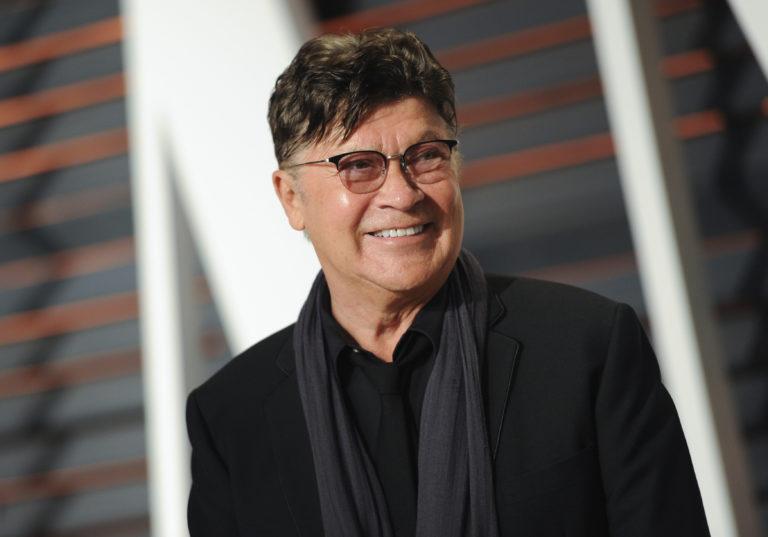
Legendary Band Leader Robbie Robertson Dies at 80

(Headline USA) Robbie Robertson, The Band’s lead guitarist and songwriter who in such classics as “The Weight” and “Up on Cripple Creek” mined American music and folklore and helped reshape contemporary rock, died Wednesday at 80.

Robertson died surrounded by family in Los Angeles “after a long illness,” publicist Ray Costa said in a statement.

From their years as Bob Dylan’s masterful backing group to their own stardom as embodiments of old-fashioned community and virtuosity, The Band profoundly influenced popular music in the 1960s and ’70s, first by literally amplifying Dylan’s polarizing transition from folk artist to rock star and then by absorbing the works of Dylan and Dylan’s influences as they fashioned a new sound immersed in the American past.

“Long before we ever met, his music played a central role in my life—me and millions and millions of other people all over this world,” Martin Scorsese, Robertson’s close friend and frequent collaborator, said in a statement. “The Band’s music, and Robbie’s own later solo music, seemed to come from the deepest place at the heart of this continent, its traditions and tragedies and joys.”

The Canadian-born Robertson was a high school dropout and one-man melting pot—part-Jewish, part-Mohawk and Cayuga—who fell in love with the seemingly limitless sounds and byways of his adopted country and wrote out of a sense of amazement and discovery at a time when the Vietnam War had alienated millions of young Americans.

His life had a Candide-like quality as he found himself among many of the giants of the rock era—getting guitar tips from Buddy Holly, taking in early performances by Aretha Franklin and by the Velvet Underground, smoking pot with the Beatles, watching the songwriting team of Leiber and Stoller develop material, chatting with Jimi Hendrix when he was a struggling musician calling himself Jimmy James.

The Band began as supporting players for rockabilly star Ronnie Hawkins in the early 1960s and through their years together in bars and juke joints forged a depth and versatility that opened them to virtually any kind of music in any kind of setting.

Besides Robertson, the group featured Arkansan drummer-singer Levon Helm and three other Canadians: bassist-singer-songwriter Rick Danko, keyboardist singer-songwriter Richard Manuel and all-around musical wizard Garth Hudson. They were originally called the Hawks, but ended up as The Band—a conceit their fans would say they earned—because people would point to them when they were with Dylan and refer to them as “the band.”

They remain defined by their first two albums, Music from Big Pink and The Band, both released in the late 1960s. The rock scene was turning away from the psychedelic extravagances of the Beatles’s Sgt Pepper’s Lonely Hearts Club Band and a wave of sound effects, long jams and lysergic lyrics.

Music from Big Pink,” named for the old house near Woodstock, New York, where Band members lived and gathered, was for many the sound of coming home. The mood was intimate, the lyrics alternately playful, cryptic and yearning, drawn from blues, gospel, folk and country music.

The Band itself seemed to stand for selflessness and a shared and vital history, with all five members making distinctive contributions and appearing in publicity photos in plain, dark clothes.

Through the Basement Tapes they had made with Dylan in 1967 and through their own albums, The Band has been widely credited as a founding source for Americana—or roots music. Fans and peers would speak of their lives being changed.

Eric Clapton broke up with his British supergroup Cream and journeyed to Woodstock in hopes he could join The Band, which influenced albums ranging from The Grateful Dead’s Workingman’s Dead to Elton John’s Tumbleweed Connection.

The Band’s songs were covered by Franklin, Joan Baez, the Staple Singers and many others. During a television performance by the Beatles of “Hey Jude,” Paul McCartney shouted out lyrics from “The Weight.”

Like Dylan, Robertson was a self-taught musicologist and storyteller influenced by everything American from the novels of William Faulkner to the scorching blues of Howlin’ Wolf to the gospel harmonies of the Swan Silvertones.

At times his songs sounded not just created, but unearthed. In “The Night They Drove Old Dixie Down,” he imagined the Civil War through the eyes of a defeated Confederate. In “The Weight,” with its lead vocals passed around among group members like a communal wine glass, he evoked a pilgrim’s arrival to a town where nothing seems impossible:

“I pulled into Nazareth, was feelin’ about half past dead / I just need some place where I can lay my head / Hey, mister, can you tell me where a man might find a bed? / He just grinned and shook my hand, ‘No,’ was all he said.”

The Band played at the 1969 Woodstock festival, not far from where they lived, and became newsworthy enough to appear on the cover of Time magazine. But the spirit behind their best work was already dissolving.

Albums such as Stage Fright and Cahoots were disappointing even for Robertson, who would acknowledge that he was struggling to find fresh ideas. While Manuel and Danko were both frequent contributors to songs during their Basement Tapes days, by the time Cahoots was released in 1971, Robertson was the dominant writer.

They toured frequently, recording the acclaimed live album Rock of Ages at Madison Square Garden and joining Dylan for 1974 shows that led to another highly praised concert release, Before the Flood.

But in 1976, after Manuel broke his neck in a boating accident, Robertson decided he needed a break from the road and organized rock’s ultimate sendoff, an all-star gathering at San Francisco’s Winterland Ballroom that included Dylan, Van Morrison, Neil Young, Muddy Waters and many others. The concert was filmed by Scorsese and the basis for his celebrated documentary The Last Waltz, released in 1978.

Robertson had intended The Band to continue recording together but The Last Waltz helped permanently sever his friendship with Helm, whom he had once looked to as an older brother.

In interviews and in his 1993 memoir Wheel on Fire, Helm accused of Robertson of greed and outsized ego, noting that Robertson had ended up owning their musical catalog and calling The Last Waltz a vanity project designed to glorify Robertson.

In response, Robertson contended that he had taken control of the group because the others—excepting Hudson—were too burdened by drug and alcohol problems to make decisions on their own.

“It hit me hard that in a band like ours, if we weren’t operating on all cylinders, it threw the whole machine off course,” Robertson wrote in his memoir Testimony, published in 2016.

The Band regrouped without Robertson in the early 1980s, and Robertson went on to a long career as a solo artist and soundtrack composer. His self-titled 1987 album was certified gold and featured the hit single “Show Down at Big Sky” and the ballad “Fallen Angel,” a tribute to Manuel, who was found dead in 1986 in what was ruled a suicide (Danko died of heart failure in 1999, and Helm of cancer in 2012).

Robertson, who moved to Los Angeles in the 1970s while the others stayed near Woodstock, remained close to Scorsese and helped oversee the soundtracks for The Color of Money, The King of Comedy, The Departed, The Irishman and the upcoming Killers of the Flower Moon, among others. He also produced the Neil Diamond album Beautiful Noise and explored his heritage through such albums as Music for the Native Americans and Contact from the Underworld of Redboy.

The Band was inducted into the Rock and Roll Hall of Fame in 1994; Robertson attended, Helm did not. In 2020, Robertson looked back and mourned in the documentary Once Were Brothers and in the title ballad, on which Robertson sang “When the light goes out and you can’t go on / You miss your brothers, but now they’re gone.”

Robertson married the Canadian journalist Dominique Bourgeois in 1967. They had three children before divorcing. His other survivors include his second wife, Janet Zuccarini, and five grandchildren.

Adapted from reporting by the Associated Press

Virgin Galactic Joins ‘Space Tourism’ Competition after 18-Year Delay

(Headline USA) Virgin Galactic is taking its first space tourists on a rocket ship ride after years of delays, including one passenger who bought his ticket 18 years ago and a mother-daughter duo from the Caribbean.

The flight window opens Thursday morning at Spaceport America in the New Mexico desert for a ride to the edge of space. If all goes well, Richard Branson’s company will begin offering monthly trips to customers on its winged space plane, joining Jeff Bezos’s Blue Origin and Elon Musk’s SpaceX in the space tourism business.

Virgin Galactic passenger Jon Goodwin, who was among the first to buy a ticket in 2005, said he had faith that he would someday make the trip. The 80-year-old British Olympian—he competed in canoeing in 1972—has Parkinson’s disease and wants to be an inspiration to others.

“I hope it shows them that these obstacles can be the start rather than the end to new adventures,” he said in a statement.

Goodwin has said he paid $200,000 for his ticket. The cost is now $450,000.

He’ll be joined by sweepstakes winner Keisha Schahaff, 46, a health coach from Antigua, and her daughter, Anastatia Mayers, 18, student at Scotland’s University of Aberdeen.

Also aboard the plane-launched craft, which glides to a space shuttle-like landing: two pilots and the company’s astronaut trainer.

It will be Virgin Galactic’s seventh trip to space since 2018, the first with a ticket-holder. Branson, the company’s founder, hopped on board for the first full-size crew ride in 2021.

Italian military and government researchers soared in June on the first commercial flight. About 800 people are currently on Virgin Galactic’s waiting list, according to the company.

Virgin Galactic’s rocket ship launches from the belly of an airplane, not from the ground, and requires two pilots in the cockpit.

Once the mothership reaches nearly 50,000 feet, the space plane is released and fires its rocket motor to make the final push to just over 50 miles up.

Passengers can unstrap from their seats, float around the cabin for a few minutes and take in the sweeping views of Earth, before the space plane glides back home and lands on a runway.

Adapted from reporting by the Associated Press

Biden’s ‘Climate Emergency’ Slip Fuels Concerns of a Pandemic-Style Lockdown for 2024 Steal

(Mark Pellin, Headline USA) President Joe Biden’s shocking admission that his administration has already declared a national climate emergency fueled concerns that a COVID-style lockdown loomed on the horizon.

When Biden was asked during a Wednesday interview with The Weather Channel whether he was prepared to declare a national climate emergency, the president claimed “We’ve already done that,” mumbling through boasts of his land conservation efforts, rejoining the globalist Paris Climate Accord and blowing nearly $370 billion on the left’s radical Green New Deal.

“We’re moving. It is the existential threat to humanity,” Biden said of climate change in the interview overlooking the Grand Canyon in Arizona, part of a Western tour to peddle his climate alarmist agenda.

When asked again if he had already declared a national climate emergency, Biden affirmed, “Practically speaking, yes.”

While Biden’s proclamation technically missed the mark – no official declaration has actually been declared – Biden’s comment was interpreted by many to be a classic example of saying the quiet part out loud.

The White House further enflamed concerns when spokesperson Karine Jean-Pierre ducked a chance to moderate her boss’s national emergency declaration, Politico reported.

“This is a president that has taken really an ambitious approach to climate change,” Jean-Pierre said during an interview with CNN when asked about the president’s comments, before parroting the regime’s green accomplishments.

Biden veered close to officially declaring a national climate emergency last year, when he was poised to use it as a political weapon to jolt passage of the administration’s Inflation Reduction Act and its multi-billion-dollar green spending spree.

“Climate change is an emergency, and in the coming weeks I’m going to use the power I have as president to turn these words into formal, official, government actions through the appropriate proclamations, executive orders and regulatory power that a president possesses,” Biden said at the time.

Biden’s latest public take on enacting his emergency powers sparked criticisms that it could pave the way for the return of tyrannical mandates, restricting public movement and censoring free speech to coincide with next year’s presidential tilt.

“The media and the left want Biden to declare a ‘climate emergency’ so they can lock you in your home, close your Church, censor your content, deplatform you for the wrong opinions, and then push mail-in ballots to secure the 2024 election,” wrote Daniel Turner, executive director of Power The Future.

Biden last month unveiled the White House’s permanent Office of Pandemic Preparedness and Response Policy, which is “charged with leading, coordinating, and implementing actions related to preparedness for, and response to, known and unknown biological threats or pathogens that could lead to a pandemic or to significant public health-related disruptions in the United States.” Biden has repeatedly made comments that make clear climate change is a “significant public health-related disruption.”

Countering Biden’s push toward again embracing pandemic-like powers, Sen. Shelley Moore Capito, R-W.Va., and other Republicans proposed legislation that would prevent Biden from using the statutory authorities available to declare a national emergency solely on the basis of climate change.

“The Biden administration has repeatedly governed by executive overreach when it comes to energy and environmental regulations, ignoring the law and doing so without congressional approval,” Capito said. The bill received two readings and was referred to the Committee on Environment and Public Works.

Noting that while most COVID-era mandates have run their course, Gateway Pundit’s Leo Hohmann reminded that “all of the unconstitutional laws, rules, logistical practices and executive orders remain in place and at the ready to once again ramp up the heat on Americans to comply with whatever ‘new normal’ the globalists desire to impose next. And Biden is getting ready for it by creating this [permanent Office of Pandemic Preparedness and Response Policy].”

For good measure, the White House last month also implemented a new policy regarding press passes that targeted non-compliant reporters. The White House warned that it was cracking down “on access to areas of the White House or credentialed events” and was demanding that all reporters renew their passes.

Biden reportedly floated a trial balloon for his climate emergency potential when he directed the Labor Department last month to issue the first-ever hazard alert for heat and told the agency to take other measures in connection with heat-related safety.

The edict proclaimed that “Millions of Americans are currently experiencing the effects of extreme heat, which is growing in intensity, frequency, and duration due to the climate crisis.”

With that as a background, energy industry leaders and analysts have sounded alarms that Biden is preparing to fold under mounting pressure to appease his leftist base with a Pandemic 2.0 power grab.

That radical base pounced on Biden’s Grand Canyon comment and used it to turn up the heat, as it were, for Biden to officially declare a national climate emergency.

“It’s a no-brainer to declare a climate emergency – and if President Biden said we already have, then why not do it now?” demanded one activist leader of the Sunrise Movement.

“Now that President Biden says he’s ‘practically’ declared a climate emergency, it’s time to do it for real,” People vs. Fossil Fuels, a coalition of over 1,200 groups, said in their statement.

“They’re leaning to that direction,” U.S. Oil and Gas Association President Tim Stewart said of Biden’s emergency powers intent.

“If you grant the president’s emergency powers to declare a climate emergency, it’s just like COVID,” Stewart told Just the News, adding that such a directive would give the Democrat regime “vast and unchecked authority to shut down everything from communications to infrastructure,” which in that scenario could include water, electricity and even freezing financial assets.

Bidenomics: U.S. Consumer Credit Card Debt Hits Record High, Tops $1T

(Luis Cornelio, Headline USA) Credit card debt among U.S. consumers has surged to an unprecedented high under the umbrella of Bidenomics, intensifying Republican criticism of the Biden administration’s economic management.

The most recent data from the Federal Reserve reveals that Americans have collectively surpassed the $1 trillion mark in credit card debt.

A report by the Federal Reserve Bank of New York informed, “Credit card balances have grown by $45 billion, marking a 4.6% increase for the quarter, bringing the total to $1.03 trillion.”

This remarkable milestone underscored the rapidly mounting financial pressures faced by American families under the policies of the Biden administration, with inflation being a significant factor, reported Fox News.

“Interest rates are going up to tackle the inflation that has happened over the past couple of years and in order to pay for it all, Americans are taking on more and more credit card debt,” Fox News host Sandra Smith detailed. “We are seeing a trillion dollars for the first time ever. That’s a record high and that is a reality of the situation.”

The Kobeissi Letter highlighted several concerning trends within household debt, with record highs noted in mortgages, auto loans, student loans and credit card debt. Particularly alarming is the fact that mortgage debt has more than doubled since its peak in 2006, potentially indicating vulnerabilities within the housing market.

Critics within the GOP have voiced their concerns about the impact of Bidenomics on the nation’s financial well-being.

Rep. Lauren Boebert, Colo., stated, “If BIDENOMICS is working, why has America’s credit rating been downgraded? Why does everything cost more than it did before BIDEN took office? Why has credit card debt skyrocketed under him?”

Rep. Mark Green, Tenn., emphasized the challenges faced by American families, asserting, “Americans are having to spend more to compensate for inflation, leading to more debt. Families can’t live this way but are forced to thanks to Bidenomics.”

Sen. Joni Ernst, Iowa, expressed her concern succinctly with the hashtag “#Bidenomics in action.”