Trump Ex-Lawyer Cohen Can’t Sue Boss for His Prior Convictions

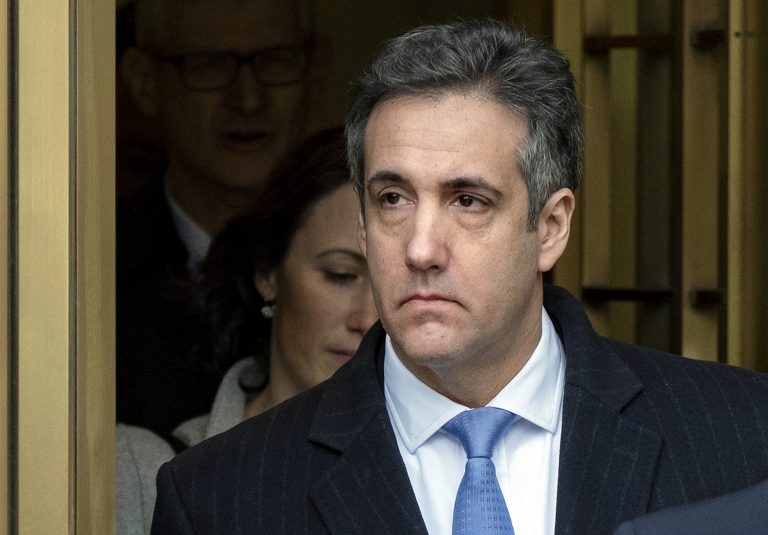
(Headline USA) Michael Cohen can’t hold his former boss, ex-president Donald Trump, liable because he was jailed for what he claimed was retaliation for writing a tell-all memoir, an appeals court said Tuesday.

The 2nd U.S. Circuit Court of Appeals in Manhattan said in an order that it would not revive a lawsuit that a lower-court judge had tossed out because the law did not seem to provide a damages remedy for most claims that someone was jailed in retaliation for their criticisms of a president.

A three-judge panel concluded Cohen already obtained relief by getting a judge to order his release from imprisonment to home confinement several weeks after he was abruptly put behind bars when the government claimed he violated severe restrictions on his public communications. It said the law did not provide an outlet for more relief than that.

Cohen served over a year of a three-year sentence in federal prison after pleading guilty in 2018 to tax evasion, campaign finance charges and lying to Congress, saying Trump directed him to arrange the payment of hush money to a porn actor to fend off damage to his 2016 presidential bid.

Freed early to home confinement as authorities worked to contain the coronavirus outbreak in federal prisons, Cohen was returned to prison weeks later when authorities claimed he failed to accept certain terms of his release.

At the time, Cohen said he had merely sought clarification on a condition forbidding him from speaking with the media and publishing his book.

After serving 16 days in solitary confinement that Cohen said left him with shortness of breath, severe headaches and anxiety, he was eventually freed on the orders of a judge who said he’d been jailed in retaliation for his desire to publish a book critical of the president and to discuss it on social media.

Cohen sued Trump and then Attorney General William P. Barr, along with various prison and probation officials.

In a statement, Cohen said Tuesday that he’ll appeal to the U.S. Supreme Court.

“The outcome is wrong if democracy is to prevail. A writ of habeas corpus cannot be the only consequence to stop a rogue president from weaponizing the Department of Justice from locking up his/her critics in prison because they refuse to waive their First Amendment right,” he said.

Trump’s lawyer, Alina Habba, said in a statement: “We are very pleased with today’s ruling. Mr. Cohen’s lawsuit was doomed from its inception. We will continue to fight against any frivolous suits aimed at our client.”

Adapted from reporting by the Associated Press

N.C. Finalizes Ballot, Bans All Biden Competitors from Primary

(Headline USA) North Carolina’s election board finalized on Tuesday the candidates for the state’s March 5 presidential primaries, leaving President Joe Biden as the lone Democrat for the job on ballots and former President Donald Trump among the Republican competitors.

The five-member State Board of Elections voted unanimously to stick with the candidate lists provided by the state’s Democratic, Republican and Libertarian parties last month. The board had given initial approval to those names at its Dec. 19 meeting, when members also agreed to reconvene Tuesday to consider additional names before ballots are printed.

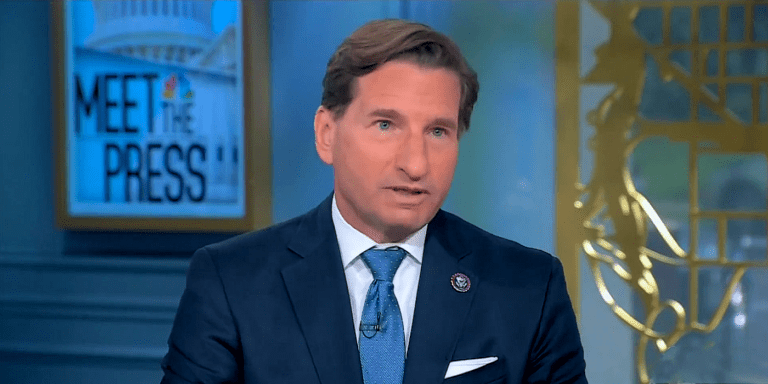
Board officials said that five additional people had unsuccessfully asked to join the presidential primaries. They included U.S. Rep. Dean Phillips, author Marianne Williamson and media personality Cenk Uygur for the Democrats and Jill Stein for the Green Party. A board attorney said Tuesday it was unclear which primary another person, Luis Lavin, had asked to run in.

The leading third-party candidate, Robert F. Kennedy Jr., withdrew from the Democratic Party after being frozen out of debates and is now running as an independent, meaning there is no need for a primary.

State law directs parties to provide lists of candidates whose bids for the nation’s highest office are “generally advocated and recognized in the news media throughout the United States or in North Carolina.” The law gives the board discretion to add more candidates whom a majority believes meets the same standard. But none of the board’s members proposed doing so.

Board members who spoke Tuesday said it was appropriate to defer to the wishes of political parties holding primaries that are ultimately designed to choose delegates to their respective national conventions.

“I’m mindful that these are private political parties and that they have associational rights,” said Stacy “Four” Eggers, one of two Republicans on the board. The other three members are registered Democrats.

State Democratic Party spokesperson Tommy Mattocks defended the party’s decision last month to offer only Biden as a candidate, saying in a text that “to get on the ballot, you need to have donors in the state and be actively campaigning in the state.”

Phillips and Williamson “haven’t been here this cycle,” Mattocks added.

As for Stein, the Green Party of North Carolina wrote the board last month saying that it would not participate in the March primary, but instead offer a general election candidate after the party’s nominating convention.

In addition to Trump, the state GOP presented Ryan Binkley, Chris Christie, Ron DeSantis, Nikki Haley, Asa Hutchinson and Vivek Ramaswamy as candidates on its presidential ballot.

By a 4-1 vote two weeks ago, the board rejected a challenge to Trump’s candidacy by a Stokes County voter who argued the U.S. Constitution disqualifies Trump because of his role in the Jan. 6, 2021, uprising at the U.S. Capitol.

Brian Martin’s challenge claimed Trump violated a section of the 14th Amendment that bars from office anyone who once took an oath to uphold the Constitution but then “engaged” in “insurrection or rebellion” against it. The amendment has been cited in rulings in Colorado and Maine that have banned Trump from those states’ ballots.

In North Carolina, the board’s majority had determined that it lacked the authority in state law to consider such a primary challenge. Martin, a retired lawyer who served in Republican U.S. presidential administrations, last week appealed the board decision to Wake County Superior Court, where he asked that swift action be taken. Absentee ballots can start being mailed to requesters in less than three weeks.

The Libertarian Party will have 10 names for its North Carolina presidential primary ballots. Voters in the presidential primaries can also cast a “No Preference” vote instead of one for a candidate.

The No Labels Party, which like the Green Party is an official political party in North Carolina, can also offer a presidential ticket to place on general election ballots.

Adapted from reporting by the Associated Press

Woke Harvard President Resigns after Plagiarism, Anti-Semitism Scandals

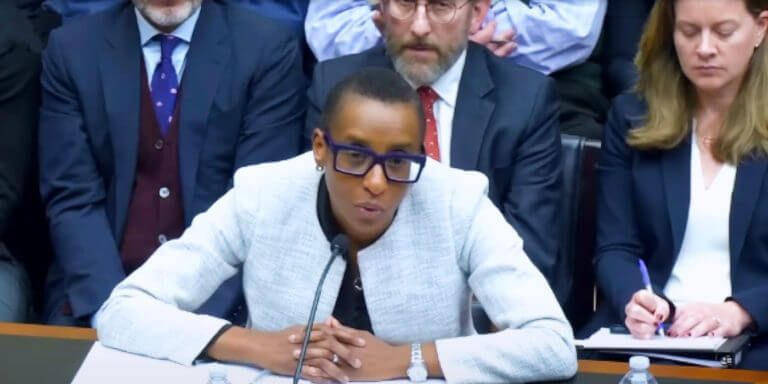
(Headline USA) Harvard University President Claudine Gay resigned Tuesday amid plagiarism accusations and criticism over testimony at a congressional hearing where she was unable to say unequivocally that calls on campus for the genocide of Jews would violate the school’s conduct policy.

Gay is the second Ivy League president to resign in the past month following the congressional testimony. Gay, Harvard’s first black president, announced her departure just months into her tenure in a letter to the Harvard community.

Following the congressional hearing, Gay’s academic career came under intense scrutiny by conservative watchdogs who unearthed several instances of plagiarism in her 1997 doctoral dissertation.

Under pressure from former President Barack Obama, Harvard’s governing board initially rallied behind Gay, claiming a review of her scholarly work turned up “a few instances of inadequate citation” but no evidence of research misconduct.

Days later, the Harvard Corporation revealed that it found two additional examples of “duplicative language without appropriate attribution.” The board said Gay would update her dissertation and request corrections.

The Harvard Corporation said the resignation came “with great sadness” and thanked Gay for her “deep and unwavering commitment to Harvard and to the pursuit of academic excellence.”

Alan M. Garber, provost and chief academic officer, will serve as interim president until Harvard finds a replacement, the board said in a statement. Garber, an economist and physician, has served as provost for 12 years.

Gay’s resignation was celebrated by the conservatives who put her plagiarism in the national spotlight. Christopher Rufo, the journalist whose work has helped expose the infiltration of critical race theory and other cultural issues in the classroom, said he’s “glad she’s gone.”

“Rather than take responsibility for minimizing antisemitism, committing serial plagiarism, intimidating the free press, and damaging the institution, she calls her critics racist,” Rufo tweeted.

He added that “this is the poison” of diversity, equity and inclusion ideology.

Scholars developed critical race theory during the 1970s as a means to transpose America’s historic racial inequalities onto the Marxist class divisions that helped usher in revolution in Europe. It centers on the idea that racism is systemic in the nation’s institutions, which function to maintain the dominance of white people in society.

By doing so, it allows the true oppressors—wealthy elitist 1 percenters—to abdicate their blame and responsibility through virtue-signaling while fomenting a racial discord between lower- and middle-class blacks and whites, none of whom are inherently privileged.

The elites are able, hence, to maintain their own wealth and lord over a sort of feudal serfdom or plantation society in which they alone benefit from the aristocratic privilege of being above the laws and social mores.

Minority elites, such as Gay, are particularly able to disregard all of society’s standards with impunity and are known to shamelessly and flagrantly play the race card should any consequences eventually catch up with them.

Gay, in her letter, said it has been “distressing to have doubt cast on my commitments to confronting hate and to upholding scholarly rigor—two bedrock values that are fundamental to who I am—and frightening to be subjected to personal attacks and threats fueled by racial animus.”

But Gay, who is returning to the school’s faculty, added “it has become clear that it is in the best interests of Harvard for me to resign so that our community can navigate this moment of extraordinary challenge.”

Gay and the presidents of MIT and the University of Pennsylvania came under fire last month for their tone-deaf answers to a line of questioning from New York Rep. Elise Stefanik, who asked whether “calling for the genocide of Jews” would violate the colleges’ code of conduct.

The three presidents had been called before the Republican-led House Committee on Education and the Workforce to answer accusations that universities were failing to protect Jewish students amid rising fears of anti-Semitism worldwide after Hamas’s Oct. 7 attack on Israel.

Gay said it depended on the context, adding that when “speech crosses into conduct, that violates our policies.” The answer faced swift backlash from Republican and some Democratic lawmakers, as well as the White House.

The hearing was parodied in the opening skit on Saturday Night Live, which further exacerbated matters after the show controversially opted to lampoon Stefanik instead of the three university presidents.

Gay later apologized, telling The Crimson student newspaper that she got caught up in a heated exchange at the House committee hearing and failed to properly denounce threats of violence against Jewish students.

“What I should have had the presence of mind to do in that moment was return to my guiding truth, which is that calls for violence against our Jewish community—threats to our Jewish students—have no place at Harvard, and will never go unchallenged,” Gay said.

The episode marred Gay’s tenure at Harvard—she became president in July—and sowed discord at the Ivy League campus.

Rabbi David Wolpe later resigned from a new committee on anti-Semitism created by Gay, tweeting that “events on campus and the painfully inadequate testimony reinforced the idea that I cannot make the sort of difference I had hoped.”

The House committee announced days after the hearing that it would investigate the policies and disciplinary procedures at Harvard, MIT and Penn.

Separate federal civil rights investigations were previously opened at Harvard, Penn and several other universities in response to complaints submitted to the U.S. Education Department.

Adapted from reporting by the Associated Press

Shooting at Colorado Supreme Court Unrelated to Trump Case

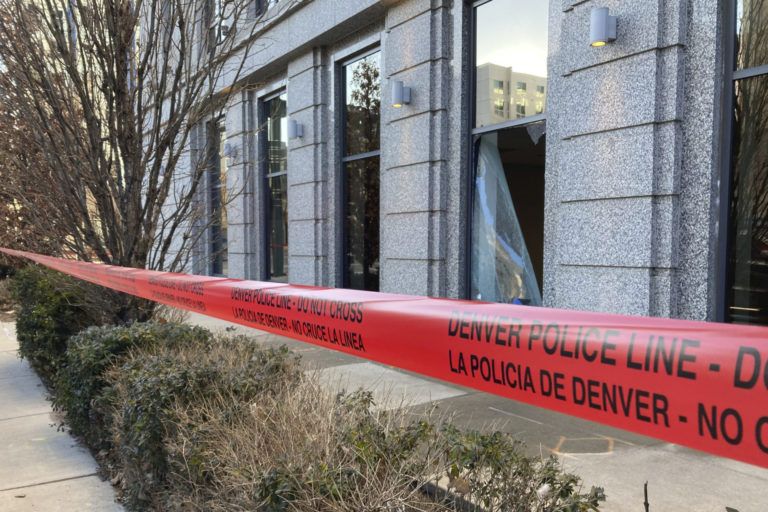
(Headline USA) A man leaving the scene of a car wreck Tuesday shot his way into the Colorado Supreme Court building and inflicted “extensive damage” to the building before being arrested by police, authorities said, adding the incident seems unrelated to the court’s recent ruling banning former President Donald Trump from the ballot.

Colorado’s justices have received threats ever since they ruled 4-3 last month that a rarely-used constitutional provision barring from office those who “engaged in insurrection” applies to Trump.

Authorities, however, said Tuesday’s incident appears unrelated to that case.

Trump is expected to appeal that ruling to the U.S. Supreme Court later Tuesday.

“The CSP and DPD are treating this incident seriously, but at this time, it is believed that this is not associated with previous threats to the Colorado Supreme Court Justices,” the Colorado State Patrol said in a statement said, using the acronyms for the state patrol and Denver Police Department.

The car wreck occurred just by the building in downtown Denver at 1:15 a.m., after which one driver pointed a handgun at the other, according to the statement from state patrol, which oversees security at the building.

The gunman then shot his way through a window at the Supreme Court building shortly thereafter and entered, authorities said.

The statement did not identify the gunman, but said he held up an unarmed security guard and got a key that let him into the rest of the building. He made his way to the seventh floor, where he fired further shots and then called 911 at 3 a.m.

The gunman voluntarily surrendered to police and there were no injuries to other people, the statement says.

Several hours after the crash a large shattered window could be seen on the ground floor of the building, with glass spilled out on the sidewalk along a busy street downtown. A state patrol trooper guarded it.

In situations where leftist law-enforcement officials and media are able to rule out the most obvious motive and that motive would negatively portray Trump supporters, the reason for ruling out the motive often goes hand-in-hand with a dearth of details about the assailant, suggesting that any additional information, if it came to light, would instead reflect negatively on a left-wing constituency or ideology.

Adapted from reporting by the Associated Press

Calif. Pizza Huts to Lay Off 1,200 Drivers Ahead of Minimum Wage Hike

(Two of California’s leading Pizza Hut franchises are firing all of their delivery drivers—over 1,200 Californians—ahead of the state’s minimum wage increase to $20 per hour for fast food employees in April of 2024.

Under AB 1228, passed earlier in 2023, the fast food minimum wage will rise to $20 per hour in 2024, establish mandatory increases of this wage by the lesser of 3.5% or inflation each year, and creating a Fast Food Council to establish working conditions and make decisions on “conditions” regarding employees’ health, safety and security, and their right to take time off.

The National Owners Association claims the wage increase will cost typical restaurants $250,000 per year, but the restaurant industry nonetheless backed the bill to mitigate an earlier bill that raised the fast food minimum wage to $22 per hour and created a Fast Food Council with far greater powers than AB 1228’s.

As the fast food industry moved to qualify a popular ballot measure to repeal this other bill and its higher minimum fast food wage, unions decided to reach a compromise by coming together with the fast food industry to pass AB 1228.

“It’s not a perfect outcome but it was significantly better than the alternative for the industry and menu prices had wages across the sector increased to $22 per hour,” said Peter Fenelio, Director of Industry Engagement for the California Restaurant Association in an interview with the Center Square.

Notably, franchisees, such as the two Pizza Hut operators firing its over 1,200 delivery drivers, were not included in these discussions.

Small business experts say AB 1228 is spurring automation and driving inflation that erodes the purchasing power of higher wages while forcing businesses to cut back on hiring even amid worker shortages that leave 80% of restaurant operators saying they have hard time filling open positions, and 62% unable to hire enough staff to meet basic customer demand.

“My prediction is these businesses will not shut down but will be operated more by automation, and [operators] will scale back their number of stores,” said John Kabateck, state director of the National Federation of Independent Business.

“Many stores, especially in disadvantaged areas, may find it difficult to survive, so they’ll throw up their hands and focus on other stores they operate,” he added. “You’re putting this into the arbitrary hands of an unelected board, and you’re going to create an upward spiral of out of control inflation.”

AB 1228 only applies to “national fast food chains” with more than 60 establishments nationally, excluding bakeries and restaurants inside of grocery stores, and is part of broader California trend of setting different minimum wages for different industries, such as the $25 per hour healthcare minimum wage that will cost the state $4 billion in its first year. California’s general minimum wage increases to $16 per hour on Jan. 1.

Special Taxes on Wireless ‘Family Plans’ Cost $100s Extra Per Year

(Americans pay hundreds of dollars per year in taxes on their wireless “family plan” for their cell phones.

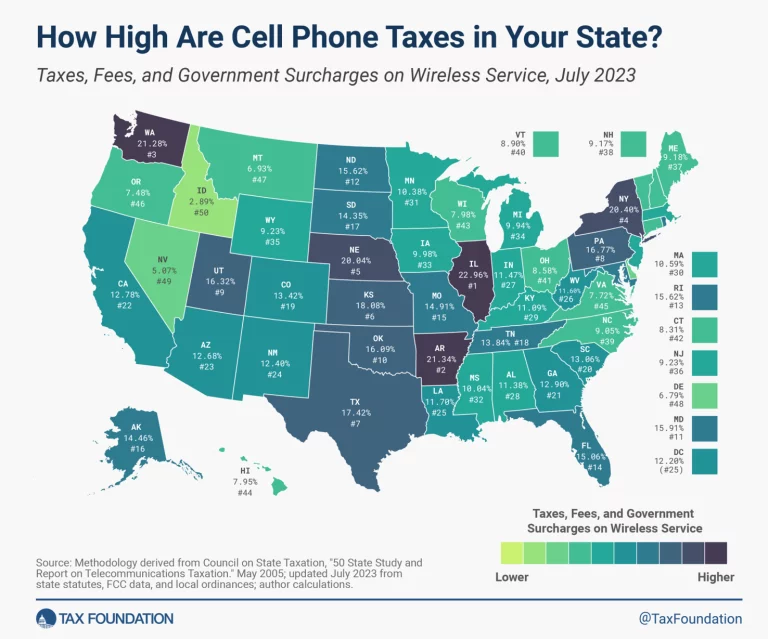
The Tax Foundation research shows the average American household with four phones would pay about $300 per year in taxes on a family plan costing $100 per month.

“Since 2012, the average charge from wireless providers decreased by 26 percent, from $47.00 per line per month to $34.56 per line,” the report said. “However, during this same time, wireless taxes, fees, and government surcharges increased from 17.2 percent to 24.5 percent of the average bill.”

But less than half of that is attributable to generic taxes like sales tax.

More than half is because of special taxes governments put on phone bills, taxes that are often unclear to consumers until after their purchase.

The Tax Foundation said those taxes hit poorer Americans even harder.

“Roughly 78 percent of low-income adults and 72 percent of all adults lived in wireless-only households,” it said. “Wireless taxes are regressive and create significant burdens on low-income families.”

Outlook 2024: Gold Set to Make History

(Stefan Gleason, Money Metals News Service) The gold market is poised to make history in 2024. It enters the New Year within striking distance of new all-time highs.

How high will gold go? Much depends on how low interest rates and the U.S. dollar go.

The Federal Reserve ended its rate hiking campaign last fall. It is expected to pivot toward monetary easing later this year.

That should work to the benefit of gold and other hard assets.

Of course, there remains much uncertainty surrounding the economy, inflation, and interest rates. If persistent inflation pressures force central bankers to keep rates elevated, then stock and bond markets could tank – possibly taking down precious metals markets with them at least temporarily.

Market volatility could also ramp up later in the year around the presidential election.

With partisan prosecutors and judges threating to jail the leading rival to incumbent President Joe Biden, and some state election officials moving to remove former President Donald Trump from the ballot, questions about the legitimacy of the election are already being raised.

Some pundits are warning that something akin to a civil war could break out if the declared winner of the election is perceived to have stolen it.

Regardless of the outcome, larger questions loom about the ability of the political system to deal with the mounting debt crisis. Neither Republicans nor Democrats in positions of power have any realistic plans to get spending under control, balance the budget, or pay down the debt.

It will cost the government more than $1 trillion in 2024 just to make interest payments on the debt.

As the national debt crosses the $34-trillion mark, Social Security and Medicare are rapidly heading toward insolvency and represent trillions more in unfunded liabilities.

Taxes can never be raised high enough to cover these massive obligations. And the political reality is that spending will never be cut and promised benefits will never be taken away either.

An inflection point is nearing. The U.S. government’s credit rating was twice downgraded by ratings agencies in 2023.

Under our fiat monetary system, however, the Treasury Department can always “borrow” more dollars into existence by dumping bonds onto the balance sheet of the Federal Reserve in exchange for cash created out of nothing.

Inflating the currency supply is the way the government will manage to keep paying its bills.

The way to preserve purchasing power amid rampant currency depreciation is to hold physical gold and silver.

Unlike fiat Federal Reserve notes, precious metals are scarce. In fact, they face widening supply deficits in 2024.

Major gold, silver, copper, platinum, and palladium mines are struggling with rising operations costs and degrading reserves.

As mining output hits a ceiling, demand for metals among industries, consumers, and investors continues to grow.

Investment demand is a wild card for gold and silver markets. It surged following the COVID-19 outbreak but softened in 2023 as higher interest rates lured savers into money market funds and rising equity markets diminished the perceived safe-haven appeal of bullion.

That could change in 2024. The prospect of Fed rate cuts, election uncertainty, and a gathering debt storm makes holding physical precious metals mandatory for those who seek to protect their wealth.

Three Factors Driving Gold Bulls Into 2024

(Mike Maharrey, Money Metals News Service) There are three factors driving gold bulls as we move into the new year – the demand factor, the Fed factor, and the January factor.

Gold just wrapped up its best year since 2020 with a 13 percent gain, and the yellow metal has new records in its crosshairs as we move into 2024.

Gold faced significant headwinds throughout most of 2023 with dollar strength and a higher interest rate environment. But as the markets began to anticipate an end to the Federal Reserve’s inflation fight, gold rallied during the fourth quarter.

Gold surged to a new record high in early December topping out at just over $2,125 an ounce. It couldn’t sustain those highs, but it has since built strong support at $2,000 an ounce, creating a foundation for gold to test new highs in the coming year.

THE DEMAND FACTOR

Saxo Bank’s Ole Hansen told Reuters he sees three significant demand factors boosting gold as we move into the new year.

Following on from a surprisingly robust performance in 2023 we see further price gains in 2024, driven by a trifecta of momentum-chasing hedge funds, central banks continuing to buy physical gold at a firm pace, and not least renewed demand from ETF investors.

Looking a little deeper at Hansen’s trifecta, we can start with central banks.

Globally, central banks gobbled up gold last year and there is no reason to think their appetite will decrease.

Through the first three quarters of 2023, central banks bought a net of 800 tons of gold. That was 14 percent more than through the same period in 2022, which was a record year dating back to 1950.

There’s no sign that central bank gold buying will abate in the coming year. According to the 2023 Central Bank Gold Reserve Survey released by the World Gold Council last spring, 24 percent of central banks indicated that they planned to add more gold to their reserves in the next 12 months. Seventy-one percent of central banks surveyed believe the overall level of global reserves would increase in the next 12 months. That was a 10-point increase over 2022.

While central bank gold buying was robust, ETF investing was tepid, with metal flowing out of gold-backed ETFs through most of 2023. But outflows slowed significantly in November with North American ETFs charting gold inflows for the first time in five months.

With the price of gold rallying, we will likely see more gold flowing into ETFs in the coming months, boosting overall global gold demand.

As Hansen alluded to, the price rally coupled with the anticipation of a lower interest rate environment could also pull some of the institutional investors back into gold.

Overall, the demand dynamics for gold seem to be on the plus side.

THE FED FACTOR

By far the biggest factor driving the precious metals market is Federal Reserve Monetary policy.

The rally in gold started when the markets began to anticipate the central bank would end its rate hiking and pivot toward rate cuts.

The Fed gave markets exactly what they were looking for at the December FOMC meeting.

The central bank didn’t make any policy moves, but it released its dot plots indicating three rate cuts for 2024 with another four cuts in 2025. That would lower rates to between 2 and 2.5 percent.

The mainstream interprets this as victory over inflation, but it would be more accurate to call it a surrender. By every metric, inflation remains far above the Fed’s 2 percent target. Even Federal Reserve Chairman Jerome Powell admitted price inflation isn’t dead.

Inflation has eased from its highs, and this has come without a significant increase in unemployment. That’s very good news. But inflation is still too high. Ongoing progress in bringing it down is not assured and the path forward is uncertain.

Nevertheless, FOMC members must know that an economy built on borrowing and levered to the hilt can’t survive in a higher interest rate environment. The central bank is easing out of the fight now with its fingers crossed, hoping it has done enough to tame price inflation without crashing the economy.

I call this wishful thinking.

Ironically, financial conditions aren’t all tight, despite the Fed raising rates from zero to 5.5 percent and Powell’s claims that rates are now “well into” restrictive territory.

They aren’t.

The Chicago Fed’s own Financial Conditions Index confirms this. As of the week ending December 22, the index stood at -0.54. A negative number indicates loose financial conditions.

So, while the Fed has tightened conditions enough to break a financial system buried in debt, it is far from tight enough to truly rein in inflation.

Regardless, the bigger problem is that by declaring victory and pivoting to rate cuts, the Fed is returning to the very policies that caused price inflation to begin with.

In other words, a “win” over inflation means more inflation.

But for now, perception is reality, and the perception is everything is fine. The Fed won the inflation fight with no collateral damage to the economy. Now we can go back to the easy money drug the markets crave. There will be no recession. Good times are here again.

I agree that rate cuts are coming. And I think the Fed will have to go back to quantitative easing. But not because it beat inflation. In all likelihood, it will be desperately trying to prop up a crashing economy as the high interest rates finally pop the debt bubbles.

But whether the Fed cuts rates because it thinks it beat inflation or because it is fighting a deep recession, it is equally bullish for gold.

Consider this: gold has fared pretty well this year despite the headwinds, despite the strong dollar, and despite the perception that higher for longer interest rates were bad for gold. If gold did as well as it did in an environment of raising rates and negative perception, imagine how much better it is going to do when rates are falling – especially if they’re falling even as inflation is heating up again.

THE JANUARY FACTOR

Gold already has plenty of momentum moving into the new year and January is historically a good month for gold.

According to data crunching by the World Gold Council, since 1971, gold has had an average return of 1.79 percent in January. That’s nearly three times the long-term monthly average.

Over that same period, gold has charted positive returns in January almost 60 percent of the time. Going back to 2000, gold has gained during 70 percent of Januaries.

The World Gold Council points to three factors that may boost gold’s January performance.

  • Beginning of the year portfolio rebalancing
  • Season weakness in real yields
  • Gold restocking in East Asia ahead of the Lunar New Year

Past performance does not guarantee future results, and there are exceptions to this general trend. We saw negative returns in January 2021 and 2022.

But as we move into 2024, there appears to be a good setup for gold to have another strong January.

As I’ve already pointed out, Federal Reserve rate hikes are on hold, and most people expect the central bank to start cutting rates next year. This should put a damper on dollar strength. In fact, we could see significant dollar weakness as we move into 2024. This would eliminate a major headwind for gold that persisted through most of 2023.

We also saw renewed strength in the Chinese gold market through the last half of 2023. This could mean an increase in demand as we move into the Chinese New Year.

Taken together, the demand factor, the Fed factor, and the January factor provide three good reasons to be bullish on gold going into the new year.


UPDATE: Suicide Note Found in New Year’s Eve Crash Probed as Terrorism

Update: A suicide note found at the scene of a fiery New Year’s Eve crash that left two innocent victims dead and four innocent victims injured—one critically—will shift the focus of an investigation that had been seen as a possible terrorist attack, the New York Post reported.

On Tuesday, law enforcement officials indicated there was no terrorism link in the case.

The perpetrator, Michael Avery, was suspected of being bipolar. He died of his injuries late Monday, the third casualty of the crash.

Original story below:

(Ben Sellers, Headline USA) Despite fears of a Hamas-related disruption, the Times Square New Year’s Eve event in New York City on Sunday night seemed to go on without major incident.

Yet, 50 minutes after the Waterford crystal ball dropped and 300 miles away, in Rochester, N.Y., authorities are investigating what may have been the first terrorism-related event of 2024, ABC News reported.

According to Rochester police chief David Smith, two people died and five were injured when a Ford Expedition struck a Mitsubishi Outlander around 12:50 a.m. Monday as it was exiting a parking lot near the city’s Kodak Center entertainment venue.

“The force of the collision caused the two vehicles to go through a group of pedestrians that were in the crosswalk, and then into two other vehicles,” Smith said at a press briefing on Monday. “There was a large fire associated with the crash that took the Rochester Fire Department almost one hour to extinguish.”

The venue was hosting an event with the jam band moe., who conveyed their shock and sympathy in a post via Instagram.


View this post on Instagram


A post shared by moe. (@moetheband)

Both of those who died were occupants of the Mitsubishi Outlander, which was an Uber rental. The vehicle’s driver was one of those transported to the hospital with non-life-threatening injuries.

Three pedestrians were also transported to the hospital, one of whom had life-threatening injuries, and the driver of the Ford also was hospitalized with life-threatening injuries.

The Ford Expedition, however, did not survive the accident. Its charred remains left little more than the vehicle’s frame, according to photos after the incident.

Of note, Smith said, first responders reported at least a dozen gasoline canisters in and around the Expedition.

“We are continuing to work with our federal partners, including the FBI, to learn exactly what led to this crash,” he said.

Officials are currently scouring the social media of the Ford driver and interviewing friends and relatives. Thus far, they have determined that the man came from Syracuse, about 75 miles east of Rochester.

He drove his own vehicle to the Syracuse airport and rented the extra-large Ford SUV there.

Richard Frankel, a former bureau chief at the FBI’s Buffalo field office, told ABC News that given the heightened concerns over Middle Eastern terrorism in particular, it seemed logical to infer this was being considered as one possible motive.

“All matters where you’re not sure of what they are, but there’s loss of life and they can’t be explained away immediately as an accident, have to be looked at as if they’re terrorism until they’re proven to not be terrorism,” he said.

The issue of Palestinian extremism has been compounded by the porous open borders under the Biden administration and the civil unrest expected to come with the November election to create a confluence of factors that will make 2024 a year of high-level alert for many.

One prominent investigative journalism, CBS News’s Catherine Herridge, recently suggested that the U.S. was prime for a “black swan” type of attack similar to 9/11—something that comes unexpectedly but seems obvious in retrospect.

But whether there is a 9/11-style grand-scale attack or not, there are sure to be many smaller-scale events that are equally devastating to those affected by them.

Ben Sellers is the editor of Headline USA. Follow him at twitter.com/realbensellers.

Another Asian Opposition Leader Openly Targeted for Assassination

(Headline USA) Just a year and a half since the July 2022 assassination of former Japanese Prime Minister Shinzo Abe shook the world, another Asian leader was attacked in broad daylight, raising questions as to whether there might be some connection—and it so, who is behind them and why?

The attack followed just days after South Korea’s government acknowledged that it was staging “decapitation drills” for the possible assassination of North Korean leader Kim Jong Un, according to the New York Post.

Abe was known as the de-facto opposition leader of Japan’s Liberal Democratic Party—which is, despite its name, considered to be the country’s more conservative branch.

Lee Jae-myung, South Korea’s left-wing opposition leader, was stabbed in the neck by an unidentified knife-wielding man who attempted to kill him during his visit to the southeastern city of Busan on Tuesday, police said.

Lee, 59, was airlifted to a Seoul hospital after receiving emergency treatment in Busan. Lee’s party later said he was recovering at an intensive care unit at the Seoul National University Hospital following a two-hour operation.

The attack happened as Lee walked through a crowd of journalists and others after a tour of the proposed site of a new airport in Busan.

The attacker approached Lee, saying he wanted his autograph, then stabbed him in the left side of his neck, senior Busan police officer Sohn Jae-han said in a briefing.

Sohn said Democratic Party officials quickly subdued the attacker before police officers detained him. He said 41 police officers had been deployed to the area for crowd control and traffic management.

TV footage showed Lee, his eyes closed, lying on the ground as a person pressed a handkerchief to his neck. A witness, Jin Jeong-hwa, told YTN television that Lee had bled a lot.

Videos circulated on social media showed the suspect, wearing a paper crown reading “I’m Lee Jae-myung,” in a possible attempt to pose as a supporter.

Sohn said the suspect, aged about 67, told investigators that he bought the 7-inch knife online. He said police are investigating the motive for the attack.

Other officers confirmed to the Associated Press that police are expected to request that the suspect be formally arrested for alleged attempted murder because he told investigators he intended to kill Lee.

Lee’s Democratic Party called the incident “a terrorist attack on Lee and a serious threat to democracy.” It called on police to make a through, swift investigation.

At the Seoul National University Hospital, party spokesperson Kwon Chil-seung told reporters that Lee’s jugular vein was damaged and that he had a medical procedure called revascularization.

Kwon cited the hospital, whose public affairs office refused to disclose Lee’s status, citing privacy rules.

Police and emergency officials earlier said Lee was conscious after the attack and wasn’t in critical condition.

President Yoon Suk Yeol expressed deep concern about Lee’s health and ordered authorities to investigate the attack, saying such violence would not be tolerated, according to Yoon’s office.

Lee lost the 2022 presidential election to Yoon by 0.7 percentage point, the narrowest margin recorded in a South Korean presidential election.

Recent public surveys indicated Lee and his main conservative rival Han Dong-hoon, a former justice minister, are the two early favorites to succeed Yoon as president when his single five-year term ends in 2027.

Since his defeat, Lee has been a harsh critic of Yoon’s major policies. Last year, Lee held a 24-day hunger strike to protest what he called Yoon’s failure to oppose Japan’s release of treated radioactive wastewater from its crippled Fukushima nuclear power, his handling of the country’s post-pandemic economy and his hard-line policies on North Korea.

Lee faces an array of corruption allegations, including that he provided unlawful favors to a private investor who reaped huge profits from a dubious housing project in the city of Seongnam, where Lee was mayor for a decade until 2018. Lee has denied legal wrongdoing and accused Yoon’s government of pursuing a political vendetta.

Last September, a South Korean court denied an arrest warrant for Lee over the allegations, but Lee faces a continuing investigation by prosecutors.

The court hearing was arranged after the opposition-controlled parliament voted to lift Lee’s immunity to arrest, a move that reflected growing divisions within his Democratic Party over his legal troubles.

Lee, who also served as governor of Gyeonggi province, which surrounds Seoul, is known for his outspoken style. His supporters see him as an anti-elitist hero who could reform establishment politics, eradicate corruption and solve growing economic inequality.

Critics view him as a populist who relies on stoking divisions and demonizing his conservative opponents.

Other violence against high-profile figures has occurred in South Korea in recent years.

In March 2022, Song Young-gil, then the leader of the Democratic Party, was assaulted by a man wielding a hammer during a rally for Lee ahead of the presidential vote. Song was treated for stitches but avoided serious injury.

In 2015, then-U.S. Ambassador to South Korea Mark Lippert was slashed in the face and arm by an anti-American activist. The assault required 80 stitches to close the cut on Lippert’s face.

In 2006, Park Geun-hye, then a conservative opposition leader, was knifed by a man with a box cutter during an election rally. She was given 60 stitches to close a 4-inch gash on her face. Park was elected president in 2012.

Although both Japan and South Korea are largely westernized U.S. allies, the neighbors’ own relations have been traditionally fraught due to cultural differences and prejudices.

However, Japan’s recent experience with assassination will certainly be a topic of discussion in light of yet another attempt in broad daylight on the life of a prominent opposition leader.

Abe, who had been a trusted friend and ally of former President Donald Trump, was fatally shot after delivering a campaign speech in Nara by a 41-year-old man wielding a homemade, improvised firearm that had been able to circumvent the country’s strict firearms regulations.

It is unclear in both cases whether the attacks were politically motivated or if there were other factors involved.

Adapted from reporting by the Associated Press