(Ken Silva, Headline USA) Confirming what many have suspected for nearly two years, the Defense Department’s inspector general reported Wednesday that the Pentagon failed to properly track more than $1 billion in weaponry sent to Ukraine.
According to the IG report, the Pentagon failed to track roughly $1 billion out of the $1.7 billion in “enhanced end-use monitoring,” or EEUM, weapons sent to Ukraine. EEUM weapons are those that have a high risk for being diverted for other uses, and the Defense Department is supposed to take extra steps to make sure they reach their intended destination.
Weapons designated as EEUM include tomahawk missiles, stinger missiles, night-vision devices, javelins and a variety of other missiles and bombs.
The IG report didn’t say whether any weapons have actually been diverted for other purposes, stating that such issues are “beyond the scope of our evaluation.”
While the IG report focused on EEUM weaponry, there have been credible media reports of widespread theft of all sorts of equipment in Ukraine.
For instance, Pulitzer Prize-winning reporter Seymour Hersh reported last April that Ukrainian President Volodymyr Zelenskyy and other top officials have siphoned some $400 million in U.S. aid.
Citing at least one unnamed intelligence official, Hersh wrote that Ukraine has been buying diesel fuel at a premium from the country it’s at war with, Russia.
Moreover, Zelenskyy and his cronies have been skimming “untold millions” from the American dollars earmarked for diesel fuel payments, according to Hersh.
“One estimate by analysts from the Central Intelligence Agency put the embezzled funds at $400 million last year, at least; another expert compared the level of corruption in Kiev as approaching that of the Afghan war, ‘although there will be no professional audit reports emerging from the Ukraine,’” Hersh wrote last year.
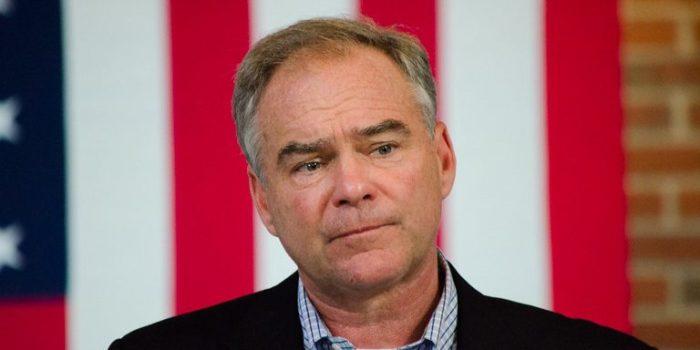
(Headline USA) Sen. Tim Kaine, D-Va., reportedly ignored warnings from the Senate Ethics Committee about using his position to help his wife, who serves as George Mason University’s interim president.
In 2019, the Senate Ethics Committee raised concerns about Kaine participating in events at Fairfax’s George Mason University given his wife’s role at the school, according to the Washington Free Beacon.
“The Ethics Committee has advised [Kaine’s office] not to do anything with just GMU,” one of Kaine’s aides wrote in a Sept. 26, 2019, email exchange with Kaine and Anne Holton, Kaine’s wife.
Additional emails, however, prove Kaine remained intimately involved with the inner workings of the school and that he may have even used his position to secure policies that benefited it.
In March 2020, for example, Holton told Kaine and his chief of staff that a “state of emergency declaration” related to the COVID-19 pandemic “will help us financially e.g. on some of our contractual obligations.”
The next day, then-Virginia Gov. Ralph Northam declared a state of emergency.
A few months later, Holton sent Kaine’s office an email titled “IRS Rules on CARES Act Student Emergency Grants.” Kaine then introduced a bill that modified the CARES Act to give universities “flexibility” to determine how they spent emergency pandemic funds.
In November 2020, Holton explicitly asked Kaine for a “favor,” urging him to lobby the White House to appoint her chief of staff, Dietra Trent, to head an initiative on historically black colleges.
A spokesperson for Kaine denied that he had been under any investigation, and claimed Kaine consulted with the Senate Ethics Committee of his own accord “about how to balance representing George Mason, the largest university in Virginia, with his wife’s work there.”
She added: “He has followed the guidance to treat George Mason as he would any other state higher education institution.”
Ironically, political success of Hillary Clinton’s 2016 vice presidential running mate may, in some ways be attributable to his wife’s political connections. She is the daughter of Linwood Holton, who served as the Republican governor of Virginia from 1970 to 1974, and was best known for fighting the pro-segregationist Democratic political machine that had long dominated politics in the Old Dominion.
However, while Democrats eventually relented on their racist stance and pivoted toward pandering to minority voters, their affinity for cronyism, dynastic elitism and political back-scratching remains one of the party’s defining characteristics, both in Virginia and beyond.
(Casey Harper, The Center Square) Consumer costs increased at an elevated level again in December, according to newly released federal economic data, raising new concerns about spiking inflation.
The U.S. Bureau of Labor Statistics on Thursday released the Consumer Price Index, a key marker of inflation, showing the cost of a range of every day goods and services for Americans rose more than expected.
According to the federal data, the CPI rose 0.3% in December alone, a break from the recent months of very low inflation. Overall, prices rose 3.4% in the last 12 months.
Food prices rose 0.2% last month, and shelter prices rose 0.5%.
“The energy index rose 0.4 percent in December, after decreasing 2.3 percent in November,” BLS said. “The gasoline index increased 0.2 percent in December, following a 6.0-percent decrease in the previous month.”
Prices have risen about 17% since Biden took office, leaving the president’s critics with another reason to attack him heading into the 2024 election year.
Some prices fell below the average while others surpassed it. The cost of vehicle insurance rose 1.5% in December, and the cost of medical care rose 0.6%. The cost of prescription drugs fell 0.4% last month.
Economists reacted to the numbers Thursday with optimism, expecting that this is a bump in the road to overall lower inflation.
The Center Square’s Voter’s Voice poll released this week showed that Americans are unhappy with Biden’s job as president so far, including his work on the economy. As the Center Square previously reported, polling shows that 67% of those surveyed say the country is headed in the wrong direction.
The majority of surveyed Americans also say in the poll that they disapprove of Biden’s handling of the economy.
The survey was conducted in conjunction with Noble Predictive Insights and queried 2,573 Americans from Jan 2-4, with a roughly equal number of Republicans and Democrats as well as 266 “true independents,” which are independents who report that they do not lean toward either the right or the left. The poll has a margin of error of about 2%.
(Ken Silva, Headline USA) U.S. military recruitment numbers have been plummeting for years, and a new report from Military.com shows that the decrease in white recruits has led the overall decline.
Military.com reported Wednesday that the number of white Army recruits fell from 44,042 in 2018 to 25,070. In 2018, 56.4% of new recruits were reportedly categorized as white. In 2023, that number reportedly declined to 44%.
“During that same five-year period, Black recruits have gone from 20% to 24% of the pool, and Hispanic recruits have risen from 17% to 24%, with both groups seeing largely flat recruiting totals but increasing as a percentage of incoming soldiers as white recruiting has fallen,” Military.com reported.
“The shift in demographics for incoming recruits would be irrelevant to war planners, except it coincides with an overall shortfall of about 10,000 recruits for the Army in 2023 as the service missed its target of 65,000 new soldiers,” the publication added.
The House Oversight Committee held a hearing related to the issue Thursday. There, military officials testified about how diversity, equity and inclusion ideology has impacted servicemembers.
“Why would a white guy want to enlist in an organization that blames every ill in the world on them? That spits in the eye of all those white guys that came before and calls them filthy names?” one veteran said, according to a report submitted by Lt. Col. Matthew Lohmeier (Ret.). “This veteran will encourage our youth to stay away from the military until the military stops with the ‘We hate white people’ nonsense.”
According to the report from Lohmeier, another servicemember said: “What military aged white male would want to enlist when politicians made it clear to promote Blacks and women over more experienced white men? I smell a Diversity, Equity & Inclusion quota system being used in the liberal social engineering degeneration of our military.”
However, many government officials have expressed apathy at the declining recruitment rates. Last month, Sen. Dick Durbin, D-Ill., proposed that the shortfall in white recruits could be made up for by allowing illegal immigrants to serve.
“Do you know what the recruiting numbers are at the Army, Navy and Air Force? They can’t find enough people,” Durbin said last month. “And there are undocumented people who want to serve this country. Should we give them the chance? I think we should.”
(Mike Maharrey, Money Metals Exchange) There were more corporate bankruptcies in 2023 than there were during the pandemic of 2020.
Higher interest rates and massive levels of corporate debt drove the flurry of business failures last year.
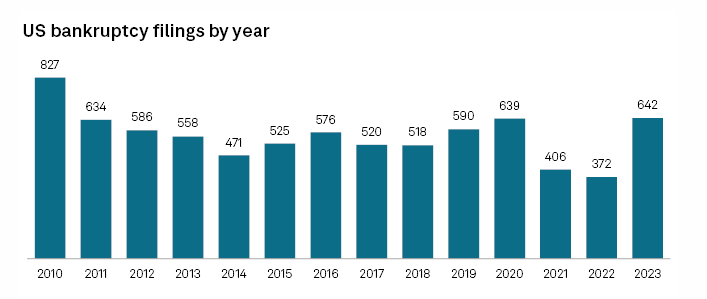
There were 642 corporate bankruptcy filings in the U.S. in 2023, according to S&P Global Market Intelligence. That was a 72.6 percent increase over the 2022 total and the largest number of bankruptcy filings since 2010.
The biggest bankruptcy of 2023 happened in December when Pennsylvania Real Estate Investment Trust filed for protection. The company had more than $1 billion in liabilities.
Other big companies that filed for bankruptcy in 2023 included WeWork, Rite Aid, Yellow, and Akumin.
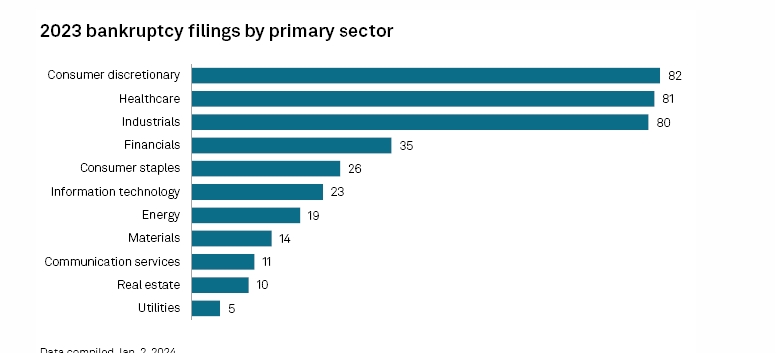
Consumer discretionary companies charted the most bankruptcy filings by sector with 82 filings. These are companies that sell non-essential goods and services including fast food, furniture, and travel services.
The healthcare and industrial sectors also recorded a large number of bankruptcy filings.
During the year, 95 California companies sought bankruptcy protection. There were 75 filings from Texas and 68 from Florida. New York added 58 bankruptcies last year, with New Jersey registering 31.
Corporate bankruptcies were part of a broader trend in the U.S. According to data from Epiq AACER, personal bankruptcy filings rose 18 percent to 419,559 in 2023.
Epiq AACER VP Michael Hunter said he doesn’t think the number of bankruptcy filings will slow in the coming year.
We expect the increase in number of consumer and commercial filers seeking bankruptcy protection to continue in 2024 given the runoff of pandemic stimulus, increased cost of funds, higher interest rates, rising delinquency rates, and near historic levels of household debt.
BLAME THE FED
What caused the big surge in bankruptcies in 2023?
You can blame the Federal Reserve.
Simply put, the U.S. economy cannot function long-term in a high interest rate environment. Easy money is gone and companies are struggling to survive without that mother’s milk.
The central bank drove interest rates from zero to 5.5 percent in a relatively short period of time to fight price inflation. But the real problems started long before the rate hiking cycle.
In the wake of the 2008 financial crisis, the Fed pushed dropped interest rates to zero and held them there for nearly a decade. It didn’t start trying to normalize rates in earnest until 2017, and it failed miserably. In the fall of 2018, the economy started getting wobbly and the stock market crashed. The Fed paused rate hikes in December 2018 and cut rates three times the following year. The pandemic gave the central bank the excuse it needed to slash rates back to zero in 2020.
Other central banks followed the Fed’s lead. More than a decade of easy money had a predictable effect. Corporations, governments, and individuals ran up mountains of debt.
And why not?
Money was cheap, and policymakers gave the impression that the easy money gravy train would never end. The Federal Reserve and the U.S. government incentivized borrowing, so people borrowed. After all, incentives matter.
But when it became clear that price inflation wasn’t transitory, the Fed was forced to act. Now we’re in an untenable environment with debt bubbles as far as the eye can see straining under the pressure of higher interest rates.
This is precisely why the Fed started talking about rate cuts in 2024 even though price inflation is nowhere near the 2 percent target. Everybody knows that this debt-distorted economy can’t run with higher interest rates. It will inevitably break things in the economy.
The rise in bankruptcies last year was just one of many symptoms. There was also the banking crisis last spring that the Fed managed to paper over with a bailout program.
The S&P Global report notes that the surge of bankruptcies will likely continue into 2024.
Although investors expect the Federal Reserve to cut interest rates as early as March, companies will still have to contend with relatively high interest rates and robust wage growth in the near term.
The Fed is between a proverbial rock and a hard place. It can ease interest rates down, risking a resurgence of price inflation, or it can hold its ground and risk crashing the economy.
(Mike Maharrey, Money Metals Exchange) No matter what you read about the December Consumer Price Index (CPI) data, you should keep one important fact top of mind: every number is far above the Federal Reserve’s 2 percent target.
Given that fact, it would seem the death of price inflation seems somewhat exaggerated.
The headline CPI for December came out hotter than expected. Prices rose 0.3 percent month-on-month, according to the latest data from the Bureau of Labor Statistics (BLS). The expectation was for a 0.2 percent increase. That pushed that annual CPI up to 3.4 percent from 3.1 percent in November.
Stripping out more volatile food and energy prices, core CPI rose by 0.3 percent. That equaled the 0.3 percent increase in November but was in line with estimates. The annual core CPI came in at 3.9 percent, down a tick from 4 percent the prior month.
It’s worth noting that core CPI has been hovering in the 4 percent range since July and remains nearly double the Fed’s 2 percent target.
To put the monthly core CPI increase in perspective, it would need to average just under 0.17 percent per month to hit the 2 percent annual target.
Keep in mind, inflation is worse than the government data suggest. The government revised the CPI formula in the 1990s so that it understates the actual rise in prices. Based on the formula used in the 1970s, CPI is closer to double the official numbers.
Digging more deeply into the numbers, rising shelter costs drove the overall CPI higher last month. Shelter prices rose 0.5 percent month-on-month and 6.2 percent on an annual basis.
Energy prices also reversed in December, charting a 0.4 gain after sliding 2.3 percent in November.
Food prices continue to creep up month after month. The food index rose 0.2 percent month-on-month, matching the November increase. On an annual basis, food prices rose 3.4 percent (not seasonally adjusted).
Reaction to the December Inflation Numbers
The higher-than-expected headline CPI dampened hope for interest rate cuts by the Federal Reserve, although many market analysts tried to spin the CPI report as “not that bad.”
Capital Economics chief North American economist Paul Ashworth told MarketWatch that the December CPI report doesn’t necessarily rule out the possibility of a rate cut as early as March. He said two big drivers of the CPI increase – used cars and shelter – will likely reverse in the coming months.
In short, we don’t think December’s CPI data necessarily rules out a March rate cut by the Fed.
Principal Asset Management chief global strategist Seema Shah was less sanguine.
Today’s inflation report reinforces the notion that the market had gotten a little overexcited around the timing of rate cuts. These are not bad numbers, but they do show that disinflation progress is still slow and unlikely to be a straight line down to 2 percent.
But she still penciled in rate cuts as early as mid-2024.
This optimism despite the actual CPI data underscores the fact that the markets are desperate for rate cuts because most people recognize that the debt-riddled economy can’t function long-term with interest rates at this level.
We’re already seeing signs of strain. There were more corporate bankruptcies in 2023 than there were during the pandemic year of 2020.
It’s important to recognize the mainstream wants the Fed to claim victory over inflation so it can go back to inflationary policies. In effect, an end to rate increases, subsequent rate cuts, and loosening monetary policy will eventually lead to more price inflation.
In other words, as soon as the Fed declares victory, inflation wins.
How?
Because rising prices are a symptom of monetary inflation. And monetary inflation is exactly what we will get when the central bank reverts to a looser monetary policy.
In fact, despite the rate hikes, the Fed hasn’t been nearly as aggressive in tightening monetary policy as you might think. From a historical perspective, financial conditions remain loose.
The Chicago Fed Financial Conditions Index confirms this. The NFCI ticked down to –0.51 in the week ending Jan. 5. A negative number indicates loose conditions.
Despite the fact rate hikes have cooled CPI in recent months, the Fed is still a long way from victory. And yet the mainstream remains convinced victory is imminent. The fact is, victory isn’t even in the cards. It’s more like surrender.
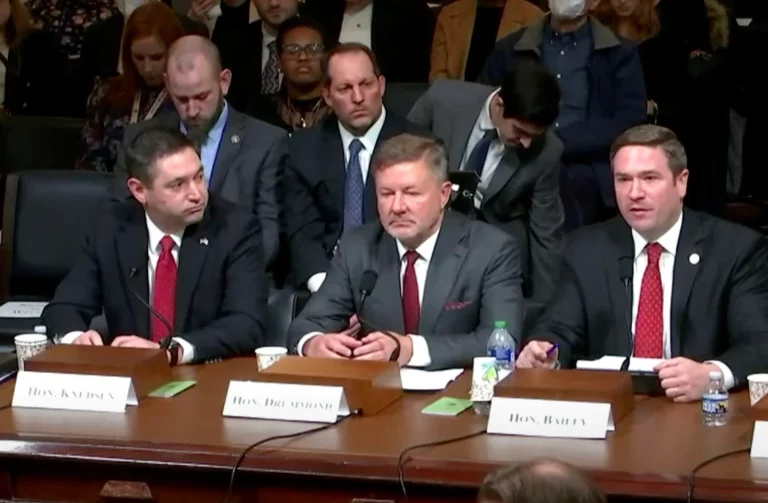
At Wednesday’s hearing, Committee Chairman Mark E. Green, R-Tenn., said, “Secretary Mayorkas has demonstrated through his words and actions that he has failed to uphold his oath of office and in his duty to secure the homeland. There is no longer any question that articles of impeachment must be considered.”
Green asked each of the attorneys general several questions about what he called Mayorkas’s “dereliction of duty.”
Has Mayorkas “failed to enforce laws passed by Congress and subverted them? Do you believe that Mayorkas has defied court orders issued by U.S. courts? Do you believe that Mayorkas misled Congress in describing operational control of the border?”
He also asked if increased fentanyl-related deaths and the increased number of known, suspected terrorists coming through the border constituted a “great and dangerous” threat to the United States. They all replied yes to his questions.
All three also said Congress was within its constitutional right to bring impeachment articles against Mayorkas. Missouri Attorney General Andrew Bailey said Mayorkas has “abdicated his official duties, he’s in dereliction of duty and should be held accountable.”
Democrats said the hearing was “a joke,” “a fraudulent impeachment,” and backed by a MAGA-led movement.
They also argued that policy disputes between Congress and the White House do not rise to the level of high crimes and misdemeanors—an argument made by Frank Bowman, professor emeritus of Law, University of Missouri School of Law.
Rep. Dan Bishop, R-N.C., said Bowman’s testimony directly contradicted claims he made in a 2019 book he wrote about high crimes and misdemeanors.
Montana Attorney General Austin Knudsen said the border crisis “is a self-inflicted injury” directly resulting from policies implemented by Mayorkas.
“Secretary Mayorkas has violated his oath to defend the homeland and uphold the Constitution by repeatedly disregarding the laws passed by Congress,” Knudsen said.
“To that end, he has instructed the men and women of his department to violate congressional mandates and circumvent court orders issued after states like Montana have taken the drastic measure of filing suit against the federal government to stop the madness at the southern border,” Knudsen continued. “His actions as secretary have turned the border into an effectively meaningless 2,000-mile line in the sand, ceding operational control to Mexican drug cartels—some of the most savage and depraved organizations in world history.”
Oklahoma Attorney General Gentner Drummond testified about the dangers citizens faced as the result of a “porous border” and Mayorkas’s “failure to enforce” immigration law.
“Throughout Oklahoma, law enforcement comes into daily contact with foreign nationals who entered our country illegally or who remain here illegally—or both. This is tragic and common in Oklahoma’s illegal marijuana grow operations,” Drummond said.
“Our law enforcement partners report that the foreign nationals most often involved in these illegal enterprises come from China and Mexico,” he continued. “We have identified individuals from many other countries, to include Cuba, Bulgaria and Russia.”’
Bailey said the consequences of Mayorkas’s policies do not discriminate against red or blue states.
“Blue states are also begging the federal government to course correct, as they too are forced to bear the unspeakable burden of tens of thousands of unauthorized migrants entering their communities.”
Bailey pointed to Arizona Gov. Katie Hobbs deploying the National Guard to the Arizona-Mexico border, Illinois Gov. J.B. Pritzker requesting federal aid, and New York Gov. Kathy Hochul declaring a state of emergency—all in response to an influx of illegal entries burdening their states.
“The fact of the matter is that every state is a border state,” Bailey said.
“Every state and its citizens are forced to bear the brunt of Secretary Mayorkas’ ineptitude,” he continued. “My call to Congress today is simple: remove that burden from the shoulders of everyday Americans and put it back where it belongs – on the shoulders of those sworn to protect us.”
He called Mayorkas to task for his oath to uphold the laws and protect Americans.
“Congress has even given DHS ample tools to do its job,” Bailey said. “But let’s be clear: this hearing today is not about resources. It’s about Secretary Mayorkas’ refusal to use the resources given to him in good faith.”
(Ken Silva, Headline USA) The FBI arrested a teenager last month who was supposedly on his way from Denver to fight for ISIS in the Middle East.
But the details of the case show that the teenager, 18-year-old Humzah Mashkoor, was targeted online since he was 16 by at least four undercover FBI agents. And moreover, Mashkoor suffers from mental illness and has high-functioning autism, according to his family.
At least four other teenagers were arrested by the FBI on terrorism charges last year, under similar dubious circumstances.
Court records state that Mashkoor first came on the FBI’s radar in November 2021, shortly after the disastrous U.S. withdrawal from Afghanistan. Following a domestic violence incident involving Mashkoor and his family in June 2022—an incident resulting in the family telling law enforcement about his mental illness—the FBI began chatting with the then-juvenile online.
“Over the course of the investigation, Mashkoor spoke with four different [undercover FBI agents] who posed as fellow ISIS supporters,” stated the criminal complaint against Mashkoor.
“Mashkoor’s communications with the [undercover FBI agents] between September 2022 and December 2023 demonstrated that Mashkoor repeatedly expressed his intent to travel in order to join ISIS as a fighter, to provide money to ISIS to support their efforts, and to recruit others to also support ISIS through travel and/or financial contributions,” the complaint said.
According to The Intercept, which first broke the story about Mashkoor, his family told the judge about his mental illness at an initial court hearing, but the judge ordered him incarcerated anyway.
“It’s not lost on this court that Mr. Mashkoor is a young man with possible mental illness and the diagnosis of high-functioning autism. It is clear he has a sea of familial support,” the judge reportedly said. “But based on this evidence, there’s no reasonable assurance here that the court can simply chalk all this up to the defendant simply being a young man.”
Mashkoor’s arrest marked at least the fifth teenager arrested by the FBI last year in highly dubious terrorism stings.
Last July, then-18-year-old Davin Meyer was as he was about to board an international flight—also out of Denver—allegedly to travel to the Middle East and fight for ISIS. Meyer’s mother, who originally approached law enforcement out of concern for her son, said that the FBI entrapped the boy.
Before Meyer was arrested in July, the FBI announced in June that it arrested 18-year-old Mateo Ventura for intending to support ISIS. However, Ventura’s father, has also accused the FBI of entrapping his son.
Along with Meyer and Ventura, the FBI announced in August the arrest of a 17-year-old boy for supposedly plotting to carry out an ISIS-inspired terrorist attack on American soil.
Most recently, a Catholic family claimed their 15-year-old son was arrested after being targeted by FBI operatives online.
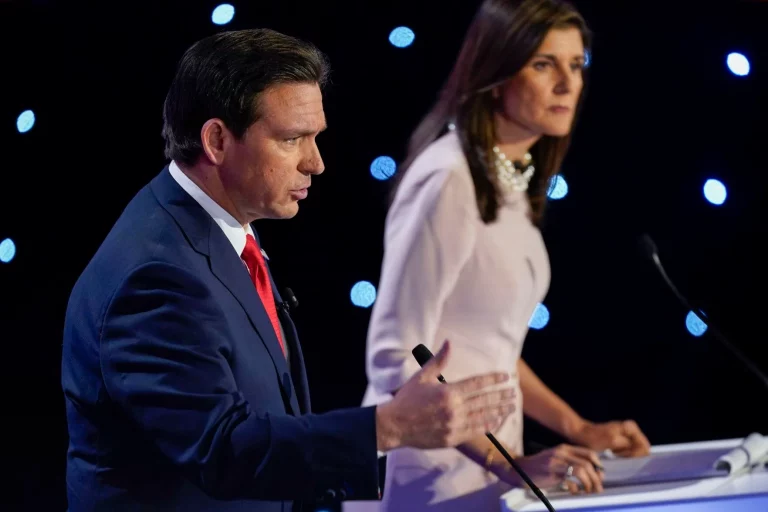
(Corey Walker, The Center Square) Florida Republican Gov. Ron DeSantis and former South Carolina Gov. Nikki Haley pulled few punches during Wednesday’s GOP primary debate, the final one before Monday’s Iowa caucuses.
DeSantis and Haley, the only two GOP candidates to qualify for the CNN-hosted debate besides former President Donald Trump, outlined their accomplishments and attacked each others’ records. Trump declined to participate as he has in all previous primary debates.
“Donald Trump’s running to pursue his issues. Nikki Haley’s running to pursue her donors’ issues. I’m running to pursue your issues and your family’s issues and to turn this country around,” DeSantis said.
“I’m the only one running that’s delivered 100% of the promises I’ve made,” DeSantis continued. “We’ve delivered huge victories in the state of Florida, things Republicans have been asking for, for a generation.”
He pointed to his successful track record in beating Democrats, suggesting that Trump picked fights he couldn’t win and Haley never picked them to begin with.
“We beat the teachers union on universal school choice,” DeSantis said.
“We beat [billionaire Democrat donor George] Soros on crime,” he continued. “We beat Fauci on Covid. We beat the Dems on election integrity. And I beat the left by banning China from buying land in the state of Florida.”
He dismissed Haley as a “mealy-mouthed” politician who will not honor her promises.
Haley underlined the urgency for a “new generational leader.” She touted her “executive experience” as governor of South Carolina, transforming the state into an “economic powerhouse.”
She also talked up her foreign policy experience as ambassador of the United Nations, engaging with American adversaries such as Russia, Iran and China.
The former South Carolina governor swiped at DeSantis, calling him a liar and saying that his donors abandoned his “exploding” campaign.
The Florida governor questioned Haley’s determination to fight for conservative policy goals, accusing her of dropping school choice policies at the behest of teachers unions.
“The reality is Nikki Haley is not somebody that has been willing to stand in and fight on behalf of conservatives,” he said.
“You know, she ran for governor, saying she was going to do universal school choice. And she caved to the teachers union. She didn’t deliver that,” he continued, once again hammering home his own track record of accomplishments as Florida governor and drawing a contrast with Haley’s.
“When she was governor of South Carolina, she was rated 50th in education, dead last” DeSantis said. “You know where Florida is under my watch? No. 1 in the nation.”
Haley blasted DeSantis for supposedly reversing his promises on the debt ceiling and foreign policy.
“When Ron was representing Florida, he said that he promised not to raise the debt limit when he got to D.C. Yet, he raised the debt limit by hundreds of billions of dollars,” Haley said.
“He used to support Ukraine. He supported Ukraine when President Obama was in office,” she continued. “Now, he’s trying to copy Trump in saying that he no longer supports Ukraine and doesn’t want to give them foreign aid anymore.”
Haley also lamented “wasteful spending” by both Democrats and Republicans, arguing the country needs “an accountant in the White House.”
“We have to have someone that respects taxpayer dollars, and we’ll start by clawing back $100 billion of unspent Covid dollars that are still out there. We’ll go in instead of 87,000 IRS agents going after middle America, we’ll go after the hundreds of billions of dollars of Covid fraud, one out of every $7” Haley said.
“We’ll stop the spending.We’ll stop the borrowing. We’ll eliminate the pet projects and the earmarks, and I’ll veto any spending bill that doesn’t take us back to pre-covid levels,” she said.
Haley promised to nix the federal gas tax, reduce taxes for the middle class and small businesses.
DeSantis dismissed the notion that America needs an accountant, asserting that it needs a “leader” instead.
“The American dream is slipping away. People are working hard. They’re getting the most out of their God-given ability. They’re doing everything right and falling further and further behind,” DeSantis said.
“Trying to afford a new home today, your monthly mortgage payment would probably be twice as much as it would have been if you were starting out five years ago,” he added.
Haley passed DeSantis for second place in the GOP primary in the latest Center Square Voters’ Voice Poll, with former President Donald Trump still holding a commanding lead over all of his rivals.
Haley, however, has surged in New Hampshire primary polling in recent months, standing at 29.9% of voters compared to 42.4% for Trump, according to data compiled by FiveThirtyEight.
(Headline USA) The Biden administration confirmed this week that it has launched an investigation into Rumble, a free speech video platform that has rejected Big Tech censorship.
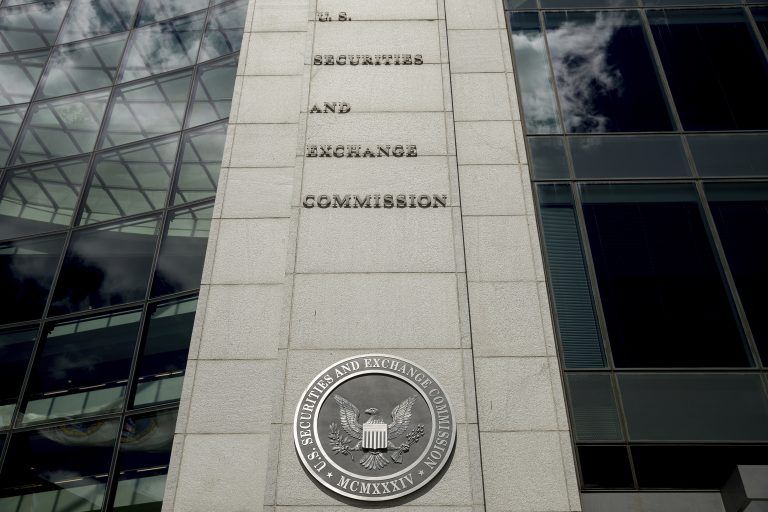
The Securities and Exchange Commission told leftist magazine Wired on Monday that it does have an active probe into Rumble, though it would not provide any information regarding the nature of the investigation.
An agency spokesperson also noted that the existence of the investigation does not mean Rumble has been accused of any illegal activity.
“We have confirmed with Division of Enforcement staff that the investigation from which you seek records is still active and ongoing,” said Melinda Hardy, the SEC’s assistant general counsel for litigation and administrative practice.
Hardy also denied Wired’s public-records request seeking additional information about the SEC’s investigation, claiming that turning over the requested documents “could be reasonably expected to cause harm to the ongoing and active enforcement proceedings because, among other things, individuals and entities of interest in the underlying investigation could fabricate evidence, influence witness testimony and/or destroy or alter certain documents.”
Rumble spokesperson Rory Rumore confirmed the SEC had requested documents from the company, which Rumble turned over voluntarily.
Rumble CEO Chris Pavlovski said in a tweet that the SEC’s request was related to a false report from a “short seller.”
He added that the report filed with the SEC was part of the “playbook to try and destroy” Rumble.
“The report is bogus, but that doesn’t matter—it’s all to get investors to sell the stock so the short seller profits,” he explained. “Good news, it won’t work. We saw the attacks coming, and we prepared for them.”
A short seller creates a bogus report and sends it to the SEC. The SEC investigates the bogus report. Then the short seller talks to the media to get a story about how the SEC is investigating the report that started with him. The…
Pavlovski warned that Rumble would likely face additional attacks in the future from leftists who “can’t stand Rumble’s mission.” But “they are going to learn quickly how hard we punch back,” he said.