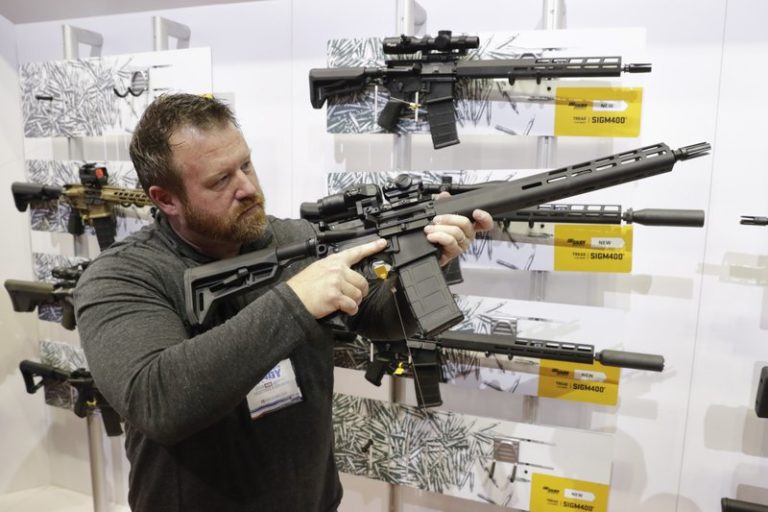
South Carolina Supreme Court Rules State Death Penalty Is Legal, Including Firing Squad

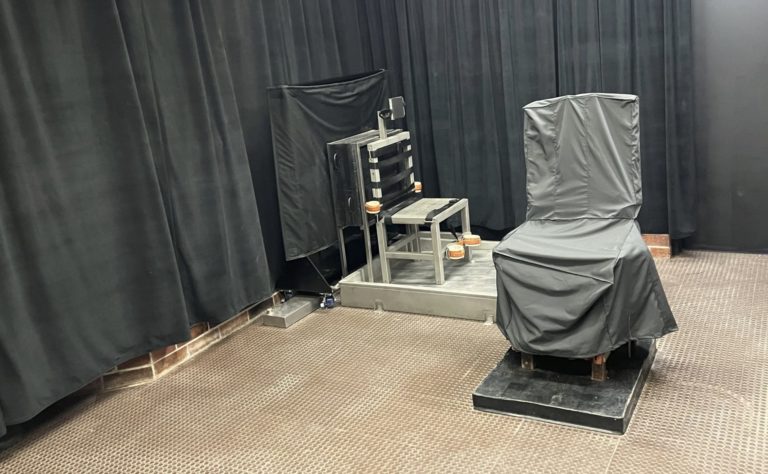
(Headline USA) South Carolina can execute death row inmates by firing squad, lethal injection or the electric chair, the state’s high court ruled Wednesday, opening the door to restart executions after more than a decade.

All five justices agreed with at least part of the ruling. But two of the justices said they felt the firing squad was not a legal way to kill an inmate and one of them felt the electric chair is a cruel and unusual punishment.

The state allowing inmates to choose from the three execution methods is far from an effort to inflict pain but a sincere attempt at making the death penalty less inhumane, Justice John Few wrote in the majority opinion.

As many as eight inmates may be out of traditional appeals. It is unclear when executions could restart or whether lawyers for death row inmates can appeal the ruling.

Gov. Henry McMaster said the justices interpreted the law correctly. “This decision is another step in ensuring that lawful sentences can be duly enforced and the families and loved ones of the victims receive the closure and justice they have long awaited,” he said in a statement.

Lawyers for the death row inmates said they were reviewing the 94-page ruling before commenting.

South Carolina has executed 43 inmates since the death penalty was restarted in the U.S. in 1976. Nearly all inmates have chosen lethal injection since it became an option in 1995.

“Choice cannot be considered cruel because the condemned inmate may elect to have the State employ the method he and his lawyers believe will cause him the least pain,” Few wrote.

South Carolina hasn’t performed an execution since 2011. The state’s supplies of drugs for lethal injections expired and no pharmaceutical companies would sell more if they could be publicly identified.

Lawmakers authorized the state to create a firing squad in 2021 to give inmates a choice between it and the old electric chair. The inmates sued, saying either choice was cruel and unusual punishment prohibited by the Constitution.

In spring 2023, the Legislature passed a shield law to keep lethal injection drug suppliers secret and the state announced in September it had the sedative pentobarbital and changed the method of lethal injection execution from using three drugs to just one.

The Supreme Court allowed the inmates to add arguments that the shield law was too secret by not releasing the potency, purity and stabilization of lethal injection drugs.

South Carolina has 32 inmates on its death row. Four prisoners are suing, but four more have also run out of appeals, although two of them face a competency hearing before they could be executed, according to Justice 360, an advocacy group for inmates.

The state said in its argument before the state Supreme Court in February that lethal injection, electrocution and firing squad all fit existing death penalty protocols. “Courts have never held the death has to be instantaneous or painless,” wrote Grayson Lambert, a lawyer for Gov. Henry McMaster’s office.

But lawyers for the inmates asked the justices to agree with Circuit Judge Jocelyn Newman, who stopped executions with the electric chair or firing squad.

She cited the inmates’ experts, who testified at a trial that prisoners would feel terrible pain whether their bodies were “cooking” by 2,000 volts of electricity in the chair, built in 1912, or if their hearts were stopped by bullets — assuming the three shooters were on target — from the yet-to-be used firing squad.

On the shield law, the attorneys for the inmates said they need to know if there is a regular supplier for the drug, which typically only has a shelf life of 45 days, and what guidelines are in place to test it and make sure it is what the seller claims.

Too weak a dose, and inmates may suffer without dying. Too strong, and the drug molecules can form tiny clumps that would cause intense pain when injected, according to court papers.

“No inmate in the country has ever been put to death with such little transparency about how he or she would be executed,” Justice 360 lawyer Lindsey Vann wrote.

Lawyers for the inmates did tell the justices in February that lethal injection appears to be legal when it follows proper protocols, with information about the drug given to the condemned in a manner that matches what other states and the federal government use.

South Carolina used to carry out an average of three executions a year and had more than 60 inmates on death row when the last execution was carried out in 2011. Since then, successful appeals and natural deaths have lowered the number to 32.

Prosecutors have sent only three new prisoners to death row in the past 13 years. Facing rising costs, the lack of lethal injection drugs and more vigorous defenses, they are choosing to accept guilty pleas and life in prison without parole.

Adapted from reporting by the Associated Press
IG: DEA Official Used Confidential Informant to Score Tickets to Sporting Events

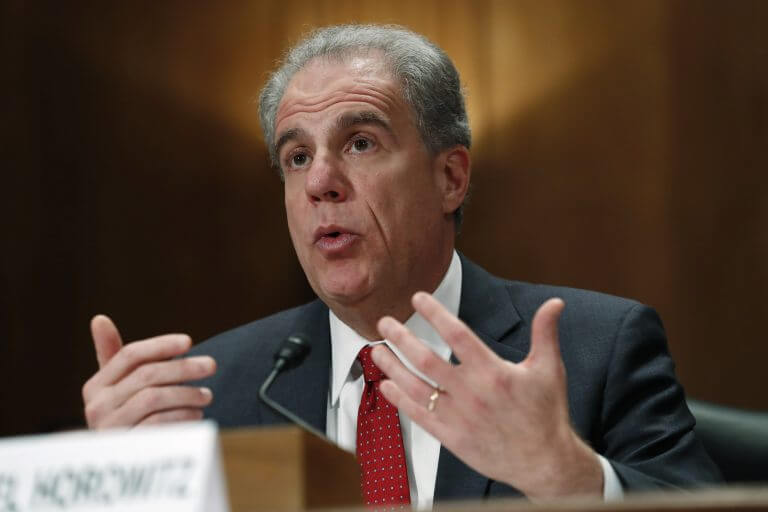
(Ken Silva, Headline USA) The Justice Department’s Inspector General released a report Thursday, finding that an executive assistant with the Drug Enforcement Administration improperly leveraged a relationship with a confidential source to score tickets to sporting events.

“The OIG investigation substantiated the allegation that the DEA Executive Assistant had developed a prohibited relationship with a former DEA confidential source, in violation of DEA policy,” the DOJ IG said Thursday.

“The OIG investigation also found that the DEA Executive Assistant had used their position to cultivate the friendship, and then used the friendship to seek and obtain tickets to expensive sporting events, in violation of DEA policy and federal ethics regulations.”

The DOJ IG said it referred its findings to the DEA, which didn’t immediately respond to a media inquiry from this publication.

Improper relationships between feds and their informants have had deadly consequences in the past. The most prominent example of this comes from June 1989, when an FBI informant named Susan Smith was found dead in the Appalachians.

Smith’s death would be a cold case for about another year, until her handler, FBI agent Mark Putnam, confessed to murdering her. It turned out, Putnam had a sexual relationship with his informant, and he killed her to prevent his wife from discovering the affair.

Putnam became the first FBI agent to be convicted of homicide. His confession was made against the wishes of his superiors at the bureau.

He was sentenced to 16 years in prison, and he was released after 10 years due to good behavior.

One of the most recent sightings of him comes from several years ago, when he was pictured teaching an exercise class.

The story of Smith’s murder and Putnam’s confession is documented in the book Above Suspicion: An Undercover FBI Agent, an Illicit Affair, and a Murder of Passion. The book has also been made into a movie staring Emilia Clarke.

Ken Silva is a staff writer at Headline USA. Follow him at twitter.com/jd_cashless.

Secret Service Set to Receive a Raise from Congress after Nearly Getting Trump Killed

(Ken Silva, Headline USA) Failing to secure nearby rooftops, letting the alleged shooter roam free for more than an hour, and waiting 15 seconds before returning fire are just a few of the Secret Service’s egregious security failures from the July 13 assassination attempt on presidential frontrunner Donald Trump.

Meanwhile, the Secret Service has yet to provide Congress with crucial information about the event, including its operations plan for that day.

So what’s Congress’s response to the Secret Service’s ineptitude and lack of transparency? Apparently, lawmakers want to give the agency a raise.

In a Wednesday letter to Secret Service Acting Director Ronald Rowe, Sens. Chris Murphy, D-Conn., and Katie Britt, R-Ala., signaled their intent to give the agency a budget boost.

“Following the assassination attempt on former President Trump, President Biden announced that Secret Service protection will also be provided to presidential candidate Robert F. Kennedy Jr. Two vice presidential candidates will now also require protection. As a result, the Secret Service is assuming new protection costs related to the campaign at a time when it already appears to lack sufficient resources to fulfill its protective mission,” the senators said in their letter.

The senators also signaled their intent to give the Secret Service a raise in their questions to Rowe. One of the questions, for instance, asked whether Rowe believes his agency needs additional resources beyond its 2025 budget request.

There’s no evidence that the Secret Service’s security failures have anything to do with the agency’s budget.

As noted by reporter Ken Klippenstein, the agency’s budget has almost doubled over the past decade.

Sens. Murphy and Britt also acknowledged that Congress provided more than $190 million to the Secret Service this year, specifically for protection requirements related to the 2024 presidential campaign, plus an additional $22 million above President Biden’s budget request for protection-related travel costs.

The senators asked Rowe for “prompt responses” about his budgetary needs.

Ken Silva is a staff writer at Headline USA. Follow him at twitter.com/jd_cashless.

GOP Challenge to New York’s Mail-In Voting Expansion Reaches State’s Highest Court

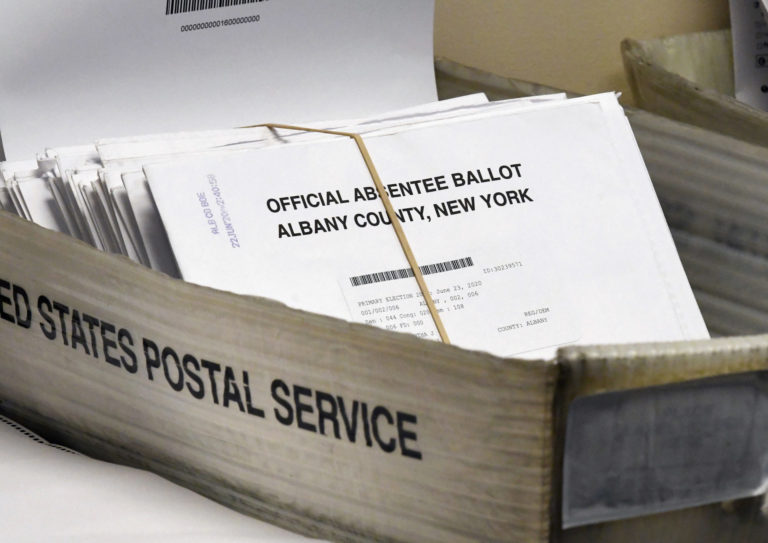
(Headline USA) New York’s highest court heard arguments Tuesday in a Republican challenge of a law that allows any registered voter to cast a mail-in ballot during the early voting period.

The case, which is led by Rep. Elise Stefanik and includes other lawmakers and the Republican National Committee, is part of a widespread GOP effort to tighten voting rules after the 2020 election.

Democrats approved the mail voting expansion law last year. The Republican challenge argues that it violates voting provisions in the state Constitution.

The hourlong arguments before the New York Court of Appeals in Albany hinged on technical readings of the Constitution, specifically whether certain passages would allow for the state Legislature to expand mail voting access.

At certain points in the hearing, judges quizzed attorneys on whether a constitutional provision that says eligible voters are entitled to vote “at every election” would mean a physical polling place or simply the election in general.

Michael Y. Hawrylchak, an attorney representing the Republicans, said that provision “presupposes a physical place” for in-person voting. Deputy Solicitor General Jeffrey W. Lang, who is representing the state, said the phrase “just refers to a process of selecting an office holder” and not any physical polling place.

Democrats first tried to expand mail voting through a constitutional amendment in 2021, but voters rejected the proposal after a campaign from conservatives who said it would lead to voter fraud.

Lower courts have dismissed the Republican lawsuit in decisions that said the Legislature has the constitutional authority to make rules on voting and the Constitution doesn’t require voting specifically to occur in person on election day.

It is unclear when the Court of Appeals will rule.

Adapted from reporting by the Associated Press

UFOs Spotted in Trump Shooting Footage—Really

(Ken Silva, Headline USA) Was it a Bird? Was it a Drone? UFOs spotted in the footage of the July 13 Trump shooting have sparked rampant speculation online.

The unidentified flying objects were spotted shortly before Trump was grazed in the ear by a bullet. What those flying objects were is another question.

The simplest explanation would be that the UFOs were birds. Others have speculated that they might have been drones—even though law enforcement claims to not have used drones that day. One UFO expert told the Daily Mail that the sightings might have been a combination of both.

“The objects are moving fast, and in closeups, you can see motion blur, distorting the objects’ actual shape,” Enigma Lab’s UAP advisor Alejandro Rojas reportedly told Daily Mail.

“Events like these often have several drones filming. It is now being reported even the shooter had flown a drone in the area. The objects also move in a straight line without making any unusual movements. While we can’t say for sure what they are, they are consistent with many videos we get that turn out to be mundane objects.”


Additionally, UFO filmmaker Mark Christopher Lee reportedly told The Daily Star he believes the assassination attempt against Trump may be related to his promise to shine transparency on the government’s UFO program.

“It sounds a bit out there, but I do believe that this attempt may have been due to the fact that, if elected President again, Trump would release the full truth about UFOs,” Lee reportedly said.

Some have even gone as far as to suggest that aliens protected Trump from the assassin’s would-be kill shot on July 13.

“UFO’s are always at Trumps rally’s, protecting him,” one Twitter user posted, according to the Daily Mail (Headline USA was unable to find that tweet).

The UFO sightings at the July 13 Trump rally come about a year after a Pentagon “whistleblower” went public with fantastical allegations that the U.S. government is in possession of alien UFO technology.

But according to Sean Kirkpatrick, who once led the Pentagon’s search for UFOs, the entire alien investigation is based on a hoax.

Kirkpatrick was the former head of the All-Domain Anomaly Resolution Office, or AARO, which was established by Congress in 2022 to investigate credible observations of unidentified anomalous phenomena, also known as UFOs.

In a recent editorial, Kirkpatrick said AARO has found no evidence of aliens or alien technology.

“During a full-scale, year-long investigation of this story (which has been told and retold by a small group of interconnected believers and others with possibly less than honest intentions—none of whom have firsthand accounts of any of this), AARO discovered a few things, and none were about aliens,” he said.

Ken Silva is a staff writer at Headline USA. Follow him at twitter.com/jd_cashless.

Federal Reserve Poised to Surrender to Inflation

(Mike Maharrey, Money Metals News Service) The Federal Reserve unfurled the white flag during the July FOMC meeting and set the stage to surrender to inflation. 

That may seem like an odd way to frame the messaging that came out of the most recent Fed meeting, but surrender is exactly what Powell & Company are set to do. The inflation dragon might be woozy, but he isn’t dead, and the central bank appears to be set to revive him with a hit of easy money in September. 

The Fed didn’t make any policy changes at the July meeting, holding rates steady at between 5.25 and 5.5 percent. But the messaging coming out of the meeting took a strong dovish turn and began signaling an impending rate cut. 

The first hint was in the official FOMC statement. Instead of describing inflation as “elevated,” it called it “somewhat elevated,” and instead of saying “the committee remains highly attentive to inflation risks,” the statement declared “the committee is attentive to both sides of its dual mandate.”

Jerome Powell’s Open-Mouth Operations

Federal Reserve Chairman Jerome Powell likes to use his podium to front-run monetary policy. He knows markets will parse his words and respond accordingly. During his post-meeting press conference, Powell gave the strongest hints yet that the Fed is officially tapping out of the inflation fight, most likely next month.

“If we were to see inflation moving down … more or less in line with expectations, growth remains reasonably strong, and the labor market remains consistent with current conditions, then I think a rate cut could be on the table at the September meeting.” 

Powell stopped short of calling a September cut a certainty, leaving himself a little wiggle room.

“We’re getting closer to the point at which it’ll be appropriate to reduce our policy rate, but we’re not quite at that point.” 

Powell left the door open for anywhere between “zero cuts and several cuts” before the end of the year.

 Nevertheless, the mainstream almost universally believes a cut is coming at the next meeting and the markets are pricing for that eventuality. 

Moody Analytics chief economist Mark Zandi told the AP, “They’re ready to cut.”

“Just as long as we don’t get an inflation surprise between now and September, which we won’t.”

SiebertNXT CIO Mark Malek offered Reuters a similar take.

“Listening to him speak, it’s clear they’re all locked and loaded for a September rate cut and they’re going to maintain their optionality.”

 The Fed Is Already Withdrawing from the Inflation Fight

 Even before yesterday’s verbal pivot, the Fed was already winding down the inflation fight.

As I reported earlier this week, the central bank already loosened monetary policy when it quietly announced that it would begin to taper balance sheet reduction in June. 

The balance sheet serves as a direct pipeline to the money supply. When the Fed buys assets – primarily U.S. Treasuries and mortgage-backed securities – it does so with money created out of thin air. Those assets go on the balance sheet and the new money gets injected into the economy.

This expansion of the money supply is, by definition, inflation.

If expanding the money supply is inflationary, it logically follows that to slay price inflation, the Fed needs to significantly shrink the balance sheet. Rate hikes aren’t enough to ring all the liquidity out of the economy. In other words, if the Fed was serious about taming inflation, it would be talking about additional rate hikes and ramping up efforts to reduce the size of the balance sheet. It needs to undo the money creation of the past decade-plus. 

I didn’t and it won’t.

The Fed is already winding down balance sheet reduction having only reduced it by $1.76 trillion, a fraction of the nearly $5 trillion it added during the pandemic alone. This indicates that it is withdrawing from the battlefield while inflation is alive and well.

Inflation Isn’t Dead 

Why do I call this a surrender?

Because inflation isn’t dead. 

And if the Fed was serious about slaying inflation, it wouldn’t be on the cusp of creating more inflation.

Keep in mind, inflation is an expansion of money and credit. Price inflation is one symptom of inflationary policy.

The Fed has tightened things up just enough to slow rising prices, but as we can see from the balance sheet, most of the inflation created during the pandemic is still sloshing around in the economy. And that’s on top of all the inflation it created in the wake of the 2008 financial crisis that the central bank never managed to wring out of the economy. 

But by slowing balance sheet reduction and signaling interest rate cuts, the Fed is telling you it plans to ramp up the inflation machine.

Meanwhile, price inflation remains well above the mythical 2 percent target. Even the Fed’s “preferred” inflation measure undercuts the “inflation is dead” narrative. The PCE heated up slightly month-on-month in June. (This measure is preferred because it understates rising prices the most.) The core PCE price index gained 0.2 percent and is still up 2.6 percent year-on-year. But the mainstream mostly focused on the headline number that dropped from 2.6 percent to 2.5 percent.

So, why loosen monetary policy?

Powell & Company know that this debt-riddled, bubble economy can’t continue to function in an even moderately tighter interest rate environment. That’s why everybody is desperate for rate cuts.

In other words, everybody knows this economy runs on inflation and they need it back.

What Does This Mean for Gold and Silver?

So, what is a gold and silver investor to do with this info? 

The mainstream consensus has been to sell gold and silver anytime Powell & Company comes out hawkish, or good economic data indicates the economy is still rolling along. (This is because there is a misguided notion that a strong economy creates inflation. It doesn’t. Money creation causes price inflation.) The mainstream buys gold and silver when the Fed gets doveish or CPI data indicates price inflation might be cooling. This raises hope that interest rate cuts are in the pipeline.

This FOMC meeting was no exception. Gold rallied to move back above $2,450 after it ended.

I’m just going to throw this out there. Instead of making knee-jerk moves based on the last thing on X (formerly known as Twitter), folks might be wise to look at the underlying dynamics.

The reality is the Fed is stuck between a rock and a hard place. The central bank has not done enough to slay price inflation. But the Fed has made monetary policy “sufficiently tight” to break things in this debt-riddled, bubble economy. It has already sparked a financial crisis that continues to bubble under the surface. The world is still buried in debt. Governments continue to borrow and spend. There are still all kinds of malinvestments in the economy.

It’s only a matter of time before the economy unravels. That’s when the markets will get the rate cuts they desperately want – even though inflation still has a heartbeat.

Of course, that means more price inflation.

And this is exactly what Powell & Company are telling you. They’re waving the white flag. They’re letting the inflation dragon off the mat.

Given this fact, you might want to consider an inflation hedge.


Mike Maharrey is a journalist and market analyst for MoneyMetals.com with over a decade of experience in precious metals. He holds a BS in accounting from the University of Kentucky and a BA in journalism from the University of South Florida.

Central Bank and Over-the-Counter Buying Pushed Gold Demand to Record Levels in Q2

(Mike Maharrey, Money Metals News Service) Gold demand was up 4 percent to 1,258 tons in the second quarter, the highest level on record since the World Gold Council started compiling data in 2000. 

Demand for gold was strong in the second quarter despite record gold prices.  

The LBMA gold price averaged a record of $2,338 per ounce in Q2. That was 18 percent higher year-on-year and 13 percent quarter-on-quarter. 

Central bank and over-the-counter (OTC) buying offset a sharp drop in gold jewelry demand.

Central bank gold buying came in at 184 tons, up 6 percent year-on-year. This pushed total central bank gold purchases to 483 tons through the first half of the year, the highest H1 on record. 

Based on the most recent World Gold Council survey, central banks’ appetite for gold won’t be sated any time soon.

Gold bar and coin demand was down about 5 percent year-on-year. A big drop in gold coin sales (38 percent) drove the overall softening of physical investment demand. Bar demand was up 12 percent. This likely reflects the fact that bars are the preferred gold product in Asia, where demand remains robust.

Investment demand data reflects a shift of gold from the West to the East. According to the World Gold Council, “Continued strong demand across Asia was offset by a sharp decline in net demand in Western markets, where profit-taking and liquidation has surged in recent quarters.”

The WGC went on to say, “Demand for bars, coins, and ETFs, was robust in the East, compared with a marked decline in the West.”

ETFs globally recorded modest outflows of 7 tons in Q2. Regionally, ETF gold demand reflected the same dichotomy as physical demand, with Asian funds adding gold and European and North American funds shedding metal.

Over-the-counter demand was particularly robust, estimated at 329 tons. 

The World Gold Council explained the difference between OTC and exchange trading.

“OTC markets are characterized by market participants trading directly with each other. The two counterparties to trade bilaterally agree on a price and have obligations to settle the transaction (exchange of cash for gold) with each other. This form of principal-to-principal gold trading is typically less regulated than trading on an exchange and is how most of the market has functioned historically.”

Jewelry demand was soft in QT, dampened by high prices, dropping 19 percent year-on-year. 

Gold used in technology was up a healthy 11 percent to 81 tons in the second quarter. The electronics sector drove growth, increasing by 14 percent year-on-year.

You can read the full World Gold Council Q2 demand report HERE.


Mike Maharrey is a journalist and market analyst for MoneyMetals.com with over a decade of experience in precious metals. He holds a BS in accounting from the University of Kentucky and a BA in journalism from the University of South Florida.

Delta CEO: Disruptions from CrowdStrike’s Global Meltdown Cost Airline Half a Billion Dollars

0

(Headline USA) Delta Air Lines CEO Ed Bastian says the airline is facing $500 million in costs related to a global tech outage this month that disrupted emergency services, communications and thousands of businesses.

Speaking on CNBC, Bastian said Wednesday that the monetary amount represents lost revenue as well as “the tens of millions of dollars per day in compensation and hotels” for the five-day period.

A week ago, CrowdStrike blamed a bug in an update that allowed its cybersecurity systems to push bad data out to millions of customer computers, setting off the global tech outage that grounded flights, took TV broadcasts off air and disrupted banks, hospitals and retailers.

Cybersecurity company CrowdStrike also outlined measures it will take to prevent the problem from recurring, including staggering the rollout of updates, giving customers more control over when and where they occur, and providing more details about the updates that it plans.

Among airlines, Delta was by far the hardest hit hard by the outage, having to cancel thousands of flights, because key systems were crippled by the incident.

The U.S. Department of Transportation is investigating why Delta failed to recover as quickly as other airlines. Transportation Secretary Pete Buttigieg said last week that the department would also examine Delta’s customer service, including “unacceptable” lines for assistance and reports that unaccompanied minors were stranded at airports.

Bastian said on CNBC that Delta will be seeking damages from the disruptions. CrowdStrike has not made any offers to help Delta financially so far, he added. It has offered free consulting advice.

Adapted from reporting by the Associated Press
Federal Judge Says New Jersey’s Ban on AR-15 Rifles Is Unconstitutional

(Headline USA) New Jersey’s ban on the AR-15 rifle is unconstitutional, but the state’s cap on magazines over 10 rounds passes constitutional muster, a federal judge said Tuesday.

U.S. District Judge Peter Sheridan’s 69-page opinion says he was compelled to rule as he did because of the Supreme Court’s rulings in firearms cases, particularly the 2022 Bruen decision that expanded gun rights.

Sheridan’s ruling left both 2nd Amendment advocates and the state attorney general planning appeals. The judge temporarily delayed the order for 30 days.

Pointing to the high court’s precedents, Sheridan suggested Congress and the president could do more to curb gun-related violence nationwide.

“It is hard to accept the Supreme Court’s pronouncements that certain firearms policy choices are ‘off the table’ when frequently, radical individuals possess and use these same firearms for evil purposes,” he wrote.

Sheridan added: “Where the Supreme Court has set for the law of our Nation, as a lower court, I am bound to follow it. … This principle — combined with the reckless inaction of our governmental leaders to address the mass shooting tragedy afflicting our Nation — necessitates the Court’s decision.”

Nine other states and the District of Columbia have laws similar to New Jersey’s, covering New York, Los Angeles and other major cities as well as the sites of massacres such as the Sandy Hook Elementary School shooting in Newtown, Connecticut, where 20 children and six adults were killed by a shooter armed with an AR-15, one of the firearms commonly referred to as an assault weapon.

“Bans on so-called ‘assault weapons’ are immoral and unconstitutional. FPC will continue to fight forward until all of these bans are eliminated throughout the United States,” said Brandon Combs, president of the Firearms Police Coalition, one of the plaintiffs.

New Jersey Attorney General Matt Platkin said in a statement the ruling undermines public safety.

“The AR-15 is an instrument designed for warfare that inflicts catastrophic mass injuries, and is the weapon of choice for the epidemic of mass shootings that have ravaged so many communities across this nation,” he said.

He added: “We look forward to pressing our arguments on appeal.”

Several challenges to state assault weapons bans have cited the Bruen decision.

New Jersey has among the strictest gun laws in the country, particularly under Democratic Gov. Phil Murphy, who has signed a number of measures into law, including the 2018 large capacity magazine ban at the center of this week’s ruling. More measures Murphy signed in 2022 include allowing the attorney general to use the state’s public nuisance law to go after gun makers in court. A message seeking comment Wednesday was left with a spokesperson for the governor.

The state’s assault weapons ban dates to 1990 and includes various other weapons, but Sheridan focused on the AR-15, citing the plaintiffs’ concentration on that weapon in their court filings. The large capacity magazine bill signed by Murphy lowered the limit from 15 rounds to 10 against the protest of 2nd Amendment advocates. The bill’s sponsors said the goal was to reduce the potential for mass casualties in shootings.

Adapted from reporting by the Associated Press

Train Derailment Victims Must Give up Right to Sue to be Eligible to Receive $25K

(Headline USA) People who live near East Palestine, Ohio, can now get $25,000 apiece for any injuries they sustained after last year’s Norfolk Southern freight train derailment on top of whatever money they get for property damage as part of the $600 million class-action settlement.

The lawyers who negotiated the deal have increased the estimated injury payment from the original $10,000 because they now have more information about how many claims there will be. One of the plaintiffs’ attorneys, Adam Gomez, said the original estimate was conservative to ensure that no one will receive less than they were promised as part of the settlement.

“We are not looking to over promise and under deliver in any way shape or form to the class,” Gomez said.

The lawyers plan to hold a Zoom call for residents Thursday evening to explain why the health payment is increasing and why they believe it is the right amount.

That payment for health problems is on top of the up to $70,000 households can receive for property damage. But to get the injury payment, residents who live within ten miles of where the train derailed have to agree before the Aug. 22 deadline to give up the right to sue the railroad or anyone else involved down the road even if they develop cancer or other serious health conditions later.

The biggest property damage payments of $70,000 per household are limited to people who lived within two miles of the derailment. The payments get much smaller toward the outer edge of the 20-mile radius that’s covered in the settlement.

The personal injury payments are only available to people who lived within ten miles of the derailment.

For the folks in East Palestine who are worried about the possibility of developing cancer or another serious health condition down the road like Jami Wallace even $25,000 seems way too low. She thinks residents’ health claims are likely worth way more than that.

Gomez said that the settlement is primarily designed to address only the short-term health impacts that residents have seen since the derailment because the courts won’t allow them to try to cover future health problems.

But the lawyers hired their own toxicologists and testing experts to try and determine what kind of long-term risks the community faces from the cocktail of chemicals that spilled and burned after the train derailment along with the vinyl chloride that was intentionally released and burned three days after the crash.

Gomez said the evidence they gathered about the chemicals that spilled and how long people were exposed to them suggests there may not be a rash of terrible illnesses in the future.

“In fact, we do not think that there is, support in that data for any significant increase in the number of additional cancers or other illnesses in East Palestine or the surrounding communities,” Gomez said.

But Wallace and others in town may not be ready to believe that because of what she has heard from other chemical experts and the doctors who are studying the health problems residents have reported.

“I have letters written from multiple toxicologists that have credentials longer than your arm that’ll say there’s definitely a huge health risk in the future,” Wallace said.

But Gomez cautioned that anyone who opts out of the class action settlement now should consider the difficult road they would face in bringing their own lawsuit later. He said it will likely be difficult that something like cancer was caused by the derailment because the disease can be caused by other factors.

The National Transportation Safety Board said that the East Palestine derailment, which was the worst rail disaster in the past decade, was caused by an overheating bearing on one of the cars on the train that wasn’t detected soon enough by the network of detectors the railroad has alongside the tracks.

The head of the NTSB also said that the five tank cars filled with vinyl chloride didn’t need to be blown open to prevent an explosion because they were actually starting to cool off even though the fire continued to burn around them.

Adapted from reporting by the Associated Press