(Mike Maharrey, Money Metals News Service) The silver’s supply deficit finally caught up with it in 2025.
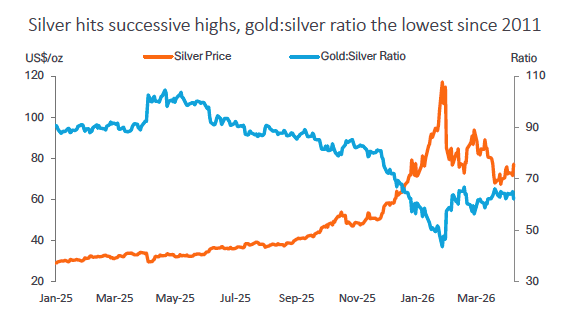
Late last year, the price surged above the $50 resistance that had been in place since the 1980s. The rally continued into the first month of 2026, as the silver price rocketed to over $100 per ounce before correcting and settling in the $80 range.
As Metals Focus explained in its World Silver Survey, “Lower inventories and metal being pulled out of London or tied up in exchange-traded products (ETPs) created explosive conditions for lease rates and prices. Against that backdrop, silver delivered a remarkable year.”
The speed of the rally was truly astonishing. In fact, silver languished most of the year as gold took the spotlight.
Silver opened 2025 at $28.84 and didn’t crack $40 until September. When the year ended, the price sat at $71.30. At its peak, silver was up 147 percent intra-year. The average price came in at $40, a 42 percent increase.
While gold hogged the spotlight through most of the year, silver stole the show at the end. According to Metals Focus, several factors converged to drive the rally.
“Exceptionally strong physical demand, tight inventories, and robust industrial metal prices, copper in particular, fueled silver’s outperformance of gold during that period. This trend eventually became self-fulfilling, as investors that had previously favored gold shifted their attention to the white metal.”
We can see the trajectory of the silver rally in the movement of the gold-silver ratio. This ratio tells you how many ounces of silver it takes to buy one ounce of gold, given the current spot price of both metals.
In the modern era, the gold-silver ratio has averaged between 40:1 and 60:1. Through the first 10 months of 2025, the gold-silver ratio was historically high, averaging 91:1. The ratio peaked in April at 107:1. By the end of the year, the ratio had plunged to 61:1 before falling into the sub-50s early this year. This indicates a significant correction in the silver price.
A Growing Silver Shortage
Silver took off in October as a silver squeeze gripped the market.
A convergence of factors from market dynamics to logistical problems led to an unprecedented silver shortage. While the market dynamics that got us here might be difficult to untangle, the situation is about as basic as it gets.
There’s not enough silver.
The silver market recorded a supply deficit for the fifth consecutive year in 2026.
Last year, demand outstripped supply by 40.2 million ounces (1,252 tonnes). That drove the 5-year market deficit to 716 million ounces. To put that into perspective, total silver mining output last year was 846 million ounces.
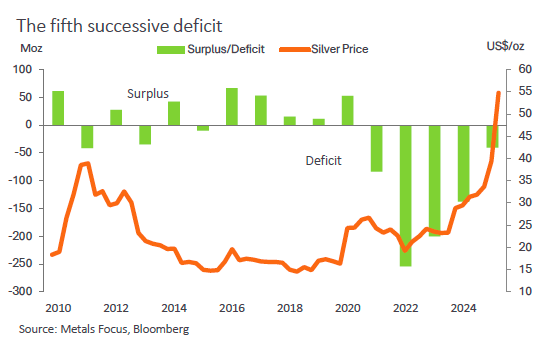
Metals Focus forecasts a 46.3-million-ounce supply deficit this year.
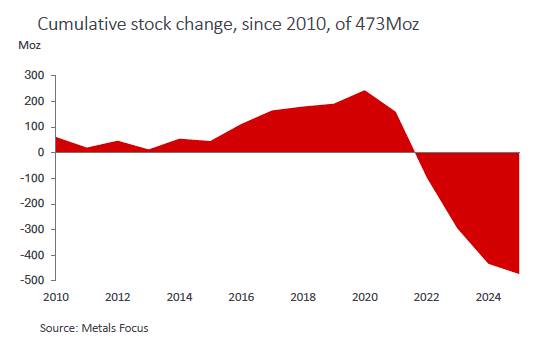
Before this string of successive market deficits, there was a cumulative above-ground stock rise of 243 million ounces between 2010 and 2020. Taken together, there has been a stock rundown of around 473 million ounces in the last 15 years.
A Silver Squeeze
When silver demand outstrips mining and recycling output, silver users must tap into aboveground stocks. That generally means rising prices to incentivize those holding silver to give it up.
As Metals Focus explained, that’s exactly what happened last fall.
“Against this backdrop, shifts in inventories into CME vaults, rising ETP holdings, and a spike in physical demand created an unprecedented liquidity squeeze in October.”
The stage was set for a silver squeeze in the spring of 2025 as Trump began levying tariffs. Worries that silver would get caught up in the tariff net drove a massive movement of silver from London to Chicago Mercantile Exchange (CME) vaults in New York.
As silver streamed into the U.S., CME silver holdings eclipsed the record set during the pandemic at 531 million ounces.
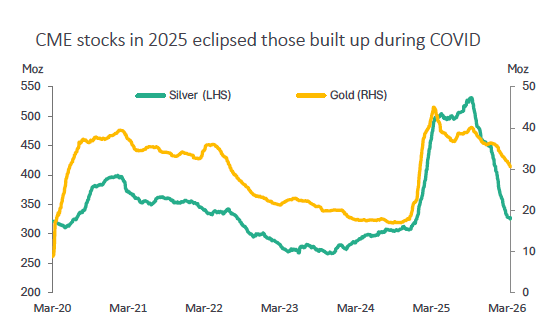
Much of the silver remaining in London vaults was already committed to ETFs. That left very little “free float” metal to provide liquidity to the London market. According to Metals Focus, the share of London silver stocks, not allocated to ETPs, fell to just 17 percent by the end of September 2025.
A surge in Indian silver demand last fall was the pin that popped the bubble. As Indian consumers began to pivot toward silver, the price premium began to rise. Typically, Indian prices run a few cents higher than global averages, but that spread began to grow. It was slow at first – from a few cents to 50 cents. And then to a dollar. And then above a dollar. At the peak of the squeeze, premiums rose as high as $5 an ounce.
Initially, Indian buyers were primarily sourcing silver from Hong Kong, but they reportedly shifted more toward London during the Chinese Golden Week Holiday in the first week of October.
But London vaults were already tapped out.
As the squeeze intensified, silver lease rates exceeded 200 percent, reflecting the strain in the market.
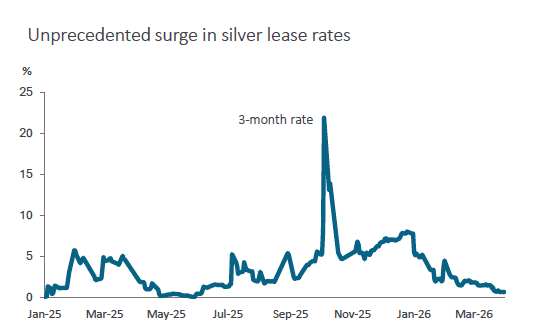
Metal has flowed back into London vaults, easing the strain for the time being. However, the fundamental dynamic has not changed. There is still a shortage of metal. And unlike fiat currency, governments can’t just print silver.
Metals Focus calls this “the crucial point.”
“The market has clearly entered an era of reduced stocks. Tightness will not be constant, but liquidity will generally be thinner, lease rates more volatile and price moves likely to be larger than investors have grown used to. With deficits set to remain in place, however, it is unlikely that we will see a return to the previous status quo any time soon.”
Mike Maharrey is a journalist and market analyst for Money Metals with over a decade of experience in precious metals. He holds a BS in accounting from the University of Kentucky and a BA in journalism from the University of South Florida.