Trump to Pardon Women’s Suffrage Leader Susan B. Anthony

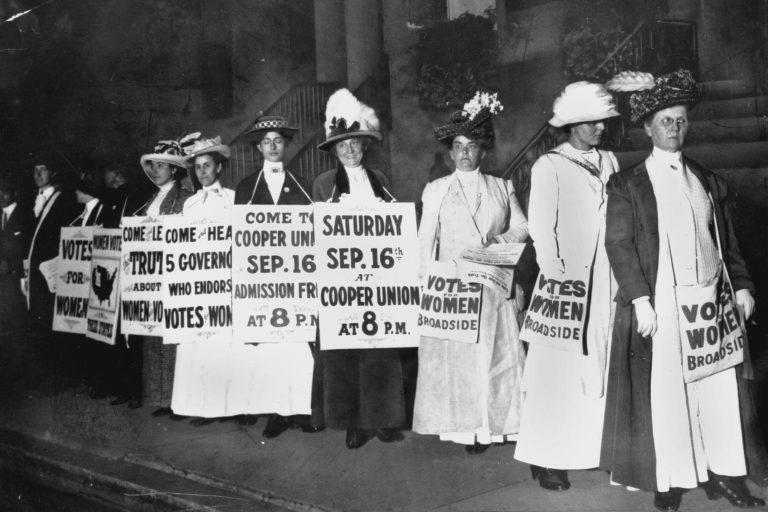
(Headline USA) President Donald Trump said Tuesday he will pardon Susan B. Anthony, a women’s suffrage leader arrested for voting in 1872 in violation of laws permitting only men to vote.

Comments from Trump and some of those assembled for a White House event commemorating the 19th Amendment quickly pivoted into a discussion about voting rights and election integrity overall.

“Win, lose or draw, we have to get it right,” Trump said, adding that mail-in voting, as opposed to absentee voting, leads to ballots cast by pets and the deceased.

“We have to have honest voting. That’s what this is all about here. We have to have honest voting,” he said.

Trump said he would sign “a full and complete pardon” later Tuesday, the 100-year anniversary of the ratification of the 19th Amendment, which ensured women the right to vote.

It’s also known as the Susan B. Anthony Amendment.

Anthony is best known for her role in the movement to secure voting rights for women, but she also was a strong anti-slavery and voting rights pioneer.

Anthony was arrested for voting in her hometown of Rochester, New York, and convicted in a widely publicized trial.

Although she refused to pay the fine, the authorities declined to take further action.

The 19th Amendment states that “The right of citizens of the United States to vote shall not be denied or abridged by the United States or by any State on account of sex.”

Congress passed it in 1919, and the amendment was ratified on Aug. 18, 1920.

Visiting Anthony’s grave site in Rochester on Election Day has become a popular ritual in recent years.

Thousands turned out in 2016 for the presidential match-up between Trump and Hillary Clinton.

In 2018, voters showed up by the dozens to put their “I Voted” stickers on her headstone.

Adapted from reporting by Associated Press.

South Dakota Gov. Kristi Noem Turns Down Extra Unemployment Benefits

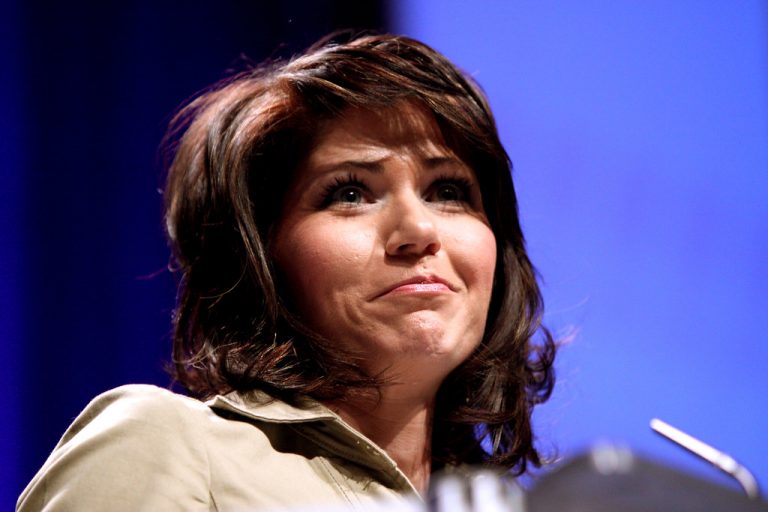
South Dakota Gov. Kristi Noem, who has increasingly become the face of the anti-lockdown coalition, said Friday that her state will not accept $400 weekly unemployment payments from the federal government.

Noem never forced South Dakota’s citizens into house arrest or ordered businesses to close shop, so the state has faced a smaller economic and social crisis, the Argus Leader reported.

“My administration is very grateful for the additional flexibility that this effort would have provided, but South Dakota is in the fortunate position of not needing to accept it,” Noem said in a statement.

She thanked President Donald Trump for his continued effort to “problem solve and provide great leadership during this recovery effort,” even as she lamented the “significant dysfunction” in Congress.

Noem said South Dakota has already recovered 80 percent of the jobs that were lost during the coronavirus pandemic, a far faster recovery than states that imposed mandatory lockdowns.

Less than 14,500 people, or 3.5 percent of the state’s workforce, were receiving unemployment on Aug. 1, according to U.S. News & World Report.

“[It] is the only state in the nation that didn’t have extended benefits kick in because our insured unemployment rate has been the lowest in the nation,” Noem said, the New York Post reported.

She also said South Dakota has an even brighter future, as “many, many businesses” seek to move to one of the few remaining states where free enterprise is tolerated.

Trump authorized the continued distribution of unemployment compensation on Aug. 8, but he reduced them from $600 to $400 per month in an effort not to dissuade citizens from returning to their jobs.

Congress did not reach a deal to spend trillions more on coronavirus bailouts, and the initial unemployment compensation, called Lost Wages Assistance, expired on July 31.

Trump extended the assistance through executive order.

States have to cover $100 of the Lost Wages Assistance, while the federal government will pay the remaining $300.

Judge Stops Idaho from Enacting Ban on Transgender Athletes

(Headline USA) A federal judge on Monday issued a temporary injunction to stop Idaho from enacting a law banning transgenders born male from participating in women’s sports while a legal challenge moves forward.

The ruling means transgender athletes wanting to participate in sports that match their “gender identity” can do so this fall at the college and secondary school level, The Idaho Statesman reported.

U.S. District Judge David Nye in Idaho ruled that a preliminary injunction is warranted because the plaintiffs are likely to win in court as part of a lawsuit filed by the American Civil Liberties Union challenging the constitutionality of the law.

The lawsuit was filed on behalf of Lindsay Hecox, a student at Boise State University who is transgender and had been planning to try out for the cross country team, and an unnamed Boise High School student who is “cisgender” and concerned about being subjected to the law’s invasive “sex verification” testing, according to the ACLU.

The law disallowing transgender athletes from playing on a team matching their gender identity contains a provision allowing anyone to challenge a person’s identity.

It then would be incumbent upon the athletes to verify their gender through an exam or genetic testing.

Nye said the law’s ban on transgender athletes “stands in stark contrast to the policies of elite athletic bodies that regulate sports both nationally and globally.”

“I feel a major sense of relief,” Hecox said Monday in a news release. “I’m a girl, and the right team for me is the girls’ team. It’s time courts recognize that and I am so glad that the court’s ruling does.”

In March Idaho Gov. Brad Little signed the measure, passed by Republicans during the 2020 state legislative session, into law despite warnings from legal experts that it wasn’t likely to survive court challenges.

Supporters said the law was needed because transgender female athletes have physical advantages.

“Transgender people belong in Idaho, including on school sports teams,” Ritchie Eppink, legal director for the ACLU of Idaho, said in a news release. “This is a welcome first step.”

It’s the second time this month a federal judge has effectively rejected a new anti-transgender law in Idaho.

Last week, U.S. Magistrate Candy Dale said the state’s latest attempt to ban transgender people from changing the gender on their birth certificate violates a court order she issued two years ago stopping a similar law.

The Case for a Platinum-Plated Metals Portfolio

0

Do precious metals still represent good value?

With gold just coming off a new all-time high above $2,000/oz and silver having more than doubled off its March bottom, some investors may be wary of entering these markets right now.

However, when adjusted for inflation, when measured against the stock market, or when compared to total money supply, a strong case can be made that gold is not yet overvalued – and that silver remains undervalued.

Investors who are seeking an even more deeply undervalued opportunity within the metals space should take a look at platinum.

What makes the case for platinum in particular compelling compared to other metals?

In a word, scarcity.

Platinum is more than twenty times rarer than gold.

It is so rare that all of the platinum ever mined could fit into a room measuring 25 feet by 25 feet.

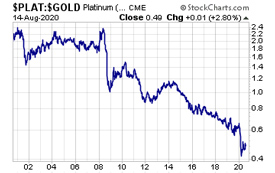
Platinum vs Gold (August 14, 2020)
Historically speaking, platinum is greatly undervalued as compared to gold.

Of course, being scarcer than gold doesn’t necessarily make it more valuable.

In recent years, Mr. Market has decided that gold is more valuable than platinum, with the latter facing some negative fundamentals.

An ounce of gold currently commands about double the price of an ounce of platinum.

But historically, platinum has more often sold at a premium to gold.

The opportunity for investors is that mean reversion could take platinum back up to a 1:1 ratio with gold and then perhaps a healthy premium over the yellow metal.

That would deliver buyers of platinum at current prices returns measured in multiples even assuming gold prices go nowhere.

What about the risk that platinum goes nowhere? The case against platinum is that its demand profile is very narrow, dominated by the automotive industry, and is generally not held in monetary reserves like gold.

In large part due to a big diesel-emissions scandal a few years ago, platinum has been out of favor for use in auto catalysts as manufacturers have turned more to its sister metal palladium. But with palladium now costing more than double what platinum does, incentives for substitution are strong.

There are also incentives for investors to substitute or supplement with platinum as part of their hard asset mix. Inflows into the top platinum exchange-traded fund have surged this year along with the broader wave of gold and silver buying.

It won’t take much of an increase in demand for platinum to overwhelm mining supply. The platinum producing industry, such as it is, will struggle to arrest declining output levels.

“Beset by power and water shortages, alongside whipsawing government policies, South African producers have cut spending over the past decade on mines responsible for 75% of global platinum supply,” reports Bloomberg.

The article continues, “Platinum output peaked in 2006, and the lack of investment in deep-level western limb shafts will result in a further sharp contraction in production over the next 10 years.”

Platinum is set to become scarcer and scarcer.

The bleak supply picture is, for now, clearer than the demand outlook. Industrial demand could continue to slump if automakers shun platinum for palladium and focus increasingly on electric vehicles that require no catalytic converters.

At the same time, however, platinum is a key component in certain fuel cell technologies. The white metal is used in cancer-treatment drugs, and platinum-cured silicone mixtures are used in a range of personal care products from lipsticks and shampoos to contact lenses.

More than likely, the ultra-dense metal will find additional practical applications and will likely see growth in both jewelry and bullion demand.

As a hard asset, platinum should benefit from the inflationary environment the world now faces. Meanwhile, if there’s an economic recovery, platinum prices would receive a new tailwind from rising industrial activity.

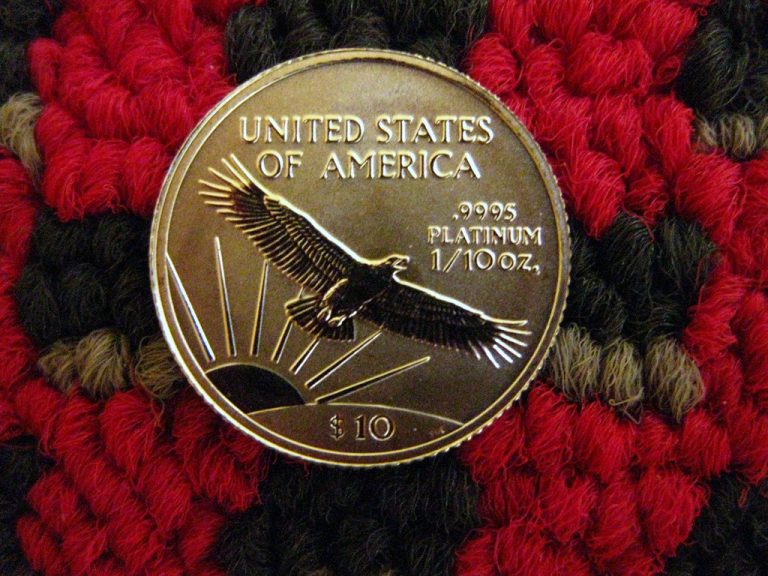
You can buy platinum American Eagle coins as well as individually sealed/assayed pure platinum barsproduced by reputable private mints.

As platinum sales tend to be a small fraction of gold and silver sales for most dealers, inventories of platinum products may be sparse and premiums and bid/ask spreads can widen when market conditions are tight.

Some dealers will try to make the most out of the occasional platinum transaction by pushing heavily marked up “proof” coins. An investor who simply looking for an efficient way to accumulate platinum should avoid these types of products – and these types of dealers.

Money Metals Exchange is proud to offer the most efficient way for individual investors accumulate physical platinum bars – Vault Platinum. Through this program, you can buy physical platinum securely stored with Money Metals Depository without the markup of minted bullion products. And you get the ultimate in security for your platinum by storing in our Class 3 state-of-the-art vaults…Original Source

Stefan Gleason is President of Money Metals Exchange, a precious metals dealer recently named “Best in the USA” by an independent global ratings group. A graduate of the University of Florida, Gleason is a seasoned business leader, investor, political strategist, and grassroots activist. Gleason has frequently appeared on national television networks such as CNN, FoxNews, and CNBC and in hundreds of publications such as the Wall Street Journal, The Street, and Seeking Alpha.

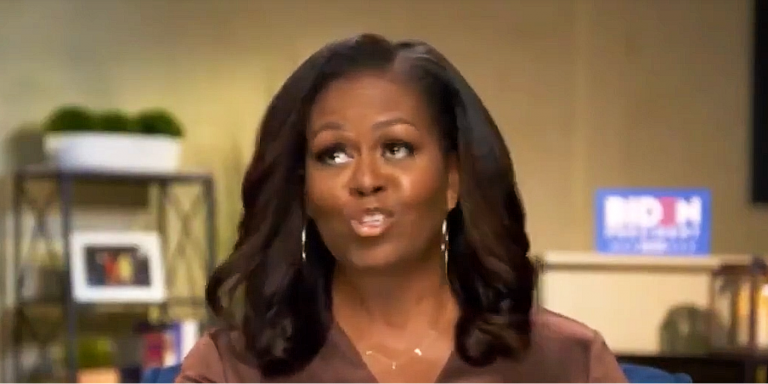
Michelle Obama Barely Mentions Biden’s Name in Speech at DNC Telethon

Former President Barack Obama has famously avoided speaking his successor’s name when criticizing the Trump Administration.

It seemed for much of her speech at the Democratic National Convention/Zoom Telethon on Monday that his wife, former First Lady Michelle Obama, would do the same about presumptive nominee Joe Biden.

Throughout the majority of her speech, Michelle barely mentioned the former vice president by name. When she did it was only to emphasize that he had left office at the “side” of her husband.

The speech did tout Biden toward the end, as if an afterthought tacked on to the end. But even then, Michelle’s body language could barely conceal her storied contempt.

Her husband is rumored to have warned Democrats not to underestimate Biden’s ability to “f*** things up,” it was reported recently.

In many of her statements of praise, Michelle seemed reflexively to shake her head “no” while mentioning Biden.

Like Sen. Bernie Sanders, I-Vt., who offered a rare moment of candor in the gaslight-fest by admitting the party was growing more radical every day, Michelle broke from the format by speaking a few select truths.

“Unlocking the shackles of lies and mistrust with the only thing that can truly set us free: the cold hard truth,” she said.

However, she artfully packaged them to mislead.

She admitted that many in the country, and young people in particular, feel duped:

“They’re looking around wondering if we’ve been lying to them this whole time about who we are and what we truly value,” she said.

But she suggested it was the country to blame and not the party led by her husband and others who have pointedly misled the citizenry.

As an addendum to her 2016 speech, she confessed, “Going high does not mean putting on a smile and saying nice things when confronted by viciousness and cruelty.”

But far from referring to her own demeanor or the viciousness on the Left, she went on to claim that it was “empathy” that still led the day among Democrats.

She also acknowledged that her message was not likely to be embraced by all, but rather than blame the message claimed it was racism to blame.

“We live in a nation that is deeply divided and I am a black woman speaking at the Democratic convention,” she said.

She gave a nod to the lackluster enthusiasm for Biden:

“There is no perfect candidate, no perfect president, [but in] his ability to learn and grow, we find in that the kind of humility and maturity,” she claimed.

And she even admitted that the current skulduggery was merely politics as usual, a game long played by the Obamas.

“These tactics are not new, but this is not the time to withhold our votes in protest or play games with candidates,” she said.

FACT CHECK: Granny-Killing Govs Lead the Way in DNC Whoppers

The first night of the Democratic National Convention was most noteworthy for the dull tedium that made a semi-annual PBS fundraising telethon seem like the pinnacle of entertainment.

Coming in second, though, was a massive gaslighting effort to gloss over the party’s growing radicalism and ignore their own policy stances.

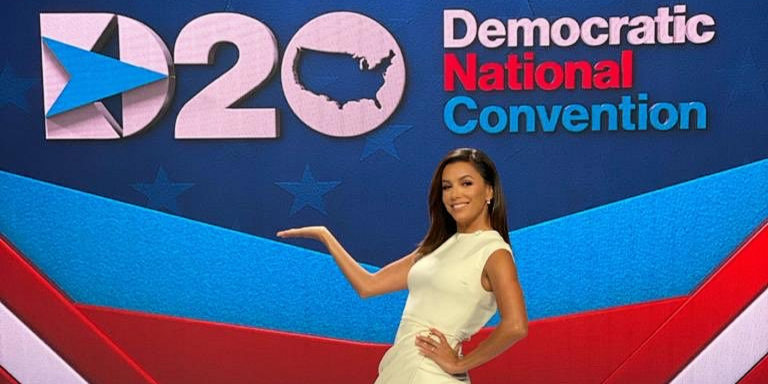
But in order to fill the time between calls from emcee Eva Longoria to donate $5, several radical blue state governors offered fantastic lies about issues including the coronavirus response and mail-in vote fraud to deceive casual viewers who had the misfortune of tuning in just as their remote battery died.

It is significant that nearly all of the speakers touted Biden as a man of integrity, glossing over some of the serious character flaws that have been raised.

But the omissions would be more than one article can contain in the Democrats’ effort to paint their flawed candidate in the best light.

Instead, here are the top five falsehoods from the first night:

1. Cuomo Saves New York from COVID

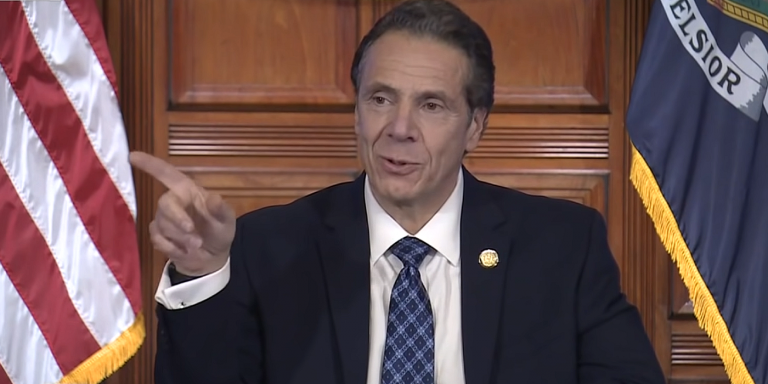
New York Gov. Andrew Cuomo spent much of his speech touting his own leadership on making the state’s coronavirus recovery a success story—even as the state has by far witnessed the largest number of deaths in the country.

In fact, its “recovery” is predicated only on the fact that the rate is now lower than it once was, although that offers little consolation.

Cuomo went so far as to call the state’s response “beautiful.”

And he said that the coronavirus was, in fact, a metaphor for the country.

2. Gov. Whitmer Credits Obama Admin for Ventilator Production

Like Cuomo, Michigan Gov. Gretchen Whitmer‘s response to the virus was disastrous on many levels.

Both governors forced nursing homes to accept infected patients, despite the fact that more than 40 percent of COVID deaths have occurred in nursing homes.

And yet, she claimed, “From the jump, we took this pandemic seriously. … We saved thousands of lives.”

Whitmer also faced severe criticism for her lockdown policies, including bans on allowing people to visit family members while allowing marijuana dispensaries to remain open.

And her administration faced a black mark last week when the director of Michigan’s health department admitted that state officials had consulted partisan Democrat operatives when seeking input on a contact-tracing no-bid contract.

The contract was offered to a Democrat canvassing operation, but the governor quickly backpedaled once it came to light.

On Monday, she claimed, “It will be science not politics or ego that drive our decisions.”

But the most objectively false statement was suggesting that a 2009 bailout of Detroit, which temporarily spared the city from declaring bankruptcy, had enabled the city’s auto industry to voluntarily leap into action when the pandemic hit.

“Autoworkers in Michigan sprang into action… These workers did their part to save American lives,” she said.

In fact, companies like General Motors were deeply reluctant until President Donald Trump invoked the wartime Defense Production Act to force their compliance in manufacturing ventilators and other equipment.

As a coup de grace, Whitmer claimed that Obama and Biden had never sought to scapegoat the George W. Bush administration for the problems they inherited and failed to fix.

However, that statement could easily be read a different way.

“President Obama and Vice president Biden didn’t waste any time blaming anyone else,” Whitmer admitted.

3. Nevada Gov. Misleads about State’s Mail-In Ballot Effort

While not a household name like Cuomo and Whitmer, Nevada Gov. Catherine Cortez Masto earned her place on the wall of shame with a lie about recent efforts to enable Democrat voter fraud.

Despite recent reports that the county surrounding Las Vegas had sent thousands of votes to the wrong address during recent primaries, the state’s Democrat legislature passed a twilight measure to send ballots to every registered voter for the November election.

In response, Trump, who narrowly lost Nevada to Hillary Clinton, with only two counties backing her, pressed a lawsuit to stop the shenanigans from undermining election confidence.

But Masto made no mention of what the law was actually attempting to do, suggesting instead that she was merely trying to provide greater access to voters and give them a choice.

“My state… put in place a vote by mail system,” she claimed. “… He [Trump] has challenged us in court with a meritless lawsuit.”

Picking up on the lie, celebrity “Desperate Housewives” actress Eva Longoria falsely suggested that Trump’s threats to take funding from the Postal Service if blue states continue their vote-fraud efforts would take away seniors’ Social Security checks.

“Seniors won’t be able to get their prescriptions because he wants to win an election,” she claimed.

But in fact, those check have not been mailed via the postal service since the Obama administration.

Sen. Amy Klobuchar Sounds Like a Terrorist Hostage Video

Like her presidential campaign, Minnesota Sen. Amy Klobuchar‘s DNC speech was mostly unremarkable.

But she made one eye-popping and highly dubious remark calling the end of her campaign shortly before Super Tuesday “a day of great joy because the day I ended my presidential campaign was also the day I endorsed Joe Biden.”

Another also-ran in the Democrat senator, New Jersey’s Cory Booker, meanwhile, raised eyebrows with a bizarre remark that “We’ve got one shot to make Donald Trump a one-term president, and that shot is right now.”

But that ignores the possibility of Trump running again should he be unseated, leaving open the possibility of another face-off and another term for Trump.

Trump, himself, left open the possibility of another run, perhaps hinting tongue-in-cheek at a third term, during a speech in Minnesota earlier in the day: “If I don’t win this time, I’m not coming back,” he joked.

Bernie Sanders Contradicts John Kasich About Party Hijacking

The DNC took considerable pains to woo disaffected Republicans during the first night and give them permission to vote against party.

That strategy will likely amount to a lot of nothing if polls about GOP support for the president are correct.

Even so, it deployed both everyday Americans and high-profile NeverTrumpers in deference to the fact that the Electoral College cannot be won without the flyover states.

The centerpiece of the initiative was a segment from former Ohio Gov. John Kasich, a longtime Trump nemesis who has all but disavowed his former party.

He reassured conservatives that the narrative about radical progressive Democrats controlling the soon-to-be-78-year-old Biden as a puppet would be greatly overstated.

“They fear Joe may turn sharp left and leave them behind … and you know no one pushes Joe around,” Kasich claimed.

But the DNC also had another group to court: disaffected voters on the Left.

It presented former Biden primary challenger Bernie Sanders to give his supporters permission to back Biden.

Instead of falling in line, however, the contrarian Sanders candidly acknowledged that his far-left acolytes were gaining in influence, undermining the night’s attempts to be mainstream.

“Our campaign ended several months ago but our movement continues and is getting stronger every day,” he confessed.


Dems Open Telethon/Convention with Desperate Bid to Look Normal, Woo Flyover States

Democrats kicked off their 2020 convention with a surprising bid to appropriate many of the American symbols that they have spent the past three months trashing, including recitations of the preamble to the Constitution, the Pledge of Allegiance and the national anthem.

While paying lip service to party diversity, including a prayer by a Latino preacher, the tone made clear that the target audience will be middle America and not the radical socialist wing of the party.

In fact, they appeared to pay a disproportionate amount of attention to clearly courting potential “crossover” voters such as small-business owners, farmers and suburban moms.

In the first segment, emcee Eva Longoria asked a Zoom panel of four “typical” Americans the question “How are you doing?”

Pennsylvania business owner Scott Richardson complained that they had been hit harshly by the trade war with China.

“I don’t understand how we got here we are the greatest nation in the world and it just seems to me that maybe if we just came together… we could overcome it,” he said.

Farmer Rich Telesz, also of Pennsylvania, seemed clearly to be one of many hesitant Biden supporters who felt ambivalent about the presumptive Democrat nominee but seemed determined to change courses.

“My biggest concern is, you know if these trends continue with this type of leadership, I will be the last generation,” he said.

It would not be the last time that the script veered toward fearmongering.

Immediately afterward, Texas schoolteacher Michelle Beebe laid it on thick for women voters who feared Trump was trying too quickly to reopen the schools.

“Honestly right now, all I can think about is keeping my kiddo safe… and it’s a little scary with all the uprise in COVID cases,” she said.

Longoria reiterated the message for any who were busy readjusting their masks the first time.

“There’s nothing more difficult for us as moms than to see our children suffer,” she said.

She then asked the panel, “Do you believe that change is coming? do you believe that better days are ahead?”

But true to form in the Biden era, she allowed no opportunity for them to elaborate other than a one-word “Yes.”

The DNC didn’t stop there. It made it explicit playing not one but two Bruce Springsteen songs that appealed to citizens to “rise up” and then trotted out a former Trump voter, now a registered Democrat.

“I’m fairly ashamed to say it but I’m one of many who voted for the current president, Donald Trump,” he said.

“It’s also really difficult to vote for someone who essentially has zero platform,” he continued. “…We have a chance right now to look ourselves in the mirror.”

But many others were to follow, including the daughter of a Trump-supporting coronavirus victim who claimed, that the president had killed her father.

Even while dwelling on some of the more radical issues, they tended to downplay agenda items like the “defund the police” movement.

“Most cops are good but the fact is that the bad ones have to be identified and prosecuted, period,” said Biden himself in a round-table Zoom panel.

The panel promised later in the evening to bring out other NeverTrump Republicans including former Ohio Gov. John Kasich.

Former New Jersey Gov. Christine Todd Whitman; former Hewlett Packard CEO Meg Whitman and former Rep. Susan Molinari, R-NY introduced Kasich, who claimed the country was at a “crossroads.”

“I’m a lifelong Republican but that attachment holds second place to my responsibility,” he claimed. “…Many of us can’t imagine four more years going down this path.”

If the idea was a tightly controlled opening with few fireworks, they succeeded.

The format—much like a spliced-together fundraising telethon—seemed to struggle with transitions or any clear focus, and it was likely to see a massive drop over past DNC conventions.

Va. Democrats Plan to Reduce Penalty for Assaulting Police

0

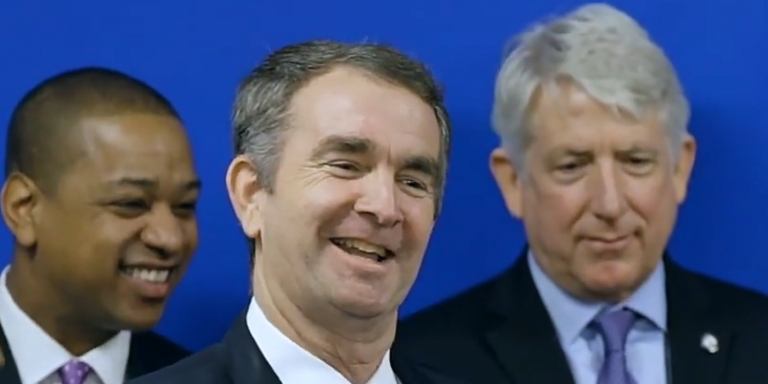
(Headline USA) Virginia lawmakers plan to take up dozens of criminal justice reforms during a special legislative session this week, but one proposal in particular is expected to spark an intense battle: a push to change a law that allows police to charge people with felony assault even if the arresting officers are not seriously hurt.

A bill by Senate Democrats would downgrade the charge of assault and battery on a law enforcement officer from a felony to a misdemeanor.

Lawmakers will also consider bills to ban the use of police chokeholds and no-knock warrants, enhance the ability of courts to expunge criminal records, and eliminate jury sentencing except when requested by defendants.

Sen. Scott Surovell, the chief sponsor of the assault and battery bill, said it would eliminate the current mandatory minimum sentence of six months in jail and change the law so the charge can only be brought as a felony if an officer has a visible physical injury.

Surovell said he is also considering adding provisions requiring that another officer—not the arresting officer—investigate the circumstances and that a prosecutor approve the charge.

Critics of the current law say police overuse the charge, particularly in cases where they fear the person they arrested will claim police brutality.

“It is a charge that tends to arise whenever officers get into a tussle with someone,” Surovell said.

Virginia’s legislature made the charge a felony in 1997, at a time when states around the country and Congress were passing “tough on crime” laws, including federal criminal justice legislation authored and sponsored by then Sen. Joe Biden.

The enhanced penalty for assaulting law enforcement officers also applies to judges, magistrates, corrections officers, firefighters and emergency medical services personnel.

States around the country have a patchwork of laws covering assaults on law enforcement officers.

Some states allow the charge to be brought as both a misdemeanor or a felony, depending on the circumstances, while other states don’t have a separate law, but allow for enhanced penalties for assaults on police, according to the National Conference of State Legislatures.

The proposal to downgrade the charge in Virginia is expected to face fierce opposition from police and Republican lawmakers.

Dana Schrad, executive director of the Virginia Association of Chiefs of Police, said the nationwide protests since George Floyd’s killing have shown “unprecedented levels″ of anger toward police.

“We should be doing more to protect officers instead of sending a message that assaulting them is not a serious offense,” Schrad said.

Republican Minority Leader Sen. Tommy Norment said he finds it “unfathomable” that Democrats are calling for reduced penalties, given the repeated violent clashes between police and demonstrators during recent protests in Richmond.

“Very candidly, for those who are advocating it — particularly in the current lawless atmosphere — I wonder what they have been smoking,” he said.

Norment is sponsoring a bill that would increase the mandatory minimum sentence of six months to a year in jail. For assaults on police during a state of emergency, the mandatory minimum would jump to two years.

Soros Prosecutor Kim Foxx Slammed for Lies, ‘Operational Failures’ in Smollett Case

0

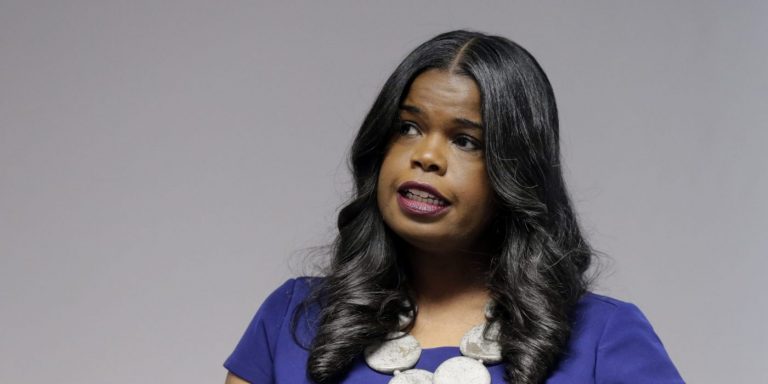
(Headline USA) A special prosecutor in Chicago accused Cook County State’s Attorney Kim Foxx and her office on Monday of repeatedly abusing their discretion and making false public statements in the case against actor Jussie Smollett last year, but he concluded they did nothing criminal.

Foxx, the first black woman to hold Chicago’s top law enforcement job, was backed by Democrat megadonor George Soros, who has targeted prosecutors and district attorneys in many major cities as part of an effort to undermine American laws.

She defeated her Democratic primary opponents earlier this year even as they made her handling of the Smollett case central to their campaigns. In overwhelmingly Democratic Chicago, the primary invariably determines who wins the general election.

In his 12-page outline of his conclusion released Monday, Dan Webb criticized Foxx and her staff for how they decided on March 26 last year to toss charges that the former “Empire” actor staged a racist, homophobic attack against himself and how they explained the move as public outrage grew.

Webb’s statement said his investigation “did not develop evidence that would support any criminal charges against State’s Attorney Foxx or any individual working at [her office]” but “did develop evidence that establishes substantial abuses of discretion and operational failures” in the case.

Among the false public statements by Foxx’s office amid intensifying scrutiny last year, Webb said, was the assertion that the dropping of charges against Smollett was the kind of thing that state prosecutors had done thousands of times before.

“There were not thousands of [or, arguably any] similar cases” resolved by Foxx’s office the way they resolved Smollett’s case, Webb said.

Webb said the terms of the deal dismissing the case were exceptionally lenient, including the requirement that Smollett forfeit only his $10,000 bond as restitution.

Webb said that was a fraction of the $130,000 in overtime paid to officers investigating Smollett’s claims.

And Smollett, Webb noted, was able to walk away without admitting any wrongdoing.

A brief statement from Foxx’s office later Monday said it welcomed Webb’s findings that no one on the staff committed a crime and that no undue outside influences affected prosecutors’ decisions.

But it added it “categorically rejects … characterizations of its exercises of prosecutorial discretion and private or public statements as ‘abuses of discretion’ or false statements to the public.”

Webb in February restored charges against Smollett, saying the tossing of charges was unjustified, including because the evidence against the 38-year-old was overwhelming.

The revived criminal case has stalled as Illinois courts have scaled back operations amid the pandemic.

The black, openly gay actor has continued to stand by his claim that two men attacked him early on Jan. 29, 2019, in downtown Chicago, shouting slurs and looping a rope around his neck.

Webb said Monday he is seeking permission from the judge who appointed him, Michael Toomin, to release a fuller, 60-page summary report.

Among the focuses of Webb’s inquiry was whether Foxx acted improperly by speaking to a Smollett relative and a onetime aide of former first lady Michelle Obama, Tina Tchen, before the charges were dropped, and in how she recused herself early in the investigation after news broke about those communications.

Webb, a former U.S. attorney, portrayed a state’s attorney’s office often in disarray and unduly worried about perceptions of the office as the Smollett case quickly became headline news nationwide.

He offered Foxx’s recusal a month after Smollett reported an attack as a prime example.

Once Foxx understood she may have had a conflict of interest or a perception of one because of her communications, Webb said Foxx and her entire staff should have been pulled off the case and replaced by a special prosecutor. Instead, Foxx simply told a top deputy, Joseph Magats, to take over the investigation.

Her office quickly realized the procedural error, Webb said, but “Foxx made the decision to ignore this major legal defect seemingly because they did not want to admit that they had made such a major mistake of judgment.”

Webb Monday disclosed for the first time the identity of the relative Foxx spoke with: Jurnee Smollett, Jussie Smollett’s sister. Webb said Foxx began speaking to her before suspicions were raised that Jussie Smollett may have staged the attack on himself. But Webb said Foxx continued the communications even as it became clear Smollett could be charged with allegedly filing a false police report.

“State’s Attorney Foxx then made false statements to the media claiming she ceased all communications with Ms. Smollett,” Webb concluded.

The alleged false statements started to pile up.

Webb said Foxx and Magats made at least six false or misleading statements regarding the dismissal of charges in possible violation of professional-conduct rules. He said Monday that his findings would be forwarded to the Illinois Attorney Registration & Disciplinary Commission, saying only it can decide if the alleged false statements amounted to serious ethical violations.

Despite alleging Foxx misled the public, Webb said his investigation found no evidence Foxx’s conversations with Jurnee Smollett or others outside her office influenced the decision to drop the charges. And he said while Foxx was updated on the investigation, he found no evidence she was directly involved in key decisions after she recused herself.

Webb also criticized Foxx’s office for trying to keep the decision to drop the charges from the public for as long as possible. He said the office didn’t even give the Chicago Police Department a heads-up about the decision until minutes before a March, 26, 2019, hearing formalizing the dismissal.

Perez Uses ‘Bully Pulpit’ at DNC to Push for End to Iowa Caucus

0

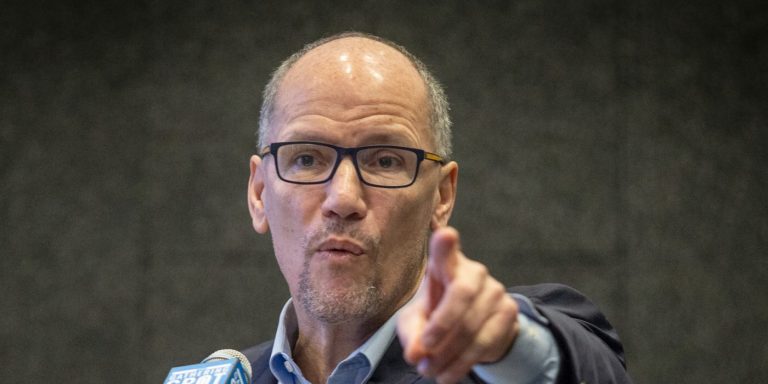
(Headline USA) Democratic National Committee Chair Tom Perez said Monday that the handful of 2020 presidential caucuses should be the last the party ever holds.

He didn’t specifically name Iowa, which for decades has led off the nominating calendar, but his position would represent a seismic shift in the party’s traditions.

Perez’s term as chair will end before the 2024 nominating calendar is determined.

But he told The Associated Press on the opening day of the Democratic National Convention that he plans to “use the bully pulpit as a former chair to make sure we continue the progress” of changes after the bitter 2016 primary fight between nominee Hillary Clinton and runner-up Bernie Sanders.

Among the changes was to push states toward primaries and at least require the remaining caucus states like Iowa to create a paper ballot system.

The Iowa caucuses were chaotic this year, with state and national party officials spending days trying to determine the winner.

Iowa’s first-in-the-nation caucuses, as well as New Hampshire’s status as the first primary state a week later, are further threatened in the Democratic pecking order because the states are overwhelmingly white, while the national party is much more diverse.

That gap was underscored this year when eventual nominee Joe Biden finished fourth in Iowa and fifth in New Hampshire, only to dominate the nominating fight over the ensuing months once more diverse states voted.

Perez wouldn’t comment on whether he thinks Iowa or New Hampshire should give up or share their leadoff spots.

But he said the demographics “will undoubtedly come up” in future party discussions.

Adapted from reporting by the Associated Press