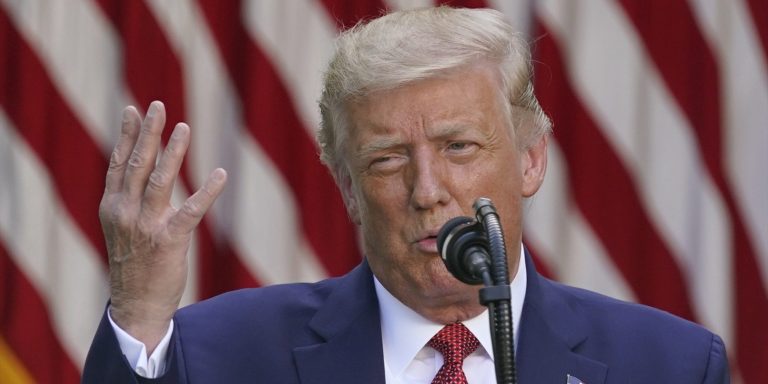
Texas Bill Would Freeze Property Taxes for Cities that Cut Police Budgets

Executive and legislative leaders in Texas joined together on Tuesday to promote legislation that would punish municipalities that defund police departments, Fox News reported.

The bill would prevent cities that defund the police from increasing property taxes.

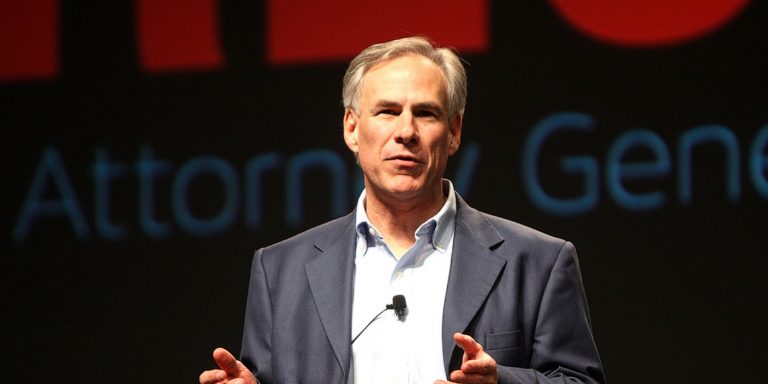
Gov. Greg Abbott, Lt. Gov. Dan Patrick and House Speaker Dennis Bonnen spoke about the proposed bill at the Bob Bolen Safety Complex in Ft. Worth, Texas.

“When crime is on the rise, the last thing we should do is defund the police,” Abbott said, as he accused city leaders of being “more focused on political agendas than public safety.”

Their bill comes as the city council in Austin, Texas, voted 11-0 to strip police budgets of 34 percent of their funding, or $150 million.

The city will not save the money, but will instead allocate it toward social services, including $21 million for EMS, domestic violence shelters, and services for the city’s growing homeless population.

Another $80 million will contribute to a “Decouple Fund,” which seeks to remove certain responsibilities, such as forensic science and victim services, from the police department.

The remaining $49 million will support the “Reimagine Safety Fund,” an amophorous, ideological leftist project that funds “alternative forms of public safety and community support, through the yearlong reimagining process.”

Abbott said these proposals are not consistent with public safety.

“Cities that endanger residents by reducing law enforcement should not then be able to turn around and go back and get more property tax dollars,” he said.

Texas Attorney General Ken Paxton said the Austin city council’s decision to cut funding for the police department stems from the rise of “cancel culture,” not the goal of protecting citizens.

“Unfortunately, the targets of this ‘canceling’ are the brave men and women who selflessly put their lives on the line to keep our families safe,” he said.

Trump Reaffirms Plan to Withdraw All US Troops from Iraq

0

(Associated Press) President Donald Trump on Thursday reaffirmed his plan to withdraw all U.S. troops from Iraq as quickly as possible as he met with the prime minister of Iraq to discuss ways to rein in pro-Iran militias in the country and counter residual threats from Islamic State sleeper cells.

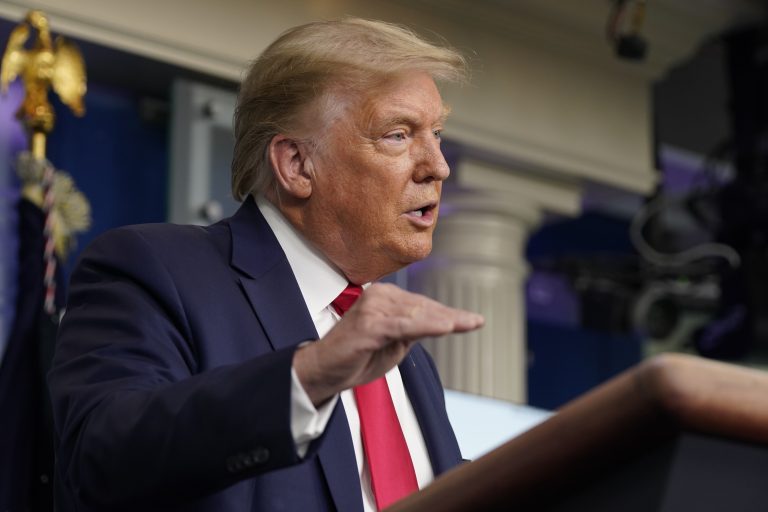
“We look forward to the day when we don’t have to be there,” Trump said during an Oval Office meeting with Iraqi Prime Minister Mustafa al-Kadhimi.

“We were there and now we’re getting out. We’ll be leaving shortly and the relationship is very good. We’re making very big oil deals. Our oil companies are making massive deals. … We’re going to be leaving and hopefully we’re going to be leaving a country that can defend itself.”

Asked about a timetable for a full withdrawal, the president turned to Secretary of State Mike Pompeo, who replied: “As soon as we can complete the mission. The president has made very clear he wants to get our forces down to the lowest level as quickly as we possibly can. That’s the mission he’s given us and we’re working with the Iraqis to achieve that.”

There are more than 5,000 American troops in Iraq now. Last month, the top U.S. general for the Middle East said he believed the U.S. will keep a smaller but enduring presence in the country. Marine Gen. Frank McKenzie, the commander of U.S. Central Command, said he believes the Iraqis welcome the U.S. and coalition troops, especially in the ongoing fight to keep IS fighters from taking hold of the country again.

McKenzie has not said how many U.S. troops might stay. But he said Iraqi conventional forces now operate on their own. U.S. and coalition forces continue to conduct training and counterterrorism operations, including with Iraqi commandos. Any final decisions, he said, would be coordinated with the Iraqi government.

Al-Kadhimi, who is backed by the United States, assumed office in May when Baghdad’s relations with Washington were precarious following the U.S. killing of Iranian Gen. Qassem Soleimani in a drone strike at the Baghdad airport. The prime minister “has my ear,” Trump said.

Al-Kadhimi has often had to walk a tightrope due to the U.S.-Iran rivalry. Asked if he was bringing any messages from Tehran following a recent visit there, al-Kadhimi told The Associated Press before he left for Washington: “We do not play the role of postman in Iraq.”

The U.S. recognizes the cultural and religious ties that exist between Iran and Iraq, but the administration wants to decrease Iran’s destabilizing influence in Iraq, often exercised by pro-Iranian militias.

Al-Kadhimi’s administration inherited a myriad of crises. State coffers in the crude oil-dependent country were slashed following a severe drop in prices, adding to the woes of an economy already struggling with the aftershocks of the global coronavirus pandemic. The U.S. wants to make sure the Baghdad central government’s limited resources also find their way to the Kurdish autonomous region in northern Iraq.

State violence used to quell the mass protests that erupted in October brought public trust in the government to a new low. Tens of thousands of Iraqis marched decrying rampant government corruption, poor services and unemployment, leading to the resignation of the previous premier, Adel Abdul-Mahdi.

Pompeo, who met Wednesday with Iraq’s foreign minister, Fuad Hussein, said the U.S. was committed to helping Iraq regain and maintain security, despite Trump’s desire to reduce and then eliminate American troops’ presence there. Armed groups are not under the full control of the Iraqi prime minister, Pompeo said. He said those groups should be replaced by local police as soon as possible and that the U.S. could and would help.

The Iraqi prime minister told Pompeo that Iraq currently does not need direct military support on the ground, and that the levels of help will depend on the changing nature of the threat. Three years since Iraq declared victory over IS, sleeper cells continue to stage attacks across the country’s north.

Pompeo and the Iraqi foreign minister expressed hope that as the security situation improves, there will be greater economic cooperation between the two countries, particularly in the energy sector.

On Wednesday, Energy Secretary Dan Brouillette announced energy agreements worth up to $8 billion between the Iraqi minsters of oil and electricity and five U.S. companies — Honeywell, Baker Hughes, GE, Stellar and Chevron. Brouillette said U.S. private investment will help Iraqi’s energy sector and stressed a need for Iraq to reduce its dependence on energy from Iran.

Iowa State Prof. Tries to Order Students Not to Criticize Abortion, Gay Marriage, BLM

Iowa State University administrators reprimanded an English instructor after she forbade students from making arguments against abortion, gay marriage and the Black Lives Matter movement.

Students who signed up for ISU assistant professor Chloe Clark’s English 250 class this semester were given a “giant warning” on their syllabus.

Any instances of othering that you participate in intentionally (racism, sexism, ableism, homophobia, sorophobia, transphobia, classism, mocking of mental health issues, body shaming, etc.) in class are grounds for dismissal from the classroom,” Clark wrote, according to a copy of the syllabus obtained by Young Americans for Freedom.

“The same goes for any papers/projects: you cannot choose any topic that takes at its base that one side doesn’t deserve the same basic human rights as you do (ie: no arguments against gay marriage, abortion, Black Lives Matter, etc). I take this seriously,” the syllabus continued.

Clark also offered to provide a “trigger warning” to students who might be disturbed by some of the “viewings/readings” in her assignments.

“If, at any point, you would like a Trigger Warning before viewings/readings that may contain this imagery, please let me know and I’m happy to provide them!” she wrote.

After the syllabus went viral online, university administrators released a statement saying the syllabus “was inconsistent with the university’s standards and its commitment to the First Amendment.”

Clark was forced to correct the syllabus, according to administrators, and she is “being provided additional information regarding the First Amendment policies of the university.”

ISU clarified that no student would be punished for expressing a viewpoint that differs from Clark’s or any other faculty member’s.

“Iowa State is firmly committed to protecting the First Amendment rights of its students, faculty, and staff,” said the school in a statement.

“With respect to student expression in the classroom, including the completion of assignments, the university does not take disciplinary action against students based on the content or viewpoints expressed in their speech,” the school said.

Famed Gold-Disliker Warren Buffett Shorts the Economy

0

(Keith Weiner, Money Metals News Service) The big news in the monetary metals is that Warren Buffett—famed disliker of gold—sold bank stocks to buy gold mining shares.

What’s interesting to us is not that we think he has any special powers to predict the gold price.

After all, he famously bet on silver, and lost.

What’s interesting is that he understands, intuitively, that owning a piece of gold is not an investment.

He may have been disingenuous in his dismissals of gold, which he did to defend the regime of irredeemable paper.

However, he has a point. A lump of metal does not produce anything.

And unless he has suddenly changed his views, his buying a gold mining stock indicates that he now thinks that it’s better to own a metal which produces nothing—and of course loses nothing—than to own stocks. Or at least bank stocks.

Yes, we know that he did not buy gold metal.

He bought a company that he expects to be geared to the gold price.

And Here’s Why

We won’t opine on Barrick shares, but we note that Buffet is not alone in expecting that a lump of metal will outperform stocks.

Or, to put this in clearer, starker terms: stocks will fall when measured in gold (but perhaps not, when measured in dollars).

Buffet is indeed shorting, if not the economy, then at least commercial bank, investment bank, and credit card companies.

He compares them to a cube of gold—and finds them wanting.

We Fully Agree, Warren

We hope that our message to the gold community may be heard above the din of people cheering.

It is not good when business prospects are bad, and doubly not good when the prospects of banks are bad.

We are not asking anyone to shed a tear for banks.

We are looking through the banks to the slow-motion train wreck that is real estate.

Residential, commercial, retail, restaurant, and hotel are all going to experience massive defaults by borrowers.

Including the loans that financed those glorious and hip interiors.

We are also looking through the banks to the liability side.

Most people think of a bank’s liabilities as money.

Banks borrow from everyone, to make loans.

If those loans go bad, then that puts stress on the bank’s ability to repay.

Now we see that Warren Buffett, who knows the finance business well, and who has invested in it for decades, is running away from it.

And we expect many others are running too…Original Source

Cuomo Brushes Back Critical Nursing Homes Report; Slammed for COVID Book

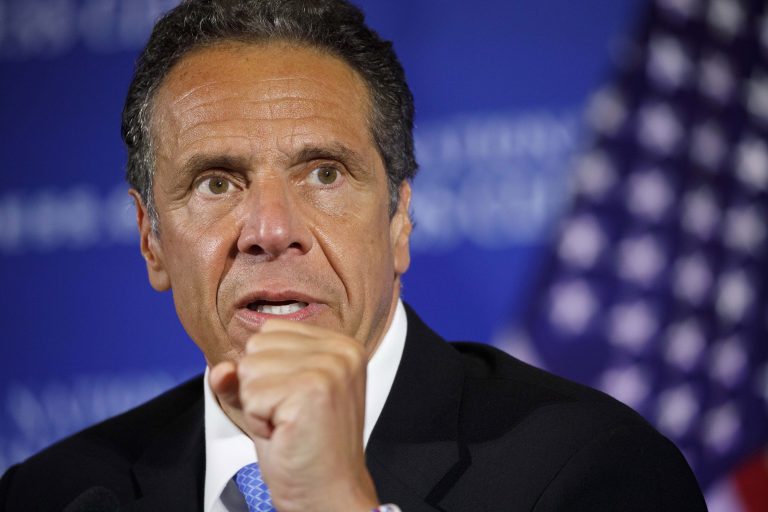
(Associated Press) New York Gov. Andrew Cuomo responded Wednesday to an Associated Press report that his state’s coronavirus death toll in nursing homes could be a significant undercount, saying it makes sense to include only those residents who died on the home’s property.

Unlike the federal government and every other state with major outbreaks, only New York explicitly says that it counts just residents who died on nursing home property and not those who were transported to hospitals and died there.

“If you die in the nursing home, it’s a nursing home death. If you die in the hospital, it’s called a hospital death,” the Democratic governor said during an interview on Albany public radio station WAMC. “It doesn’t say where were you before.”

Cuomo said if New York were to count a death as a nursing home death and a hospital death, that could lead to a “double count.”

“And if I’m a nursing home operator, I say: ‘Don’t say that person died in my nursing home, because they didn’t,'” Cuomo said. “‘They died in the hospital. And if the hospital did a better job, they wouldn’t have died. So why do I get the blame for the death when it didn’t happen in my nursing home?’ So it depends on how you want to argue it.”

Some New York lawmakers have accused Cuomo’s administration of refusing to divulge the complete count to make it appear that his state is doing better than others on the nursing home crisis and make a tragic situation less dire.

AP’s report found that New York’s official care home death count of more than 6,620 is not only an undercount, but that it is likely undercounted by thousands of deaths. It noted how a separate federal count since May included resident deaths in hospitals and was 65 percent higher than the comparable state count that didn’t.

New York’s count allows it to tout a percentage of nursing home deaths among its overall deaths that is 20%, as much as three times smaller than neighboring states. If New York was even at the national average of 44%, that would translate to more than 11,000 nursing home deaths.

Several lawmakers lashed out at Cuomo during a livestreamed forum on the nursing home issue Wednesday, saying his health officials have for more than two weeks stonewalled their request for the numbers of nursing home residents who died in hospitals.

One accused Cuomo of being more interested in promoting his upcoming book on the crisis than than being transparent on nursing homes.

“Don’t be publishing a damn book right now. Take responsibility for what is happening,” state Sen. Gustavo Rivera, a Democrat, said during the discussion put on by the Empire Report news site.

In a legislative hearing Aug. 3, New York Health Commissioner Howard Zucker acknowledged the state keeps a running count of nursing home resident deaths at hospitals but declined to provide that to lawmakers until it could be doublechecked for accuracy.

The lawmakers say they have not heard back since. AP has also been denied similar nursing home death data it sought through a public records request more than three months ago.

“It’s patently ridiculous,” Assemblyman Richard Gottfried, a Democrat, said. “When you ask an important question and their answer is patently ridiculous, it’s clear something is really wrong here.”

Cuomo, who has generally been praised for flattening the curve of his state’s coronavirus infections and highest-in-the-nation 32,850 deaths, has nonetheless faced increasing criticism over his handling of nursing homes, particularly a controversial March 25 order that sent thousands of recovering COVID-19 patients from hospitals into nursing homes at the height of the pandemic.

In his daily coronavirus briefing earlier Wednesday, Cuomo was asked about his upcoming book, “American Crisis,” due in October, and about the criticism that he is writing it before the pandemic is under control.

“It’s not about the history of COVID because it’s not over,” Cuomo said. “This is what we did right, this is what we did wrong. Now we have to go out there and play the second half of the game.”

Trump Appeals as Judge OKs Manhattan DA Getting Tax Returns

(Associated Press) A federal judge on Thursday cleared the way for Manhattan’s top prosecutor to get President Donald Trump’s tax returns, rejecting a last-ditch attempt by his lawyers to block a subpoena issued to his accounting firm.

Trump’s lawyers immediately appealed U.S. District Judge Victor Marrero’s decision to the Second Circuit Court of Appeals.

Marrero’s ruling echoed his prior decision in the case that was upheld by the U.S. Supreme Court last month.

The high court had returned the case to Marrero to give Trump’s lawyers a chance to raise other concerns about the subpoena issued by Manhattan District Attorney Cyrus Vance Jr.

Vance has been seeking Trump’s tax returns from the president’s longtime accounting firm, Mazars USA, for more than a year, since Trump’s former personal lawyer, Michael Cohen, told Congress that the president had misled tax officials, insurers and business associated about the value of his assets.

Trump’s lawyers said that the request for tax records dating back to 2011 was retaliatory after the president’s company, the Trump Organization, disputed the scope of a subpoena seeking records from June 1, 2015, through Sept. 20, 2018.

That time span pertains to an investigation related to payoffs to two women, including porn actress Stormy Daniels, to keep them quiet during the 2016 presidential campaign about alleged extramarital affairs with Trump. Trump has denied the affairs.

Messages seeking comment on the ruling were left with Trump’s lawyer. A spokesperson for Vance’s office declined comment.

Trump, through his lawyers, has argued that the subpoena was issued in bad faith, might have been politically motivated and amounted to harassment of him, especially since the wording mimicked the language in congressional subpoenas.

Vance’s attorneys said they were entitled to extensive records to aid a “complex financial investigation” and they cited in their papers public reports of “extensive and protracted criminal conduct at the Trump Organization.”

In July, the Supreme Court rejected Trump’s arguments that he can’t even be investigated, let alone charged with any crime, while he is in office. But the court left open the prospect that Trump could make new arguments in a bid to keep the subpoena from being enforced.

Vance isn’t the only one pursuing Trump’s financial records, though his office’s request specifically included the president’s taxes.

Congress has also tried to access Trump’s financial records.

Also in July, the Supreme Court kept a hold on banking and other documents about Trump, family members and his businesses that Congress has been seeking for over a year and returned the case to a lower court.

Trump is the only president in modern times who has refused to make his tax returns public.

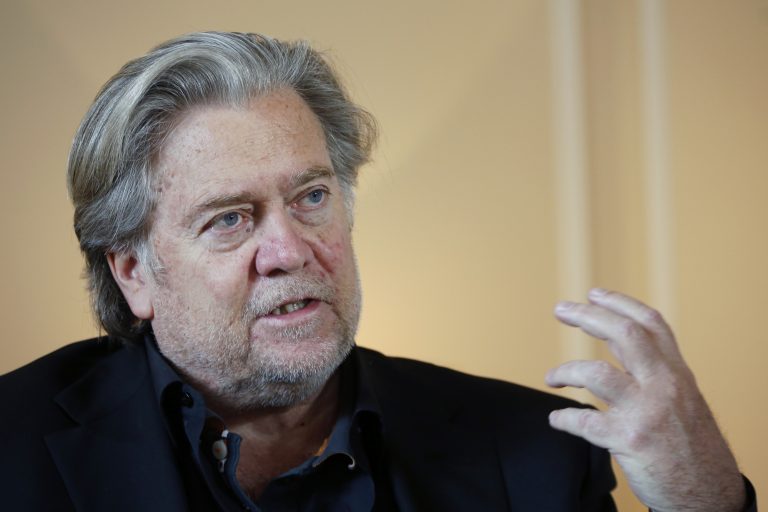
UPDATED: Ex-Trump Adviser Steve Bannon Charged in Border Wall Scam

(Headline USA) UPDATED: Former White House adviser Steve Bannon was arrested Thursday on charges that he and three others ripped off donors to an online fundraising scheme “We Build The Wall.”

The fundraiser was headed by men who pushed their close ties to President Donald Trump, giving their effort a legitimacy that helped them raise more than $25 million. They touted their effort to help the president realize his vision of a “big beautiful” border wall along the U.S.-Mexico line, especially after his effort to redirect millions in government funds was held up through lawsuits.

But according to the criminal charges unsealed Thursday, very little of the wall was actually constructed. Instead, the money lined the pockets of some of those involved. Bannon received over $1 million himself, using some to secretly pay co-defendant, Brian Kolfage, the founder of the project, and to cover hundreds of thousands of dollars of Bannon’s personal expenses.

According to the indictment, Bannon promised that 100% of the donated money would be used for the project, but the defendants collectively used hundreds of thousands of dollars in a manner inconsistent with the organization’s public representations.

They faked invoices and sham “vendor” arrangements, among other ways, to hide what was really happening, according to the indictment.

“All money donated to the ‘We Build the Wall’ campaign goes directly to wall!!! Not anyone’s pocket,” the lawsuit said.

An immigration plan unveiled by Trump last year had included a proposal to allow public donations to pay for his long-promised southern border wall. At that point, the GoFundMe campaign launched by war veteran Kolfage had raised more than $20 million for wall construction.

But Trump later denounced the project publicly, tweeting last month that “I disagreed with doing this very small (tiny) section of wall, in a tricky area, by a private group which raised money by ads. It was only done to make me look bad, and perhaps it now doesn’t even work. Should have been built like rest of Wall, 500 plus miles,” he said.

The defendants learned last October from a financial institution that the “We Build the Wall” campaign might be under federal criminal investigation and took additional steps to conceal the fraud, according to the indictment.

Charges included conspiracy to commit wire fraud and conspiracy to commit money laundering.

Kolfage did not return a call seeking comment, but according to the indictment, he once said: “It’s not possible to steal the money. I can’t touch that money. It’s not for me.”

A phone at the office of Bannon’s lawyer went unanswered Thursday morning. A spokeswoman for Bannon did not immediately respond to a request for comment. It was not immediately clear who would represent Kolfage at an initial court appearance, and his phone was unanswered.

The indictment said Kolfage “went so far as to send mass emails to his donors asking them to purchase coffee from his unrelated business, telling donors that the coffee company was the only way he ‘keeps his family fed and a roof over their head.’”

Some donors wrote directly to Kolfage saying they did not have a lot of money and were skeptical of online fundraising campaigns, the indictment said. It added that Kolfage would reassure the donors that nobody was being compensated.

In fact, the indictment said, an arrangement had been made among the Bannon and his codefendants to pay Kolfage $100,000 up front and an additional $20,000 monthly.

Kolfage eventually spent some of the over $350,000 he received on home renovations, payments toward a boat, a luxury SUV, a golf cart, jewelry, cosmetic surgery, personal tax payments and credit card debt.

We Build the Wall, launched on Dec. 17, 2018, originally promoted a project for 3 miles of fence posts in South Texas that was ultimately built and largely funded by Fisher Industries, which has received about $2 billion in funding for wall contracts. Tommy Fisher, CEO, didn’t respond to calls for comment.

In 2019, Kolfage and Fisher successfully constructed a half-mile of bollard-style border fence on privately donated land in New Mexico near of El Paso, Texas. We Build The Wall used early construction to fundraise for more cash and more private land donations in along border states.

Construction faced resistance by local authorities in New Mexico and Texas and accusations of improper permitting. In May, federal officials found that a section of Fisher’s privately-funded wall violated flood construction standards along the Rio Grande. It also caused erosion.

Dustin Stockton, who helped start the campaign then left the project to work on the upcoming presidential election, said it seemed clear that federal prosecutors were “attacking political infrastructure that supports President Trump right before the election.”

He could not comment on the specific charges yet. He was not charged in the case.

Bannon led the conservative Breitbart News before being tapped to serve as chief executive officer of Trump’s campaign in its critical final months, when he pushed a scorched earth strategy that included highlighting the stories of former President Bill Clinton’s accusers. After the election, he served as chief strategist during the turbulent early months of Trump’s administration. But Bannon also clashed with other top advisers, and his high profile sometimes irked Trump. He was pushed out in August 2017.

Bannon, who served in the Navy and worked as an investment banker at Goldman Sachs before becoming a Hollywood producer, has been hosting a pro-Trump podcast called “War Room” that began during the president’s impeachment proceedings and has continued during the pandemic.

Adapted from reporting by Associated Press.

Why Uber, Lyft Are About to Shut Down All Operations in California

0

(Brad Polumbo, Foundation for Economic Education) This Friday, Uber and Lyft are set to entirely shut down ride-sharing operations in California.

The businesses’ exit from the Golden State will leave hundreds of thousands of drivers unemployed and millions of Californians chasing an expensive cab. Sadly, this was preventable.

Here’s how we got to this point.

In September of 2019, the California state legislature passed AB 5, a now-infamous bill harshly restricting independent contracting and freelancing across many industries. By requiring ride-sharing apps such as Uber and Lyft to reclassify their drivers as full employees, the law mandated that the companies provide healthcare and benefits to all the drivers in their system and pay additional taxes.

Legislators didn’t realize the drastic implications their legislation would have; they were simply hoping to improve working conditions in the gig economy. The unintended consequences may end up destroying it instead.

Here’s why.

AB 5 went into effect in January, and now, a judge has ordered Uber and Lyft to comply with the regulation and make the drastic transformation by August 20. Since compliance is simply unaffordable, the companies are going to have to shut down operations in California.

Their entire business model was based upon independent contracting, so providing full employee benefits is prohibitively expensive. Neither Uber nor Lyft actually make a profit, and converting their workforce to full-time employees would cost approximately $3,625 per driver in California. As reported by Quartz, “that’s enough to boost Uber’s annual operating loss by more than $500 million and Lyft’s by $290 million.”

Essentially, California legislators put these companies in an impossible position. It makes perfect sense that they’d leave the state in response. It’s clear that despite the good intentions behind the ride-sharing regulation, this outcome will leave all Californians worse off.

Uber employs approximately 140,000 drivers in California and Lyft employs roughly 80,000. These 220,000 working Californians will now lose their source of income in the middle of a pandemic and recession, all thanks to the naive intervention of Sacramento regulators who thought they could plan the market. Moreover, the millions of Californians who benefit from and rely on cheap, accessible ride-sharing services will be out of luck.

Yet this isn’t some one-off example where regulators just got it wrong. Rampant unintended consequences inevitably plague any attempt to intervene and “fix” the economy by central planners convened in the state capital.

Here’s how FEE’s Antony Davies and James R. Harrigan summed up the key insight of unintended consequences:

Lawmakers should be keenly aware that every human action has both intended and unintended consequences. Human beings react to every rule, regulation, and order governments impose, and their reactions result in outcomes that can be quite different than the outcomes lawmakers intended. So while there is a place for legislation, that place should be one defined by both great caution and tremendous humility. Sadly, these are character traits not often found in those who become legislators.

There was nothing humble or cautious about the approach California took to regulating the ride-sharing industry. Legislators took a cursory look at a business model they clearly didn’t understand, wished it was different, and thought they could rewrite it entirely on their own. This hubris has not improved conditions for workers, but brought the industry to the brink of destruction.

Benevolent intentions simply aren’t enough. As famed free-market economist Milton Friedman once noted, “concentrated power is not rendered harmless by the good intentions of those who create it.” Still, not all hope is lost for the future of ride-sharing in California.

In this case, voters will have an opportunity to rectify the unintended consequences of this failed attempt at central planning. Uber and Lyft have successfully secured the addition of a ballot question to the November election that will give Californians the opportunity to vote to create an exception to AB 5 for ride-sharing app drivers, allowing them to once again work as independent contractors. (Although freelance writers and many other professions will still be left in the lurch.)

If this vote succeeds, it might be enough to bring Uber and Lyft back to California. But the struggling Golden State will continue to run into problems like this as long as its legislators continue to abandon humility in favor of a heavy-handed approach…Original Source

Brad Polumbo is a libertarian-conservative journalist and the Eugene S. Thorpe Writing Fellow at the Foundation for Economic Education. He was previously a Media and Journalism Fellow at the Washington Examiner and an editor at the libertarian media nonprofit Young Voices. His work has appeared in outlets such as USA Today, National Review, the Daily Beast, and the Boston Globe, and he has also appeared on Fox News and Fox Business.

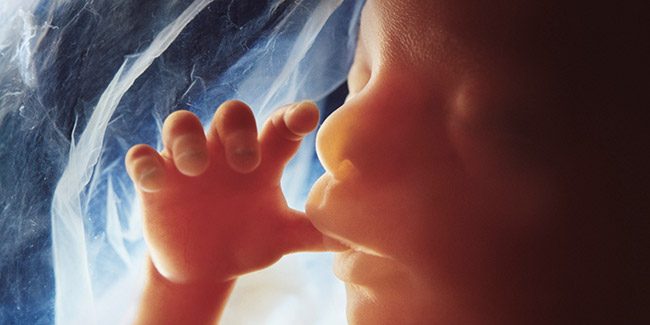
Planned Parenthood Concedes Defeat; Lawsuit Dropped Over Ind. Abortion Ultrasound Mandate

(Associated Press) Planned Parenthood has decided to drop its federal lawsuit challenging an Indiana law that will require women to undergo an ultrasound at least 18 hours before having an abortion.

The law was passed by the Republican-dominated Legislature in 2016 but had been blocked since a federal judge’s ruling in 2017.

Although that ruling was upheld by a federal appeals court, the U.S. Supreme Court in July sent the case back to the appeals court for a fresh review that would take into account recent Supreme Court decisions.

Lawyers for Planned Parenthood of Indiana and Kentucky and the state said in a Wednesday court filing they agreed the injunction blocking the law should end on Jan. 1, citing “events” over the past three years and the addition of a new ultrasound machine at Planned Parenthood’s clinic in Fort Wayne.

The two sides asked U.S. District Court Judge Tanya Walton Pratt to then dismiss the lawsuit.

Republican state Attorney General Curtis Hill on Thursday described the agreement as a victory and said “Planned Parenthood has conceded defeat.”

Hill said the date for ending the injunction was set to give Planned Parenthood time to train staff members at its Fort Wayne clinic to operate ultrasound equipment.

“The concession makes clear that if anything threatened women’s ability to obtain abortions, it was Planned Parenthood’s own business decisions, not the challenged law — an argument that the State made all along,” the attorney general’s office said in a statement.

Spokeswomen for Planned Parenthood and the American Civil Liberties Union of Indiana, which represented Planned Parenthood in the lawsuit, didn’t immediately reply to requests for comment.

Planned Parenthood argued that the state law was unconstitutional and would prevent some women from getting abortions.

Pratt ruled that the 18-hour waiting period “creates significant financial and other burdens” on Planned Parenthood and its patients, particularly low-income women who face lengthy travel to clinics with the ultrasound equipment.

The judge found that Indiana had presented “no compelling evidence” to support its contention that the requirement would further its stated interest of convincing women not to have an abortion.

Several other abortion restrictions adopted by Indiana lawmakers have been blocked by court challenges in recent years.

A federal judge last month struck down a law that aimed to require reports from medical providers to the state if they treat women for complications arising from abortions.

That came after another judge last year blocked the state’s ban on a common second-trimester abortion procedure called “dismemberment abortion.”

The U.S. Supreme Court last year also rejected Indiana’s appeal of a lower court ruling that blocked the state’s ban on abortion based on gender, race or disability.

However, it upheld a portion of the 2016 law signed by then-Gov. Mike Pence requiring the burial or cremation of fetal remains after an abortion.

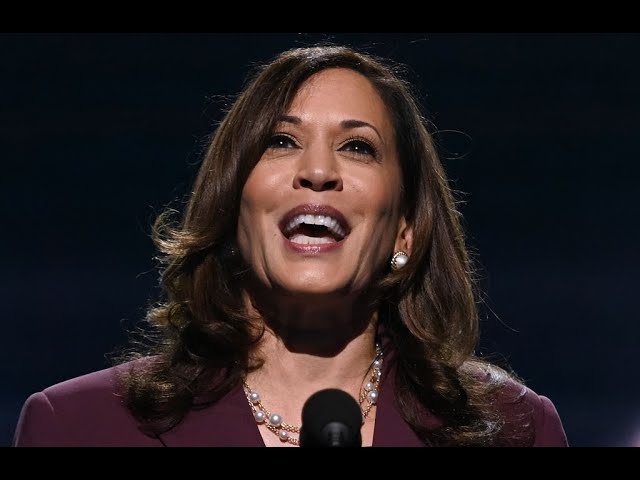
Kamala Harris’s DNC Speech Honors Those Rarely Named… Including Hunter Biden

From the hashtag #SayHerName to the old African American adage “take that name out your mouth” the civil rights movement has been deeply connected with honoring its unsung heroes by naming them.

It was fitting, thus, that California Sen. Kamala Harris, in her acceptance speech for the vice presidential nomination at the Democratic National Convention, rattled of a litany of forgotten names including those of black female pioneers in the fight for equality and voting rights.

“There’s another woman whose name isn’t known, whose story isn’t shared,” she said before framing her own biography through the tribute to her late mother, Shyamala Gopalan, who fled India at age 19 to have an anchor baby while attending Berkeley.

“I got a stroller’s-eye view of people getting into what the great John Lewis called ‘good trouble,’ said Harris, of witnessing protests much like the recent riots now taking place in Oakland during the late 1960s.

Her downplaying of the violent 1968 riots aside, Harris didn’t just speak nostalgically of her own traumatic upbringing—she spoke, too, of another troubled and mentally scarred product of a single-parent household: Hunter Biden.

The black-sheep son of presidential nominee Joe Biden has been featured in photographs, but was rarely—if ever—brought up by name during speeches including that of aspiring First Lady Jill Biden on Tuesday.

However, his running mate said Hunter’s name on Wednesday during an anecdote about her special relationship with Biden’s other son, the late Beau Biden, who was attorney general of Delaware while she was serving the role in California.

Tapping into some of the oft-repeated staples of Biden lore, Beau regaled Harris with stories about how he and Hunter got to have breakfast with their father before he would catch the Amtrak to Washington, DC, during his days in the Senate.

The throwaway line did not go unnoticed on Twitter.

Meanwhile, despite the many opportunities to do so, the Democrats still managed to dodge any direct mention of Biden rape accuser Tara Reade, even as a video montage directly addressed questions of female abuse and assault.

Hillary Clinton, Nancy Pelosi, Elizabeth Warren and Barack Obama all neglected to confront head on the elephant in the (virtual) room.

In fact, some seemed to suggest that Biden was a strong advocate and protector of abused women, ignoring the many binders of evidence to the contrary secured within the University of Delaware library that holds his archival papers.

In a departure from her previous attacks on Biden—calling him a segregation apologist and saying she believed his rape accusers—Harris kept her attacks largely focused on Trump.

But she did appear to make a down-payment on her promise during the speech to speak the truth while claiming (again despite evidence to the contrary) that she was tough on abusers during her time as a prosecutor.

“I know a predator when I see one,” she warned ominously.