Clinton-Appointed Judge (Again) Blocks Ohio’s Bid to Limit Ballot Dropoffs, Ensure Integrity

0

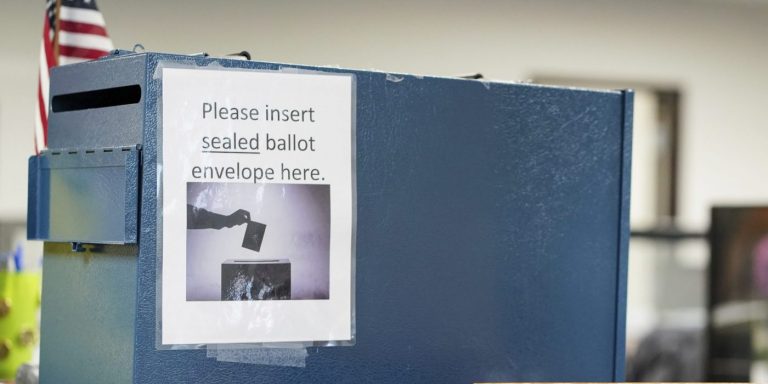
(Headline USA) A federal judge on Thursday temporarily blocked an order by Ohio’s elections chief that limits the number of ballot drop boxes available in next month’s election, calling the move “essential to vindicate a vital constitutional right.”

U.S. District Judge Dan Polster’s decision marked the second time in recent weeks that a court has ruled against Republican Secretary of State Frank LaRose’s directive restricting ballot drop boxes to a single location in each county in the presidential battleground state.

A left-wing activist group keen on expanding access to the boxes in urban, more Democratic-leaning counties had asked Wednesday for Polster to reopen its case after LaRose said the judge’s ruling was “expressly contrary” to LaRose’s intent.

Polster, based in Cleveland, had dismissed the A. Philip Randolph Institute’s case Tuesday because he said a clarification LaRose issued to his one-box-per-county order now permitted ballot drop boxes at multiple locations within a county.

That was what the institute’s lawsuit had been seeking.

But LaRose’s office argued that by allowing drop boxes “outside” boards of elections, his new directive was meant to restrict them to board property just outside the building—not to allow them off site.

Polster said in reopening the case Thursday that LaRose’s definition appeared arbitrary.

“It appears the Secretary has arbitrarily drawn the ‘outside’ boundary somewhere beyond a board’s premises but not as far as a library a few miles away,” he wrote. “This leaves the Court and the boards with no working definition of where ‘outside’ collection is permissible.”

Polster’s original order said the Cuyahoga County Board of Elections could move forward with its plan under LaRose’s clarified order to set up ballot drop boxes at six public libraries scattered around the county, which is home to Cleveland. But lawyers for LaRose immediately ordered the county not to proceed.

Three courts have now sought to substitute LaRose’s judgment for their own, calling the original drop box directive unreasonable and arbitrary. A state appellate court made clear he had the authority to remedy the order under law.

LaRose and his Republican allies in the case, including President Donald Trump’s reelection campaign and the Republican National Committee, argue that Ohio voters have ample opportunities to vote, including being able to deliver absentee ballots by mail or in person.

Polster said they “gloss over the risks and obstacles that those options present under today’s unprecedented conditions.”

Adapted from reporting by the Associated Press
Supreme Court Says Women Can Get Abortion Pill by Mail, for Now

0

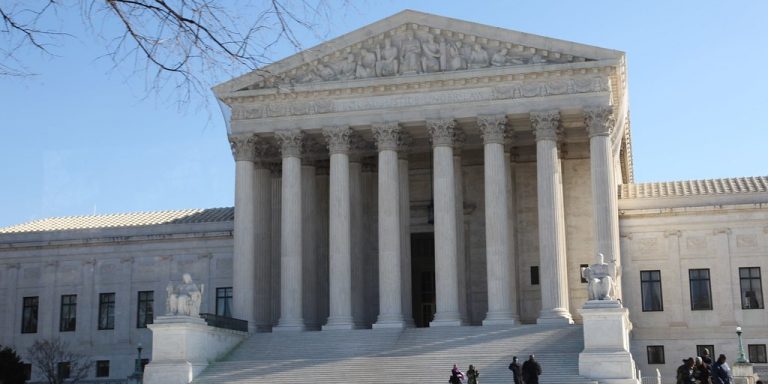
(Headline USA) The Supreme Court said in a 6-2 decision on Thursday that it would for now continue to allow women to obtain an abortion pill by mail during the COVID-19 pandemic.

Chief Justice John Roberts, and Justices Neil Gorsuch and Brett Kavanaugh joined the court’s three liberals in delaying the decision on a Trump administration request to reinstate the requirement that women must visit a hospital, clinic or medical office to obtain a pill.

The court did little more than defer its first action on an abortion-related issue since the death of Justice Ruth Bader Ginsburg last month.

It called for a lower-court judge to take a new look at the issue and rule within 40 days. That would put any further high court action after the Nov. 3 election.

The court said in an unsigned opinion that it was holding the administration’s appeal “in abeyance.”

The administration is asking to be allowed to enforce a U.S. Food and Drug Administration rule. The administration has suspended similar in-person visits for other drugs, including opioids in some cases, but refused to relax the rules for getting the abortion pill.

A federal judge in Maryland ruled in July that, during the public health emergency declared by Health and Human Services Secretary Alex Azar, health care providers can arrange for mifepristone to be mailed or delivered to patients.

The FDA has approved mifepristone to be used in combination with a second drug, misoprostol, to end an early pregnancy or manage a miscarriage.

Justices Samuel Alito and Clarence Thomas said they would have granted the administration’s request.

“Six weeks have passed since the application was submitted, but the Court refuses to rule,” Alito wrote.

Adapted from reporting by the Associated Press
Michigan Gov. Whitmer Blames Alleged Kidnapping Plot on Trump’s Rhetoric

0

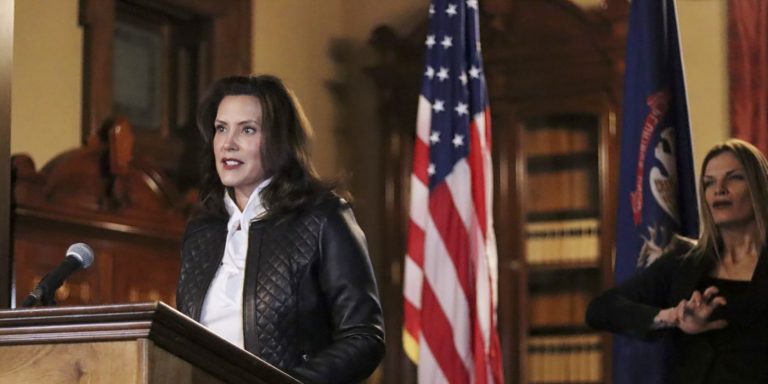
(Headline USA) Only hours after police foiled an alleged plot to kidnap her, Michigan’s Democrat Gov. Gretchen Whitmer found a way to leverage the traumatic episode to her political advantage by scapegoating President Donald Trump.

Six men were charged in federal court with conspiring to kidnap the governor in reaction to what they viewed as her “uncontrolled power,” according to a federal complaint.

Separately, seven others were charged in state court under Michigan’s anti-terrorism laws for allegedly targeting police and seeking a “civil war.”

Whitmer claimed in a speech Thursday that Trump’s words had been a “rallying cry.”

Her own authoritarian impulses have been met with considerable criticism and protest from Michiganders as her mishandling of the virus—by comingling healthy and infected nursing home patients—seems poised for a federal probe.

Whitmer also was dealt a humiliating blow by the state Supreme Court this week after it ruled her lockdown restrictions to be unconstitutional. However, her crony health department director on Wednesday defiantly insisted that he still had the authority to impose them.

The negative press against her may have been enough to arouse suspicions among some of her detractors about the alleged kidnapping attempt, especially after she used it to deflect blame from her own pandemic response.

Whitmer claimed the Republican president had spent the last seven months of the coronavirus pandemic “denying science, ignoring his own health experts, stoking distrust, fomenting anger and giving comfort to those who spread fear and hatred and division.”

She singled out Trump’s debate comments, when he didn’t condemn white supremacist groups and told one far-right extremist group to “stand back and stand by.”

However, many have noted that Trump has repeatedly denounced white supremacy and right-wing extremism during his time in office even as he refused to be baited by the leading question from left-leaning moderator Chris Wallace.

“Hate groups heard the president’s words not as a rebuke, but as a rallying cry,” Whitmer claimed.

“When our leaders speak, their words matter,” she continued. “They carry weight. When our leaders meet, encourage or fraternize with domestic terrorists, they legitimize their actions and they are complicit. When they stoke and contribute to hate speech, they are complicit.”

Whitmer also issued a rather menacing warning to those who threaten violence, even as leftist groups continue to foment violent and lawless unrest in many parts of the country.

“Hatred, bigotry and violence have no place in the great state of Michigan,” she said. “If you break the law or conspire to commit heinous acts of violence against anyone, we will find you, we will hold you accountable, and we will bring you to justice.”

There’s no indication in the criminal complaint that the men arrested were inspired by Trump.

Authorities also have not publicly said whether the men were angry about Whitmer’s coronavirus orders, which sharply curtailed businesses and individuals in an effort to slow the spread of the virus.

Democrat Joe Biden sought to tie Trump to the plot as well, pointing to the president’s tweet earlier this year to “LIBERATE MICHIGAN!”

White House press secretary Kayleigh McEnany criticized Whitmer’s remarks.

“President Trump has continually condemned white supremacists and all forms of hate,” she said. “Governor Whitmer is sowing division by making these outlandish allegations. America stands united against hate and in support of our federal law enforcement who stopped this plot.”

The arrests and Whitmer’s comments come less than a month before the presidential election in a key battleground state, which Trump narrowly won in 2016.

Adapted from reporting by the Associated Press
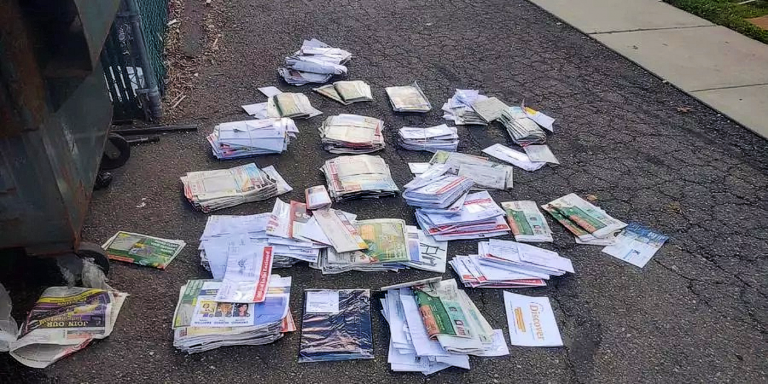
Nearly 7,000 New Jersey Residents Receive Ballots for Wrong District

Nearly 7,000 New Jersey residents received mail-in ballots meant for a different congressional district, according to NorthJersey.com.

Teaneck residents found that the wrong ballots had been delivered to them on Monday due to an error by a private mailing company, said Bergen County Clerk John Hogan.

Local officials plan to remedy the issue by mailing the residents new ballots with the correct information and urging everyone to shred the old ones.

But in a separate incident this week, also in the Republican-dominated Bergen County, a resident reported that he had discovered 300 pounds of mail—including an estimated 200 ballots—dumped behind a local bank.

The postal service acknowledged that it was looking into the matter and that the mail eventually was delivered, NJ.com reported.

“This matter was then turned over to our Office of Inspector General,” said USPS spokesman George Flood. “We are unable to comment further at this time.”

New Jersey is one of the states that decided to move ahead with largely mail-in elections back in March. Since then, the state has had a host of problems.

Allegations of vote fraud upset May’s municipal elections, and nearly 40,000 ballots had to be rejected in the July primary for various reasons.

Similar errors have been popping up across the country as Democratic officials encourage mail-in voting.

About 100,000 absentee ballots with the wrong names and addresses printed on the return envelopes were sent to voters in Brooklyn, N.Y., in late September.

And this week, an as-yet undetermined number of voters in Franklin County, home to Ohio’s capital, received the wrong absentee ballots, while 2,100 voters in Los Angeles were mailed ballots missing the presidential race.

President Donald Trump and the rest of the GOP have raised concerns about mail-in voting for the past several months, arguing that the risk of voter fraud and mismanagement threatens to undermine the integrity of our elections.

“If you do universal mail-ins with millions and millions of ballots, you are never going to know what the real result of an election is,” President Trump said in August. “It’s going to be a very, very sad day for our country.”

Democrats have denied that voter fraud is a problem, but the Heritage Foundation compiled a report last year documenting more than 1,000 voter fraud cases that resulted in 938 convictions across 47 states.

The Public Interest Legal Foundation also determined earlier this year that nearly 28 million mail-in ballots have gone missing over the last 10 years.

(The Associated Press contributed to this report).

Trump to Host Virtual Radio ‘Rally’ on Friday’s Rush Limbaugh Show

0

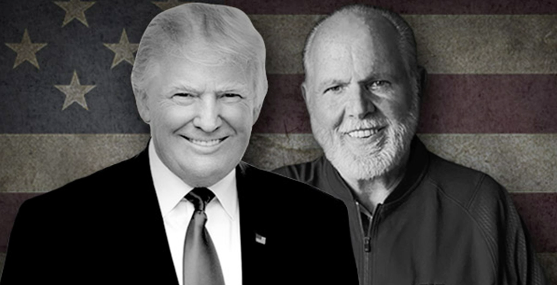
America’s number one talk radio host Rush Limbaugh announced on his program Thursday that President Donald Trump would host on Friday, calling it a “virtual radio rally.”

Appearing in a pre-recorded message while otherwise being off most of the week for cancer treatments, Limbaugh first told his audience how much he enjoyed Vice President Mike Pence‘s performance in Wednesday night’s debate.

“He was stand-up-and-cheer outstanding. It was just… it was great,” he said.

Then came the big news.

“I’m thrilled to announce that our commander-in-chief, President Donald Trump, will be right here tomorrow hosting the largest virtual rally in radio history,” Limbaugh said. “Be sure to tune in. You don’t want to miss this.”

He added that listeners would be able to submit questions to the president via a special web form to be announced later.

He finished his brief segment with a note of gratitude.

“Thank you again for all of your continued prayers,” he told his audience. “I am so moved by your support. You know that I know and believe that they work. And I cannot tell you how appreciative my family and I are for all of you.”

DeSantis Gives Miami Dolphins Green Light to FULLY Reopen Stadium

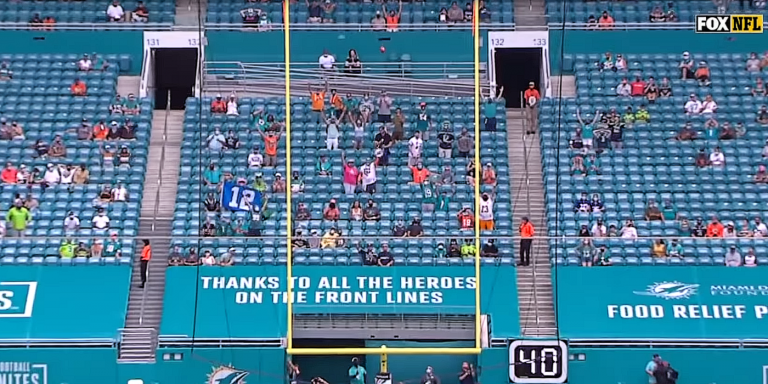
Florida’s Republican Gov. Ron DeSantis has given his state’s NFL team, the Miami Dolphins, the green light to have a full capacity of 65,000 fans at Hard Rock Stadium, according to a spokesperson for DeSantis.

Talk show host Andy Slater announced this week that the Dolphins had been given clearance to sell out the stadium, but the team still plans to allow just 13,000 fans while Miami plays at home again on Oct. 25.

DeSantis has been advocating for a complete reopening for several months, but approved of a plan earlier this year to enforce social distancing among fans at in-person games.

“They’re not going to make a lot of money this season,” DeSantis said in late August, according to the Chicago Tribune.

“Putting all the money they did into this to give fans the ability to watch some football in person, I think, means a lot,” he said.

A socially-distanced game is better than an empty one, DeSantis added.

“Look, we’ve been watching sports on TV, but when you watch the NBA with an empty arena, or Major League Baseball with an empty stadium, it’s just not quite the same,” he said. “I know this isn’t going to be people falling from the rafters here, but I think it is something that will give people a little bit of hope.”

Allowing the state’s sports teams to reopen quickly is part of DeSantis’s strategy to make his state the epicenter of professional sports following the coronavirus pandemic.

He’s invited multiple teams to hold their events in Florida, including WrestleMania and the UFC. He also invited the professional leagues to resume in-person practices in their Florida facilities as early as May.

“The one thing I am going to do, probably this week, is all professional sports are welcome here for practicing and for playing,” DeSantis said back in May.

“Now, we’re not going to necessarily have fans, but there’s been reports that Major League Soccer may want to have their season in Orlando,” he added. “Do it. We want to have ya’ here.”

DeSantis said his desire to bring back sports is rooted in the understanding that this is “an important part of people’s lives,” he said. “So we want to be able to do that.”

Liberal Commentator Explains Why Pence Beat Harris in Debate

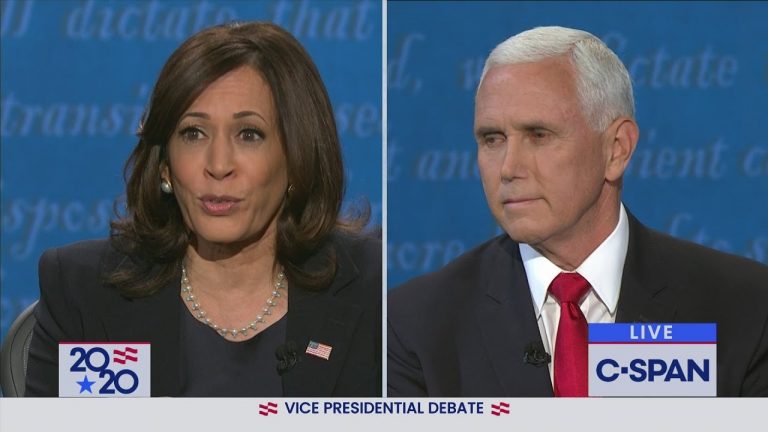
Vice President Mike Pence won his first debate against Sen. Kamala Harris, D-Calif., according to liberal commentator Matthew Yglesias.

Yglesias argued in a column for Vox that although Pence’s hand was “weak,” he “outperformed” Harris by a wide margin.

He said the vice president successfully spinned tough questions and focused them back on “popular Republican positions and unpopular Democratic ones — positioning the Trump/Pence ticket as the moderate choice compared to Biden/Harris, which he cast as a radical and risky alternative.”

Both Harris and Pence managed to avoid giving substantive answers to just about every question moderator Susan Page asked them.

But Pence, unlike Harris, did so with skill, Yglesias said.

For example, Page’s question on whether Pence would “ban all abortions” if Roe v. Wade were overturned did not shake Pence. He simply chose to ignore it, and instead jabbed Harris for vilifying Supreme Court Justice Brett Kavanaugh during his confirmation process, and pointing out that Democrats have already begun doing this exact same thing to Supreme Court nominee Amy Coney Barrett.

Harris could have pressed Pence in her response, but she did not, according to Yglesias.

Instead, she attacked Barrett’s nomination, which led Pence to ask Harris about court-packing, a radical policy that is deeply unpopular among a plurality of voters. Harris couldn’t answer that question either, but she also couldn’t turn the conversation away from it, said Yglesias.

Pence also won in an exchange about the Trump administration’s 2017 tax cuts, Yglesias said. Harris could have hit Pence for “enriching the wealthiest” Americans, but she failed to do so, he argued.

Pence, however, successfully “hewed to the talking point that the average family of four saved $2,000 a year” because of the tax cuts, and continued to point out that Biden “promised to repeal the Trump tax cuts, thus raising taxes on everyone.”

This was the pattern throughout the entire debate, Yglesias noted. Harris failed to explain Biden’s positions, and failed to point out what was wrong with Trump’s. Pence, however, successfully “downplayed Trump’s failures” by pointing to Biden’s, Yglesias explained.

“What Harris did instead was repeatedly get visibly annoyed at the way Pence would go over time, attack her or Biden in dishonest ways, or misrepresent his own record,” Yglesias wrote, referencing Harris’s constant sneering and laughing.

Yglesias attributed Harris’s failures during the debate to her lack of experience with normal, moderate voters.

“Harris is a donor favorite and the likely future of Democratic Party politics. But having come up in California, she has essentially no experience with running races where she needs to appeal to moderate cross-pressured voters,” he wrote.

“Pence has also spent his entire career running in a safe House seat and then statewide in a very red state,” he concluded. “But somewhere along the way, he has picked up the knack for focusing on his good issues and downplaying his bad ones. Harris hasn’t, and it showed.”

The Fed’s Quest for Higher Inflation: What Could Go Wrong?

The Federal Reserve is warning investors in no uncertain terms that higher rates of inflation are coming.

Yet markets, for the most part, have disregarded that warning.

Bond yields, for example, remain well below 2% across the entire duration range. Stock market valuations continue to reflect a sanguine outlook for inflation. And crude oil futures suggest limited upside pressure on prices.

It seems the Fed has a credibility problem.

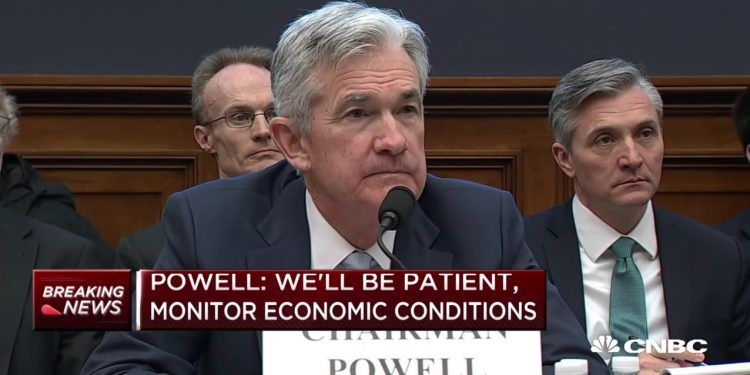
In August, Fed Chairman Jerome Powell announced that the central bank would begin targeting an inflation “average” of 2%.

By the Fed’s measures, inflation has been running below 2% in recent years. So getting to a 2% average in the years ahead will require above 2% inflation for a significant period.

In September, St. Louis Fed president James Bullard doubled down on higher inflation. He said the combination of loose credit, huge government deficits, and supply bottlenecks caused by coronavirus lockdowns could cause an unexpected surge in price levels.

Billionaire hedge fund manager Stanley Druckenmiller is worried that the U.S. dollar will lose purchasing power much more rapidly than the 2% “average” the Fed is currently telegraphing. Druckenmiller recently said he sees inflation rates likely rising to 5% or perhaps even 10%.

The Fed’s credibility problem could quickly morph from one of not being taken seriously on the risks of higher inflation… to one of not being trusted to keep it contained.

Perhaps gold investors know something that bond holders and most Wall Street analysts don’t.

The gold market surged to a new all-time high in August before selling off in September. The major bull market appears to be intact, however, which means the next rally could lead to higher highs still.

If gold is a leading indicator of rising inflation – i.e., falling confidence in the value and credibility of the U.S. dollar – then investors should expect other assets to follow gold’s lead.

Instead of enjoying endlessly rising equity values, they may suffer from relentlessly rising food, fuel, healthcare, and other costs of living.

The upshot is that investors can own hard assets that may be set to follow gold to new all-time highs of their own in the months and years ahead.

Silver and platinum, for example, remain relatively cheap. They could each double in value from their current levels in terms of dollars and still have room to run before making new nominal highs – let alone real (inflation adjusted) highs.

Gold and Silver’s Response to Inflation Should Be Spectacular

If inflation expectations fundamentally shift from doubt that the Fed will ever achieve its 2% “average” to fear that it might overshoot, then precious metals could see a spectacular rise.

They won’t merely go up a few percent to reflect a gradual rise in inflation. They will go up multiples to reflect surging investor demand for safe havens.

We saw a preview of that phenomenon in the first half of the year in the midst of coronavirus lockdowns.

Demand for bullion went bonkers, sending spot prices and coin premiums sharply higher in a very short amount of time.

A new inflation upcycle can be expected to last much longer and produce much more dramatic results on the charts for metals.

The last true mania phase in gold and silver occurred during the inflationary late 1970s. History doesn’t repeat exactly, of course, but it does give us a rough guide for what could unfold for investors facing a similar environment:

  • Severe real losses on cash savings, bonds, and other fixed income instruments.
  • A sluggish stock market that fails to keep up with inflation, except for a few select sectors.
  • A spectacular rise (and eventual fall) in precious metals prices.

Yes, manias do ultimately end badly. But in the case of hard assets like silver, which have been depressed for years, they are far closer to a major bottom than to a mania peak.

As long as the Fed remains committed to depreciating the currency at a more rapid pace and punishing savers with negative real interest rates (it has vowed to keep its Funds rate near zero through 2023), the major trend for precious metals should remain HIGHER…Original Source

Stefan GleasonStefan Gleason is President of Money Metals Exchange, a precious metals dealer recently named “Best in the USA” by an independent global ratings group. A graduate of the University of Florida, Gleason is a seasoned business leader, investor, political strategist, and grassroots activist. Gleason has frequently appeared on national television networks such as CNN, FoxNews, and CNBC and in hundreds of publications such as the Wall Street Journal, The Street, and Seeking Alpha.

UPDATE: Biden, Trump Campaigns Propose 1-Week Delay on In-Person Debates

UPDATE VIA AP, 1:00 PM EDT: It’s suddenly up in air when the next presidential debate, or maybe debates, may take place.

President Donald Trump said Thursday he would skip next week’s faceoff with Democratic nominee Joe Biden after organizers said it would be held virtually after Trump got COVID-19.

Biden’s campaign countered by asking for next Thursday’s town hall style event — the second debate for the candidates —to instead be moved back a week “so the president is not able to evade accountability.”

Trump advisers counter-countered that a short time later by saying the second debate should indeed be delayed until Oct. 22 and that a third should be rescheduled for the following week, just before Election Day. And they insisted anew that the candidates must meet face to face.

ORIGINAL ARTICLE: (Headline USA) President Donald Trump vowed Thursday not to participate in next week’s debate with Democratic nominee Joe Biden after organizers announced it will take place virtually because of the president’s diagnosis of COVID-19.

“I’m not going to do a virtual debate” with Biden, Trump told Fox News, moments after the Commission on Presidential Debates announced the changes due to Trump’s diagnosis.

“President Trump will have posted multiple negative tests prior to the debate, so there is no need for this unilateral declaration,” said Bill Stepien, Trump’s campaign manager, in a statement.

Trump’s campaign said the president would do a rally instead of the debate.

“For the swamp creatures at the Presidential Debate Commission to now rush to Joe Biden’s defense by unilaterally canceling an in-person debate is pathetic,” Stepien said. “The safety of all involved can easily be achieved without canceling a chance for voters to see both candidates go head to head. We’ll pass on this sad excuse to bail out Joe Biden and do a rally instead.”

That cast serious doubts on whether the event will go forward, even as Biden’s campaign vowed that its candidate is willing to participate.

“We don’t know what the president is going to do, he changes his mind every second so for me to comment on that now would be irresponsible,” Biden said to reporters in Delaware, according to Fox News. “I’m going to follow the commission recommendations.”

The announcement from the nonpartisan Commission on Presidential Debates cited a need “to protect the health and safety of all involved with the second presidential debate.”

The candidates will “participate from separate remote locations” while the participants and moderator remain in Miami, it said.

The announcement came a week before Biden and Trump were scheduled to face off in Miami.

Trump was diagnosed with the coronavirus a week ago and but in a Tuesday tweet said he looked forward to debating Biden on stage in Miami.

“It will be great!” he tweeted.

Biden, for his part, said he and Trump “shouldn’t have a debate” as long as the president remains COVID positive.

Biden told reporters in Pennsylvania that he was “looking forward to being able to debate him” but said “we’re going to have to follow very strict guidelines.”

Trump fell ill with the virus last Thursday, just 48 hours after debating Biden in person for the first time in Cleveland.

While the two candidates remained a dozen feet apart during the debate, Trump’s infection sparked health concerns for Biden and sent him to undergo multiple COVID-19 tests before returning to the campaign trail.

Trump was still contagious with the virus when he was discharged from Walter Reed National Military Medical Center on Monday.

According to the Centers for Disease Control and Prevention, those with mild to moderate symptoms of COVID-19 can be contagious for as many as — and should isolate for at least — 10 days.

It’s not the first debate in which the candidates are not in the same room.

In 1960, the third presidential debate between Richard Nixon and John F. Kennedy was broadcast with the two candidates on opposite coasts.

Adapted from reporting by Associated Press.

Six People Charged in Plot to Kidnap Michigan Gov. Whitmer

0

(Associated Press) Six men plotted to try to kidnap Michigan Democratic Gov. Gretchen Whitmer at her vacation home, according to a criminal complaint unsealed Thursday in federal court.

Four of the six men had planned to meet Wednesday to “make a payment on explosives and exchange tactical gear,” the FBI said in the court filing.

The FBI quoted one of the accused as saying Whitmer “has no checks and balances at all. She has uncontrolled power right now. All good things must come to an end.”

Authorities scheduled a Thursday afternoon news conference to talk about the case.

The government used informants and undercover agents to thwart the alleged plot.

The criminal complaint said the plan involved Whitmer and her second home in northern Michigan.

Whitmer has been praised but also deeply criticized for the state’s response to the coronavirus.

She put major restrictions on personal movement throughout the state and on the economy, although many of those limits have been lifted.

Through electronic communications, two of the alleged conspirators “agreed to unite others in their cause and take violent action against multiple state governments that they believe are violating the U.S. Constitution,” the FBI said.

The criminal complaint identified the six as Adam Fox, Ty Garbin, Kaleb Franks, Daniel Harris, Brandon Caserta, all of Michigan, and Barry Croft of Delaware.

Fox said he needed 200 men to storm the Capitol building in Lansing and take hostages, including the governor, according to the FBI.

He said he wanted to try Whitmer for “treason” and would execute the plan before the Nov. 3 election, the government said.

Later, however, the group shifted to targeting the governor’s vacation home, the FBI said.