(Dave DeCamp, Antiwar.com) The Pentagon has admitted in its annual report on civilian casualties to Congress that it committed two large-scale massacres of civilians in Yemen during its bombing campaign against the Houthis, officially known as Ansar Allah, last year, which War Secretary Pete Hegseth dubbed “Operation Rough Rider.”
In the report, the Pentagon acknowledged that the bombing campaign killed at least 153 civilians and injured 243, numbers that are a significant undercount. According to the Yemen Data Project, at least 238 civilians, including 24 children, were killed, and 467 civilians were injured.
The Pentagon acknowledged that civilians were killed in three strikes, including two that were among the deadliest US attacks on civilians in recent decades: the April 16, 2025, bombing of the Ras Isa fuel port in Hodeidah, and the April 25, 2025, strike on a migrant detention facility in the northern Saada province.
At the time of the bombing on Ras Isa, Yemeni media reported that it involved a double-tap strike that killed rescue workers, and it was clear that a large number of civilians were killed, though the strike received virtually no media coverage in the US. The Pentagon report acknowledged the strike killed 80 civilians, though the Yemen Data Project and Airwars put the number at 84. The Pentagon also said 171 civilians were wounded in the strike, which aligns with Airwars’ numbers.
Airwars identified the 84 Yemenis who were killed and said they were all civilians. The majority were workers at the port, though two rescue workers and three children were among the dead. At the time of the strike, the US military didn’t even claim it was hitting a military target and justified the strike by saying the fuel that came into the port was a source of revenue for the Houthis.
Regarding the April 25 strike in Saada, the Pentagon admitted 68 civilians were killed, the same number reported by local media in Yemen and rights groups that have investigated the strike. All of those killed were African migrants being detained in the facility, and Amnesty International said in a report on the attack that it found no evidence of any military targets at the facility.
The same detention facility was targeted by Saudi Arabia in a January 2022 airstrike, which killed 91 civilians, according to the Yemen Data Project. The US provided intelligence support for Saudi Arabia’s bombing campaign in Yemen, meaning the Pentagon should have been aware that any strike on the facility would result in major civilian casualties.
The Pentagon also assessed that five civilians were killed and 25 were wounded by a strike in the Yemeni capital of Sanaa on April 6, 2026. According to Airwars, a US strike in Sanaa that day hit a residential area and killed at least three people, including one woman and one child.
There were multiple other instances of the US killing civilians during the bombing campaign, and the Pentagon said it’s still assessing 15 other incidents. The report didn’t provide any kind of explanation for why the places were targeted, and there’s no sign of any accountability. Hegseth’s Pentagon has continued to carry out large-scale massacres of civilians, most notably the February 28 bombing of the Shajareh Tayyebeh Primary School in Minab, Iran, which killed at least 156 people, including 120 schoolchildren.
Operation Rough Rider was launched without congressional authorization and against a group that Congress has never provided an Authorization for the Use of Military Force against, making it illegal under the Constitution. The official justification was that it was to secure shipping, but the Houthis weren’t attacking US ships at the time, and Hegseth admitted in a Signal chat the day the bombing campaign started, which was published by The Atlantic, that he could “easily pause” plans to launch the strikes, demonstrating there was no imminent threat facing US forces.
The bombing campaign began on March 15, 2025, a few days after Ansar Allah announced it was renewing its blockade of Israeli-linked shipping in the Red Sea in response to Israel violating the January 2025 Gaza ceasefire deal by imposing a full blockade on the Palestinian territory. It ended on May 6, 2026, with a mutual ceasefire between the US and Ansar Allah, but Ansar Allah continued its blockade on Israeli shipping and its strikes on Israel.
(Bethany Blankley, The Center Square) More international buyers – and those in the U.S. on visas, purchased more homes in Texas last year than the previous year.
The majority, 62%, were living in the U.S. on visas or as “recent immigrants,” according to the report.
The majority of foreign buyers, 35%, were Mexican nationals – an increase from 30% the previous year. The next greatest number who purchased residential property in Texas were Indian (14%), followed by Chinese (9%), Nigerian (5%), and British (5%) nationals.
More Indians purchased homes in Texas last year than previous years as the Trump administration began to crack down on visa fraud. Gov. Greg Abbott also issued directives related to H-1B visa fraud. Texas’ Congressional delegation has also called for an investigation into H-1B visa holders in Texas.
The greatest number of H-1B visa holders nationwide are from India, more than 70% in 2024, according to federal data. The second greatest number of holders are from China, The Center Square reported.
So many more Indian nationals purchased property in Texas last year that they moved up to the second spot in the top five of the most foreigners purchasing property in Texas. Canada dropped out of the top five, according to the data.
“The relative affordability in Texas is one reason for high international interest, but our strong economy and quality of life are also persuasive recruiting tools on the world stage,” Texas REALTORS® 2026 Chairman Jennifer Wauhob said.
The majority of non-residents paid in all cash, 59%. All foreign buyers, 38%, made all cash purchases, according to the data.
The majority of foreign buyers, 57% purchased a primary residence, with 83% purchasing detached single-family homes and 58% purchasing homes in the suburbs.
The same percentage of international buyers purchased residential property in Texas but they purchased a greater number of properties, according to the data.
“International buyers accounted for 2.3% of all Texas residential transactions, the same share as a year ago, and 3.5% of the state’s total dollar volume,” it says.
They purchased more homes than the previous year, but the lower overall dollar volume reflects a lower median price, dropping from $4.8 billion to $4 billion over the year.
Despite this, the properties they purchased were more than the median price for all Texas homes.
“The $375,000 median price of homes purchased by international buyers was down about 11% from $420,800 a year earlier. Even so, it remained $41,400 higher than the $333,600 median price for all Texas homes sold during the same period,” according to the report.
The report breaks down foreign buyers into Types A and B, both of whom aren’t U.S. citizens. Type A primarily live outside of the U.S. and don’t live in the U.S. year-round. Type B are in the U.S. “on non-immigrant visas (e.g., diplomats, foreign students, foreign workers) or recent immigrants who have been in the U.S. for less than two years as of the time of the transaction.”
The majority of purchasers in Texas were Type B, 62%, compared to 38%.
Nationwide, Florida remains the top destination for international buyers: 20% of all residential purchases are made by foreigners.
California was not far behind, with 19% of residential purchases made by foreigners, followed by 12% in Texas.
Texas and California remain the most popular states for Mexican buyers.
Texas remains the most popular state for Indian buyers: 17% of all Indian buyers nationwide purchased residential property in Texas.
Nationwide, 10% of all Chinese buyers purchase residential property in Texas, according to the report.
(Sound Money Defense League, Money Metals News Service) One of the largest national precious metals dealers and depositories in the U.S. has again teamed up with the nation’s leading sound money public policy group to recognize state legislators championing sound money policies.
Money Metals and the Sound Money Defense League today named Maryland lawmakers Del. Wayne Hartman and Sen. J.B. Jennings and Alaska Rep. Kevin McCabe as the 2026 Sound Money Legislators of the Year.
In Maryland, Del. Wayne Hartman and Sen. J.B. Jennings are recognized for restoring the sales tax exemption on purchases of precious metals that was controversially repealed in 2025.
Prior to 2025, Maryland’s sales tax law included a full sales tax exemption on all purchases of gold and silver made above $1,000. A cynical new law imposed a sales tax on all purchases, regardless of order size, that were made outside of the Baltimore Convention Center. This effectively eliminated the sales tax exemption for the overwhelming majority of transactions in the state.
The Sound Money Defense League worked closely with bill sponsors and their offices to craft final bill language for Senate Bill 309 and House Bill 500, provided talking points about the measure and research from other states, mobilized thousands of Marylanders in support of the bill, and testified in Annapolis.
Sen. Jennings said, “I’m deeply honored to receive the Sound Money Defense League’s Legislator of the Year award…Every time government creates or increases a tax or fee, we [legislators] have a responsibility to consider the broader consequences for working families, small businesses, and Maryland’s economy.
“The tax on precious metal bullion and coins placed an unnecessary burden on small business owners, and its impact extended well beyond a single industry. After hearing directly from Maryland businesses about lost sales, lost customers, and the ripple effects on surrounding industries, it was clear that we needed to act.”
Maryland’s 2025 tax law had been devastating to businesses and investors. In-state dealers testified they had lost more than 70% of their business volume overnight, with customers choosing to leave the state or shop online and ship to a sales-tax-free state.
On the other side of the country, Alaska Rep. Kevin McCabe (then a freshman legislator) worked with the Sound Money Defense League on legislation to remove taxes on precious metals as well as reaffirm their status as legal constitutional money.
Forty-five states have already fully or partially eliminated the state sales tax on the purchase of precious metals, including Alaska. However, local government bodies in Alaska could (and did) still impose sales tax on purchases of the monetary metals. House Bill 1 eliminated local tax assessments on gold and silver coins, bars, and rounds.
This measure also reaffirmed Alaska’s recognition of gold and silver as money as outlined in Article I, Section 10 of the U.S. Constitution, which says “No state shall… make any Thing but gold and silver Coin a Tender in Payment of Debts.”
Rep. McCabe and his Chief of Staff Angela Stephl worked for five years to refine the bill language, coordinate with fellow lawmakers to garner support for the measure, and work with outside constituencies. Executive Director of the Sound Money Defense League, Jp Cortez, traveled to Juneau several times to participate in hearings and meet with legislators.
After receiving the award, Rep. McCabe said, “I am deeply honored to receive the Sound Money Legislator of the Year award. Having worked with SMDL [Sound Money Defense League] since 2021, I know it is the gold standard of national sound money policy efforts.”
“Our bill removed taxes on gold and silver and reaffirmed them as legal tender, giving Alaskans greater opportunity and access to inflation-proof assets while aligning our state with the Constitution. My team and I will continue working toward sound money for Alaska in the future,” the Frontier State leader continued.
In May, Rep. McCabe’s bill was enacted into law with broad support from lawmakers and sound money supporters across the state.
Several other lawmakers also made key contributions to the national movement to advance sound money policies, thereby earning honorable mention in this year’s awards.
In Wisconsin, Rep. Shae Sortwell and Sen. Rachael Cabral-Guevara are recognized for their work in passing multiple sound money bills over a two-year period.
In 2024, the Sound Money Defense League worked closely with Rep. Sortwell to make Wisconsin the next state to eliminate the sales tax on purchases of gold and silver coins, bars, and rounds. In addition to creating massive grassroots pressure in support of the bill, Cortez again traveled to Madison to testify at numerous hearings. Sen. Cabral-Guevara’s vocal support of the legislation during committee hearings was crucial in ultimately passing a bill to eliminate this tax.
Wisconsin Gov. Tony Evers’ signature on Assembly Bill 29 officially struck this tax in 2024.
This year, Rep. Sortwell and Sen. Cabral-Guevara introduced legislation to remove the sales tax exemption certificate requirement to be eligible for the exemption. In March, Gov. Evers signed SB 748, Wisconsin’s second sound money bill in three years.
Only five states still impose a sales tax on all purchases of precious metals: Washington, Hawaii, New Mexico, Maine, and Vermont. League executives expect exemption bills to be introduced in the majority of these states in the upcoming legislative session.
Sound Money Defense League is a non-partisan project working nationally since 2014 to promote and defend gold, silver, and sound money policy at the state and federal level. The League, working in concert with Money Metals, also publishes the annual Sound Money Index.
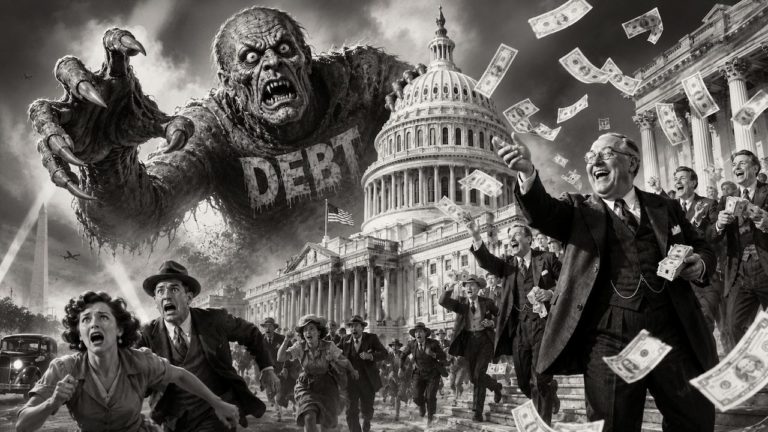
(Mike Maharrey, Money Metals News Service) Without tariff revenue to paper over excessive spending, the U.S. ran the biggest monthly budget deficit in five years last month.
The Trump administration spent $432.31 billion more than it took in in July. It was the highest monthly budget shortfall since March 2021, amid the COVID stimulus era and the third-largest deficit on record.
With August beginning on a weekend, there were some calendar adjustments, as around $99 billion in August benefits were paid out in July, inflating the month’s outlays. However, even adjusting for these calendar shifts, the July deficit was still $333 billion. That was up 18 percent from the prior year.
The July shortfall pushed the 2026 budget deficit to $1.8 trillion with two months remaining in the fiscal year. The deficit is now larger than the 2025 shortfall and is on track to eclipse $2 trillion.
Keep in mind that the federal government ran $1 trillion deficits for the first time during the Obama administration, during the Great Recession. Today, we’re seeing $2 trillion deficits, with the economy supposedly expanding.
A surge in tariff revenue moderated deficits last year and at least partially obscured the out-of-control spending problem. However, with the Supreme Court declaring the “Liberation Day” tariffs unconstitutional, Uncle Sam is now experiencing negative tariff receipts as the government refunds past tariff payments.
The government refunded $33.38 billion in tariffs in July. That sent tariff revenue negative by $8.55 billion last month.
Total government tax receipts came in at $334.01 billion. That was 1 percent lower than last year’s July revenue.
Through the first 10 months of fiscal 2026, the Treasury has collected $4.49 trillion, about 3 percent more than through the same period last year.
The real problem continues to be on the spending side of the ledger.
The Trump administration blew through $766.31 billion last month. That was a 22 percent increase from July 2025 spending. When factoring out the $99 billion for calendar adjustments, the federal government still spent $677.31 billion.
So far in fiscal 2026, Uncle Sam has spent $6.28 trillion. That’s a 3.3 percent increase compared to the same period last year.
A 3.3 percent increase in spending might not sound significant. But weren’t we told there would be spending cuts?
In fact, there were some cuts in the Big Beautiful Bill (along with spending increases).
The increased spending comes despite cuts to the EPA and the Department of Education, along with staffing reductions that are now showing up in the data. Lower disaster spending also helped moderate spending levels through the first two months of fiscal ’26.
Looking at the big picture, the spending trajectory is up. Even with all the hype about DOGE and some lip service to cutting spending during the early days of the Trump administration, the U.S. government spent just over $7 trillion last year. That’s an average of $583.3 billion per month or $19.2 billion per day.
And now there’s a war.
Despite some non-specific talk about “spending cuts,” there seems to be little to no commitment to tackle runaway spending. In fact, the powers-that-be constantly find new reasons to spend money, whether it is a crisis at home or a war overseas.
The Cost of the Debt
The cost of servicing the debt continues to climb in this higher-interest rate environment as the government keeps piling on new debt.
Interest expense has grown into the second-largest spending category in the federal budget behind only Social Security.
In July, the Treasury forked out $117.57 billion on interest payments alone. That was down slightly from a record $185 billion in June.
July interest payments pushed total interest expense to $1.17 trillion through the first 10 months of fiscal 2026. That was up 15.5 percent compared to the same period in fiscal ’25.
Interest on the national debt cost $1.2 trillion in fiscal 2025. That was up 7.3 percent over 2024.
Net interest (interest expense – interest receipts) was $104 billion in July.
Through the first 10 months of the fiscal year, the federal government spent more on interest on the debt than it did on national defense ($804 billion) or Medicare ($955 billion). The only higher spending category is Social Security ($1.4 trillion).
Much of the debt currently on the books was financed at very low rates before the Federal Reserve started its hiking cycle. Every month, some of that super-low-yielding paper matures and must be replaced by bonds yielding much higher rates.
When people say the spending is unsustainable, it feels like an understatement. In fact, it’s fair to call the federal government insolvent.
However, very few people in the political class seem the least bit interested in tackling the problem. The bad news is that at some point, the problem is going to tackle them.
Mike Maharrey is a journalist and market analyst for Money Metals with over a decade of experience in precious metals. He holds a BS in accounting from the University of Kentucky and a BA in journalism from the University of South Florida.
(Morgan Sweeney, The Center Square) Jewish advocacy group and antisemitism tracker the Anti-Defamation League launched a new initiative Wednesday aimed at helping university students, faculty and staff combat antisemitism on their campuses.
The initiative includes two reports tracking “less visible” forms of antisemitism at universities, a confidential reporting mechanism for those encountering antisemitism on their campuses and guidance for how to respond.
While antisemitic incidents on college campuses may have peaked in 2024 among an abundance of anti-Israeli protests, the latest reports from the league track where they may be occurring among faculty and course curricula.
“Antisemitism doesn’t only show up in a student protest chant or an encampment,” said the league’s CEO, Jonathan Greenblatt. “It can show up in a syllabus, a lecture, a seemingly innocuous remark.”
The report identified multiple “recurring patterns” at universities across the country, including what it characterized as faculty presenting political claims about Israel and Zionism as fact, amplifying the viewpoints of designated terrorist organizations, singling out Jewish and Israeli students in classroom settings, and calling on their schools to withdraw university investments connected to Israel.
As examples of the first pattern, the report cited instances at Columbia, Northwestern, Princeton, Stanford and Yale universities, as well as the University of Illinois Champaign-Urbana and the University of Missouri.
Course descriptions at Princeton and Stanford characterized the Israel-Hamas war as a Palestinian genocide. The Princeton course included a reading whose summary described “Israel’s genocidal project” as “hypervisible” in the war in Gaza but “unfolding” since 1948. A Yale seminar “alluded to Israel as a ‘settler-colonial structure of occupation and violence,’” according to the report.
In 2025, the University of California, Berkeley offered an English comparative literature course that initially referred to the Israeli military in the Palestinian Territory as the “Israeli Occupying Force” and Hamas militants as “revolutionary resistance forces” standing up against colonialism and imperialism.
The school later revised the course description to no longer include the names of Israel or Hamas specifically, though it did still include reflection on “Indigenous Palestinian resistance against settler-colonialism.”
The report cited assigned readings at UC-Berkeley and Columbia written by members of the Popular Front for the Liberation of Palestine, a group designated as a terrorist organization by the U.S., European Union, Canada and Israel, as amplifying “pro-terrorism narratives.”
It called out instances of “singling out Jewish and Israeli students” that were reported by students and included in a report by Columbia University’s Task Force on Antisemitism where Israeli students were the subject of derogatory comments by other students and professors.
The second league report documents some of its findings examining faculty groups it claims have “deepened their collaboration with anti-Israel student groups since the wave of 2024 campus encampments,” including the American Association of University Professors, the Coalition for Action in Higher Education and the Sanctuary Campus Network.
“The hostile environment on campus toward Zionist and Jewish students is not an accident, but the result of organized, well-resourced networks working to reshape academic institutions from within,” said Oren Segal, the league’s senior vice president of counter-extremism and intelligence.
In addition to a variety of best-practice guides and model policies for schools seeking to combat antisemitism, the final piece of the initiative is the Campus Classroom Reporting mechanism.
Accessible on its website, the league describes the mechanism as “a confidential reporting and support channel for students, faculty and staff facing antisemitism in classrooms and curricula.”
(Mike Maharrey, Money Metals News Service) Each month, the Bureau of Labor Statistics releases the Consumer Price Index (CPI) report. Policymakers, pundits, and economists use this data to gauge the current inflation situation. For instance, the July CPI cooled a bit, raising hopes that the Fed will not raise interest rates next month.
However, the CPI only tells part of the inflation story. Relying solely on CPI is a little like looking at the temperature and claiming that you know the weather.
CPI tracks price inflation – more specifically, the change in the price of a basket of goods. But historically, inflation was defined as an increase in the supply of money and credit. Rising consumer prices are one of the impacts of this monetary inflation. In other words, the CPI measures a symptom of monetary inflation.
The CPI can tell us when past monetary inflation is showing up in the economy, but it can’t predict the trajectory of inflation. That means we need to look at money supply metrics to understand the complete inflation story.
With this in mind, when the CPI data comes out each month, I plan to produce a more comprehensive inflation report using four metrics – CPI, changes in the M2 money supply, changes in the Federal Reserve balance sheet, and the Chicago Fed National Financial Conditions Index.
July CPI Data
Based on the headlines, you probably assume inflation is easing.
Prices rose just 0.1 percent month-on-month in July, according to the latest BLS data. That follows on the heels of a -0.4 percent decline in prices in June.
On an annual basis, the headline CPI fell from 3.5 to 3.4 percent.
Stripping out more volatile food and energy prices, core CPI ticked up by 0.2 percent, with the annual increase in prices dropping from 2.6 to 2.5 percent.
While still above the mythical 2 percent target, all these numbers fell within Wall Street forecasts, and they appear to be trending in a positive direction.
Another big drop in energy prices helped pull the overall CPI lower. The energy index dropped -1.5 percent month-on-month, driven by a healthy -2.9 percent dip in gasoline prices.
The medical care services index charted the steepest price increase in July, surging by 0.6 percent.
Increases in food, shelter, and service prices were modest.
With the sanguine price inflation data, traders lowered the odds of a September interest rate hike to 42 percent, according to the CME Group’s FedWatch gauge.
Morgan Stanley Wealth Management chief economic strategist Ellen Zentner told CNBC the CPI data “will keep the ‘no need to hike rates’ narrative that took hold after last week’s jobs report intact.”
“There will be another round of inflation data before the September FOMC meeting, so the storyline could still change. But unless those numbers tell a much different story, the Fed will likely still be in a position to leave rates unchanged next month.”
But when we look at the other inflation indicators, we find inflation isn’t nearly as tame as the CPI might indicate. In fact, it appears to be accelerating.
M2 Money Supply
While prices are cooling, the money supply is increasing rapidly. That is, by definition, inflation. However, we won’t see its impact on the general price level for months.
The money supply rose by nearly $100 billion, from $23.06 billion in May to $23.16 billion in June.
Since June 2025, the money supply has surged from $21.94 billion to 23.16 billion, a 5.6 percent increase.
In other words, we have an actual inflation rate of 5.6 percent.
This monetary inflation will eventually find its way into consumer prices. (It could also manifest in rising asset prices such as real estate and equities.)
The Federal Reserve Balance Sheet
One reason the money supply is increasing is due to central bank money printing.
While Warsh & Co. talk tough on inflation, the Fed is running quantitative easing (QE) operations to create artificial demand for Treasuries and hold yields lower than they otherwise would be. That means the central bank is buying U.S. Treasuries and holding them on its balance sheet. To run this operation, the Fed creates money out of thin air to pay for these bonds, and it is injected into the economy. Again, this is, by definition, inflation.
The Fed will never admit to running QE. It will tell you it is just a technical operation to keep the financial system’s plumbing clear. But no matter what you call it, the practical impact is the same. The Fed’s balance sheet expands, and new money flows into the economy.
The central bank’s balance sheet began ticking higher in December, and the upward trend continues today. In the last month, the balance sheet increased from $6.72 trillion to $6.75 trillion.
I can’t overstate the fact that the Fed is easing monetary policy through its balance sheet operations, even as it claims to be fighting inflation. Sure, the increase to the balance sheet is modest. But if you’re serious about an inflation fight, why isn’t the balance sheet shrinking?
The answer is that there is an evolving bear market in bonds. With yields rising and pushing up the federal government’s interest costs, the Fed has no choice but to step in and support the Treasury market.
National Financial Conditions Index
While everybody imagines monetary policy is tight with the federal funds rate set between 3.5 and 3.75 percent, from a historical perspective, it is loose.
As of the week ending August 7, the NFCI stood at -0.55. The minus sign indicates that financial conditions are historically loose.
Surprisingly, the NFCI never went positive, even during the height of the Fed’s tightening cycle. The highest it got was -0.09 in October 2022.
Again, this reveals that the Federal Reserve inflation fight wasn’t nearly as aggressive as advertised. It has maintained a historically loose monetary policy through the entirety of this inflation cycle.
It also reveals that the economy is addicted to easy money. The fact that the central bank could never get financial conditions tight for fear of collapsing the debt-riddled bubble economy is telling. It certainly wasn’t because inflation was under control.
Conclusion
When you put all the data together, the inflation picture looks much more concerning than the sketch you get with the CPI data alone. It’s clear that inflation is far from under control. It is on the upswing.
We’re getting some relief from rising prices, but given the increasing money supply, there is undoubtedly more price pressure in the pipeline. Whether it manifests in consumer prices, asset prices, or both, remains to be seen.
The bottom line is it’s not the time to celebrate inflation’s demise. Absolutely enjoy the lower fuel prices. But remember, there is more inflation in the pipeline. One thing you can count on: the powers-that-be will relentlessly devalue your money – at least by the planned 10-plus percent every five years.
Mike Maharrey is a journalist and market analyst for Money Metals with over a decade of experience in precious metals. He holds a BS in accounting from the University of Kentucky and a BA in journalism from the University of South Florida.
(José Niño, Headline USA) A layoff tracking firm has turned the H-1B fight into a map, and the map points at Texas.
LayoffHedgetweeted, “The 8 fastest-growing H-1B districts in America are all Texas Republicans…” The post promotes a new study from the firm that assigns certified Labor Condition Applications to congressional districts, drawing on the roughly 7 million filings itsH-1B Visa Explorer tracks from fiscal 2015 through the second quarter of fiscal 2026.
Newsweek reported the underlying numbers first, and they cut against the tweet’s implication. Democratic held districts logged 5.17 million filings since 2015, more than triple the 1.69 million recorded in Republican held seats, with four vacant districts adding 56,596.
The heaviest concentrations sit in coastal technology hubs. California’s 17th under Ro Khanna leads the country at 323,966 filings, New York’s 12th under Jerrold Nadler follows at 259,001, and California’s 16th under Sam Liccardo ranks third at 233,165. Texas’ 4th under Pat Fallon tops all Republican seats at 106,892, ahead of Georgia’s 7th under Richard McCormick at 96,705 and Texas’ 24th under Beth Van Duyne at 81,784.
Growth flips that picture. Every one of the eight fastest expanding districts between fiscal 2019 and fiscal 2025 sits in Republican held Texas, a pattern that tracks corporate relocations and data center construction across the state. A LayoffHedge spokesperson urged caution in reading partisan intent into any of it, telling Newsweek, “The data shows where employers asked to place the work. It does not show that either party causes or drives H-1B usage.”
Those district patterns follow the state map. According to H1B Report, cumulative worksitetotals from fiscal 2010 through fiscal 2026 put California first at 1,684,275 filings and Texas second at 993,563, trailed by New York at 779,382, New Jersey at 534,212, Illinois at 428,170, Washington at 407,237, Massachusetts at 338,769, Georgia at 310,027, Florida at 294,620, and Pennsylvania at 290,872.
Texas holds that second place spot in current federal data as well. Labor Departmentfigures for the first quarter of fiscal 2026 show 20,628 certified positions in Texas, or 12.6 percent of the national total, with Austin, Plano, Dallas, Irving, Houston, and San Antonio supplying most of the volume. California, Texas, Washington, New York, and Illinois together claimed 67.3 percent of everything certified that quarter.
José Niño is the deputy editor of Headline USA. Follow him at x.com/JoseAlNino
(José Niño, Headline USA) Federal employees can once again access TikTok on government equipment after officials determined the platform’s revamped ownership structure removes the security risks that led to the original prohibition.Bloomberg reported that the shift came after TikTok’s U.S. business moved under the control of American investors.
The Office of Management and Budget canceled its 2023 directive that had ordered agencies to strip TikTok from federal systems, halt fresh downloads, and cut off network access to the app apart from limited exceptions. Officials issued that earlier rule because TikTok answered to a Beijing-based parent company, and lawmakers worried government data could end up exposed.
Bloomberg noted that the policy change traces back to a Justice Department legal opinion released the previous month. That opinion determined the app’s current U.S. version no longer meets the definition of a “covered application” spelled out in the federal statute that had kept TikTok off government networks.
The department explained that the law was written to target TikTok versions built or supplied by ByteDance or firms under ByteDance’s authority. Investigators found that the newly formed TikTok USDS Joint Venture now operates the American version separately from ByteDance, with U.S. shareholders holding majority control.
Per the opinion, the venture “has revised the content recommendation algorithm and cybersecurity program originally developed by ByteDance to insulate federal government information against the concerning security features that initially motivated the prohibition.”
The Justice Department’s review found that sensitive American user information now sits inside Oracle’s protected domestic cloud system, walled off from direct ByteDance access, with independent security experts monitoring the platform’s data protection practices.
TikTok finalized its restructured American ownership in January, closing out months of tension over its Chinese ties. As Reutersreported, the arrangement placed US operations under the TikTok USDS Joint Venture, with Oracle, Silver Lake, and MGX each taking a 15 percent managing stake, while ByteDance kept a smaller, non-controlling 19.9 percent share.
José Niño is the deputy editor of Headline USA. Follow him at x.com/JoseAlNino
(Luis Cornelio, Headline USA) The daughter of billionaire Bill Gates is facing scrutiny over accusations that she knew about and pushed for an alleged money-making scheme at her start-up company.
Phoebe Gates, along with her friend Sophia Kianni, is the co-founder of Phia, an e-commerce company that helps users find products at lower prices through a browser extension.
When a customer makes a purchase through the platform, Phia collects a commission from the retailer. However, at the center of the controversy are allegations that Phia collected commissions from sales it did not actually drive.
Specifically, Bloomberg reported Tuesday that Phia was designed to place “cookies,” or digital trackers, on users’ browsers, creating the appearance that purchases originated through Phia.
The tactic, known as “cookie stuffing,” allegedly allowed Phia to collect commissions on purchases it did not generate, unbeknownst to users and business partners.
In fact, Phia’s daily revenue dropped from approximately $80,000 to between $10,000 and $28,000 after the company removed the code that triggered the cookie stuffing, according to Bloomberg.
The outlet reported Tuesday that both Gates and Kianni knew about the cookie-stuffing features since December and reportedly pushed for their use. The outlet based its reporting on internal communications and anonymous sources who previously worked at Phia.
“The strategy, which is broadly prohibited by Phia’s commercial partners, was implemented at least as far back as December, the internal chats show, and involved purchases made on the websites of several major retailers, including Nike, Gap and Nordstrom,” Bloomberg reported. “A Bloomberg review of Phia’s historical source code confirmed these features existed.”
In response to the allegations, a Phia spokesperson said that “any features causing misattributions were immediately removed over a month ago on July 7.”
The spokesperson said that the company is reviewing transactions and would issue refunds for the commissions of transactions stemming from the “misattribution.”
The Phia spokesperson also claimed the company is hiring a “head of compliance to make sure something like this never happens again.”
Gates and Kianni launched Phia in 2025 with $30 million in backing from investors including Hailey Bieber, daughter of actor Stephen Baldwin and wife of pop star Justin Bieber, and Kris Jenner, the matriarch of the Kardashian-Jenner family, according to the New York Post.
The allegations bear similarities to a 2014 federal case involving an online retailer.
In 2014, the DOJ prosecuted a man named Jefferson Bruce McKittrick over a scheme that allowed him to collect more than $1.8 million in unearned sales commission from an online retailer.
He pleaded guilty to one count of “information charging conspiracy to commit wire fraud.”
At the time, then-U.S. Attorney Kenyen R. Brown criticized the scheme and the harms it causes to e-commerce in a statement.
“Internet fraud has a devastating impact on our consumers, as advertising expenses are added to the cost of items the consumer buys,” Brown said. “We are committed to working with our law enforcement partners to stop internet fraud.”
Federal offenses tied to the scheme carry a maximum penalty of 20 years in prison, according to the DOJ.
It is unclear whether the DOJ is looking into the allegations against Phia.
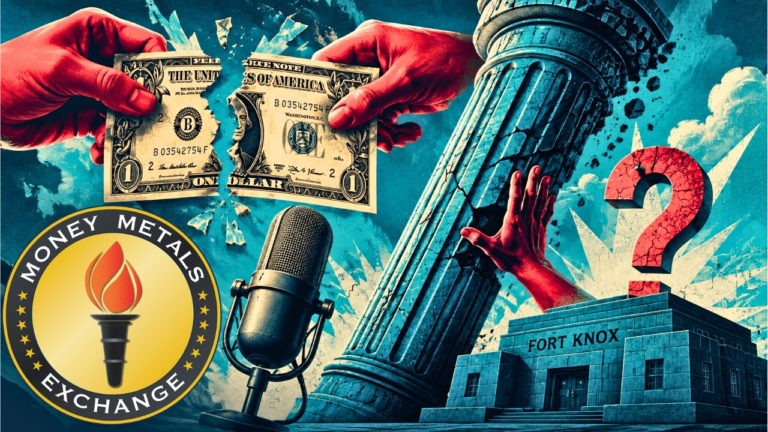
(Money Metals News Service) Money Metals Midweek Memo host Mike Maharrey opened this week’s episode with an old-fashioned banking analogy: Imagine somebody repeatedly claiming to have $100,000 in the bank but refusing to produce a statement or even balance the checkbook. The money might be there, but without verification, skepticism would be reasonable.
That, Maharrey argued, is essentially the situation with America’s gold reserves. He suspects the gold at Fort Knox probably is there. But “probably” isn’t the same as an independent, comprehensive audit.
That question framed one half of the episode. The other centered on an issue Maharrey believes could have much broader economic consequences. That is, recent U.S. intervention to support the Japanese yen and what the unusual mechanics of that intervention may reveal about the deteriorating position of the U.S. dollar.
The Dollar’s Reserve-Currency Advantage Is Under Pressure
The United States recently intervened in currency markets to support the Japanese yen. Such interventions aren’t extraordinary by themselves, but Maharrey argued that the way Washington went about it was revealing.
Dollar reserve status is enormously important to the U.S. monetary and fiscal system. Global demand for dollars absorbs some of the currency created by the Federal Reserve, while international demand for U.S. Treasuries helps finance federal borrowing.
Maharrey stressed that the dollar isn’t likely to suddenly lose reserve-currency status overnight. In his words, it remains the “cleanest dirty shirt in the laundry hamper.” But he argued that persistent borrowing, spending, debt accumulation, and money creation are gradually making the monetary system more fragile.
Normally, if the United States wants to strengthen the yen, it can sell dollars and use the proceeds to buy yen. Increased demand for yen strengthens the Japanese currency, but selling dollars can simultaneously put downward pressure on the greenback.
This time, the Treasury reportedly did something different.
Instead of buying yen with dollars, the U.S. used euros from its reserves. That allowed Washington to support the yen without directly selling dollars. According to the Financial Times, the operation “blindsided” the European Central Bank, which reportedly wasn’t informed until after the intervention.
Why Washington Didn’t Want to Sell Dollars
UC Berkeley economist Barry Eichengreen argued in the Financial Times that the unusual transaction pointed toward a deeper concern – Treasury Secretary Scott Bessent and other U.S. officials may have worried that selling dollar securities to support the yen would put additional pressure on the long end of the Treasury market.
That matters because weakening demand for Treasury securities means lower bond prices and higher yields. Higher yields, in turn, translate into higher borrowing costs for Washington.
Maharrey illustrated the problem with a simple example. If the yield on the 10-year Treasury is 3.5 percent instead of 2.5 percent, the federal government must pay more to borrow. That is especially problematic when the government is already spending more than $1 trillion per year on interest alone.
Japan’s situation makes the dilemma even clearer.
When Japan needs to strengthen the yen, it can sell U.S. Treasury securities, receive dollars, and use those dollars to buy yen. Japan has apparently been doing exactly that. Its foreign currency reserves fell by $75.6 billion in May, an amount Bloomberg reported broadly matched the scale of yen intervention that month. Federal Reserve custody data also showed a decline in Japanese Treasury holdings consistent with liquidation.
But Japanese Treasury sales create a headache for Washington. More Treasuries hitting the market can push prices lower and yields higher precisely when the U.S. government needs to borrow enormous sums.
By stepping in to buy yen itself, Washington could therefore accomplish two things at once: support Japan’s currency and reduce Japan’s need to dump Treasuries.
Japan Can Get Dollars Without Dumping Treasuries
There is another piece to the puzzle.
Japanese officials have indicated they will use the Federal Reserve’s Foreign and International Monetary Authorities, or FIMA, Repo Facility for future currency-support operations.
The Fed created the facility in March 2020 after foreign institutions needing dollars began selling Treasuries during the pandemic, contributing to severe volatility and dysfunction in the Treasury market.
FIMA gives eligible foreign monetary authorities another option. Rather than outright selling Treasuries, they can pledge those securities as collateral and obtain dollars from the Federal Reserve. The loans have a maximum maturity of seven days but can be rolled over.
For Japan, that creates a way to obtain dollars to support the yen without dumping Treasury securities onto the open market. For Washington, it potentially removes another source of selling pressure from the bond market.
Why Hold Reserves You Can’t Freely Use?
For Maharrey, this is where the story becomes a de-dollarization story.
Eichengreen argued that the developments suggest the dollar’s status as a reserve currency “is not what it used to be.” Central banks traditionally hold dollar reserves partly because the Treasury market is deep and liquid, allowing those assets to be bought, sold, and deployed in currency interventions.
But what happens if foreign central banks face pressure not to sell their Treasury holdings because Washington is worried about the effect on its own bond market?
Why hold reserves, Maharrey asked, if you can’t freely use them when you need them?
Eichengreen warned that the dollar is becoming less attractive as a reserve currency and predicted that other countries could intensify their search for alternatives. In other words, reserve diversification – another form of de-dollarization – could accelerate.
Gold Stands to Benefit
Gold is one obvious alternative.
Capital Economics economist Kieran Tompkins argued that concerns about central banks conducting foreign-exchange operations without upsetting U.S. officials over Treasury-market consequences could provide fresh impetus for central bank gold demand.
That matters because central bank buying has been one of the major pillars supporting the gold bull market in recent years.
Maharrey argued that this demand has helped gold hold around the $4,000 level despite significant interest-rate headwinds and relatively subdued enthusiasm among Western investors. Asian investors, meanwhile, have been aggressively buying the recent dip.
With expectations for a Federal Reserve rate hike fading and gold showing signs of breaking out of its range-bound trading pattern, Maharrey sees numerous indicators pointing toward a continuing gold bull market.
Rand Paul Goes to Fort Knox
The second half of the episode shifted from international currency markets to America’s most famous gold vault.
A few weeks earlier, Treasury Secretary Scott Bessent had insisted that all of the gold at Fort Knox was present and accounted for, despite acknowledging that he had not personally visited the facility.
After spending roughly one or two hours inside the U.S. Bullion Depository, Paul emerged and declared that the gold was there – approximately 147 million ounces.
Maharrey wasn’t persuaded.
Based on the amount of gold the government says Fort Knox contains, there should be more than 300,000 gold bars inside. Many aren’t even standard modern bullion bars because some Fort Knox holdings originated with coins melted down following the gold policies of the 1930s. Those bars can have irregular weights and insufficient purity to qualify for international settlement.
In Maharrey’s view, there is simply no way somebody can verify more than 300,000 bars during a brief guided visit.
A Tour Isn’t an Audit
Money Metals CEO Stefan Gleason sharply criticized the episode, arguing that Paul had effectively been “rolled” after being given the opportunity to tour the mysterious facility.
Gleason also noted that Money Metals operates a precious-metals depository twice the physical size of Fort Knox. He argued that a brief visit cannot establish that America’s gold is fully accounted for, much less answer questions about whether any of it is encumbered.
Another issue is purity. Gleason said 83 percent of the gold is unacceptable on global markets due to insufficient purity.
The episode is especially striking because Paul co-sponsored the Gold Reserve Transparency Act of 2025 with prime sponsor Sen. Mike Lee. That legislation would have provided for a comprehensive audit of U.S. gold reserves.
Sound Money Defense League director Jp Cortez questioned why Paul would back a bill calling for a genuine accounting and then seemingly substitute a Fort Knox “field trip” and assurances that everything was there.
What a Real Fort Knox Audit Would Require
Maharrey emphasized that a legitimate audit involves much more than walking through a vault.
A proper independent examination would require every bar to be counted and inspected. Serial numbers would need to be reconciled with official records. Gold would need to be assayed to verify weight and purity. The resulting documentation would then need to be published for public examination.
An audit would also address chain of custody and potential encumbrances.
Has any Fort Knox gold been loaned to another entity? Has it been pledged, leased, swapped, or mobilized in currency operations? Does anybody else hold full or partial claims against metal sitting inside the vault?
Without a comprehensive published audit, Maharrey argued, the public simply cannot know.
The $6 Billion Question
That leads to what Maharrey called the “$6 billion question”: Why not simply audit the gold?
He pointed back to 1974, when officials opened the Fort Knox vaults to outsiders. Maharrey characterized that episode as another publicity event rather than the type of rigorous accounting needed to settle the issue.
The continuing resistance to an independent audit only breeds suspicion, he argued. If a private company refused to audit its books and became hostile whenever somebody suggested doing so, that behavior would hardly inspire confidence.
Money Metals has firsthand experience with what a real bullion audit entails. The Money Metals Depository is larger than the U.S. Bullion Depository and undergoes both internal and external auditing.
For Maharrey, that should be the standard… verification rather than assurances.
Don’t Rely on Washington to Protect Your Money
The two seemingly different topics of the episode ultimately came together around the same theme.
The dollar’s international position is showing signs of strain as the U.S. struggles to preserve demand for Treasury securities. Meanwhile, Washington continues asking Americans to accept assurances about the nation’s gold holdings without the kind of comprehensive public audit that would settle the question.
Maharrey also pointed to the long-running erosion of purchasing power, saying government policy is effectively designed to devalue money by more than 10 percent every five years.
His conclusion was that individuals shouldn’t depend on policymakers to preserve their wealth. Instead, he argued that saving in sound money such as physical gold and silver can provide a way to protect purchasing power from monetary debasement.
The dollar may remain the world’s dominant reserve currency for some time. But as Maharrey put it at the end of the episode, “the dollar is not what it used to be.”