Musk Lawyer: Gag Order Would Trample Free Speech Rights

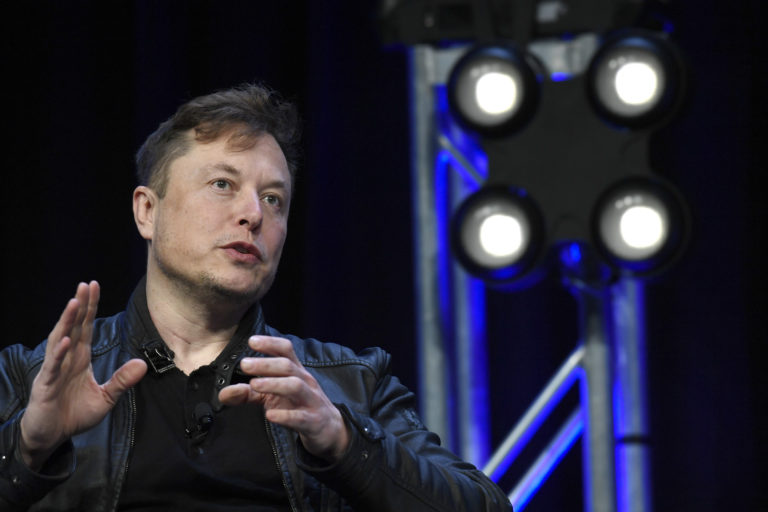
(Headline USA) Elon Musk’s lawyer says a federal judge would trample on the Tesla CEO’s free speech rights if he ordered Musk to stop talking about 2018 tweets saying he had the funding to make Tesla a private company.

In a court document filed Wednesday, lawyer Alex Spiro says a motion from a group of Tesla shareholders seeking a gag order doesn’t establish that Musk’s comments will prejudice the pool of jurors who may hear the case.

Lawyers for the shareholders have argued that Musk is trying to influence potential jurors before the lawsuit comes to trial on Jan. 17 of next year. They contend that the CEO’s August, 2018 tweets were written to manipulate the stock price, costing shareholders money.

In court documents, the shareholders say U.S. District Judge Edward Chen in San Francisco already has ruled that Musk’s statements about having the money to take Tesla private at $420 per share were false.

They also argue that Musk violated an October, 2018, court settlement with U.S. securities regulators. Musk signed the agreement to pay a $20 million fine and not make any statements denying securities fraud allegations. Musk is challenging the agreement, saying it is unconstitutional.

Spiro’s response comes about a week after Musk, the world’s richest person, made a controversial offer to take over Twitter and turn it into a private company with a $43 billion offer that equals $54.20 per share. Twitter’s board on Friday adopted a “poison pill” strategy that would make it prohibitively expensive for Musk to buy the shares.

At issue is Musk’s April 14 interview at the TED 2022 conference, where he said that he did have funding secured to take Tesla private in 2018. He called the Securities and Exchange Commission a profane name and said he only settled the case because bankers told him they would stop providing capital if he didn’t, and the Austin, Texas-based Tesla would have gone bankrupt.

Lawyers for the shareholders say Musk’s comments in the interview were an “unsubtle attempt to absolve himself in the court of public opinion” over misrepresentations made with his Aug. 7, 2018 tweets.

But Spiro wrote in his response that the shareholders didn’t show that Musk’s speech presented a “clear and discernable danger” that the whole community would be corrupted by pretrial publicity, or that finding 12 objective jurors would be impossible.

Musk’s comments merely reiterated the case that’s already on the public record in his challenge to the SEC settlement, Spiro wrote.

His motion says that Musk is in the middle of a public offer to take over Twitter, which has led to debate over censorship of free speech. Reporters, he wrote, have compared this to Musk’s previous statements about taking Tesla private.

During the TED interview, Musk was asked if funding was secured for the Twitter deal, a reference to the 2018 Tesla tweets. “Mr. Musk should be permitted to respond meaningfully and truthfully to inquiries such as this, and not be compelled to remain silent,” Spiro wrote.

If Musk violated the SEC agreement, the agency can ask a judge to scrap it and restore the securities fraud complaint. The SEC wouldn’t comment.

Adapted from reporting by the Associated Press

Trump Sours on Brnovich as Another Ariz. GOP Candidate Outraises

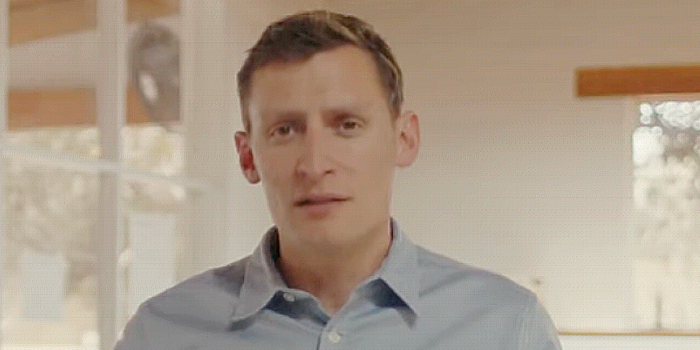
(Joshua Paladino, Headline USA) As former President Donald Trump loses faith in Arizona Attorney General Mark Brnovich, Senate candidate Blake Masters has surged in the Republican primary by receiving more individual donations than any other candidate.

Masters pulled in $1.16 million from Jan. to March. 2022, besting all the other Republican candidates, including Brnovich, who raised $735,000, and businessman Jim Lamon, who received about $275,000, according to Breitbart.

Trump said he will endorse a candidate in Arizona‘s Republican Senate primary “in the not too distant future,” but he indicated that Brnovich may not receive the endorsement if he does not follow through on investigations into election fraud.

Trump said Brnovich received “massive information on the fraud and so-called ‘irregularities” but has not acted on it.

“Well, he did a report, and he recites some of the many horrible things that happened in that very dark period of American history but, rather than go after the people that committed these election crimes, it looks like he is just going to ‘kick the can down the road’ and stay in that middle path of non-controversy,” he wrote in a statement.

Trump contrasted Brnovich with “some very good people” in the race.

Brnovich’s campaign is not in a solid financial position. He spent $974,269 dollars in the first quarter, a $240,000 spending deficit, and he has only $529,000 in remaining cash.

Masters spent about $700,000 and has $2.253 million in cash.

Campaign manager Amalia Halikia said that Masters has proven himself as a candidate who can rouse grassroots support from America-First Republicans.

“Kelly is going to have well over $100 million in his war chest by November,” Halikias said, adding that Democrat incumbent Sen. Mark Kelly raised $61.5 million in the first quarter. “Republicans need to win this seat back — fortunately, the smartest, strongest candidate has proven he can seriously fundraise.”

Lamon has self-funded his campaign. He gave himself $5 million in the first quarter and has given $13 million to his campaign overall.

“We have an attorney general who is unable to even cover what he’s spending. We’ve got a self-funder setting his money on fire,” Halikias said. “Blake’s opponents are letting consultants take them for a ride.”

Ortagus, Starbuck Removed from GOP Ballot in Nashville Congressional Race

(Headline USA) Tennessee Republican officials have removed three congressional hopefuls from the GOP primary ballot, including one candidate backed by former President Donald Trump.

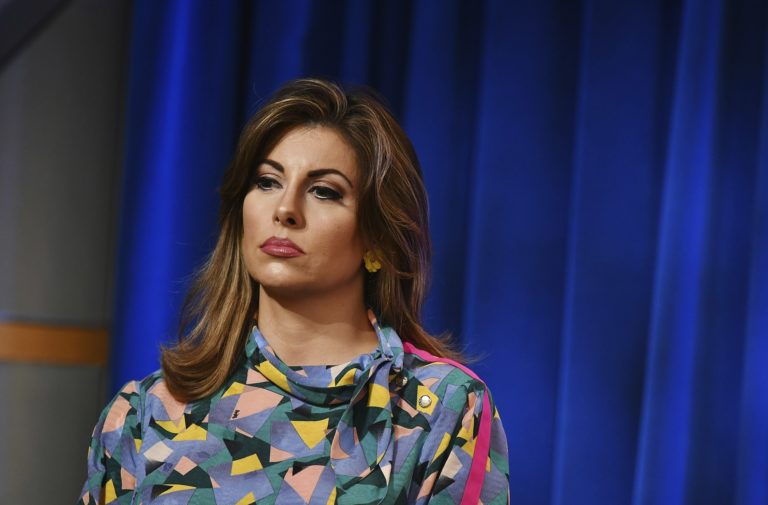
The late Tuesday night decision by the Tennessee Republican Party was a long awaited result of months of debate over Morgan Ortagus, Trump’s former State Department spokesperson, entering Nashville’s open 5th Congressional District race.

Even with Trump’s endorsement, some Republicans criticized the selection after pointing out that she had just recently moved to the state and did not know the region or its voters.

Tennessee’s Republican-controlled Legislature had sought to nudge Ortagus and others off the ballot by imposing residency requirements on most U.S. House and Senate candidates.

However, that attempt fizzled after the state’s election office told the Associated Press the legislation—which Republican Tennessee Gov. Bill Lee allowed to go into effect without his signature earlier this month—would not apply retroactively to candidates who had already met the qualifications.

That left the decision up to the state Republican Party, who had received challenges over the voting records of Ortagus, as well as video producer Robby Starbuck and small-business owner Baxter Lee.

Party officials had until Thursday to decide whether to keep the candidates on the August primary ballot. Tennessee GOP chairman Scott Golden confirmed the three were removed in a text to the AP on Wednesday.

In a statement, Ortagus said she was “deeply disappointed” in the GOP executive committee’s decision.

“As I have said all along, I believe that voters in Middle Tennessee should pick their representative—not establishment party insiders,” she said. “Our team is evaluating the options before us.”

Trump has not responded to the state party’s move. He had announced his endorsement via email in January, before Ortagus had officially filed to run, saying she would have his “Complete and Total Endorsement.”

Meanwhile, Starbuck tweeted out a short video with dark music that simply said “war” shortly after the party’s decision was revealed.

“In Cuba they have sham elections where the party decides which candidates are allowed to run. That’s what we have in Tennessee now thanks to the State Executive Committee,” he later said in a Wednesday statement. “My family didn’t come from Cuba just to watch America become Cuba. Not without a fight. Freedom matters.”

Chip Saltsman, Baxter Lee’s campaign manager, described the decision a “headscratcher” and said Baxter Lee was a Republican “through and through.”

Saltsman said Baxter Lee was kicked off the ballot because the candidate had not voted in three of the last four Tennessee primary elections. However, Saltsman pointed out that Lee had voted in 10 of the last 12 GOP primaries while giving nearly $100,000 to Republican candidates.

Meanwhile, Republican state Sen. Frank Niceley—they key sponsor of the legislation that sought to boot Ortagus and others off the ballot—told NBC News that only Jewish members of Trump’s family will care about Ortagus getting kicked out of the primary. Ortagus is Jewish.

“I don’t think Trump cares one way or the other,” Niceley said, who is supporting former House Speaker Beth Harwell in the open congressional race. “I think Jared Kushner—he’s Jewish, she’s Jewish—I think Jared will be upset. Ivanka will be upset. I don’t think Trump cares.”

Niceley had recently sparked national criticism after seemingly praising Adolf Hitler on the Senate floor while discussing a homelessness bill.

Ortagus responded that Niceley should be “ashamed of his repeated anti-Semitic rhetoric.”

“I will condemn anyone who traffics in this hate-mongering,” she said in a statement. “Senator Niceley’s repulsive words could not be more clear in disparaging the Jewish people. This racism cannot stand.”

Niceley claimed his words were taken out of context.

“Attempting to construe my off-hand comments about the Trump family as anti-Semitism is unfair and inaccurate,” he said Wednesday.

The deep Republican field for the 5th District now includes Harwell, Maury County Mayor Andy Ogles and retired National Guard Brig. Gen. Kurt Winstead.

The flurry of candidates have set their sights on Tennessee’s freshly drawn 5th District after Republican redistricting this year.

The seat became open after Democratic U.S. Rep. Jim Cooper announced he would not seek reelection rather than run in a district that carved up Nashville, favoring Republicans in each of the three seats and making it impossible for him to win any of them, in his view.

On the Democratic side, state Sen. Heidi Campbell is seeking the 5th District seat.

Adapted from reporting by the Associated Press

At Least Five Clinton Associates Have Taken the Fifth in Durham Probe

(Joshua Paladino, Headline USA) Five people who worked for Hillary Clinton and her 2016 presidential campaign have pleaded the Fifth Amendment against self-incrimination when called to testify before Special Counsel John Durham, who is investigating the origins of the Trump–Russia collusion hoax, Breitbart reported.

Legal scholar Jonathan Turley said the witnesses “refused to cooperate in fear that they might incriminate themselves in criminal conduct.”

Another witness, called “Researcher-2,” agreed to testify in exchange for immunity.

“[Durham] is now moving to give immunity to a key witness while revealing that the claims made by the Clinton campaign were viewed by the CIA as “not technically plausible” and “user created,” Turley said.

Durham revealed that Clinton’s employees refused to testify in a recent court filing.

The motion challenged the Clinton campaign and former campaign lawyer Michael Sussmann’s attempts to withhold evidence from Durham on the grounds that providing it would violate attorney–client privilege.

Durham asked the court to admit evidence from communications between “Clinton campaign leadership” and “Campaign Lawyer-1.”

Durham charged Sussmann for lying to the FBI that then-candidate Donald Trump coordinated with the Russian government through Alfa Bank and for failing to tell the FBI that he was working on Clinton’s behalf.

Turley said Durham’s motion “also detailed how the false Russian collusion claims related to Alfa Bank involved Clinton General Counsel Marc Elias and Christopher Steele.”

Clinton’s campaign hired Fusion GPS, which then hired Steele, a former British spy, to collect or manufacture allegations against Trump. Steele concocted the fraudulent “dossier” that launched the collusion hoax and spiked Trump’s presidency.

Elias helped fund Fusion GPS’s work on the dossier. Later, he orchestrated the sue-til-blue legal strategy to change election laws, expand mail-in voting, and curtail signature-verification procedures prior to the 2020 elections.

CNN+ Facing Lay-Offs, Budget Cuts After Dismal Launch

(Headline USA) CNN’s new streaming service is already facing steep budget cuts and lay-offs after a miserable launch.

Warner Bros. Discovery, an incoming corporate parent of CNN, plans to take a hard look at CNN+ and cut costs and staff members, according to Axios. As part of its review, WBD decided to suspend all external marketing for CNN+, and is pulling a plug on CNN’s original plan to invest $1 billion into the streaming service over the next four years.

The news comes amidst reports that CNN+ has failed to attract viewers and subscribers alike. The platform has only 150,000 subscribers so far, even after the company spent $300 million to roll it out.

CNN’s ratings have also tanked. Through Feb. 15, the channel’s average prime time audience among viewers aged 25-54 was just 126,000, according to Forbes.

However, CNN has insisted that CNN+ has been nothing but a success.

“After only three weeks of being available to customers, CNN+ is one of the top news subscription services on the market,” a spokesperson for the network said in a statement this week. “We remain very happy with CNN+’s performance to date and are proud of what our teams have built.”  

CNN+’s early failure reportedly has one of its star hosts, former Fox News anchor Chris Wallace, in a tizzy. He is reportedly having “daily mental breakdowns” over how quickly his career has tanked since leaving Fox.

On top of this, Wallace has been so uptight about his own image (or lack thereof) that he has been having staff count how many times his promo plays each day.

Mexican Border Agents Warn of Violent Migrants, Urge Biden to Extend Title 42

(Headline USA) Mexican border agents are ready to quit their jobs if President Joe Biden moves forward with repealing Title 42, a public health order that allowed U.S. border officials to immediately turn away migrants caught crossing the southern border illegally.

Title 42 helped deter surges of migration to the U.S. through Mexico because migrants knew they would be immediately sent home if they were caught, border agents, a part of Mexico’s immigration forces, told the New York Post. If it is lifted, tens of thousands of migrants will restart their trek towards the border, which will overwhelm U.S. and Mexican officials alike.

The situation at the border is already bad, one agent explained.

“Work has doubled and even tripled for us. Some weeks we have no days off,” one Mexican officer with the National Migration Institute, which is Mexico’s version of the U.S. Border Patrol, said.

“We pull in double shifts for the same pay and are sent from one end of the country to the other with less money for our expenses that we must pay up front.” 

On one team alone, half of the 30 officers have quit over the past two years, Jorge added.

“It’s a nationwide phenomenon,” he said.

The situation has become even more dire in recent weeks, as Mexican agents have had to deal with angry and violent mobs of migrants.

“They sprayed the vehicle with bullets, with the officers inside,” another former Mexican border agent, identified as Jorge, said of migrants. “Some of the local Mexicans, taxi drivers, turn to human smuggling. They are called ‘polleros.’ This is [also] a war between Immigration [officers] and the local people.

“This is already making things worse for us,” he continued. “Those new immigrants coming in are more violent. They are bigger than us. We Mexicans are smaller. We need at least two officers to detain them. We can’t handle them one on one.”

At least one major migrant caravan is preparing to head through Mexico to reach the U.S.’s southern border by the time Title 42 expires. Republicans have warned the Biden administration that more will follow if the policy is not extended.

Justice Dept. Claims CDC Should Determine Legality of Travel Mask Mandates

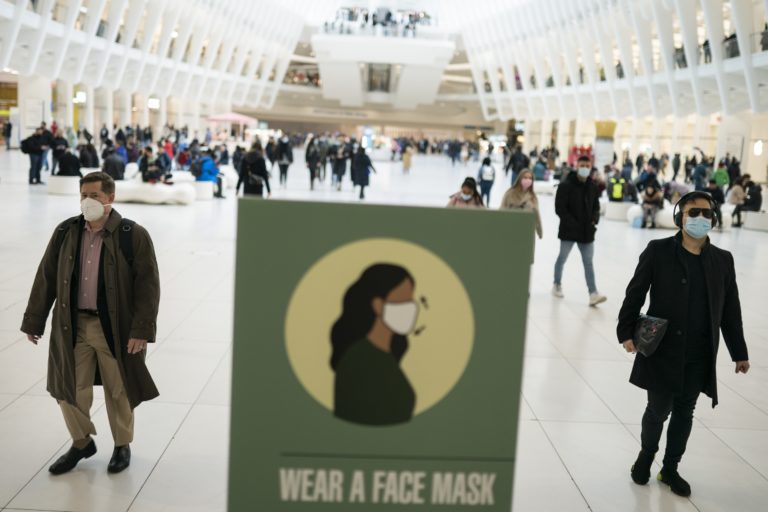
(Headline USA) The Justice Department said Tuesday it will appeal a federal district judge’s ruling that ended the nation’s federal mask mandate on public transit if the Centers for Disease Control and Prevention believes the requirement is still necessary, regardless of whether or not the mandate is actually legal.

In a statement released a day after a Florida judge ended the sweeping mandate, which required face coverings on planes and trains and in transit hubs, DOJ spokesman Anthony Coley said officials believe that the federal mask order was “a valid exercise of the authority Congress has given CDC to protect the public health.”

He said it was “an important authority the Department will continue to work to preserve.”

Coley said the CDC had said it would continue to assess public health conditions, and if the agency determined a mandate was necessary for public health, the Justice Department would file an appeal.

As of Tuesday, the agency hadn’t made a determination, officials said.

The federal judge’s ruling did away with the last major vestige of federal pandemic rules and led to a mishmash of new locally created rules that reflected the nation’s ongoing divisions over how to battle the virus.

Major airlines and airports in places like Dallas, Atlanta, Los Angeles and Salt Lake City quickly switched to a mask-optional policy.

Los Angeles County dropped its mandate for mass transit, and a train conductor in New Jersey told commuters of their masks Tuesday: “Feel free to burn them at will.”

New York City, Chicago and Connecticut, however, continued to require masks for travelers.

The ride-sharing companies Lyft and Uber announced on their websites Tuesday that masks will now be optional while riding or driving.

Even Walt Disney World in Florida on Tuesday announced it was lifting its mask requirement for its monorail, buses and sky gondola.

For many, the news was welcome.

A video showed some passengers on a Delta Air Lines flight cheering and applauding as they removed masks upon hearing the announcement they were now optional. One man happily twirled his mask on his finger.

However Brooke Tansley, a television producer and former Broadway performer, was incensed after boarding a flight with her 4-year-old and 8-month-old baby—neither old enough to be vaccinated—only to learn the mask mandate had ended mid-flight.

“Very very angry about this,” she said in a tweet, noting her baby was too young to wear a mask.

In Portland, Oregon, transit employees immediately began taking down “mask required” announcements and signs, but said it would likely take several days to remove everything.

The city joined Atlanta, Boston, Philadelphia, Washington, D.C., Kansas City, Missouri, and two of Alaska’s largest cities, Anchorage and Juneau, in making masking optional on mass transit.

Some passengers at Chicago’s Union Station said the rules were confusing. Amtrak dropped its requirement. The Chicago Transit Authority and Metra, the regional commuter rail service, kept the requirement at first but dropped it late Tuesday.

“It’s like this patchwork of different rules and enforcement of it,” said Erik Abderhalden, who wore a mask as he waited for a Metra train to his home in suburban Naperville. “I mean, it’s like Swiss cheese … there’s no uniformity and it seems pretty laissez-faire.”

Subway rider Cooper Klinges was pleased that New York City’s public transit system wasn’t following the trend and planned to keep its mask requirement in place. As he waited at a Brooklyn train station, he said he canceled a flight earlier this year over concerns about the virus.

“I don’t think we are out of the woods yet,” said Klinges, a teacher, citing concerns about the BA.2 omicron subvariant of the coronavirus. “It is still around. We have to still stick it out.”

President Joe Biden avoided taking a clear stance when asked about the legal defeat—seeking instead to defer the decision to his partisan CDC.

“That’s up to them,” Biden declared during a visit to Portsmouth, New Hampshire.

The White House continues to require face coverings for those traveling with him on Air Force One, citing CDC guidance. However, both Biden and Vice President Kamala Harris have repeatedly been called out for their inconsistency and hypocrisy while neglecting to follow the guidance in public settings.

During a recent visit from former President Barack Obama, Biden and House Speaker Nancy Pelosi shared what appeared to be a maskless kiss and hair sniff. Pelosi tested positive for the coronavirus shortly thereafter.

The CDC had recently extended the mask mandate, which was set to expire Monday, until May 3 to allow more time to study the latest subvariant, which is now responsible for the vast majority of U.S. cases even though fatalities and hospitilizations have plunged in many parts of the country—red states in particular.

But several Northeast cities have seen a rise in hospitalizations in recent weeks, leading Philadelphia to bring back its mask mandate.

Adapted from reporting by the Associated Press

DeSantis Threatens Legal Action Against Twitter If Board Rejects Elon Musk’s Offer

(Headline USA) Florida Republican Gov. Ron DeSantis threatened to explore legal action against Twitter’s board of directors this week after they moved to block billionaire Elon Musk from acquiring more of the company’s stock.

Musk sent an offer to the Twitter board last week offering to buy the company outright and take it private, so that he could “unlock” its “potential.” Twitter has not given Musk a formal response, but it did activate a so-called “poison pill” to prevent shareholders from acquiring more than 15% of the company’s stock.

In response, DeSantis said his team is reviewing options for legal action against Twitter’s board of directors “to hold them accountable for breaching their fiduciary duty.” He has the authority to go after Twitter since Florida, through its Retirement System pension fund, is an investor in the company, he noted.

“I can just tell you, the State of Florida, in our pension system, we have shares of Twitter. I didn’t buy it, we have people that run the fund. Nevertheless, it hasn’t exactly been great on returns on investment,” he said during a press conference on Tuesday.

“It’s been pretty stagnant for many, many years. So, nevertheless, to me, I think that’s probably an injury to the fund. We’re going to be looking at ways that the State of Florida can potentially be holding these Twitter board of directors accountable for breaching their fiduciary duties. So stay tuned on that.”

DeSantis argued that the Twitter board’s decision had nothing to do with shareholders’ best financial interests, and everything to do with their desire to control the narrative.

“They rejected it because they know they can’t control Elon Musk,” DeSantis said. “They know that he will not accept the narrative and that their little play toy of Twitter, it would not be used to enforce orthodoxy.

“And so that’s why they did it. It was not, in my judgment, because it wasn’t a good business deal.”

DeSantis also cited a number of incidents in which Twitter displayed an obvious bias against conservative users, such as the New York Post and Babylon Bee.

“They were censoring accounts like the Babylon Bee, which is a satirical site. But they don’t like it because, you know, it’s satire, but it cuts and they don’t like when people are effective like that,” he said.

“And so you saw how it had been really used to control the narrative, not to give the ability of people to speak their mind. 

“They advertise themselves as being a platform dedicated to the free expression of ideas and yet, you know when you have a New York Post article about Hunter Biden, what do they do?” he continued. “They take it down. They lock the New York Post’s account.”

DeSantis said that it would be a better move financially and politically for Twitter to accept Musk’s offer.

“What Musk is trying to do is, in a sense, liberate it from being an agent of censorship into making it an actual open platform,” he said.

Palin: Congressional Run Would Be ‘All About Alaska’

(Headline USA) In the nearly 14 years since she burst onto the national political scene, Sarah Palin has appeared on reality television programs, written books, spent time as a Fox News contributor, formed a political action committee in her name and been a rumored White House contender.

The former Alaska governor more recently revived her status as a conservative sensation with a defamation lawsuit against the New York Times.

Now, Republicans’ first—and, to date, only—female vice presidential nominee is vying to be a member of the U.S. House.

While it may seem a step down to some, the role may be more than a stepping stone as Republicans aim to retake the chamber that Democrats have held for the past four years.

Coalitions like the Freedom Caucus have given conservatives a particularly large voice in the lower chamber.

And the sparsely populated state’s single seat makes it twice as rare as being one of Alaska’s two US senators. (Palin had previously considered challenging incumbent Republican Sen. Lisa Murkowski, but opted against it.)

After being encouraged by party leaders—including former President Donald Trump—Palin is among 48 candidates running for Alaska’s lone House seat following the death last month of Republican Rep. Don Young, who held the job for 49 years.

If successful, she would be one of 435 members in a chamber where ambition runs deep but legislating is tough, in no small part because of the populist politics that took hold in the aftermath of the 2008 election that launched her into the public eye.

Given those dynamics, it would be easy to dismiss Palin’s candidacy as the latest headline-grabbing twist in an unconventional career.

Some of her critics have sought to cast her as an opportunist seeking to bolster her brand. The opinion section of the website of Alaska’s largest newspaper is dotted with letters to the editor urging Alaskans to reject her run. Some remind readers she left the last major job she had in politics, as Alaska’s governor, with about 16 months left in her term.

But in a recent interview with the Associated Press, Palin, 58, dismissed such critiques. She insisted her commitment to Alaska has not wavered and those who suggest otherwise “don’t know me.”

And she said she is serious about seeking the House seat and doesn’t need a “launching pad for anything else.”

In fact, she said, her unique place in American politics would put her in a stronger position in Washington. Unlike other freshmen lawmakers, she said, she could “pick up the phone and call any reporter and be on any show if I wanted to, and it would be all about Alaska.”

“I love to work, and anyone who is around me, they know,” she said. “What I’m doing is applying for a job, for Alaskans, saying: ‘Hey, you guys would be my boss. Do you want to hire me? Because if you do, I’ll do a good job for you, and I won’t back down.’”

There’s only one former governor who is currently a member of the House—Democrat Charlie Crist of Florida. Palin faces several hurdles to get there.

One is navigating elections that will unfold in rapid order. A June 11 special primary will be the first statewide by-mail election. The four candidates who get the most votes will advance to an Aug. 16 special election, in which ranked-choice voting will be used. The winner will serve the remainder of Young’s term, which expires in January.

There also will be an August primary and November general election to determine who will serve a two-year term starting in January.

Palin is one of 16 candidates so far to have filed for the regular primary.

Some voters question Palin’s decision to leave the governor’s office, a move she has attributed to an onslaught of records requests and ethics complaints she said were frivolous and had become distractions.

She has spent time out of the state but maintains a home in Wasilla, her hometown and where she got her start in politics.

“Well, I’m sorry if that narrative is out there because it’s inaccurate,” she said of the perception she had left Alaska behind. She said Alaska is her home and that she was “shoveling moose poop” in her father’s yard on a recent sunny day before calling a reporter.

She has regularly voted in state elections since leaving office, according to the Division of Elections.

“I’m still all about Carhartts and steel-toed boots and just hard work,” Palin said, referring to a popular brand of outerwear. “I just have been blessed with opportunities and a platform to get out there and tell and show other people the beauty of being an Alaskan.”

She mentions Alaskans’ hunting lifestyles and the importance of responsibly developing the state’s oil and gas resources. She said she plans to attend events, including this week’s state Republican Party convention.

The contest in Republican-leaning Alaska will do little to change the balance of power in Washington. But the election is being closely watched as a barometer of Trump’s connection to the GOP’s most loyal voters.

In Wasilla, Trump 2020 or Trump 2024 banners fly from several homes, the few political signs seen so far this election year.

Palin said if Trump runs for president in 2024 and asks her to be his running mate, she’d consider it, though she said he could choose anyone and they haven’t had such a candid conversation.

Palin said Trump was among those who contacted her after Young’s death asking if she would be willing to run.

She said this is a good time in her life to seek a return to office, politically and personally. Her family life has changed, she noted, with her four older children grown. Her youngest, Trig, is in middle school. Palin was divorced from Todd Palin, her husband of more than 30 years, in 2020.

Palin said she feels like she has “nothing to lose” in running. After having her political and personal life in the media glare for so long, “what more can they say?” she said, adding later: “To me, it’s freedom.”

Trump has endorsed Palin and has made Murkowski, one of his top primary-election targets this year.

Even if Palin doesn’t win the election, she could emerge as a high-wattage critic of Murkowski, who faces voters later this year.

Palin said she disagrees with Murkowski on some of her positions, including her vote to convict Trump during his second impeachment trial. But on issues like resource development in Alaska, Palin said she believed they would be “on the same sheet of music.”

Palin has perhaps the highest profile among a list of candidates that includes current and former state legislators, a North Pole city council member whose legal name is Santa Claus, and Republican Nick Begich, who got into the race last fall and has been working for months to rack up conservative support.

Begich said he considers the Matanuska–Susitna region, a conservative hotbed that includes Wasilla, as one of his strongest areas. He said he is unaware of any of his supporters defecting since Palin joined the race.

“Everyone that has come to support me remains fully supportive, and that’s a strong statement because a lot has changed,” he said.

But Holly Houghton, who works as a pharmacy tech, is willing to hear Palin out. Houghton, who was eating a take-out lunch with her son outside a restaurant in Wasilla recently, said she has mixed feelings about Palin and is also considering Begich.

Houghton said she doesn’t like how Palin has carried herself in her personal life but also thought she was an “excellent” governor.

Houghton said she thinks of the Begich family as Democrats and wants to look more closely at Begich. Begich’s grandfather, Democrat Nick Begich, held the House seat before Young. His uncle Mark was a Democratic U.S. senator, and his uncle Tom is the state Senate’s Democratic leader.

Joe Miller, a former Republican and now Libertarian whom Palin endorsed in two of his unsuccessful Senate races, said Palin would be no ordinary House freshman and would have an “extraordinary” platform she could use to help Alaska.

He said she’s the “only anti-Establishment, truly conservative” candidate in the race and that she could be the “natural repository” for voter angst over economic and other issues.

Tim Burney, who lives in Wasilla, said he supports Palin. He said she resigned “for the good of the state” after her detractors “came at her with guns ablazing.”

“She just lives right down the road here, and, you know, she grew up here,” he said while smoking a cigarette outside the Mug-Shot Saloon after finishing lunch on a recent day.

“Her heart’s here in Alaska, and I think that she’s good for Alaska,” he said.

Adapted from reporting by the Associated Press

Russia’s Chernobyl Seizure Seen as Nuclear Risk ‘Nightmare’

(Headline USA) Here in the dirt of one of the world’s most radioactive places, Russian soldiers dug trenches. Ukrainian officials worry they were, in effect, digging their own graves.

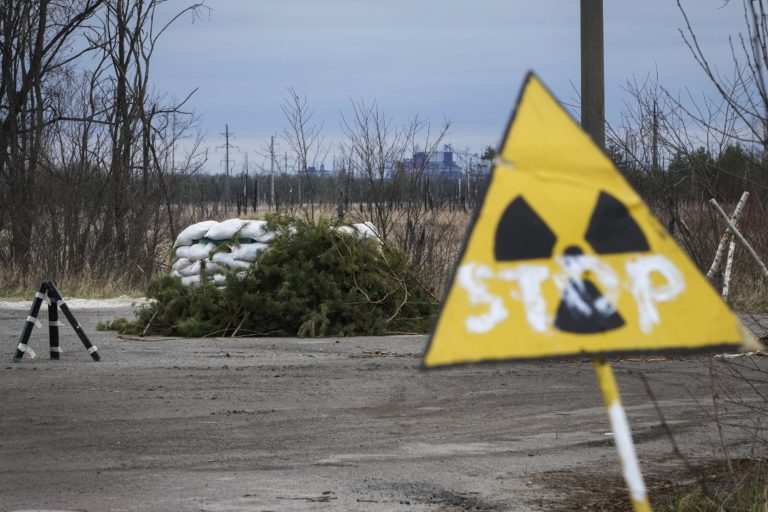
Thousands of tanks and troops rumbled into the forested Chernobyl exclusion zone in the earliest hours of Russia’s invasion of Ukraine in February, churning up highly contaminated soil from the site of the 1986 accident that was the world’s worst nuclear disaster.

For more than a month, some Russian soldiers bunked in the earth within sight of the massive structure built to contain radiation from the damaged Chernobyl nuclear reactor. A close inspection of their trenches was impossible because even walking on the dirt is discouraged.

As the 36th anniversary of the April 26, 1986, disaster approaches and Russia’s invasion continues, it’s clear that Chernobyl — a relic of the Cold War — was never prepared for this.

With scientists and others watching in disbelief from afar, Russian forces flew over the long-closed plant, ignoring the restricted airspace around it. They held personnel still working at the plant at gunpoint during a marathon shift of more than a month, with employees reportedly sleeping on tabletops and eating just twice a day.

Even now, weeks after the Russians left, “I need to calm down,” the plant’s main security engineer, Valerii Semenov, told The Associated Press. He worked 35 days straight, sleeping only three hours a night, rationing cigarettes and staying on even after the Russians allowed a shift change.

“I was afraid they would install something and damage the system,” he said in an interview.

Workers kept the Russians from the most dangerous areas, but in what Semenov called the worst situation he has seen in his 30 years at Chernobyl, the plant was without electricity, relying on diesel generators to support the critical work of circulating water for cooling the spent fuel rods.

“It was very dangerous to act in this way,” said Maksym Shevchuck, the deputy head of the state agency managing the exclusion zone. He was scared by it all.

Russia’s invasion marks the first time that occupying a nuclear plant was part of a nation’s war strategy, said Rebecca Harms, former president of the Greens group in the European Parliament, who has visited Chernobyl several times. She called it a “nightmare” scenario in which “every nuclear plant can be used like a pre-installed nuclear bomb.”

A visit to the exclusion zone, more desolate than usual, found that the invasion risked a catastrophe worse than the original explosion and fire at Chernobyl that sent radioactive material into the atmosphere and became a symbol of the Soviet Union’s stumbling final years. Billions of dollars were spent by the international community, including Russia, to stabilize and secure the area.

Now authorities are working with Ukraine’s defense ministry on ways to protect Chernobyl’s most critical places. At the top of the list are anti-drone systems and anti-tank barriers, along with a system to protect against warplanes and helicopters.

None of it will matter much if Russian President Vladimir Putin resorts to nuclear weapons, which Shevchuck says he can’t rule out anymore.

“I understand they can use any kind of weapon and they can do any awful thing,” he said.

Chernobyl needs special international protection with a robust U.N. mandate, Harms said. As with the original disaster, the risks are not only to Ukraine but to nearby Belarus and beyond.

“It depends from where the wind blows,” she said.

After watching thousands of Soviet soldiers work to contain the effects of the 1986 accident, sometimes with no protection, Harms and others were shocked at the Russian soldiers’ disregard for safety, or their ignorance, in the recent invasion.

Some soldiers even stole highly radioactive materials as souvenirs or possibly to sell.

“I think from movies they have the imagination that all dangerous small things are very valuable,” Shevchuck said.

He believes hundreds or thousands of soldiers damaged their health, likely with little idea of the consequences, despite plant workers’ warnings to their commanders.

“Most of the soldiers were around 20 years old,” he said. “All these actions proves that their management, and in Russia in general, human life equals like zero.”

The full extent of Russia’s activities in the Chernobyl exclusion zone is still unknown, especially because the troops scattered mines that the Ukrainian military is still searching for. Some have detonated, further disturbing the radioactive ground. The Russians also set several forest fires, which have been put out.

In normal times, about 6,000 people work in the zone, about half of them at the nuclear plant. When the Russians invaded, most workers were told to evacuate immediately. Now about 100 are left at the nuclear plant and 100 are elsewhere.

Another Ukrainian nuclear plant, at Zaporizhzhia in southeastern Ukraine, remains under Russian control. It is the largest in Europe.

Shevchuck, like other Ukrainians, has had it with Putin.

“We’re inviting him inside the new safe confinement shelter,” he said. “Then we will close it.”

Adapted from reporting by the Associated Press