Flash Cards Depicting LGBT Themes Used to Indoctrinate NC Preschoolers

(Molly Bruns, Headline USA) Flash cards featuring a LGBT themes, including a pregnant man (or possibly a severe beer gut), were found in a North Carolina preschool classroom.

The incident was revealed in a press release from Rep. Tim Moore, the Republican speaker of the North Carolina House of Representatives, the Western Journal reported.

Republican state Rep. Erin Paré was alerted to this via an email from a concerned parent.

“This week, Rep. Erin Paré (R-Wake) received an email from a concerned constituent alerting her to the use of LGBTQIA+ themed flash cards, including a card with the depiction of a pregnant man, to teach colors to children in a preschool class at Ballentine Elementary School,” Moore’s release said.

After receiving the email Paré alerted the principal of the school about use of inappropriate material targeting small children.

“The principal found the stack of cards in a preschool classroom and verified with the teacher that they had been used by the teacher in the classroom to teach colors,” she said.

The principal was unaware the cards were being used and confirmed that they were not a part of the approved curriculum.

The Wake County School District also released a statement saying they are investigating the incident and the flashcards were removed from the school as they “did not complement, enrich, or extend the curriculum.”

Paré commended the district for its swift reaction, and restated that schools should not be using inappropriate materials like these to teach small children.

“Schools should only be using age-appropriate materials, and these flashcards clearly do not meet that standard for a pre-school classroom,” Paré said.

“I hope schools across Wake County and the State of North Carolina will follow the example of Ballentine and respond swiftly when a parent expresses concern and ensure that materials like this are not being used to teach young students,” she added.

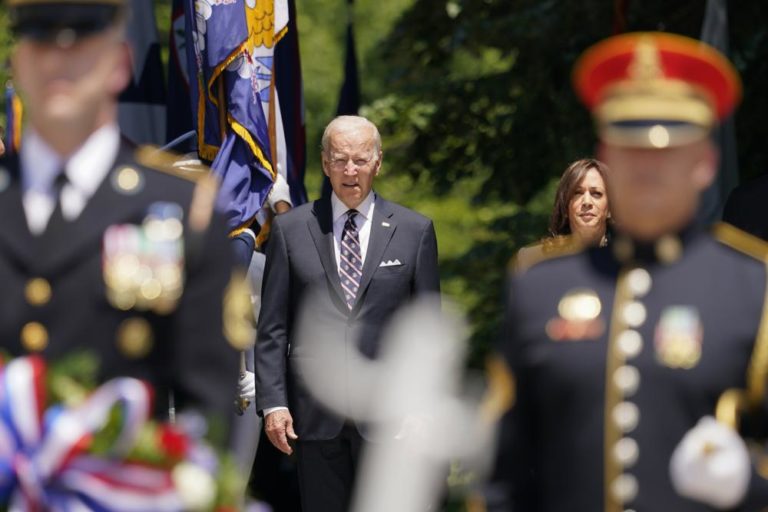
Biden Insults Democracy at Arlington Ceremony on Memorial Day

(Jacob Bruns, Headline USA) President Joe Biden insulted one of his most sacred objects of veneration earlier this week, suggesting that the Left’s beloved ‘democracy’ has never been a good form of government.

In a scattered and incoherent Memorial Day address, Biden stumbled through a series of mishaps, some of which seemed to reveal his true opinions, the Western Journal reported.

Biden began by noting that he sees in the world a “perennial struggle for democracy and freedom,” referring to the ongoing skirmish between Russia and Ukraine.

The president continued to suggest that democracy has always been a failure, but a failure worth fighting for, and possibly even dying for.

“Ladies and gentlemen, today we remember and we reaffirm: Freedom is worth the sacrifice. Democracy is not perfect; it’s never been good — perfect.  But it’s worth fighting for; if necessary, worth dying for,” he said.

Democracy, which he had just noted has “never been good,” is also central to America as a nation, according to Biden. The implications are obvious, but it is strange nonetheless that Biden used his Memorial Day speech to suggest that America has never been so good.

“It’s more than just our form of government, it is part of the very soul of America. The soul of America,” he continued.

Later in the speech Biden felt compelled to define democracy. According to the president, it is characterized by “the rule of law, free and fair elections, freedom to speak and write and to assemble, freedom to worship as one chooses, freedom of the press — principles that are essential for a free society” — several of which he and his administration have completely ignored.

Most recently, Biden has railed against gun ownership in America, even the ownership of 9 mm guns.

“The idea you need a weapon that can have the ability to fire 20, 30, 40, 50, 120 shots from that weapon, whether it’s a 9mm pistol or whether it’s a rifle, is ridiculous. I’m continuing to push to eliminate the sale of those things,” he said.

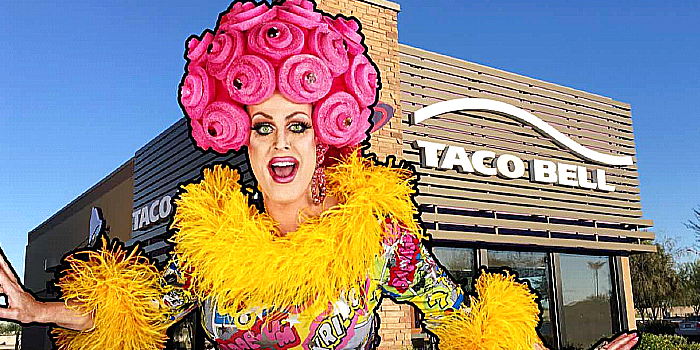
Taco Bell Partners w/ Groomer Org. to Host Drag Queen Brunches

(Molly Bruns, Headline USA) Taco Bell has announced that they will be hosting “drag queen brunches” at their locations to celebrate the LGBT community and create an “immersive fan experience,” giving new meaning to a fast-food run for the border.

In a statement, Taco Bell also said they want to “further its mission to break down barriers to [LGBT] education” by partnering with the It Gets Better Project.

The It Gets Better Project targets young children, Big League Politics reported.

The company also discussed the “Live Más Pride Employee Resource Group,” which is an internal group that funds events such as drag queen brunch to “elevate the voices, stories and experiences of its community both internally and externally.”

Taco Bell hosted its premiere drag queen brunch in Chicago, which was given glowing reviews and excessive adulation by the New York Times:

“As drag brunch came to a close at a Mexican restaurant here last Sunday, the performers conga-lined their way through the crowd of about 40 party people who were just this side of tipsy on Brunch Punch.”

“But this was no standard drag brunch,” the outlet continued. “It was a Taco Bell Drag Brunch. And that wasn’t a microphone in the lead queen’s hand; it was a Grande Toasted Breakfast Burrito.”

The fast-food chain wasn’t entirely politically correct, however, butchering the spelling of ‘quesadilla’ for woke affect.

“That queen—a Mexican American performer called Kay Sedia (pronounced quesadilla)—was the M.C. at a Taco Bell Cantina down the block from Wrigley Field, wearing a frilly, skintight frock with the Taco Bell logo on the belly.”

The entire country is waiting with bated breath for the excessive cringe of Pride month, which starts on June 1.

Many big-name brands, such as The North Face and Target, have announced initiatives to increase gay engagement.


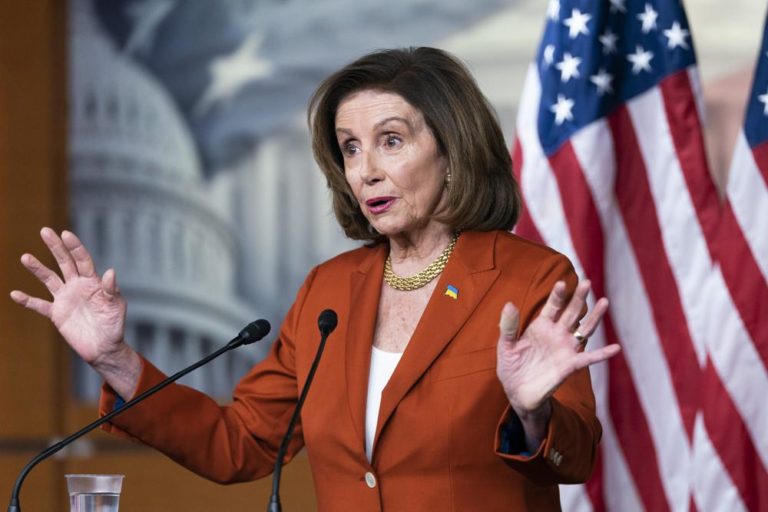
Pelosi Distances Herself from Hubby as DUI Details Emerge

(Jacob Bruns, Headline USA) House Speaker Nancy Pelosi, D-Calif., appeared to throw her disgraced husband under the bus by distancing herself—rhetorically and physically—from his arrest on Saturday for drunken driving.

“The Speaker will not be commenting on this private matter which occurred while she was on the East Coast,” her spokesman, Drew Hammill, said in a statement, according to the Western Journal. 

Paul Pelosi was arrested on Saturday night after he crashed his Porsche into another motorist driving a Jeep in Napa Valley—the heart of wine country–where the Pelosis own a vineyard.

Neither driver was hurt, but Paul Pelosi was brought in by the police under suspicion of driving under the influence.

According to Just the News, Pelosi will be charged with two misdemeanors: one for driving while under the influence, and another for driving while under the legal Blood Alcohol Content limit of 0.08%.

He has had run-ins with the law in the past, especially regarding drinking while driving.

In 2018, he was arrested and subsequently put on probation for “alcohol-related reckless driving.”

Many, including Rep. Lauren Boebert, R-Colo., took to Twitter to reprimand Mr. Pelosi for his endangering and reckless actions.

Some pointed to the fact that Pelosi—an extraordinarily wealthy multinational hedge-fund investor—decided to endanger his fellow citizens rather than simply call a cab.

Speaker Pelosi has regularly faced criticism for the perception that she puts herself above the common person, particularly during recent coronavirus restrictions.

She was slammed for having a hair appointment as others were banned from doing so, for attending several luxurious super-spreader events where she remained unmasked, and for saying that her favorite way to decompress was with pints of designer ice cream outside the budgets of most Americans.

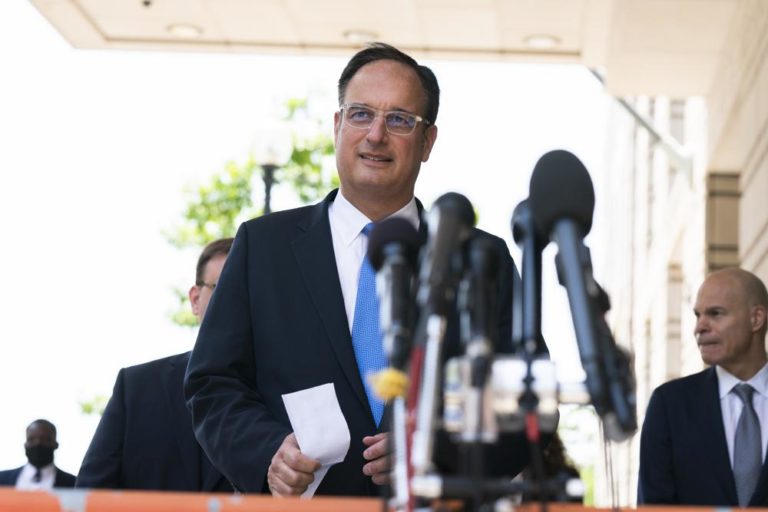
Pro-Clinton Jury Gives Democrat Bagman Michael Sussmann a Free Pass

(Dmytro “Henry” Aleksandrov, Headline USA) A jury stacked with Hillary Clinton campaign donors ignored what most legal experts considered “overwhelming” evidence of guilt and returned an earlier-than-expected verdict that gave Democrat bagman Michael Sussmann a free pass on a charge of lying to the FBI.

Special counsel John Durham mounted a comprehensive case against Sussmann that showed through damning testimony and mountains of evidence that Sussmann lied to the FBI about his colluding with the Clinton 2016 presidential campaign to promote the now debunked Russia hoax fable.

“Unsurprising,” Mike Davis, former chief counsel for nominations, U.S. Senate Committee on the Judiciary, tweeted after the verdict.

“The evidence made crystal clear Sussman (sic) was guilty as sin. But jury nullification by a biased DC jury. After a trial run by a biased DC judge.”

While the pro-Clinton jury returned a verdict favorable to their ringleader, the trial might yet put a dent in the Clinton Cabal armor and is likely to help future prosecutions into the Original Deplorable‘s scheme

Former Attorney General William Barr said that Durham is in the process of uncovering “seditious” activity that would be the evidence of Clinton trying to undermine Donald Trump’s candidacy and presidency.

“The trial of Democratic cybersecurity lawyer Michael Sussmann has shown how Hillary Clinton’s 2016 presidential campaign and its allies spread theories tying rival Donald Trump to Russia in the final months of the election, providing evidence for … a so-called Russiagate plot to undermine Trump’s candidacy and later his presidency,” according to The Washington Examiner.

Barr said that he became an attorney general because he believed that there will be a constitutional crisis. He took charge of the Justice Department in February of 2019 to oversee Robert Mueller’s “Trump-Russia findings” and appointed Durham to investigate the collusion between Russia and Trump that was called a “witch hunt” by Trump himself.

“I think whatever you think of Trump, the fact is that the whole Russiagate thing was a grave injustice,” Barr told BlazeTV.

“It appears to be a dirty political trick that was used first to hobble him and then potentially to drive him from office.”

He said that he also believes it was seditious, citing 18 U.S. Code § 2384 – Seditious conspiracy. However, he added that the court will determine the criminality, which it failed to do in spectacular fashion.

Aside from Sussmann, and a revelation of Robby Mook, the campaign manager for Clinton in 2016, who said that Clinton “personally signed off on sharing since-debunked Trump-Russia allegations related to Alfa-Bank with the media during the election,” there is also something else, according to Examiner.

Durham also has a case against a key source for Christopher Steele’s anti-Trump now-discredited dossier.

“Research for the now-discredited dossier was funded by the Democratic National Committee and Clinton’s 2016 campaign,” the Examiner reported. “The two were fined by the Federal Election Commission for not properly disclosing those expenditures.”

Former FBI lawyer Kevin Clinesmith also admitted to Durham that he altered an email about a Trump campaign aide under the government surveillance, the Examiner said.

Barr suggested that these allegations had worldwide consequences, including the current war between Russia and Ukraine.

“It was a gross injustice, and it hurt the United States in many ways, including what we’re seeing in Ukraine these days. It distorted our foreign policy, and so forth,” he said.

Graduating Senior Holds Signing Ceremony for Plumber Apprenticeship

(Molly Bruns, Headline USA) Who has greater value to society: elite, college-bound athletes or the plumbers who help them unclog their toilets?

As a growing number of people begin to question the purpose and benefit of increasingly woke university indoctrination centers, one high-schooler found a lighthearted way to call attention to the heady issue, while celebrating his oft-unheralded career path, where a six-figure salary is nonetheless within reach.

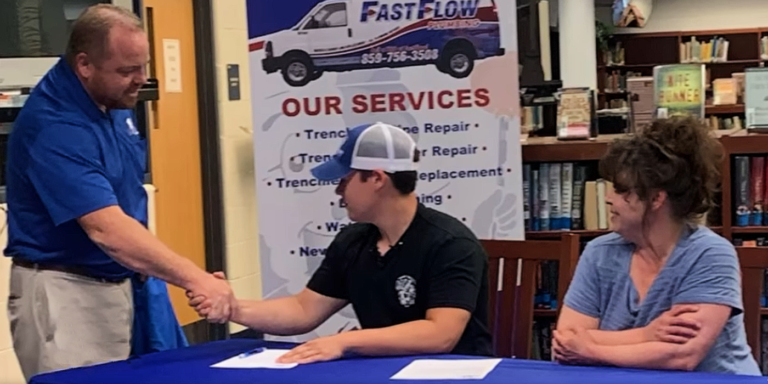
Jacob Bradley, a senior at a Kentucky high school, held a ceremony, signing a letter of intent to join the plumbing industry, Lexington’s Fox 56 reported.

At Montgomery County High School, Bradley signed the letter in agreement to join Fast Flow Plumbing and begin his apprenticeship.

“I never really wanted to be an accountant or sit down. I enjoy working with my hands a lot,” said Bradley.

His proud mother was present at the ceremony as well

“His dad and I are just over the moon,” said Angie. “He’s a great kid. We are very lucky to have him.”

Bradley has experience fixing water pipes, electrical sockets and more around the hosue with the help of his dad. He has worked part-time for Fast Flow Plumbing while enrolled in the high school’s co-op program.

Bradley got started at Fast Flow after meeting Ben Crum, vice president of the company, at a career fair. He has been committed to the idea of becoming a plumber ever since.

As an apprentice, Bradley will study under the tutelage of a master plumber for two years, after which he will take his first exam to get a journeyman’s license.

“We are willing to invest in anyone that comes to us,” said Crum. “We want to make sure they have the opportunity in two years to get their journeyman’s license.”

The plumbing industry is looking for recruits. It is estimated that nearly 80,000 plumbers will be retiring in 10 years, and the industry is already in high enough demand that most would be willing to take on apprentices.

On average, journeyman plumber’s earn between $40,000 and $120,000 per year. In Kentucky, the average plumbing company grosses more than $1,000,000 per year.

Even a decade from now, Bradley still sees himself plumbing.

“Maybe I’ll be a Fast Flow Plumbing franchise owner,” he said.

Journalist Confronts Beto O’Rourke for ‘Exploiting Dead Kids’

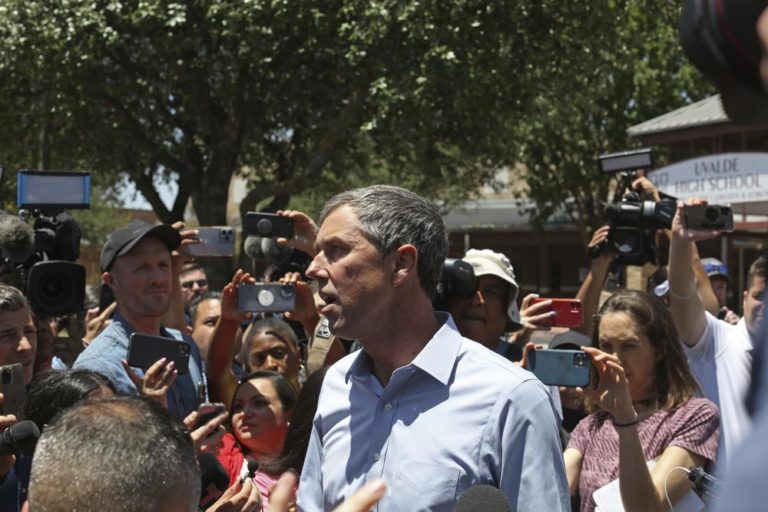
(Molly Bruns, Headline USA) Drew Hernandez, a reporter for Frontline, confronted failed Texas Senate candidate and all-round shameless race huckster Robert Francis O’Rourke over his exploitation of the Uvalde shooting to shill for gun control and “further” his campaign.

O’Rourke, who famously said “hell yes, we are going to take your AR-15,” crashed a news conference after the shooting to give a stump speech to Gov. Greg Abbot and other Texas officials.

“Hey Beto, how do you feel exploiting dead kids? How do you feel exploiting dead kids? Do you care?” Hernandez asked O’Rourke, who has camped outside of the NRA Conference in Houston to yell at freedom-loving gun owners, according to National File.

O’Rourke is in the middle of a campaign to be governor of Texas, challenging incumbent Abbot.

“The parents in Uvalde said they didn’t want you there!” Hernandez told O’Rourke.

“What do you say to the parents I talked to yesterday in Uvalde who said they didn’t want you there? They didn’t want you to do that Beto, they didn’t want you to exploit dead kids Beto!”

Beto did not make eye contact with Hernandez, nor did he make any attempt to defend his actions.

Twitter users came out in support of Hernandez’s attempt to get answers:

Democrat Voters Helping RINOs Block Trump Candidates in GOP Primaries

(Headline USA) Diane Murray struggled with her decision all the way up to Election Day.

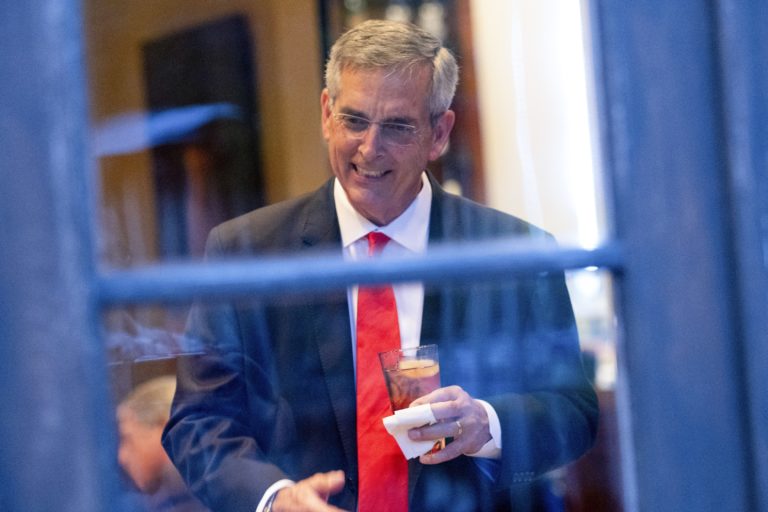
But when the time came, the 54-year-old Georgia Democrat cast a ballot in last week’s Republican primary for Secretary of State Brad Raffensperger.

While state law allowed her to participate in either party’s primary, she said it felt like a violation of her core values to vote for the Republican. But it had to be done, she decided, to prevent a Donald Trump -backed “election denier” from becoming the battleground state’s election chief.

“I feel strongly that our democracy is at risk, and that people who are holding up the big lie, as we call it, and holding onto the former president are dangerous to democracy,” said Murray, who works at the University of Georgia. “I don’t know I’ll do it again because of how I felt afterward. I just felt icky.”

Raffensperger—a China-compromised RINO (or possibly a Democrat plant) who was complicit in a consent agreement that undermined the state’s election-integrity laws and then refused to investigate credible evidence of vote fraud during the 2020 election—probably would not have won the May 24 Republican primary without people like Murray.

An Associated Press analysis of early voting records from data firm L2 found that more than 37,000 people who voted in Georgia’s Democratic primary two years ago cast ballots in last week’s Republican primary, an unusually high number of so-called crossover voters.

Even taking into account the limited sample of early votes, the data reveal that crossover voters were consequential in defeating Trump’s hand-picked candidates for secretary of state and, to a lesser extent, governor.

Gov. Brian Kemp did not ultimately need Democrats in his blowout victory against his Trump-backed opponent, but Raffensperger probably did.

The Republican secretary of state cleared the 50% threshold required to avoid a runoff election by just over 27,000 votes, according to the latest AP tallies.

Based on early voting data alone, 37,144 former Democrats voted in the Republican primary. The total number of crossovers including Election Day votes, set to be revealed in the coming weeks, may be even higher.

Crossover voting, also known as strategic voting, is not exclusive to Georgia this primary season as leftist voters across the political spectrum work to stop Trump-backed candidates from winning control of state and federal governments.

The phenomenon is playing out in multiple primary contests, sometimes organically and sometimes in response to a coordinated effort by Trump’s opponents.

While Trump railed against the practice over the weekend, there is nothing inherently wrong with crossover voting in states that do not have closed primaries. Dozens of states make it legal and easy for voters to participate in either party’s primary. And there are several isolated incidents of both parties engaging in strategic voting over the years.

Still, Trump warned conservatives about crossover voting while campaigning Saturday in Wyoming, another state where the former president’s opponents are calling for Democrats to intervene—this time to help save Rep. Liz Cheney from a Trump-backed primary challenger.

Cheney is currently trailing challenger Harriet Hageman by around 30% in polls, but the leftist shenanigans could result in a curveball comeback.

“Don’t let the Democrats do what they did in another state last week,” Trump told Wyoming supporters, complaining about what happens “when you allow Democrats to vote in a Republican primary.”

While the practice has Trump’s attention, it is often ineffective.

After Trump’s opponents encouraged Democrats to help defeat U.S. Rep. Marjorie Taylor Greene in her Georgia primary last week, the popular MAGA-supporting congresswoman won by more than 50 percentage points.

And in some cases, Democrats have been too focused on their own competitive primaries to cast a Republican ballot. That was probably the case in Pennsylvania, where some Democrats openly encouraged their base to vote for the Republican candidate for governor, Doug Mastriano, thinking his support for Trump and role in pushing investigations of vote fraud made him more beatable in November versus the deeply corrupt state attorney general, Josh Shapiro.

To cast a ballot in the May 17 GOP primary, however, voters needed to register as Republicans ahead of the contest because Pennsylvania has a “closed primary” system. And on the same day, Democrats were deciding their own high-stakes Senate primary.

If the advance vote in Pennsylvania is any indication, few Democrats heeded the call to vote GOP.

Of Republican primary voters who cast early or absentee ballots this year, only 1.7% voted Democratic in the 2020 primary. Those 2,600 votes, even if ultimately bolstered by more Election Day participants, were unlikely to have moved the needle in an outcome in which Mastriano beat his closest rival by nearly 320,000.

On the forefront of the crossover movement, RINO Rep. Adam Kinzinger of Illinois, cast out of his own party in disgrace and forced into retirment by gerrymandering Democrats, has called for an “uneasy alliance” to take down pro-Trump candidates in GOP primaries whenever and wherever possible.

Some states have open primaries like Georgia that allow people to vote in either primary, while other states have more restrictive rules.

In an interview, Kinzinger said he was pleasantly surprised by the Democrats’ response in some races. He said he never expected the movement to be an “earth-shattering game-changer” right away.

Kinzinger’s political organization, Country First, targeted thousands of former Georgia Democrats with mailers and text messages urging them to support Raffensperger for the sake of democracy.

A Country First text message widely distributed to Georgia voters in the days before the election read: “Don’t wait for until the general election to go after the extremes. Vote in the Republican Primary for the candidate that supports truth and democracy.”

Kinzinger’s team was also active in North Carolina’s closely watched congressional race in North Carolina’s 11th District, where voters ousted pro-Trump freshman Rep. Madison Cawthorn in the Republican primary.

As was the case in Georgia, the AP found a sizable percentage of Republican early ballots were cast by voters who participated in the Democratic primary two years ago.

Specifically, more than 14% of the 38,000 early or absentee votes cast in the Cawthorn race—more than 5,400 voters—came from a Democratic 2020 primary voter.

Cawthorn lost his primary by fewer than 1,500 votes.

Back in Georgia, Raffensperger’s team pushed back on the idea that he won the GOP primary because of Democrats. The team suggested that a number of crossover voters were actually Republicans who voted Democratic in recent years to protest Trump.

“It is clear that Brad Raffensperger carried a majority of the Republican vote here in the state of Georgia, and that there are people who stopped voting in Republican primaries after 2016 who are now reengaged,” said Jordan Fuchs, a consultant to the Raffensperger campaign.

Fuchs, also a NeverTrumper, notoriously leaked the private conversation in which Trump appealed to Raffensperger to investigate vote fraud, fueling leftist media calls for Trump’s second impeachment even before the Jan. 6 uprising became a convenient pretense.

An AP examination of voting records from before the Trump era shows at least a portion of Georgia’s 37,000 party switchers in 2022 had been in the Republican camp before Trump took office. Roughly between 9,000 to 13,000 voted Republican in the 2010, 2012 and 2014 primaries, according to the L2 data.

Trump allies in the state, caught off guard by the crossover trend, were furious.

“It was a Democratic version of ‘Operation Chaos,’” said Debbie Dooley, president of the Atlanta Tea Party, referring to a similar stunt promoted by Rush Limbaugh during the 2008 race between Barack Obama and Hillary Clinton. “I did not realize just how heavily the Democrats were going to cross over.”

Dooley launched a petition late last week to close Georgia’s Republican primaries to non-Republicans. More than a dozen states have closed, or partially closed, primaries that block members of opposing parties from participating.

Meanwhile, Kinzinger said he’s already crafting plans to execute a similar playbook in coming primaries in Michigan, Wyoming and Alaska.

In addition to helping Sen. Lisa Murkowski, the Alaska Republican who voted to convict Trump in his second impeachment trial, Kinzinger said he’s weighing whether to invest resources in trying to block former Gov. Sarah Palin’s congressional bid.

“Donald Trump came in and took over the Republican Party with nationalism,” Kinzinger said. “The American people have every right to determine who represents them in a congressional district, and if that’s in a primary, that’s in a primary. If they want to take back the Republican Party from the liar, they can do that, and I’m certainly going to help them.”

Adapted from reporting by the Associated Press

Desperate to Stop Industry Exodus, Calif. Considers Major Tax Cuts

(The Center Square) A bill that would provide a full sales and use tax exemption for purchases of manufacturing and research and development equipment up to $200 million was advanced by Assembly lawmakers.

The bill, which passed the Assembly in a 74-0 vote, expands California’s existing partial sales and use tax exemption for manufacturing and research and development equipment to a full exemption for a period of five years.

Nationwide, California has the highest state sales tax rate in the U.S. After accounting for local rates, sales and use tax rates in California can reach 10.75%, according to the text of the bill. Thirty-eight states provide a full exemption from sales and use tax for manufacturing equipment, the bill notes.

The bill passed the Assembly last week.

With only the state’s existing partial tax exemption for manufacturing and research and development equipment, “taxpayers pay more to buy equipment in California than they would elsewhere, creating a competitive disadvantage for the state,” according to the bill.

Supporters of the bill said enacting a full exemption will help to maintain California’s status as a hub for innovation and keep manufacturing jobs within the state. 

“Within the California economy, manufacturing plays a crucial and essential role, supporting high wage jobs and small businesses,” Assemblymember Tim Grayson, the bill’s author, said in a statement. “AB 1951 will incentivize long-term investments and fuel growth in the manufacturing industry in California by providing a full state and local sales and use tax exemption for the purchase of manufacturing equipment.”

Under existing law, a person can receive a partial sales and use and tax exemption for qualified “tangible personal property” that is used primarily for manufacturing and research and development. The exemption is limited to $200 million in qualified purchases in a single calendar year and is set to expire July 1, 2030.

The new measure passed last week would slightly alter this provision by providing a full exemption for purchases of up to $200 million from Jan. 1, 2023, to Jan. 1, 2028. After the five years are up, the state would revert back to the partial exemption until 2030.

Supporters of the bill said the measure would advance innovation and maintain manufacturing jobs within California. Robert Gutierrez, president of the California Taxpayers Association—a co-sponsor of the legislation—said that the bill “will lead to more California-made products on store shelves” and support workers statewide.

Manufacturing jobs currently employ about 1.3 million people in California, and every one manufacturing job “supports at least 2.5 other jobs,” the California Chamber of Commerce said in a statement.

“AB 1951 sends an important message: California is serious about retaining and attracting high-quality jobs and production,” Preston Young, CalChamber policy advocate, said in a statement.

According to a fiscal analysis of the bill, about $695,000 annually would not be added to the state’s coffers due to additional taxpayers “that did not utilize the partial exemption now utilizing the full exemption.” Additionally, local government revenue loss is anticipated to total $533 million for the “change in taxpayer behavior.”

Concerns about the proposal’s ability to “erode the sales tax base” was among the reasons cited for opposition from the League of California Cities. In a statement, the organization praised the intent of the measure, but recommended utilizing the state’s surplus to invest in manufacturing.

“While we support California’s manufacturing economy, local governments can ill afford additional erosion of sales and use tax revenues,” the organization wrote in opposition. “Instead, the Legislature should use the historic state budget surplus to invest in California’s manufacturing economy, incentivize innovation, and spur a manufacturing marketplace that is competitive with nation-wide.”

The measure is now in the Senate Rules Committee. 

Philly Schools Need Nearly $2B in Fed. COVID Funds to Offset Bad Budgeting

(T, The Center Square) The Philadelphia public school district is relying on $1.8 billion of the federal government’s emergency COVID-19 funding to stay out of a deficit.

The district’s audited budget said the one-time COVID-19 relief money is expected to keep the district out of the red through fiscal year 2025.

The school district received $6,941 per pupil in the three rounds of federal funding that came between May 2020 and March 2021. School districts with more low-income students received far more federal relief funding.

“Fiscal Year 2022 is projected (based upon the amended budget) to have a positive operating fund balance of $283.9 million due to the federal stimulus funds from the pandemic,” the district stated in its 2021 audited budget. “Federal stimulus money and the return of higher levels of local tax revenues is projected to allow the District to maintain a positive fund balance through Fiscal Year 2025.”

Efforts were unsuccessful to get the district to comment on the impact of the federal pandemic stimulus on its budget.

The federal pandemic relief funding is weighted to favor of districts with a higher percentage of low-income students. Philadelphia was not the only district to benefit from that funding formula. Pittsburgh’s public school district received $124.8 million in the same three rounds of emergency funding, or $6,203 per pupil.

However, just 15 miles down the road, the more affluent community that hosts North Allegheny saw that school district get $1.6 million from the three rounds of federal funding, or $190 per pupil, about $6,000 less per pupil than Pittsburgh. The affluent Pittsburgh suburbs that are home to Seneca Valley School District received $2.8 million in total federal emergency funding, or $372 per pupil.

Six school districts filed a lawsuit against the state in 2014 claiming that poorer community school districts have less money per pupil than wealthier communities school districts. The six school districts in the lawsuit received per pupil funding that ranged from $3,343 per pupil to $10,263 per pupil in the three rounds of federal funding.

The six districts in the lawsuit are Panther Valley ($3,343 per pupil), William Penn ($4,246 per pupil), Wilkes-Barre ($4,982 per pupil), Lancaster ($5,224 per pupil), Shenandoah Valley ($5,640 per pupil) and Greater Johnstown ($10,263 per pupil).