Microsoft Officially Retires Internet Explorer Web Browser

(Headline USA) Internet Explorer is finally headed out to pasture.

As of Wednesday, Microsoft will no longer support the once-dominant browser that legions of web surfers loved to hate—and a few still claim to adore.

The 27-year-old application now joins BlackBerry phones, dial-up modems and Palm Pilots in the dustbin of tech history.

IE’s demise was not a surprise. A year ago, Microsoft said that it was putting an end to Internet Explorer on June 15, 2022, pushing users to its Edge browser, which was launched in 2015.

The company made clear then it was time to move on.

“Not only is Microsoft Edge a faster, more secure and more modern browsing experience than Internet Explorer, but it is also able to address a key concern: compatibility for older, legacy websites and applications,” Sean Lyndersay, general manager of Microsoft Edge Enterprise, wrote in a May 2021 blog post.

Users marked Explorer’s passing on Twitter, with some referring to it as a “bug-ridden, insecure POS” or the “top browser for installing other browsers.”

For others it was a moment for ’90s nostalgia memes, while the Wall Street Journal quoted a 22-year-old who was sad to see IE go.

Microsoft released the first version of Internet Explorer in 1995, the antediluvian era of web surfing dominated by the first widely popular browser, Netscape Navigator.

Its launch signaled the beginning of the end of Navigator: Microsoft went on to tie IE and its ubiquitous Windows operating system together so tightly that many people simply used it by default instead of Navigator.

The Justice Department sued Microsoft in 1997, saying it violated an earlier consent decree by requiring computer makers to use its browser as a condition of using Windows. It eventually agreed to settle the antitrust battle in 2002 over its use of its Windows monopoly to squash competitors.

It also tangled with European regulators who said that tying Internet Explorer to Windows gave it an unfair advantage over rivals such as Mozilla’s Firefox, Opera and Google’s Chrome.

Users, meanwhile, complained that IE was slow, prone to crashing and vulnerable to hacks. IE’s market share, which in the early 2000s was over 90%, began to fade as users found more appealing alternatives.

Today, the Chrome browser dominates with roughly a 65% share of the worldwide browser market, followed by Apple’s Safari with 19%, according to internet analytics company Statcounter. IE’s heir, Edge, lags with about about 4%, just ahead of Firefox.

Adapted from reporting by the Associated Press

Musk Drops Hints about Supporting DeSantis in 2024

(Molly Bruns, Headline USA) Tesla CEO and Texas resident Elon Musk recently dropped the bomb that he was voting Republican, but yesterday he hinted that he would support Florida Gov. Ron DeSantis in the 2024 presidential election.

After revealing that he voted Republican for the first time in his life in a special election for Texas’ 34th Congressional District, Musk also expressed the belief that a “massive red wave” is coming, Slay News reported.

Texas’ 34th District has been under Democrat control for nearly four decades, and was won by conservative Mayra Flores.

When prodded by his followers on Twitter, Musk said he was leaning towards DeSantis for president in 2024, but had yet to make a final call.

Many were surprised by this response, as Musk is historically politically moderate.

He was also asked if he would support Andrew Yang, a candidate who Musk threw his weight behind in the last election.

Some asked if he would evenly spread his political donations. Musk said he was considering a “Super Moderate Super PAC,” supporting candidates from all parties and upholding centrist views.

The convsersation came to a close with some asking if Musk was going to become more outspoken about who he supports.

With that and the potential of an upcoming Super PAC, Musk seems poised to step into the political arena.

Biden Taps Fmr. Atlanta Mayor as New Minority-Outreach Czar

(Headline USA) President Joe Biden on Wednesday announced the appointment of former Atlanta Mayor Keisha Lance Bottoms as a top adviser, filling a key White House role at a politically important time in the runup to November elections that could determine the fate of the his agenda.

Bottoms will become director of the White House Office of Public Engagement, adding the advice and counsel of a black woman to Biden’s inner circle. She succeeds Cedric Richmond, a former Louisiana congressman who in April left for a senior role at the Democratic National Committee.

Bottoms joins at a challenging time for the White House, with Biden’s public approval rating at the lowest of his presidency while consumer prices and the cost of gasoline keeps rising, factors that are complicating Democrats’ chances of retaining control of Congress in the November midterm elections.

Biden, in a statement Wednesday, praised Bottoms’s stewardship of her city through the pandemic, a summer of leftist-sanctioned race riots, and through a mass shooting that Democrats claimed targeted six Asian–American women.

“Mayor Bottoms understands that democracy is about making government work for working families, for the people who are the backbone in this country,” he said. “Keisha is bright, honorable, tough and has the integrity required to represent our administration to the American public.”

In her new role, Bottoms will be in regular touch with a range of constituency groups at the local, state and national levels, bringing their feedback to the president.

Bottoms, 52, was an early supporter of Biden’s presidential bid, and was considered as a possible running mate before Biden added then-Sen. Kamala Harris to the ticket.

Bottoms left the mayor’s office in January after serving one term and became a CNN commentator.

Adapted from reporting by the Associated Press

Groomer Org. Recommends Lowering Age for Trans Surgeries, Hormone Treatments

(Headline USA) With apparent callous disregard for the physical and mental health of teens, a leading transgender health association has lowered its recommended minimum age for starting gender transition treatment, including sex hormones and surgeries.

The World Professional Association for Transgender Health said hormones could be started at age 14, two years earlier than the group’s previous advice, and some surgeries done at age 15 or 17, a year or so earlier than previous guidance. The group acknowledged potential risks but said it is unethical and harmful to withhold early treatment.

Critics contend the only unethical and harmful aspects come from mutilating children, with risky surgeries and medications that can for years have detrimental physical and mental ramifications.

Texas is among several states fighting to ban the horrendous practice for children, although the state has faced considerable backlash and lawsuits from leftists.

The association provided The Associated Press with an advance copy of its update ahead of publication in a medical journal, expected later this year. The international group promotes evidence-based standards of care and includes more than 3,000 doctors, social scientists and others involved in transgender health issues.

The update is based on expert opinion and a review of scientific evidence on the benefits and harms of transgender medical treatment in teens whose gender identity doesn’t match the sex they were assigned at birth, the group said. Such evidence is limited but has grown in the last decade, the group said, with studies suggesting the treatments can improve psychological well-being and reduce suicidal behavior.

The so-called evidence has come under fire as being unreliable and biased, in some cases pushed by drug companies that have significant financial interests in the transitioning business.

Starting treatment earlier allows transgender teens to experience physical puberty changes around the same time as other teens, said Dr. Eli Coleman, chair of the group’s standards of care and director of the University of Minnesota Medical School’s human sexuality program.

But he stressed that age is just one factor to be weighed. Emotional maturity, parents’ consent, longstanding gender discomfort and a careful psychological evaluation are among the others.

“Certainly there are adolescents that do not have the emotional or cognitive maturity to make an informed decision,” he said. “That is why we recommend a careful multidisciplinary assessment.”

Some leading experts, including some from within the transgender treatment community, say some clinics are too quick to offer irreversible treatment to kids who would otherwise outgrow their gender-questioning.

Psychologist Erica Anderson resigned her post as a board member of the World Professional Association for Transgender Health last year after voicing concerns about “sloppy” treatment given to kids without adequate counseling.

She is still a group member and supports the updated guidelines, which emphasize comprehensive assessments before treatment. But she says dozens of families have told her that doesn’t always happen.

“They tell me horror stories. They tell me, ‘Our child had 20 minutes with the doctor'” before being offered hormones, she said. “The parents leave with their hair on fire.’’

The updated guidelines include recommendations for treatment in adults, but the teen guidance is bound to get more attention. It comes amid a surge in kids referred to clinics offering transgender medical treatment, along with new efforts to prevent or restrict the treatment.

In many cases, government schools are actively promoting transitioning for students and hiding that information from parents. A growing concern is also the ballooning number of teens who are transitioning solely as a warped fashion statement.

Many experts say more kids are seeking such treatment because gender-questioning children are more aware of their medical options and facing less stigma.

Estimates on the number of transgender youth and adults worldwide vary, partly because of different definitions. The association’s new guidelines say data from mostly Western countries suggest a range of between a fraction of a percent in adults to up to 8% in kids.

Anderson said she’s heard recent estimates suggesting the rate in kids is as high as 1 in 5 — which she strongly disputes. That number likely reflects gender-questioning kids who aren’t good candidates for lifelong medical treatment or permanent physical changes, she said.

Still, Anderson said she condemns politicians who want to punish parents for allowing their kids to receive transgender treatment and those who say treatment should be banned for those under age 18.

“That’s just absolutely cruel,’’ she said.

Dr. Marci Bowers, the transgender health group’s president-elect, also has raised concerns about hasty treatment, but she acknowledged the frustration of people who have been “forced to jump through arbitrary hoops and barriers to treatment by gatekeepers … and subjected to scrutiny that is not applied to another medical diagnosis.’’

Gabe Poulos, 22, had breast removal surgery at age 16 and has been on sex hormones for seven years. The Asheville, North Carolina, resident struggled miserably with gender discomfort before his treatment.

Poulos said he’s glad he was able to get treatment at a young age.

“Transitioning under the roof with your parents so they can go through it with you, that’s really beneficial,’’ he said. “I’m so much happier now.’’

In South Carolina, where a proposed law would ban transgender treatments for kids under age 18, Eli Bundy has been waiting to get breast removal surgery since age 15. Now 18, Bundy just graduated from high school and is planning to have surgery before college.

Bundy, who identifies as nonbinary, supports easing limits on transgender medical care for kids.

“Those decisions are best made by patients and patient families and medical professionals,’’ they said. “It definitely makes sense for there to be fewer restrictions, because then kids and physicians can figure it out together.’’

Dr. Julia Mason, an Oregon pediatrician who has raised concerns about the increasing numbers of youngsters who are getting transgender treatment, said too many in the field are jumping the gun. She argues there isn’t strong evidence in favor of transgender medical treatment for kids.

“In medicine … the treatment has to be proven safe and effective before we can start recommending it,’’ Mason said.

Experts say the most rigorous research — studies comparing treated kids with outcomes in untreated kids — would be unethical and psychologically harmful to the untreated group.

The new guidelines include starting medication called puberty blockers in the early stages of puberty, which for girls is around ages 8 to 13 and typically two years later for boys. That’s no change from the group’s previous guidance. The drugs delay puberty and give kids time to decide about additional treatment; their effects end when the medication is stopped.

The blockers can weaken bones, and starting them too young in children assigned males at birth might impair sexual function in adulthood, although long-term evidence is lacking.

The update also recommends:

—Sex hormones — estrogen or testosterone — starting at age 14. This is often lifelong treatment. Long-term risks may include infertility and weight gain, along with strokes in trans women and high blood pressure in trans men, the guidelines say.

—Breast removal for trans boys at age 15. Previous guidance suggested this could be done at least a year after hormones, around age 17, although a specific minimum ag wasn’t listed.

—Most genital surgeries starting at age 17, including womb and testicle removal, a year earlier than previous guidance.

The Endocrine Society, another group that offers guidance on transgender treatment, generally recommends starting a year or two later, although it recently moved to start updating its own guidelines. The American Academy of Pediatrics and the American Medical Association support allowing kids to seek transgender medical treatment, but they don’t offer age-specific guidance.

Dr. Joel Frader, a Northwestern University a pediatrician and medical ethicist who advises a gender treatment program at Chicago’s Lurie Children’s Hospital, said guidelines should rely on psychological readiness, not age.

Frader said brain science shows that kids are able to make logical decisions by around age 14, but they’re prone to risk-taking and they take into account long-term consequences of their actions only when they’re much older.

Coleen Williams, a psychologist at Boston Children’s Hospital’s Gender Multispecialty Service, said treatment decisions there are collaborative and individualized.

“Medical intervention in any realm is not a one-size-fits-all option,” Williams said.

Adapted from reporting by the Associated Press

McConnell Signals Support for RINO Gun Deal in Senate

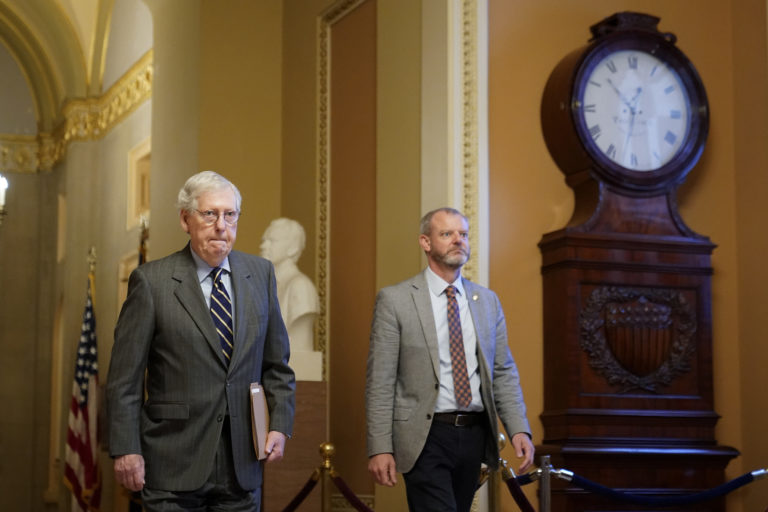
(Headline USA) Senate Minority Leader Mitch McConnell announced his support Tuesday for his chamber’s emerging bipartisan gun agreement, boosting momentum for controversial election-year action by Congress on an issue that has constitutional implications.

Proponents hope that the action to restrict gun rights in the wake of several recent mass-shootings will prove to be a catalyst in ending the more than 30-year deadlock on efforts to rein in the 2nd Amendment.

The Kentucky Republican said he hoped an outline of the accord, released Sunday by 10 Democrats and 10 Republicans, would be translated into legislation and enacted.

McConnell’s backing was the latest indication that last month’s gun massacres in Buffalo, New York, and Uvalde, Texas, had reconfigured the political calculations for some in the GOP after years of steadfastly opposing even incremental tightening of firearms curbs.

Senators and aides seek to translate their broad agreement into legislation in days, in hopes that Congress could approve it before leaving for its July 4 recess

“If this framework becomes the actual piece of legislation, it’s a step forward, a step forward on a bipartisan basis,” McConnell told reporters.

He said the proposal “further demonstrates to the American people” that lawmakers can work together on significant issues “to make progress for the country.”

McConnell’s comments were striking, coming five months before midterm elections in which Republicans hope to win control of the Senate and seem likely to win a majority in the House.

For years, GOP candidates could risk their careers by defying the views of the party’s loyal gun-owning and rural voters, who oppose moves seen as threatening their ownership and use of firearms.

But increasingly, a coalition of RINO candidates has flouted the wishes of its base to negotiate with the far-left Democrat monolith on measures such as increasing government spending—a direct cause of the current inflation crisis.

Of the 10 Republicans who signed on prior to McConnell, five voted to impeach former President Donald Trump for inciting violence on Jan. 6, 2021.

Two of the remaining senators—Rob Portman of Ohio and Roy Blount of Missouri—plan to retire at the end of the current session.

Only Sens. John Cornyn of Texas, Lindsey Graham of South Carolina and Thom Tillis of North Carolina face the prospect of political consequences, and all won re-election in 2020, meaning they will not be held accountable for another four years at best. McConnell is on the same election cycle, having won with support from then-President Trump in his closely contested 2020 race.

Nonetheless, the notorious “Swamp Turtle” seemed to suggest that backing this gun measure might help some Republicans’ prospects in November.

While he maintained that senators should take a position “based upon the views of their states,” he said Cornyn, a chief architect of the deal, presented GOP polling data at a closed-door senators’ lunch claiming support among gun owners for the agreement’s provisions is “off the charts, overwhelming.”

The plan would, for the first time, make the juvenile records of gun buyers under age 21 part of required background checks.

Money would be sent to states for mental health and school-security programs and for incentives to enforce or enact local “red flag” laws that let authorities win court approval to temporarily remove guns from people considered dangerous.

While Republicans widely support the funding of mental health and school security, both red-flag laws and age limits on gun-ownership for legal adults have rightfully garnered pushback as being possible pratfalls aiding an unconstitutional federal gun-grab.

Some Republicans expressed unhappiness with the plan Tuesday. Nineteen states—mostly dominated by Democrats—and the District of Columbia have them, but Republicans have blocked efforts in Congress to pass federal legislation on the subject.

“If we’re not going to pass a federal red flag law, and we shouldn’t, why would we incentivize states to do something that we think is a bad idea?” said Sen. Kevin Cramer, R-N.D.

“I don’t know what we can do in view of the Constitution,” Sen. Richard Shelby, R-Ala., said of the overall agreement.

Cornyn defended the plan’s “red flag” proposal, saying it would create no national requirements for such laws.

He said it gives “every state regardless of whether it has a ‘red flag’ law or not” money for programs aimed at improving public safety and helping troubled people get assistance. Texas, which he represents, does not have a “red flag” law.

McConnell made clear he would only go so far in restricting firearms.

Asked by a reporter why the federal minimum age is 21 for tobacco sales but 18 to buy rifles, he answered, “Good try.”

He added that including state and local juvenile records in background checks for the youngest guy buyers was “a step in the right direction.”

While federal legislation has incrementally reduced the rights of 18- to 20-year-old adults in some cases, citing a lack of sound judgment from their still-developming brains, 18 remains the legal age for voting and for the selective-service draft—two core civic duties that lawmakers are unlikely to restrict anytime soon for self-serving, pragmatic reasons.

A final agreement on overall legislation would be expected to receive solid support from Democrats. But it would need at least 10 GOP votes to reach the Senate’s usual 60 vote threshold, and McConnell’s plaudits raised hopes that Republican backing would grow beyond that.

The framework also broadens the type of domestic abusers who’d be prohibited from buying guns, requires more firearms sellers to conduct background checks and imposes tougher penalties on gun traffickers.

The National Rifle Association said Sunday it wouldn’t take a position on the proposal until full legislation is produced. It warned it would oppose “gun control policies” or infringements on people’s “fundamental right to protect themselves.”

The pro-gun watchdog group still has political muscle from its millions of dedicated members, who vote heavily on firearms issues. But GOP support for the new package is the latest threat to its power following recent internal scandals and lawfare attacks that resulted in a bankruptcy filing.

Approval seems likely by the Democratic-run House, where Speaker Nancy Pelosi, D-Calif., has praised the measure as a first step toward strong restrictions in the future.

Senate Majority Leader Chuck Schumer, D-N.Y., said he would schedule votes on the legislation as soon as it is ready. He contrasted recent days’ progress with Congress’s failure to act after a parade of mass shootings in recent decades.

“After Uvalde and Buffalo, perhaps this time could be different. To many senators on both sides, this debate certainly feels different,” Schumer said.

Congress’ last major gun measure was an assault weapons ban that took effect in 1994 but expired 10 years later.

Adapted from reporting by the Associated Press

Abortion Radicals Plotting ‘Night of Rage’ after ‘Dobbs’ Decision Drops

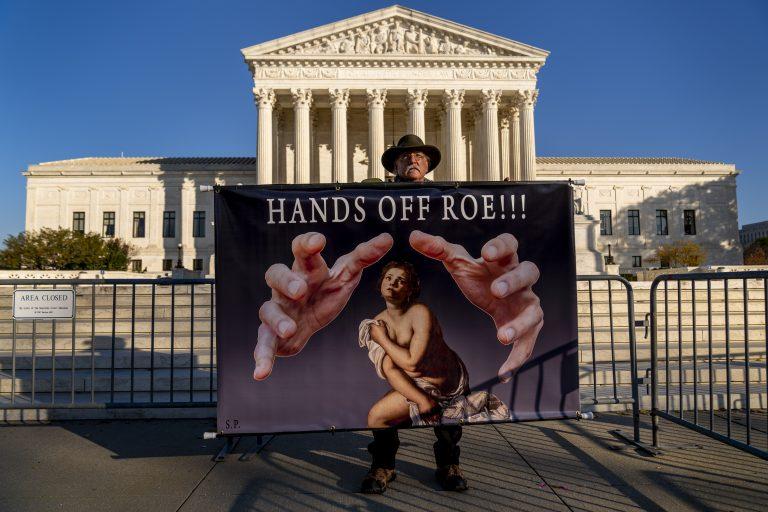
(Molly Bruns, Headline USA) According to Rep. Greg Steube, R-Fla., the pro-abortion mob is planning a string of violent attacks if the Supreme Court decides to overturn Roe v. Wade.

In an episode of the Todd Starnes Show, Starnes introduced the segment with a discussion of the pattern of attacks on Christian ministries, pro-life groups and crisis pregnancy centers all over the country.

Steube explained that pro-abortion fanatics are posting fliers around Washington D.C. calling for “a night of rage” after Roe is overturned.

“I firmly believe that Washington’s going to turn into a completely overrun, mob rule type environment when that happens,” Steube said.

“Right now, if you go anywhere by the Supreme Court, there is tons of security, wire like fencing up to where you can’t climb it, people all over, security all over in anticipation of this.”

Steube went on to mention that it was a wonder security was even being prepared, after the attempted assassination of Supreme Court Justice Brett Kavanaugh, and points out the double standard between the reactions to conservative and leftist protests.

“You have a completely weaponized and politicized Department of Justice that is not even enforcing the law when a U.S. Supreme Court justice has had his life threatened and attempted to be assassinated,” Steube explained. “And they’re still allowing all these protests in front of justice’s homes, which is in current violation of the law.”

“They should be held accountable,” he said. “And this DOJ is doing nothing about it.”

Although D.C. and the lives of conservative Justices will be the most likely targets, Starnes made a point to mention that the reaction to Roe‘s overturn will likely have national consequences.

“They’re going to be coming after everybody and especially in the major urban centers,” he explained.

“And to your point, look, I appreciate that the Supreme Court is surrounded and it’s like Fort Knox over there, but they’re not going to be trying to burn down Fort Knox. They’re going to be burning down businesses.”

Steube agreed and elaborated on Starnes’ point:

“My guess is it’s going to be just the same as it’s been to the protests that the Supreme Court justice’s houses… where if it’s left wing, violent, domestic terrorism, [the Biden adminisration doesn’t] care about that,” Steube said.

“If it’s conservatives that are doing that type of activity, they’re going to be held in solitary confinement.”

FBI Official Who Worked on Russia Probe Maintained Inappropriate Media Ties

(Tony Sifert, Headline USA) A former FBI senior official has come under fire for developing unseemly relationships with hundreds of media contacts during his time as head of the FBI’s Counterterrorism Division and as executive assistant director of the FBI’s National Security Branch.

FOIA requests made by several media organs identified the recently retired Michael Steinbach as “the Senior FBI Official had numerous unauthorized contacts with the media from 2014 through 2016,” whose conduct was “in violation of FBI policy” according to Inspector General Michael Horowitz.

Politico reported that Steinbach played a major role in overseeing both the 2016 investigations into both Hillary Clinton‘s private email server and President Donald Trump’s alleged “collusion” with Russia.

According to the executive summary of Horowitz’s 2018 report, which did not name Steinbach, the official was also accused of accepting tickets from media members to “black tie events” like the White House Correspondents’ Dinner, and of retiring before he could be investigated.

“The Senior FBI Official retired from the FBI prior to being contacted by the OIG for an interview,” Horowitz wrote. “When later contacted by the OIG for a voluntary interview, the Senior FBI Official declined to be interviewed.”

Outlets like Politico, the New York Post, and the Washington Free Beacon were able to identify Steinbach after the FOIA-required release of a more recent, though redacted, report, which named the official.

An anonymous official told Politico that Steinbach was likely acting under the authority of infamous FBI director James Comey, who allegedly encouraged senior officials to cultivate relationships with the media in order to manipulate the narrative.

“Comey’s approach entailed proactively trying to find media sources that the FBI could trust to get stories right and to protect the brand of the FBI,” the anonymous official said.

Several of the exchanges between Steinbach and Washington journalists reveal the grotesquely flirtatious nature of the relationship between the deep state and its enablers in the media.

“I put you on the map and now you’re cheating on me with,” a CNN reporter wrote to Steinbach after the FBI official attended an event with another reporter.

“I kept waiting for my invite from you,” Steinbach replied.

Brits Resume Deportations of Asylum-Seeking Illegals to Rwanda, Despite Leftist Protests

(Headline USA) The British government vowed Wednesday to organize more flights to deport asylum-seekers from around the world to Rwanda, after a last-minute court judgment grounded the first plane due to take off under the contentious policy.

Home Secretary Priti Patel said ”preparation for the next flight begins now” despite legal rulings that none of the migrants earmarked for deportation could be sent to the East African country.

“We will not be put off by the inevitable legal last-minute challenges,” Patel told lawmakers.

Under a deal signed in April, Britain plans to send some migrants from countries including Iraq, Afghanistan and Syria who arrive illegally in Britain as stowaways or in small boats to Rwanda, where their asylum claims will be processed. If successful, they will stay in the African country, rather than returning to Britain.

Prime Minister Boris Johnson’s government says the plan is a legitimate way to protect lives and thwart the criminal gangs that send migrants on risky journeys from France across the English Channel.

Human rights groups argue that the plan rides roughshod over the protections afforded to refugees under rules set up after World War II. They have called the idea inhumane and a waste of money. Britain paid Rwanda $150 million up front for the deal.

Critics include leaders of the Church of England and, according to British news reports, heir to the throne Prince Charles.

British courts refused last week to ground the first flight, scheduled for Tuesday, but the number due to be aboard was whittled down by appeals and legal challenges, from 37 last week to seven on Tuesday.

Then the European Court of Human Rights, an international tribunal supported by 46 countries, including Britain, ruled late Tuesday that an Iraqi man due to be on the plane shouldn’t fly, saying he faced “a real risk of irreversible harm.” That judgment allowed the final few migrants on the plane to win a reprieve from British judges with minutes to spare, and the government canceled the then-empty flight.

British Cabinet minister Therese Coffey said the government was “surprised and disappointed” by the ruling.

“I think the public will be surprised at European judges overruling British judges,” she told Sky News — though the European judges did not overrule British courts, which had ruled on the issue of the flight as a whole, not on individual migrants.

Some lawmakers from the governing Conservative Party nonetheless say Britain should withdraw from the Strasbourg-based European human rights court, which Britain helped to set up.

A full trial of the legality of the Rwanda plan is due to be heard in the British courts by the end of July.

Human rights lawyer Frances Swaine, who represents one of the people due to be sent to Rwanda, urged the government to wait for that decision before organizing any more deportation flights.

“I would be sitting back and thinking: Was it worth it, either from a financial or a legal perspective, to organize one of these very expensive flights again when they’ve been so unsuccessful this time around on legal grounds?” she said.

The British government says it welcomes refugees who come by approved immigration routes but wants to put the criminal smuggling gangs that operate dangerous cross-Channel voyages out of business.

Migration and refugee groups point out that there are no approved legal routes to Britain for most refugees, with the exception of those fleeing Afghanistan and Ukraine. Britain receives fewer asylum applications than comparably sized European countries such as France and Germany.

There are also concerns about the migrants’ treatment in Rwanda, the most densely populated country in Africa. While Rwanda was the site of a genocide that killed hundreds of thousands of people in 1994, the country has built a reputation for stability and economic progress since then, the British government argues.

Critics say that stability comes at the cost of political repression.

More than 28,000 migrants entered Britain last year by crossing the English Channel, up from 8,500 in 2020. About 10,000 have arrived so far this year. Dozens have died while attempting the trip, including 27 people in November when a boat capsized.

Johnson has promised to stop the criminal gangs behind the perilous journeys — a “tough on immigration” message that plays well with the Conservative grassroots.

Labour Party migration spokeswoman Yvette Cooper said the plan is “unworkable, unethical and won’t stop the criminal gangs.”

“This isn’t a long-term plan; it is a short-term stunt,” she said.

Migration groups say the Rwanda plan is unlikely to deter desperate people making risky journeys to Britain. More than 440 people were brought ashore in southern England from small boats on Tuesday, including a heavily pregnant woman and parents with children.

Nando Sigona, a migration expert at the University of Birmingham, said that because most of the people chosen for deportation under the Rwanda plan are single men, the policy could lead to more women, children and families attempting to cross the Channel.

Adapted from reporting by the Associated Press

Bishop: Pelosi Refused SCOTUS Protection to Abet Abortion Leaker

(Tony Sifert, Headline USA) On the House floor Tuesday and again in an interview with Fox News, Rep. Dan Bishop, R-N.C., accused Democrats, led by Speaker Nancy Pelosi, of delaying a bill providing extra security for Supreme Court Justices in order to protect the identity of the clerk who leaked Justice Alito’s Roe-overturning opinion in Dobbs v. Jackson Women’s Health Organization.

“I do think I know why this bill had to be delayed . . . that is because you want to protect the leaker, and that implies that although this has been pending for a month and a half, somebody knows who the leaker was, and that’s who you want to protect,” Bishop told Democrat members of the House of Representatives.

The bill in question — the Supreme Court Police Parity Act — finally passed Tuesday, with 27 Democrats voting against protecting conservative members of the Supreme Court from violence by pro-abortion domestic terrorist groups like Ruth Sent Us and leftist assassins like Nicholas Roske.

According to The Hill, the monthlong delay in passing the bill resulted from House Democrats’ demands for “an expanded bill that also offered protections to Supreme Court staff, including judicial clerks.”

In an appearance on Fox News after the vote, Bishop again raised the question of why the Democrats delayed adopting the new security measures.

“You gotta wonder if there is any bottom to their conduct,” Bishop said.

“The notion was they wanted to extend the protection to the families of the clerks . . . if that’s the case, it seems like they know the identity of the leaker,” he continued.

Bishop’s comments echoed those of House Minority Leader Kevin McCarthy, who accused Pelosi of “jeopardizing people’s lives.”

“If you change the bill, you’re trying to kill it and delay it,” McCarthy said. “You’re playing more games than anyone in this country can understand.”

Apparently shamed by Pelosie’s conduct, House Majority Leader Steny Hoyer said that he could not explain why Democrats had delayed for so long.

“I can’t really give you an explanation, because adding more employees doesn’t seem like a very controversial thing to do,” Hoyer told The Hill.

Leftists Gloat that 1 in 5 U.S. Babies Killed by Abortion in 2020

(Headline USA) The number and rate of U.S. abortions increased from 2017 to 2020 after a long decline, according to figures released Wednesday.

The report from the pro-abortion Guttmacher Institute counted more than 930,000 abortions in the U.S. in 2020. The number was estimated to account for roughly 20% of total pregnancies, according to the Associated Press.

That’s up from about 862,000 abortions in 2017, when national abortion figures reached their lowest point since the U.S. Supreme Court’s controversial 1973 Roe v. Wade decision imposed a federal abortion mandate nationwide.

About one in five pregnancies ended in abortion in 2020, according to the report, which comes as the Supreme Court appears ready to overturn that decision.

Medication abortions, the two-drug combination sometimes called the “abortion pill,” accounted for 54% of U.S. abortions in 2020, the first time they made up more than half of abortions, Guttmacher said.

The COVID-19 pandemic may have pushed down the numbers in some states, according to the report. In New York, abortions increased from 2017 to 2019, then fell 6% between 2019 and 2020. One in 10 clinics in New York paused or stopped abortions in 2020.

Texas saw a 2% decrease between 2019 and 2020, coinciding with pandemic-related abortion restrictions in the state.

Yet, abortions already were inching upward before the coronavirus upended people’s lives. One contributing factor: Some blue states expanded Medicaid access to abortion as a way to counter the Trump administration’s efforts to defund abortion clinics.

Illinois, for example, began allowing state Medicaid funds to pay for abortions starting in January 2018. The state saw abortions increase 25% between 2017 and 2020.

In neighboring Missouri, abortions decreased substantially, but the number of Missouri residents traveling to Illinois for abortions increased to more than 6,500.

“If states are paying for abortions I hope they are also looking at how to support childbirth, so a woman doesn’t think abortion is the best or only option,” said Carol Tobias, president of the National Right to Life Committee, which opposes abortion.

Guttmacher conducts the nation’s most comprehensive survey of abortion providers every three years.

The tally is considered more complete than data from the Centers for Disease Control and Prevention that omits several states including California, the nation’s most populous state.

In 2020, fewer women were getting pregnant and a larger share of them chose abortion, the researchers found. There were 3.6 million births, a decline since 2017.

The abortion rate in 2020 was 14.4 per 1,000 women aged 15-44, an increase from 13.5 per 1,000 women in 2017.

Abortions increased by 12% in the West, 10% in the Midwest, 8% in the South and 2% in the Northeast.

Adapted from reporting by the Associated Press