Fed Issues Another Major Rate Hike as Powell Parrots Biden Admin’s Recession Denials

(Headline USA) The Federal Reserve on Wednesday raised its benchmark interest rate by a hefty three-quarters of a point for a second straight time in its most aggressive drive in three decades to tame high inflation, which has run rampant under the misguided policies of the Biden administration.

The Fed’s move will raise its key rate, which affects many consumer and business loans, to a range of 2.25% to 2.5%, its highest level since 2018.

The central bank’s decision follows a jump in inflation to 9.1%, the fastest annual rate in 41 years, and reflects its strenuous efforts to slow price gains across the economy. By raising borrowing rates, the Fed makes it costlier to take out a mortgage or an auto or business loan. Consumers and businesses then presumably borrow and spend less, cooling the economy and slowing inflation.

The Fed is tightening credit even while the economy has begun to slow, thereby heightening the risk that its rate hikes will cause a recession later this year or next. The surge in inflation and fear of a recession have eroded consumer confidence and stirred public anxiety about the economy, which is sending frustratingly mixed signals.

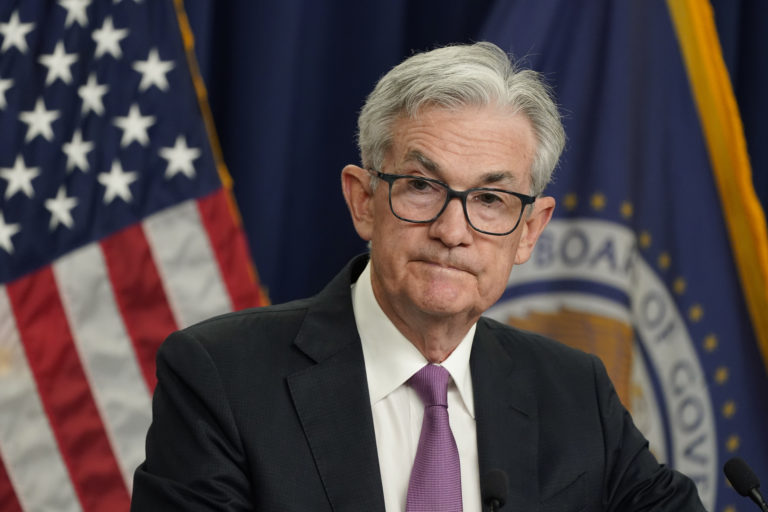
“I do not think the U.S. is currently in a recession,” Chair Jerome Powell said Wednesday at a news conference, echoing the same delusional denial that has come from the White House.

With the November midterm elections nearing, Americans’ discontent has diminished President Joe Biden’s public approval ratings and increased the likelihood that the Democrats will lose control of the House and Senate.

The Fed’s moves to sharply tighten credit have torpedoed the housing market, which is especially sensitive to interest rate changes. The average rate on a 30-year fixed mortgage has roughly doubled in the past year, to 5.5%, and home sales have tumbled.

At the same time, consumers are showing signs of cutting spending in the face of high prices. And business surveys suggest that sales are slowing.

The central bank is betting that it can slow growth just enough to tame inflation yet not so much as to trigger a recession — a risk that many analysts fear may end badly.

In a statement the Fed issued after its latest policy meeting ended, it acknowledged that while “indicators of spending and production have softened,” “job gains have been robust in recent months, and the unemployment rate has remained low.” The Fed typically assigns high importance to the pace of hiring and pay growth because when more people earn paychecks, the resulting spending can fuel inflation.

Ian Shepherdson of Pantheon Macroeconomics noted that point, saying, “The Fed is not ready — yet — to concede that weaker growth is a reason to slow the pace of tightening,″

On Thursday, when the government estimates the gross domestic product for the April-June period, some economists think it may show that the economy shrank for a second straight quarter. That would meet one longstanding assumption for when a recession has begun.

But economists say that wouldn’t necessarily mean a recession had started, regardless of the facts facing them. During those same six months when the overall economy might have contracted, employers added 2.7 million jobs — more than in most entire years before the pandemic. Wages are also rising at a healthy pace, with many employers still struggling to attract and retain enough workers.

Still, slowing growth puts the Fed’s policymakers in a high-risk quandary: How high should they raise borrowing rates if the economy is decelerating? Weaker growth, if it causes layoffs and raises unemployment, often reduces inflation on its own.

That dilemma could become an even more consequential one for the Fed next year, when the economy may be in worse shape and inflation will likely still exceed the central bank’s 2% target.

“How much recession risk are you willing to bear to get (inflation) back to 2%, quickly, versus over the course of several years?” asked Nathan Sheets, a former Fed economist who is global chief economist at Citi. “Those are the kinds of issues they’re going to have to wrestle with.”

Economists at Bank of America foresee a “mild” recession later this year. Goldman Sachs analysts estimate a 50-50 likelihood of a recession within two years.

Should the economy continue to show signs of slowing, the Fed may moderate the size of its rate hikes as soon as its next meeting in September, perhaps to a half-point. Such an increase, followed by possibly quarter-point hikes in November and December, would still raise the Fed’s short-term rate to 3.25% to 3.5% by year’s end — the highest point since 2008.

Adapted from reporting by the Associated Press
July 4 Parade Attack Suspect Indicted for Murder, Attempted Murder

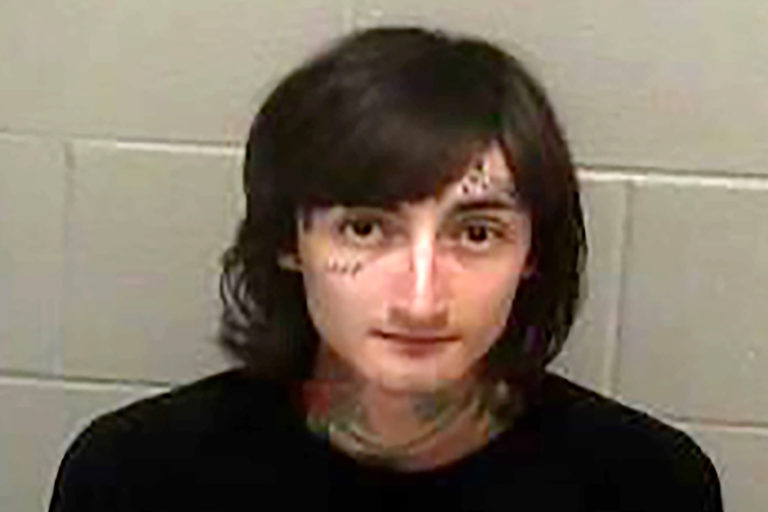
(Headline USA) The man accused of opening fire on an Independence Day parade in suburban Chicago has been indicted by a grand jury on 21 first-degree murder counts, 48 counts of attempted murder and 48 counts of aggravated battery, representing the seven people killed and dozens wounded in the attack on a beloved holiday event.

Prosecutors previously filed seven murder charges against Robert E. Crimo III. They announced the grand jury’s decision to indict him on 117 felony charges on Wednesday.

Attorneys for Crimo have not made a formal response yet to any of the charges he faces in the July Fourth shooting in downtown Highland Park, Illinois.

A representative for the county public defenders office, which is representing Crimo, said Wednesday that it does not comment publicly on any cases.

Prosecutors have said Crimo, 21, admitted to the shooting when police arrested him following an hourslong search on July 4.

Under Illinois law, prosecutors can ask a grand jury to determine whether there is probable cause to proceed to trial. Grand jury proceedings aren’t open to the public and defense attorneys cannot cross-examine witnesses.

The multiple first-degree murder charges allege Crimo intended to kill, caused death or great bodily harm and took action with a strong probability of causing death or great bodily harm on the seven people who died.

Prosecutors said Wednesday that the 48 attempted murder counts and 48 counts of aggravated battery with a firearm represent “each victim who was struck by a bullet, bullet fragment, or shrapnel.”

“I want to thank law enforcement and the prosecutors who presented evidence to the grand jury today,” Lake County State’s Attorney Eric Rinehart said in a statement. “Our investigation continues, and our victim specialists are working around the clock to support all those affected by this crime that led to 117 felony counts being filed.”

Authorities have said the wounded range in age from 8 to their 80s, including an 8-year-old boy who was paralyzed from the waist down when the shooting severed his spine.

In her first public comments since the shooting, the boy’s mother said in a video and written statement released Wednesday that the violence her family and others experienced has taught them “to see the unbelievably generous, caring, good and kind spirit that makes up the vast majority of our world.”

Keely Roberts described her son, Cooper Roberts, as “athletic” and “fun-loving” but said he has a long road ahead. Cooper was shot in the back. The bullet tore through his body, severely damaging his aorta, liver, esophagus and spinal cord before exiting through his chest.

Cooper has undergone multiple surgeries and is paralyzed from the waist down.

Cooper’s twin brother, Luke, sustained minor injuries from shrapnel, but his mom worries about the impact of seeing his twin so violently injured. She also was wounded in the leg.

Roberts said she still sees a bright future ahead for Cooper and thanked paradegoers who helped the family in the aftermath of the shooting, along with health care providers and other first responders.

“He’s gonna teach a whole lot of people that the lesson in this is not that one person did this horrible thing,” she said. “The lesson in this is that thousands of people did great things, kind things, and continue to do kind things.”

During a court hearing presenting the murder charges, prosecutors said police found more than 80 spent shell casings on the rooftop of a building along the parade route and the semi-automatic rifle used in the attack on the ground nearby.

Investigators believe Crimo blended in with the fleeing crowd to get away from the scene, then borrowed his mother’s car and briefly contemplated a second attack on a celebration in Madison, Wisconsin, before returning to Illinois where police arrested him.

Crimo is due to appear in court Aug. 3.

Adapted from reporting by the Associated Press
Woke, Leftist Facebook Parent Meta’s Revenue Tanks

(Headline USA) Facebook and Instagram’s parent company Meta posted its first revenue decline in history Thursday, dragged by a drop in ad spending as the economy falters — and as competition from rival TikTok intensifies.

The company’s stock dropped slightly in after-hours trading following the results, suggesting Wall Street was largely expecting the weak earnings report. The tech titan has come under heavy fire recently for its ultra-woke and far-leftist policies and its apparent mission to cancel conservative thought.

The results also largely followed a broader decline in the digital advertising market that is dinging rivals such as Alphabet and Snap. Google’s parent company reported its slowest quarterly growth in two years on Tuesday.

Meta also faces some unique challenges, including the looming departure of its chief operating officer Sheryl Sandberg, the chief architect of the company’s massive advertising business.

In addition to TikTok, the decline in ad spending among the downturn and Apple’s privacy changes, “questions about Meta’s leadership” — including Sandberg’s exit and negative sentiment about the company as a whole — also contributed to the decline, said Raj Shah, a managing partner at digital consultancy Publicis Sapient.

Meta earned profits of $6.69 billion, or $2.46 per share, in the April-June period. That’s down 36% from $10.39 billion, or $3.61 per share, in the same period a year ago.

Revenue was $28.82 billion, down 1% from $29.08 billion a year earlier.

Analysts, on average, were expecting earnings of $2.54 per share on revenue of $28.91 billion, according to a poll by FactSet.

“The year-over-year drop in quarterly revenue signifies just how quickly Meta’s business has deteriorated,” said Insider Intelligence analyst Debra Aho Williamson in an email. “Prior to these results, we had forecasted that Meta’s worldwide ad revenue would increase 12.4% this year, to nearly $130 billion. Now, it’s unlikely to reach that figure.”

She added that the good news — if it could be called that — is that Meta’s competitors are also experiencing slowdowns.

Meta is in the midst of a corporate transformation that will take years to complete. It wants to evolve from social media to the “metaverse” — a risky bet that’s still in its nascent stage. The metaverse is sort of the internet brought to life, or at least rendered in 3D.

CEO Mark Zuckerberg has described it as a “virtual environment” in which you can immerse yourself instead of just staring at a screen. The company is investing billions on its metaverse plans that will likely take years to pay off — and as part of its plan renamed itself Meta last fall.

“Expect Meta’s decline to continue until Meta can monetize the metaverse, and begin another Meta-reverse,” Shah said.

Meta’s forecast revenue of $26 billion to $28.5 billion for the current quarter, which is below Wall Street’s expectations.

“This outlook reflects a continuation of the weak advertising demand environment we experienced throughout the second quarter, which we believe is being driven by broader macroeconomic uncertainty,” finance chief David Wehner said in a statement. Meta said Wehner is being promoted to chief strategy officer, where he will oversee the company’s strategy and corporate development. Susan Li, currently vice president of finance, will replace him as CFO.

Shares of Meta Platforms Inc. fell 58 cents to $169 in after-hours trading.

Adapted from reporting by the Associated Press
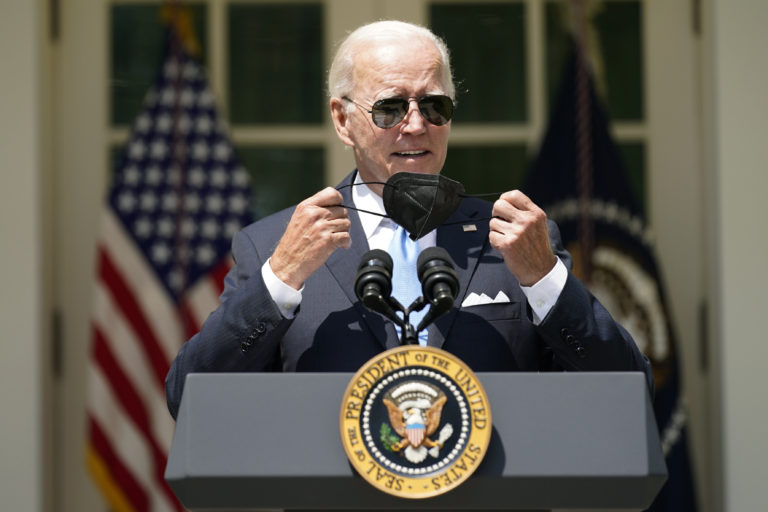
Biden Flagrantly Violates CDC Guidance by Unmasking Only 6 Days After COVID Diagnosis

(Headline USA) President Joe Biden ended his COVID-19 isolation on Wednesday, telling Americans they can “live without fear” of the pandemic if they take advantage of booster shots and treatments, the protections he credited with his swift recovery.

“You don’t need to be president to get these tools to be used for your defense,” he said in the Rose Garden. “In fact, the same booster shots, the same at-home test, the same treatment that I got is available to you.”

However, in boasting of his swift recovery, he flagrantly violated the rules of his own Centers for Disease Control and Prevention, which recommend that those testing positive for COVID with symptoms “Wear a well-fitting mask for 10 full days any time you are around others inside your home or in public.”

According to the CDC’s own isolation calculator, a patient who first tested postitive on Thursday, July 21 and exhibited symptoms of a fever should remain in isolation until Thursday, July 28 and should continue wearing a mask in public through Sunday, July 31.

The guidance also instructs indivuduals to avoid travel for the same span of time. It is unclear whether Biden intends to abide by the CDC’s recommendation.

But Biden emphasized that people are far less likely to die from the disease despite a wave of new infections caused by a contagious variant known as BA.5, which is believed to have sickened the president as well.

“You can live without fear by doing what I did,” he said. “Get boosted, get tested and get treatment.”

The fact that Biden—and several other highly vaccinated congressional Democrats—have contracted the disease and shown symptoms effectively undermined the political rhetoric that the president used just a year ago to suggest that COVID-19 was a “pandemic of the unvaccinated.”

Instead of dealing in absolutes, however, Biden spoke more about treatment than prevention, a sign of how the pandemic and his approach has evolved after having foisted the potentially dangerous vaccine onto millions of unwilling test-subjects.

Still, his COVID demagoguery helped drive a deeper rift into the already critical political divide with his vaccine mandates, the legacy of which likely lingers in the country’s ongoing supply-chain and inflation crises.

Biden made no admission of guilt, instead taking a more upbeat approach to the use of antiviral medications like Paxlovid.

“Grandparents are hugging their kids and grandkids again. Weddings, birthdays, celebrations are happening in person again,” Biden said. “Let’s keep emerging from one of the darkest moments in our history.”

White House staff assembled in the Rose Garden applauded Biden, who thanked them for their support as he finished his remarks.

“God bless you all, and now I get to go back to the Oval Office,” he said.

Biden tested negative for the virus on Tuesday night and Wednesday morning, allowing him to end his isolation.

The variant that likely infected the president, BA.5, is an offshoot of the omicron strain that was first detected last year. It’s now responsible for 82% of cases in the country, with its cousin BA.4 contributing another 13%.

The summer wave of infections continues to disrupt society, particularly for people at high risk for severe disease who are encouraged to avoid exposure in places where transmission is high.

The majority of people in the U.S. live in counties with high levels of spread, and in those places the Centers for Disease Control and Prevention recommends masks in indoor public spaces for everyone—except Biden, evidently.

In Los Angeles County, where face coverings are required on trains and buses, a slight slowing in cases may spare authorities from imposing an expanded mask order.

More than 43,000 people in the U.S. are currently hospitalized with COVID-19 and about 430 die each day.

Dr. Kevin O’Connor, Biden’s physician, wrote in Wednesday’s update that the president remains free of fever and had not used Tylenol in the past 36 hours.

Biden’s symptoms were almost “completely resolved,” O’Connor reported.

“Given these reassuring factors, the president will discontinue his strict isolation measures,” the doctor wrote.

By all accounts, Biden had a mild bout with the virus.

O’Connor consistently wrote in his updates that Biden’s vital signs remained strong, and his temperature only became briefly elevated. He suffered from a runny nose, cough, sore throat and some body aches.

However, the infection was disruptive. Biden cancelled a trip to Pennsylvania, where he was going to detail his crime prevention plans and speak at at a Democratic National Committee fundraiser, and skipped a long weekend at his family home in Delaware.

First lady Jill Biden went without him, and Biden isolated in the White House residence. With voters already concerned about Biden’s age—he turns 80 in November—his aides emphasized that he was working despite his illness.

They released photos of him talking on the phone, and Biden participated in virtual meetings with advisers. His voice was hoarse and he coughed through a conversation on Friday, but he had significantly improved after the weekend.

“I’m not keeping the same hours, but I’m meeting all my requirements that have come before me,” Biden said Monday.

Although presidents benefit from household attendants, Biden’s infection brought a few unglamorous glimpses of life with COVID-19.

Shortly before 7 a.m. on Monday, he said, he felt “the nuzzle of my dog’s nose against my chest.”

“My wife’s not here, she usually takes him out,” he said.

Then, during another meeting on Tuesday, the dog interrupted the conversation by barking in the background.

Adapted from reporting by the Associated Press
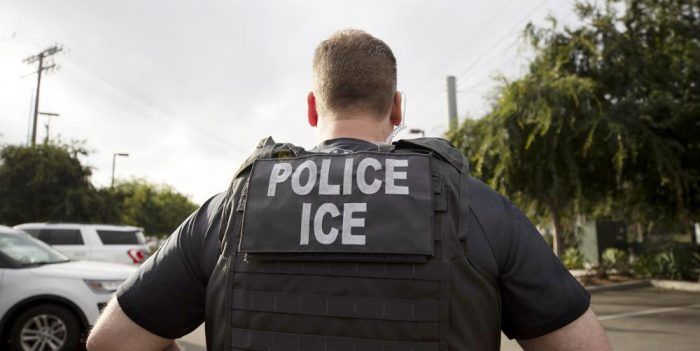
Far-Left NC Sheriff Who Resisted ICE Gets Smoked in Primary

(Headline USA) Former deputy Willie Rowe beat leftist incumbent Gerald Baker in Tuesday’s run-off election for the Democrat nomination in the Wake County, N.C., sheriff’s race.

The win sets up Rowe to face former four-term Wake County Sheriff Donnie Harrison in November.

Rowe’s victory over Baker, whose soft-on-crime policies led to a spike in violent crime in Wake County, wasn’t even close. He won more than 75% of the primary vote with all precincts reporting. 

He beat Baker in the May primary as well, earning just under 30% of the vote while Baker won 24%. But Baker demanded a runoff, which is legally permissible in North Carolina if a candidate doesn’t win more than 30% of the votes in a partisan election.

Rowe, who served in the Wake County Sheriff’s Office for 28 years, vowed to make Wake County a safer place and rejected the anti-police policies pushed by Baker and other leftists.

“We can do it by improving morale at the sheriff’s office by increasing staffing, improving the working conditions and just working together as a team,” Rowe said.

Baker said that, despite his loss, he was proud of the last four years.

“The voters have spoken and that’s fine. I’m fine with that,” he said.

“We’ve been working hard. This office is serving the county. Tonight’s results sets this office back about four years, and come November, going to see it set back about 16 years. That’s neither here nor there at this point.”

Baker also denied the allegations that morale in the Wake County Sheriff’s Office is at a new low because of his policies.

“Morale in this office is better than it’s ever been, and I know that because I’ve been here. I know that morale issues are going to be there. You’re talking about an agency that employs 1,000 human beings,” he said.

Baker is perhaps best known for ending Wake County’s cooperation agreement with Immigration and Customs Enforcement, a move that increased the number of illegal immigrants in the county significantly.

When Baker ended Wake County’s 287(g) agreement, transfers of illegal aliens to ICE dropped from 1,556 in 2018 to just two in 2019.

Judge Allows Killing Unborn Babies to Continue in Wyoming

(Headline USA) In another attempt to usurp and obstruct the Supreme Court’s overturn of Roe, a Wyoming judge on Wednesday temporarily blocked the state’s abortion ban on the day it took effect, siding with a firebombed women’s health clinic and others who argued the ban would harm health care workers and their patients and violate the state constitution.

Attorneys arguing before Teton County District Judge Melissa Owens, in Jackson, disagreed over whether the Wyoming Constitution provided a right to abortion.

Wyoming was among states that recently passed abortion bans should the U.S. Supreme Court overturn Roe v. Wade, which happened June 24. After a review, Gov. Mark Gordon, a Republican who signed the abortion “trigger” bill in March, gave the go-ahead for the law to take effect Wednesday.

Owens was sympathetic with arguments that the ban left pregnant patients with dangerous complications and their doctors in a difficult position as they balanced serious medical risks against the possibility of prosecution.

“That is a possible irreparable injury to the plaintiffs. They are left with no guidance,” Owens said.

The four Wyoming women and two nonprofits that sued Monday claim the new law violates several rights guaranteed by the state constitution, including a “fundamental right to be left alone by the government.”

The two organizations that sued include a nonprofit opening a Casper women’s and LGBTQ health clinic that would have offered abortions. A May arson attack has set back the clinic’s opening from mid-June until at least the end of this year, months past the start of Wyoming’s new abortion ban.

The lawsuit claims the abortion ban will harm the women — two obstetricians, a pregnant nurse and a University of Wyoming law student — by outlawing potentially life-saving treatment options for their patients or themselves. It apparently didn’t offer any claims about harming unborn babies by killing them.

The Wyoming law would have outlawed abortions except in cases of rape or incest or to protect the mother’s life or health, not including psychological conditions. Wyoming until Wednesday had allowed abortions up to the point of viability outside the mother, or around 23 weeks into pregnancy.

Wyoming’s hearing came a day after Indiana Republican lawmakers narrowly advanced a plan to ban nearly all abortions in the state, despite opposition from abortion-rights supporters, who say the bill goes too far, and anti-abortion activists, who say it doesn’t go far enough.

In West Virginia, lawmakers on Wednesday debated a sweeping abortion ban bill on the House floor that would make providing the procedure a felony punishable by up to 10 years in prison. The bill provides no exceptions for rape and incest, but for an ectopic pregnancy, a “nonmedically viable fetus” or a medical emergency.

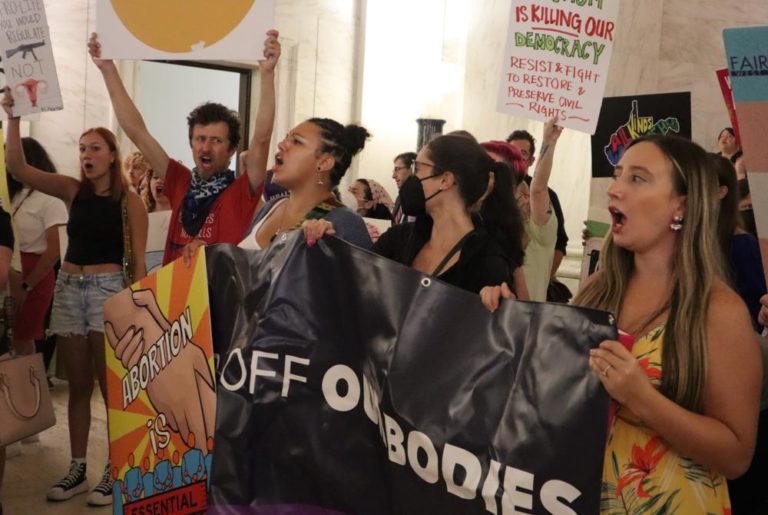
Hundreds of people descended on the state Capitol to watch lawmakers vote, standing outside the House chamber and Speaker Roger Hanshaw’s office chanting and holding signs reading “we will not go quietly” and “stop stealing our health care.”

During a morning public hearing on the bill, multiple people were escorted out from the House chambers by security, including staff from the state’s only abortion clinic.

Around 70 of 90 people spoke against the bill. All speakers were each given 45 seconds before they were cut off and asked to step down from the podium. Some people cried, including a woman who said getting an abortion saved her life and a mother whose teenage daughter was raped last year at a sleepover.

Adapted from reporting by the Associated Press
Federal Court Denies Noem’s Mount Rushmore Fireworks Appeal

(Headline USA) In keeping with its desire to overreach on authority, a federal appeals court on Wednesday dismissed an appeal from South Dakota Gov. Kristi Noem in her lawsuit that attempted to overturn the National Park Service’s denial of the state’s application to hold a fireworks display at Mount Rushmore to celebrate 2021’s Independence Day.

The Eighth Circuit of Appeals found that South Dakota’s objections to the Park Service’s decision were moot because it was in the past and the federal government was within its rights to deny the state from shooting off fireworks at the national memorial.

“The bottom line is that we cannot change what happened last year, and South Dakota has not demonstrated that deciding this otherwise moot case will impact any future permitting decision,” Judge David Stras wrote in the court’s opinion. “Any controversy has, in other words, fizzled out.”

The Republican governor, who has positioned herself for a 2021 White House bid, has used the fireworks celebration as a political rallying point. She hosted former President Donald Trump at the 2020 celebration and the patriotic display, held during the early months of the COVID-19 pandemic, figured largely in her rise to national prominence. It was also the first time the fireworks had been held at Mount Rushmore in nearly a decade.

The governor’s office did not immediately provide a comment on the court’s decision.

South Dakota has paid nearly $230,000 to Consovoy McCarthy, a Virginia-based law firm that has taken up Republican causes across the country, including working for Trump, to represent the state in court.

The court’s decision left open the possibility of the Park Service allowing a pyrotechnic display in the future, and Noem has already applied for a permit for next year. The Park Service denied Noem’s 2022 application for fireworks, citing objections from Native American tribes, wildfire risks and other environmental concerns.

South Dakota had argued that the Park Service’s decision was politically motivated as well as one that should only be made by Congress.

But Stras and the two other judges who issued the opinion disagreed: “Nobody has a right to shoot off fireworks on someone else’s land, whether it be a neighbor; an area business; or as is the case here, a national park.”

Adapted from reporting by the Associated Press

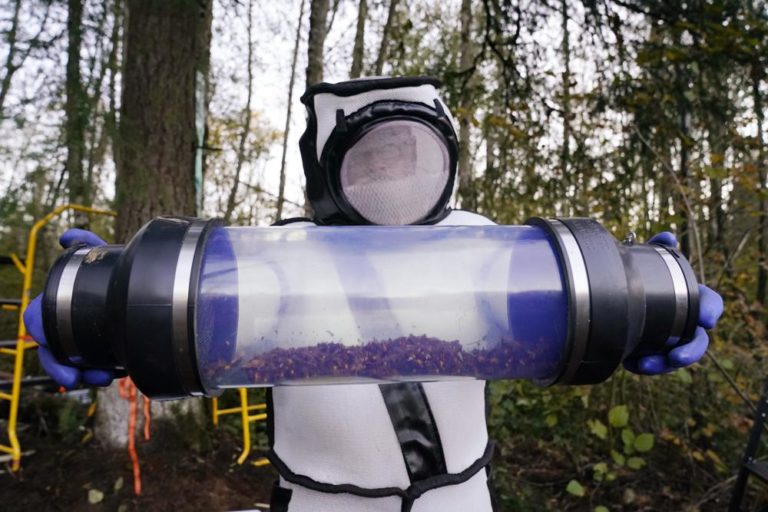
Scientists Change Name of ‘Asian Murder Hornet’ to Avoid ‘Discrimination’

(Headline USA) Scientists have announced that they are renaming the “Asian giant hornet” to avoid discrimination.

Citing a rise in anti-Asian hate crimes, the Entomological Society of American said that the “Asian giant hornet,” most commonly referred to as the “murder hornet,” will now be named the “northern giant hornet.”

“Amid a rise in hate crimes and discrimination against people of Asian descent, usage of ‘Asian’ in the name of a pest insect can unintentionally bolster anti-Asian sentiment,” the organization said in a statement.

The group’s president Jessica Ware added that the new name serves two purposes.

“Common names are an important tool for entomologists to communicate with the public about insects and insect science,” she said. “Northern giant hornet is both scientifically accurate and easy to understand, and it avoids evoking fear or discrimination.”

She noted the “murder hornets” aren’t actually native to Asia, so the name didn’t make much sense in the first place.

“‘Asian giant hornet’ does not convey unique information about the biology or behavior of the species,” the society’s statement read.

At best, the previous common name for the species is “a neutral and uninformative adjective, potentially a distraction from more salient characters of the organism, and at worst a racist trope,” said Chris Looney, entomologist at the Washington State Department of Agriculture who authored the name change proposal.

“I don’t want my Asian American or Pacific Islander colleagues, friends and family to have any negative connotations with invasive or pest species that might be used against them in a negative way,” Ware said.

In 2021, the ESA updated its guidelines to state that scientists can change common insect names if they refer to ethnic or racial groups or may cause fear.

Ware encouraged people to submit a request to the Better Common Names Project if there is an insect name they believe should be changed.

Victim Warns Private Hacking Software May Be Used Against U.S. Gov’t

(Headline USA) Months after her father was lured back to Rwanda under false pretenses and jailed, Carine Kanimba discovered her own phone had been hacked using private spyware.

Kanimba is the youngest daughter of Paul Rusesabagina, who is credited with saving more than 1,200 lives during the 1994 Rwandan genocide in a story that inspired the movie Hotel Rwanda.

An opponent of Rwandan President Paul Kagame, Rusesabagina is now serving a 25-year prison sentence on charges that he has dismissed as politically motivated.

Researchers have alleged Pegasus was used to spy on Kanimba and her cousin as Rusesabagina’s family was advocating for his release from Rwanda, which received $160 million in foreign aid from the United States in the last budget year.

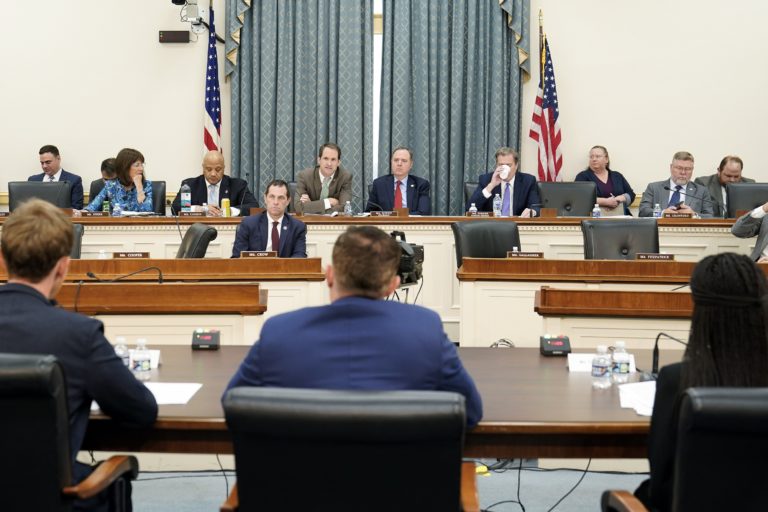
“Unless there are consequences for countries and their enablers which abuse this technology, none of us are safe,” she told the House Intelligence Committee on Wednesday.

Kanimba and technology experts urged Congress to oppose the use of commercial spyware in the U.S. and discourage investment in spyware that has been used to hack the phones of dissidents, journalists, and even U.S. diplomats.

Pegasus infiltrates phones to control their camera and microphone and siphon off data without requiring the user to click on a malicious link.

It is part of a burgeoning international market for states to acquire cyber tools that were once available only to the most technically advanced governments. Researchers at Google have identified at least 30 vendors selling “zero click” exploits or other spyware.

NSO Group says its software can’t be activated against phone numbers with a U.S. country code unless used by an American agency. But there are several documented reports of American officials and citizens having their data captured by Pegasus.

One committee member, Rep. Jim Himes, D-Conn., suggested that off-the-shelf spyware felt “like a very serious threat to our democracy and to democracies around the world.”

Himes questioned whether spyware could be deployed from another country against American officials, and he criticized companies that invest in it.

Among the investors in a private equity firm that held majority ownership of NSO Group were the Oregon state employee pension fund and the Alaska Permanent Fund Corporation.

U.S. officials and many lawmakers in both parties are concerned about foreign interference in future elections and the prospect of Americans trying to overturn a lawful vote by force.

“Nobody, not Mike Pence, not Nancy Pelosi, not Kevin McCarthy … are immune from having their most private deliberations watched,” Himes said. “And that may be just enough to interfere in our elections, just enough to end our democracy.”

U.S. law enforcement and intelligence agencies have long been in the market themselves for ways to hack into phones.

The Biden administration last year imposed export limits on NSO Group and three other firms. But the FBI has acknowledged buying a license for Pegasus for what it said was “product testing and evaluation only.”

While spyware companies make huge profits in the Middle East and Europe, it is American business and investment that “legitimizes what they’re doing,” said John Scott-Railton, senior researcher at Citizen Lab, which has long studied how the programs work.

“Doing business with the U.S. government, getting acquired by a U.S. company or even doing business with an American police department is the golden price for many in the spyware industry,” he said. “As long as that remains as a possibility for problematic actors, they’re going to get support from investors.”

The committee is pushing U.S. spy agencies to “decisively act against counterintelligence threats posed by foreign commercial spyware,” according to the public version of its latest bill authorizing intelligence activities.

The bill, which has not yet been voted on by the full House, proposes that the director of national intelligence “may prohibit” individual U.S. agencies from acquiring or using foreign commercial spyware.

But the bill would also allow any intelligence agency chief to seek a waiver from the director if the waiver “is in the national security interest of the United States.”

In a statement, NSO Group noted that the discussion over spyware “at times lacks balance [by] intentionally omitting their lifesaving benefits.”

“NSO reiterates that it thoroughly investigates any claim for illegal use of its technology by customers, and terminates contracts when illegal use is found,” the company said. “Nonetheless, it is critical to consider the benefits and alternatives to these critical technologies.”

Kanimba testified that she was alerted last year by a collective of journalists working with Citizen Lab and Amnesty International that there was reason to believe that she had been spied on. A subsequent forensic analysis of her phone revealed that she had been targeted by Pegasus spyware, she said.

She said the surveillance was triggered as she walked with her mother into a meeting with Belgium’s minister of foreign affairs—Rusesabagina holds Belgian citizenship and U.S. residency—and was active during calls with the State Department and with the office of the U.S. government’s special presidential envoy for hostage affairs.

Her family lives in San Antonio. Democratic Rep. Joaquin Castro, a committee member who represents that city, noted that his office’s communications may have been captured by Rwanda because he was advocating for Rusesabagina’s release.

The Rwandan Embassy in Washington did not respond to a request for comment.

Rusesabagina was sentenced for terrorism offenses related to his alleged links to the armed wing of his opposition political platform. Rusesabagina has denied supporting violence and called the verdict a “sham.”

Adapted from reporting by the Associated Press
Obama Advisor Warns: Blacks Don’t Like Biden’s Ukraine Boondoggle

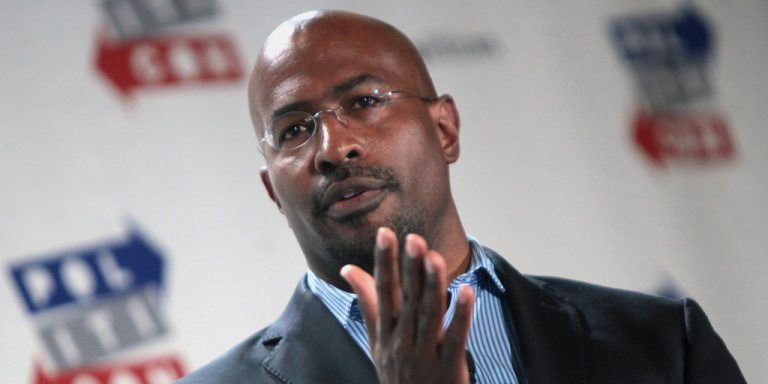
(Tony Sifert, Headline USA) In an appearance on CNN, Democrat strategist Van Jones, who briefly served as President Obama’s “Green Jobs” czar, has issued his second major warning to Democrats about their ability to retain the automatic support of black voters.

Back in June, Jones took Democrats to task for their “weird” obsession with ultra-woke, alienating language.

“LatinX, I’ve never met a LatinX, I’ve never met a BIPOC, I’ve never met . . . all this weird stuff that these highly-educated people say,” Jones told a pair of stunned CNN anchors.

“It’s bizarre — nobody talks that way at the barbershop, the nail salon, the grocery store.”

In a similar appearance last week, Jones accused President Joe Biden of causing black voters to undergo a “summer of real heartbreak” as they watch the man they put in office send their hard-earned taxpayer money down the Ukrainian toilet.

“I think for African-American voters, in particular, there is a special heartbreak because, first of all, the pain is more intense,” Jones said.

“The rising gas prices, food prices, it has really walloped the black community in a particular way, but the hopes were so much higher.”

In particular, Jones criticized the White House’s inability to communicate properly with black voters regarding the millions upon millions that Biden has spent and the numerous diversity hires he’s made to retain their votes.

“If I were the Democratic Party now, the black community is a firewall, they need to be spending a lot of money on black radio, a lot of money on black media to just point out the fact that Joe Biden is there for the black community and is doing stuff,” Jones said.

Unless Democrats get their messaging back on track, Jones warned, the party is in danger of losing its “paper-thin majority.”

Jones, however, observed a blessing in disguise in Biden’s hapless efforts to shore up Congress, as he suggested that a Republican takeover of Congress would allow a scaremongering, anti-white Democrat party to frighten blacks back to the polls in 2024.

“If you start seeing the Republican Party putting up bills that are against affirmative action, putting up bills that might hurt immigrants, bills that might go back toward mass incarceration, that should shock black voters,” Jones said. “That lets [Biden] begin to reset a narrative.”